Home Blog Page 55

Pak, Bahrain vow stronger ties across economic, security and diplomatic domains

Pak, Bahrain vow stronger ties across economic, security and diplomatic domains

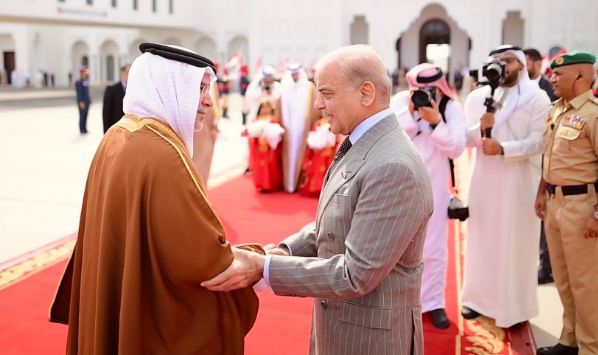
MANAMA, NOV 26 /DNA/ – Prime Minister Muhammad Shehbaz Sharif held a comprehensive meeting with His Royal Highness the Crown Prince of Bahrain in Manama, aimed at expanding bilateral ties across economic, security, and strategic domains. The Prime Minister was presented a guard of honour upon his arrival at the Al-Qudaibiya Palace, reflecting the warmth and respect accorded by the Bahraini leadership.

During the meeting, Prime Minister Shehbaz Sharif thanked the Crown Prince for the generous hospitality and praised Bahrain’s consistent efforts in strengthening ties with Pakistan. He congratulated Bahrain on securing a two-year non-permanent seat on the UN Security Council for the 2026–2027 term, assuring Pakistan’s full support and close coordination during its tenure.

Economic cooperation remained a central focus of the discussions. The Prime Minister highlighted Pakistan’s ambition to increase the current bilateral trade volume of over USD 550 million to USD 1 billion within the next three years. He noted that the Pakistan–GCC Free Trade Agreement—now in the final stages of negotiation—along with recently eased visa requirements, would significantly boost commerce and investment. Shehbaz Sharif invited Bahraini investors to explore promising opportunities in food security, information technology, construction, mines and minerals, healthcare, renewable energy, and tourism. He also proposed enhancing port-to-port linkages between Karachi and Gwadar with Bahrain’s Khalifa Bin Salman Port.

The Prime Minister appreciated Bahrain’s continued support for its community of over 157,000 Pakistanis and offered Pakistan’s readiness to provide more skilled manpower. He welcomed expanded cooperation in higher education, technical training, and digital governance, building on the King Hamad University initiative, and expressed gratitude for Bahrain’s assistance in the release and repatriation of Pakistani nationals.

Both leaders also discussed enhancing defence and security collaboration, with agreements to deepen cooperation in training, cybersecurity, defence production, and intelligence sharing.

Regional developments, particularly the situation in Gaza, were reviewed in detail. Both sides agreed that sustainable peace and stability in Gaza was urgently needed and long overdue for its people after decades of suffering.

The meeting concluded with renewed confidence that the outcomes of the discussions would translate into concrete progress, further elevating Pakistan–Bahrain relations across political, economic, security, and people-to-people spheres.

Chinese Ambassador pledges support to Pakistan’s agriculture industry 

Chinese Ambassador pledges support to Pakistan’s agriculture industry 

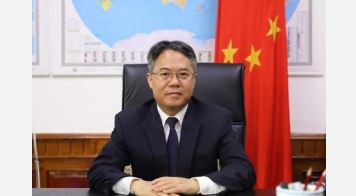
ISLAMABAD, Nov 26 (DNA): Chinese Ambassador to Pakistan Jiang Zaidong on Wednesday reaffirmed Beijing’s commitment to supporting Pakistan’s industrialisation, agricultural modernisation and major connectivity upgrades under CPEC Phase II, describing these sectors as central to Pakistan’s long-term economic recovery.

In a video address to senior policymakers, scholars and students at a policy dialogue in Islamabad titled “Redefining Regional Connectivity: Pakistan–China Friendship in the New Geo-Economic Paradigm,” hosted by the BNU Center for Policy Research in collaboration with the Understanding China Forum, Jiang outlined China’s plans to expand cooperation across key productive areas,  according to Gwadar Pro.

He announced support for two major upcoming investments: Haier’s USD 400 million home appliance industrial park, designed to produce 10 million units annually, and the Challenge Group’s USD 150 million textile industrial park, expected to generate USD 400 million in yearly exports. 

Jiang said both projects would strengthen Pakistan’s export competitiveness, create employment and promote localisation of high-value manufacturing.

 Highlighting agricultural cooperation, the ambassador said China would facilitate the inclusion of more Pakistani products under contract farming, improve market access and strengthen value-chain linkages to help diversify Pakistan’s exports and stabilise foreign exchange earnings.

 On connectivity, he reiterated China’s readiness to advance several major infrastructure schemes, including the Karakoram Highway (Raikot–Thakot) realignment, modernisation of the Khunjerab–Sost border port and comprehensive upgrades to Gwadar Port. 

Transforming Gwadar into a fully functional regional logistics hub, he said, remains a priority under CPEC 2.0.

 Reviewing CPEC’s first phase, Jiang said the corridor has attracted USD 25.93 billion in direct investment, added 8,000 megawatts of power to the national grid, built 510 km of motorways and laid 886 km of transmission lines. 

He noted that projects such as the China-Pakistan Friendship Hospital and the 2,000-ton-per-day desalination plant in Gwadar have improved access to healthcare and clean water for tens of thousands of residents.

Jiang also praised the Lahore Orange Line Metro Train, calling its operations comparable to Beijing’s transit systems. With ridership surpassing 270 million, he said the project demonstrates the transformative impact of modern urban infrastructure.

He added that the 261,000 jobs created under CPEC reflect its broad social impact and have strengthened public confidence in bilateral cooperation. Jiang also pointed to Pakistan’s recent macroeconomic improvements—including 3.04% GDP growth and rising per capita income—as signs of increasing stability.

 The ambassador said China is ready to work with Pakistan to better align development strategies, integrate CPEC with national priorities and build a “closer China–Pakistan community with a shared future.” 

Future cooperation, he added, will deepen across industry, agriculture, mining and green development, with the aim of contributing directly to Pakistan’s economic modernisation.

 The policy dialogue also featured two expert-led sessions—one on connectivity, cooperation and peace, and the other on the future of regional geoeconomics—bringing together senior policymakers, journalists, academics and practitioners.

Portuguese Ambassador pays homage at Quaid-e-Azam Mausoleum

Portuguese Ambassador pays homage at Quaid-e-Azam Mausoleum

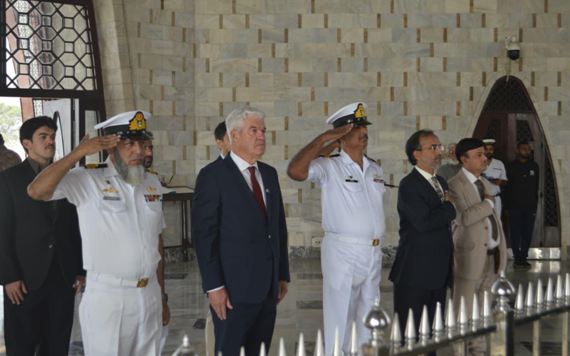
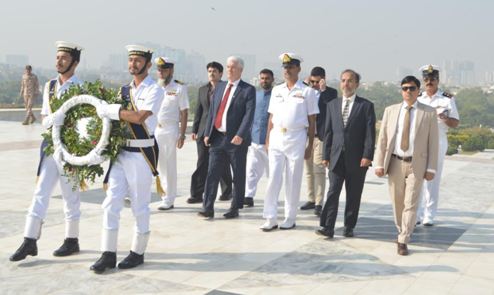
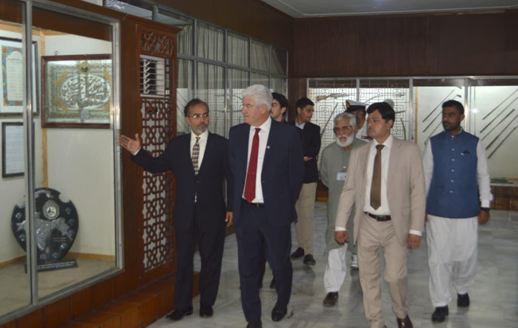
KARACHI, NOV 26 /DNA/ – The Ambassador of Portugal to Pakistan, Frederico Silva, visited the Quaid-e-Azam Mausoleum in Karachi on 23 November 2025 to pay homage to the Founder of Pakistan, Muhammad Ali Jinnah. Upon arrival, the Ambassador was received with full protocol honors, including a ceremonial guard display conducted by the Pakistani Navy and Mausoleum’s protocol staff.

Ambassador Silva laid a wreath at the tomb of Quaid-e-Azam, reflecting Portugal’s respect for Pakistan’s national heritage and acknowledging the enduring legacy of Muhammad Ali Jinnah. Following the ceremony, the Ambassador toured the adjoining museum, where he viewed personal artefacts, historical documents, and exhibits chronicling the life and leadership of Pakistan’s founding father.

The visit underscored the importance of shared values, mutual respect, and the strengthening of bilateral relations between Portugal and Pakistan.

India rejects China’s territorial claim, asserts Arunachal Pradesh remains integral

India rejects China’s territorial claim, asserts Arunachal Pradesh remains integral

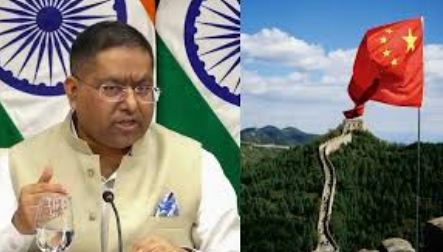
NEW DELHI, NOV 26 – New Delhi has asserted that Arunachal Pradesh is an “integral part” of India in response to Beijing’s claim over the territory as the two countries rowed over the detention of an Indian citizen at Shanghai Airport.

On Tuesday, India had issued a demarche to China over the detention of Prema Wangjom Thongdok, a UK-based woman from Arunachal Pradesh, at the Shanghai airport. Thongdok had said immigration officials had held for 18 hours and “mocked” her by saying the region was not a part of India.

China says Arunachal Pradesh, which Beijing calls Zangnan, is a part of South Tibet — a claim India has repeatedly dismissed. Beijing has renamed places in the northeastern Himalayan state multiple times, prompting strong reactions from New Delhi.

Responding to queries during a press briefing on Tuesday, China’s foreign ministry spokesperson Mao Ning had said that “Zangnan is China’s territory”.

“The Chinese side has never recognised the so-called ‘Arunachal Pradesh’ illegally set up by India,” she said. She further stated there was “no so-called ‘detaining’ or ‘harassing’” of the woman at the Shanghai Pudong International Airport, adding that authorities carried out checks in accordance with the law.

Gen Sahir given a warm send-off

Gen Sahir given a warm send-off

In his address, the outgoing CJCSC expressed gratitude to Allah Almighty for granting him the strength to perform his duties with dedication, professionalism and selfless devotion

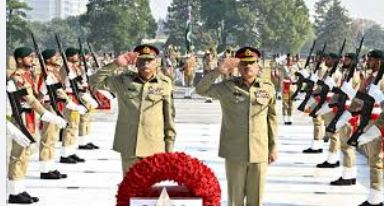
RAWALPINDI, NOV 26 /DNA/ – Today a special ceremony was held at Joint Staff Headquarters to bid farewell to General Sahir Shamshad Mirza, NI, NI (M), the outgoing Chairman Joint Chiefs of Staff Committee, after completing 40 years of distinguished military service.

The event was attended by ex-CJCSCs and senior military officers of the tri-services.

In his address, the outgoing CJCSC expressed gratitude to Allah Almighty for granting him the strength to perform his duties with dedication, professionalism and selfless devotion. He paid rich tributes to the Armed Forces for their unwavering sacrifices in the defence of the motherland and payed homage to the shuhada of the Armed Forces and their families.

He highlighted that in the current geo-strategic environment strong national defence is an essential pillar of National Security and reaffirmed that the nation’s defence remains impregnable and our valiant officers and soldiers stand ever-ready to make it even more formidable.

Earlier, upon his arrival at Joint Staff Headquarters, a smartly turned-out tri-services contingent presented ‘Guard of Honour’ to the outgoing CJCSC.

Morocco elected Interpol Vice-President for the African continent

Morocco elected Interpol Vice-President for the African continent

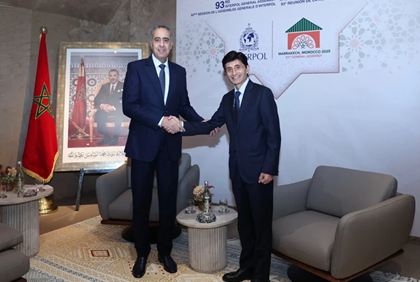
RABAT, NOV 26 /DNA/ – Morocco’s security policy, shaped by the forward-looking leadership of theKing Mohammed VI, has evolved into far more than a mechanism for fighting crime. It now embodies a genuine partnership between law-enforcement institutions and citizens. This assessment was shared on Tuesday in Marrakech by Mr. Mohammed Ben Ali Koman, Secretary-General of the Council of Arab Interior Ministers.

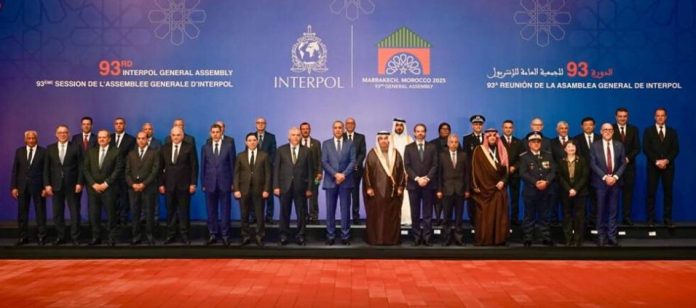
Speaking on the sidelines of the 93rd General Assembly of Interpol, held from 24 to 27 November, Mr. Koman noted that the Kingdom’s security apparatus works tirelessly to sustain Morocco’s stability, an essential foundation for the country’s rapid development trajectory.He highlighted the “continuous modernization efforts” undertaken by Moroccan security services, efforts that align closely with the strategic vision of the King for a stronger, more prosperous and influential Morocco on the regional and international stage.According to Mr. Koman, the citizen remains the central focus of police action, with human rights protection and respect for personal dignity placed at the forefront.

He pointed in particular to the growing popularity of the National Police Open Days, which have become a key moment for strengthening public trust and dialogue. This initiative, he added, represents a distinctive model that many Arab and foreign countries could effectively emulate.The Secretary-General also emphasized the international recognition earned by Morocco’s security institutions. Among the notable achievements, he cited:

  • The awarding of the Prince Naif Medal for Arab Security, First Class to Mr. Abdellatif Hammouchi, Director General of National Security and Territorial Surveillance;
  • The Grand Cross of Merit bestowed by Spain’s Civil Guard;
  • Morocco’s election as Interpol Vice-President for the African continent.
  • Hosting Interpol’s 93rd General Assembly, marked by unprecedented participation, allows the world to witness Morocco’s advanced security practices, further enhancing global appreciation for Arab security capabilities, he added.

At the regional level, Mr. Ben Ali Koman underscored Morocco’s longstanding role as a cornerstone of Arab security cooperation. The Kingdom is home to the Arab Organization for Social Defense Against Crime and now also hosts the Arab Office for Civil Protection and Environmental Affairs, a specialized body operating under the Council of Arab Interior Ministers.This development, he explained, reflects the Royal vision of an inclusive security model, one that safeguards citizens, promotes sustainable development and addresses growing environmental challenges.

Mr. Abdelatif Hammouchi, welcomed Faisal Shahkar, head of the United Nations Policeand UNUnder-Secretary-General for Rule of Law, on Tuesday in Marrakech.The meeting took place at the Manara Gardens, the venue for the 93rd General Assembly of the International Criminal Police Organization (INTERPOL), which runs through November 27, 2025, the General Directorate of National Security said in a statement.

During the meeting, Shahkar conveyed the UN Secretary-General’s interest in strengthening cooperation and security partnerships with Morocco’s national police, aiming to reinforce UN police capacities both at headquarters in New York and in peacekeeping missions deployed in conflict areas worldwide.Shahkar emphasized the value of Moroccan police personnel, citing their field experience, high-level training, and language skills that enable deployment across diverse regions globally.

The meeting is part of a series of bilateral discussions Hammouchi is holding with leaders of national delegations and international and regional organizations attending INTERPOL’s General Assembly. These discussions are intended to bolster security cooperation and partnerships between Morocco and international partners, addressing cross-border crime and enhancing comprehensive security efforts.

AI’s Expanding Influence in Academia: Promise and Peril

AI’s Expanding Influence in Academia: Promise and Peril

Dr. Muhammad Rizwan Bhatti

Artificial intelligence, which was formerly thought of as a far-off technical fantasy, has suddenly emerged as a revolutionary force in academia, drastically altering how organizations conduct research, educate, learn and function at a revolutionary pace never seen before.Moreover, artificial intelligence is achieving remarkable breakthroughs not only in academia but also across industries by driving cutting-edge technological innovation. However, this rapid transformation requires substantial effort from individuals and institutions to develop AI literacy and apply these tools effectively in academia, policing, governance and industry.The Generative AI tools have become invaluable for extracting knowledge from diverse sources, but they rely heavily on thoughtful prompt engineering to deliver precise, meaningful insights with a prudent query.

Indeed, its increasing prevalence has forced universities to reevaluate long-standing academic procedures and address a crucial issue: how can academics take use of AI’s enormous promise while resolving the structural, ethical and social issues it raises? The response will influence how higher education develops in the future.

There are different key generative AI tools,comprising ChatGPT, Bard, DeepSeek, Elicit, Grammarly, Google Gemini and Meta AI etc, are being used widely in academia.According to recent studies on higher education in Pakistan, artificial intelligence has rapidly evolved from a supplemental choice to a crucial academic tool, with students now depending on it for timely assignment completion, academic problem-solving, and personalized learning. A study found that in Pakistan as many as 51% students are using ChatGPT on the regular basis.Moreover, according to a recent SQ Magazine report, nearly 87% of educational institutions worldwide have now integrated some form of AI into their operations. Likewise, an estimated 92% of university students in the UK actively use generative AI tools such as ChatGPT, underscoring how rapidly these technologies are reshaping academic practices globally.

Even though students in Pakistan are quickly adopting AI technologies, there is still a significant institutional preparedness gap in the nation. Many public colleges lack the financial resources, staff training opportunities and computational infrastructure needed for significant AI integration. In terms of digital maturity indices, Pakistan lags behind regional counterparts like India, Malaysiaand the United Arab Emirates. This underscores the critical need for strategic investments, national AI policies and capacity-building programs to guarantee cohesiveness and fairness in AI adoption throughout the nation.

AI technologies are changing how students interact with knowledge in both traditional classroom settings and online learning contexts. Moreover, adaptive learning platforms and intelligent tutoring systems tailor training to each student’s needs by modifying material, difficulty and pace. Because automated grading provides effective feedback, teachers may focus their efforts on more in-depth mentoring and engagement. Furthermore, immersion simulations in disciplines like science, engineering and medicine are made possible by AI-driven virtual and augmented reality settings, which produce experiences that would not be possible or safe otherwise.

AI has an equally transformative effect on research. For instance, in order to handle the deluge of scholarly papers, scholars now use AI-assisted literature reviews, which makes thorough synthesis more achievable. AI’s ability to identify patterns in massive datasets, facilitate predictive modelling and improve accuracy and speed in analytical tasks is particularly advantageous to data-intensive fields. Consequently, these developments enable academics to concentrate on conceptual innovation and multidisciplinary investigation instead of routine duties. As AI-powered solutions enhance enrolment predictions, optimize management procedures and bolster student assistance through predictive analytics, even university administration is changing.

Universitiesthroughout the world are coordinating their AI integration initiatives with global frameworks like the EU AI Act and the UNESCO’srecommendation on the Ethics of AI. These frameworks place a strong emphasis on accountability, justice, transparency and responsible data use; principles that provide helpful direction for nations like Pakistan, where formal AI governance systems are still developing. By implementing such guidelines, organizations may make sure that innovation doesn’t compromise moral principles.

The potential afforded by this technological wave is tremendous. AI offers greater productivity, creative research avenues and highly tailored learning. It creates new opportunities for exploration and democratizes access to excellent resources. Nevertheless, there are significant hazards associated with these advantages. There is an urgent need to address ethical issues related to algorithmic bias, privacy and opaque decision-making. AI has the potential to exacerbate rather than lessen current disparities in the absence of transparent and accountable procedures. Additionally, access to cutting-edge AI technologies necessitates strong infrastructure; high-performance computers, dependable internet connectivity and ongoing investment and resources that are unevenly distributed among institutions and geographical areas.

The situation is further complicated by gaps in educators’ and students’ AI literacy. Many lack the abilities necessary to objectively assess the limitations of AI technologies or to use them effectively. This challenge is intensified because AI-generated work blurs the lines between authorship and evaluation, especially with growing worries about academic integrity. In a time when AI support is becoming more common, universities must reconsider how learning is assessed and how integrity may be maintained.

The emergence of AI-generated false material and fake citations, which can mislead students and jeopardize academic standards, presents another difficulty. Universities need to adapt their plagiarism rules to match the reality of generative AI, invest in sophisticated AI-detection technologies and provide students with instruction on how to spot dubious AI-generated work. However,maintaining academic integrity requires strengthening digital literacy across disciplines.

For all parties involved, these developments carry significant implications. Teachers must constantly adapt, incorporating AI into their teaching while demonstrating its ethical and appropriate use. In addition to developing digital fluency, students must cultivate the critical thinking skills needed to navigate algorithm-shaped information. Simultaneously, institutions must establish a logical, transparent framework for AI integration that safeguards data privacy, guarantees equity and aligns with educational ideals. Maintaining trust and preventing misuse can be achieved through strategic, progressive adoption coupled with ongoing assessment.

Universities must reconsider their curriculum by including courses on data literacy, cybersecurity, computational thinking and AI ethics into a variety of academic programs in order to keep up with the quick development of AI. Moreover, perpetual faculty development is equally crucial; teachers require specialized training to comprehend and apply AI tools efficiently while directing students toward appropriate use.

In the future, ethical innovation will be crucial to the success of AI in academia. Universities need to enhance digital and AI literacy programs that empower all students, reinforce institutional policies and invest in ethical and inclusive AI systems. Multidisciplinary collaboration is just as essential as building strong technological infrastructure, particularly for navigating the social and ethical implications of AI. Thus, AI has the potential to become a catalyst for equality and innovation rather than division, if it is applied responsibly.

Pakistan’s higher education system has to prepare for the skills needed for an AI-driven economy as AI quickly changes the world’s job markets. Additionally, National competitiveness will depend on growing AI research facilities, encouraging collaborations between academia and business, and bolstering innovation ecosystems. Pakistan’s economic future will be significantly shaped by institutions that train graduates for AI-augmented careers.

In the end, the task is to deliberately influence AI’s course rather than to oppose it. Indeed, academics must embrace transparency, equality and ethical governance while remaining watchful for unforeseen repercussions in order to protect the integrity of teaching and research. Moreover, institutions that use AI as a strategic partner to advance human understanding, creativity and academic excellence, rather than as a quick fixwill be far better positioned to prosper. In this way, universities can guarantee that AI enhances, rather than undermines, the fundamentals of academic life. By committing to deliberate cooperation and moral innovation, they can open the door to a future that is more robust, inclusive and forward-thinking.

Dr Muhammad Rizwan Bhatti holds a PhD in Political Science and writes regularly on terrorism, counter terrorism, countering violent extremism, disaster management and policing affairs. He can be reached at [email protected].

Pakistan, Saudi Arabia agree to boost sports cooperation

Pakistan, Saudi Arabia agree to boost sports cooperation

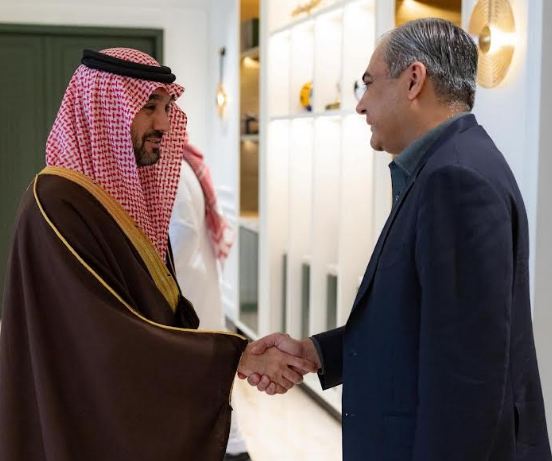
RIYADH, NOV 26 /DNA/ — Pakistan’s Federal Minister for Interior & Narcotics Control and Chairman PCB, Mohsin Naqvi, held an important meeting with Saudi Arabia’s Minister of Sports, Prince Abdulaziz bin Turki Al Faisal, in Riyadh to discuss enhanced sports cooperation, particularly the promotion of cricket in the Kingdom.

During the meeting, both sides exchanged detailed views on expanding youth engagement through sports, developing cricket infrastructure in Saudi Arabia, and creating structured opportunities for joint training programmes, bilateral tours, and junior- and youth-level tournaments.

Mohsin Naqvi praised Prince Abdulaziz bin Turki Al Faisal’s dynamic leadership in advancing the sports sector under Saudi Vision 2030, noting that the Kingdom—under the guidance of its leadership—has created history by securing hosting rights for major global tournaments. He congratulated the Saudi Minister on winning bids for the AFC Asian Cup 2027, Asian Winter Games 2029, Asian Games 2034, and the FIFA World Cup 2034.

Naqvi  emphasised that strengthened cricket infrastructure and collaboration can open new avenues for young players in both countries. “Pakistan and Saudi Arabia will turn sports—especially cricket—into a strong bridge of friendship and regional harmony,” he said.

Both sides agreed to intensify institutional coordination and accelerate practical planning so that joint initiatives can be finalised soon, paving the way for greater opportunities for youth and deeper sports cooperation between the two brotherly nations.

PIDE, PBS seminar pushes data-driven policy for Pakistan

PIDE, PBS seminar pushes data-driven policy for Pakistan

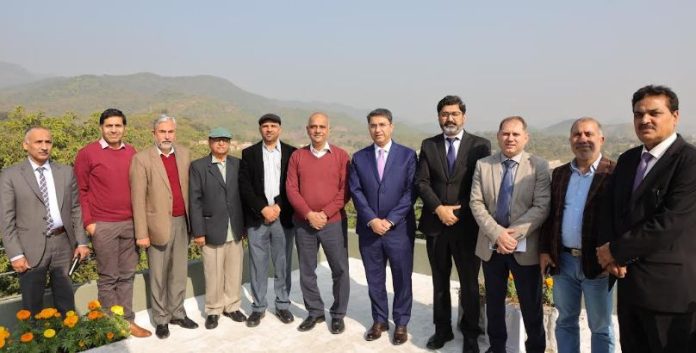
ISLAMABAD, NOV 26 /DNA/ – The Pakistan Institute of Development Economics (PIDE) hosted a specialised seminar titled “PIDE & PBS Deliberations on Data for Policy Research,” bringing together researchers, faculty members, practitioners, policymakers, and students to explore the significance of credible national data in shaping Pakistan’s development agenda. Dr. Naeem Uz Zafar, Chief Statistician of the Pakistan Bureau of Statistics (PBS), was the learned speaker who is a leading authority in national statistical systems, census operations, and data governance in Pakistan. The seminar was moderated by Dr Faheem Jehangir, Dean (Policy), who emphasised the need to enhance collaboration between data producers and data users. The session provided an invaluable opportunity to engage directly with the Chief PBS, the custodian of the national data powerhouse, and to understand better the methodologies, strengths, limitations, and policy implications of major statistical exercises.

Dr. Naeem highlighted significant gaps in Pakistan’s data ecosystem, pointing out that although social indicators are prioritised, the actual economy, including value chains, productivity, and industrial clusters, remains insufficiently researched. He stressed the importance of adopting international classification standards and geotagging frameworks to enhance structural analysis. Referring to the Economic Census, he observed that the new geotagged economic framework enables better mapping of economic activity and service delivery across regions.

A significant part of his address concentrated on agriculture, where systematic data collection on crops, livestock, and machinery now better aligns with rural decision-making cycles. He highlighted ongoing productivity gaps, including limited adoption of certified seeds, unequal access to machinery, and the dominance of small subsistence farms. He emphasized how understanding demand-supply gaps and economies of scale can lead to more effective policy interventions.

Discussing governance and public service delivery, Dr. Naeem illustrated how combining census data with geotagged information on schools, health facilities, and public infrastructure can help identify mismatches between supply and community needs. He underscored the importance of digitized monitoring systems and improved evaluation frameworks for better public spending.

During the Question-and-Answer session, Dr. Naeem encouraged young researchers to adopt modern analytical tools such as R, Python, and geospatial software to deepen Pakistan’s analytical capacity. He appreciated PIDE’s efforts to bridge the gap between data producers and data users, calling such collaborations essential for strengthening Pakistan’s policy ecosystem.

Dr. Nadeem Javaid, Vice Chancellor of PIDE, delivered the closing remarks, highlighting that official statistics are essential for effective public policy. He noted that without reliable data, discussions become abstract, planning turns into guesswork, and reforms have difficulty implementing. While praising the collaboration between PIDE and PBS, he recognised the significant potential to foster evidence-based decision-making, guide resource distribution, and support research that can genuinely shape development priorities.

The session closed with a shared commitment from PIDE and PBS to enhance cooperation and advance data-driven policy research to support Pakistan’s transition toward an evidence-based governance framework.

Tunisia summons EU ambassador

Tunisia summons EU ambassador

DNA

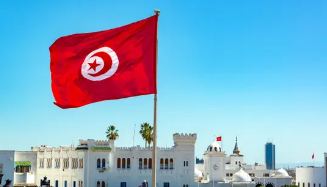
TUNIS: Tunisia’s President Kais Saied summoned the European Union’s ambassador Wednesday to protest the “failure to respect diplomatic rules,” according to a brief statement from the presidency that provided no details on the alleged breach in protocol.

Saied went on to slam the envoy over “the use of practices outside of official frameworks recognized by diplomatic customs.”

The statement comes after EU ambassador to Tunisia Giuseppe Perrone met with Noureddine Taboubi, the leader of the north African country’s main trade union.

On Monday, Perrone hailed the role of the Tunisian General Labour Union (UGTT), according to the EU’s delegation in Tunis, while Taboubi called for reinforced cooperation between Tunisia and the EU.

The UGTT was part of the 2015 Nobel Peace Prize-winning “national dialogue quartet,” and remains an influential counterweight to Saied, who has jailed many of his critics since a sweeping 2021 power grab.

Last week, Taboubi oversaw a union meeting and expressed his support for multiple private sector strikes underway in the inflation-hit country.

He hailed a general strike in the city of Sfax and threatened to call for a national stoppage.

Tunisian and international rights groups have decried the erosion of rights and freedoms since Saied’s power grab.

Residents have also complained of their reduced purchasing power because of inflation, with food products particularly affected.

“The organization is heading toward a general strike to defend the material and social gains of workers in the face of daily difficulties,” he said at the time.

Founded in 1946, the UGTT played a leading role in the struggle against French colonial rule, and later resisted autocratic presidents Habib Bourguiba and Zine El Abidine Ben Ali.

It was also central to the 2011 revolution that toppled Ben Ali and ignited protests across the Arab world.

Stay Connected

64FansLike
60FollowersFollow

Latest Reviews

Exchange Rates

USD - United States Dollar
EUR
1.17
GBP
1.34
AUD
0.67
CAD
0.73