Home Blog Page 547

Saudi envoy presents FII Invitation from Crown Prince to PM

Saudi envoy presents FII Invitation from Crown Prince to PM

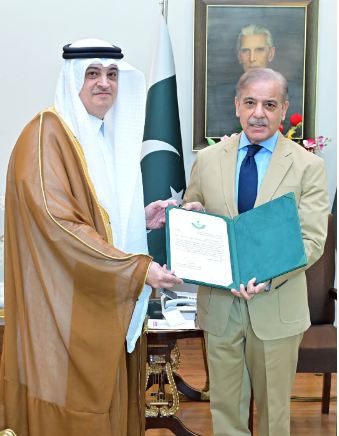
ISLAMABAD, AUG 9 /DNA/ – Prime Minister Muhammad Shehbaz Sharif today met with the Ambassador of the Kingdom of Saudi Arabia to Pakistan, Nawaf bin Saeed Al-Maliki, at the Prime Minister’s House.

The Saudi ambassador presented to the Prime Minister an invitation personally signed by His Royal Highness Crown Prince Mohammed bin Salman bin Abdulaziz Al Saud, inviting him to participate in the 9th Future Investment Initiative (FII) Forum to be held in Riyadh from 27–30 October 2025.

Accepting the invitation to attend the conference, the Prime Minister expressed heartfelt gratitude to Crown Prince Mohammed bin Salman for extending the invitation.

The Prime Minister conveyed his best wishes for the Custodian of the Two Holy Mosques, King Salman bin Abdulaziz Al Saud, and Crown Prince Mohammed bin Salman.

Pakistan-Tajikistan Dosti-II counter terrorism exercise concludes

Pakistan-Tajikistan Dosti-II counter terrorism exercise concludes

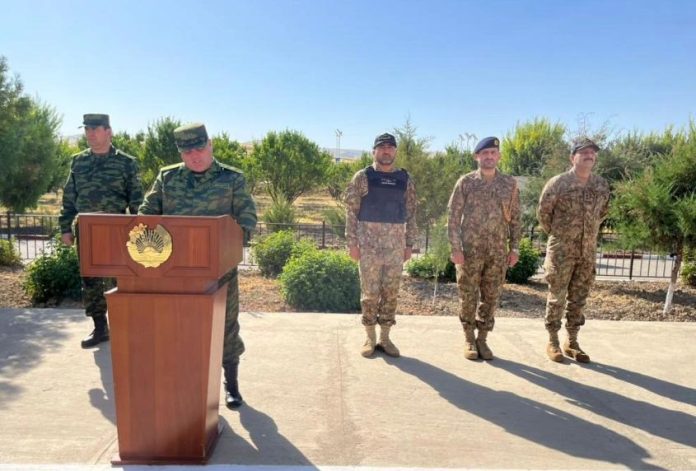
RAWALPINDI, AUG 9 /DNA/ – Pakistan-Tajikistan Joint Counter Terrorism Exercise Dosti-ll was conducted from 4-9 August 2026 at Fakhrobod Base, Tajikistan. 2 x Combat Teams from Light Commando Battalion, Pakistan Army and 4 x Combat Teams from Tajikistan Special Forces participated in the Exercise. All training and military diplomacy objectives were achieved successfully.

Exercise was concluded on 9 August 2026. DA (P) Tajikistan Colonel Muhammad Muazzam Zafar graced the ceremony as Chief Guest from Pakistan side; while, senior military officials from Tajikistan were also in attendance. The troops from both the countries displayed highest standards of professional excellence during the conduct.

Besides harnessing the historic military to military relations between both friendly countries, Dosti-II Exercise was aimed at refining the drills, procedures and techniques involved in Counter Terrorism operations through joint training.

Azerbaijan, US forge strategic partnership

Azerbaijan, US forge strategic partnership

A significant development during the visit was the U.S. President’s signing of an Executive Order extending the waiver of Section 907 of the Freedom Support Act

DNA

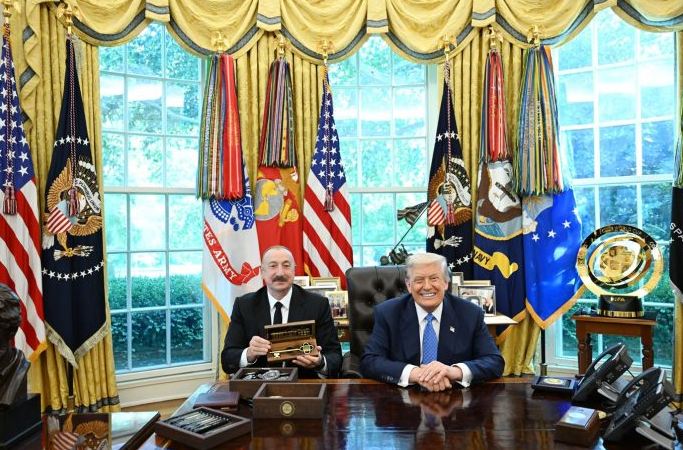
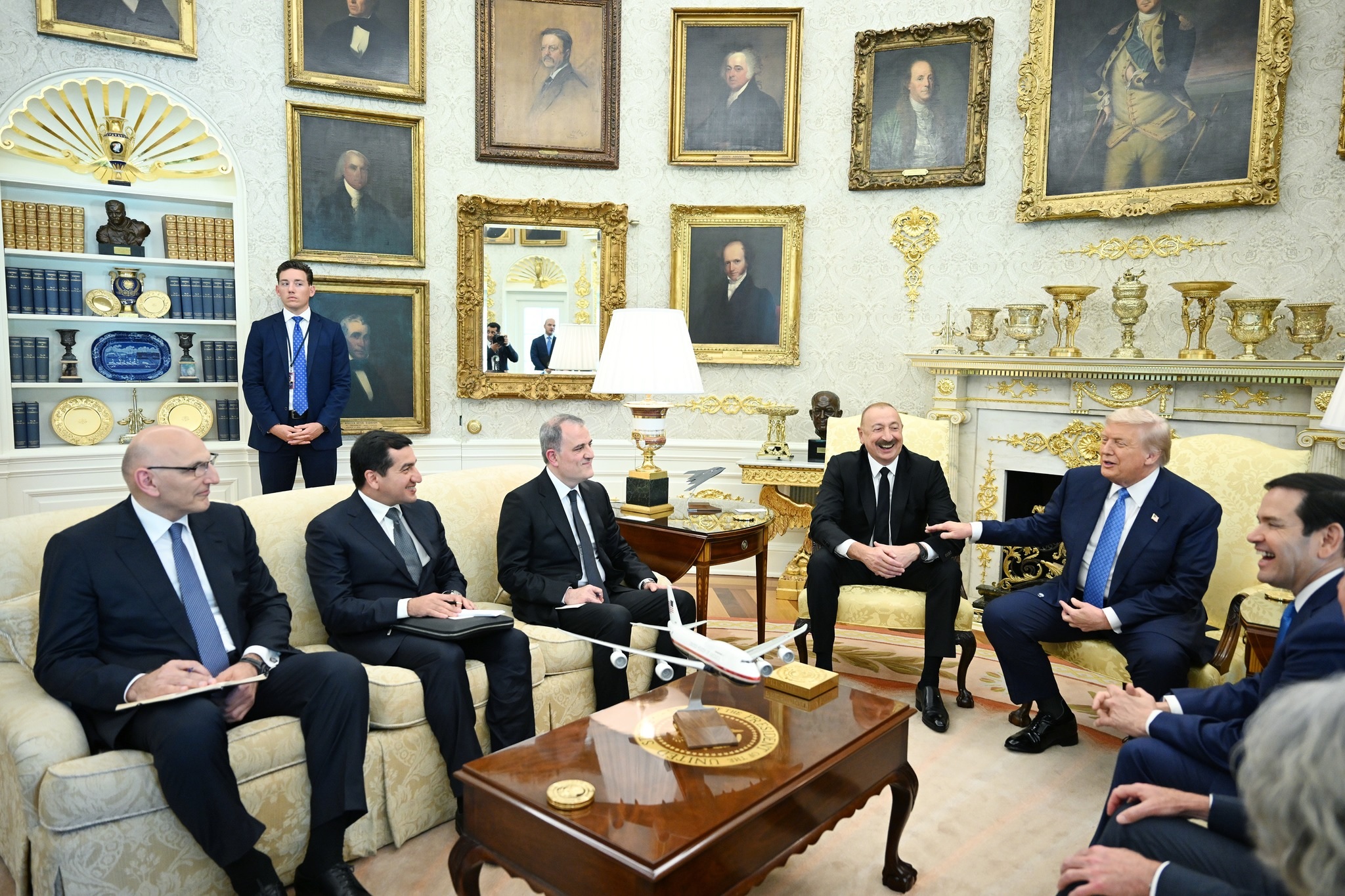
BAKU: The President of the Republic of Azerbaijan, H.E. Mr. Ilham Aliyev, paid an official visit to the United States of America on July 7–8, 2025, marking a new chapter in bilateral relations.

During the visit, the Presidents of both countries signed a Memorandum of Understanding between the Government of the Republic of Azerbaijan and the Government of the United States of America regarding the establishment of a Strategic Working Group to develop a Charter on Strategic Partnership. The initiative aims to elevate Azerbaijan–U.S. relations to the level of a strategic partnership.

Under the agreement, a Strategic Working Group will be formed to develop the Charter within six months. The focus will be on key areas of mutual interest, including regional connectivity—covering energy, trade, and transit—economic investment, artificial intelligence, digital infrastructure, defense, security, and counter-terrorism. The initiative is seen as a major step toward institutionalizing practical cooperation between the two nations.

A significant development during the visit was the U.S. President’s signing of an Executive Order extending the waiver of Section 907 of the Freedom Support Act. This amendment, long viewed as a negative legacy in bilateral ties, was lifted during President Aliyev’s visit, underscoring its symbolic importance.

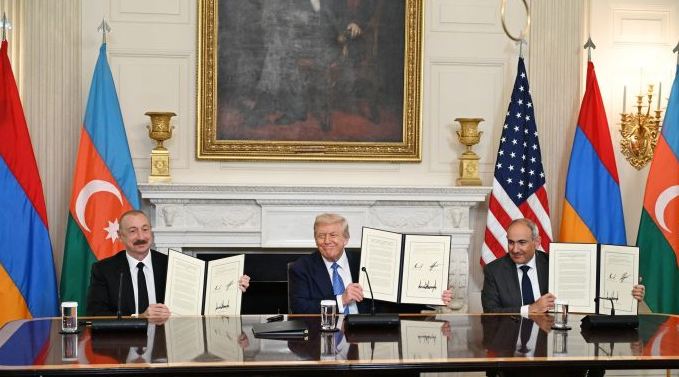
The trip also yielded breakthroughs in the Azerbaijan–Armenia normalization process. A trilateral summit between the Presidents of Azerbaijan, the United States, and Armenia concluded with the signing of a Joint Declaration by Azerbaijan and Armenia, witnessed by the U.S. President. Foreign Ministers of both countries also initialed the Draft Agreement on the Establishment of Peace and Inter-State Relations and jointly appealed to the OSCE Chairperson-in-Office for the closure of the OSCE Minsk Process and its related structures.

The Joint Declaration reaffirmed Azerbaijan’s peace agenda while noting that constitutional amendments in Armenia would be necessary to remove territorial claims against Azerbaijan. It also committed both sides to opening transport and communication links, including unimpeded connectivity between mainland Azerbaijan and the Nakhchivan Autonomous Republic.

Of particular note was the announcement of the “Trump Route for International Peace and Prosperity,” a U.S.-led special connectivity project through Armenian territory to link Azerbaijan with Nakhchivan.

In the economic sphere, a Memorandum of Cooperation was signed between SOCAR and ExxonMobil in the presence of President Aliyev and the U.S. President’s Special Envoy. The agreement aims to build on existing ties and explore opportunities in both conventional and unconventional oil and gas development in Azerbaijan.

President Aliyev’s U.S. visit, alongside the progress made in the peace process with Armenia, represents a landmark moment in Azerbaijan’s diplomatic history—strengthening strategic ties with Washington while advancing the vision for lasting peace and regional prosperity.

Azerbaijan, Armenia seal historic peace deal: Aliyev’s statesmanship shines

Azerbaijan, Armenia seal historic peace deal: Aliyev’s statesmanship shines

Ansar Mahmood Bhatti

In what many are calling a historic turning point for the South Caucasus, Azerbaijan and Armenia have signed a landmark peace agreement, facilitated by US President Donald Trump, officially bringing an end to over three decades of conflict. The ceremony showcased stark contrasts in the demeanor and delivery of the two leaders — with Azerbaijan’s President Ilham Aliyev drawing particular praise for his confidence, openness, and statesmanlike composure.

For 35 years, Azerbaijan and Armenia have been locked in a bitter dispute, marked by periodic escalations, devastating wars, and the loss of thousands of lives on both sides. Generations have grown up knowing little other than hostility and mistrust. Yet, as the pens met the paper, there was a sense — albeit tentative — that a new chapter was opening.

Observers could not help but note the body language of both leaders. President Ilham Aliyev appeared calm, relaxed, and confident — radiating an air of assurance that the agreement would hold. His speech, delivered extempore without notes, reflected a tone of sincerity and directness. Speaking from the heart, he emphasized the need to “turn the page of history” and work together for a future of stability and shared prosperity.

In a symbolic gesture, Aliyev openly extended his hand in friendship to Armenia, signaling a willingness to move beyond decades of hostility. The Azerbaijani leader’s words carried both a sense of closure and a forward-looking vision, making it clear that this was more than a strategic move — it was, in his view, a moral obligation to the people of both nations.

By contrast, Armenian Prime Minister read from a prepared text, his delivery careful and deliberate. While the speech acknowledged the importance of peace and the sacrifices of the past, its measured tone and cautious phrasing conveyed lingering skepticism. Some analysts interpreted this as a reflection of internal political pressures back home, where the peace deal may face scrutiny from factions wary of compromise.

In a surprising moment of levity and candor, Aliyev suggested that both Azerbaijan and Armenia should submit a joint plea to the Nobel Peace Committee to award the Nobel Peace Prize to U.S. President Donald Trump. The comment drew a mix of smiles and raised eyebrows in the audience, but it underscored Aliyev’s willingness to break from the strictly formal script often seen at such events. Whether in jest or sincerity, the remark reinforced his image as a leader unafraid to speak plainly.

Both leaders acknowledged the heavy toll the conflict has taken — countless precious lives lost, communities shattered, and decades of economic potential squandered. For many families, the agreement offers the first real hope of reuniting with loved ones or returning to long-abandoned homes.

Aliyev was unequivocal in his assurance that the peace deal would hold, stressing that the United States was acting as the guarantor. This, he said, should dispel any doubts about the agreement’s longevity. “We have strong international backing for this accord,” he noted, “and we have the will to make it work.”

The peace agreement has been met with widespread approval from the international community. In Islamabad, Prime Minister of Pakistan warmly welcomed the development, calling it “a good step toward lasting stability in the South Caucasus.” Pakistan has long been a close ally of Azerbaijan and has notably refrained from recognizing Armenia — a diplomatic stance rooted in solidarity with Baku.

From the European Union to the United Nations, statements poured in praising the courage of both sides to negotiate and compromise. Many see the deal as a potential model for resolving other long-standing regional disputes, provided both nations can follow through with confidence-building measures in the months ahead.

The peace accord is expected to open new economic opportunities for the entire region. Trade routes that were blocked for decades could be revived, attracting foreign investment and boosting infrastructure development. The South Caucasus, situated at the crossroads of Europe and Asia, has long been recognized for its strategic value. Stability could allow it to fulfill its role as a key energy and transport corridor.

Aliyev expressed optimism about this economic potential, noting that cooperation could lift living standards on both sides of the border. “Peace is not only the absence of war,” he said, “it is the creation of conditions where our people can prosper together.”

While the signing of the peace deal marks a dramatic shift, it is only the beginning of a long process of reconciliation. Centuries-old grievances, national narratives, and political opposition could still test the agreement’s resilience. However, the symbolism of Aliyev’s open-handed approach and Armenia’s willingness to come to the table is hard to ignore.

The road ahead will require trust, patience, and political courage. Yet, as both leaders stood side by side — one speaking freely from the heart, the other reading carefully from prepared notes — the world saw two men attempting, in their own ways, to bridge a gulf that once seemed unbridgeable.

If the spirit of the agreement holds, the people of Azerbaijan and Armenia may one day look back on this moment not merely as the day their leaders signed a treaty, but as the day they dared to imagine a shared future.

The writer is senor journalist and newspaper editor.

 Email: [email protected]

Ina Lepel returns to Pakistan as German ambassador

Ina Lepel returns to Pakistan as German ambassador

Ambassador Lepel is no stranger to Pakistan. She first served in Islamabad in 2007 as the Deputy Head of Mission at the German Embassy. She then returned in 2015 for her first tenure as Germany’s Ambassador to Pakistan, a position she held until 2019

By Ansar Mahmood Bhatti

ISLAMABAD, AUG 8 /DNA/ – Ina Lepel has arrived in Pakistan to assume her responsibilities as the new Ambassador of the Federal Republic of Germany — marking her third diplomatic posting in the country and second as Ambassador. Her return underlines Germany’s continued commitment to strengthening bilateral ties with Pakistan.

Ambassador Lepel is no stranger to Pakistan. She first served in Islamabad in 2007 as the Deputy Head of Mission at the German Embassy. She then returned in 2015 for her first tenure as Germany’s Ambassador to Pakistan, a position she held until 2019. Now, in 2025, she begins a rare second ambassadorial posting in Islamabad, making her one of the few diplomats to serve twice in the same capacity in Pakistan.

With this latest appointment, Ambassador Lepel becomes the third envoy in the past three decades to return to Pakistan for a second term as ambassador. Previously, Uzbek Ambassador Arif Osmanov and Hungarian Ambassador Bela Fazekas also served twice in Islamabad. Ambassador Fazekas recently completed his second term and departed Pakistan earlier this year.

Known for her deep understanding of South Asian geopolitics and regional dynamics, Ina Lepel is widely respected for her diplomatic insight and people-to-people engagement skills. Her familiarity with Pakistan and experience in regional affairs are expected to contribute positively to further enhancing Pak-German relations, particularly in trade, climate cooperation, cultural exchange, and development collaboration.

Diplomatic circles in Islamabad view her return as a positive development, especially at a time when Germany and Pakistan continue to expand cooperation in key sectors. Ambassador Lepel’s second tenure is expected to build on previous successes and open new avenues for bilateral engagement.

Pakistan Navy, PMSA, KPT conduct joint port security drill

Pakistan Navy, PMSA, KPT conduct joint port security drill

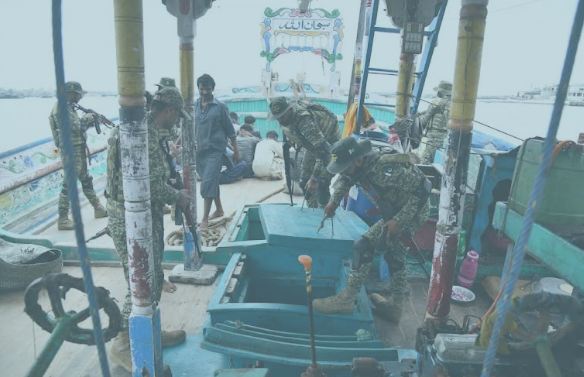
KARACHI, AUG 8 /DNA/ – Pakistan Navy conducted a two-day Port Security and HarbourDefence Exercise at Karachi harbour. The exercise aimed to enhance operational tactics, techniques, and procedures, and to strengthen inter-agency coordination among all relevant stakeholders.

Multiple scenarios were rehearsed to improve the readiness and integrated response capabilities of Pakistan Navy’s Coastal Command, Pakistan Maritime Security Agency (PMSA), Karachi Port Trust (KPT), and other law enforcement agencies.

During the course of exercise, participating units rehearsed coordinated actions in a high-pressure environment, focusing on swift detection, deterrence, and neutralisation of potential threats to critical maritime and naval infrastructure. Special emphasis was placed on real-time communication, joint situational awareness, and the streamlining of command and control mechanisms to ensure a rapid and cohesive response in evolving situations.

The successful conduct of exercise reaffirmed the determination, operational readiness, and capability of Pakistan Navy and other participating agencies to safeguard national assets and ensure secure, uninterrupted port operations under all conditions.

Palestine warns of Gaza catastrophe, demands UN action

Palestine warns of Gaza catastrophe, demands UN action

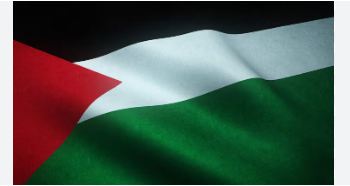
RAMALLAH, AUG 8 /DNA/ – The Ministry of Foreign Affairs and Expatriates has initiated an intensive international campaign urging the world to confront the catastrophic repercussions of the Israeli cabinet’s decision to fully occupy and impose control over the Gaza Strip. The Ministry warns that these measures threaten the survival of Palestinian civilians, subjecting them to mass killings, starvation, and forced displacement.

Over one million Palestinians face imminent expulsion, while more than two million risk being confined to less than 10% of Gaza’s territory—a deliberate step toward their eventual forced removal. The Ministry asserts that these decisions expose the true nature of the occupation’s unjust war on Gaza’s civilians.

The Ministry condemns the ongoing failure of the UN Security Council to enforce an immediate ceasefire, secure the release of hostages and detainees, protect civilians, and halt the use of starvation as a weapon of war. This inaction, the Ministry warns, has enabled the occupying government to advance its plans of genocide, annexation, and mass displacement.

In response, the Ministry demands urgent international intervention to stop the war and calls for the immediate implementation of the New York Declaration to safeguard Palestinian rights and survival.

ASEAN Ambassadors mark 58th anniversary in Islamabad

ASEAN Ambassadors mark 58th anniversary in Islamabad

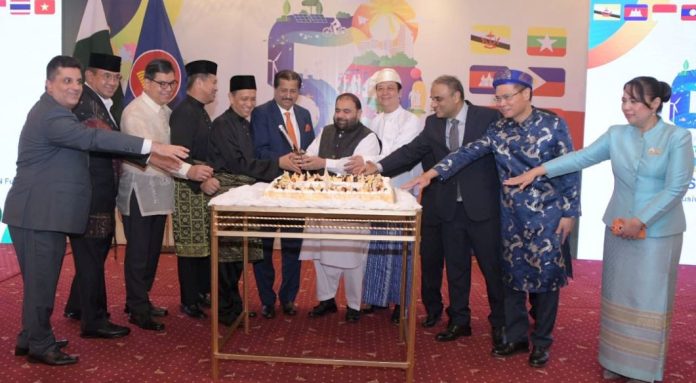
ISLAMABAD, AUG 8 /DNA/ – Chief Guest Federal Minister for Culture and National Heritage Aurangzeb Khichi, the Chairman of the ASEAN Committee in Islamabad Ambassador of Myanmar Wunna Han and Heads of Missions of the ASEAN states cutting cake to celebrate the 58th Anniversary of ASEAN DAY.=DNA

ALSO READ: Deepening ASEAN-Pakistan ties:  A Philippine perspective

Modi skipped Trump meeting over fear of COAS Munir encounter: Bloomberg

Modi skipped Trump meeting over fear of COAS Munir encounter: Bloomberg

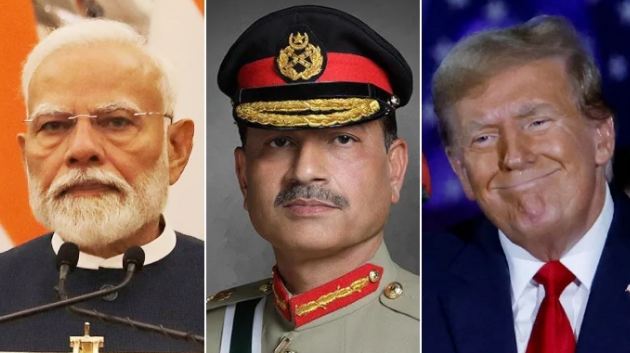
ISLAMABAD, AUG 8: Indian Prime Minister Narendra Modi declined a meeting with US President Donald Trump in June, fearing a possible encounter with Pakistan’s army chief, Field Marshal Asim Munir, according to Bloomberg.

The American publication, citing officials in New Delhi, said Modi was concerned Trump might arrange a meeting between him and COAS Munir if they were both at the White House at the same time.

While India was comfortable with Trump meeting Pakistan’s civilian leadership, hosting Field Marshal Munir was viewed as a setback to the Indian narrative.

As the US president repeatedly spoke about how he prevented a nuclear war, Indian diplomats started to push back publicly against his version of events. The tensions came to a head in a June 17 phone call with Narendra Modi, which was held after Trump left the Group of Seven summit in Canada early and couldn’t meet the Indian leader in person.

In the 35-minute conversation, Modi told Trump that the two nations directly discussed a ceasefire upon Pakistan’s request following a bombardment by India. Modi said India “does not and will never accept mediation,” according to an Indian readout, adding that Trump “listened carefully.”

Modi felt like he needed to set the record straight in the call after his aides discovered that Trump planned to host a lunch the following day at the White House for Pakistani Army Chief Asim Munir, according to officials in New Delhi familiar with the matter, who requested anonymity to speak about confidential discussions.

The report stated that the episode unfolded in the weeks after India and Pakistan agreed to a ceasefire in May following a four-day conflict. Tensions between Modi and Trump grew after the US president publicly claimed credit for brokering the truce — an assertion India rejected, insisting the ceasefire was agreed directly between the two nations.

Bloomberg said Modi’s aides learned Trump was set to host COAS Munir for lunch at the White House, prompting the Indian leader to turn down an invitation to stop in Washington on his way back from Canada. Modi instead continued with a planned visit to Croatia.

During a 35-minute phone call with Trump, Modi asserted that the two nations directly discussed a ceasefire, initiated at Pakistan’s request following an Indian bombardment.

In a 35-minute phone call with Trump, Modi insisted that the two nations had directly discussed a ceasefire upon Pakistan’s request following a bombardment by India.

Modi said India “does not and will never accept mediation,” according to an Indian readout, adding that Trump “listened carefully.”

According to the report, ties between Washington and New Delhi deteriorated sharply after the incident.

Trump began publicly criticising India, later threatening a 50% tariff on Indian exports to the US, and slamming the country’s trade barriers and economic performance. Following up on his threat, he did impose those tariffs.

Modi and Trump have not spoken since their June phone call.

COAS Munir’s second US visit
The Bloomberg report follows a foreign media report on Thursday that COAS Munir is set to visit the United States this week, marking his second trip in under two months.

According to reports, the army chief will attend US Central Command chief General Michael Kurilla’s retirement ceremony, who was awarded the Nishan-e-Imtiaz (Military) by President Asif Ali Zardari during his recent visit to Pakistan on 26 July.

However, no official confirmation has been given regarding any other engagements during the visit.

Field Marshal Munir last visited the US in June, where he held a rare one-on-one meeting with Trump at the White House Cabinet Room. The meeting was also attended by US Secretary of State Senator Marco Rubio, US Special Representative for Middle Eastern Affairs Steve Witkoff, and Pakistan’s national security adviser.

The June visit took place against the backdrop of an armed Pakistan-India conflict, during which Washington helped broker a ceasefire following Indian strikes inside Pakistan, which New Delhi claims targeted those responsible for the Pahalgam attack in Indian Illegally Occupied Jammu and Kashmir (IIOJK).

Pakistan responded with Operation Bunyan-um-Marsoos, downing multiple Indian fighter jets. The short but intense conflict involved cross-border strikes and resulted in civilian and military casualties on both sides.

During the White House meeting, the COAS praised Trump’s “constructive and result-oriented role” in facilitating the ceasefire with India, while the US president commended Munir’s leadership during a period of complex regional dynamics.

Discussions, which extended to over two hours, also covered the then-worsening Iran situation and explored opportunities to expand cooperation in areas including trade, economic development, mines and minerals, artificial intelligence, energy, cryptocurrency, and emerging technologies.

The visit was followed by a breakthrough in bilateral economic relations. Pakistan and the US reached a long-awaited trade agreement during a meeting between Finance Minister Muhammad Aurangzeb and the US Secretary of Commerce and Trade Representative.

Under the agreement, a 19% reciprocal tariff was imposed on Pakistani exports to the US, paving the way for a fresh start in economic cooperation between the two countries.

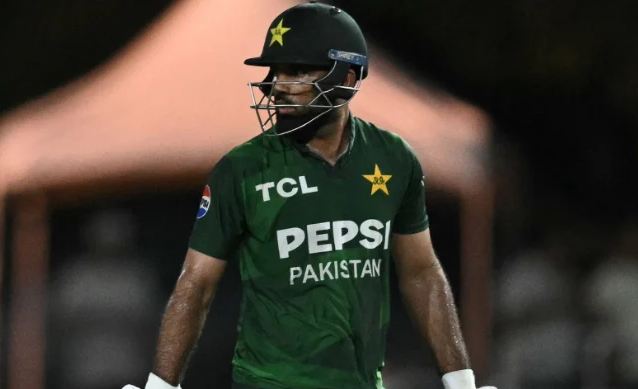
Will Fakhar Zaman recover in time for Asia Cup 2025?

Will Fakhar Zaman recover in time for Asia Cup 2025?

Pakistan’s left-handed batsman Fakhar Zaman is expected to regain full fitness soon and is likely to be available for the Asia Cup, scheduled to begin in the UAE on September 9.

As per a local media outlet, the hard-hitting batter, the player’s injury is not serious and he is expected to recover soon.

“He is currently in Dubai on his way back home from the United States and is expected to reach tonight. I spoke to him personally and he told me that it’s a minor injury and it will take him just 10 to 15 days to recover,” the source said.

The opening batter sustained a hamstring injury during the second T20I against the West Indies in Lauderhill, USA. 

The injury ruled him out of both the third T20I and the upcoming three-match ODI series against the same opposition, starting this Friday.

Once back home, Fakhar will begin his rehabilitation at the National Cricket Academy (NCA) in Lahore. 

His return is eagerly anticipated, especially given Pakistan’s need for an experienced campaigner on the slow, spin-friendly tracks expected in the UAE.

This is not the first time this year that Fakhar has missed a key assignment due to injury. 

Earlier, he was sidelined for Pakistan’s high-profile ICC Championship Trophy match against India after suffering an oblique muscle tear during a game against New Zealand. Imam-ul-Haq replaced him for the remainder of that tournament.

In the recent T20I series against the West Indies, Fakhar showed promise with the bat. He scored 28 runs off 24 balls at No. 3 in the first match before falling to Shamar Joseph. 

In the second game, he made 20 runs off 19 deliveries, including two boundaries, before injuring himself while fielding. He missed the third match, which Pakistan won by 13 runs to clinch the series 2-1.

The Asia Cup will feature eight teams divided into two groups. Group A includes Pakistan, India, UAE, and Oman, while Group B comprises Bangladesh, Sri Lanka, Hong Kong, and Afghanistan.

Pakistan’s campaign starts on September 12 against Oman in Dubai, followed by a much-anticipated clash with India on September 14, and a final group-stage match against the UAE on September 17.

India remains the most successful side in the tournament’s history with eight titles, followed by Sri Lanka with six and Pakistan with two. 

Since 2016, the Asia Cup has alternated between ODI and T20I formats. This edition will be played in the T20 format, serving as key preparation for the T20 World Cup scheduled for next year.

Ahead of the Asia Cup, Pakistan will also participate in a tri-nation T20I series in Sharjah featuring Afghanistan and the UAE, scheduled from August 29 to September 7.

Stay Connected

64FansLike
60FollowersFollow

Latest Reviews

Exchange Rates

USD - United States Dollar
EUR
1.17
GBP
1.35
AUD
0.72
CAD
0.73