Home Blog Page 538

Pakistan slams Israel’s ‘Greater Israel’ plan as illegal

Pakistan slams Israel's 'Greater Israel' plan as illegal

ISLAMABAD, AUG 15: /DNA/ – Pakistan strongly condemned and rejects recent statements made by the Israeli Occupying power, alluding to the creation of so-called “Greater Israel,” and its designs aimed at the forcible displacement of Palestinians from Gaza.

Pakistan calls on the international community to outrightly reject such provocative notions that constitute a flagrant violation of the international law, principles of the UN Charter, as well as the relevant United Nations resolutions.

Such statements reflect the occupying power’s intention to entrench its illegal occupation, as well as its complete contempt for all international efforts aimed at achieving lasting peace and stability in the region. The international community must take immediate and tangible measures to prevent the occupying power from further destabilizing the region, and to end its ongoing crimes and atrocities against the Palestinians.

Pakistan reaffirms its full support for the Palestinian people’s legitimate rights, including the right to self-determination and the establishment of an independent, viable, and contiguous State of Palestine, based on pre-1967 borders, with Al-Quds Al-Sharif as its capital.

At least 61 killed as floods, landslides wreak havoc in KP, GB and AJK

At least 61 killed as floods, landslides wreak havoc in KP, GB and AJK

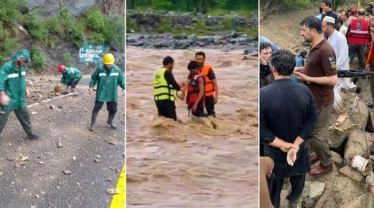
MUZAFFARABAD/GILGIT/BAJAUR: At least 61 people, including women and children, were killed as heavy rains triggered flash floods and landslides in Khyber-Pakhtunkhwa, Gilgit Baltistan and Azad Jammu and Kashmir (AJK), rescue officials said on Friday.

According to the Provincial Disaster Management Authority (PDMA) in KP, at least 43 people were killed in the past 24 hours in mountainous areas following heavy rainfall, cloudbursts, and flash floods.

The highest number of casualties was reported in Bajaur, where 21 people lost their lives and eight others were injured. In Lower Dir, five people were killed and four injured, while seven deaths were reported from Battagram.

Four people were also killed in Swat and Shangla districts, the PDMA added.

Meanwhile, in Gilgit Baltistan, at least 10 people were killed as a result of landslides and flash floods triggered by heavy monsoon rains.

According to GB government spokesperson Faizullah Faraq, three people, including a woman, were killed in Khalthi valley of district Ghizer, where more than half a dozen houses were buried under debris. Three others remain missing, with rescue teams conducting search operations, The News reported.

In Diamer’s Bonar area, a brother and sister were swept away by raging floodwaters, while a child was injured in a landslide on the Babusar road.

Flash floods also ravaged Ghizer’s Yasin Thoi, damaging houses, schools, water tanks and agricultural land. Landslides disrupted travel on the Baltistan and Sadpara roads, while Thor in Diamer reported severe destruction. The Astore valley wasn’t spared either. Floods also damaged agricultural land and roads in the area.

Meanwhile, in Kohistan, floods damaged a bridge on the Karakoram Highway, disrupting traffic between GB and rest of the country.

The GB government has imposed emergency measures in several areas, directing the GB Disaster Management Authority (GBDMA) and Rescue 1122 to remain on high alert. Relief and search operations are under way despite challenging weather conditions. “This is a testing time for Gilgit-Baltistan,” said Faraq. “The government is mobilising all available resources to assist the affected communities.”

In AJK, flash floods and landslides have killed at least eight people and injured two others, according to the State Disaster Management Authority (SDMA).

Six members of the same family were killed in a cloudburst in Naseerabad Tehsil of Muzaffarabad, said SDMA.

Heavy rains in Bagh district caused rivers to overflow, and high levels of flooding occurred in the Bhimbar drain in Samahni, which swept away a tourist vehicle. However, all the people were rescued.

There was also an extraordinary increase in water flow in Jhelum Valley, Samahni, Hattian Bala and Neelum Valley.

In Muzaffarabad and adjoining areas, more than 30 houses, shops and other properties have been either partially or completely destroyed. Authorities also reported that mobile phone services have been suspended in several upper mountainous regions due to damaged infrastructure.

AJK Prime Minister Chaudhry Anwar ul Haq chaired an emergency meeting of the State Disaster Management Authority (SDMA) on late Thursday and ordered the relocation of residents living along riverbanks to safer places.

During the meeting, the premier also approved financial assistance for rain-affected families and directed that housing be provided to those whose homes were destroyed.

The AJK premier also ordered the establishment of emergency checkpoints to monitor water resources.

The government also announced the closure of public and private schools on August 15 and 16 owing to continued heavy rains and the risk of landslides.

Meanwhile, AJK Information Minister Mazhar Saeed, in a video statement from the tourist spot of Ratti Gali in Neelum Valley, said over 700 tourists, including more than 300 women and children, were stranded after a cloudburst washed away sections of the road.

Due to bad weather, he noted, authorities have stopped tourists from leaving the area and arranged free accommodation with the help of local residents.

The recent monsoon season has wreaked havoc across Pakistan, causing widespread flooding and landslides that claimed over 300 lives nationwide.

Most of the deaths were caused by collapsing houses, flash floods and electrocutions.

In July, Punjab, home to nearly half of Pakistan’s 255 million people, recorded 73% more rainfall than the previous year and more deaths than in the entire previous monsoon.

Landslides and flash floods are common during the monsoon season, which usually begins in June and eases by the end of September. But scientists say climate change has made weather events around the world more extreme and more frequent.

In 2022, monsoon floods submerged a third of the country and killed 1,700 people.

Pakistan is one of the world’s most vulnerable countries to the effects of climate change, and its 255 million residents are facing extreme weather events with increasing frequency.

Pakistan navy celebrates 78th Independence day with traditional zeal and patriotic fervour

Pakistan navy celebrates 78th Independence day with traditional zeal and patriotic fervour

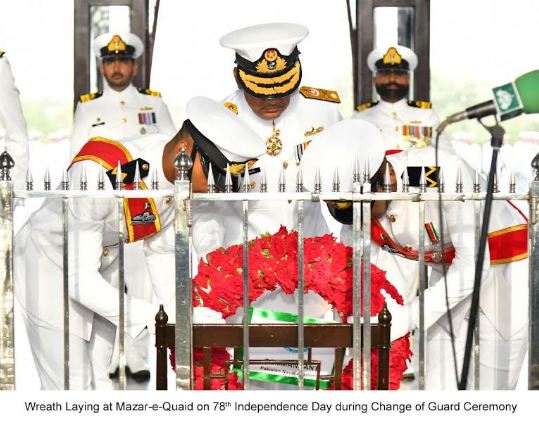
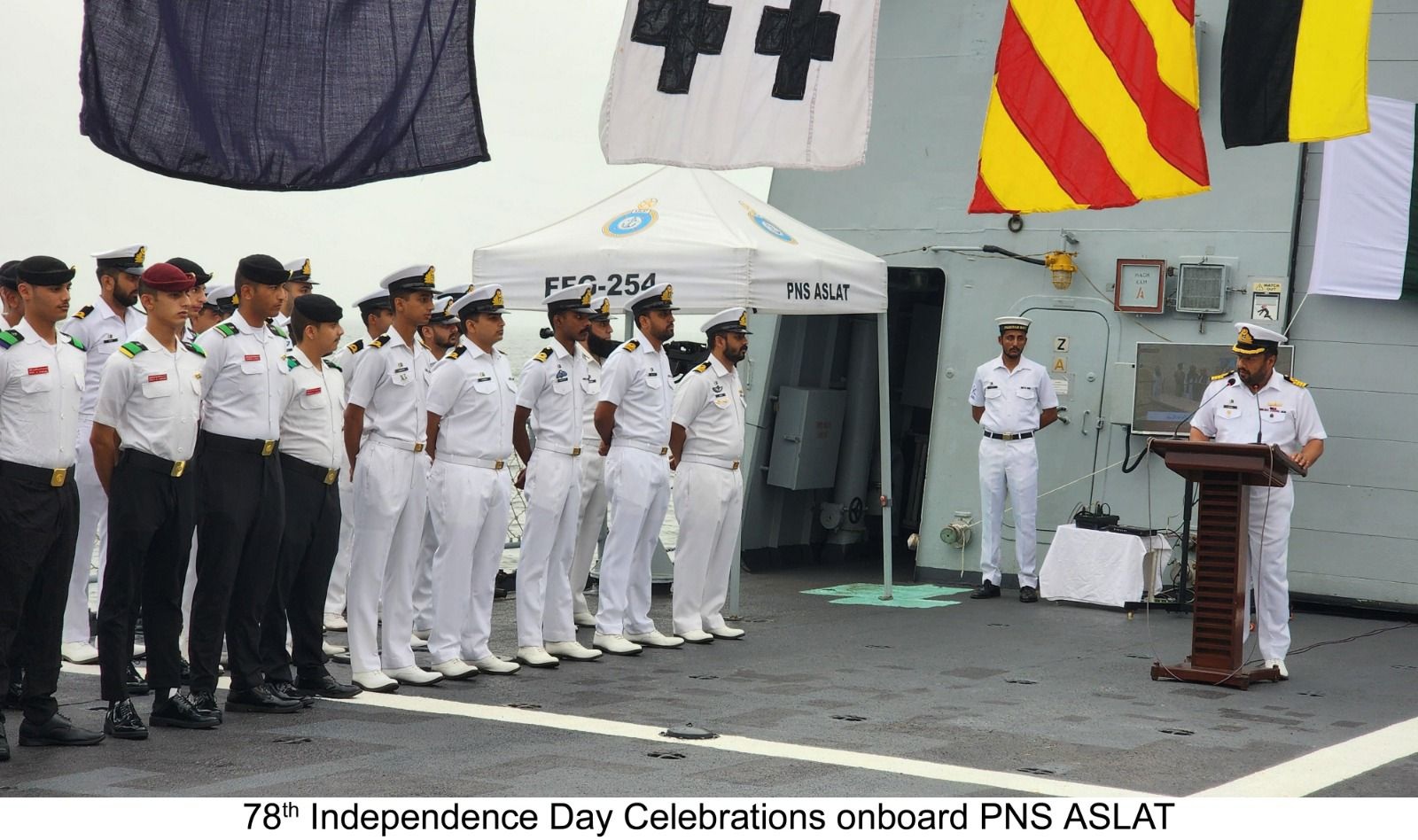
KARACHI, AUG 15 (DNA): Pakistan Navy marked 78th Independence Day of Pakistan with national spirit and military tradition. A dignified Change of Guard ceremony was held at the mausoleum of Quaid-e-Azam Muhammad Ali Jinnah. A smartly turned-out contingent of cadets from Pakistan Naval Academy and sailors, dressed in ceremonial uniforms, assumed guard duties at Mazar-e-Quaid with traditional enthusiasm and decorum.

Online travel bookings

Commodore Tasawar Iqbal, Commandant Pakistan Naval Academy, graced the occasion as Chief Guest and reviewed the guard. The Chief Guest, along with cadets of Pakistan Naval Academy, presented Qaumi Salam to Father of the Nation, followed by ceremonial laying of a floral wreath at Mazar-e-Quaid on behalf of Chief of the Naval Staff, officers, and men of Pakistan Navy.

Online travel bookings

The day dawned with gun salutes and special prayers in all mosques located in naval areas, seeking national unity and prosperity. Flag hoisting ceremonies were simultaneously conducted at major naval units and stations across Islamabad, Lahore, Karachi, Gwadar, Sanghar and Ormara.

On Independence Day, Pakistan Navy reaffirmed its unwavering resolve to defend the motherland against all forms of belligerence.

U.S.–Canada Relations Collapsed into a Full-Blown Trade War

Qamar Bashir

By Qamar Bashir

There was a time when the United States and Canada were so deeply intertwined that it was almost impossible to tell them apart. The world’s longest undefended border felt like an open gate between two homes. In 2018, during a visit from France to Canada, I stayed with my sister and later traveled with my family to Niagara Falls to see my brother-in-law in Michigan. At the border, our documents were checked briefly, but my brother-in-law’s American ID allowed him to pass without delay. It was a small yet telling example of the mutual trust and convenience that marked the relationship between the two neighbors. Canada’s warm hospitality toward U.S. visitors and the respect they received mirrored the dignity the United States offered to Canadian travelers. It reminded me of another crossing, years earlier, from Pakistan to China, where there was only one polite official on the Pakistani side helping tourists navigate the journey to one of the highest plateaus in the world. Sadly, the current U.S.–Canada border atmosphere now more closely resembles the tense and suspicious crossings between Pakistan and India, where travelers are stripped of ease and privacy, and once inside the country are shadowed by security services. This shift from warmth to wariness is both shocking and deeply regrettable.

Until recently, the two countries were bound by one of the strongest economic partnerships in the world. In 2024, total goods trade between them reached $761.8 billion, with U.S. exports to Canada worth $349.9 billion and imports from Canada at $411.9 billion. Agriculture alone accounted for $28.4 billion in U.S. exports, including nearly $800 million in dairy. Canada sent $124 billion worth of energy, machinery, and vehicles to the United States, while the USMCA trade agreement favored U.S. dairy producers by granting 3.6% tariff-free access to Canada’s $15 billion dairy market and removing restrictions that had long frustrated American farmers. This trade was not just numbers—it represented communities, livelihoods, and a shared prosperity that outsiders often described as two halves of one whole.

That reality began to unravel early in President Trump’s second term when he abruptly imposed tariffs on Canadian goods, starting at 10% and then climbing to 35%, with threats of even higher duties on dairy. In public speeches, he floated the idea of Canada becoming the “cherished 51st State” of the United States. The comments were not taken lightly in Ottawa. Prime Minister Mark Carney declared that “Canada is not for sale and will never be the 51st state.” Former Prime Minister Justin Trudeau described the remarks as humiliating, while Deputy Prime Minister Chrystia Freeland called the U.S. actions “economic warfare.” Words quickly turned into confrontation, and soon a trade war was underway.

The most visible flashpoint came at the border when fully loaded trucks carrying U.S. dairy products—milk, cheese, butter, cream—began being turned back without explanation. Reports suggest that around 200 trailers were refused entry each day. Each truck carried goods worth tens of thousands of dollars, and with this volume, the losses to farmers, transporters, insurers, and distributors could easily reach tens of millions daily. Industry analysts estimate that U.S. dairy producers could lose up to $6 billion over the next four years as a result of tariffs, spoiled inventory, and the collapse of cross-border demand. Processing plants face shutdowns, insurers are exposed to claims on perishable goods, and the carefully balanced supply chain that once linked the two nations is now badly frayed.

The damage is not one-sided. Canada’s machinery, agricultural, and energy exports are also facing retaliatory barriers. Small towns and rural regions whose economies depend entirely on cross-border trade now face an uncertain future. In some places, the change feels less like a trade dispute and more like the hostility of neighbors locked in a feud, akin to the dynamic between India and Pakistan—where shared history and culture give way to mutual suspicion. Public sentiment has shifted sharply; Canadian road trips to the United States have dropped by nearly 37%, air travel by 26%, and the once-friendly banter between citizens on social media is now tinged with resentment and hostility.

What makes this all the more disturbing is the absence of reason or necessity for such a rupture. The U.S. agriculture sector, particularly dairy, is labor-intensive, export-dependent, and deeply rooted in the stability of Canadian demand. Without it, thousands of farmers face financial ruin, along with the transporters, warehouse operators, and retailers tied to their output. The Canadian side is suffering too, as businesses tied to U.S. customers lose access to their largest market. Millions of ordinary people in both countries are paying the price for a policy shift driven more by ego and rhetoric than by economic logic.

Sooner or later, the political consequences will be felt. As American farmers, truckers, and factory workers count their losses and measure the impact on their communities, the patience that some have shown for aggressive trade policies will erode. Once public opinion turns against a leader who is perceived to have harmed his own citizens, there is no political fight left to win. In all prudence, and without the need to massage egos, this policy should be reversed before the damage becomes irreversible. The relationship between the United States and Canada was never just an economic arrangement—it was a model of cooperation, trust, and mutual respect, admired worldwide. It is both tragic and pathetic to see it reduced to this level of hostility.

The path back is still possible, but it requires decisive steps now. Tariffs must be rolled back, inflammatory rhetoric abandoned, and cooperation under the USMCA framework restored. Both nations stand to gain far more from renewing their friendship than from prolonging this feud. By acting swiftly, they can repair the economic damage, restore public trust, and return to the days when crossing the border was a gesture of friendship rather than a symbol of division.

May wisdom muffle the clamor of pride, and may prudence guide the decisions that affect millions. May the leaders of the United States and Canada remember the years when they stood as the closest of allies and set an example for the world. Let this be the moment when two natural friends, turned by folly into unnatural foes, find their way back to partnership so that future generations inherit cooperation, not rivalry, and a shared prosperity that benefits all. Amen.

By Qamar Bashir

Press Secretary to the President (Rtd)

Former Press Minister, Embassy of Pakistan to France

Former MD, SRBC | Macomb, Michigan, USA

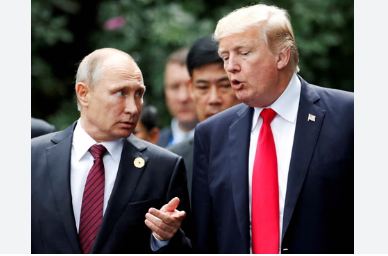
Expected Trump–Putin meeting: Ukraine deal in the works?

Expected Trump–Putin meeting: Ukraine deal in the works?

With reports swirling of a possible face-to-face meeting between U.S. President Donald Trump and Russian President Vladimir Putin in the coming days, speculation is mounting over whether the two leaders might attempt to hammer out a deal to end the ongoing Ukraine war. Trump has hinted that Putin may be prepared to sign an agreement, but the Kremlin has been cautious, stressing it is still “too early” to speak of any breakthrough.

The meeting—if confirmed—would come at a pivotal moment. The war in Ukraine has dragged on for years, reshaping global alliances, crippling economies, and leading to immense human suffering. For Trump, the optics of ending one of the most consequential conflicts of the 21st century could be politically transformative. For Putin, it would be a chance to cement gains and potentially secure recognition of Russian control over territories it currently occupies.

Throughout his political career, Trump has cultivated the image of a master negotiator. He has repeatedly claimed that he could resolve the Ukraine war “in 24 hours” if given the chance, a promise that resonates with supporters eager for swift, decisive leadership. His team has been quick to remind the public of past diplomatic efforts, including the 2025 India-Pakistan ceasefire agreement and the Azerbaijan-Armenia peace arrangement brokered under his watch.

Now, with the Nobel Peace Prize committee’s next session approaching, Trump appears to see the Ukraine conflict as the ultimate stage for a legacy-defining triumph. An accord between Moscow and Kyiv could be positioned as proof of his ability to achieve what others could not—ending a major war through personal diplomacy.

Trump’s interest in a Nobel Peace Prize has never been subtle. He has previously expressed frustration that other world leaders received the award for what he considers far less impactful achievements. His allies argue that his record in mediating high-stakes disputes makes him a credible contender, pointing to past agreements as evidence of his peace-building credentials.

However, critics argue that any Nobel bid will be overshadowed by his unwavering support for Israel during the Gaza war—a conflict that has claimed tens of thousands of civilian lives. Human rights organizations and several Nobel committee observers have suggested that his alignment with Israel’s military campaign could be a permanent obstacle to recognition, regardless of any future diplomatic breakthroughs.

While Trump’s rhetoric suggests optimism, the Kremlin’s tone has been far more restrained. Russian officials have reiterated that no final agreement is close, and any potential deal would require “serious groundwork” and “realistic expectations.” The sticking points are formidable: Russia controls large swathes of eastern and southern Ukraine, and Putin is unlikely to retreat without concrete guarantees of security, territorial recognition, and influence in the post-war order.

Diplomatic insiders warn that if Trump seeks to fast-track a deal by pressuring Ukraine into accepting unfavorable terms, it could fracture NATO unity and provoke anger among U.S. allies. Ukrainian President Volodymyr Zelenskyy has consistently stated that Kyiv will not accept any agreement that legitimizes Russia’s annexations.

For Trump, the incentive to reach an agreement goes beyond foreign policy. A headline-grabbing peace deal could become a central pillar of his campaign narrative. It would allow him to contrast his direct, deal-oriented approach with what he has called the “endless diplomacy” of career politicians.

Yet the risks are equally high. If the deal is seen as a capitulation to Russian demands, it could alienate hawkish Republicans, military leaders, and much of the U.S. foreign policy establishment. Moreover, it could invite accusations that Trump is willing to compromise core Western principles for personal political gain.

Trump’s record on Gaza may prove to be the largest obstacle to any Nobel Peace Prize aspirations or wider claims of being a global peacemaker. His administration’s unwavering endorsement of Israel’s military offensive, despite mounting evidence of humanitarian catastrophe, has been condemned by the United Nations, international NGOs, and a significant portion of the global public. For many observers, this stance fundamentally undermines his credibility in brokering peace elsewhere.

Even if Trump manages to mediate multiple agreements—whether in Ukraine, the Caucasus, or South Asia—critics argue that the scale of civilian suffering in Gaza, coupled with his refusal to push for a ceasefire, will remain a defining blemish on his foreign policy record.

Analysts note that while both leaders may benefit from appearing at the negotiating table, their motivations diverge sharply. Trump seeks an immediate, highly public diplomatic win to bolster his image and electoral chances. Putin, by contrast, is playing a longer strategic game. Any deal will be shaped to serve Russia’s security interests, preserve territorial gains, and weaken Western cohesion.

This mismatch in priorities means that, despite the fanfare surrounding the possible meeting, the likelihood of a rapid resolution remains uncertain. Without extensive groundwork and buy-in from Ukraine and NATO members, even the most dramatic handshake moment could prove hollow.

The world has seen similar moments before—high-profile summits that generate headlines but deliver little in substance. Whether this potential Trump–Putin meeting becomes a milestone in ending the Ukraine war or simply another episode of political spectacle will depend on what is negotiated behind closed doors.

For now, the stakes are clear. Trump is driven by ambition and a desire to secure his place in history. Putin is guided by cold strategic calculation. And in between lies a war that has exacted an immense toll on human lives, international stability, and global trust in diplomacy.

As the clock ticks toward a possible announcement, allies and adversaries alike are watching closely. The coming days will reveal whether this is the dawn of a peace breakthrough—or merely the latest chapter in the theater of international politics.

Pakistan, US vow to boost trade and investment

Pakistan-US vow to boost trade and investment

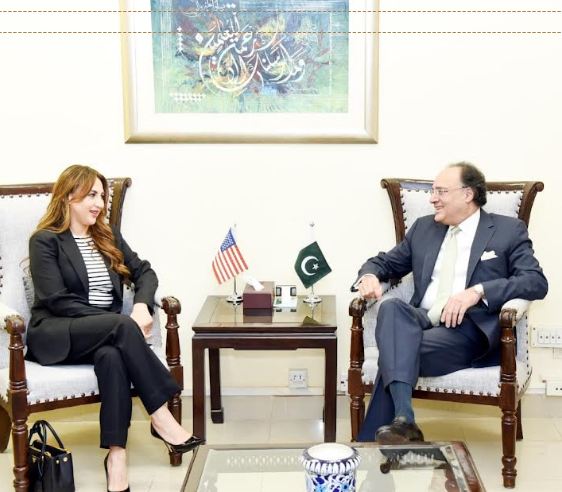
ISLAMABAD, AUG 15 /DNA/ – Natalie Baker, Chargé d’Affaires of the Embassy of the United States of America, called on Federal Minister for Finance and Revenue, Senator Muhammad Aurangzeb, at the Finance Division today.

During the meeting, matters of mutual interest, including avenues for enhancing bilateral trade, commerce, and U.S. investment in Pakistan, were discussed.

The Finance Minister stated that Pakistan’s economy had “turned a corner,” noting that the recent upgrade by Moody’s—aligning all three major international rating agencies in their assessment of Pakistan’s economic performance—was clear evidence that the hard and necessary reforms undertaken by the government were yielding positive results. He highlighted Pakistan’s bold and much-needed tariff reforms aimed at liberalizing trade and steering the country towards export-led growth.

Senator Aurangzeb thanked the United States for its continued economic and development support to Pakistan and recalled his recent visit to Washington, D.C., where he had constructive engagements with U.S. Secretary of Commerce Howard Lutnick and United States Trade Representative Ambassador Jamieson Greer to finalize the trade agreement between both the countries.

The Minister emphasized that the agreement would usher in a new era of economic collaboration—particularly in energy, mines and minerals, IT, cryptocurrency, and other sectors—while expanding market access, attracting investment, and fostering cooperation in areas of mutual interest.

He expressed hope that the deal would lead to increased U.S. investment in Pakistan’s infrastructure, development projects, and digital and mining sectors, which were ready for tangible action and progress.

H.E. Ms. Natalie Baker said that the trade agreement presented a significant opportunity for both Pakistan and the United States to expand bilateral trade. She noted that U.S. companies were taking a keen interest in investment and entrepreneurial opportunities in Pakistan, particularly in supply chain, production, project management, energy, critical minerals, mining, and oil exploration.

Both sides reaffirmed their commitment to working closely together to advance these initiatives, ensuring mutually beneficial outcomes and further strengthening trade and economic cooperation between the two countries.

Pakistan, US vow to jointly tackle terrorism

Pakistan-US vow to jointly tackle terrorism

US Counterterrorism Coordinator Calls on Interior Minister Mohsin Naqvi

Saifullah Ansar/DNA

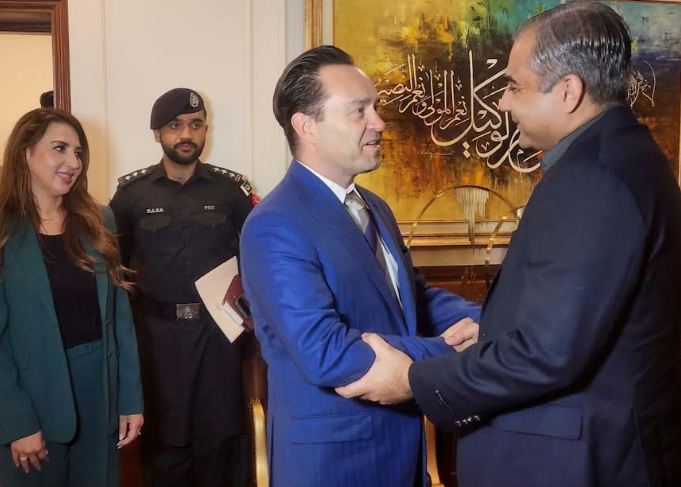
ISLAMABAD, Aug 15: Federal Interior Minister Mohsin Naqvi met with the US Coordinator for Counterterrorism, Gregory LoGerfo, here on Friday. Minister of State for Interior Talal Chaudhry, Acting US Ambassador Natalie Baker, and Federal Interior Secretary were also present at the meeting.

Gregory LoGerfo congratulated Minister Naqvi and the people of Pakistan on the country’s 78th Independence Day. Both sides discussed Pakistan-US relations and agreed to enhance cooperation in various fields, including counterterrorism, border security, and counter-narcotics. They also agreed to strengthen the exchange of information in the domains of counterterrorism and anti-narcotics operations.

Interior Minister Mohsin Naqvi said that Pakistan-US relations have witnessed remarkable improvement since the beginning of President Donald Trump’s administration. He praised President Trump’s sincere efforts for global peace and noted that transparency, mutual trust, and cooperation have become defining features of bilateral ties. “This is an excellent opportunity to promote relations in every sector,” he added.

Naqvi said that the counterterrorism dialogue would help in formulating a joint strategy. He welcomed the US decision to designate the banned Balochistan Liberation Army (BLA) and the banned Majeed Brigade as global terrorist organizations, calling it a positive step. He expressed confidence that Pakistan-US cooperation would yield positive results in eliminating terrorism.

Gregory LoGerfo acknowledged Pakistan’s significant geostrategic importance and expressed sorrow over the loss of lives in recent terrorist attacks.

Sri Lanka high commissioner-designate meets FPCCI chief

Sri Lanka high commissioner-designate meets FPCCI chief

Welcoming the envoy, Atif Ikram Sheikh congratulated him on his appointment and said the visit reflects the strong and longstanding friendship between Sri Lanka and Pakistan, founded on mutual respect, regional cooperation, and historical goodwill

Saifullah Ansar

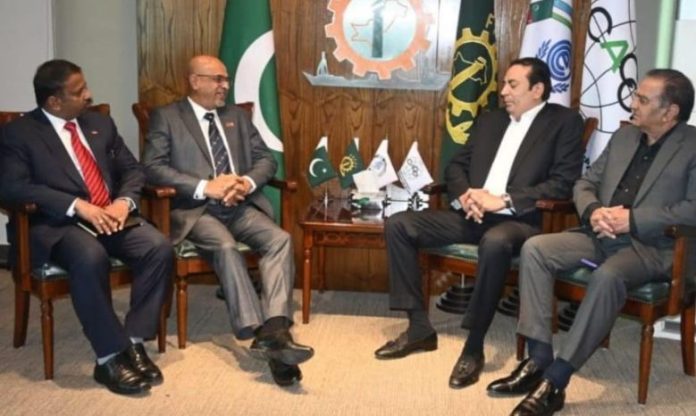
ISLAMABAD, AUG 15 /DNA/ – The High Commissioner-designate of Sri Lanka to Pakistan, Rear Admiral Fred Senevirathna, met with the President of the Federation of Pakistan Chambers of Commerce and Industry (FPCCI), Atif Ikram Sheikh, at the FPCCI President’s Office in Islamabad to discuss avenues for enhancing bilateral trade and investment.

Welcoming the envoy, Atif Ikram Sheikh congratulated him on his appointment and said the visit reflects the strong and longstanding friendship between Sri Lanka and Pakistan, founded on mutual respect, regional cooperation, and historical goodwill. He emphasized the potential for expanding economic and trade relations, noting Sri Lanka’s strategic location and resilient economy as attractive for joint ventures, and Pakistan’s large consumer market, industrial base, and focus on regional connectivity as key strengths.

Highlighting FPCCI’s role in bridging business communities, Sheikh said the organization actively supports trade facilitation and the strengthening of Pakistan–Sri Lanka economic relations.

Rear Admiral Senevirathna thanked the FPCCI for its warm hospitality and acknowledged the sustained collaboration between the two countries. He outlined Sri Lanka’s current reforms under its political leadership, which focus on zero tolerance for corruption, good governance, and the creation of greater opportunities for foreign investors. He noted that the country had regained macroeconomic stability with IMF support, improved foreign reserves, boosted exports, attracted more tourists, and seen a steady rise in foreign direct investment over the past six months.

The envoy also highlighted Sri Lanka’s investor-friendly policies, including reduced corporate tax rates for priority sectors such as SMEs, exports, IT, education, tourism, and agriculture. He underlined Sri Lanka’s strategic position along major maritime trade routes and its modern infrastructure, capable workforce, and well-connected transport network as competitive advantages.

The meeting was attended by A. Christy Ruban, Head of Chancery/Minister of the Sri Lanka High Commission; officials from Pakistan’s Ministry of Industry; presidents and members of chambers of commerce from Islamabad, Haripur, and Rawalpindi; senior figures from Pakistan’s gem and jewelry sector; and other business community representatives, both in person and virtually.

Foreign missions greet Pakistan on Independence Day

Foreign missions greet Pakistan on Independence Day

ISLAMABAD, AUG 14: On the occasion of Pakistan’s 78th Independence Day, embassies and ambassadors from various countries extended congratulatory messages and expressed their best wishes to the nation.

Iranian Embassy

In a message issued from Islamabad, the Iranian Embassy paid tribute to the “noble values of this great nation,” stating it was a day to honour Pakistan’s unwavering resilience, unity, and remarkable achievements.

The message conveyed congratulations to “the esteemed government of Pakistan and its honourable, brotherly, friendly and neighbouring nation.”

The statement emphasised the cherished ties between Iran and Pakistan, founded on mutual respect, friendship and cooperation. The embassy expressed continued prayers for Pakistan’s prosperity, security, development and stability, and voiced hope that the enduring friendship between the two brotherly nations would deepen further.

Russian Embassy

A special message released by the Russian Embassy acknowledged Pakistan’s significant progress across various sectors since gaining independence. It noted Pakistan’s growing stature in the international community and its contributions to space research.

Despite ongoing challenges, the statement said, Pakistan remains committed to the principles of Quaid-e-Azam and Allama Iqbal, as well as its national values and traditions.

The embassy added that the people of Pakistan can rightfully take pride in their country, and reaffirmed Russia’s desire for Pakistan’s continued success, prosperity and well-being.

Japanese Ambassador

In a video message, Japanese Ambassador to Pakistan, Mr Akamatsu Shoichi, extended heartfelt Independence Day greetings to the people of Pakistan. He stated that Japan stands alongside Pakistan in support of a strong and prosperous future.

The message was accompanied by a symbolic gesture, as Japanese and Pakistani staff at the Japanese Embassy in Islamabad jointly sang the national song Jeevay Jeevay Pakistan.

Irish Ambassador

Ireland’s Ambassador to Pakistan, Ms Mary O’Neill, extended her greetings on the occasion by reciting verses of Allama Iqbal, offering warm wishes to the people of Pakistan both at home and abroad.

Uzbek Ambassador

According to the APP, Uzbekistan’s Ambassador to Pakistan, Alisher Tukhtaev, has extended warm greetings to the Pakistani nation on the occasion of the country’s 78th Independence Day, describing August 14 as “a day of pride and happiness” rooted in dreams, sacrifices, and unwavering belief.

He, in a congratulatory video message, said he was speaking not only as Uzbekistan’s envoy but also as “a friend and brother,” noting that the spirit of independence he sees in Pakistan mirrors that of his own country’s history.

“From the snow-capped mountains of the Northern Areas to the waves of Arabian Sea, Pakistan is blessed with abundant natural resources,” he remarked, adding that ties between the two countries go beyond diplomacy to encompass “a relationship of hearts,” further strengthened through trade, culture, education, and transport cooperation.

On this occasion, the envoy prayed for Pakistan’s strength, unity, and a bright future. “May the Pakistani flag always fly high, its people remain prosperous, and every home be filled with peace, love, and hope,” he maintained.

German Consulate official extends Independence Day greetings to Pakistan

The Acting Head of Mission at the German Consul in Karachi, Andreas Wegner, has extended his congratulations to Pakistan on its Independence Day.

Mr Wegner stated that it was an honour to offer his greetings on this national occasion. He paid tribute to the vision of unity, faith and discipline, which, he said, has continued to inspire the nation.

Google marks Pakistan’s 78th Independence Day with national flag doodle

Google marks Pakistan's 78th Independence Day with national flag doodle

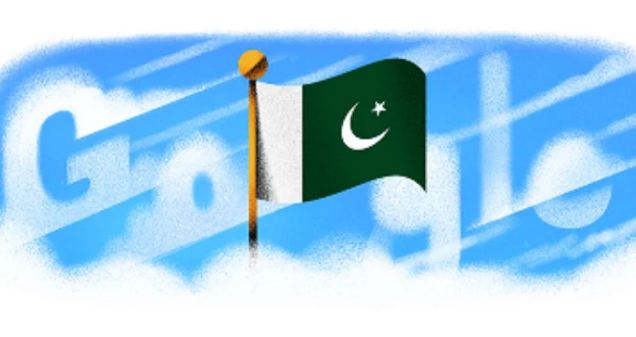
Google, the world’s most widely used search engine, has marked Pakistan’s 78th Independence Day with a special doodle featuring the national flag.

Displayed on the homepage for users in Pakistan, the animated illustration shows the green-and-white flag billowing against a clear blue sky. The design is subtly woven into the word ‘Google’, blending seamlessly with the background.

In a statement highlighting the significance of the occasion, Google said: “On this day in 1947, Pakistan gained independence and became a sovereign nation. This public holiday also commemorates the deeds and legacies of Pakistan’s founders.”

Clicking on the doodle directs users to search results exploring the importance of the day — from patriotic songs and historical accounts of Pakistan’s creation to videos, updates and news reports. The search engine periodically alters its doodle to celebrate notable occasions and events from around the globe.

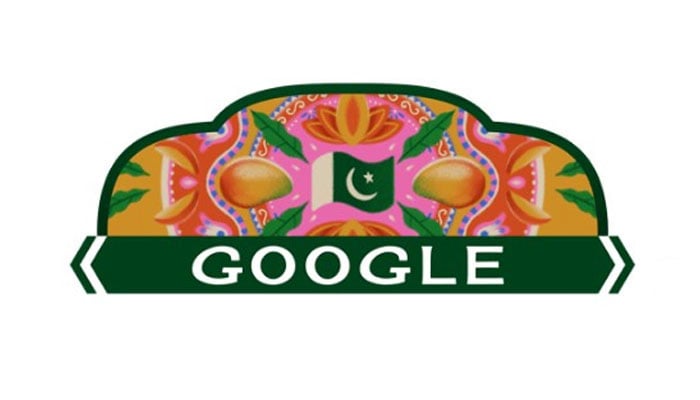
The Independence Day doodle has become an annual tradition for Google. In previous years, designs have showcased landmarks such as Karachi’s Frere Hall and cultural icons including Pakistan’s renowned mangoes. 

This year’s creation takes a more restrained yet evocative approach, placing the flag at the heart of the tribute as a potent symbol of national pride.

In addition, on the search results page, users may notice an alternate design in which a Pakistani flag replaces the double ‘O’s in ‘Google’, offering a further nod to the country’s identity.

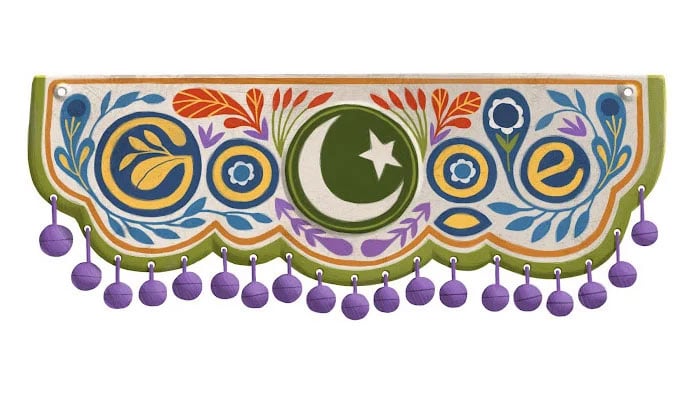
Some of the doodles from the past years: 

The image shows Google Doodle to mark Pakistans 77th Independence Day. — Google/Screengrab
The image shows Google Doodle to mark Pakistan’s 77th Independence Day. — Google/Screengrab
The image shows Google Doodle to mark Pakistans 75th Independence Day. — Google/Screengrab
The image shows Google Doodle to mark Pakistan’s 75th Independence Day. — Google/Screengrab
Google shared this doodle of Derawar Fort, Cholistan to mark Pakistans Independence Day in 2021. — Google/Screengrab
Google shared this doodle of Derawar Fort, Cholistan to mark Pakistan’s Independence Day in 2021. — Google/Screengrab
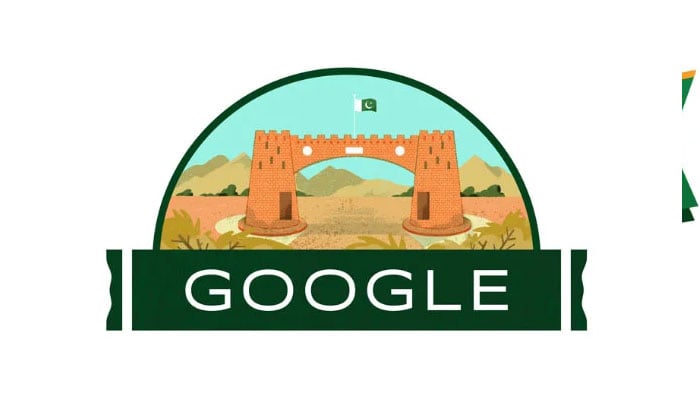
Google shared this doodle of the fortified eastern entrance of Pakistan’s historic Khojak Tunnel to mark the countrys Independence Day in 2020.  — Google/Screengrab
Google shared this doodle of the fortified eastern entrance of Pakistan’s historic Khojak Tunnel to mark the country’s Independence Day in 2020.  — Google/Screengrab
Google shared this doodle of the iconic Bab-e-Khyber to mark Pakistans Independence Day in 2019. — Google/Screengrab
Google shared this doodle of the iconic Bab-e-Khyber to mark Pakistan’s Independence Day in 2019. — Google/Screengrab
Google shared this doodle of the national flag hoisted high in the sky to mark Pakistans Independence Day in 2018.  — Google/Screengrab
Google shared this doodle of the national flag hoisted high in the sky to mark Pakistan’s Independence Day in 2018. — Google/Screengrab
Google shared this doodle of an animated national flag to mark Pakistans Independence Day in 2017.  — Google/Screengrab
Google shared this doodle of an animated national flag to mark Pakistan’s Independence Day in 2017. — Google/Screengrab
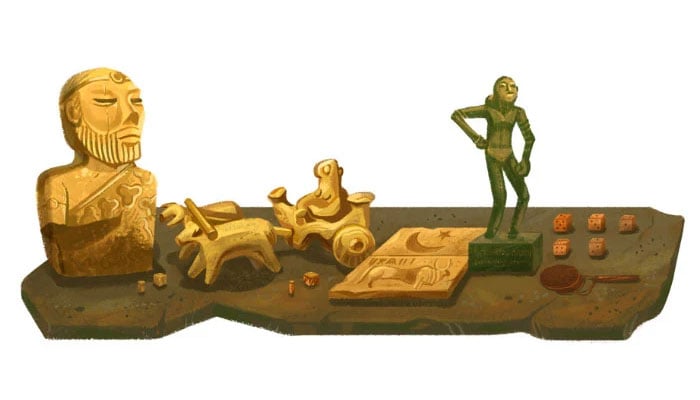
Google shared this doodle of some of Mohenjodaro’s most iconic landmarks to mark Pakistans Independence Day in 2016.    — Google/Screengrab
Google shared this doodle of some of Mohenjodaro’s most iconic landmarks to mark Pakistan’s Independence Day in 2016. — Google/Screengrab
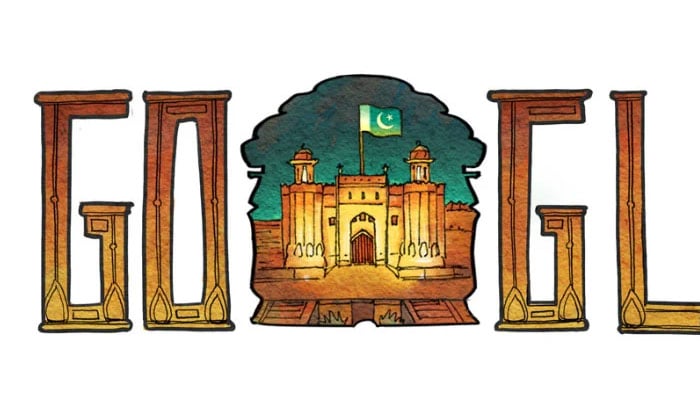
Google shared this doodle of the Lahore Fort to mark Pakistans Independence Day in 2015.  — Google/Screengrab
Google shared this doodle of the Lahore Fort to mark Pakistan’s Independence Day in 2015.  — Google/Screengrab
Google shared this doodle of the Pakistan National Monument to mark Pakistans Independence Day in 2014.  — Google/Screengrab
Google shared this doodle of the Pakistan National Monument to mark Pakistan’s Independence Day in 2014. — Google/Screengrab
Google shared this doodle of Markhor with the national colours to mark Pakistans Independence Day in 2013. — Google/Screengrab
Google shared this doodle of Markhor with the national colours to mark Pakistan’s Independence Day in 2013. — Google/Screengrab
Google shared this doodle of the national flag to mark Pakistans Independence Day in 2012. — Google/Screengrab
Google shared this doodle of the national flag to mark Pakistan’s Independence Day in 2012. — Google/Screengrab
Google shared this doodle of the Minar-e-Pakistan to mark Pakistans Independence Day in 2011. — Google/Screengrab
Google shared this doodle of the Minar-e-Pakistan to mark Pakistan’s Independence Day in 2011. — Google/Screengrab

Stay Connected

64FansLike
60FollowersFollow

Latest Reviews

Exchange Rates

USD - United States Dollar
EUR
1.17
GBP
1.35
AUD
0.72
CAD
0.73