Home Blog Page 536

NDMA advises citizens to avoid travelling to mountainous areas

NDMA advises citizens to avoid travelling to mountainous areas

ISLAMABAD, AUG 16: The National Disaster Management Authority (NDMA) issued on Saturday an advisory to restrict tourism to mountainous regions following the inclement weather on the instructions of Prime Minister Shehbaz Sharif.

According to details, the NDMA spokesperson has made it clear that the restrictions would be imposed on tourism activities in the calamity-hit areas in a bid to ensure the safety of the masses.

The NDMA has directed the concerned authorities to take immediate actions to ensure restriction of the public movement in dangerous places during the monsoon spell.

Meanwhile, the NDMA said that tourism restrictions can be imposed under Section 144 if important. The NDMA has asked the masses to avoid travelling to the flood-hit people.

The NDMA has directed the law enforcement agencies (LEAs) to ensure implementation of the restrictions in tourist areas to avert any potential threat of devastation.

CDA’s Anti-Encroachment Drive in full Swing Clearing major portion of GT Road Tarnol

CDA’s Anti-Encroachment Drive in full Swing Clearing major portion of GT Road Tarnol

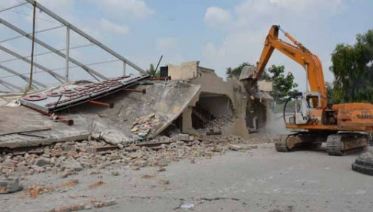
ISLAMABAD, AUG 16 /DNA/ – In line with the directions of Chairman CDA and Chief Commissioner Islamabad Muhammad Ali Randhwa, the Capital Development Authority (CDA) carried out a large-scale anti-encroachment operation at GT Road Tarnol under the supervision of Deputy Director General (Enforcement) and Director DMA, Dr. Anam Fatima, with the support of the Islamabad Administration. The operation focused on the stretch from Total Petrol Pump to opposite Zarkon Plaza.

During the operation, a total of 40 illegal structures were demolished and removed, including 17 directional and sign boards, 2 shades, 5 block walls, 9 shops, and 7 washrooms. As part of legal action, 09 individuals were arrested, while 08 shops were sealed to prevent further violations.

CDA Enforcement teams also took action against temporary setups and machinery. Two security cabins were shifted to the Enforcement Store, while 37 were damaged at the site. Additionally, 27 containers were damaged, and one dismantled lifter machine was shifted to storage. The cleared stretch covered approximately 2 kilometers, with two truckloads of dismantled material, including sign boards, shifted to the Enforcement Store.

Overall progress on GT Road, which spans 16 kilometers in total length, has reached the halfway mark. From Zarkon Plaza to Total Pump, both sides of a 3 km stretch have been cleared up to 80–90%, with remaining scrap being removed by dealers. From Bus Stop Sarai Harbooza to Railway Phatak, one side of a 2 km stretch has been fully cleared. With this, a total of 8 km out of 16 km stands cleared, showing 50% progress.

The CDA has set a timeline of August 21, 2025, for completing the operation. The Authority reaffirmed its commitment to clearing GT Road Tarnol of all illegal encroachments to ensure smooth traffic flow and public convenience.

Pakistan’s remote sensing satellite enters orbit

Pakistan's remote sensing satellite enters orbit

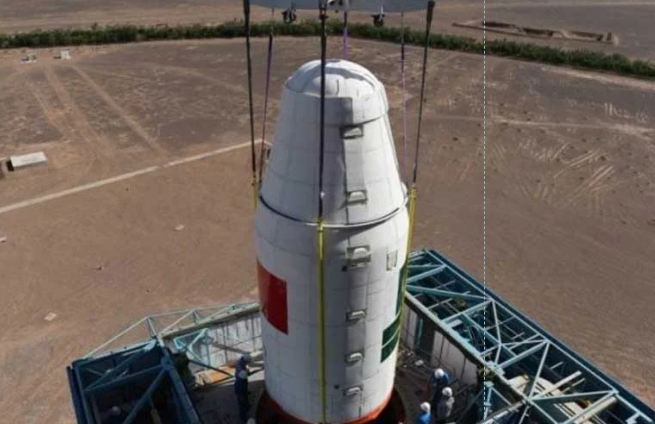
ISLAMABAD, AUG 16: Pakistan’s modern remote sensing satellite has successfully entered orbit and established stable contact with ground stations.

According to a statement from the Space and Upper Atmosphere Research Commission (Suparco), the satellite has begun transmitting high-resolution images of Earth, with potential applications in urban planning and infrastructure development.

The technology is expected to improve the country’s capacity to monitor natural disasters, including floods, earthquakes and landslides, enabling faster and more effective relief operations.

The Suparco said that the satellite would support environmental monitoring by tracking glacial melt and deforestation, while also assisting the agricultural sector through crop mapping and more efficient use of water resources. These capabilities are expected to enhance food security and agricultural output.

Moreover, the satellite will play a role in identifying geological risks and mapping networks along routes linked to China–Pakistan Economic Corridor (CPEC) projects.

‘God made me this country’s guardian’: COAS Asim Munir dismisses change rumours

'God made me this country's guardian': COAS Asim Munir dismisses change rumours

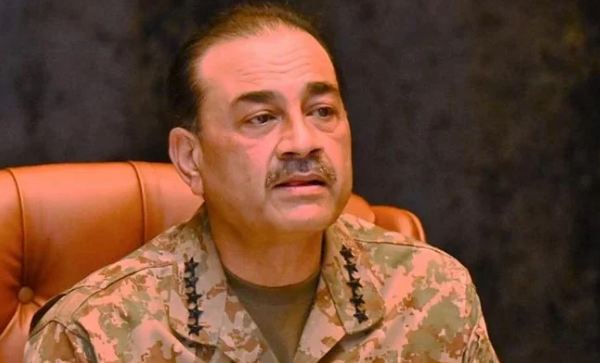
RAWALPINDI, AUG 16: Chief of Army Staff Field Marshal Asim Munir has ruled out any change in the country’s leadership, describing circulating rumours as completely false and against both the government and the establishment.

Speaking to senior journalist Sohail Waraich in Brussels, the army chief said he has been chosen by God to protect the country and has no desire for any other position.

He emphasised that political reconciliation is only possible through genuine apologies from all parties involved.

In July, rumours began to circulate that President Asif Ali Zardari may be asked to step down and that the COAS would take over the top office. However, top government officials — Prime Minister Shehbaz Sharif and Interior Minister Mohsin Naqvi — rejected such claims.

“Field Marshal Asim Munir has never expressed any desire to become the president, nor is there any such plan in the offing,” PM Shehbaz had said, while Naqvi called it a “malicious campaign” targeting President Zardari, the premier, and the army chief.

During his interaction with the senior journalist, Field Marshal Munir also highlighted Pakistan’s long-standing experience in maintaining balanced relations with China and the United States. He said: “We will not sacrifice one friend for the sake of another.”

United States-Pakistan relations have started improving since US President Donald Trump took office. He recently hosted COAS Munir for lunch at the White House, a move that unsettled India and signalled a significant diplomatic shift.

On international diplomacy, the army chief noted that US President Trump’s desire for peace is genuine, which is why Pakistan was the first to support his nomination for the Nobel Peace Prize. He added that other countries are now following Pakistan’s lead in supporting the nomination.

Regarding regional security, Field Marshal Munir warned that India should not attempt to destabilise Pakistan through proxies.

The army chief praised Prime Minister Shehbaz for his dedication, including working 18-hour days during the war, and lauded the government and cabinet for demonstrating remarkable resolve during challenging times.

India has escalated its proxy war against Pakistan following its defeat in “Marka-e-Haq” — the days-long military conflict between the two nuclear neighbours — and is using Fitna-al-Khawarij and Fitna-al-Hindustan to advance its nefarious designs.

He also called on the Afghan government to halt policies that push the Taliban into Pakistan, and reaffirmed that the blood of every Pakistani is a responsibility the state must uphold.

During the Brussels event, overseas Pakistanis welcomed Field Marshal Munir as a war victor. He spent several hours meeting Pakistanis who had travelled from far and wide, despite advice that such a large gathering could cause logistical issues. The army chief insisted that the visitors’ dedication and enthusiasm could not be ignored.

Trump-Putin Alaska Talks: A Step Toward Peace or a Diplomatic Mirage?

Qamar Bashir

By Qamar Bashir

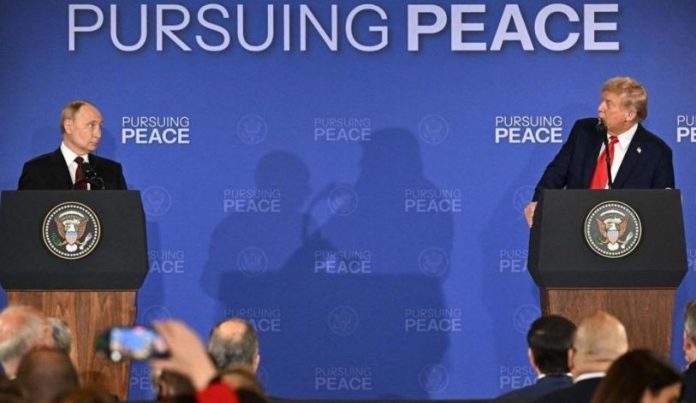
The world watched closely as two of the most powerful leaders, U.S. President Donald Trump and Russian President Vladimir Putin, met in Anchorage, Alaska, in a summit that carried the potential to alter the trajectory of one of the deadliest conflicts in Europe since World War II. Flying in from Moscow, Putin was received with a red-carpet welcome at Joint Base Elmendorf-Richardson, where U.S. military aircraft flew overhead in a symbolic display of American strength. The meeting, lasting nearly three hours, was billed by both leaders as “productive,” though the absence of concrete commitments or immediate breakthroughs has left the future of peace in Ukraine uncertain.

From the outset, the talks were historic. Not since Russia’s full-scale invasion of Ukraine in 2022 had a U.S. president sat down face-to-face with Putin. For Trump, the stakes were personal and political. He has repeatedly claimed credit for halting or preventing six major wars during his political career—citing his involvement in easing tensions between India and Pakistan, preventing escalation between Thailand and Cambodia, and defusing what could have been a catastrophic war between Israel and Iran. His record also includes brokering a ceasefire between Armenia and Azerbaijan, which earned him endorsements for the Nobel Peace Prize from leaders in both countries. Trump has made it clear: if he can secure even a significant step toward ending the Russia-Ukraine war, he believes he would be deserving of the Nobel Peace Prize.

Yet, despite the symbolism, the Alaska summit produced no agreement to resolve or pause Moscow’s war in Ukraine. Trump himself admitted, “There’s no deal until there’s a deal,” while adding that “many, many points” had been agreed upon, with “a couple of big ones” still unresolved. The “Pursuing Peace” backdrop behind the two leaders sent an optimistic message, but the details remained elusive. The Ukrainian leadership, notably absent from the meeting, has made it clear they will not concede territory or accept a settlement that legitimizes Russia’s control over nearly a fifth of their land. Ukrainian President Volodymyr Zelenskiy has also called for a U.S.-backed security guarantee, making any unilateral U.S.-Russia arrangement politically unviable without Kyiv’s buy-in.

This is where Trump’s approach diverged sharply from European and Ukrainian expectations. By engaging directly with Putin without the presence or consent of Ukraine or European allies, Trump assumed a mediating role that risked alienating key stakeholders. In his own words, he was “not here to negotiate for Ukraine” but to “get them at a table.” However, replacing one major party in a conflict with an external power—even one as influential as the United States—has rarely produced lasting peace without eventual multilateral engagement.

Putin, for his part, called the meeting a “reference point” for restoring pragmatic U.S.-Russia relations and insisted that the “root causes” of the conflict must be addressed for any long-term settlement. This language, familiar to anyone following the war, underscores Moscow’s unwillingness to agree to a ceasefire without substantial concessions. As the leaders spoke, the war raged on: air raid alerts blared across eastern Ukraine, and Russian governors in Rostov and Bryansk reported Ukrainian drone attacks. The optics of diplomacy were starkly undercut by the reality of ongoing violence.

For Europe, the meeting was an unsettling reminder that its security could be negotiated over without its direct involvement. European leaders, aligned with Zelenskiy in their opposition to any premature freeze of the conflict, were quick to express skepticism. Czech Foreign Minister Jan Lipavsky welcomed Trump’s efforts but doubted Putin’s sincerity, noting that Russian forces had continued attacking Ukraine even as the summit took place. The fear in European capitals is that Trump might seek a “quick fix” deal that sacrifices Ukraine’s territorial integrity for the sake of ending hostilities on paper.

Still, there is a pragmatic argument to be made for not dismissing the Alaska talks outright. If any understanding between Trump and Putin could lead to a verifiable ceasefire, guarantee Ukraine’s security, and offer Europe a stable security framework, it would be worth exploring. This would require Kyiv and European governments to set aside political pride and assess the proposals based on merit rather than the process by which they were reached. Given the deep divisions between Trump and Europe on other issues—including Gaza, where Europe has taken a markedly different stance from Washington—the temptation to reject any Trump-brokered deal is strong. Yet peace, if achievable, should transcend personal and political grievances.

Trump’s diplomatic résumé is as polarizing as it is unusual. While some credit him with preventing conflicts, others argue that his domestic policies—on immigration, healthcare, and U.S.-Canada relations—undermine his credibility as a global peacemaker. His handling of the Gaza conflict, where critics accuse him of enabling Israeli Prime Minister Benjamin Netanyahu’s military campaign, has drawn condemnation from much of the international community. In Gaza, thousands have been killed, with civilians—including children and the elderly—bearing the brunt of the violence. The region has been turned into what many describe as an “open prison” and a “death trap.”

If Trump were to use the same leverage he claims to have over Netanyahu to halt the Gaza war, his Nobel Peace Prize prospects would be significantly enhanced. Without that, his candidacy will remain a point of fierce debate. Nevertheless, the Alaska summit shows that Trump is willing to insert himself into high-stakes global conflicts, even at the risk of bypassing traditional diplomatic channels.

The reality, however, is that the Alaska meeting has so far delivered little tangible progress. No ceasefire, no formal commitments, and no agreed-upon next steps toward a trilateral summit involving Zelenskiy. Ukraine’s opposition figures, such as lawmaker Oleksiy Honcharenko, have already characterized the outcome as a win for Putin, arguing that the talks have simply bought Moscow more time. Without concrete deliverables, the meeting risks being remembered more for its optics than its outcomes.

That said, the possibility remains for Europe and Ukraine to engage later, should any framework emerge from Trump-Putin discussions that could realistically lead to peace. In such a scenario, setting aside ego and geopolitical point-scoring in favor of pragmatic diplomacy could save countless lives. The stakes are monumental—not only for Ukraine and Europe but for the credibility of international conflict resolution in an era when wars seem increasingly resistant to traditional diplomacy.

In the end, the Alaska summit may be less about the immediate cessation of hostilities and more about testing the waters for a new phase in the U.S.-Russia relationship. Whether this phase leads to a genuine peace process or simply becomes another chapter in the long list of failed mediation attempts will depend on whether all relevant parties—Ukraine, Europe, the U.S., and Russia—can find common ground. For now, the war grinds on, and the window for diplomacy remains precariously narrow.

By Qamar Bashir

Press Secretary to the President (Rtd)

Former Press Minister, Embassy of Pakistan to France

Former Press Attache to Malaysia

Former MD, SRBC | Macomb, Michigan, USA

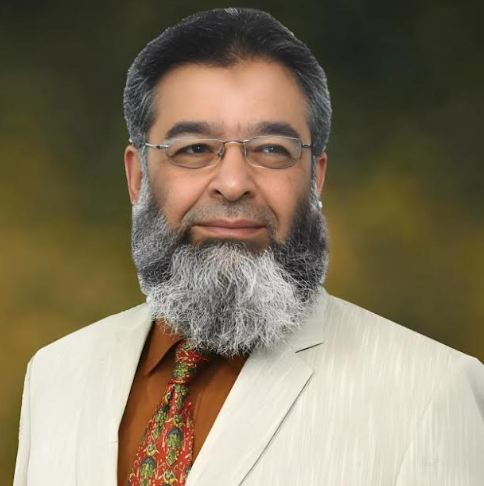
Shoulder to Shoulder in Every Calamity: The Role of Pakistan Army in Disasters

Shoulder to Shoulder in Every Calamity: The Role of Pakistan Army in Disasters

by Muhammad Mohsin Iqbal

There are many ups and downs in the lives of nations, and often, the harshest trials come from nature itself. In these moments, resilience, courage, and unity define the strength of a people. Pakistan, throughout its history, has faced numerous natural calamities that have tested its patience and perseverance. Each time, however, the people of this land, alongside their armed forces, have stood steadfast in the face of adversity. Whether in war or disaster, the Pakistan Army has never hesitated to sacrifice for the nation and has always remained on the front lines of relief and rescue.

This time, the province of Khyber Pakhtunkhwa has been ravaged by devastating floods, leading to immense loss of life and property. Villages have been swept away, communication links destroyed, and countless families left stranded. Yet, as has always been the case, the Pakistan Army has rushed to the side of the distressed, standing shoulder to shoulder with the affected people. Following the traditions of service and sacrifice, the federal government, provincial governments, and Pakistanis abroad have also mobilized resources to support those suffering in this time of crisis.

Army Chief Field Marshal Syed Asim Munir has issued special instructions for the rehabilitation of flood victims in Khyber Pakhtunkhwa. He emphasized that the army deployed in the region will provide full support to those impacted, with additional troops sent to reinforce relief operations. In a gesture of solidarity, the entire Pakistan Army has donated one day’s salary towards rehabilitation efforts. Furthermore, the army has allocated over 600 tons of its own ration stock to provide immediate sustenance to the flood-hit population.

The Chief has also directed the Corps of Engineers to expedite the repair of damaged bridges and establish temporary structures where necessary to restore connectivity. Specialized rescue units, including the Army’s Sniffing Dog Unit and the Urban Search and Rescue Team, have been deployed to locate missing persons and assist in evacuation. Helicopters from the Army Aviation Corps are actively engaged in transporting supplies and rescuing stranded families. In every sphere, the Pakistan Army has once again shown that it remains a guardian not only of the country’s borders but also of its people in their darkest hours.

Natural disasters, though painful, remind us of the fragility of life and the importance of solidarity. The Holy Qur’an says: “And We will surely test you with something of fear and hunger and a loss of wealth and lives and fruits, but give good tidings to the patient—those who, when disaster strikes them, say, ‘Indeed we belong to Allah, and indeed to Him we will return.’” (Surah Al-Baqarah 2:155–156). These verses offer solace, reminding believers that patience and steadfastness in trials bring divine reward. The Prophet Muhammad (Peace Be Upon Him) also said: “The believers, in their mutual kindness, compassion, and sympathy, are just like one body. When one limb suffers, the whole body responds with wakefulness and fever.” (Sahih al-Bukhari and Sahih Muslim). Pakistan’s collective response to such calamities is a testament to this very spirit of unity and compassion.

History bears witness that Pakistan has endured calamities of even greater scale. In 8 October 2005, the earthquake that struck Kashmir and northern Pakistan claimed over 80,000 lives and left millions homeless. The nation united in grief and resilience, with the armed forces and volunteers from every corner of Pakistan rushing to aid survivors. Again, in the floods of 2010, described by the United Nations as one of the worst humanitarian crises of modern times, nearly one-fifth of the country was submerged. Around 20 million people were affected, homes were destroyed, and farmlands devastated, yet the resolve of Pakistan’s people and their armed forces turned despair into determination. In 2014, the floods in Punjab and Kashmir once again tested the nation, sweeping away infrastructure and livelihoods. Each time, Pakistan endured, rebuilt, and moved forward.

The present calamity in Khyber Pakhtunkhwa is thus part of a long and painful history, but also of a legacy of resilience. Every disaster has shown that the strength of Pakistan lies not in the absence of trials but in the courage with which they are faced. The sacrifices of the armed forces, who risk their lives even in peacetime for the sake of their people, deserve eternal recognition. Likewise, the compassion of overseas Pakistanis and ordinary citizens who contribute whatever they can illustrates the indomitable spirit of this nation.

As the floodwaters recede, the challenge of rehabilitation and reconstruction will demand patience, resources, and sustained effort. But with faith in Allah Almighty, the unity of the people, and the tireless service of our defenders, Pakistan will once again rise from the ruins. Just as the sun emerges after the darkest storms, so too will hope return to the valleys of Khyber Pakhtunkhwa. The Pakistan Army, as declared by its Chief, will continue to stand shoulder to shoulder with the brave people of the province in every hour of difficulty. And as history has shown, no disaster, however grave, can break the will of a nation bound together by faith, sacrifice, and resilience.

Zelensky to meet Trump after Alaska talks stall

Zelensky to meet Trump after Alaska talks stall

WASHINGTON/ANCHORAGE, AUG 16: Ukrainian President Volodymyr Zelensky will travel to Washington, D.C., on Monday to meet with U.S. President Donald Trump, following Trump’s high-profile summit with Russian President Vladimir Putin in Alaska that ended without an agreement on Ukraine.

The much-anticipated Alaska meeting, billed as a potential turning point in the two-year-old conflict, produced no ceasefire deal. Trump, however, remained upbeat, insisting that “progress was made” and reiterating his belief that the best path forward was a “direct peace agreement” rather than a temporary ceasefire, which he argued “often times do not hold up.”

Putin, for his part, emphasized that Russia was “sincerely interested” in ending the war but refrained from offering any new commitments or concessions. Analysts noted that the Russian leader appeared to gain much from the summit without making visible compromises.

Following the talks, Trump held what he described as a “long and substantive” phone call with Zelensky, joined by several NATO leaders. The conversation reportedly focused on coordinating positions ahead of the Ukrainian president’s visit to Washington.

In Kyiv, officials expressed relief that no deal was struck in Alaska without Ukraine’s direct involvement. Writing in his analysis, BBC’s Vitaliy Shevchenko noted that there is a “sense of reassurance in Ukraine that its fate was not decided over its head.”

For now, the conflict grinds on as international diplomacy continues. The Washington meeting between Trump and Zelensky is expected to shed more light on whether the U.S. is prepared to press Russia further or pursue Trump’s vision of a rapid peace accord.

High Commissioner kicks off Malaysia’s National Month celebrations in Islamabad

Malaysian High Commissioner joins sports gala in Islamabad for unity

ISLAMABAD, AUG 16 /DNA/ – The Sports and Citizens Welfare Club of the High Commission of Malaysia in Islamabad (STMI Club) officially launched the National Month celebrations and Kibar Jalur Gemilang 2025 today, marking the start of Malaysia’s patriotic festivities in Pakistan.

The ceremony, held at the High Commission of Malaysia in Islamabad, commenced with the rendition of Malaysia’s national anthem, Negaraku, followed by an inspiring speech by Ambassador Dato’ Mohammad Azhar Mazlan, High Commissioner of Malaysia to Pakistan and Patron of Club STMI.

Embracing Patriotism and Unity Abroad

In his address, the High Commissioner highlighted the significance of honoring Malaysia’s independence and nurturing patriotism among Malaysians overseas. He reiterated that this year’s theme, “Malaysia Madani, Rakyat Disantuni”, embodies the nation’s dedication to unity, inclusivity, and progress.

“Even while serving abroad, we must uphold the spirit of Malaysia through teamwork, community engagement, and excellence in service,” said Ambassador Dato’ Mohammad Azhar Mazlan.

Sports Day Strengthens Bonds

Following the launch, a Sports Day was organized, featuring friendly competitions in badminton, table tennis, cricket, carrom, and chess. Officers, local staff, and their families participated enthusiastically, fostering team bonding and a healthy lifestyle in the spirit of Merdeka celebrations.

Month-Long Celebrations Leading to Independence Day

This event marks the beginning of a series of activities planned throughout August in commemoration of Malaysia’s 68th Independence Day on 31 August 2025. The High Commission encourages all Malaysians in Pakistan to proudly display the Jalur Gemilang and actively engage in the National Month festivities.

The High Commission extends its gratitude to all participants and organizers for making the event a success. Malaysians across Pakistan are urged to join the celebrations and showcase their national pride.

Daily Islamabad Post Completes Six Years of Publication

Daily Islamabad Post Completes Six Years of Publication

ISLAMABAD: The Daily Islamabad Post has successfully completed six years of its publication, marking an important milestone in Pakistan’s media landscape. In a remarkably short span of time, the newspaper has achieved several accomplishments and established itself as a credible voice, particularly among the country’s diplomatic and policymaking circles.

Since its inception, the Daily Islamabad Post has created a distinct niche for itself among Pakistan’s leading newspapers. Known for its balanced reporting, insightful analyses, and wide-ranging coverage, the newspaper has consistently delivered quality content to its readers. Its special emphasis on diplomacy, foreign relations, and global affairs has made it especially popular among diplomats, foreign missions, and policy think tanks based in Islamabad.

One of the newspaper’s early achievements was becoming a member of the All Pakistan Newspapers Society (APNS) soon after its launch—a recognition that very few dailies attain in such a short time. This membership not only validated the credibility of the Daily Islamabad Post but also reflected its commitment to journalistic standards and professionalism.

Led by its editor, Ansar Mahmood Bhatti, a seasoned career journalist with decades of experience in political and diplomatic reporting, the newspaper has grown steadily both in reach and reputation. Bhatti’s editorial vision and commitment to impartial journalism have been instrumental in shaping the newspaper’s identity. Under his leadership, the Daily Islamabad Post has carved out a space where serious journalism thrives, free from sensationalism but rich in substance.

The newspaper is owned and published by the Monthly Centreline—the largest circulated diplomatic magazine in Pakistan—and the Diplomatic News Agency (DNA), both of which are highly respected for their specialized coverage of international relations and diplomatic affairs. This strong backing has provided the Daily Islamabad Post with a unique edge in producing news content that resonates with both domestic and foreign readers.

In just six years, the newspaper has built a loyal readership not only in Islamabad but across Pakistan and abroad. Its online presence has further expanded its influence, allowing it to reach a diverse global audience that values accurate reporting and credible perspectives from Pakistan.

Looking ahead, the Daily Islamabad Post has ambitious plans for expansion. It intends to establish a stronger presence in Pakistan’s two largest cities, Lahore and Karachi, in the near future. This move is expected to broaden its outreach, strengthen its circulation, and solidify its standing as a truly national daily.

As the newspaper celebrates six years of impactful journalism, it continues to uphold the values of credibility, responsibility, and excellence in reporting. With a growing readership, recognition from leading media bodies, and the trust of Pakistan’s diplomatic community, the Daily Islamabad Post is well-positioned to achieve even greater milestones in the years to come.

Pakistan Navy unveils cutting-edge Hangor-Class Submarine in China

Pakistan Navy unveils cutting-edge Hangor-Class Submarine in China

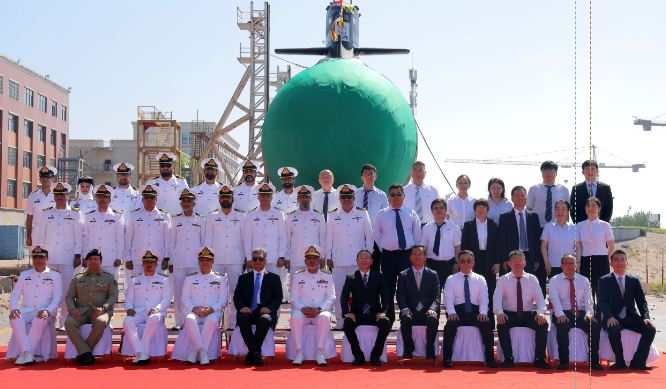
ISLAMABAD, AUG 15 /DNA/ – The launching ceremony of submarine PNS/M MANGRO (Desig) was held at Wuchang Shipbuilding Industry Group Company Ltd, Shuangliu Base, Wuhan, China. Deputy Chief of Naval Staff Project-2, Vice Admiral Abdul Samad graced the occasion as Chief Guest.

While addressing the ceremony, Chief Guest stressed the significance of maritime security amid region’s current geo-strategic dynamics. He reaffirmed that Pakistan Navy remains fully committed to defend national interests while fostering a secure and cooperative maritime environment. Referring to HANGOR Class Submarines, he highlighted that their cutting-edge weaponry and advanced sensors would be instrumental in sustaining regional power equilibrium and ensuring maritime stability. Commending the dedicated work of China Shipbuilding & Offshore International Company Ltd (CSOC), he expressed satisfaction over steady progress of the project and remarked that HANGOR Class Submarine initiative would bring a fresh dimension to the enduring, time-honoured partnership between Pakistan and China.

The Government of Pakistan signed an agreement with CSOC to acquire eight HANGOR Class submarines. Under the contract, four submarines are being built in China, while the remaining four will be constructed in Pakistan at Karachi Shipyard and Engineering Works Ltd (KS&EW) under Transfer of Technology (ToT) program.

The launching ceremony was attended by high-ranking officials from Pakistan and China, including representatives from Wuchang Shipbuilding Industry Group Company Ltd and China Shipbuilding & Offshore International Company Ltd.

Stay Connected

64FansLike
60FollowersFollow

Latest Reviews

Exchange Rates

USD - United States Dollar
EUR
1.17
GBP
1.35
AUD
0.72
CAD
0.73