Home Blog Page 534

PAC slams delays only escalate project costs despite billions spent

PAC slams delays only escalate project costs despite billions spent

The project originally approved in 2001 at a cost of Rs 14 billion and revised thrice to Rs 61.985 billion

Nazir Siyal/DNA


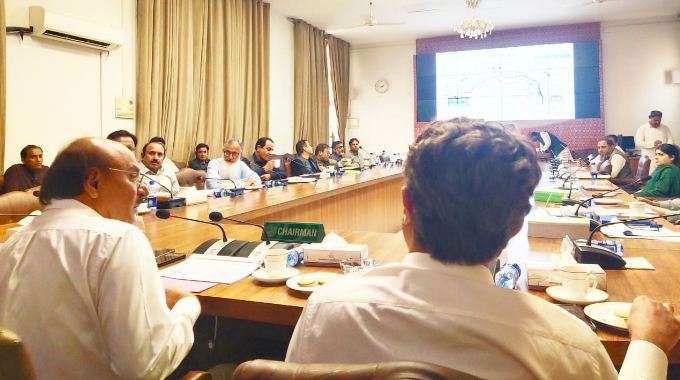
KARACHI: The Public Accounts Committee (PAC) expressed strong displeasure over the long-stalled Right Bank Outfall Drain-II (RBOD-II) project, where despite spending over Rs 40 billion between 2001 and 2017, the scheme remains incomplete.

At a briefing by WAPDA officials and Sindh Irrigation Department officers, it was revealed that the 273-kilometer-long project originally approved in 2001 at a cost of Rs 14 billion and revised thrice to Rs 61.985 billion has seen 70% work completed but has remained abandoned since 2015.

WAPDA distanced itself from the project, asserting that it was only responsible for RBOD-I and RBOD-III (both completed) and that RBOD-II is solely handled by the Sindh Irrigation Department, bwith direct funding from the federal Ministry of Water Resources.

The Irrigation Department cited cancellation of the 2022 work order, removal of consultants, and ongoing NAB and Anti-Corruption inquiries as reasons for the halt in construction, despite Rs 3.5 billion still available in funds.

PAC Chairman Nisar Khuhro rebuked irrigation officials for negligence, stating that delays only escalate project costs.
He directed the Sindh Chief Secretary to seek approval from the Steering Committee for appointment of a new consultant to resume work.

PAC also instructed the department to take steps for installing a treatment plant before the Zero Point to prevent toxic RBOD effluents from polluting Manchar Lake.

Officials confirmed that the federal government had released Rs 44 billion up to 2017, of which Rs 40 billion had already been spent. Still, the project is pending, raising serious accountability questions.

Earlier objections by the Irrigation Secretary declaring the project “non-feasible” were rejected in today’s meeting by SE RBOD Abdul Waheed Nizamani, who clarified that RBOD-II will not pass through the Indus riverbed, but will run along its alignment as per the approved design.

PAC concluded by declaring RBOD-II a vital project for Sindh and ordered that construction must resume without further delay.

It is also mentioned here that the substandard work on RBOD-I and its Embankments are vulnerable and weak, which can be witnessed at various locations after decade work.
Pakistan, Ethiopia unite for climate action at green dialogue

Pakistan, Ethiopia unite for climate action at green dialogue

ISLAMABAD, AUG 18 /DNA/ – Chairman Senate Syed Yousaf Raza Gilani has said that climate change is an urgent reality and despite contributing less than one percent to global emissions, Pakistan is among the most climate-affected countries, facing floods, glacial melt, and droughts.

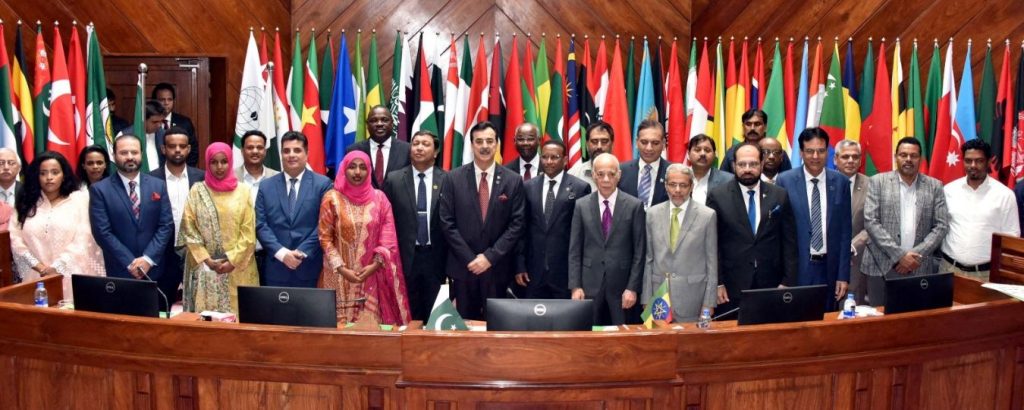
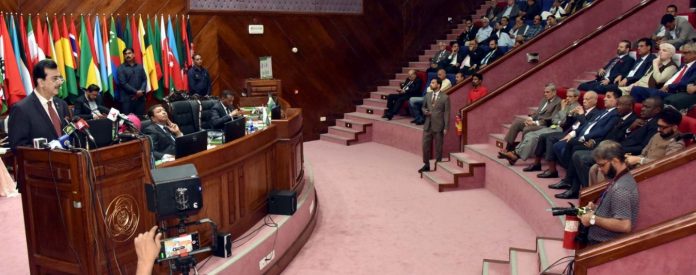
He expressed these views while addressing the “Ethiopia–Pakistan Green Dialogue: Lessons from Ethiopia’s Green Legacy” at the COMSTECH Auditorium, Islamabad on Monday. The OIC Standing Committee on Scientific and Technological Cooperation (COMSTECH), in collaboration with the Embassy of the Federal Democratic Republic of Ethiopia, organized the dialogue.

He praised Ethiopia’s Green Legacy Initiative as a global model of reforestation and sustainability, noting that both nations face common challenges but can find solutions through South-South cooperation. He underlined Pakistan’s active role in global climate diplomacy, including championing the Loss and Damage Fund at COP27 and advancing climate finance at COP29.

Mr. Gilani called for practical collaboration through joint task forces, parliamentary exchanges, and research partnerships, while inviting Ethiopia’s parliamentary leadership to the upcoming Inter-Parliamentary Speakers’ Conference.

He informed the participants that landmark laws like the Pakistan Climate Change Act and National Energy Efficiency Act have been passed by the parliament. He urged the parliamentary committees actively monitor climate finance, adaptation plans, and carbon markets to ensure implementation.

He further stated that Pakistan’s Green Pakistan Programme, Living Indus Initiative, and Indus Delta Blue Carbon Project resonate with Ethiopia’s visionary Green Legacy Initiative. “If climate change is our greatest challenge, South-South cooperation is our most potent tool” Chairman Senate remarked. We face shared constraints—limited climate finance, exposure to extreme weather, and climate-dependent economies, he added. He observed that the way forward lies in coordinated efforts at the government, parliamentary and institutional levels. He called for maximizing linkages in legislative spheres, creating a Joint Task Force on Climate Resilience to coordinate policy and projects and strengthening linkages between academia and research institutes to exchange expertise.  The Chairman Senate also invited the  Ethiopia’s Parliamentary leadership to the ISC in Islamabad in November 2025.

He concluded: “Together, we can build a greener, safer, and sustainable future.”In his welcome remarks, Prof. Dr. M. Iqbal Choudhary, Coordinator General, OIC-COMSTECH, highlighted the importance of green diplomacy and collective action in tackling global challenges such as climate change, deforestation, and environmental degradation.

Ambassador Dr. Jemal Beker Abdula underlined Ethiopia’s remarkable achievements through the Green Legacy campaign, which has set an international benchmark for combating climate change through mass tree plantation and sustainable practices. Other distinguished speakers, including heads of delegations and guest dignitaries, emphasized the urgency of regional and global cooperation for sustainable development and climate action.

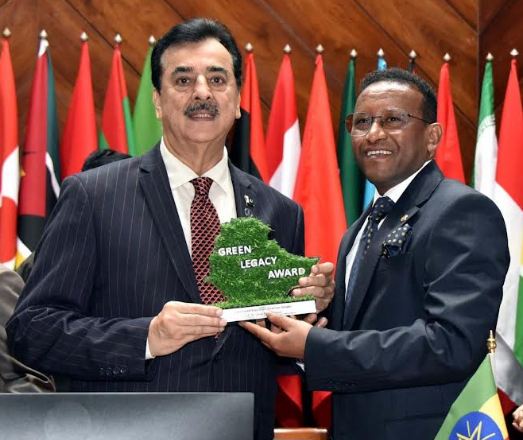
As part of the proceedings, Green Legacy Awards were presented, followed by a symbolic tree plantation ceremony and a group photograph, reflecting the shared commitment of Pakistan and Ethiopia towards a greener future.

A thought- provoking panel discussion on Green Legacy Initiatives brought together experts and policymakers who shared innovative strategies, policy frameworks, and community engagement models to promote long-term environmental sustainability.

The session concluded with a lively Q&A and networking lunch, where participants expressed strong support for further enhancing Pakistan–Ethiopia collaboration in climate resilience, ecological restoration, and sustainable development. The dialogue successfully underscored the shared vision of both countries in advancing environmental diplomacy and building a greener, sustainable future for generations to come.

Pakistan’s GDP growth to reach 3.5% by 2027: Fitch

Pakistan's GDP growth to reach 3.5% by 2027: Fitch

LONDON, AUG 18: Global credit rating agency Fitch has forecasted Pakistan’s real GDP growth at 3.5% by 2027, up from 2.5% in 2024, according to Fitch Ratings.

“Pakistan’s improved sovereign credit profile reinforces this view,” Fitch noted, referring to the upgrade of the country’s Long-Term Issuer Default Rating (IDR) to ‘B-‘/Stable from ‘CCC+’ in April 2025. The rating improvement was underpinned by ongoing economic recovery, reforms and improving fiscal performance.

The recovery comes after a particularly turbulent period for Pakistan’s economy. Inflation, which peaked at 38% in May 2023, has since eased to 4.1% in July 2025, with Fitch expecting it to average around 5% for the year.

Meanwhile, monetary policy has shifted in response to easing inflationary pressures. Since May 2024, Pakistan’s central bank has halved the policy rate to 11%, while external stability has improved through reduced currency volatility and current account surpluses.

Fitch anticipates that this combination of lower interest rates and a more stable macroeconomic environment will boost demand for private credit.

“We expect the combination of lower interest rates and an improving macroeconomic environment to stimulate private credit demand,” Fitch said, adding that this should support “steadier loan and deposit growth, and banks’ financial performance.”

The agency noted that Pakistan’s banks are set to benefit from better opportunities to generate business volumes due to improving operating conditions amid receding macroeconomic headwinds.

“Private sector credit, which had dropped to a cyclical low of 9.7% of GDP in 2024, is expected to rebound, reducing banks’ reliance on public-sector lending. Continued economic and fiscal reforms could further support this shift,” the statement read.

However, Fitch also pointed to ongoing risks, stating that Pakistan’s improving, albeit still weak, operating environment and its low sovereign credit rating remain areas of concern.

The agency cautioned that the banks’ intrinsic creditworthiness will remain “closely linked to the sovereign and the pace of economic reform,” due to their significant exposure to sovereign securities and state-linked entities.

Despite past economic turbulence, Pakistani banks have demonstrated resilience. The sector’s impaired loan ratio improved to 7.1% by March 2025, down from 7.6% at the end of 2023, amid strong loan growth of 26%, largely fueled by inflation.

PAF responds to nation’s call

PAF responds to nation’s call

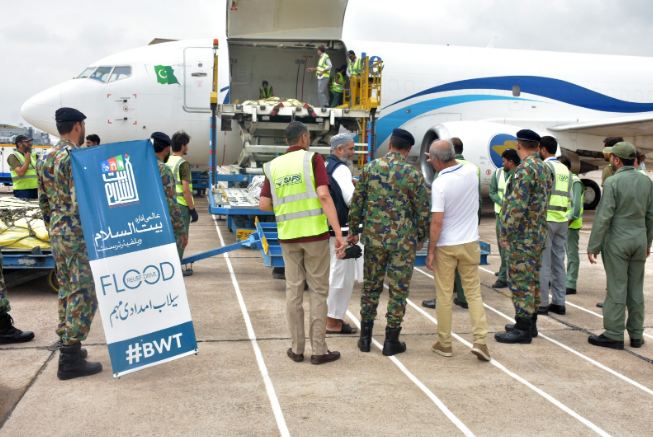
RAWALPINDI, AUG 18 /DNA/ – Upholding its legacy of responding to the nation’s call during times of natural calamities, Pakistan Air Force, extended vital support to ongoing relief operations in flood-affected areas of Khyber Pakhtunkhwa.

In this regard, a total of 48 tons of relief goods arranged by an NGO were airlifted from Karachi to Peshawar through an Air Eagle B-737 aircraft. By establishing an air bridge, PAF has ensured the swift transportation of urgently needed supplies to support relief efforts in the flood-hit districts of Buner and Shangla.

The consignment comprising essential dry ration will be distributed among affected families in close coordination with National Disaster Management Authority.

This humanitarian mission reflects Pakistan Air Force’s enduring commitment to stand shoulder-to-shoulder with the nation, not only in safeguarding the aerial frontiers of the country but also in providing timely assistance to fellow countrymen in times of crisis.

Passports to be delivered to applicants on time

Passports to be delivered to applicants on time

Federal Interior Minister Mohsin Naqvi Pays Surprise Visit to NADRA Kot Abdul Malik Centre and Shahdara Passport Office

Abid Raza

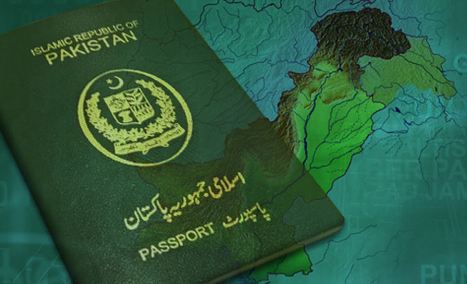
Lahore, AUG 18 /DNA/ – Federal Interior Minister Mohsin Naqvi today paid a surprise visit to the NADRA Centre in Kot Abdul Malik and the Passport Office in Shahdara. During the visit, the Minister reviewed the process of issuing national identity cards, other related documents, and passports.

The NADRA office at Kot Abdul Malik was closed due to renovation work, while two mobile vans were stationed outside. However, both vans faced internet outages, resulting in long queues of citizens. NADRA staff explained that the system was down, which caused delays. Citizens also complained that the helpline was not providing proper guidance.

Minister Naqvi listened to the grievances of people who had come to get their ID cards made and issued immediate instructions to resolve the issues. He directed that the internet problem be fixed without delay and ordered the Kot Abdul Malik centre to be made operational at the earliest. He further stressed that since the facility to issue ID cards is available at every centre, it is unacceptable to ask citizens to visit other centres.

At the Shahdara Passport Office, Minister Naqvi met citizens and inquired about the passport issuance process. People complained about delays in the delivery of passports. Expressing displeasure after seeing files and paperwork scattered in the office, the Minister ordered that all records be digitized immediately.

He directed officials to ensure that passports are delivered within the stipulated timeframe. He emphasized that citizens should be able to obtain passports from any passport centre of their choice and that forcing them to move from one centre to another is intolerable.

The Interior Minister also instructed the formulation of a new policy for issuing passports to children whose fathers are working abroad.

Air Canada grounded after strike

Air Canada grounded after strike

DNA

TORONTO: Air Canada’s fleet of hundreds of planes remained grounded on Monday morning after striking flight attendants refused a government-backed order to get back to work and called on the airline to return to the bargaining table.

The carrier, which normally carries 130,000 people daily and is part of the global Star Alliance of airlines, had planned to start ramping up operations on Sunday evening, after a labour relations board ordered the union to return to work and start binding arbitration.

The union said no, setting up an almost unprecedented standoff with the Canadian government, which had requested the back-to-work order.

The Canadian Union of Public Employees, which represents 10,000 Air Canada cabin crew, had pushed for a negotiated solution, saying binding arbitration would take pressure off the airline.

Dar meets UK minister, discusses bilateral cooperation and regional issues

Dar meets UK minister, discusses bilateral cooperation and regional issues

LONDON/ISLAMABAD, AUG 18 /DNA/ – Deputy Prime Minister and Foreign Minister of Pakistan, Senator Mohammad Ishaq Dar, met on Monday with the UK’s Parliamentary Under-Secretary of State for the Middle East, Afghanistan, and Pakistan, Rt. Hon. Hamish Falconer, at the Foreign, Commonwealth & Development Office (FCDO) in London.

According to an official statement, the two sides reviewed the entire spectrum of Pakistan–UK bilateral relations and reaffirmed their shared commitment to further strengthening cooperation in political, economic, climate, and people-to-people domains. They also held an exchange of views on important regional and global developments.

Senator Dar briefed his counterpart on Pakistan’s ongoing economic reform agenda and highlighted Islamabad’s perspective on regional security, including the need for peace and stability in South Asia. He also reiterated Pakistan’s principled stance on the Jammu and Kashmir dispute, underscoring the importance of a just and peaceful resolution in line with relevant United Nations Security Council resolutions.

Both leaders expressed satisfaction at the positive trajectory of Pakistan–UK relations and acknowledged the progress being made in multiple areas of collaboration. They emphasized the significance of maintaining regular high-level engagements to sustain momentum and to explore new avenues for strategic partnership.

The meeting was described as cordial and constructive, reflecting the mutual desire of both countries to deepen bilateral ties and enhance cooperation on shared priorities.

China expresses deep condolences over loss of lives in floods in Pakistan

China expresses deep condolences over loss of lives in floods in Pakistan

BEIJING, AUG 18 (DNA): A Chinese foreign ministry spokesperson on Monday expressed deep condolences over loss of lives caused by flash floods in different parts of Pakistan.

“We have noted the severe rainfall disasters in multiple regions, which have caused casualties and property losses. We express our deep condolences for the deceased and extend our sympathies to the bereaved families and the injured,” Mao Ning said during her regular briefing here.

She informed that Chinese Foreign Minister Wang Yi has also conveyed his condolences to Deputy Prime Minister and Foreign Minister.

“We believe the Pakistani people will surely overcome the disaster and rebuild their homes,” she added.

Mao Ning said, “At present, we are not aware of any Chinese citizens having lost their lives in the disaster. Our embassy in Pakistan is still working to verify the situation.”

KP and GB left to struggle alone

KP and GB left to struggle alone

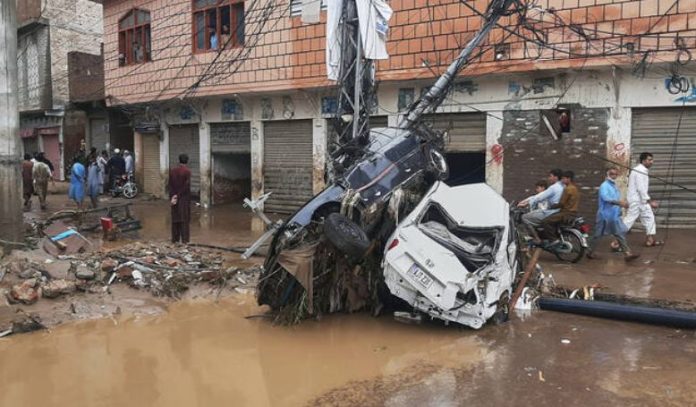
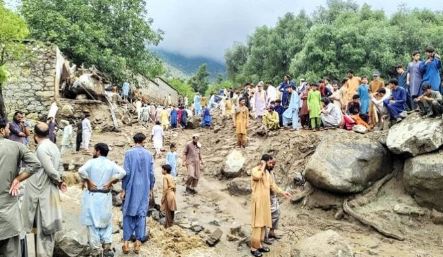
The devastating floods that recently swept across Khyber Pakhtunkhwa (KP), Gilgit-Baltistan (GB), and parts of Kashmir have once again exposed the glaring weaknesses of Pakistan’s disaster management system. Hundreds of lives have been lost, thousands of homes washed away, and countless families left stranded in treacherous conditions without food, shelter, or medical assistance. Amid this human tragedy, the National Disaster Management Authority (NDMA) has come under severe criticism for failing to rise to the occasion.

When the NDMA was established, it was touted as a professional, central body that would ensure swift coordination and effective relief operations across the country during natural disasters. However, on the ground, the situation remains dismal. Observers note that before the creation of the NDMA, provincial governments, armed forces, and local administrations handled emergencies more efficiently. Today, the Authority seems more engaged in PowerPoint presentations, press briefings, and paperwork rather than real action where it matters most.

The plight of flood victims in KP and GB illustrates this disconnect. In many districts, access roads remain blocked, bridges collapsed, and communication systems cut off. Yet timely rescue efforts, evacuation arrangements, and relief distribution were either delayed or entirely absent. Local volunteers, community groups, and civil society organizations have once again stepped in to fill the vacuum left by state institutions.

Critics argue that the NDMA’s centralized approach often sidelines provincial disaster management authorities and creates unnecessary red tape. The result is duplication, confusion, and a lack of accountability. In emergencies, minutes matter, but bureaucracy continues to stall urgent decisions. Victims in Chitral, Swat, Kohistan, and Skardu have lamented that despite repeated appeals, government help has not reached them.

The federal government, too, cannot absolve itself of responsibility. Expressing solidarity in statements and issuing condolence messages is not enough. What the people of KP and GB need are practical steps: immediate financial compensation for affected families, provision of tents, food, medicines, and safe drinking water, as well as urgent restoration of damaged roads, power, and communication infrastructure.

Pakistan faces a recurring cycle of floods, landslides, and climate-induced disasters every year, yet lessons from the past remain unlearned. Billions have been spent on disaster management institutions, but the outcomes remain invisible on the ground. If this failure continues, the credibility of NDMA as a national institution will further erode, reducing it to little more than a bureaucratic showpiece.

The federal government must urgently extend full support to KP and GB. Long-term planning, effective coordination between provincial and federal institutions, and a genuine focus on implementation rather than paperwork are the need of the hour. Without these, tragedies like the recent floods will only continue to devastate vulnerable communities, leaving survivors with nothing but despair.

The people of Pakistan deserve not just sympathy, but action. It is time for the state to prove that the NDMA is more than a name on a letterhead and that governance means service to the people in their darkest hour.

Hamas receives new Gaza truce plan: Palestinian official

Hamas receives new Gaza truce plan: Palestinian official

CAIRO, AUG 18: New deal calls for a 60-day truce and phased hostage release, says Palestinian official. Hamas negotiators in Cairo have received a new proposal for a ceasefire in Gaza calling for an initial 60-day truce and hostage release in two batches, a Palestinian official said Monday.

“The proposal is a framework agreement to launch negotiations on a permanent ceasefire,” the official told AFP on condition of anonymity.

The official said that “Hamas will hold internal consultations among its leadership” and with leaders of other Palestinian factions to review the proposal from mediators.

Stay Connected

64FansLike
60FollowersFollow

Latest Reviews

Exchange Rates

USD - United States Dollar
EUR
1.17
GBP
1.35
AUD
0.72
CAD
0.73