Home Blog Page 533

Heavy showers lash Karachi amid fears of urban flooding

Heavy showers lash Karachi amid fears of urban flooding

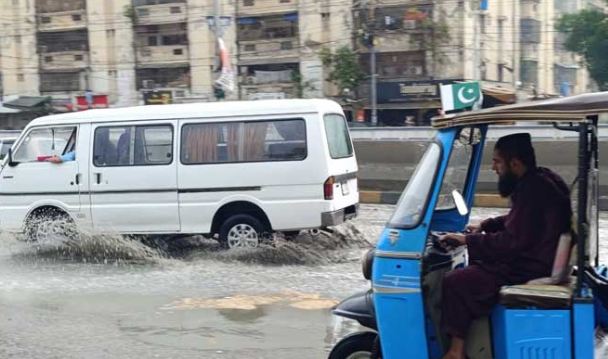
KARACHI: Heavy showers continue to lash different parts of Karachi as the city faces increasing risk of urban flooding with rainwater inundating roads and entering homes in various areas on Tuesday.

Sharea Faisal, II Chundrigar Road, Shah Faisal Colony, Model Colony, airport, and nearby residential areas received downpour today

Showers were also recorded in Malir Halt, Rafah-e-Aam, and the surrounding areas. There were also reports of rainfall in Surjani Town and Korangi.

The change in weather came as a breath of fresh air for residents after a spell of hot and humid conditions over the last two days.

“With just a little amount of rain, the road outside my house has been inundated and I can’t commute to my office,” said a resident of Gulistan-e-Jauhar area as various roads across the city became inundated after morning downpour.

The latest showers come in the backdrop of Pakistan Meteorological Department’s (PMD) forecast of isolated showers in Karachi till August 23.

With strong monsoon entering Sindh, PMD noted, rain thunderstorm/rain with few moderate to isolated heavy falls is expected in Karachi, Hyderabad, Jacobabad, Shikarpur, Larkana, Qambar Shahdadkot, Mirpurkhas, Sanghar, Badin, Thatta, Tharparkar, and surrounding areas.

As per the Met Office’s statistics, the highest rainfall was recorded in Keamari (29 millimetres) followed by Nazimabad (28mm) and 20mm of rain recorded at PAF Masroor Base.

Gulshan-e-Hadeed recorded 15mm of rain, Orangi Town 12.2mm, airport and Old City area 10.8mm, Sharea Faisal 8mm, Saadi Town 5.1mm, University Road 5mm, Super Highway 4.8mm and Gulshan-e-Maymar 2.4mm.

With rainwater entering homes in Gulshan-e-Hadeed Phase I and Quaidabad, weather expert Jawad Memon has said that rain clouds were still forming over the city.

“Rain may continue for another hour or more,” Memon said, adding that clouds were approaching the city from the direction of Super Highway.

“A monsoon system is present in the Arabian Sea. Due to humidity, the system has turned into a low-pressure area,” Memon remarked while predicting more moderate showers.

Rainwater enters Karachi homes. — Geo News
Also, the next two days, the Met Office has warned, are very important with regards to rains in the city as well as the province.

“Moderate to heavy rainfall may cause urban flooding in Karachi,” it said, adding that a monsoon system was present in the form of a depression near Western Odisha and will reach Gujarat in India in the next one and a half days.

Following the showers, a part of North Nazimabad Landi Kotal Chowrangi caved in, disrupting the traffic flow.

With the residents lamenting that the administration had not started the repair work, the Assistant Commissioner North Nazimabad has said that higher authorities have been informed about the road subsidence.

The traffic police, the official added, have also been asked to provide an alternative route for traffic.

Furthermore, the downpour also resulted in electricity outages in multiple areas. However, K-Electric (KE) has said that the city was being provided with an uninterrupted power supply from more than 1,770 feeders out of 2,100.

As a precautionary measure, power supply is temporarily suspended in low-lying areas, encroachments and ditches, said the KE spokesperson, adding that the utility supplier’s staff has been fully mobilised and is present in the field.

In light of the Met Office’s prediction, Sindh Chief Minister Syed Murad Ali Shah chaired an emergency meeting a day earlier to oversee preparations for the monsoon rains expected to impact Karachi and other parts of the province, The News reported on Tuesday.

The CM put the local governments, administration and traffic police on high alert, and directed them to strengthen coordination to ensure convenience for the people in case of heavy rains.

The CM said he wanted to ensure that Karachi’s infrastructure was ready to handle the anticipated downpour. Karachi Mayor Murtaza Wahab briefed the CM on ongoing efforts to improve drainage systems at 44 critical drain choking points across Karachi, with approximately 150 drains under the control of towns undergoing de-silting to facilitate the smooth flow of rainwater.

The CM directed the local government minister and mayor to take all necessary steps to minimise disruption during the rains and ensure the safety of citizens.

Karachi is not the only part of the country witnessing monsoon showers as heavy rains have wreaked havoc across Pakistan’s northern areas in recent days.

So far, the death tally in rain-related incidents has climbed to 660 with reports of casualties and widespread destruction pouring in from all provinces and regions.

Khyber Pakhtunkhwa (KP) has reported the highest casualties, with 392 people losing their lives in various incidents.

KP is followed by Punjab with 164 fatalities, Gilgit Baltistan (GB) with 32, Sindh with 29, Balochistan with 20, Azad Jammu and Kashmir (AJK) with 15, and Islamabad with eight.

Among the victims, 394 were men, 95 women, and 171 children. The total number of injured has reached 935, most of them in Punjab (582), while 245 were reported in KP, 40 in Sindh, 37 in GB, 24 in AJK, four in Balochistan, and three in Islamabad.
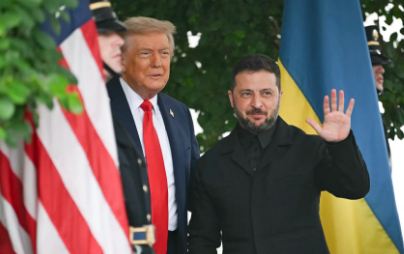
Trump–Zelensky meeting fails to deliver breakthrough

Trump–Zelensky meeting fails to deliver breakthrough

U.S. President Donald Trump hosted Ukrainian President Volodymyr Zelensky in Washington this week, joined by several prominent European leaders, in what was billed as a critical push toward ending the devastating war in Ukraine. Despite the high-profile gathering, no breakthrough emerged, leaving the future of peace in Eastern Europe as uncertain as ever.

The talks followed Trump’s earlier summit with Russian President Vladimir Putin in Alaska, where the U.S. leader had hoped to secure concessions from Moscow. That effort also ended without tangible progress. The Washington meeting, therefore, carried heightened expectations. Yet, once again, the road to peace proved far more complicated than Trump’s public optimism suggested.

At the heart of the impasse remain two fundamental disputes: Ukraine’s refusal to accept Trump’s quiet suggestion to “consider vacating” territories occupied by Russian forces since 2022, and Moscow’s unwavering stance on retaining control over Crimea, which it annexed in 2014. Zelensky made it clear during the closed-door sessions that Ukraine will not legitimize Russian occupation by ceding sovereign territory. For Kyiv, any proposal involving territorial compromise is tantamount to surrender.

On the other side, Russia continues to insist that Crimea is non-negotiable and shows no willingness to withdraw from regions in eastern Ukraine where its troops remain entrenched. These irreconcilable positions once again dashed hopes that Trump could present himself as the dealmaker capable of bridging the divide.

Observers note that Trump’s sense of urgency in resolving the conflict is tied not only to his political ambitions but also to his personal quest for international recognition. The U.S. president has repeatedly spoken of his desire to win the Nobel Peace Prize, openly declaring that a Ukraine peace deal would make him a strong candidate.

Yet, with both Moscow and Kyiv refusing to budge, critics say Trump’s strategy appears desperate rather than pragmatic. His trademark bravado — assuring reporters that “a deal will be done, sooner rather than later” — sounded increasingly hollow after two high-profile failures within a month. Still, Trump remains eager to claim progress, framing the meetings as “steps forward” even without tangible results.

Joining Zelensky in Washington were key European leaders, including French President Emmanuel Macron, German Chancellor Friedrich Merz, and European Commission President Ursula von der Leyen. Their presence was meant to demonstrate transatlantic unity in the search for peace. However, European officials privately expressed frustration at Trump’s approach, which many see as focused more on personal political gain than on sustainable conflict resolution.

One EU diplomat noted, “Europe has borne the brunt of this war — millions of refugees, massive energy crises, and security risks. We cannot reduce this to a campaign narrative in Washington.”

European leaders also used the opportunity to press Trump on post-war reconstruction commitments, trade ties, and NATO funding — issues that remain sources of tension in transatlantic relations. While Trump emphasized his wish to “end the bloodshed in Europe,” his critics argue that his credibility is undermined by glaring inconsistencies in his foreign policy priorities.

Perhaps the starkest example of these inconsistencies is Gaza. As Trump spoke passionately about ending the war in Ukraine, European and Middle Eastern commentators pointed out his silence on the ongoing humanitarian catastrophe in Gaza. Despite repeated international appeals, Trump has largely avoided criticizing Israel’s military campaign, which has killed tens of thousands of civilians and displaced millions.

This double standard has not gone unnoticed. Analysts argue that Trump’s insistence on being a peace broker in Ukraine while ignoring Gaza undermines his moral standing. “When it comes to Gaza, he simply shuts his eyes,” a European journalist remarked, “and that makes his claims of wanting to ‘stop bloodshed’ ring hollow.”

Indeed, the Gaza issue looms as a major obstacle to Trump’s Nobel ambitions. Even if he were to succeed in facilitating an agreement between Russia and Ukraine, many within the international community would still question whether his selective concern for human suffering merits the world’s most prestigious peace prize.

For Zelensky, the Washington trip was another attempt to keep Ukraine firmly on the global agenda. With war fatigue setting in across Europe and America, and with international aid slowing, Kyiv desperately needs continued political and military support. By standing firm in Washington, Zelensky signaled both to his domestic audience and international partners that Ukraine will not compromise its sovereignty.

For Trump, the calculus is different. Yet his repeated inability to secure meaningful concessions from either side raises doubts about whether his approach is more performance than substance.

The failure of both the Alaska summit with Putin and the Washington meeting with Zelensky underscores the complexity of the Ukraine conflict. Peace remains elusive not because leaders are unwilling to talk, but because the fundamental interests of the parties involved are deeply irreconcilable.

Trump continues to insist that “progress is being made,” but without a shift in Russia’s or Ukraine’s core positions, any deal remains a distant prospect. Meanwhile, the war grinds on, exacting a devastating human toll and destabilizing global security.

As the world watches, Trump’s balancing act between personal ambition, political survival, and the harsh realities of international diplomacy grows increasingly precarious. For Zelensky, Macron, Merz, and von der Leyen, the task is to keep Ukraine’s plight central while resisting the temptation to reduce peace talks to a stage for political theater.

For now, the Washington meeting ends as it began: with hopes high, words plentiful, but peace still painfully out of reach.

Pakistan’s Nuclear Ascent: A Source of National Pride

Pakistan's Nuclear Ascent: A Source of National Pride

Alishba Usman

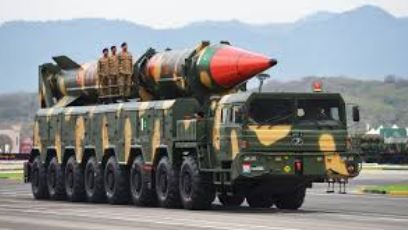
Pakistan’s emergence as the world’s first Islamic nuclear power on May 28, 1998, marked a defining moment in its history and the geopolitics of South Asia. The thunderous detonations in the Chagai hills of Balochistan, commemorated annually as Youm-e-Takbeer (Day of Greatness), were not merely scientific feats but profound assertions of national sovereigntytechnological brilliancestrategic resolve, andIslamic identity. This journey, driven by acute security imperatives and national aspiration, transformed Pakistan into the seventh nuclear-armed nation and cemented its place as a pivotal strategic actor.

Pakistan’s nuclear ambitions were fundamentally forged in the crucible of regional insecurity and conflict with India. The early Cold War alignment with the United States, formalized through the Mutual Defense Assistance Agreement (1954), provided crucial military modernization, training, and access to Western alliances like SEATO and CENTO. While this bolstered conventional forces in the 1950s-60s, it also exposed Pakistan to the realities of global power politics and the symbolic weight of nuclear capability. However, two seismic events crystallized the absolute necessity of a nuclear deterrent:

India’s first nuclear explosion shattered the regional strategic balance. For Pakistan, already scarred by three wars (1948, 1965, and 1971) with its larger neighbor, it represented an existential threat. Conventional military parity was rendered insufficient. The loss of East Pakistan (Bangladesh) was a devastating military and psychological blow. It underscored Pakistan’s vulnerability and convinced its leadership, particularly Prime Minister Zulfikar Ali Bhutto, that nuclear weapons were essential for survival and preventing future dismemberment. Bhutto’s famous declaration, “We will eat grass, even go hungry, but we will get our own nuclear bomb,” became the rallying cry. He established the Pakistan Atomic EnergyCommission (PAEC) and laid the institutional groundwork.

 Beyond immediate security, motivations included deterrence (making aggression prohibitively costly for adversaries), restoring the regional power balance tilted by India’s test, and achieving national pride and technological prestige particularly the aspiration to become the first Muslim nation to possess nuclear weapons. The path to nuclear capability was arduous, conducted under a shroud of extreme secrecy and against formidable external pressure. The 1974 test triggered international non-proliferation efforts, leading to technology embargoesheavy internationalscrutiny, and intelligence surveillance. Pakistan faced diplomatic isolation and severe resource constraints. Despite these obstacles, a network of patriotic scientists,engineers, and military strategists worked relentlessly. Early initiatives benefited from peaceful nuclear programs like the US “Atoms for Peace” and training collaborations. Key institutions like the Atomic Energy Research Organization (1954) and the PAEC were crucial. The scientific effort was spearheaded by figures like Dr. Munir Ahmad Khan (PAEC Chairman), Dr. SamarMubarakmand (nuclear physicist overseeing the tests and missile tech), and Dr. Ishfaq Ahmad (prominent PAEC physicist). However, the program gained decisive momentum with the arrival of Dr. Abdul Qadeer Khan in the mid-1970s. His expertise in uranium enrichment technology, often controversially acquired, earned him the title “father of Pakistan’s nuclear program” and provided a viable route to a fission weapon. This development was not merely technical; it was deeply political, ideological, and nationalistic. Successive governments, military and civilian, prioritized the program despite economic weaknesses and international condemnation, viewing it as the ultimate guarantor of security against India and a symbol of national resolve.


The catalyst for testing came in May 1998 when India conducted five nuclear tests, escalating regional tensions to a critical point. Facing immense domestic pressure and strategic imperative, Prime Minister Nawaz Sharif authorized Pakistan’s response. OnMay 28, 1998 (Chagai-I) andMay 30, 1998 (Chagai-II), Pakistan detonated its nuclear devices in the Ras Koh Hills. These tests demonstrated. The success was immediate and profound. Pakistan had unequivocally joined the nuclear club, becoming the 7th nuclear power globally and the sole nuclear-armed Islamic state. Pakistan immediately framed its capability as purely defensive, rooted in the doctrine of “minimum credible deterrence.” The weapons were presented as essential to deter Indian aggression, ensure a strategic balance in South Asia, and prevent large-scale war a lesson starkly learned from 1971. The emphasis remains on maintaining sufficient capability for defense, not aggression or dominance.

For the Islamic world, Pakistan’s achievement was unprecedented. It shattered perceptions of technological inferiority and dependence, proving that a Muslim-majority nation, despite limited economic resources and political instability, could achieve technological parity with global powers. Domestically, it ignited “nuclear nationalism” – a potent unifying force celebrated annually on Youm-e-Takbeer, honoring the sacrifices of scientists, the military, and leadership, and serving as a powerful symbol of sovereignty, scientific achievement, strength, and unity for Muslims worldwide. It reshaped the Islamic identity in global geopolitics – projecting capability, pride, and security.

The global response was swift and severe. Pakistan faced economic sanctions (US, Japan, EU), suspension of aid and trade agreements, and short-term diplomatic isolation. However, the strategic landscape, particularly post-9/11, forced a recalibration. Global powers gradually began to accept Pakistan’s nuclear reality. Pakistan managed to maintain crucial alliances, especially with China, navigate relations with the US, and retain strong ties within the Muslim world. The scientific triumph, utilizing indigenous techniques and developing secure facilities and command systems, became a source of enduring national pride.

Pakistan’s nuclear status undeniably strengthened its defense posture, provided a powerful deterrent, and fulfilled a deep-seated need for national and Islamic prestige. However, the journey also invites critical reflection. The program was intensely elite-driven, prioritizing military strength and strategic parity, often at the expense of broader social welfare and economic development. The reliance on imported technology, despite claims of self-reliance, highlights the complexities of achieving such a feat under sanctions. The immense financial and political capital invested continues to shape national priorities.

Pakistan’s ascent as the first Islamic nuclear power stands as a landmark achievement born from profound security anxieties, unwavering national will, and immense scientific effort. The Chagai tests of 1998 were the culmination of a decades-long struggle against adversity, transforming Pakistan’s strategic standing. While serving as a crucial deterrent against India and a powerful symbol of sovereignty, Islamic capability, and national pride, the program also reflects the complex trade-offs between security imperatives and socio-economic needs. Youm-e-Takbeer remains a potent annual reminder that determination, unity, and intellect enabled Pakistan to overcome isolation, sanctions, and global resistance, securing its place as a significant nuclear power and altering the identity of the Muslim world on the global stage. The legacy of Chagai endures as a testament to strategic resolve and a cornerstone of Pakistan’s national identity.

Alishba Usman

Student of DPT University of Okara

[email protected]

The End of Liberal Hegemony

The End of Liberal Hegemony

Dr. Muhammad Akram Zaheer

Today the liberal international order (LIO) is in decline and many of its supporters in the transatlantic world are mourning its passing. During the first Trump administration, denial prevailed, but today recognition is widespread. Political leaders across Europe and North America have reacted with a range of emotions from anger, blaming the Trump presidency for dismantling institutions, to appeals for a return to the rules‑based order. Yet others seem resigned, unable even to imagine viable alternatives to the system that once defined post‑Cold War global governance.

Trump’s disruptive leadership, neoliberal economic shifts, and the rise of revisionist illiberal powers like China and Russia played roles, but these are symptoms rather than root causes. Instead, the underlying fragility stems from the system’s liberal foundations its institutions, norms, and legalistic commitments. What was presumed to be a source of durability universal principles, legal binding, and inclusive norms proved to be the order’s greatest weakness, rendering it rigid, bureaucratic and unresponsive to changing global realities.

Liberalism is not merely an ideology but the structural logic animating the international architecture constructed after World War II. The belief that durable peace and cooperation would follow from legalistic mechanisms and global norms ultimately bred overconfidence in the self‑healing power of institutions. As a result, the system became inflexible, unable to adapt when nationalist currents surged within member states and rival ideological powers gained strength. The very commitment to universality especially the notion that liberal norms applied equally across cultures rendered the order unable to accommodate dissenting or non‑Western worldviews and thereby sapped its legitimacy and appeal.

The old order are not only unrealistic but counterproductive. Rather than clinging to memory or hoping for a U.S. recommitment to past multilateralism, the international community must confront the reality that the LIO is functional only under certain historical preconditions—conditions that no longer obtain.

Therefore, it need more pluralistic and flexible global order that retains liberal legitimacy in principle, but loosens the strict legalistic discipline that hampered responsiveness. This “less legalistic system” would recognize cultural, normative, and political differences across regions and allow for variable geometries of cooperation. In other words, rather than imposing universal norms via institutional channels, democracy‑oriented states would operate through coalitions of the willing, issue‑based alignments, and informal networks that preserve core values without rigid institutional constraint.

During the Cold War and early post‑Cold War era, liberal powers wielded their leadership to build institutions, often embedding free trade with regimes that guaranteed domestic welfare protections a model described in academic literature as “embedded liberalism”. However, as global economic integration deepened and domestic discontent grew within Western democracies manifesting in populist backlash and protectionist nationalism the public support base for the LIO eroded. In effect, liberalism’s economic and ideological commitments planted the seeds of populist revolt and institutional skepticism.

Externally, non‑Western powers exploited the inflexibility and perceived moralized structure of the liberal order. China and Russia, unbound by liberal norms, maneuvered strategically within the LIO’s institutional architecture joining WTO, UN agencies and other global institutions but manipulating the system from within, while simultaneously building alternative networks of influence. Thus, liberalism not only constrained adjustment but also empowered adversaries to subvert the order’s own rules.

This breakdown has accelerated into what many describe as a “post‑Western era” a multipolar geopolitical landscape no longer dominated by liberal democratic frames. Global South nations, regional coalitions like BRICS, and issue‑based alignments increasingly mobilize on their own terms, often rejecting Western liberal universality. Important global challenges climate, public health, technology governance, migration are handled through patchwork arrangements, rather than the integrated system the LIO once represented.

This means democratic states should acknowledge that universalism is no longer viable. Next‑generation global governance should emphasize pluralism variable cooperation based on shared interests rather than formal institutional membership; overlapping multilateralisms; flexible norms; and a willingness to allow different pathways to legitimacy. The aim is to create a more resilient system capable of absorbing shocks, adapting to diversity, and resisting the kind of moral overreach that fuels backlash at home and distrust abroad.Of course, critics argue that weakening the legalistic structure risks a slide into relativism or an abandonment of liberal principles altogether.

PM Shehbaz reiterates commitment for polio-free Pakistan

PM Shehbaz reiterates commitment for polio-free Pakistan

Saifullah Ansar

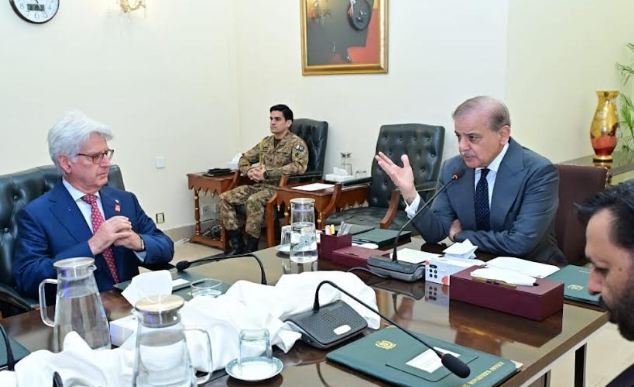
ISLAMABAD, AUG 19: Prime Minister Shehbaz Sharif on Tuesday reaffirmed that the government’s health sector team, polio workers, and all relevant institutions were determined to completely eradicate polio from the country.

The prime minister, in a meeting with a delegation of Rotary International Foundation, led by President Francesco Arezzo here, thanked the organisation for its full cooperation, like other international organizations, in eliminating this deadly disease from Pakistan.

He said that despite challenges, the government was resolved to secure the future of Pakistan’s children through its unwavering commitment and hard work.

There are difficulties in eradicating polio, but it is not impossible. The key role of polio workers in polio campaigns is commendable, he remarked

The members of the delegation praised the government’s polio eradication efforts and expressed hope that, with Prime Minister Shehbaz’s special focus and leadership, Pakistan would soon be able to eliminate this deadly disease.

Reaffirming Rotary International’s commitment to continue supporting the government in its polio eradication efforts, they said that the organisation spent $500 million on polio eradication in Pakistan last year and intended to allocate a substantial amount for this purpose this year as well.

The delegation also appreciated the selection of the polio eradication team by the prime minister and the measures taken by that team.

The meeting was attended by Federal Health Minister Syed Mustafa Kamal, the Prime Minister’s Special Representative for Polio Eradication Ayesha Raza Farooq, and relevant senior officials.

100 STEM faculty members of 62 Pakistani HEIs trained in UK

100 STEM faculty members of 62 Pakistani HEIs trained in UK

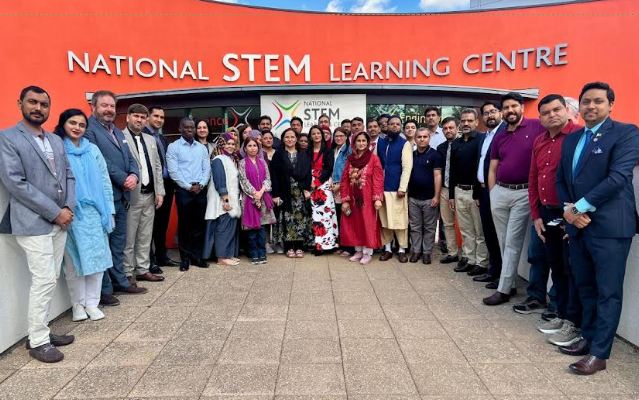
ISLAMABAD, AUG 19 /DNA/ – A week long capacity building initiative of the National Academy of Higher Education (NAHE) Higher Education Commission’s (HEC), Pakistan for the STEM faculty from Universities across Pakistan in three batches concluded in UK on Friday August 08, 2025. Lecturers and Assistant Professors of as many as 62 universities took part in the program which was held in three batches during July to August.

National Academy of Higher Education (NAHE), in collaboration with the British Council Pakistan, King’s College London (KCL), and STEM Learning Center, York, UK, organized the training program under the umbrella of Pakistan-UK Education Gateway, a program aimed to enhance partnership between the higher education sectors of Pakistan and the UK. A consortium of UK universities were partners with KCL for this training program.

Focused on bridging the gap between STEM teaching standards in Pakistan and the UK through collaborations between Pakistani and UK higher education institutions, and fostering partnerships between STEM institutions in both countries, the training was executed in three cohorts in the months of July and August, 2025. Colleagues from HEC and the British Council were also part of the training. Some of the modules covered in the training program included Global STEM education and challenges, Project based learning and its relevance to STEM education, embedding work-integrated learning (WIL) and industry into STEM education, microteaching, and designing authentic and effective assessment strategies.  The role of community of practice, artificial intelligence, internet of things, STEM ambassadors, and gender equity and inclusion was also discussed at length during the week-long training for all the cohorts.

Exposure visits to STEM Learning Center, University of York, University of Birmingham, King’s College London and historical sites in London were also part of the training for better understanding of the available facilities and cultural aspects as well. These participants are now required to cascade their learnings in their universities and play their part in improving the STEM education systems in the universities.

Greater cooperation on gender equality between Pakistan and Nepal urged

Greater cooperation on gender equality between Pakistan and Nepal urged

Saifullah Ansar

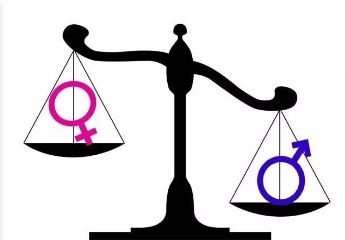
ISLAMABAD, AUG 19 /DNA/ – During a visit by a Nepal’s Women Parliamentarians’ delegation to the Institute of Regional Studies (IRS) Islamabad, President Amb. Jauhar Saleem underscored the importance of enhanced cooperation between Pakistan and Nepal on gender development. He noted the cordial relationship between the two countries and advocated for its translation into tangible cooperation across various sectors of mutual interest. He commended the Parliamentarians’ dedication to addressing legislative and governance gaps that impede gender development. Amb. Saleem highlighted gender development as a key area for collaboration, alongside climate change, and educational and cultural exchanges between the two countries. He proposed allocating the existing 50 percent scholarship to Nepali students specifically for female, anticipating a significant boost to women’s empowerment in the region.

Ms. Nagina Yadav, delegation head and leading Nepali Congress Party figure, outlined Nepal’s gender development status and the delegation’s commitment to addressing gender challenges. She conveyed the delegation’s strong desire for concrete collaboration with Pakistan, recognizing Pakistan’s effective women empowerment initiatives.

Ms. Puja Chaudhary, of the Janata Samajbadi Party Nepal, emphasized the opportunity to harness strong bilateral relations for targeted working groups on business, education, culture, climate, and direct people-to-people exchanges. Also part of the delegation were Sarita Bhusal, a politician from the Communist Party of Nepal (Unified Marxist-Leninist), and Ms. Gaura Nepali, Dalit rights activist and chairperson of the Centre for Dalit Women Nepal (CDWN).

Mr. Felix Kolbitz, Country Director of Friedrich-Ebert-Stiftung (FES), Pakistan Office, identified climate change as a particularly promising area for collaboration, given the vulnerability of both countries. He elaborated on FES’s commitment to fostering cooperation between Pakistan and regional countries like Nepal to advance women empowerment and address human security issues. Echoing what Mr. Kolbitz highlighted, Ms. Natalia Figge, Resident Representative, Friedrich-Ebert-Stiftung, Nepal Office noted that Nepal and Pakistan can develop synergy on gender equality through frequent exchanges as a practical means to accelerate gender parity efforts. Ms. Pabitra Raut, Program Manager at FES, Nepal also accompanied the delegation.

The interactive session with Nepali Parliamentarians concluded with a lively Q&A, generating several constructive proposals for future collaboration.

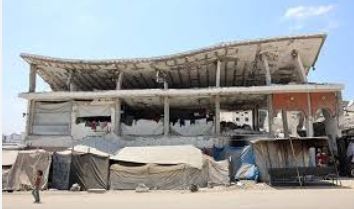
Hamas accepts new Gaza truce plan: group official

Proposal comes days after Israel’s security cabinet approved plans to expand the war into Gaza City

DNA

GAZA: Hamas has accepted a new ceasefire proposal for Gaza without requesting amendments, a source from the group told AFP Monday, after a fresh diplomatic push to end more than 22 months of war.

Mediators Egypt and Qatar, backed by the United States, have struggled to secure a lasting truce in the conflict, which has triggered a dire humanitarian crisis in the Gaza Strip.

But after receiving a new proposal from meditators, Hamas said it was ready for talks.

“Hamas has delivered its response to the mediators, confirming that Hamas and the factions agreed to the new ceasefire proposal without requesting any amendments,” the source said, speaking on condition of anonymity.

Israel has yet to respond.

A Palestinian source familiar with the talks said mediators were “expected to announce that an agreement has been reached and set a date for the resumption of talks”, adding that guarantees were offered to ensure implementation and pursue a permanent solution.

Another Palestinian official earlier said mediators had proposed an initial 60-day truce and hostage release in two batches.

The proposal comes more than a week after Israel’s security cabinet approved plans to expand the war into Gaza City and nearby refugee camps, which has sparked international outcry as well as domestic opposition.

An Islamic Jihad source told AFP the plan envisaged a 60-day ceasefire “during which 10 Israeli hostages would be released alive, along with a number of bodies”.

Out of 251 hostages taken during Hamas’s October 2023 attack, 49 are still held in Gaza, including 27 the Israeli military says are dead.

The Islamic Jihad source said “the remaining captives would be released in a second phase”, with negotiations for a broader settlement to follow. They added that “all factions are supportive” of the Egyptian and Qatari proposal.

US President Donald Trump wrote on Truth Social: “We will only see the return of the remaining hostages when Hamas is confronted and destroyed!!!”

“The sooner this takes place, the better the chances of success will be.”

Last week, Prime Minister Benjamin Netanyahu said Israel “will agree to an agreement in which all the hostages are released at once and according to our conditions for ending the war”.

Meanwhile, in a now familiar scene in Gaza, AFP footage from the southern city of Khan Yunis showed crowds of mourners kneeling over the shrouded bodies of their loved ones who were killed seeking aid the day before.

Dar rules out 27th Constitutional amendment, urges peace with neighbors

Dar rules out 27th Constitutional amendment, urges peace with neighbors

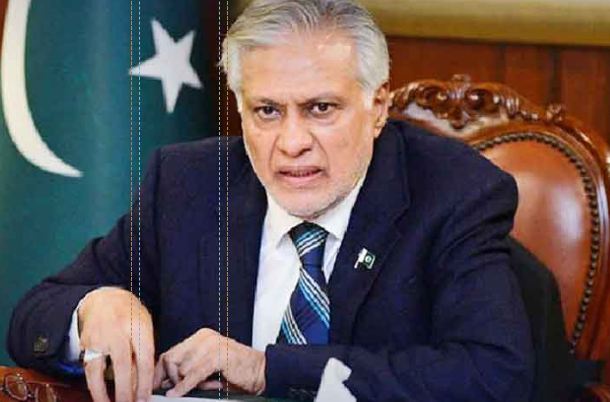
ISLAMABAD, AUG 18: Deputy Prime Minister and Foreign Minister Ishaq Dar has said there is no need for a 27th constitutional amendment as the country is still absorbing the 26th.

Speaking to the media in London, Dar said the country was running smoothly and dismissed the need for another amendment.

He added that India has been making verbal violations of the ceasefire, but Pakistan remains alert. “If India looks at us with ill intent, we will respond firmly,” he said. Dar stressed that Pakistan seeks peace with its neighbors.

“We are a peace-loving nation and want to live with neighboring countries in harmony,” he said. He added that ties with Afghanistan and Iran have improved, noting that Iranian officials acknowledged recognizing Pakistan as a true friend.

The foreign minister also said he had suggested developing an airport in Mirpur on the model of Sialkot International Airport and told British parliamentarians that Pakistan would provide the land for it.

He praised the ongoing digitization of land records and improvements in the passport issuance system.

Earlier, Dar met UK Parliamentary Under-Secretary Hamish Falconer in London, where both sides reaffirmed their commitment to strengthening Pakistan-UK relations.

According to the Foreign Office, the meeting reviewed positive progress in bilateral ties, with both leaders agreeing to expand their partnership and discuss regional and global developments.

Falconer is the UK’s parliamentary under-secretary for the Middle East, Afghanistan, and Pakistan.

OIC condemns Israeli PM’s visit to illegal west bank settlement, calls for UN action

OIC condemns Israeli PM’s visit to illegal west bank settlement

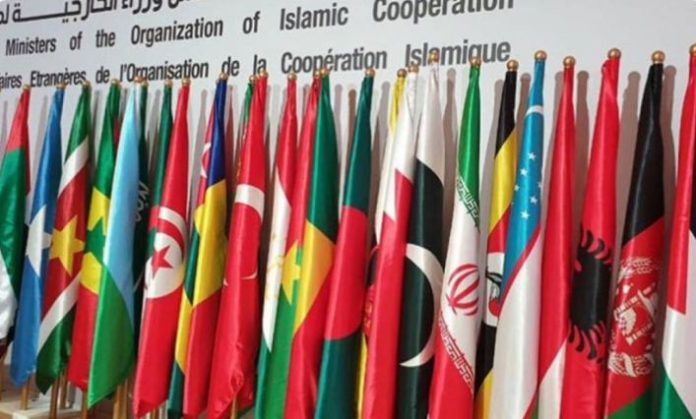
JEDDAH, AUG 18: The Organization of Islamic Cooperation (OIC) has strongly condemned the Israeli prime minister’s visit to the illegal “Ofra” settlement in the occupied West Bank, calling it a provocative act accompanied by racist statements.

According to the OIC, the Israeli leader reaffirmed his commitment to preserving settlements, maintaining control over the so-called “Land of Israel,” and preventing the establishment of a Palestinian state.

In a statement, the OIC said the visit represented a further escalation of Israel’s blatant violations of international law and United Nations resolutions, particularly UN Security Council Resolution 2334 and the advisory opinion of the International Court of Justice, both of which declare settlement activity illegal and demand its immediate cessation.

The organization stressed that the visit and the accompanying rhetoric reflected Israel’s expansionist and colonial intentions, its defiance of the international community, and its undermining of efforts to achieve a just and comprehensive peace in the region based on the two-state solution.

The OIC urged the international community, especially the UN Security Council, to act to end Israel’s occupation and settlement activity and to ensure international protection for the Palestinian people.

Stay Connected

64FansLike
60FollowersFollow

Latest Reviews

Exchange Rates

USD - United States Dollar
EUR
1.17
GBP
1.35
AUD
0.72
CAD
0.73