Home Blog Page 529

PM Shehbaz vows speedy rehabilitation in flood-hit KP

PM Shehbaz vows speedy rehabilitation in flood-hit KP

ISLAMABAD: Prime Minister Shehbaz Sharif on Friday reaffirmed the federal government’s unwavering commitment to supporting the flood-affected families in Khyber Pakhtunkhwa, where over 460 lives lost during recent floods and rains.

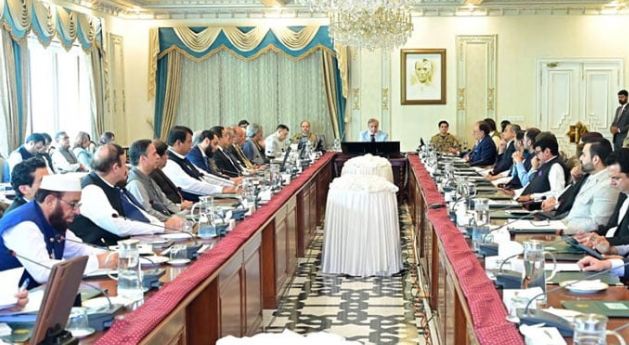
Addressing a meeting of the federal cabinet, PM Shehbaz vowed to expedite the rehabilitation process in the flood-stricken areas of KP.

The premier expressed deep concern over the recent incidents of heavy rains, cloudbursts, and flash floods that have caused widespread devastation across the province, especially in Swat, Swabi, Mansehra, and Shangla.

The flash floods triggered by the worst of this year’s monsoon and cloudbursts, which started in the mountainous northwest, have spread to other parts of the country of 240 million, bringing death and destruction on a large scale.

Authorities have said the longer spell of heavy rain and rare cloudbursts were rooted in climate change due to global warming, fearing the intensity will increase in the coming years.

At least 785 people have lost their lives nationwide in devastating floods triggered by heavy monsoon rains — from June 26 to August 22.

KP registered the highest fatalities at 469, followed by Punjab with 165, Gilgit Baltistan (GB) with 45, Sindh with 51, Balochistan with 24, according to the National Disaster Management Authority (NDMA).

He emphasised that federal ministers, secretaries, the chairman of the National Disaster Management Authority (NDMA), and the armed forces were fully engaged in ongoing relief efforts across the affected areas.

He also noted that Chief of Army Staff Field Marshal Syed Asim Munir had accompanied him during his recent visit to Buner and other flood-affected regions in KP.

Recalling the devastation caused by the 2022 floods, which led to significant property damage and around 100 casualties, the prime minister highlighted the alarming toll of the recent flash floods and cloudbursts. Although the impacted area was relatively limited this time, the human loss has been far greater, with over 700 lives lost—more than 400 of them from KP.

He further mentioned similar weather-related disasters in Karachi, Gilgit-Baltistan, and Azad Jammu and Kashmir, and expressed solidarity with the affected populations.

He stressed that the illegal constructions on the water ways should be discouraged. “I will call a meeting soon to discuss the matter,” he added.

He said that trees were being cut on mass scale in Galyat and other parts of the country.

As regards the visit of Chinese Foreign Minister Wang Yi, the prime minister said China Pakistan strategic friendship was being strengthened day by day. He informed that soon he will visit China to attend Shanghai Cooperation Organization (SCO) Summit where he will also meet the Chinese leadership.

The cabinet also offered Fateha for those lost their lives in the recent rains and flash floods.

At least 785 people have lost their lives nationwide in devastating floods triggered by heavy monsoon rains.

South Africa clinch ODI series after Ngidi wrecks Australia

South Africa clinch ODI series after Ngidi wrecks Australia

South Africa grabbed an unassailable 2-0 lead in the three-match series against world champions Australia after Lungi Ngidi’s five-wicket haul secured their 84-run victory in the second one day international in Mackay on Friday.

Electing to bat, South Africa posted 277 before being all out with five deliveries left in their innings. Matthew Breetzke (88) and Tristan Stubbs (74) smashed half-centuries and South Africa looked poised to cross the 300-mark at one stage.

Not that it really mattered as Ngidi (5-42) and his bowling colleagues bundled out Australia for 193 in 37.4 overs to clinch the series with a match to spare.

Josh Inglis made 87 for Australia, who folded for a sub-200 total for the fourth time in a row in home ODIs.

Earlier, South Africa captain Temba Bavuma was rested as part of his workload management since a hamstring strain in June.

Aiden Markram took over the captaincy but could not lead by example and fell for a duck in the second over after electing to bat first.

Xavier Bartlett claimed a second wicket when he had Ryan Rickelton caught behind in the sixth over.
Breetzke hit Aaron Hardie for two sixes and a four in the bowler’s first over and added 67 runs with Tony de Zorzi (38) to steady the innings.

Adam Zampa (3-63) broke the stand in the 16th over when the spinner took a return catch from de Zorzi.
Nathan Ellis dismissed Breetzke and Dewald Brevis but South Africa, at 233-5 in 40 overs and with two set batters in the middle, still looked in a perfect position for a late flourish.

Australia fought back superbly in the final 10 overs, claiming the last five wickets conceding only 44 runs.
Cameron Green equalled an Australia ODI record for a non-wicketkeeper taking four catches.

Australia, who won the preceding T20 series between the sides, lost opener Travis Head and number three Marnus Labuschagne inside four overs.

It could have been even worse for them but Stubbs spilled Green in the slips and Australia captain Mitchell Marsh at cover.

Marsh could not make the most of the reprieve though and fell for 18 but Green (35) and Inglis soldiered on.
Senuran Muthusamy took a return catch from Green to break the partnership and Ngidi effectively sealed the match when he had Inglis caught behind in the 36th over.

The teams stay put in Mackay for Sunday’s dead rubber.

Envoys of five countries present credentials to President Asif Ali Zardari

Envoys of five countries present credentials to President Asif Ali Zardari

DNA

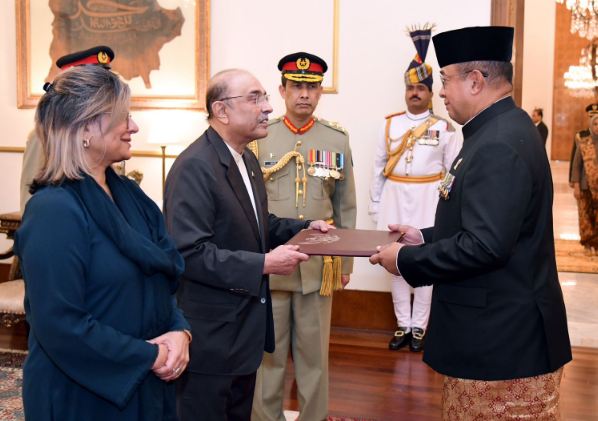
Islamabad, Aug 22: President Asif Ali Zardari has emphasized the need to further strengthen bilateral cooperation with Sri Lanka, Indonesia, Kyrgyzstan, Austria, and Germany in diverse fields, particularly trade, economy, and culture.

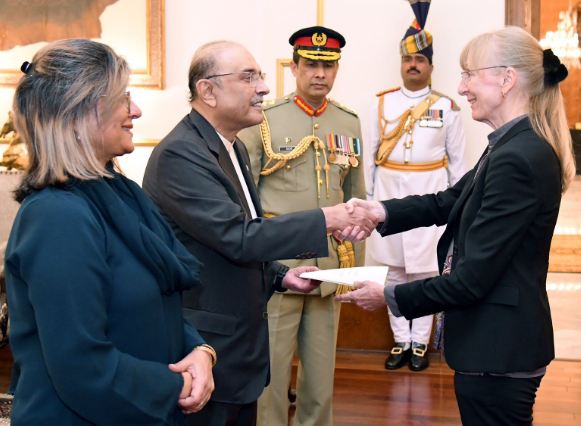
The President expressed these views while talking to the High Commissioner-designate of Sri Lanka and the Ambassadors-designate of Indonesia, Kyrgyzstan, Austria, and Germany to Pakistan, who called on him and presented their diplomatic credentials during a ceremony held at Aiwan-e-Sadr today.

The High Commissioner-designate of Sri Lanka, H.E. Rear-Admiral H.L.A. Don Fred Senevirante, the Ambassador-designate of Indonesia / Chairman of ASEAN Countries, H.E. Mr. Chandra Warsenanto, the Ambassador-designate of Kyrgyzstan, H.E. Mr. Kylychbek Sultan, the Ambassador-designate of Austria, H.E. Mr. Wolfgang Oliver Kutschera, and the Ambassador-designate of Germany, H.E. Mrs. Ina Ruth Luise Lepel, presented their diplomatic credentials to President Asif Ali Zardari.

On their arrival, the envoys were presented with the guard of honour by a smartly turned-out contingent of the Armed Forces.

The President congratulated the High Commissioner and Ambassadors on their new assignments and expressed the hope that their tenure in Pakistan would help further deepen bilateral ties and broaden cooperation in mutually beneficial areas.

New dustbins installed to improve sanitation in G-11 Markaz

New dustbins installed to improve sanitation in G-11 Markaz

ISLAMABAD, AUG 22 /DNA/ – Under the auspices of the Clean & Green Islamabad Movement, a plantation and cleanliness awareness campaign was held at G-11 Markaz. On this occasion, Chairman Clean & Green Islamabad Movement, Ahsan Zafar Bakhtawari, along with Arham Bakhtawari, President of Traders Welfare Association G-11 Naeem Akhtar Awan, Chairman G-11 Markaz Malik Akram Awan, General Secretary Farukh Khan, Sardar Muhammad Asim Abbasi, Patron-in-Chief of G-11 Markaz Raja Ameen, Senior Vice President Nazim Ghori, Hassan Mughal, Feroz Khan, Qasim Shah, and other office bearers, participated in the campaign and planted saplings.

Clean & Green Islamabad Movement also installed dustbins in the Markaz to further improve the sanitation system. The event was also attended by President E-11 Zahir Abbasi, ICCI Executive Members Malik Abdul Aziz, Mohsin Khalid, Ruhail Anwar Butt, Khalid Chaudhry, Nisar Mirza, along with other representatives of the business community.

Addressing the ceremony, Ahsan Zafar Bakhtawari said that the purpose of the Clean & Green Islamabad Movement is not just cleanliness or plantation, but to create awareness in the hearts of the people that this city belongs to us, and its beauty is our collective responsibility. The plantation drive and installation of dustbins in G-11 Markaz is part of this vision, so that we can hand over a clean and green Islamabad to the coming generations. He emphasized that true progress of society becomes possible only when both the public and business community play their role. He appreciated the cooperation of the traders and said that the goal is to transform every commercial center of Islamabad into a Clean & Green Model.

President G-11 Traders Welfare Association Naeem Akhtar Awan said that cleanliness is half of faith, and today, with this pledge, we all are gathered here to not only keep our Markaz clean but also raise awareness among people. General Secretary Farukh Khan said that this initiative is a positive example for both civic facilities and the environment.

Malik Akram Awan, Sardar Muhammad Asim Abbasi, Raja Ameen, Nazim Ghori, Hassan Mughal, Feroz Khan, and Qasim Shah appreciated the efforts of Chairman Clean & Green Islamabad Movement Ahsan Zafar Bakhtawari, saying that he not only carried out practical steps such as plantation and installation of dustbins in G-11 Markaz, but earlier also installed a filtration plant to provide healthy and quality facilities to the public.

They added that the Clean & Green Islamabad Movement reflects a positive vision and practical struggle, aiming not only at cleanliness and plantation but also at fostering awareness of collective responsibility among citizens. These measures will not only improve the environment of the Markaz but also ensure a clean, green, and healthy Islamabad for future generations.

Bangladeshi general lauds professionalism of Pakistan’s Armed Forces

Bangladeshi general lauds professionalism of Pakistan's Armed Forces

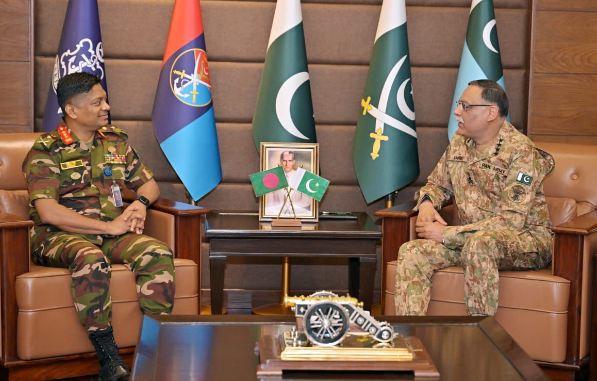
RAWALPINDI, AUG 22 /DNA/ – Lieutenant General Md Faizur Rahman, Quarter Master General, Bangladesh Army called on General Sahir Shamshad Mirza, NI, NI (M), Chairman Joint Chiefs of Staff Committee (CJCSC) at Joint Staff Headquarters, Rawalpindi.

During the meeting, both sides discussed the prevailing security environment in the region and laid emphasis on shared resolve for enhancing existing cooperation in defence and security domain. Chairman JCSC highlighted the rising trajectory of bilateral relations between both the countries and identified new avenues of defence cooperation.

The visiting dignitary lauded the professionalism of Pakistan Armed Forces and acknowledged their sacrifices in fight against terrorism.

FM Dar Arrives In Dhaka for Bilateral Talks

FM Dar Arrives In Dhaka for Bilateral Talks

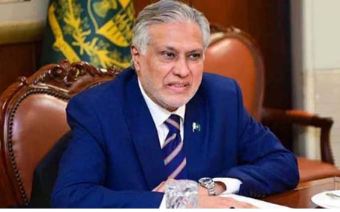
ISLAMABAD, AUG 22 /DNA/ – On the invitation of the Government of the People’s Republic of Bangladesh, Deputy Prime Minister and Foreign Minister, Senator Muhammad Ishaq Dar, will pay an official visit to Bangladesh on 23-24 August 2025.

In Dhaka, the Deputy Prime Minister and Foreign Minister (DPM/FM) will hold important meetings with various Bangladeshi leaders, including Chief Adviser, H.E. Professor Muhammad Yunus, and Adviser for Foreign Affairs, H.E. Mr. Md. Touhid Hossain. The whole range of bilateral relations and a number of regional and international issues will be discussed during these meetings.

Sri Lanka arrests former president Wickremesinghe, local media reports

Sri Lanka arrests former president Wickremesinghe, local media reports

COLOMBO: Former Sri Lankan President Ranil Wickremesinghe was arrested by the Criminal Investigation Department (CID) on Friday in connection with allegations of misuse of state funds, local television channel Ada Derana reported.

Wickremesinghe, 76, was taken into custody after arriving at the CID office in the capital Colombo to record a statement in an investigation into his visit to London to attend his wife’s graduation ceremony, the report said.

A Sri Lankan police spokesperson did not immediately confirm the arrest. Wickremesinghe’s office did not respond to a request for comment from Reuters.

He was due to appear in court later on Friday, local media reported.

A lawyer who served as Sri Lanka’s prime minister a record six times, Wickremesinghe was made president in 2022 during the Indian Ocean island nation’s debilitating financial crisis.

Wickremesinghe, who is the leader of the United National Party (UNP), took over after widespread protests caused by an economic meltdown forced his predecessor Gotabaya Rajapaksa to flee the country and later resign.

He finished third in last year’s presidential election – the first since the economic crisis – behind Marxist-leaning Anura Kumara Dissanayake, who won the vote, and opposition leader Sajith Premadasa.

The election was a referendum on Wickremesinghe, who led a successful but fragile economic recovery that included austerity measures that angered voters.

Born into a prominent family of politicians and businessmen with large media interests, in 1978 Wickremesinghe was, at 29, made the country’s youngest cabinet minister by his uncle, President Junius Jayewardene.

In 1994, following assassinations that wiped out several of his senior colleagues, Wickremesinghe became leader of the UNP.

The Future of NATO: Do We Still Need It?

The Future of NATO: Do We Still Need It?

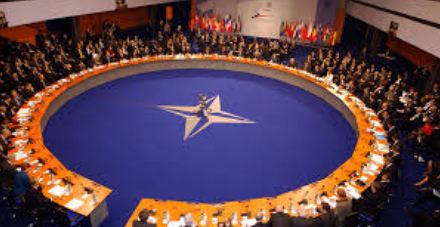
NATO (North Atlantic Treaty Organization) was created in 1949 to provide collective defense for its member states, primarily in Europe and North America. The core principle of the alliance is that an attack against one member is considered an attack against all, as outlined in Article 5 of the NATO treaty. This principle has been invoked only once, in response to the September 11 terrorist attacks in 2001.

Following the Cold War, NATO shifted its focus from solely deterring Soviet threats to addressing a wider scope of security challenges. The alliance expanded its roles into crisis management, peacekeeping, and combatting terrorism. NATO conducted missions in the Balkans, Afghanistan, and maritime security operations. Furthermore, the alliance grew eastward, incorporating many former Warsaw Pact countries and Soviet republics, thereby redefining its strategic objectives.

Today, NATO faces multifaceted challenges that raise questions about its traditional role and future viability. The most acute challenge is the resurgence of Russia as a geopolitical adversary, especially after its invasion of Ukraine in 2022. This conflict revitalized NATO’s original mission of collective defense and caused members to strengthen their military presence, especially in Eastern Europe.

Simultaneously, internal disputes within NATO have emerged, including disagreements over defense spending and diverging views on global powers such as China and Russia. Some member states have questioned NATO’s ongoing relevance and the financial costs of membership, particularly as security threats evolve beyond traditional military conflicts into realms such as cyber warfare, terrorism, and hybrid warfare.

The rise of China as a global power also affects NATO’s strategic considerations. Although China does not pose a direct military threat to NATO members comparable to Russia, its expanding influence in technology, economics, and geopolitics challenges the alliance to reexamine and update its strategic priorities accordingly.

Despite these challenges, several strong arguments affirm NATO’s continued necessity:Collective Defense and Deterrence: NATO remains the world’s most effective military alliance for credible deterrence against aggression, particularly from Russia. Its integrated command structure and coordinated capabilities outperform any other security arrangement globally.

Political Unity: Beyond its military functions, NATO fosters vital political dialogue and cooperation among Western democracies. This coordination helps address a broad spectrum of security issues, including counterterrorism and cyber defense.

Adaptability: NATO has demonstrated resilience and adaptability over decades. It is expanding its focus to include new domains like cyber and space and is exploring partnerships beyond the traditional Euro-Atlantic sphere.

Support for Global Stability: Through joint exercises and partnerships, NATO plays a crucial role in stabilizing conflict regions and enhancing interoperability among diverse militaries worldwide.

NATO’s future will largely depend on its ability to reform and stay relevant amid an increasingly complex global environment. Key priorities include:Resolving internal divisions and achieving equitable burden-sharing among members.Enhancing capabilities to counter hybrid and cyber threats.Engaging emerging powers and expanding strategic partnerships worldwide.Maintaining focus on collective defense while developing strategies to tackle non-traditional security challenges.

The world has transformed dramatically since NATO’s founding. Yet, its core mission of collective defense, paired with evolving capabilities, continues to make NATO an indispensable component of global security architecture. While reforms and modernization are necessary, abandoning NATO now would risk creating a security vacuum that could empower adversarial powers. Therefore, despite ongoing debates, NATO remains essential—albeit in a transformed, modernized form designed to meet the strategic challenges of the 21st century.

Chinese Foreign Minister  Wang Yi Visits Pakistan

Chinese Foreign Minister Wang Yi Visits Pakistan

In a significant diplomatic engagement, Chinese Foreign Minister Wang Yi visited Pakistan this week to discuss the ongoing progress of the China-Pakistan Economic Corridor (CPEC) and the bilateral cooperation between the two countries. The visit underscored China’s commitment to deepen ties with Pakistan and highlighted both the achievements and challenges faced in the ambitious CPEC project.

Wang Yi expressed China’s strong desire to continue developing Pakistan through enhanced economic and infrastructural cooperation. “China views Pakistan as a key partner in its Belt and Road Initiative and is dedicated to supporting Pakistan’s socio-economic development,” Wang stated during his meetings with Pakistani leaders. The visit aimed to review the current status of CPEC Phase 2 projects, which include energy, infrastructure, and industrial cooperation sectors, emphasizing mutual benefits.

While CPEC has made notable progress since its inception, the Foreign Minister acknowledged that the corridor faces multiple hurdles. Among the most significant issues highlighted was the security situation in Balochistan. The province has long been a hotspot for insurgencies and terrorist activities, posing risks to Chinese personnel and infrastructure. Wang Yi referenced the tragic losses China has suffered in the region, where several Chinese nationals have been targeted and killed by militant groups.

“Security concerns remain the greatest challenge for CPEC’s full potential to be realized,”. He called for stronger collaboration between Pakistan’s security forces and Chinese experts to ensure the safety of workers and assets involved in the projects. Both sides agreed that counterterrorism efforts must intensify, and political stability in Balochistan is crucial for the corridor’s uninterrupted progress.

China has invested heavily in Pakistan over the years, with billions of dollars committed to building roads, power plants, and industrial zones. Wang emphasized that despite the challenges, China cannot simply abandon its investments and partnerships in Pakistan. .

On the diplomatic front, discussions also touched upon Pakistan’s balancing act between China and the United States. Pakistan has carefully maintained its ties with both powers amid increasing tensions and global competition. The United States has reportedly urged Pakistan to reduce its dependence on China, pushing Islamabad to diversify its alliances and economic partners.

However, Pakistani officials made it clear that reducing reliance on China is not feasible at this stage. The deep-rooted economic involvement, especially through CPEC, makes Pakistan-China cooperation vital for Islamabad’s development agenda. Pakistan views its partnership with China as both a geopolitical necessity and an economic opportunity, while still keeping diplomatic channels open with the US.

Wang Yi concluded his visit by reaffirming China’s vision of a “win-win” relationship with Pakistan and pledged to work through current challenges together. Both sides agreed to accelerate the implementation of CPEC Phase 2 initiatives and enhance security measures to protect ongoing projects.

In summary, the visit of Chinese Foreign Minister Wang Yi served as a reminder of the strategic importance China places on Pakistan amidst regional complexities. While progress on CPEC continues, addressing the security and political issues in Balochistan remains paramount. Pakistan’s position of balancing relations between China and the US continues to be delicate, but its commitment to China’s partnership appears steadfast in the foreseeable future. The success of CPEC will depend largely on how well both countries manage these intertwined challenges moving forward.

PHA hosts Ethio-Pakistan green dialogue in Lahore

PHA hosts Ethio-Pakistan green dialogue in Lahore

LAHORE, AUG 22 /DNA/ – An Ethiopia-Pakistan Green Dialogue was held at a local hotel in Lahore to promote green culture, innovation and technology in the global south for effectively fighting the climate change.

The “Ethiopia–Pakistan Green Dialogue: Lessons from Ethiopia’s Green Legacy” was jointly organized by the Ethiopian Embassy Islamabad and the Parks & Horticulture Authority Lahore, Government of the punjab.

The event was graced by Bilal Yasin, Minister of Punjab for Housing, Urban Development and Public Health Engineering as a Chief Guest, while Muddassir Riaz Malik, Secretary Forest, Wildlife & Fisheries Department, DG PHA Punjab Naheed Gul Baloch and Zaki Ijaz, Vice President of Federations of Pakistan Chamber of Commerce and Industry attended as the guests of honor.

A delegation from Ethiopia took part in the Dialogue which saw huge presence from Pakistan including government officials, diplomatic corps, climate experts, University professors, business community, academia, youth and civil society.

H.E. Dr. Jemal Beker Abdula, Special Envoy and Ambassador Extraordinary of the Federal Democratic Republic of Ethiopia, presided over the dialogue along with H.E. Mansoor Ahmad, Director General PHA.

Addressing the launching the ceremony of dialogue, the Ambassador briefed the participants about the importance of massive plantation through community mobilization to avert the adverse impacts of the climate change.

He said Pakistan needs to learn from Ethiopia’s Green Legacy Initiative of our Prime Minister H.E. Dr. Abiy Ahmed, whose leadership and commitment helped Ethiopia plant more than 41.2 seedlings that significantly enhancing green cover through forestation and reforestation and addressing food insecurity, soil erosion, poverty and unemployment.

The Ambassador said Pakistan is facing the severe climate changes despite being the least contribution to the carbon emissions. “Pakistan is not alone in its fight against climate change as Ethiopia firmly stands with its brothers and sisters from Pakistan.

He said the Government of Ethiopia has sent a high-level delegation to Pakistan to express solidarity and share our experiences with Pakistan to tackle the climate changes. “I would like to thank H.E. Maryam Nawaz Sharif, Chief Minister of Punjab, for providing us this opportunity to initiate the discussions on the Green Legacy Initiative in Punjab,” he added.

The DG PHA said the dialogue is the manifestation of the climate-friendly agenda of Chief Minister Punjab who is committed to modernize Punjab in sustainable manner.

He appreciated the Green Legacy Initiative and vowed to strengthen the two sides partnership in this regard.

FPCCI Vice President Zaki Aijaz lauded the initiative taken by the Ethiopian Embassy Islamabad and Government of Punjab to promote dialogue to address the issue of most pressing issues of our times—climate change.

As part of the proceedings, Green Legacy Awards were presented, followed by a mass tree plantation ceremony, reflecting the shared commitment of Pakistan and Ethiopia towards a greener future.

A thought-provoking panel discussion on Green Legacy Initiatives brought together experts and policymakers who shared innovative strategies, policy frameworks, and community engagement models to promote long-term environmental sustainability.

The session concluded with a lively Q&A, where participants expressed strong support for further enhancing Pakistan–Ethiopia collaboration in climate resilience, ecological restoration, and sustainable development.

Stay Connected

64FansLike
60FollowersFollow

Latest Reviews

Exchange Rates

USD - United States Dollar
EUR
1.17
GBP
1.35
AUD
0.72
CAD
0.73