Home Blog Page 526

Pakistan at OIC Summit calls Gaza a “Graveyard for Int’l Law,” proposes seven-point plan for peace

Pakistan at OIC Summit calls Gaza a

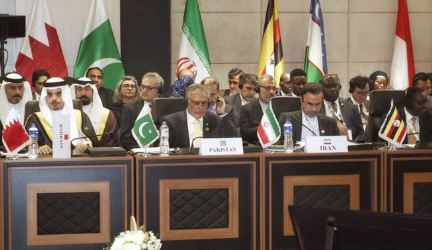
ISLAMABAD, AUG 25 /DNA/ – At the 21st Extraordinary Session of the OIC Council of Foreign Ministers, Pakistan delivered a powerful address condemning Israel’s ongoing military assault in Gaza and outlining a comprehensive path toward lasting peace and justice for the Palestinian people.

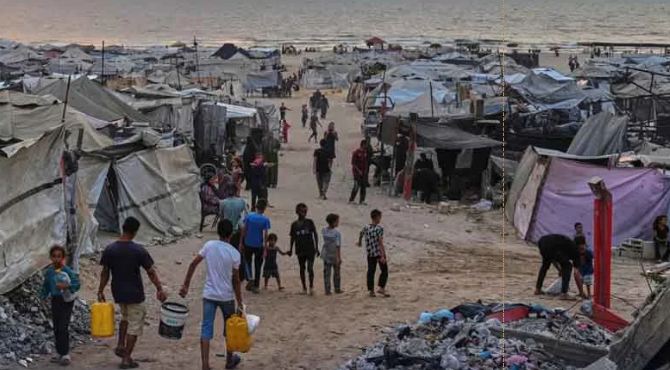
The statement, delivered on Monday, characterized Gaza as enduring a “full-scale humanitarian catastrophe” and a “graveyard for innocent lives as well as for international law.” It highlighted that over 60,000 Palestinians, mostly women and children, have been killed with impunity.

Condemnation of Israeli Expansionist Threats

Pakistan strongly condemned recent “highly provocative and unwarranted statements” from Israeli officials, specifically denouncing the cabinet’s plan to extend full military control over Gaza and the Prime Minister’s allusion to a ‘Greater Israel.’

“His statement constitutes a direct threat to Arab national security, to the sovereignty of states, and to regional and international peace and security,” the address stated, affirming Pakistan’s full solidarity with brotherly Arab states against these threats.

The Seven-Point Peace Plan

To end the cycle of violence, Pakistan reiterated an urgent seven-point plan for the international community:

  1. An immediate, permanent, and unconditional ceasefire.
  2. Unfettered and secure humanitarian access.
  3. Renewed international support for UNRWA.
  4. An end to forced displacement and illegal settlement expansion.
  5. Implementation of an Arab-OIC-led reconstruction plan for Gaza.
  6. Revival of a time-bound process for a two-state solution.
  7. Accountability for war crimes and crimes against humanity.

A Call for Action, Not Words

Emphasizing that this is a “defining moment for the Muslim Ummah,” the statement argued that history will judge leaders by their actions, not their words. It called on the UN Security Council to fulfill its duty by imposing a cost on Israel and considering the deployment of an international protection force for Gaza.

Pakistan, as a non-permanent member of the UNSC, pledged to continue working with OIC and Arab partners to mobilize global support for Palestinian rights, self-determination, and a just and lasting peace based on pre-1967 borders with Jerusalem as its capital.

About the Organization of Islamic Cooperation (OIC):
The OIC is the second-largest intergovernmental organization after the United Nations, with 57 member states across four continents. It is the collective voice of the Muslim world, safeguarding and protecting its interests in the spirit of promoting international peace and harmony.

India contacts Pakistan for second time to ‘alert about potential flood’

India contacts Pakistan for second time to 'alert about potential flood'

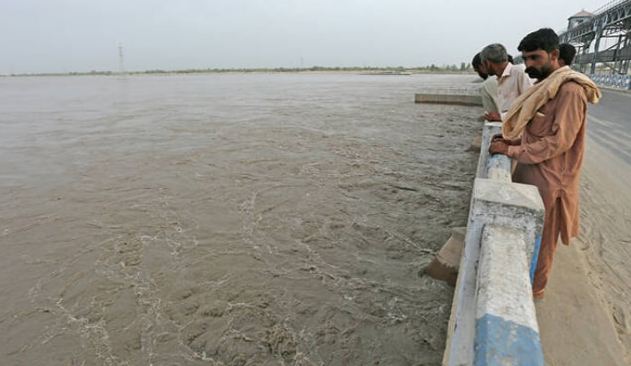
ISLAMABAD, AUG 25: India on Monday made a second contact with Pakistan in a day to warn Islamabad about a potential flood in the Sutlej River, after issuing a previous warning about the Tawi River at Jammu, diplomatic sources told Geo News.

The Indian High Commission in Islamabad reached out to the Ministry of Foreign Affairs to convey details regarding possible flood conditions in the Sutlej River, the sources said.

They added that India has shared such data with Pakistan during flood situations in the past.

Separately, the Foreign Office said that India — before the latest contact — communicated flood warnings through diplomatic channels, rather than through the bilateral commission as required under the Indus Waters Treaty (IWT), Radio Pakistan reported.

The FO reaffirmed that India is obligated to fully comply with all provisions of the treaty.

It said India’s unilateral declaration to hold the IWT in abeyance constitutes a serious violation of international law and could have significant negative consequences for peace and stability in South Asia.

It is noteworthy to mention here that India reached out to Pakistan for the first time hours earlier after the May military standoff to share details on a potential major flood in the Tawi River at Jammu.

The Indian High Commission in Islamabad conveyed the alert, with the communication made on the morning of Sunday, August 24, they added.

Following the alert, Pakistani authorities issued warnings based on the information provided by India, the sources confirmed.

In the wake of the killing of 26 people in the Pahalgam area of the Indian Illegally Occupied Jammu and Kashmir (IIOJK) in April, India held the IWT with Pakistan in abeyance.

New Delhi accuses Islamabad of orchestrating the deadly militant attack, an allegation that Pakistan denies.

Based on these groundless allegations, India waged a war against Pakistan in May, resulting in the heaviest military engagement in decades, before a ceasefire was brokered by the US.

The water treaty had survived three wars and other conflicts between the two rivals, while withstanding many twists and turns in diplomatic ties.

Reuters reported on May 16 that Delhi is considering projects that would likely reduce the flow of water into Pakistan from rivers allocated to that country.

India has also said that it will “keep the treaty in abeyance until Pakistan credibly and irrevocably abjures its support for cross-border terrorism.”

In contrast, Islamabad says “any attempt to stop or divert the flow of water belonging to Pakistan” will be an “act of war”.

What is Indus Waters Treaty?
The nuclear-armed neighbours disagree over the use of the water from rivers that flow downstream from India into the Indus River basin in Pakistan.

The use of the water is governed by the IWT, which was mediated by the World Bank and signed by the neighbours in September 1960.

The agreement split the Indus and its tributaries between the two countries and regulated water sharing. India was granted the use of water from three eastern rivers — Sutlej, Beas and Ravi — while Pakistan was granted most of the three western rivers — Indus, Jhelum and Chenab.

There is no provision in the treaty for either country to unilaterally suspend or terminate the pact, which has clear dispute resolution systems.

UNESCO adds 26 new treasures to World Heritage List for 2025

UNESCO adds 26 new treasures to World Heritage List for 2025

John Garry

Romantic German castles, ancient Australian petroglyphs, and a karst canyon carved through a lush Brazilian park: the 26 new destinations inscribed to UNESCO’s World Heritage List in 2025 honor human history and natural wonders across the globe, preserving each treasure for generations to come.

The latest picks were announced in July at the World Heritage Committee’s Paris conference, where members voted to expand the list to 1248 sites.

To make the list, a destination must meet one of 10 criteria tied to cultural, historical or natural significance – reflected in UNESCO sites like Cambodia’s ancient Angkor Wat and Yellowstone’s bubbling geysers.

UNESCO’s stamp of approval can boost tourism and national pride, but may also wind up encouraging overtourism and ecological strain. Still, the benefits often outweigh the costs, providing a framework for conservation while inspiring international acclaim.

For destinations under duress, the label can also act as a lifeline. When UNESCO added Palestine’s Monastery of Saint Hilarion to its Endangered List in 2024, it opened the door to technical and financial aid during the ongoing conflict in the Gaza Strip.

This year’s additions span six continents and more than one million years of history, spotlighting both bucket-list landmarks and lesser-known marvels. Here are eight of the most travel-worthy spots from 2025.

Neuschwanstein Castle, Bavaria, Germany.
Neuschwanstein Castle, Bavaria, Germany. Francesco Carucci/Shutterstock
The Palaces of King Ludwig II of Bavaria
Germany

Schloss Neuschwanstein – the inspiration for Disneyland’s Sleeping Beauty Castle – enchanted its way onto the World Heritage List with three other 19th-century German complexes built under King Ludwig between 1864 and 1886. The theatrical assemblage – Neuschwanstein, Linderhof, Schachen and Herrenchiemsee – fuses fairy-tale design with Bavaria’s alpine landscape, showcasing Ludwig’s love of Germanic folklore and Wagnerian grandeur. Neuschwanstein is the most recognizable of the bunch, attracting 1.4 million visitors annually – many of whom travel from Munich, Bavaria’s capital, to see the limestone stunner rising above the forested lake region. Ludwig, who withdrew from public life, lived in the castle for a short 170 days before he was found dead along with his psychiatrist, who certified him insane. The fortress opened as a museum shortly after, transforming Ludwig’s private dream world into one of Germany’s most idyllic destinations.

The Archaeological Ensemble of 17th Century Port Royal
Jamaica

Once dubbed “the wickedest city on earth,” Port Royal fashioned itself into a global hub of 17th-century English commerce. As merchants grew rich by trading enslaved Africans and sugar, the Kingston Harbour town thrived as a home base for pirates and a haven for vice. It all came crashing down in 1692, when a powerful earthquake sank two-thirds of the city within minutes, preserving everything from brothels and religious buildings like a Caribbean Pompeii. Now the only sunken city in the Western Hemisphere, Port Royal offers archaeological insight into colonial life. Fort Charles – the only fort to survive the earthquake – unearths the town’s maritime past on dry land. Scuba tours of the city’s underwater resting place require a government permit.

Western Xia tombs (Xixia Wangling) is a famous historic site in Yinchuan, Ningxia, China.
Western Xia tombs (Xixia Wangling) in Yinchuan, Ningxia, China. beibaoke/Shutterstock
Xixia Imperial Tombs
China

Rising like weathered beehives from the arid eastern foothills of China’s Helan Mountains near Yinchuan, these nine majestic mausoleums and 271 lesser tombs mark the imperial burial grounds of the Xixia Dynasty. Founded in 1038 and destroyed by Genghis Khan’s forces in 1227, the once-mighty Buddhist civilization became a cultural melting pot along the Silk Road where numerous ethnic groups coexisted. The tombs mirror their exchange of ideas, blending Chinese imperial design with artistic influences from Tibet and Central Asia. It’s all anchored by Tomb No. 3 – a 75ft-tall (23m) pagoda built for the dynasty’s first emperor, Li Yuanhao – a small glimpse into the vanished kingdom’s complex culture.

Cambodian Memorial Sites
Cambodia

These Cambodian memorial sites mark the violent legacy of the Khmer Rouge – a rare World Heritage addition spotlighting contemporary atrocities. Between 1975 and 1979, the Communist Khmer Rouge regime murdered an estimated 1.7 to 3 million people – a fifth of the nation’s population. At the Tuol Sleng Genocide Museum, located in capital city Phnom Penh, visitors walk the halls of a high school-turned-prison where more than 15,000 people were tortured and killed. Choeung Ek, featured in the 1984 film The Killing Fields, was used as an execution site and mass grave – now a somber spot for contemplation, 9.3 miles (15km) south of Phnom Penh. A third site, the rural Kampong Chhnang province’s M-13 prison, served as a testing ground for early Khmer Rouge imprisonment and torture practices. Together, these locations preserve the memory of those lost and stand as warnings for future generations.

Murujuga Cultural Landscape
Australia

Western Australia’s remote Burrup Peninsula is home to the world’s largest collection of rock art – a series of up to two million petroglyphs demonstrating more than 50,000 years of Aboriginal creativity. Images of kangaroos, emus, extinct species and the oldest known depiction of a human face decorate the landscape, etched by Ngarda-Ngarli ancestors, whose descendants still steward the red-rock terrain. In recent years, fertilizer and gas plants have threatened the fragile earthworks with toxic acid emissions, and UNESCO’s backing brings hope for protection. One of the best ways to appreciate the art is through Ngurrangga Tours, an Aboriginal-owned company that guides visitors through Murujuga National Park.

Mulanje Massif (mountain) in Malawi.
Mulanje Massif in Malawi. Radek Borovka/Shutterstock
Mount Mulanje Cultural Landscape
Malawi

Soaring more than 8201ft (2500m) above southern Malawi’s tea-growing plains, Mount Mulanje is one of the world’s largest inselbergs – a dramatic rock formation jutting abruptly from flatlands like an island in the sky. For the Indigenous Yao, Mang’anja and Lhomwe communities, this towering massif is more than a geological landmark – it’s a sacred site inhabited by ancestral spirits and central to their cultural practices. The granite giant is also Malawi’s premier hiking destination. Visitors can trek through cedar forests and camp in rustic huts with the help of expert guides, who impart local legends and point out endemic fauna like the klipspringer, a nimble-footed dwarf antelope. Routes range from several miles to five-day excursions, passing rambling rivers and waterfalls. Find guides and pre-book huts via Mountain Club of Malawi.

Peruaçu River Canyon
Brazil

It’s all about natural beauty around the Peruaçu River Canyon – a vast karst landscape of cathedral-sized caverns sculpted by water over millions of years. Located within Cavernas do Peruaçu National Park, open since 2014, hikers can spot ancient rock art while crossing an underground waterway flowing beneath dramatic limestone arches. Janelão Cave is the park’s pièce de résistance – a 328ft-high (99m) nature-made temple decorated with the 92ft (28m) Perna da Bailarina (Ballerina’s Leg) – the world’s biggest stalactite. Sunlight streams into many of the subterranean lairs, illuminating their wonders like a well-curated museum exhibit. Visitors must hire a certified local guide to enter the park, where three biomes converge to support more than 2000 plant and animal species.

Minoan Palatial Centres
Greece

Possibly the inspiration for Plato’s legendary Atlantis, the Minoan civilization of Crete was a Mediterranean trendsetter during the Bronze Age. Its influences stretch from Egypt to mainland Greece and beyond, reflected in the six sites added to the World Heritage list. Each ruin – palatial complexes that doubled as community centers from 1900 to 1100 BCE – showcases the sophisticated culture’s knack for architecture and urban planning. Most magnificent is the labyrinthine Palace of Knossos, 3 miles (5km) south of the city of Iraklio, with its frescoes of mythical beasts and community rituals. Nearby centers, such as Phaistos and Malia, echo the island’s legacy – each an ancient piece of Crete’s mysterious puzzle.

Sunset view of the north entrance to Knossos palace at Greek island Crete.
The Palace of Knossos on the Greek island of Crete during sunset. trabantos/Shutterstock
The complete list of new World Heritage sites
Here’s the full list of UNESCO’s latest additions for 2025, by continent:

Africa
Diy-Gid-Biy Cultural Landscape of the Mandara Mountains, Cameroon

Coastal and Marine Ecosystems of the Bijagós Archipelago – Omatí Minhô, Guinea-Bissau

Mount Mulanje Cultural Landscape, Malawi

Gola-Tiwai Complex, Sierra Leone

Asia
Cambodian Memorial Sites: From centers of repression to places of peace and reflection, Cambodia

Cultural Heritage Sites of Ancient Khuttal, Tajikistan

Faya Palaeolandscape, United Arab Emirates

Maratha Military Landscapes, India

Prehistoric Sites of the Khorramabad Valley, Iran

Petroglyphs along the Bangucheon Stream, Republic of Korea

Mount Kumgang – Diamond Mountain from the Sea, Democratic People’s Republic of Korea

Yen Tu-Vinh Nghiem-Con Son, Kiep Bac Complex of Monuments and Landscapes, Viet Nam

Forest Research Institute Malaysia (FRIM) Forest Park Selangor, Malaysia

Xixia Imperial Tombs, China

Australia
Murujuga Cultural Landscape

Europe
Megaliths of Carnac and of the shores of Morbihan, France

The Palaces of King Ludwig II of Bavaria, Germany

Funerary Tradition in the Prehistory of Sardinia – The domus de janas, Italy

Møns Klint, Denmark

Minoan Palatial Centres, Greece

Rock Paintings of Shulgan-Tash Cave, Russian Federation

Sardis and the Lydian Tumuli of Bin Tepe, Türkiye

North America
Wixárika Route through Sacred Sites to Wirikuta (Tatehuarí Huajuyé), Mexico

The Archaeological Ensemble of 17th Century Port Royal, Jamaica

The Colonial Transisthmian Route of Panamá, Panama

South America
Cavernas do Peruaçu National Park, Brazil

Pakistan deploys business delegation to forge Malaysia ties

Pakistan deploys business delegation to forge Malaysia ties

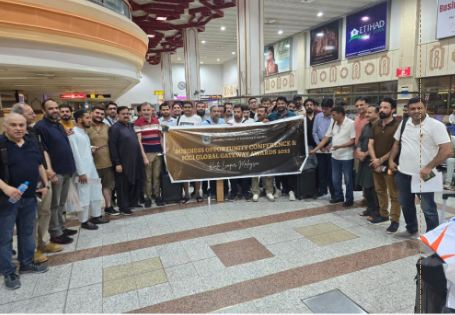
ISLAMABAD, AUG 25 /DNA/ – A high-profile delegation of more than eighty prominent businessmen and investors representing diverse economic sectors has arrived in Kuala Lumpur to take part in the Business Opportunity Conference (BOC) and ICCI Global Gateway Awards 2025. The prestigious event, organized by the Islamabad Chamber of Commerce and Industry (ICCI), is aimed at boosting trade, investment, collaboration, cultural exchange, and tourism promotion between Pakistan and Malaysia.

On the eve of the departure of the delegation, the ICCI President Nasir Mansoor Qureshi advised the participants to grasp and encash this golden opportunity to showcase Pakistan’s true business potential before the world.

The BOC and awards ceremony will hopefully  be attended by top dignitaries, including the Deputy Prime Minister of Malaysia, the Governor of Malacca, federal ministers from both countries, leading CEOs, diplomats, diaspora leaders, and senior media professionals.

The program will feature exclusive B2B networking sessions, investment matchmaking, and business dialogues, facilitated by the Malaysian government, international business leaders, and the High Commission of Pakistan in Malaysia. Alongside business interactions, delegates will also explore Malaysia’s rich heritage and culture through guided tours and entertainment programs.

Nasir Mansoor Qureshi further remarked that this milestone initiative would serve as a powerful branding platform for Pakistani enterprises to build strategic alliances, secure joint ventures, and strengthen economic diplomacy. “This is the time to encash the opportunity, promote Pakistani products, and establish lasting partnerships with Malaysian counterparts,” he emphasized.

The ICCI delegation is expertly led by Senior Vice President Abdul Rehman Siddiqui, accompanied by Vice President Nasir Mehmood Chaudhry, alongside a distinguished group of Executive Members and other key stakeholders.

Pakistan–Morocco parliamentary friendship group pledges to deepen bilateral cooperation

Pakistan–Morocco parliamentary friendship group pledges to deepen bilateral cooperation

DNA

ISLAMABAD, AUG 25 /DNA/ – A meeting of the Pakistan–Morocco Parliamentary Friendship Group was held at Parliament House under the convenorship of Hon. Senator Bilal Ahmed Khan. The meeting was attended by H.E Mr.Mohamed Karmoune, Ambassador of the Kingdom of Morocco, along with senior Romanian officials and Members of the Senate, including Senators Faisal Saleem Rahman, Mir Dostian Khan Domki, Umer Farooq, and Advisor to the Chairman Senate, Ms. Misbah Khar.

In his opening remarks, Senator Bilal Ahmed Khan underscored the importance of fostering closer Parliamentary, economic, and diplomatic ties between the two countries. Senators and Advisor to the Chairman Senate Ms. Misbah khar extended a warm welcome to the delegation. Both sides expressed mutual interest in expanding cooperation in key sectors such as education, health, trade, and agriculture. The group emphasized that regular parliamentary exchanges can serve as a strong foundation for long-term collaboration and people-to-people connectivity.

Supporting these views, Ms. Misbah khar highlighted the need for institutional collaboration within bilateral and constitutional policy frameworks. She also identified trade, tourism, and cultural exchange as key areas for building a long-term partnership.

H.E Mr.Mohamed Karmoune, reaffirmed Morocco’s commitment to advancing bilateral relations with Pakistan. He stressed the importance of balancing trade by encouraging greater imports from Pakistan. During the meeting, it was also addressed that the challenges faced by Morocco nationals in obtaining Pakistani visas. H.E Mr.Mohamed Karmoune, added that Morocco has already extended the facility of e-visa for Pakistani citizens and requested reciprocal facilitation to ease the process for Morocco applicants. He also extended an invitation to undertake high-level visits in order to further strengthen bilateral relations.

Senator Faisal Saleem Rahman identified several promising areas for future collaboration, including education, medical equipment, sports, tourism, and defence training. He emphasized that a bilateral agreement should be established between Pakistan and Morocco to promote tourism. He also stated that scholarships should be awarded to Students in Pakistan on a province-wise basis.

The meeting concluded with both sides reaffirming their commitment to further deepen Pakistan–Morocco relations through sustained parliamentary diplomacy and enhanced institutional cooperation. Members underscored that continued dialogue, regular exchanges, and practical initiatives will serve as a catalyst for fostering stronger bilateral ties and greater people-to-people connectivity.

Islamabad High Court blocks deportation of 18 Afghan refugees with expired PoR cards

Islamabad High Court blocks deportation of 18 Afghan refugees with expired PoR cards

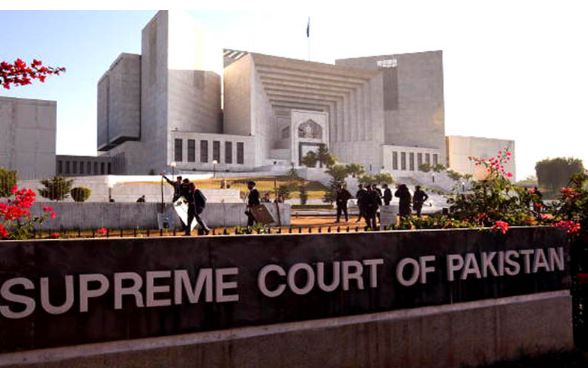
ISLAMABAD/KABUL, AUG 25: The Islamabad High Court has halted the deportation of 18 Afghan refugees with expired PoR cards, granting temporary relief amid Pakistan’s broader repatriation plan starting September.

The Islamabad High Court has issued a temporary reprieve preventing the deportation of 18 Afghan refugees holding expired Proof of Registration (PoR) cards. Notices were sent to Pakistan’s Interior Ministry, Immigration Department, and Federal Investigation Agency.

Chief Justice Sarfraz Dogar ruled in response to petitions filed by the individuals, who are reportedly linked to the family of the late Fazlur Rahman—who had sought Pakistani citizenship in 2008 after legally fulfilling all requirements.

The court’s directive prohibits deportation of these 18 individuals until further notice. This order comes amid intensifying enforcement under Pakistan’s “Illegal Foreigners Repatriation Plan,” which targets refugees with PoR cards whose documentation expired on June 30.

The federal government has notified that deportations of PoR cardholders will begin from September 1, following a voluntary return period from August 4 to August 31.

Meanwhile, human rights agencies and the UNHCR continue to express serious concerns. They warn that coercive repatriations may violate the principle of non-refoulement and strain refugees who have lived in Pakistan for decades.

While the court’s ruling provides a temporary safeguard for a small group of Afghans, it underscores the fragile legal status faced by over a million PoR cardholders at risk of expulsion. Many have longstanding ties to Pakistan, raising urgent humanitarian and policy challenges.

As implementing agencies prepare deportations, international observers urge Pakistan to adopt a more measured approach; extending documentation, permitting peaceful transitions, and preserving the dignity and stability of refugees who have sought shelter in the country for decades.

NA body forms sub-committee to inquire PHF affairs

NA body forms sub-committee to inquire PHF affairs

ISLAMABAD, Aug 25 (DNA): The Standing Committee of the National Assembly on Inter-Provincial Coordination (IPC) on Monday constituted a sub-committee to inquire the affairs of the Pakistan Hockey Federation (PHF).

The agenda of the meeting included briefings on matters relating to Pakistan Hockey, particularly the payment of players, participation in the International Hockey Federation events, the Constitution and election process of the Pakistan Hockey Federation (PHF), along with other allied issues.

The Committee also received a briefing from the PHF regarding financial irregularities, its election procedure, and constitutional matters during the Financial Year 2024–25. However, the agenda item pertaining to the National Internship Program could not be discussed.

The Committee, which met here at the Parliament House, under the chairmanship of Member National Assembly (MNA) Muhammad Sana Ullah Khan Masti Khel, constituted a sub-committee under the convenorship of MNA Sheikh Aftab Ahmed, to examine the legal status of the PHF body, financial irregularities, and other related issues, and to prepare a future road map.

The sub-committee will be assisted by the Secretaries of the Ministry of Law and Inter Provincial Coordination (IPC), the Director General, Pakistan Sports Board, a representative from the Office of the Attorney General, as well as the President and Secretary of the PHF. The Sub-Committee will submit its report to the main Committee.

The meeting was attended by MNAs Anjum Aqeel Khan, Sheikh Aftab Ahmed, Waseem Qadir, Sardar Muhammad Yaqoob Khan Nasar, Haji Rasool Bux Chandio, Syeda Shehla Raza, Dr. Mehreen Razzaq Bhutto, Muhammad Iqbal Khan, Khawaja Izhar-ul-Hassan, Yousaf Khan, and Syed Sami Ullah.

The Secretary and Additional Secretary of the Ministry of IPC, the DG Pakistan Sports Board, DG Internship Programme, representatives from SNGPL, and the President and Secretary PHF also attended the meeting.

Sweet prospects: Elevating Pakistan’s mango exports to China and elsewhere

Sweet prospects: Elevating Pakistan’s mango exports to China and elsewhere

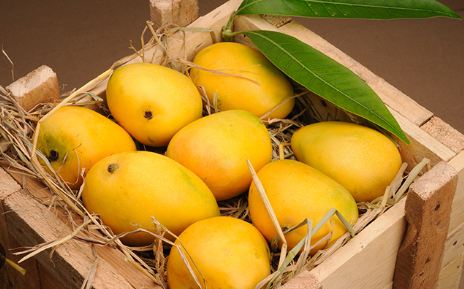
ISLAMABAD, AUG 25 /DNA/ – There are sweet prospects, elevating Pakistan’s mango exports to China and elsewhere in the World, China Economic Net (CEN) reported on Monday.

Pakistan, the world’s sixth-largest mango exporter, boasts over 200 varieties yet struggles to translate its abundance into export growth.

With around 1.2 million tonnes of mangoes produced annually over the past several years, the country still exports only about 10% of its produce.

High production costs and persistent quality concerns continue to constrain growth.

Khawar Nadeem, manager of the Pakistan Horticulture Development & Export Board, highlights that up to 30% of mangoes are lost from orchard to consumer due to outdated farming practices.

Unlike conventional Pakistani farms with 40–60 plants per acre, countries like Australia and Egypt cultivate up to 600 plants per acre using high-density planting, superior rootstocks, and greenhouse setups.

“If orchards with modern technology can be established, yields could multiply,” Nadeem says.

“For that, we need greater adoption of genetic engineering and the establishment of comprehensive production facilities, such as greenhouses, to offset the declining quality of nurseries caused by contamination from germs, diseases, and pests.

At the same time, it is essential to introduce dwarf rootstock varieties that offer better adaptability to Pakistan’s soil conditions,” he added.

Dr. Muhammad Zubair Iqbal, Vice Chancellor of Bahauddin Zakariya University, points to another barrier: costs. “Electricity, gas, land, and registration fees are all too high. If we really want this industry to grow, input costs must come down and registration processes should be eased.”

Beyond production, Dr. Iqbal highlights chronic quality issues. He calls for government-backed standards to ensure only premium fruit enters the export chain.

“Pakistan’s mango sector remains largely raw-fruit focused, missing out on lucrative value-added opportunities. Juicing units, drying plants, packaging facilities, and industry training are essential. A full supply chain must connect producing regions with export ports.”

“Pakistan’s mango sector remains largely raw-fruit focused, missing out on lucrative value-added opportunities.A proper supply chain is essential. Juicing units, drying plants, packaging facilities, and industry training can dramatically enhance both quality and profitability.”

Dr. Iqbal said, A whole supply chain should be put in place from mango producing-regions in the country to ports.

Nadeem agrees, emphasizing the need for pulping, dehydration, and freeze-drying facilities. Neighboring countries, he notes, convert as much as 70% of production into pulp. “Exports could be conveniently tripled provided we move up the value chain,” he envisions.

In May, the All Pakistan Fruit & Vegetable Exporters, Importers & Merchants Association (PFVA) launched its 2025 mango export season, setting a target of 125,000 tonnes worth an estimated $100 million.

China, the world’s largest fruit consumer, has emerged as one of Pakistan’s fastest-growing markets. In 2023, Pakistan’s mango exports to China exceeded 115,000 tonnes with a trade value of $80 million. Pakistan’s Ambassador to China Khalil Hashmi told China Economic Net that the country aims to double exports to China within five years.

The results of bilateral cooperation are already visible. Cold-chain logistics have cut transit times by 50% and reduced spoilage rates. Chinese technologies in preservation and processing are helping raise value-added returns.

On e-commerce platforms such as JD.com and Pinduoduo, daily peak sales exceeded 50 tonnes, with satisfaction rates above 98%, according to Zhang Qingfeng, Vice President of the China Fruit Marketing Association.

Dr. Iqbal sees further potential in Chinese equipment. “We need compact units with storage capacity, boilers, and vacuum-sealed systems to maintain hygiene and shelf life. Harvesting machinery, whether imported or locally produced, could also raise efficiency. Pakistan still lacks packaging facilities of international standard.”

Muhammad Riaz, President of Al Rafique Enterprises in Punjab, advocates more virtual meetings between bilateral trade bodies, Chinese corporate visits to Pakistan, and greater showcasing of processed mango products on the world stage.

Academic collaboration is also taken into account: Dr. Abid Ali, Professor at Shenyang Normal University, suggests joint research on pest management, precision pesticide use, and green plant protection to reduce environmental impact.

Looking ahead, Zhang argues that a three-pronged approach could transform Pakistan’s mango exports: aligning phytosanitary standards with China to ease customs and double exports within three years; attracting Chinese investment into mango industrial parks to co-develop new transport-friendly varieties such as the “mini Chaunsa”; and building stronger brand linkages by including Pakistani mangoes in China’s “Belt and Road Premium Agricultural Products” list, complementing Hainan’s mango season to ensure year-round supply.

Israel hits Gaza hospital, killing at least 15 people, including journalists

Israel hits Gaza hospital, killing at least 15 people, including journalists

GAZA, AUG 25: Israeli strikes on Nasser Hospital in Gaza on Monday killed at least 15 people, including three journalists, one of whom worked for Reuters, Palestinian health officials said.

Cameraman Hussam al-Masri, one of the journalists killed in the strikes according to the officials, was a contractor for Reuters. Photographer Hatem Khaled, who was also a Reuters contractor, was wounded, the officials said.

The Israeli military and Prime Minister’s Office both had no immediate comment regarding the strikes.

Amad Butt expresses joy ever Pro League participation

Pakistan Hockey Federation still in a shambles

DNA

ISLAMABAD: Pakistan national hockey team player, Amad Butt, has expressed his happiness over getting the “green signal” to participate in the upcoming Pro Hockey League. In a statement, Butt thanked the government for its support, which he said was crucial for the team’s participation in the prestigious event.

However, Butt also highlighted a pressing issue still facing the players: the unresolved matter of daily allowances. He noted that despite the team’s preparations, the financial issue for the players has not yet been settled.

Looking ahead to the Pro League, Butt stated that the team has ample time to prepare for the tournament. He believes that participation in the Pro League will be highly beneficial for the national game, as it will not only provide valuable experience but also help improve Pakistan’s international ranking in hockey.

Butt also touched upon the broader issue of the sport’s development in the country. He stressed that the promotion of hockey should not rely solely on government funding. Instead, he urged the Pakistan Hockey Federation (PHF) to take proactive steps to secure its own funds. This move, he suggested, is essential for the long-term sustainability and growth of the sport in Pakistan.

His comments underscore a mix of optimism for the future of Pakistan’s hockey team in international competitions and a call for more robust and independent financial management within the sport’s governing body. The team’s participation in the Pro League is seen as a significant step forward, but the underlying issues of player welfare and financial autonomy remain key challenges.

Stay Connected

64FansLike
60FollowersFollow

Latest Reviews

Exchange Rates

USD - United States Dollar
EUR
1.17
GBP
1.35
AUD
0.72
CAD
0.73