Home Blog Page 525
India readies for punishing US tariffs

India readies for punishing US tariffs

Trump issued a three-week deadline on August 6, which is expected to take effect on Wednesday

MUMBAI: Indian exports to the United States will face some of the highest tariffs in the world this week, barring a last-minute reversal from President Donald Trump.

Trump has tied issues of war and peace to trade, threatening to slap 50% duties on New Delhi in retaliation for its continued purchases of Russian oil — which Washington argues help finance Moscow’s war in Ukraine.

The tariff offensive has rattled US-India ties, given New Delhi a new incentive to repair relations with Beijing, and carries major consequences for the world’s fifth-largest economy.

Trump issued a three-week deadline on August 6, which is expected to take effect on Wednesday morning in India.

How bad will it be?

The United States was India’s top export destination in 2024, with shipments worth $87.3 billion.

Analysts at Nomura warn that 50% duties would be “akin to a trade embargo”, devastating smaller firms with “lower value add and thinner margins”.

Elara Securities’s Garima Kapoor said no Indian product can “stand any competitive edge” under such heavy import taxes.

Economists estimate tariffs could shave 70 to 100 basis points off India’s GDP growth this fiscal year, dragging growth below 6%, the weakest pace since the pandemic.

Exporters in textiles, seafood and jewellery are already reporting cancelled US orders and losses to rivals such as Bangladesh and Vietnam, raising fears of heavy job cuts.

A small reprieve: pharmaceuticals and electronics, including iPhones assembled in India, are exempt for now.

S&P estimates exports equivalent to 1.2% of India’s GDP will be hit, but says it will be a “one-off” shock that “will not derail” the country’s long-term growth prospects.
ECP writes to political parties seeking financial statements

ECP writes to political parties seeking financial statements

Mahnoor Ansar / DNA

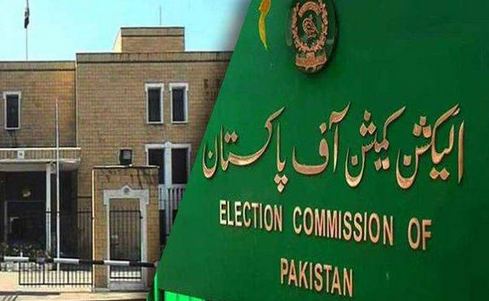
ISLAMABAD: The Election Commission of Pakistan (ECP) has issued a formal reminder to all political parties, directing their leadership to submit consolidated and audited financial statements for the fiscal year 2024–25, which concluded in June 2025. As per the requirements of Sections 204 and 210 of the Elections Act, 2017, and Rules 159 and 160 of the Election Rules, 2017, all parties are obligated to file their financial disclosures with the Commission on or before August 29, 2025.

Under Section 210 of the Elections Act, political parties are legally bound to submit, within forty days after the end of each financial year, their financial statements on Form-D, duly audited and certified by a Chartered Accountant. The statements must include a comprehensive breakdown of the party’s annual income and expenditures, sources of funding, as well as its assets and liabilities.

These documents must be signed by an authorized party official, confirming that no funds were received from any prohibited sources as defined under the Elections Act, 2017, and that the statements provide a true and fair view of the party’s financial position. The submission must also include a valid and current renewal certificate issued by the Institute of Chartered Accountants of Pakistan (ICAP) as proof of the auditor’s accreditation.

Form-D is available free of charge at the ECP Secretariat in Islamabad, as well as at the offices of the Provincial Election Commissioners in Punjab, Sindh, Khyber Pakhtunkhwa, and Balochistan. The form is also accessible on the ECP’s official website. The Commission has strictly instructed that no overwriting will be tolerated on the submitted forms, and all submissions must be clean, complete, and compliant with the specified format.

Furthermore, each submission must include bank statements for all party accounts covering the full financial year from July 1, 2024, to June 30, 2025. These documents must be delivered in person by an authorized party representative to the office of the Secretary, Election Commission of Pakistan, Constitution Avenue, Sector G-5/2, Islamabad. Submissions sent via post, fax, courier, or any alternative means will not be accepted, in accordance with Rule 156 of the Election Rules, 2017.

Upcoming SCO summit in China

Upcoming SCO summit in China

As the Shanghai Cooperation Organisation (SCO) prepares to convene its annual summit in China starting August 31, global attention is turning toward the strategic ambitions and diplomatic choreography of its key member states. With leaders from China, Russia, India, Pakistan, and Central Asian nations expected to attend, the summit promises to be a pivotal moment for regional dialogue, economic collaboration, and security coordination.

China, as this year’s host, is expected to showcase its leadership within the SCO framework by emphasizing connectivity, trade, and multilateralism. The summit will be held in the historic city of Xi’an, a symbolic nod to the ancient Silk Road and a modern reminder of China’s Belt and Road Initiative (BRI). Beijing is likely to push for deeper integration among member states, particularly in digital infrastructure, energy cooperation, and counterterrorism efforts.

For Russia, the summit offers a platform to reinforce its eastern partnerships amid ongoing tensions with the West. Moscow is expected to advocate for a multipolar world order and promote regional security mechanisms that bypass Western institutions. President Vladimir Putin’s presence will underscore Russia’s commitment to the SCO as a counterbalance to NATO and the EU, while also seeking economic opportunities through Eurasian connectivity.

India’s participation will be closely watched, especially given its complex relationships with both China and Pakistan. Prime Minister Narendra Modi is likely to focus on economic cooperation, counterterrorism, and regional stability. While India remains cautious about China’s growing influence in the SCO, it views the organization as a valuable forum to engage with Central Asia and assert its strategic autonomy.

Pakistan, a full member since 2017, sees the SCO as a vital platform to advance its regional interests. Islamabad is expected to highlight its contributions to peace and stability in South Asia, while advocating for enhanced trade and connectivity. The summit may also provide an opportunity for Pakistan to engage in backchannel diplomacy with India, although formal bilateral talks remain unlikely. Pakistan’s alignment with China and its growing ties with Russia could further shape its role within the SCO.

Despite underlying rivalries and divergent national interests, the SCO summit carries hopes for pragmatic cooperation. While the SCO is not without its limitations—particularly in resolving bilateral disputes—it remains one of the few multilateral platforms where adversaries like India and Pakistan, or China and India, can engage under a shared framework.

As the summit unfolds, observers will be watching for signs of consensus, new initiatives, and potential breakthroughs in regional diplomacy. Whether the SCO can evolve from a dialogue forum into a more action-oriented bloc remains to be seen. But with the world increasingly shaped by regional alliances, the August 31 summit in China could mark a defining moment for Eurasian cooperation in the years to come.

Australia expels Iran’s envoy over antisemitic attacks

Australia expels Iran’s envoy over antisemitic attacks

Iran has vowed reciprocal action; rejects accusations as baseless

DNA

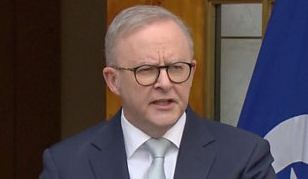
CANBERA: Australia said on Tuesday it would expel Iran’s ambassador to Canberra, as Prime Minister Anthony Albanese accused Tehran of executing two antisemitic attacks in the key cities of Sydney and Melbourne.

“Iran has sought to disguise its involvement, but ASIO assesses it was behind the attacks on the Lewis Continental Kitchen in Sydney on October 20 last year, and the Adass Israel Synagogue in Melbourne on December 6.”

“These were extraordinary and dangerous acts of aggression orchestrated by a foreign nation on Australian soil,” Albanese said. “They were attempts to undermine social cohesion and sow discord in our community.”

Australia has suspended operations at its embassy in Tehran and all its diplomats were safe in a third country, Albanese said, adding that his government would designate Tehran’s Islamic Revolutionary Guard Corps as a terrorist organisation.

Meanwhile, Iran has vowed reciprocal action after Australia expelled its ambassador over accusations that Tehran was behind antisemitic arson attacks in Sydney and Melbourne.

“The accusation that has been made is absolutely rejected,” said foreign ministry spokesman Esmaeil Baqaei during a weekly press conference, adding that “any inappropriate and unjustified action on a diplomatic level will have a reciprocal reaction”.

Australian Prime Minister Anthony Albanese said earlier that Iran was behind the torching of a kosher cafe in Sydney’s Bondi suburb in October 2024, and directed a major arson attack on the Adass Israel Synagogue in Melbourne in December of the same year.

No injuries were reported in the two attacks.

Australia declared Iranian ambassador Ahmad Sadeghi “persona non grata” and ordered him and three other officials to leave the country within seven days.

It also withdrew its own ambassador to Iran and suspended operations at its embassy in Tehran, which opened in 1968.

Baqaei said the measures appeared to be “influenced by internal developments” in Australia, including recent protests against Israel’s war in Gaza.

“It seems that this action is taken in order to compensate for the limited criticism the Australian side has directed at the Zionist regime [Israel],” he added.

Iran’s reaction comes in response of Australian PM’s allegations saying that Tehran was behind two arson attacks.

PM Albanese said the Australian Security Intelligence Organisation (ASIO) had gathered credible intelligence that Iran had directed at least two attacks.

“These were extraordinary and dangerous acts of aggression orchestrated by a foreign nation on Australian soil,” Albanese told a press briefing. “They were attempts to undermine social cohesion and sow discord in our community.”

Iran had sought to “disguise its involvement” in last year’s attacks on a kosher restaurant in Sydney and the Adass Israel Synagogue in Melbourne, Albanese said. No injuries were reported in the attacks.

Another blow to democracy

Another blow to democracy

In a development that has stirred deep concern across Pakistan’s political landscape, an anti-terrorism court in Faisalabad has sentenced 61 more Pakistan Tehreek-e-Insaf (PTI) leaders and workers to prison in connection with the May 9, 2023 riots. Among those convicted are prominent figures such as Omar Ayub, Shibli Faraz, and Zartaj Gul, each handed a 10-year sentence for their alleged involvement in the attack on the residence of Pakistan Muslim League-Nawaz (PML-N) leader Rana Sanaullah2.

The verdict marks yet another chapter in the ongoing legal crackdown against PTI following the unrest that erupted after the arrest of former Prime Minister Imran Khan. Thousands of party members have been arrested, tried, and sentenced in various cases tied to the May 9 protests, which saw widespread demonstrations and damage to public property. While the state maintains these actions were necessary to uphold law and order, critics argue that the judicial process has been weaponized against political dissent.

The sentencing of Ayub, Faraz, and Gul—who were not present in court during the verdict—has raised serious questions about due process and the fairness of the trials. Many of the accused have already been convicted in other cases and disqualified from parliamentary positions, leading to accusations that these legal actions are politically motivated. Zartaj Gul, for instance, has publicly denied the charges, claiming she was not present at the alleged planning meeting and had submitted evidence to support her claim.

This pattern of repeated convictions and disqualifications has sparked fears that the judiciary is being used to systematically dismantle PTI’s political influence. Such actions not only undermine democratic norms but also risk alienating the electorate and eroding public trust in the legal system.

The international community is watching closely. Pakistan’s image as a functioning democracy is at stake, and the implications extend beyond politics. Investors and tourists alike seek stability, transparency, and rule of law. If political activism continues to be criminalized, it sends a chilling message to the world: dissent is dangerous, and justice is selective.

This perception could deter foreign investment, stall tourism, and isolate Pakistan diplomatically. In an era where global partnerships hinge on democratic values and human rights, the country cannot afford to project an image of authoritarianism cloaked in legal formalities.

While some political factions may celebrate the downfall of PTI leaders, such triumphalism is shortsighted. Today’s victors could be tomorrow’s defendants. The precedent being set—where political rivalry is settled in courtrooms rather than through dialogue and elections—poses a threat to all parties. If the legal system becomes a tool of political vengeance, no one is safe.

August 26, 2025, will be remembered not just for the convictions, but for what they represent: a shrinking space for political expression, a judiciary under scrutiny, and a democracy in distress. Pakistan must reflect deeply on the path it is taking. True justice must be impartial, and democracy must be resilient enough to accommodate dissent—not punish it.

The road ahead demands introspection, reform, and a recommitment to democratic principles. Otherwise, the cost will be borne not just by PTI, but by the nation as a whole.

Mass protests erupt across Israel demanding hostage release and end to Gaza War

Mass protests erupt across Israel demanding hostage release and end to Gaza War

Centreline Report

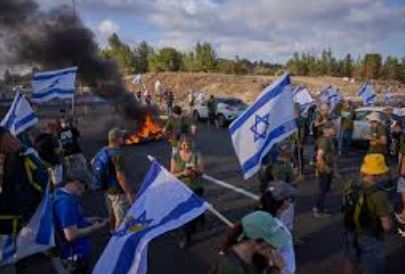
Tel Aviv, August 26, 2025 — Tens of thousands of Israelis have taken to the streets in a sweeping wave of protests demanding the immediate release of hostages held in Gaza and an end to the nearly two-year-long war. Organized by the Hostages and Missing Families Forum, the demonstrations have spread across major cities including Tel Aviv, Jerusalem, and Haifa, with protesters blocking highways, waving Israeli flags, and holding up photos of loved ones still in captivity.

Local police confirmed that all roads have now reopened to traffic, following hours of disruption caused by demonstrators who lit bonfires and staged sit-ins on key routes. The protests mark one of the most intense public mobilizations since the October 7, 2023 Hamas-led attack, which killed approximately 1,200 Israelis and saw 251 others taken hostage into Gaza. Israeli authorities believe around 20 hostages remain alive2.

The protests come amid mounting frustration over the government’s handling of the hostage crisis and the ongoing military campaign in Gaza. Demonstrators chanted slogans such as “Bring them home now!” and “No more war over the bodies of hostages,” expressing fears that continued military pressure could jeopardize the lives of those still held captive3.

The Hostages and Missing Families Forum declared a nationwide strike, urging citizens to “shut down the country” until a comprehensive deal is reached. Protesters also gathered outside the homes of government ministers and military headquarters, demanding immediate action.

The protests intensified following reports of a deadly Israeli airstrike on a hospital in southern Gaza on Monday, which allegedly killed at least 20 people, including five journalists. The incident has drawn international condemnation and renewed scrutiny of Israel’s military tactics.

Prime Minister Benjamin Netanyahu acknowledged the strike as a “tragic mishap” and stated that the military is “conducting a thorough investigation” into the incident. However, critics argue that such statements fall short of accountability, especially as the death toll in Gaza continues to climb. According to the Hamas-run health ministry, more than 62,744 Palestinians have been killed since the war began2.

Netanyahu’s government faces growing domestic and international pressure. While some cabinet members have condemned the protests as undermining national security, others warn that ignoring public sentiment could deepen divisions and prolong the crisis. Analysts suggest that Israel’s global image is at risk, with potential consequences for foreign investment, tourism, and diplomatic relations.

As the protests continue, families of hostages remain resolute. “This is probably the last minute we have to save them,” said Ofir Penso, a demonstrator in Tel Aviv. “We demand a comprehensive and achievable agreement and an end to the war. We demand what is rightfully ours — our children”.

A glimmer of hope for SAARC? Pakistan and Bangladesh mend ties, but the India factor looms

A glimmer of hope for SAARC? Pakistan and Bangladesh mend ties, but the India factor looms

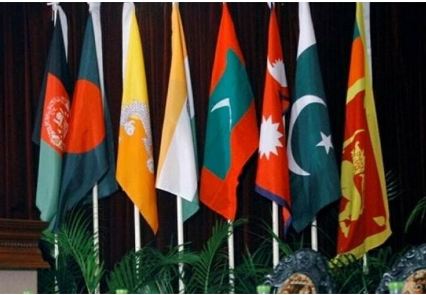
Recent positive developments in the relationship between Pakistan and Bangladesh offer a sliver of hope for the South Asian Association for Regional Cooperation (SAARC). While the road to a fully functional and effective SAARC remains long and fraught with challenges, the apparent thaw in bilateral ties between these two significant member states could inject some much-needed momentum into the stalled regional body. However, it is crucial to acknowledge that the revival of SAARC’s fortunes hinges largely on the resolution of the far more deep-seated and complex issues plaguing the relationship between its two largest members: Pakistan and India.

For years, SAARC has been struggling to live up to its potential, often overshadowed by the political tensions and mistrust prevalent within the region. Its history has been one of missed opportunities and unfulfilled promises. Bilateral disagreements and a lack of consistent engagement have hampered progress on crucial areas of cooperation, ranging from trade and connectivity to counter-terrorism and cultural exchange. The strained relationship between Pakistan and Bangladesh, marked by historical complexities and divergent perspectives stemming from the 1971 war, has been one such impediment. This historical baggage has often prevented a more robust partnership, hindering regional collaboration. Therefore, the recent signals of a potential rapprochement are a welcome development. Increased diplomatic engagement, high-level visits, and a renewed focus on areas of mutual interest could pave the way for greater collaboration between Islamabad and Dhaka. This improved understanding could, in turn, foster a more conducive environment for regional dialogue within the SAARC framework.

However, it would be premature to declare a new dawn for SAARC based solely on the improvement of Pakistan-Bangladesh relations. The elephant in the room remains the deeply entrenched animosity between Pakistan and India. The history of conflict, border disputes, and differing strategic objectives continues to cast a long shadow over regional cooperation. The SAARC charter emphasizes the importance of bilateral harmony for effective regionalism, and the persistent state of hostility between its two most influential members directly undermines this principle. The two nations have been locked in a cold war, with political rhetoric and diplomatic spats often taking precedence over substantive cooperation.  This rivalry has not only paralyzed SAARC meetings and initiatives but has also forced other member states to navigate a complex and delicate political landscape. Meaningful progress on any substantive SAARC agenda item inevitably gets stalled due to the prevailing mistrust and the tendency to view regional initiatives through the prism of bilateral rivalry. Whether it’s a proposal for a regional trade agreement or a joint infrastructure project, the initiatives often fall prey to the lack of consensus between these two major players.

Unless Pakistan and India find a way to engage in sustained dialogue, address their core concerns, and build a modicum of trust, SAARC will likely remain in its current state of suspended animation. While improved relations among other member states, such as the Pakistan-Bangladesh rapprochement, are undoubtedly positive and can contribute to a more cooperative atmosphere, they cannot substitute for a functional working relationship between Islamabad and New Delhi. The sheer size, economic power, and strategic importance of these two nations within the South Asian context mean that their bilateral dynamics significantly impact the entire region and, consequently, the effectiveness of SAARC. Their disagreements often seep into the regional body’s agenda, making any collective decision-making process difficult, if not impossible. The smaller nations of SAARC, such as Nepal, Sri Lanka, Bhutan, and the Maldives, are often caught in the middle, unable to push their own agendas forward without the cooperation of the two largest economies.

In conclusion, the potential revival of Pakistan-Bangladesh relations is a positive sign for regional cooperation within South Asia. It demonstrates a willingness among member states to overcome past grievances and explore avenues for collaboration. It shows that progress is possible, even if it is incremental. However, the future of SAARC is inextricably linked to the relationship between Pakistan and India. While the improved Islamabad-Dhaka dynamic might create a slightly more favorable backdrop, a genuine revitalization of SAARC requires a fundamental shift in the dynamics between its two major players. Until Pakistan and India find a path towards peaceful coexistence and constructive engagement, SAARC will continue to fall short of its promise as a vehicle for regional integration and shared prosperity. The journey towards a truly effective SAARC is a long one, and its success hinges on overcoming the deep-seated mistrust that currently defines the relationship between its two most significant members. The dream of a united and prosperous South Asia, as envisioned by the founders of SAARC, will remain a distant one until these two nations can find a way to work together.

UAE ambassador pays farewell call on PM Shehbaz

UAE ambassador pays farewell call on PM Shehbaz

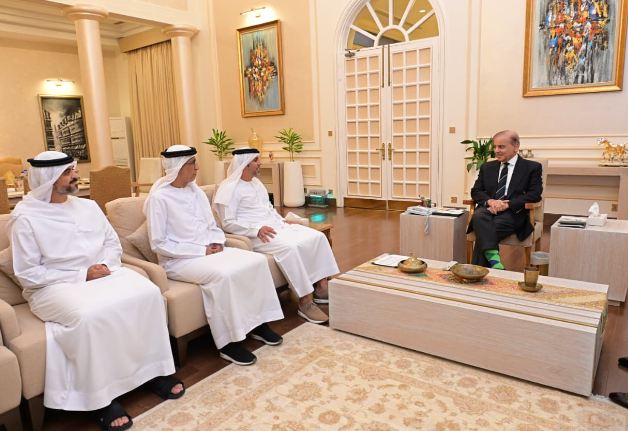
ISLAMABAD, AUG 25 /DNA/ – Ambassador of United Arab Emirates (UAE) Hamad Obaid Ibrahim Al-Zaabi, the outgoing Ambassador of the United Arab Emirates to Pakistan, paid a farewell call on Prime Minister Muhammad Shehbaz Sharif at the Prime Minister House this evening. Defence Minister Khawaja Mohammad Asif, Minister of State Bilal Azhar Kiyani, SAPM Tariq Fatemi and Foreign Secretary Amna Baloch were also present during the meeting.

The Prime Minister congratulated the Ambassador on the successful completion of his tenure in Pakistan and thanked him for his contribution towards the strengthening of Pakistan-UAE relations.

The Prime Minister lauded the leadership of His Highness Sheikh Mohamed bin Zayed Al Nahyan, President of the United Arab Emirates and Ruler of Abu Dhabi, in forging closer Pakistan-UAE ties that were reflective of the longstanding, deep-rooted, fraternal bonds between both countries.  

He also expressed his satisfaction that in recent months, the two sides had taken important steps to further strengthen these ties, including the visits of Foreign Minister His Highness Sheikh Abdullah bin Zayed Al Nahyan, Crown Prince of Abu Dhabi His Highness Sheikh Khalid bin Mohamed bin Zayed Al Nahyan, the convening of the Pakistan-UAE Joint Ministerial Commission, and the recently operationalized agreement on visa abolition for diplomatic and official passport holders. The Prime Minister said that he looked forward to the official visit of His Highness Sheikh Mohamed bin Zayed Al Nahyan to Pakistan at an early date, that would lend further impetus to the relationship between the two sides.

                Amb. Al Zaabi thanked the Prime Minister for receiving him for a farewell call and said he was deeply appreciative of the support and friendship that he had received throughout his nine-year stay in Pakistan, from the Government as well as the people of the country. While acknowledging the special bonds of friendship between the leadership and the people of both countries, he said that he would continue to work for stronger Pakistan-UAE ties in the future.

PM Shehbaz commends heroic shepherds for averting disaster in Ghizer Valley

PM Shehbaz commends heroic shepherds for averting disaster in Ghizer Valley

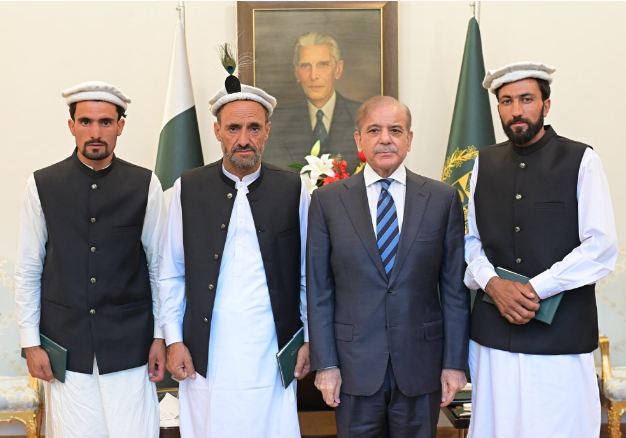
ISLAMABAD, AUG 25 /DNA/ – Prime Minister Muhammad Shehbaz Sharif received a delegation of local shepherds from Ghizer, Gilgit-Baltistan, today at the Prime Minister’s House, honoring them for their critical role in saving countless lives during a recent Glacial Lake Outburst Flood (GLOF).

The shepherds, Mr. Wasiyat Khan, Mr. Ansar, and Mr. Muhammad Khan, were hailed as national heroes for their vigilance and courage. Their timely warning of the impending GLOF in the Ghizer Valley enabled the complete and safe evacuation of all local residents, preventing a major human tragedy.

During the meeting, the Prime Minister personally commended the shepherds for their exceptional community spirit and swift action. He stated that their bravery serves as a powerful example for the entire nation.

Dar meets Malaysian FM, urges humanitarian access for Gaza

Dar meets Malaysian FM, urges humanitarian access for Gaza

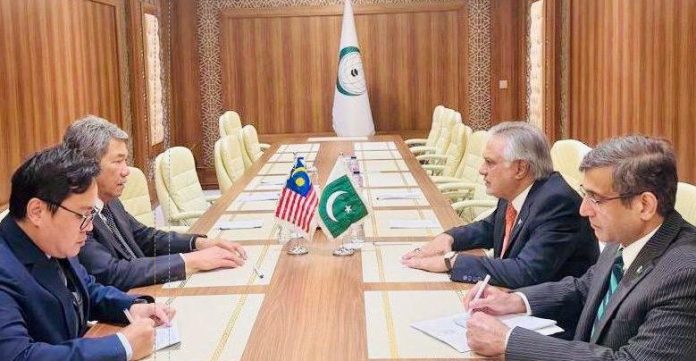
JEDDAH, AUG 25 /DNA/ – – The Deputy Prime Minister and Foreign Minister of Pakistan, Senator Mohammad Ishaq Dar, held a bilateral meeting with His Excellency Mr. Mohamad Haji Hasan, the Foreign Minister of Malaysia, on the sidelines of the 21st Extraordinary Session of the OIC Council of Foreign Ministers today.

The meeting was marked by a strong expression of bilateral solidarity and a shared deep concern for the ongoing crisis in Gaza.

A Unified Call for Peace in Palestine

Both ministers emphasized their nations’ firm solidarity with the people of Palestine. They discussed the grave humanitarian situation in Gaza and concurred on the urgent necessity for:

  • Unhindered humanitarian access to deliver critical aid to civilians.
  • An immediate and permanent ceasefire to end the violence.
  • A concerted effort to pave the way for a lasting and just peace.

Reaffirming Brotherly Bilateral Relations

Foreign Minister Dar fondly recalled the successful hosting of the ASEAN Regional Forum (ARF) ministerial meeting by Malaysia in Kuala Lumpur in July and his positive interactions with the Malaysian leadership.

Building on this foundation, the two leaders reaffirmed their commitment to further strengthening the close brotherly relations between Pakistan and Malaysia. They agreed to achieve this through:

  • Enhanced high-level exchanges.
  • Expanding trade and economic ties for mutual benefit.
  • Promoting people-to-people contacts to deepen cultural and social links.

About Pakistan-Malaysia Relations:
Pakistan and Malaysia enjoy cordial and long-standing relations, characterized by mutual respect and cooperation on international forums. Both nations are active members of the OIC and share similar views on various global issues, particularly their support for the Palestinian cause.

Stay Connected

64FansLike
60FollowersFollow

Latest Reviews

Exchange Rates

USD - United States Dollar
EUR
1.17
GBP
1.35
AUD
0.72
CAD
0.73