Home Blog Page 524

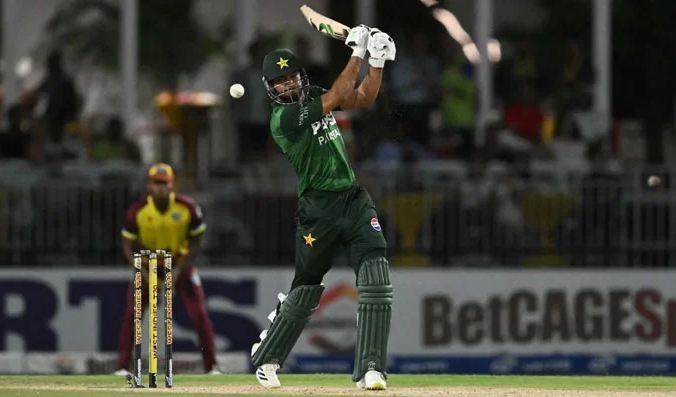
Hasan Nawaz says players in ‘good form’ ahead of tri-series, Asia Cup 2025

Hasan Nawaz says players in 'good form' ahead of tri-series

DUBAI: Pakistan’s emerging batter Hasan Nawaz on Monday, claimed that his teammates are in good form and will try to continue it heading into the T20I tri-series against Afghanistan and hosts United Arab Emirates (UAE) and the subsequent ACC Men’s Asia Cup 2025.

The right-handed batter, who has represented Pakistan in 13 T20Is, played a pivotal role in leading Agha XI to victory over Saim XI in the Green Shirts’ intrasquad practice match, held here at the Dubai International Cricket Stadium.

Later, he, alongside mystery spinner Abrar Ahmed, shared insights on the practice match in a video released by the Pakistan Cricket Board (PCB).

During the candid discussion, Abrar praised Nawaz and wicketkeeper batter Mohammad Haris for their blistering knocks, which sank Saim XI.

In response, Nawaz particularly praised Abrar’s fielding and bowling performances, experienced top-order batter Fakhar Zaman for his brilliant knock, before going on to assert that all members of the squad are in good form.

He then expressed hope that all the players, including him, will continue the form heading into the upcoming assignments.

“In the match, the catch you took and the way you bowled were outstanding, and we restricted them to a low total,” Nawaz told Abrar.

“The players are in [good] form, Fakhar played very well. So, by the will of Almighty Allah, everyone’s and my strive is to continue this form for the tri-series and Asia Cup,” he added.

For the unversed, the Pakistan squad for the upcoming tri-series and the continental tournament is currently participating in the training camp here.

The tri-nation series will take place at the Sharjah Cricket Stadium from August 29 to September 7, featuring Pakistan, Afghanistan and hosts UAE.

Pakistan will begin their campaign against Afghanistan on August 29 at 7:00 PM local time.

Meanwhile, the Asia Cup 2025 will get underway on August 9 with the match between Afghanistan and Hong Kong and will conclude on September 28.

The Green Shirts will start their campaign on September 12 against Oman, while their blockbuster fixture against arch-rivals India is scheduled on September 14.

Pakistan squad for Tri-Series and Asia Cup 2025:

Saim Ayub, Fakhar Zaman, Salman Ali Agha (C), Abrar Ahmed, Faheem Ashraf, Haris Rauf, Hasan Ali, Hasan Nawaz, Hussain Talat, Khushdil Shah, Mohammad Haris (WK), Mohammad Nawaz, Mohammad Wasim Jr., Sahibzada Farhan, Salman Mirza, Shaheen Shah Afridi and Sufiyan Muqeem.

Aleema rejects reports of tense exchange with PTI’s Salman Akram Raja

Aleema rejects reports of tense exchange with PTI’s Salman Akram Raja

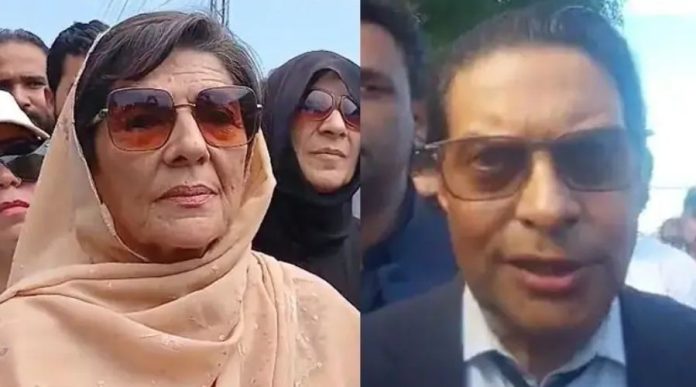
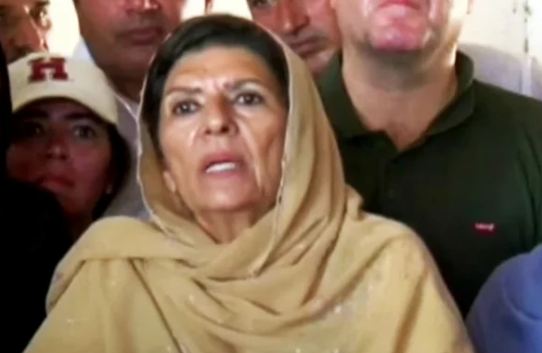
ISLAMABAD, AUG 26: PTI founder Imran Khan’s sister, Aleema Khanum, on Tuesday rejected rumours of a tense exchange with PTI Secretary General Salman Akram Raja that allegedly led to his decision to resign.

There seems to be a tug of war within the PTI over whether to participate in the upcoming by-elections for national and provincial assembly seats — vacated after the recent disqualifications of a number of key lawmakers. Insiders had told Dawn the party’s political committee — in its meeting on Monday — had a change of heart after a majority of members voted against the decision to boycott by-polls. This contravenes the opinion reportedly expressed by Imran, transmitted by Aleema on a couple of occasions, to steer clear of by-elections so that the party isn’t seen as legitimising the process.

PTI Central Information Secretary Sheikh Waqqas Akram had shared the party’s decision on social media and triggered a wave of criticism from across the globe. When approached, Akram confirmed that he, Raja and a few others were against the decision, but they had to go with the majority. In a dramatic turn of events, however, Raja announced his intention to step down from the post of secretary general. Although he did not specify what prompted him to take this decision, the timing of his X post indicated that the “incident” he referred to was — in all probability — the political committee’s decision to contest by-polls.

Questioned about reports of a tense exchange with him being the cause of his decision, Aleema said while talking to the media outside Adiala Jail today: “I had no bitter exchange of words with him. He is our lawyer and like a family [member] with all of us, but I think it is more so [a matter] of his own [decision] and that of the political committee. It is an issue [of participation] in the by-election and you should ask him (Raja).”

Pushed on the reports of a disagreement in the party over whether to contest the by-elections or not, Imran’s other sister, Uzma Khanum, interjected and said: “The party will tell what conflict it was. As per our last family meeting, Khan sahib very firmly, repeatedly and clearly said not to contest the elections but to boycott them because there will be no benefit, it will harm the party and the [movement] for actual freedom and the illegitimate disqualifications would be legitimised.”

Addressing the media later, Aleema said Imran had directed PTI lawmakers to resign from parliamentary committees and to inform him about the political committee’s decision regarding the by-elections tomorrow morning after holding a meeting later today on the issue based on his instructions.

Meanwhile, Raja said while talking to the media that Imran had not accepted his decision to resign.

He added that the political committee would have a meeting again today to discuss the issue of participating in the by-elections based on Imran’s “clear instructions”.

Raja further said that the PTI had a clear stance that Omar Ayub and Shibli Faraz were still the opposition leaders in the National Assembly and Senate, adding that they were still contesting their cases and would fulfil all legal requirements.

“If there is a need after that, then the name that Imran has repeated today for the NA opposition leader is that of Mehmood Khan Achakzai.”

Raja explained that Imran gave his “clear directions” about participating in the by-polls after listening to all those allowed to meet him today, including his sisters.

Meanwhile, PTI Chairman Barrister Ali Gohar said he had not read Raja’s statement on resigning as secretary general, nor had he received any resignation in writing.

“Imran will decide whether he decides to continue or not. It is unfortunate. I’ve always said that something always comes up from inside the party and people make it an issue. Imran said that no party leader would mention their resignation in public.”

The PTI has already obtained stay orders against the de-seating of key opposition leaders. It has also, albeit reluctantly, nominated replacements while the party pursues legal options.

But faced with threats on multiple fronts — including the possible loss of maj­o­rity in the Khyber Pakhtunkhwa Assembly due to future disqualifications, a push to reclaim political space in Punjab, and a showdown between two opposing camps within the party — it seems as if the PTI may throw its hat in the ring, despite all misgivings about the by-elections. According to sources privy to proceedings, Monday’s meeting of the political committee had voted 12-9 in favour of fielding candidates for the upcoming by-elections.

Additionally, Akram had announced that all candidates would be issued tickets under the banner of the Sunni Ittehad Council, which appears to be an insurance policy of sorts, to offset chances of them being declared ‘independent candidates’, since the dispute around PTI’s intra-party elections and the matter of its electoral symbol are still in limbo.

PM directs NDMA to accelerate rescue operation

PM directs NDMA to accelerate rescue operation

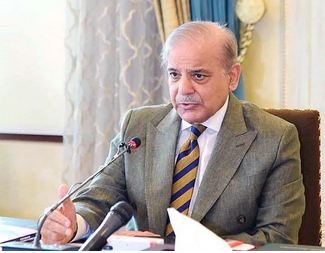
ISLAMABAD, AUG 26 (DNA) —   Prime Minister Shehbaz Sharif on Tuesday directed the National Disaster Management Authority to expedite the rescue operation in the districts of Punjab province affected by the flooding in the Sutlej River

The prime minister instructed the NDMA chairman to take immediate steps for the evacuation of people stranded in flood-affected areas and to ensure their relocation to safe locations. He asked the Authority to take protective measures and intensify monitoring, considering the flood situation at Ganda Singh Wala in the River Sutlej.

The prime minister also directed to ensure the provision of food, medicines, and tents to the affected population, besides instructing the NDMA chairman to maintain close coordination with Punjab’s disaster management authority. — DNA

Dar reaffirms Pakistan’s commitment to deepen ties with brotherly nations

Dar reaffirms Pakistan's commitment to deepen ties with brotherly nations

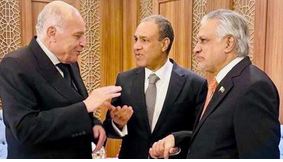
ISLAMABAD, AUG 26: Deputy Prime Minister (DPM) and Foreign Minister Ishaq Dar on Tuesday reaffirmed Pakistan’s commitment to deepening ties with North African nations, including Algeria and Egypt, through enhanced connectivity and expanded cooperation across diverse fields.

The deputy premier made the remarks during a “meaningful interaction” with his Egyptian counterpart Badr Abdelatty and Algerian FM Ahmed Attaf on the sidelines of 21st extraordinary session of the Council of Foreign Minister of the Organisation of Islamic Cooperation (OIC).

In the meeting, they discussed the grave situation in Palestine, stressing the urgent need for humanitarian access, a ceasefire, and lasting peace. The FMs underscored the importance of unity within the Muslim Ummah in these challenging times.

Dar landed in Jeddah on a two-day official visit yesterday, where he spoke on Israel’s ongoing Gaza onslaught during the 21st extraordinary session of the Organisation of Islamic Cooperation’s (OIC) Council of Foreign Ministers.

DPM Dar on Monday reiterated Pakistan’s strong condemnation of Israel’s highly escalatory and dangerous statements over Palestinian land.

He said the brazen audacity of the so-called Israeli cabinet, in unveiling its ominous plan to extend Israel’s full military control over Gaza, as well as the Israeli prime minister’s recent allusion to the creation of a “Greater Israel”, provided an insight into Israel’s annexationist and rogue mindset.

In his statement at the 21st Extraordinary Session of the OIC Council of Foreign Ministers (CFM) in Jeddah, DPM Dar reiterated Pakistan’s call for an immediate and effective ceasefire in Gaza.

He ensured the flow of humanitarian aid, an end to forced displacement, illegal settlement expansion and annexation of Palestinian land, accountability for war crimes and crimes against humanity, and the implementation of international and humanitarian laws.

He said the meeting was held again as Gaza bled, under systematic, premeditated and deliberate violations of international law, including international humanitarian law, UN Security Council resolutions and the judgment of the ICJ.

And all of this was being committed with impunity by Israel, he noted.

“Gaza has become a graveyard for innocent lives as well as for international law, particularly International Humanitarian Law (IHL). Over 60,000 Palestinians — most of them women and children — have been killed in Israel’s brutal military assault,” he added.

He said the systematic targeting of hospitals, schools, UN facilities, aid convoys and refugee camps was not incidental; these were wanton acts of collective punishment in full view of the world.

“Gaza is enduring a full-scale humanitarian catastrophe. For nearly two years, it has suffered indiscriminate bombardment, total blockade, and deliberate deprivation and starvation, while violence and dispossession escalate in the West Bank and Jerusalem,” he added.

Dar further said the so-called humanitarian system put in place by the occupying power was a cruel illusion, adding: “Famine is rampant. Civilians are being shot while trying to collect food. The hunger crisis in Gaza has reached unprecedented and deeply alarming levels.”

Imran directs PTI lawmakers to resign from all parliamentary committees: Aleema

Imran directs PTI lawmakers to resign from all parliamentary committees: Aleema

Pakistan Tehreek-e-Insaf (PTI) founder Imran Khan has instructed party members to resign from all parliamentary committees, his sister Aleema Khan said on Tuesday.

“He [PTI founder] has ordered party members to tender their resignations from all standing committees in the National Assembly,” she said while speaking to journalists outside Adiala jail after meeting her brother.

She said the PTI founder also issued directives to PTI Chairman Barrister Gohar and general secretary Salman Akram Raja regarding the upcoming by-elections. “He [Imran] said contesting the by-elections would only give legal justification to those polls,” Aleema added.

Earlier, it was reported that Aleema had opposed participation in the by-elections, saying that the decision was totally against Khan’s clear instructions.

Raja, however, reportedly conveyed the political committee’s position and voting breakdown to her. According to sources, 13 members of the committee favoured contesting the by-elections, while 9 were opposed.

The disagreement reportedly left Raja disheartened, ultimately prompting his decision to tender resignation from the key party role.

However, Raja — earlier in the day — said Imran had refused to accept his resignation from party’s secretary general post.

Sharing details of the meeting today, Aleema said the PTI founder expressed distress over his wife Bushra Bibi’s situation and was informed about the arrests of Shershah and Shahrez.

“Imran said that such punishments and disqualifications have never taken place before in Pakistan,” she noted.

Shershah and Shahrez were arrested over their alleged involvement in May 9, 2023, riots, as the police claimed to have video evidence against the former for his presence at the Jinnah House on that day, a first information report (FIR) stated.

The FIR stated that Shershah was accused of carrying out attacks on policemen during the riots, adding that the police possessed a video record as evidence of his presence at the scene.

Regarding Shahrez, it emerged that his name appeared in a supplementary investigation report in September 2023, sources added.

Speaking to media, she quoted the PTI founder as saying that cricket had been destroyed by Mohsin Naqvi — who is the chairman of Pakistan Cricket Board (PCB). Aleema further said the PTI founder expressed sorrow over the devastation caused by floods in Buner and other areas.

Regarding his health, Aleema clarified that Imran was in good condition, though he had an eye problem for which a petition would be filed in court. “Doctors from Pims hospital will be called for his eye treatment,” she confirmed.

Aleema said she and her sisters had been attempting to meet the PTI founder for three months but were not allowed. “Today, by the grace of Allah, we were able to meet him,” she said, adding that it was the first meeting of all sisters with him after four months.

Pakistan trains media on ethical reporting of human trafficking

Pakistan trains media on ethical reporting of human trafficking

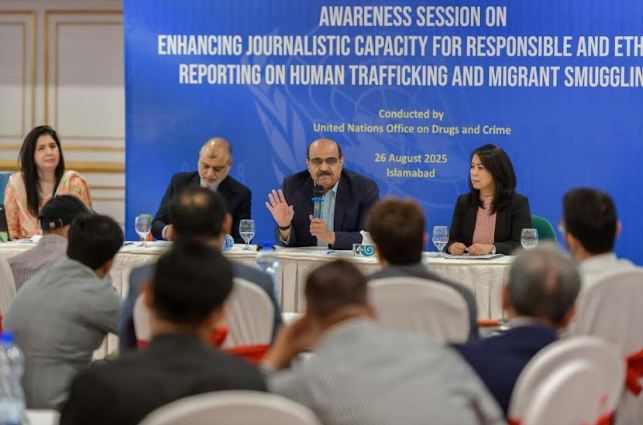
ISLAMABAD, AUG 26 /DNA/ – The United Nations Office on Drugs and Crime (UNODC) Country Office Pakistan, in collaboration with the Federal Investigation Agency (FIA), held a one-day media awareness session in Islamabad to strengthen journalists’ capacity for ethical and responsible reporting on Trafficking in Persons (TIP) and Smuggling of Migrants (SOM).

Over 30 journalists and editors from leading media houses participated in the workshop, which stressed survivor-centered reporting, accurate legal terminology, safeguarding victims’ identities, and avoiding sensationalism. Through interactive presentations, case studies, and discussions, participants explored how ethical journalism can shape public awareness, influence policy, and support Pakistan’s national response to these crimes.

Facilitated by senior journalist Mr. Oun Sahi, the session reinforced key principles:

Correct terminology: differentiating Trafficking in Persons (TIP) from Smuggling of Migrants (SOM), stressing how misuse confuses the public and undermines legal/policy responses.

Survivor-centered approach: avoiding stigmatizing language, passive voice, or sensational headlines; protecting privacy and dignity with pseudonyms, blurred visuals, and trauma-informed interviews.

Legal grounding: references to Pakistan’s Prevention of Trafficking in Persons Act (2018) and Prevention of Smuggling of Migrants Act (2018).

Ethical guidelines: avoiding clichés, framing stories within human rights and social contexts (poverty, gender inequality, migration gaps), and highlighting systemic complicity.

Media’s role: shaping public understanding, influencing government priorities, exposing organized crime, and sustaining momentum for reforms.

This initiative highlights UNODC and FIA’s commitment to working with the media in promoting accurate and constructive narratives that uphold the dignity of survivors while exposing organized crime.

Pakistan invites Sri Lanka to key regional parliament conference

Pakistan invites Sri Lanka to key regional parliament conference

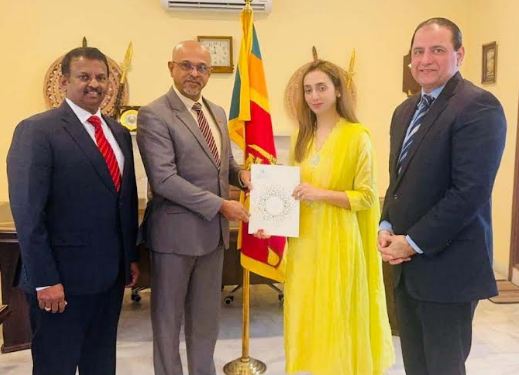
ISLAMABAD, AUG 26 /DNA/ – Ambassador to the Inter-Parliamentary Speakers Conference (ISC) and Adviser to the Chairman Senate, Ms. Misbah Khar, together with Mr. Tariq bin Waheed, Senior Director-General (SDG) of Protocol, met with Rear Admiral (Retd.) Fred Senevirathne, High Commissioner of Sri Lanka to Pakistan, and Mr. Christy Ruban, Deputy High Commissioner, at the Sri Lankan High Commission in Islamabad.

The purpose of the visit was to brief the High Commissioner on the upcoming ISC Conference, scheduled to be held in Islamabad on 11–12 November 2025, and to formally invite the participation of Sri Lankan parliamentary leaders. The conference will serve as a unique opportunity for parliamentarians from across the region to exchange views and collaborate on matters of mutual interest.

During the meeting, Ms. Misbah Khar highlighted the objectives of the ISC Conference, emphasizing its role in strengthening multilateral cooperation and promoting constructive dialogue among regional partners. She underscored that the event would provide an important platform for addressing shared challenges and enhancing institutional collaboration.

The High Commissioner reaffirmed Sri Lanka’s historically strong and respectful ties with Pakistan, recognizing the long-standing tradition of bilateral engagement and cooperation. He welcomed the initiative of the ISC Conference and acknowledged its value as a timely platform to further advance Pakistan–Sri Lanka relations.

Both sides expressed their commitment to continued collaboration across diplomatic and security domains. The High Commissioner conveyed his appreciation for the briefing and the invitation, while affirming Sri Lanka’s interest in active participation in such strategic dialogues.

Two new polio cases in KP push Pakistan’s 2025 tally to 23

Two new polio cases in KP push Pakistan's 2025 tally to 23

Peshawar, AUG 26: The Regional Reference Laboratory for Polio Eradication at the National Institute of Health (NIH), Islamabad, has confirmed two new poliovirus cases from south Khyber Pakhtunkhwa, one from district Tank and the other from district North Waziristan.

The recent polio cases include a 16-month-old girl from Union Council Mullazai, District Tank, and a 24-month-old girl from Union Council Miran Shah-3, District North Waziristan. With these detections, the total number of polio cases in Pakistan in 2025 has reached 23 – including 15 cases from KP, six from Sindh, and one each from Punjab and Gilgit Baltistan.

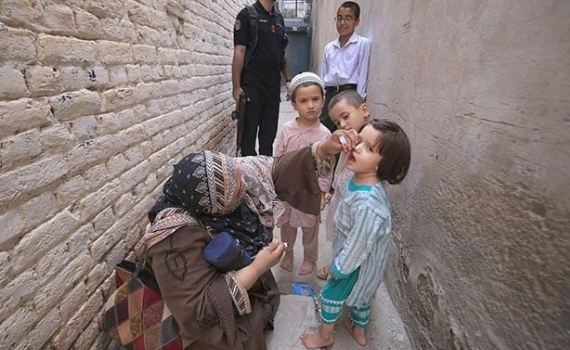
Polio is a highly infectious and incurable disease that can cause lifelong paralysis. The only effective protection is through repeated doses of the Oral Polio Vaccine (OPV) for every child under five during each campaign, alongside timely completion of all routine immunisations.

Despite significant progress, the continued detection of polio cases, particularly in southern KP, remains a serious concern. It underscores that children in hard-to-access areas and those with low vaccine acceptance continue to be at risk.

However, the National and Provincial Emergency Operations Centres (EOCs) are taking all possible measures to ensure the implementation of high-quality vaccination campaigns.

To interrupt poliovirus transmission, the National Emergency Operations Centre for Polio Eradication has developed a robust vaccination campaign schedule for the upcoming low transmission season.

The first campaign of the season will be conducted from September 1 to 7, 2025, while in southern KP, the campaign will commence on September 15. More than 28 million under 5-year children will receive polio drops in door-to-door vaccination campaign.

The aim is to ensure that every child in these districts is vaccinated against polio as part of ongoing efforts to rapidly strengthen immunity and address existing protection gaps. Parents and caregivers are strongly urged to ensure their children receive the polio vaccine during this and every campaign.

Polio eradication is a shared responsibility. While frontline health workers continue to deliver critical vaccines to children, parents and caregivers play an important role by ensuring their children receive all recommended doses of the polio vaccine and complete their routine immunisations.

Communities can protect their children by actively supporting vaccination efforts, countering misinformation, and encouraging others to vaccinate.

Trump’s Confrontation to Coexistence with China

Qamar Bashir

By Qamar Bashir

When Donald Trump reassumed the presidency in January 2025, he came with a determination to reset the United States, to restore what he called its lost glory, and to end the long years of exploitation by allies and adversaries alike. His first and fiercest target was China. Even before his administration had taken shape, when his cabinet was being scrutinized in the Senate and the Congress, it was clear that nearly every appointee, from the national security leadership to the economic team, carried one unifying agenda: to confront China, to cut down its growing influence, and to reclaim for America the leadership of the international order. The early months carried the full weight of this antagonism. Tariffs were slapped on Chinese goods, hawkish statements were made about containing Beijing in the Pacific, and even talk of stopping the flow of Chinese students to American universities was floated. The tone was confrontational, the stance uncompromising, and the ambition was nothing less than to push China back not only from American shores but from Asia, Europe, and beyond.

Yet as the weeks unfolded, a sobering reality dawned on Washington. The United States no longer had the leverage it once commanded. The global order had shifted. China was not a fragile power dependent on American markets and technology; it was a formidable actor that had, over the past decade, consolidated its dominance in manufacturing, technology, and finance. By 2024, China accounted for nearly 31% of global manufacturing output, making it the indispensable workshop of the world. Its grip on rare earth elements was even more decisive, producing nearly 70% and processing about 85% of the world’s supply, the backbone of modern technologies from smartphones and electric vehicles to satellites and fighter jets. To think that tariffs alone could bend such a power was wishful, and it quickly became apparent that the United States was staring at a competitor far too entrenched to be bullied.

Trump’s early declarations that allies like Europe, Canada, and Mexico had been “plundering” the United States found quick results there. NATO states, under American pressure, agreed to hike defense spending from 2% to as high as 5% of GDP, and European negotiators conceded to humiliating trade deals that forced them to buy more American goods while swallowing a 15% tariff on their exports to the U.S. Canada, too, suffered greatly, as disputes over trade, security, and investment battered its economy and its political stability.

In those regions, Trump’s heavy-handed tactics worked because the dependency on the United States remained asymmetric. But with China, the playbook misfired. Beijing did not bend. It retaliated with equal tariffs, diverted exports to Africa, Latin America, and Southeast Asia, and doubled down on its Belt and Road Initiative, which by 2025 had already drawn in more than 150 countries and over a trillion dollars in investment. Far from retreating, China used America’s confrontation to strengthen its global alternatives.

The attempt to ban Chinese students quickly collapsed as well. In 2024, more than 290,000 Chinese students were enrolled in American universities, contributing over $15 billion annually to tuition and living expenses. When proposals were made to cut them off, university presidents, governors, and state legislators raised the alarm that such a move would devastate higher education budgets and gut critical research programs. By the summer of 2025, Trump reversed course, openly admitting that these students were vital not only for finances but also for America’s scientific and technological advancement. What had been framed as a security threat was rebranded as a necessary lifeline for institutions already struggling with deficits.

On the military front, too, harsh reality intruded. American officials initially talked of quadrupling the U.S. presence in the South China Sea to contain Beijing. But the Pentagon’s own assessments made clear that China now had the largest navy in the world by ship count, and that sustaining such deployments would bleed the U.S. treasury without altering China’s resolve. With a defense budget already at $850 billion in 2024, America faced the prospect of draining itself in a contest it could not decisively win. It was not Beijing that appeared overstretched but Washington, and in the calculus of resources, the United States realized that escalation could only sap its strength.

Even the most powerful weapon in America’s arsenal, the dollar, proved less decisive than hoped. The dollar still made up about 58% of global foreign exchange reserves in 2024, but China and its BRICS partners had been steadily eroding this dominance. By early 2025, nearly a quarter of intra-BRICS trade was being conducted outside of the dollar, through local currency swaps and yuan settlements. At the same time, Beijing reduced its U.S. Treasury holdings to under $775 billion, its lowest in more than a decade, subtly weakening America’s ability to weaponize its debt dependence. The weaponization of finance, so effective against weaker adversaries, had limited effect on a China that had prepared its defenses.

It was on rare earths and supply chains that the hardest lesson was learned. Any disruption from Beijing would paralyze entire sectors of the U.S. economy. Defense contractors building F-35s, tech companies producing semiconductors, automakers racing to transition to EVs—all were dependent on Chinese supply chains. Attempts to reshore production or find alternative suppliers in Africa and Australia were years away from maturity. In the meantime, tariffs and restrictions only drove up prices at home. Walmart, Target, and Home Depot reported that household goods were rising by 10–15%, squeezing American consumers and fueling inflationary pressures. What had been billed as a strategy to punish China threatened to punish the very voters Trump had pledged to protect.

Trump is not a leader who easily admits defeat, but he is a pragmatist when forced by circumstances. Gradually, the rhetoric softened. Where once he threatened to choke off Chinese students, now he welcomed them. Where once he promised to multiply naval deployments, now he quietly acknowledged that China was too big to intimidate. Where once he boasted that tariffs would bring Beijing to its knees, now he conceded in his own words that “both China and the United States hold powerful cards, but I do not want to use these cards anymore.” It was a rare admission of limits, but also a demonstration of flexibility, of learning fast and adjusting course in the face of hard realities.

The implications of this shift are global. For Europe and Canada, the price of submission to American tariffs has been humiliation and economic loss. For developing countries, especially those bound to China through investment and infrastructure like Pakistan, the easing of U.S.-China tensions offers relief, stability, and opportunities. Supply chains can stabilize, inflationary shocks can be tempered, and the specter of a bifurcated technological order can be postponed. The nervousness that gripped global markets in early 2025 may yet give way to a calmer, more predictable environment.

This is not submission by the United States, nor is it triumph for China alone. It is a recognition of a multipolar world, one where interdependence outweighs the fantasies of domination. It is also a testament to Trump’s instinct for survival, his ability to correct course, and his willingness to pivot when faced with the immovable weight of reality. The United States still holds cards—in its consumer market, its technology base, its dollar system, and its alliances. But China holds cards too—in its manufacturing dominance, its rare earths, its investments, and its financial innovation. The test now is not who can outplay the other, but who can recognize that destroying the table destroys the game for all.

The course correction we are witnessing may prove to be one of the most consequential strategic adjustments of Trump’s presidency. It suggests not weakness, but wisdom—the wisdom to see that America cannot remain a hegemon in a world where China has become the indispensable player. In showing flexibility, Trump has revealed that leadership is not only about force but about judgment. He has acknowledged that America’s power, though vast, must coexist with China’s, and that a stable balance is the only path to safeguard prosperity at home and stability abroad. To some, this may feel like compromise. To others, like survival. But history may remember it as something larger: the moment the United States accepted the reality of a multipolar world, and chose coexistence over collision.

By Qamar Bashir

Press Secretary to the President (Rtd)

Former Press Minister, Embassy of Pakistan to France

Former Press Attache to Malaysia

Former MD, SRBC | Macomb, Michigan, USA

Tehran ready to ‘Eradicate Terrorism’ on Pakistan border, says General

Tehran ready to 'Eradicate Terrorism' on Pakistan border

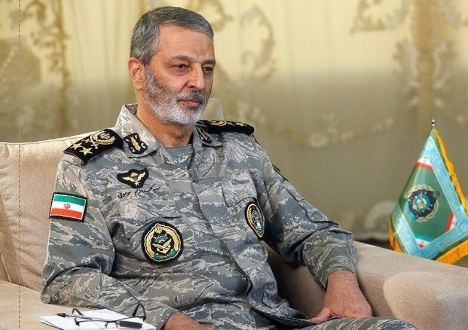
Chief of General Staff of the 🇮🇷 Armed Forces’ Telephone Conversation with 🇵🇰i Field Marshal Syed Asim Munir, COAS

Tehran/Rawalpindi, AUG 26: General Syed Abdul Rahim Mousavi had a telephone conversation with Pakistani Army chief Field Marshal Syed Asim Munir today.

General Mousavi expressed his deep condolences and sympathy to the government, nation and armed forces of Pakistan following the devastating rains and floods.

He emphasized: Iran is ready to eradicate terrorism and secure the borders of the two countries of Iran and Pakistan.

General Syed Abdul Rahim Mousavi, appreciating Pakistan’s positions and support for the Islamic Republic of Iran in the 12-day Sacred Defense against Israeli aggression, said: We expect that practical action will be taken against terrorists in the light of this bilateral cooperation. Of course, some steps have been taken in the past that should be increased and the backlogs should be compensated.

Stay Connected

64FansLike
60FollowersFollow

Latest Reviews

Exchange Rates

USD - United States Dollar
EUR
1.17
GBP
1.35
AUD
0.72
CAD
0.73