Home Blog Page 517

Warwickshire County, Lahore Qalandars Form Global Partnership

Warwickshire County, Lahore Qalandars Form Global Partnership

ANSAR BHATTI

ISLAMABAD, AUG 31 /DNA/ – Warwickshire County Cricket Club (WCCC) and Lahore Qalandars  (LQ) have announced a long-term global partnership aimed at boosting cricket in Birmingham, Warwickshire, and Lahore.

Launching this autumn, the collaboration will feature talent development, player and coach exchanges, joint academies, grassroots initiatives, community projects, and commercial ventures for 2026 and beyond.

Warwickshire County, Lahore Qalandars Form Global Partnership

This announcement follows Warwickshire’s milestone acquisition of Birmingham Phoenix alongside Knighthead LLP in July 2025, reinforcing the club’s ambition to expand its reach and strengthen its global footprint. 

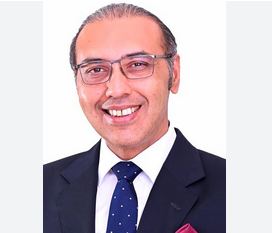
Abraham Khan, Finance Director of Warwickshire CCC, said: “Collaborating with Lahore Qalandars is not only about elite cricket but also about creating opportunities that will shape the future of the game. Together, we will open pathways for young talent, expand grassroots cricket, launch community projects, and pool resources to strengthen cricket at every level. This is a historic new chapter for both clubs.” 

Sameen Rana, Owner and COO of Lahore Qalandars, termed the agreement as a landmark moment, saying: “Our philosophy has always been to think beyond boundaries, and this partnership reflects that vision. By working with Warwickshire, we aim to nurture talent, inspire communities in Lahore and Birmingham, and build a sustainable model that strengthens both clubs on and off the field while leaving a lasting legacy for the sport.” 

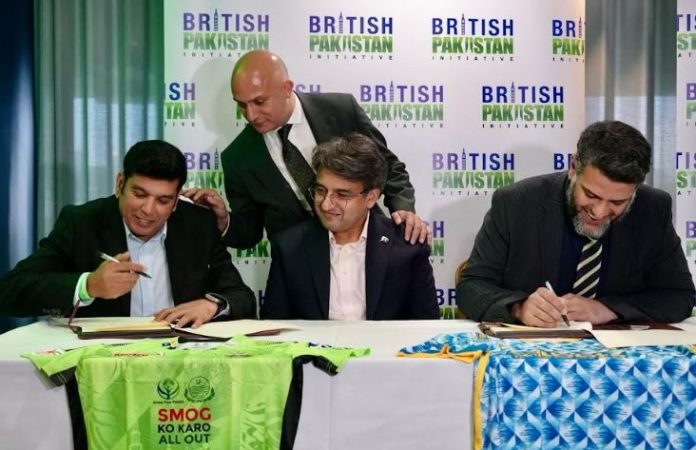
Facilitated by the British Pakistan Initiative after a successful academy tour to Lahore earlier this year, the deal transforms initial cultural exchanges into a wide-ranging cricket alliance across two continents.

23 more killed, nine injured across country in floods: NDMA

23 more killed, nine injured across country in floods: NDMA

ISLAMABAD, AUG 31: The National Disaster Management Authority (NDMA) has reported that 23 people killed and nine injured due to the flash floods.

According to details surfaced on Sunday, the NDMA has issued a report regarding the losses caused by the catastrophic floods and rains.

The NDMA said that over 850 have killed across the country due to the floods and rains since January 26.

The Pakistan Meteorological Department (PMD) has predicted more rains in the forthcoming 24 hours.

Moreover, the concerned institutions have been warned to remain on alert. The masses have been asked to ensure the precautionary measures to avert any damages due to the inclement weather.

Pakistan, Armenia establish diplomatic relations

Pakistan, Armenia establish diplomatic relations

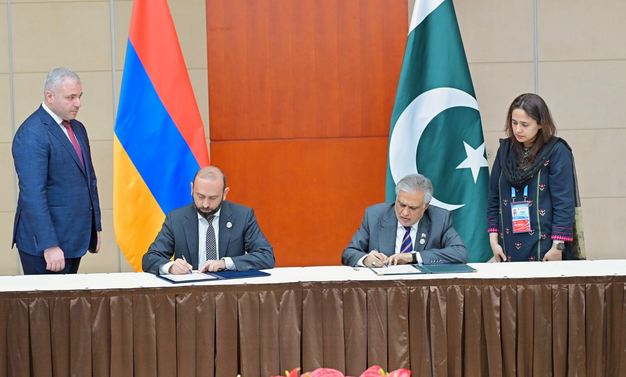
TIANJIN, AUG 31 /DNA/ – The Deputy Prime Minister and Foreign Minister of Islamic Republic of Pakistan, Senator Mohammad Ishaq Dar @MIshaqDar50 today, formally exchanged a Joint Communiqué, with the Foreign Minister of Armenia, Mr. Ararat Mirzoyan, thereby establishing diplomatic relations between the two countries.

Marking a historic step forward, both the leaders affirmed their commitment to the principles and objectives of United Nations Charter and discussed possible avenues of cooperation including economy, education, culture, and tourism.

The two leaders reaffirmed their desire to work closely with each other at bilateral and multilateral fora, to achieve their shared objectives of peace, progress, and prosperity for the peoples of their two countries.

Silver jubilee of Int’l pure mathematics conference celebrated in Islamabad

Silver jubilee of Int’l pure mathematics conference celebrated in Islamabad

ISLAMABAD, AUG 31 /DNA/ – The Silver Jubilee of the International Pure Mathematics Conference (IPMC) was inaugurated today in Islamabad. Founded in 2000 by Emeritus Professor Qaiser Mushtaq at Quaid-i-Azam University, the IPMC has become the largest annual gathering of mathematicians in South Asia.

Over the last 25 years, the IPMC has hosted 631 foreign speakers from 54 countries and 880 leading national speakers, making it a major platform of 4761 participants for academic exchange in the fields of Algebra, Geometry, and Analysis.

Speaking at the inaugural ceremony, Emeritus Professor Qaiser Mushtaq highlighted the vision behind the IPMC: “The conference has provided Pakistani students and young researchers with exposure to world-class mathematics, inspired international collaborations, and raised Pakistan’s academic profile globally.”

The International Pure Mathematics Conferences have been supported by the Pakistan Mathematical Society, Higher Education Commission, Pakistan Science Foundation, Quaid-i-Azam University, Preston University, Air University, Allama Iqbal Open University, COMSATS, National Centre for Physics, and other partners.

Special acknowledgment was made of the International Steering Committee, the National Advisory Committee, and the current Organizing Committee

A commemorative booklet detailing the history, structure, and contributions of the IPMC will be published following the event.

New provinces essential for effective Governance: RCCI President

New provinces essential for effective Governance: RCCI President

RAWALPINDI, AUG 31 (DNA) —   President of the Rawalpindi Chamber of Commerce and Industry (RCCI), Usman Shaukat, has emphasized the need for the creation of new provinces in Pakistan, stating that devolution of power to the grassroots level would ensure more effective governance and development outcomes.

Speaking at a luncheon hosted in honor of the Council of Economic and Energy Journalists (CEEJ), Shaukat said, “When Mustafa Kamal served as the Nazim of Karachi, the city witnessed significant development. This proves that when powers are decentralized, cities and regions thrive.” He called for a more decentralized administrative system across the country to improve service delivery and governance.

The event was attended by RCCI Senior Vice President Khalid Farooq Qazi, Vice President Fahad Barlas, Founder Chairman of the Pakistan Association of Exhibition Industry (PAEI) Khurshid Barlas, CEEJ President Raja Kamran, Secretary Kashif Munir, and senior journalists from across the country.

Usman Shaukat welcomed the improving bilateral relations between Pakistan and Bangladesh, noting a major shift in diplomatic sentiment. “The shadow of Indian influence over Bangladesh is lifting. Where it was once difficult for Pakistanis to obtain visas, now there is positive news that on-arrival visas are being considered,” he said. He further suggested that Bangladesh should be granted the Most Favored Nation (MFN) status by Pakistan to enhance economic ties.

Referring to recent developments, Shaukat highlighted the visit of Federal Minister for Commerce Jam Kamal to Bangladesh, where discussions were held on a potential joint venture in pharmaceutical manufacturing, especially in vaccine production. He pointed out the immense potential for Pakistan to earn valuable foreign exchange from such collaboration.

He acknowledged the media’s role in supporting national causes, especially during tense times such as the Pakistan-India conflicts and the ongoing challenges in cyber warfare. He also appreciated the media’s continued coverage of business community struggles and achievements.

“We are actively working with the government to reduce the cost of doing business. Several of our budget proposals have been implemented, and many longstanding issues are finally being addressed,” Shaukat added. Addressing the gathering, Khurshid Barlas described Bangladesh as “Pakistan’s fifth province” and emphasized the growing depth of bilateral relations.

He announced that a 200-member delegation of Pakistani business leaders will visit Bangladesh in September. The delegation will organize a “Made in Pakistan” Exhibition and Business Conference starting on September 23. “We’re taking major Pakistani brands with us. Our private and public sector representatives will accompany us to ensure deeper collaboration,” Barlas said, adding that Bangladeshi counterparts often refer to Pakistan as their “elder brother,” and we must respond in the same spirit.

Barlas also stressed the need to focus on the SAARC region, saying, “Our economy is stabilizing, and a new Pakistan is emerging. We must now move toward progress.” — DNA

Xi says China ready to stand with Belarus in practicing true multilateralism

Xi says China ready to stand with Belarus in practicing true multilateralism

TIANJIN, AUG 31: China is willing to work with Belarus to practice true multilateralism and jointly contribute to world peace, development and win-win cooperation as humanity once again comes to a crossroads, Chinese President Xi Jinping said on Sunday.

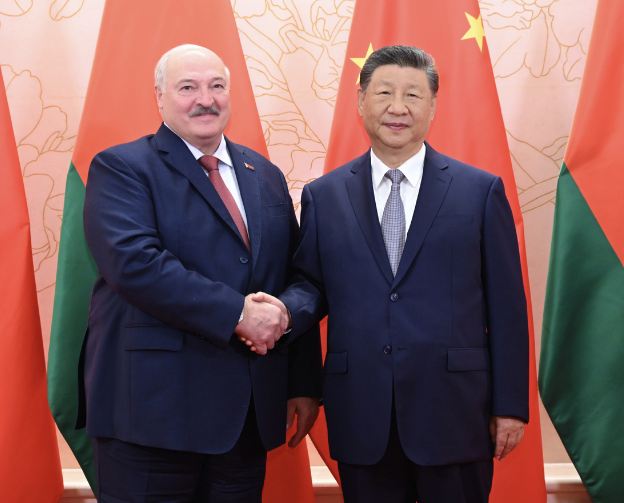
Xi made the remarks when meeting with Belarusian President Alexander Lukashenko in the northern Chinese city of Tianjin. Lukashenko is in China to attend the Shanghai Cooperation Organization Summit 2025, as well as commemorations marking the 80th anniversary of the victory in the Chinese People’s War of Resistance against Japanese Aggression and the World Anti-Fascist War.

Xi said the Chinese and Belarusian people once fought shoulder to shoulder, made major contributions to crushing militarism and fascism, and forged a profound friendship.

President Xi Jinping meets with Belarusian President Alexander Lukashenko in Tianjin, North China on Aug 31, 2025. [Photo/Xinhua]
He said the two countries should continue to support each other firmly on issues involving their respective core interests and major concerns, promote high-quality Belt and Road cooperation, and further align development strategies to foster new cooperation growth engines.

Lukashenko praised China’s just position on international and regional affairs, saying that China has made major contributions to peace and stability on the Eurasian continent and in the world.

He said Belarus is China’s all-weather partner who can always be trusted, expressing the hope to deepen exchanges with China on national governance and enhance cooperation in various fields.

The meeting also saw the inking of cooperation documents covering fields including technology, finance, media, transportation and customs inspection and quarantine.

Senior officials including Cai Qi, Wang Yi and Chen Min’er attended the meeting.

FRIA urges tech-driven disaster response amid ongoing floods

FRIA urges tech-driven disaster response amid ongoing floods

LAHORE: /DNA/ – Ferozepur Road Industrial Association (FRIA) Chairman Shahbaz Aslam has called for urgent adoption of advanced disaster management technologies to mitigate the impact of the ongoing floods across Pakistan. He said the current widespread inundation, which has caused significant human and economic losses in districts such as Narowal, Sialkot, Wazirabad, Hafizabad, Chiniot, and Jhang, underscores the critical need for modern, technology-based preventive and emergency response systems.

Shahbaz Aslam emphasized that integrating lessons from China’s advanced disaster management practices could greatly enhance Pakistan’s preparedness and response capabilities. He said leveraging Chinese expertise in early warning systems, medical rescue vehicles, and coordinated relief operations can help reduce casualties and protect property during future natural calamities.

The FRIA Chairman noted that the Prime Minister’s recent visit to China highlighted several ongoing collaborative projects under the Belt and Road Initiative, including the China-Pakistan Joint Lab for Disaster and Emergency Medicine, the International Medical Cooperation Center, and the China-Pakistan Friendship Hospital.

According to Shahbaz Aslam, these initiatives provide a strong foundation to strengthen Pakistan’s emergency response framework and ensure faster, more effective deployment of aid in flood-hit regions.

He stressed the importance of close coordination between national and provincial disaster authorities. “Structured cooperation between the National Disaster Management Authority (NDMA) and Provincial Disaster Management Authority (PDMA) is essential to ensure timely relief delivery and minimize losses during disasters,” he said. He also highlighted that proper training, modern equipment, and technology-driven monitoring could prevent small-scale incidents from escalating into major crises, protecting both lives and livelihoods.

Shahbaz Aslam further said that adopting these technological solutions could enhance public confidence and international recognition of Pakistan’s disaster management efforts. He called on the government to focus on implementing preventive strategies, upgrading rescue infrastructure, and deploying advanced monitoring systems alongside ongoing flood relief operations.

Concluding, the FRIA Chairman stated that Pakistan’s collaboration with China represents a crucial opportunity to build a resilient and responsive disaster management system. He said that by learning from Chinese practices and using modern technologies, Pakistan can significantly reduce the human and economic toll of future floods and other natural disasters.

PM Sharif, Erdoğan condemn Israeli “Genocidal Policies” in Gaza

PM Sharif, Erdoğan condemn Israeli

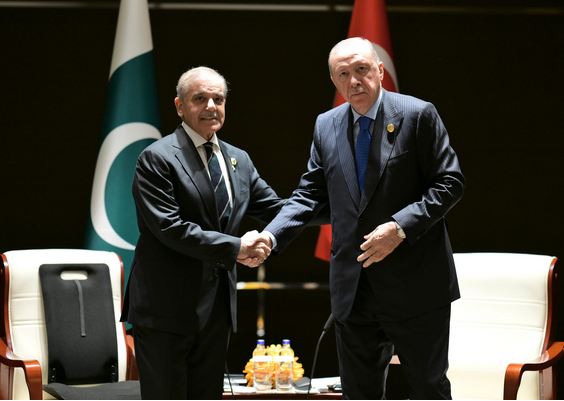
TIANJIN, AUG 31: /DNA/ – Prime Minister of Pakistan, Muhammad Shehbaz Sharif, held a constructive bilateral meeting with the President of the Republic of Türkiye, H.E. Recep Tayyip Erdoğan, on the sidelines of the SCO Council of Heads of State in Tianjin, China.

Both leaders reviewed the current state of Pakistan-Türkiye relations and expressed satisfaction over the growing momentum in bilateral ties. They noted with appreciation the steady increase in high-level exchanges and cooperation across a broad spectrum, including political, economic, defense, and security domains.

The Turkish President offered sincere condolences over the loss of precious lives and property as a result of the ongoing floods across various parts of Pakistan. The Turkish President also expressed his country’s solidarity with the people of Pakistan and said that the Government and people of Turkiye stand shoulder to shoulder with Pakistan in this hour of need.

The two sides exchanged views on key regional and international developments. They expressed grave concern over the worsening humanitarian situation in Gaza and reaffirmed their shared commitment to using international platforms to advocate for the legitimate rights of the Palestinian people and to condemn the ongoing Israeli aggression and genocidal policies.

The meeting reaffirmed the deep-rooted brotherly ties between Pakistan and Türkiye and underscored their shared resolve to further strengthen cooperation for peace, stability, and prosperity in the Muslim world and beyond.

Is America Drifting Toward Authoritarianism?

Qamar Bashir

By Qamar Bashir

In the United States, democracy is held sacred, yet the question lingers uncomfortably: who really governs this nation—Congress, the embodiment of representative debate, or the president, who issues executive orders at a breakneck pace? Nowhere is this tension more alive than in the story of migration—both of people and of power itself—whose routes are shaped by promises, implemented under seal, and tested by the courts.

When Donald Trump took the oath for his second term in January 2025, the air crackled with urgency, a promise that the long stalemates of Congress would no longer stall America’s progress. In just 147 days, he signed his 163rd executive order—already surpassing the 162 orders President Biden issued in his entire four-year term. By the end of August, that tally had climbed to 198. Coupled with his 220 first-term orders, he had, in fewer than five years, issued more directives than any modern president. Only Franklin D. Roosevelt surpassed his total—and FDR’s presidency spanned a global depression and climate of war. The executive pen, once a tool of occasional recalibration, had become Trump’s primary method of governing, as if power itself had picked up suitcase and migrated swiftly from Congress to the Oval Office.

Many of these orders moved along the path of public endorsement. Campaign promises that had galvanized voters—slashing immigration, limiting foreign trade, remodeling federal architecture—were delivered with immediate force. Endorsed by rallies and ballots, these promises took shape: tariffs were imposed, immigration enforcement tightened, Washington’s monuments and streets cleaned up, and classical architecture mandated for new federal buildings. It was governance by immediate mandate, enacted before Congress could deliberate.

Yet these rushed crossings hit legal checkpoints. One order targeted birthright citizenship—stripping citizenship from children born in the U.S. to non-citizen parents. Courts swiftly struck back: judges across the country blocked it, arguing the constitutional protections of the 14th Amendment could not be overturned with a signature. Federal circuits remain divided, the issue escalated toward the Supreme Court, stalled in multiple hearings—a charge halted gate by gate.

Another directive aimed at expanding “expedited removal,” allowing deportations without judicial hearings for immigrants anywhere in the country. The Justice Department warned of expedited processing for up to a million deportations per year. But a district judge ruled that violating due process would be unconstitutional, and several states filed lawsuits. Detention centers overflowed, protests erupted, and the eruption of legal action forced a partial retreat. Trump’s rapid implementation had collided with America’s entrenched legal norms.

These legal battles multiplied. Orders banning transgender individuals from military service, cutting funding for gender-affirming care, and revoking passports with non-binary markers were met with court injunctions. Judges held fast to equal protection and free speech, labeling some orders as discriminatory. The result: a patchwork where federal policy differed starkly across regions, depending on the rulings in local courts. Democracy, in its procedural wisdom, slow-marched through lawsuits and hearings.

But even as rolling injunctions slowed or blocked dozens of orders, Trump’s economic narrative flickered bright. In the second quarter of 2025, U.S. GDP growth was revised to 3.3 percent—above the initial 3 percent estimate and marking a dramatic rebound from a 0.5 percent contraction in the first quarter. Consumer spending rose, AI investments surged, and stock indices climbed to new highs. The economy, for the moment, seemed to reward a government that governed swiftly. The Federal Reserve, sensing softening labor data, eyed interest-rate cuts. Consumer confidence, bolstered by job stability and spending, contributed to this upward trend.

Yet cracks appeared below the surface. Analysts warned of stagflation risks—tariffs pushing prices higher even as growth slowed. The OECD revised U.S. growth expectations downward, and economists cautioned that Trump’s economic rebound was fragile, driven by temporary factors like inventory shifts rather than sustainable demand.

On the geopolitical front, Trump touted himself as a peacemaker, claiming to have ended multiple wars—from conflicts in Africa to Asia. The reality was murkier: several of the cited wars continued, deals remained incomplete, and analysts called his claims exaggerated. At home, however, aggressive immigration enforcement, trade wars, and detention centers like “Alligator Alcatraz” symbolized executive power in action—power that enforced campaign promises but also fractured international goodwill.

Even policies aimed at improving the capital’s image became flashpoints. A White House order created a “Washington Safe and Beautiful” task force, deploying Park Police and the National Guard to clean encampments, scrub graffiti, and restore order around monuments. Soon after, another directive mandated classical architecture in new federal buildings—a symbolic reclaiming of civic aesthetics. Critics saw it as symbolism over substance, an aesthetic takeover rubber-stamped without consensus.

Behind the symbolic momentum lay legal resistance and civic concern. Immigration centers were sued by environmental groups and tribal nations, courts ordered facilities dismantled, and resistance grew across states, courts, and civil society. Difficult public policies had been enacted swiftly—but their permanence remained in question.

This generational tension—between unchecked executive speed and slow democratic process—was the hallmark of a nation on edge. Trump’s rapid delivery on campaign promises demonstrated both the power and peril of executive orders as tools for public mandate. Speed can enact change—but velocity alone is not governance.

Ultimately, the American story of migration—from promises to policy, from the Oval Office to the courtroom—asks a foundational question: Can democracy thrive when its channels are bypassed? Executive orders are powerful locomotives: they move policy quickly, visibly, sometimes effectively; but without democratic gears, they risk derailment.

In the end, Trump’s second term became the most vivid demonstration of that balance. His rapid implementation of executive orders did enable him to fulfill campaign promises, ease trade tensions, reshape government aesthetics, and catalyze economic growth—however briefly. Yet courts stood as gatekeepers, injunctions blocked orders, cities resisted, and allies questioned U.S. reliability. Power migrated swiftly—but settling it into the republic requires democracy’s architecture: deliberation, legitimacy, and institutional consent. As America moves forward, the question remains: will swift power prove foundational—or fleeting?

Consensus reached on amendments to national commission for Minorities rights bill 2025

Consensus reached on amendments to national commission for Minorities rights bill 2025

ISLAMABAD, AUG 31 /DNA/ – A consensus-based amendment to the National Commission for Minorities Rights Bill, 2025 has been finalised in a recent meeting at Aiwan-e-Sadr.

The amended Bill has been forwarded to the Parliament for reconsideration in its Joint Session. These amendments were prepared in response to the President’s earlier message to the Parliament under Article 75(1) of the Constitution of Pakistan.

The Bill seeks to establish a statutory commission to safeguard the rights of religious minorities, ensuring their representation and protection from discrimination. The commission will monitor implementation of minority rights, review relevant policies, and will have the powers to investigate rights violations, independently.

This legislation reflects a significant step toward fulfilling constitutional guarantees and international commitments to minority rights in Pakistan. The formation of the commission includes representatives from all provinces and minority communities, promoting inclusivity and effective oversight.

The Bill will proceed under the constitutional process for due consideration by the Parliament in its joint session.

Stay Connected

64FansLike
60FollowersFollow

Latest Reviews

Exchange Rates

USD - United States Dollar
EUR
1.17
GBP
1.35
AUD
0.72
CAD
0.73