Home Blog Page 516

Independence Day of Uzbekistan celebrated

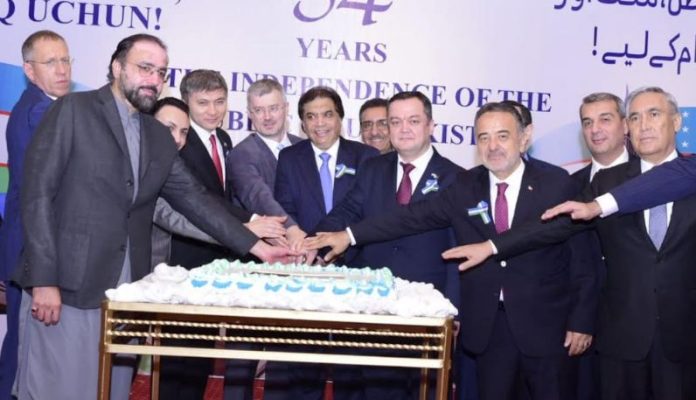
ISLAMABAD, SEPT 1 /DNA/ – The Embassy of the Republic of Uzbekistan in Pakistan hosted a grand reception today to mark the 34th Anniversary of Uzbekistan’s Independence. The event was attended by a distinguished gathering including the Chief Guest, Federal Minister for Railways Mr. Muhammad Hanif Abbasi, members of the diplomatic corps, government officials, business leaders, and media representatives.

In his keynote address, His Excellency Mr. Alisher Tukhtaev, Ambassador of Uzbekistan to Pakistan, reflected on the profound significance of Independence for the Uzbek people, describing it as “the heartbeat of our nation” and the realization of a dream to live in a free country under its own flag.

The Ambassador detailed the remarkable socio-economic achievements of Uzbekistan under the leadership of President Shavkat Mirziyoyev, ushering in what he termed “the era of the New Uzbekistan.”

Key Economic Highlights Cited:

  • Sustained Growth: The economy is growing at over 6% annually, with GDP doubling in the last eight years to $115 billion in 2023, and projected to exceed $130 billion this year.
  • Investment Boom: $130 billion in foreign investments attracted over recent years, with $35 billion alone this year creating nearly 9,000 new enterprises.
  • Export & Reserve Strength: Exports have reached $26 billion, and gold and foreign exchange reserves have surpassed $48 billion for the first time.
  • Job Creation: An ambitious goal of creating 5.5 million new jobs in 2024 has seen 5 million people employed in just eight months. Notably, 700,000 Uzbek citizens working abroad have returned home, believing in the country’s future.
  • Tourism surge: Hosted over 10 million tourists last year, generating $3 billion in revenue.

Ambassador Tukhtaev also highlighted the nation’s historic sporting achievement: “For the first time in history, the national football team of Uzbekistan has qualified for the World Cup!”

A significant portion of the address was dedicated to the growing strategic partnership between Uzbekistan and Pakistan. The Ambassador emphasized that the two nations are bound by “centuries of shared history, culture, and spirituality,” which are now transforming into a robust modern partnership.

Key Bilateral Highlights:

  • High-Level Engagement: The official visit of Prime Minister Shahbaz Sharif to Uzbekistan in February 2024 was a milestone, resulting in the signing of a Joint Declaration and a Protocol to establish the High Council of Strategic Partnership.
  • Transformative Project: Collaborative work on the historic Trans-Afghan Railway project was highlighted as a game-changer for regional connectivity, linking Central Asia with South Asia.
  • Trade Acceleration: Bilateral trade reached $404.5 million in 2024. In the first seven months of this year, trade turnover hit $320 million—a dramatic 126% increase compared to the same period last year. The leaders have set a ambitious target of $2 billion.
  • People-to-People Ties: The simplification of the visa regime for Pakistani citizens and the establishment of direct flights between Tashkent-Lahore and Tashkent-Islamabad were noted as crucial steps in strengthening humanitarian bonds.

In his concluding remarks, Ambassador Tukhtaev expressed his deep gratitude to the Government and people of Pakistan for their solidarity and friendship. The guests were treated to an evening of traditional Uzbek cuisine, music, and culture, experiencing the “living soul” of the nation.

The event underscored a shared commitment to a future of peace, prosperity, and deepened cooperation between the brotherly nations of Uzbekistan and Pakistan.

Man-made tragedy Climate change result of our deeds: Kh. Asif

Man-made tragedy Climate change result of our deeds: Kh. Asif

“So I want to state that this is a time for self-accountability, that when you encroach or invite it or allow any person … and make such [housing] schemes, then nature reacts.”

Faisal Sheikh

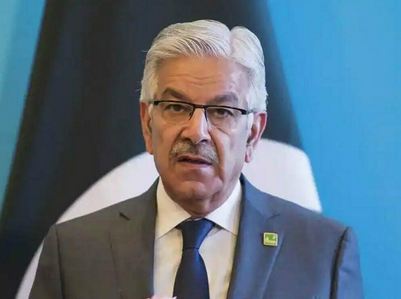
ISLAMABAD: Defence Minister Khawaja Asif has said in the National Assembly that any climate change in the country is due to “our own actions”.

He said the recent floods were the third or fourth major “catastrophe” in the country in the last 12 or 15 years.

“With that, we have done value addition that we created hotels and houses on waterways, the main route and path of the river has been encroached and presumed that it’s a sewer so housing colonies can be made here.

“So I want to state that this is a time for self-accountability, that when you encroach or invite it or allow any person … and make such [housing] schemes, then nature reacts.”

He said in all of Pakistan, from the cloudbursts in Khyber Pakhtunkhwa to the rains in Punjab, the natural jurisdiction of rivers was interfered with by humans.

Meanwhile, the district administration in Islamabad has been placed on high alert after the capital city received fresh showers, as per Islamabad DC Irfan Memon.

The Islamabad DC has directed the relevant authorities to ensure monitoring of low-lying areas and drains. Memon also instructed respective assistant commissioners to be present in the field to oversee the situation.

The water level in the Punjab’s rivers is expected to rise after the High Commission of India informed Pakistan of incoming floodwater from Harike and Ferozpur headworks, according to the Pakistan Commission for Indus Water.

“Harike and Ferozpur along the Sutlej in India are at high flood level as of 8am on Sept 1, which will affect the water levels in the respective downstream districts,” the Punjab PDMA said in an advisory.

UAE win toss, elect to bowl first against Afghanistan in tri-series clash

UAE win toss, elect to bowl first against Afghanistan in tri-series clash

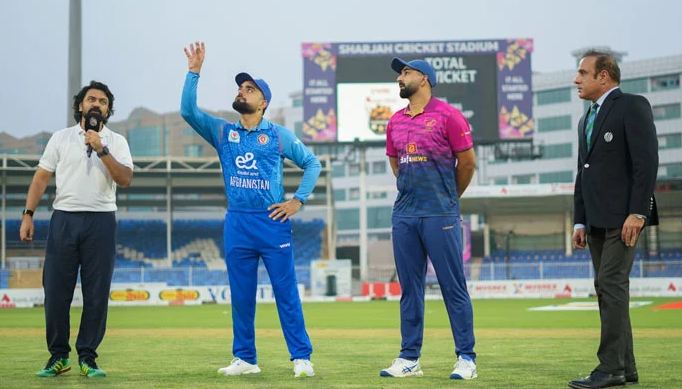
SHARJAH: Home side United Arab Emirates (UAE) have won the toss and opted to field first against Afghanistan in the third match of the T20I tri-series here at the Sharjah Cricket Stadium on Monday.

Squads

UAE: Muhammad Waseem (c), Alishan Sharafu, Aryansh Sharma (wk), Asif Khan, Dhruv Parashar, Ethan D’Souza, Haider Ali, Harshit Kaushik, Junaid Siddique, Muhammad Farooq, Muhammad Jawadullah, Muhammad Zohaib, Rahul Chopra (wk), Rohid Khan and Saghir Khan.

Afghanistan: Rashid Khan (captain), Rahmanullah Gurbaz, Ibrahim Zadran, Sediqullah Atal, Darwish Rasooli, Azmatullah Omarzai, Mohammad Ishaq, Gulbadin Naib, Mohammad Nabi, Karim Janat, Sharafuddin Ashraf, Noor Ahmad, Mujeeb Ur Rahman, AM Ghazanfar, Abdullah Ahmadzai, Farid Ahmad Malik and Fazalhaq Farooqi.

Head-to-head

Afghanistan and UAE have come face-to-face 12 times in T20Is, with the former boasting a dominant record with nine victories, compared to the Gulf nation’s three.

Matches: 12
Afghanistan: 9
UAE: 3

Form Guide

Both Afghanistan and UAE enter the fixture with similar momentum, having suffered defeat in their respective campaign openers against Pakistan.

Afghanistan: L, W, W, L, L (most recent first)
UAE: L, L, W, W, W

PM Shehbaz raises Kashmir issue at the SCO summit

PM Shehbaz to present regional strategy at SCO summit in China

At the recent Shanghai Cooperation Organisation (SCO) summit, Prime Minister Shehbaz Sharif brought up the issues of Kashmir and Balochistan, even though the SCO’s charter does not allow for the discussion of bilateral disputes. This action, taken in the presence of Indian Prime Minister Narendra Modi, served to highlight these long-standing issues on an international platform.

Prime Minister Sharif’s decision to raise these issues at the SCO summit was a significant diplomatic move. While the SCO is primarily focused on regional security and economic cooperation, and explicitly avoids taking up bilateral disputes, this was an opportunity to draw the attention of world leaders to what Pakistan views as critical humanitarian and security concerns. By speaking out, Sharif ensured that the issues of Kashmir and Balochistan were not sidelined, even if no formal resolution could be expected from the summit itself. His remarks underscored Pakistan’s perspective that lasting peace in the region is impossible without a just and lasting solution to the Kashmir conflict.

The Kashmir issue remains one of the world’s most enduring and dangerous flashpoints. A resolution is essential for the stability and prosperity of the entire South Asian region. While both Pakistan and India agree that the issue must be resolved bilaterally, their inability to find common ground has led to a cycle of conflict, mistrust, and immense suffering for the people on both sides of the border. This continuous state of tension diverts valuable resources that could otherwise be used for economic development, poverty alleviation, and improving the lives of citizens. The people of both nations, particularly the poor, are the ones who bear the greatest burden of this prolonged geopolitical struggle.

For decades, the United States and other global powers have been hesitant to play a direct role in mediating the Kashmir dispute. This reluctance is often attributed to their own vested interests in the region, which include maintaining a strategic balance of power and cultivating relationships with both India and Pakistan without alienating either. The lack of external pressure to find a solution has allowed the conflict to fester, perpetuating the cycle of violence and instability. A genuine, lasting resolution will require not only bilateral dialogue but also a shift in the international community’s approach, which has so far been marked by cautious non-intervention. The resources spent on military preparedness and cross-border skirmishes could instead be directed toward education, healthcare, and infrastructure development, transforming the lives of millions.

Bahrain Defence Chief meets Pakistan Air Chief

Bahrain Defence Chief meets Pakistan Air Chief

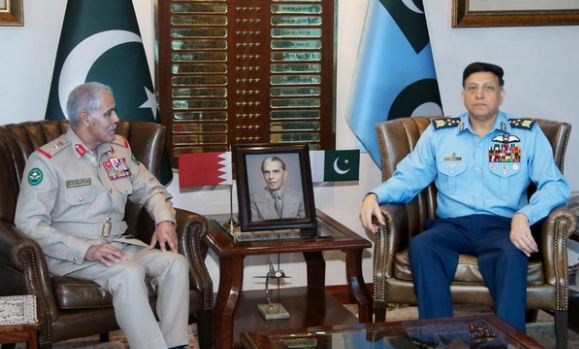
ISLAMABAD, SEPT 1 /DNA/ – Lieutenant General Thiab Saqer Abdulla Al Nuaimi, Chief of Staff, Bahrain Defence Force, called on Air Chief Marshal Zaheer Ahmed Baber Sidhu, Chief of the Air Staff, Pakistan Air Force during his visit to Air Headquarters, Islamabad. The meeting focused on key areas of mutual interest and exploring avenues of enhanced cooperation between the two countries. Both sides reaffirmed their commitment to sustained military-to-military engagement, emphasizing joint training and collective growth as a unified team.

Upon his arrival, a smartly turned-out contingent of Pakistan Air Force presented Guard of Honour to Lieutenant General Thiab Saqer Abdulla Al Nuaimi.

The Air Chief extended a gracious welcome to the distinguished guests, highlighting that Pakistan and Bahrain enjoy deep-rooted religious and historic bonds, which are reflected in the exemplary military to miltary relationships between the two countries. During the meeting, Chief of the Air Staff reiterated his resolve to further expand the bilateral military cooperation, particularly in the domains of joint training and knowledge-sharing initiatives. He further emphasized that Pakistan deeply values its strong diplomatic and defence ties with Bahrain, which are firmly anchored in shared commitment of both the countries on regional peace, security and stability.

The visiting dignitary lauded the professionalism of PAF personnel and commended the remarkable strides made by Pakistan Air Force, particularly in indigenization and technological advancement. Underscoring the significance of knowledge-sharing in Multi Domain operations to augment the operational readiness of Bahrain Air Force, he conveyed his earnest desire to gain deeper insight into PAF’s complete methodology of Multi Domain warfare, with the aim of learning from its rich operational experience. The visiting dignitary also expressed interest in initiating joint training programs for Bahraini pilots and engineers at all levels. Chief of Staff, Bahrain Defence Force was highly appreciative of PAF’s indigenization efforts and particularly commended the role of National Aerospace Science & Technology Park in spearheading innovation and building advanced indigenous capabilities. Later, the dignitary visited National ISR & Integrated Air Operations Centre and PAF Cyber Command, where he was briefed on the operational capabilities of Pakistan Air Force.

This meeting between Chief of the Air Staff and Chief of Staff, Bahrain Defence Force signifies a resolute commitment of both countries to reinforce military partnership, fostering collaboration and promoting robust relations.

Rethinking Education in Pakistan’s Digital Age:

Rethinking Education in Pakistan’s Digital Age:

Muhammad Irfan

The present world is rapidly growing in technology and the digital era. Technology has become an essential component in every aspect of life, from eating and drinking to sleeping and rising in the morning, from entertainment and enjoyment to medicine, education, jobs, agriculture, and advanced industries. Every single thing has become dependent on technology. In Pakistan, where over 100 million people now use the internet, this digital tide offers hope for a nation yearning to educate its youth, yet millions in rural areas remain cut off by patchy networks and power outages. Higher education, once confined to lecture halls and scarce resources, now stands at the cusp of a digital revolution. By embracing technology, Pakistan can transform its universities into gateways of opportunity, if it can overcome the barriers of underfunding and unequal access.

This technological wave beckons Pakistan to reimagine higher education, where students from the mountains of Chitral to the plains of Sindh can learn without limits. Still, the gross enrolment ratio in higher education is lower at 12 percent in the country compared to global standards, and public universities have been struggling with overcrowded seats and obsolete infrastructure. The Higher Education Commission (HEC) has initiated digital projects such as online education and learning, but this is hampered by insufficient budgets and a lack of trained faculty. Technology is the solution to this, and it promises to fill these gaps with online courses and digital tools that can make education accessible and relevant in a digital world. The potential is immense- Pakistan can equip its young population of 60 percent to compete in the global market, only by using infrastructure and digital literacy to make sure that none of the students are left behind.

Libraries, once the sole keepers of knowledge, have been eclipsed by the internet’s vast digital libraries, e-books, and online databases, opening a world of information to students and educators alike. In Pakistan, where rural libraries are nearly nonexistent and urban ones often outdated, this shift is a lifeline, letting a student in Quetta access global research with a click. But digital literacy lags—many students, especially in remote regions, struggle to navigate online resources, and slow internet hinders their efforts. Yuval Noah Harari’s words capture the stakes: “The most important skills of the 21st century are not reading and writing, but critical thinking, communication, collaboration, and creativity.” The internet’s endless data can spark these skills, turning a young mind in Peshawar into a critical thinker, but Pakistan must train its youth to wield this tool effectively.

The delivery of education has been reshaped by technology, breaking barriers of distance and circumstance. Online platforms, like those transforming Allama Iqbal Open University from postal courses to digital classrooms, bring learning to Pakistan’s 60 percent rural population, where universities are often out of reach. An online program can allow a shopkeeper in Gwadar or a mother in Swat to obtain degrees through flexible programs. However, unstable internet and regular power outages undermine this promise, and most schools do not have the servers or the know-how to implement strong e-learning. Blended learning, which is a combination of online and face-to-face learning, could be a potential solution to personalize education; however, the digital infrastructure in Pakistan requires immediate improvements. Investment in connectivity and education can transform a dream into reality by making education the right of every individual in the country.

Communication, the soul of learning, thrives in the digital age. Tools like WhatsApp, email, and online forums allow students in Lahore to collaborate with students in Islamabad, exchanging ideas with professors at once. The virtual solution, such as Zoom, can save time and is a way to bring faculty spread across universities located in various parts of Pakistan to meet each other and become creative. The digital divide continues, however, with poor reception in the rural regions of Balochistan and resources strained in the urban megacities such as Karachi. Administrators share updates via digital tools, but most of them are incompetent in taking full advantage of these tools. The potential is obvious: professionally providing the universities with quality technology and educating personnel to forge dynamic academic societies that are as good as anywhere in the world can make the scholars in Pakistan a unifying force in the pursuit of knowledge.

In higher education, data seems to swim everywhere: grades, enrolments, and the demand for resources. The analytics enabled by technology can use this data to generate insights that could then guide an institution such as Punjab University to streamline its courses or assist students in need. In Pakistan, where universities are overcrowded and youth unemployment rates are running at nearly 8 percent, analytics could place education where employment opportunities prevail and enhance the future of graduates. However, not many institutions possess the tools or knowledge to make decisions based on data, and there is a low number of technical training programs. The possibilities are radical—envision universities forecasting dropouts or programming to meet industry demands and boosting Pakistan’s economy. Such an investment in analytics transforms education in the country, not merely making it available but effective in defining a future where all graduates prosper.

Technology’s revolution in higher education is Pakistan’s chance to soar, turning universities into engines of progress for a nation of 240 million. Digital libraries can break geographical barriers; those who are unreachable can be accessed through online platforms, and smarter institutions can be built through analytics. However, the journey is uphill because poor funding of universities, a lack of stable internet connections, and minimal digital literacy can widen existing gaps. To turn this around, Pakistan must take strong steps forward: increase investment in the HEC, collaborate with tech companies to invest in infrastructure, and educate teachers to adopt digital technologies. The young generation, the heartbeat of Pakistan, needs to be prepared through their education to live in a digital world. Will we seize this moment to build a future where knowledge knows no bounds, or will we let old barriers hold us back? The time to choose is now.

Muhammad Irfan

[email protected]

What Makes the Ukraine Russia War Unique

Qamar Bashir

By Qamar Bashir

Ukraine entered this war as the presumed underdog—smaller economy, fewer troops, and seemingly overmatched by a nuclear-armed Russia. Early expectations of a quick collapse proved wrong because two big forces collided: Ukraine’s own adaptation and resolve, and Europe’s decision that defending Kyiv was, in practice, defending Europe. That political will translated into money, weapons, training, and intelligence support on a scale and with a speed that Moscow did not anticipate. The result is a grinding third year in which Russia has advanced in places but still not broken Ukraine’s state, army, or economy—and in which the very character of warfare has been rewritten by drones, long-range precision strikes, and an unprecedented air-defence duel.

On the battlefield, the single biggest operational surprise has been the drone revolution. Ukraine industrialized “good-enough” unmanned systems—cheap FPV strike drones, long-range one-way attack drones, and uncrewed surface vessels (USVs)—to impose constant pressure on Russian logistics, airbases, and the Black Sea Fleet. Those naval drones forced Russia to pull major combatants away from Sevastopol toward safer ports, degrading its ability to blockade Ukraine’s coast and contributing to a remarkable Ukrainian asymmetric sea campaign.

Long-range strike has been the other pillar. The United States transferred ATACMS with 300-kilometre range in 2024, giving Ukraine new options against high-value targets deep behind the lines. That capability, combined with European Storm Shadow/SCALP and Ukrainian-built long-range drones, underpins the campaign hitting Russian oil infrastructure. Through August 2025, independent tallies indicate those drone strikes have taken roughly 10–17% of Russia’s refining capacity offline at various points—an effect visible at the pump and in emergency policy responses inside Russia.

If this is the war of drones and strikes, it is also the war of air defence. Ukraine’s layered network—Patriot, NASAMS, IRIS-T and others—has rewritten assumptions about what modern integrated air defences can do under fire, including the first confirmed shoot-downs of Russia’s Kinzhal air-launched ballistic missile. At the same time, Russia adapted with massed Shahed-type drones and heavy use of ballistic and cruise missiles to saturate interceptors, paired with powerful electronic warfare to degrade guidance and communications. The duel continues to evolve: intercept successes are real, but saturation and glide-bomb tactics have bitten hard.

The Black Sea is where Ukraine’s innovation most visibly paid off. By turning USVs into precision kamikaze boats and pairing them with intelligence from partners, Kyiv chipped away at ships, piers, and command nodes, compelling the Black Sea Fleet to redistribute to less exposed ports and reducing its freedom to threaten Ukraine’s coastline and grain lanes. That maritime asymmetry—inflicted by a country with almost no surviving navy—has strategic consequences disproportionate to cost.

Why, then, has Russia—despite numbers, artillery, and nuclear weapons—failed to secure a decisive victory? First, it misjudged the political spine of its opponents. Europe decided early that Ukraine’s survival was a core European interest, and it has put its money where its mouth is. The EU’s multi-year Ukraine Facility, worth up to €50 billion through 2027, created predictable budget support, while total EU-level and member-state assistance across financial, military, and humanitarian lines has reached roughly €150 billion. That predictable lifeline kept the Ukrainian state functioning and the army supplied even when battlefield fortunes wavered.

Second, Moscow underestimated what U.S. and European intelligence, surveillance and reconnaissance (ISR)—including commercial space—would do to Russian command posts, ammo dumps, and air defences. Western ISR didn’t fight the war, but it made Ukrainian strikes smarter and faster and helped compensate for smaller forces.

Third, Russia’s logistics and corruption problems, while not new, were brutally exposed by the scale and tempo of this campaign. Under strain, the Russian system struggled to keep front-line formations fully equipped with trained infantry, modern optics, and precision munitions, and to sustain coherent combined-arms manoeuvre after the war’s first months.

Fourth, Ukrainian denial of the air domain—without actually achieving air superiority—has been unexpectedly effective. Air defences blunted Russia’s ability to use its fast jets in depth, and since mid-2024 the arrival of Western-donated F-16s has begun to stiffen Ukraine’s air posture and air-defence suppression capability, albeit in limited numbers so far.

Fifth, Russia’s war economy, though resilient, is feeling real pressure. The refinery-strike campaign has fed domestic fuel shortages and rationing in some regions, forcing ad-hoc controls and export bans. Lower oil and gas revenues this summer further squeezed the budget alongside very high nominal interest rates. Sustained pressure here does not guarantee battlefield collapse, but it narrows Moscow’s menu of options.

None of this means Ukraine has had it easy. Russia has adapted, too. It mass-produced glide-bomb kits (UMPK) to lob heavy bombs from beyond Ukraine’s front-line air-defence umbrellas, pulverizing defensive positions and urban strongpoints. It scaled up Shahed-type drones and improved missile salvos to exhaust intercept stocks, and it is iterating on EW to blunt Ukrainian drones. The result is a seesaw of adaptation in which each side’s marginal gains are contested within months.

Leadership and diplomacy sit over all of this. President Trump has sought to test diplomatic openings with Moscow, but as of mid-August a high-profile meeting produced no deal, and fighting has intensified since. Washington continues to weigh sanctions, export-control tightening, and security guarantees alongside European leaders; in parallel, Europeans insist they must be at the table for any settlement they will be asked to underwrite.

This war, unfolding in the heart of Europe, should never have happened in an age where humanity prides itself on knowledge, civility, and progress. Europe, with its centuries of cultural achievement, scientific discovery, and lessons from devastating past wars, was expected to have built a framework strong enough to prevent such catastrophe. Yet the conflict continues into its third year, threatening not just Ukraine and Russia but also global security, economic stability, and human dignity.

Finally, the lesson of this war must transform global thinking: that military might alone cannot deliver lasting security. Sustainable peace depends on economic interdependence, technological cooperation, and mutual respect for sovereignty. The same technologies—AI, robotics, cyber systems, and satellites—that now make this war deadlier could, if directed differently, make peace stronger and more enduring.

Humanity, after centuries of struggle, innovation, and shared civilization, owes itself a better path forward. Europe, the cradle of modern democracy and human rights, must lead—not with weapons alone but with wisdom, reconciliation, and courage. If the war’s architects fail to act, history will remember this as a failure not of power but of imagination. Yet if they succeed, Ukraine’s resilience, Europe’s unity, and the world’s collective resolve could together turn a battlefield tragedy into a foundation for a safer, more cooperative, and more humane international order.

By Qamar Bashir

Press Secretary to the President (Rtd)

Former Press Minister, Embassy of Pakistan to France

Former Press Attache to Malaysia

Former MD, SRBC | Macomb, Michigan, USA

SCO leaders condemn Jaffar Express and Pahalgam attacks, vow joint fight on terror

SCO leaders condemn Jaffar Express and Pahalgam attacks

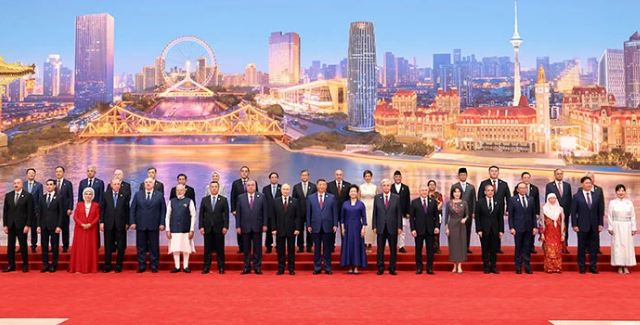
TIANJIN: The Shanghai Cooperation Organisation (SCO) leaders on Monday strongly condemned recent terrorist attacks in Indian Illegally Occupied Jammu and Kashmir’s (IIOJK) Pahalgam area, on the Jaffar Express, and in Khuzdar, pledging deeper multilateral cooperation and concrete measures to combat terrorism.

In a joint statement issued after the Council of Heads of State meeting in Tianjin, the leaders stressed that perpetrators, organisers and sponsors of such attacks must be held accountable, reaffirming their strong commitment to combating terrorism, separatism and extremism.

The SCO members underlined the unacceptability of using terrorist and extremist groups for political or selfish purposes, while recognising the primary role of sovereign states in countering these threats.

Pakistan and India recently engaged in a four-day armed conflict following the April 22 Pahalgam attack. New Delhi, without offering any evidence, claimed that Islamabad was behind the attack — allegations that Pakistan has denied.

In response to India’s cross-border strikes, Pakistan had launched Operation Bunyan-um-Marsoos after downing six Indian Air Force jets, including three Rafales.

After the brief war, India in June refused to sign a joint document during a high-level SCO Defence Ministers’ meeting in China due to its mentioning terrorist activities in Pakistan’s Balochistan and lack of reference to the Pahalgam incident. The huddle decided not to issue a joint statement over a lack of consensus on the terrorism issue.

However, Pakistan secured a major win after the United States formally designated the Balochistan Liberation Army (BLA) and its militant faction, the Majeed Brigade, as a Foreign Terrorist Organisation (FTO). Majeed Brigade was also listed as an alias to BLA’s previous listing as a Specially Designated Global Terrorist (SDGT) group.

The India-backed BLA, first designated as an SDGT in 2019, claimed responsibility for the March hijacking of the Jaffar Express train travelling from Quetta to Peshawar, which left 31 civilians and security personnel martyred and saw more than 300 passengers taken hostage.

Today’s declaration — signed by all SCO members — also highlighted the importance of multilateral cooperation in addressing terrorism and its financing, noting the outcome of the International High-Level Conference on Border Security under the Dushanbe Process. The next round of the conference will be held in New York in 2026, the statement added.

The leaders appreciated the role of the SCO Regional Anti-Terrorist Structure (RATS) in facilitating joint counterterrorism exercises, information-sharing, and monitoring efforts. They noted the results of the joint anti-terrorism drills “Interaction – Anti-Terror – 2024” held in China’s Xinjiang region last July, and affirmed readiness to expand such initiatives.

To counter extremist ideology, the SCO members adopted a new 2026–2030 Program of Cooperation, aimed at implementing the Convention on Countering Extremism signed in Astana in 2017. The program focuses on preventing the spread of radical ideologies, religious intolerance, xenophobia, aggressive nationalism, and racial discrimination within the SCO region.

Middle East crisis
Meanwhile, the SCO member states also noted that the only possible way to ensure peace and stability in the Middle East is through a comprehensive and just settlement of the Palestinian question.

They strongly condemned the military strikes by Israel and the United States against Iran in June 2025.

“Such aggressive actions against civilian targets, including nuclear energy infrastructure, which resulted in the death of civilians, constitute a gross violation of the principles and norms of international law and the UN Charter, and an infringement on the sovereignty of Iran,” the declaration added.

The SCO members undermined regional and international security, and have serious implications for global peace and stability.

“They noted that physical nuclear safety and security of nuclear facilities must be ensured on a permanent basis, including during periods of armed conflict, in order to protect the population and the environment from harm,” it added.

Xi and Putin round on West
During the summit aimed at putting Beijing front and centre of regional relations, Presidents Xi Jinping and Vladimir Putin took turns to swipe at the West.

Xi told the SCO leaders that the global international situation was becoming more “chaotic and intertwined”. The Chinese leader also slammed “bullying behaviour” from certain countries — a veiled reference to the United States.

“The security and development tasks facing member states have become even more challenging,” he added in his address in the northern port city of Tianjin.

“With the world undergoing turbulence and transformation, we must continue to follow the Shanghai spirit … and better perform the functions of the organisation,” Xi said.

Putin used his speech to defend Russia’s Ukraine offensive, blaming the West for triggering the three-and-a-half-year conflict that has killed tens of thousands and devastated much of eastern Ukraine.

“This crisis wasn’t triggered by Russia’s attack on Ukraine, but was a result of a coup in Ukraine, which was supported and provoked by the West,” Putin said. “The second reason for the crisis is the West’s constant attempts to drag Ukraine into NATO.”

New global order
Meanwhile, Chinese President Xi pressed his vision for a new global security and economic order — Global Governance Initiative (GGI) — that prioritises the “Global South”, in a direct challenge to the United States.

“We must continue to take a clear stand against hegemonism and power politics, and practise true multilateralism,” Xi said, in a thinly veiled swipe at the United States and President Donald Trump’s tariff policies.

“Global governance has reached a new crossroads,” he added.

Outlining the framework, the Chinese president said the initiative rests on five principles: adhering to sovereign equality, abiding by international rule of law, practising multilateralism, adopting a people-centered approach, and focusing on real actions.

Putin, whose country has forged even closer economic and security ties with China amid the fallout from the Ukraine war, said the SCO had revived “genuine multilateralism”, with national currencies increasingly used in mutual settlements.

“This, in turn, lays the political and socio-economic groundwork for the formation of a new system of stability and security in Eurasia,” Putin said.

“This security system, unlike Euro-centric and Euro-Atlantic models, would genuinely consider the interests of a broad range of countries, be truly balanced, and would not allow one country to ensure its own security at the expense of others.”

Xi called for the creation of a new SCO development bank, in what would be a major step towards the bloc’s long-held aspiration of developing an alternative payment system that circumvents the U.S. dollar and the power of US sanctions.

Beijing will provide 2 billion yuan ($280 million) of free aid to member states this year and a further 10 billion yuan of loans to an SCO banking consortium.

China will also build an artificial intelligence cooperation centre for SCO nations, which are also invited to participate in China’s lunar research station, Xi added.

— With additional input from Reuters and AFP.

High Commissioner of Kenya visits PTA office

High Commissioner of Kenya visits PTA office

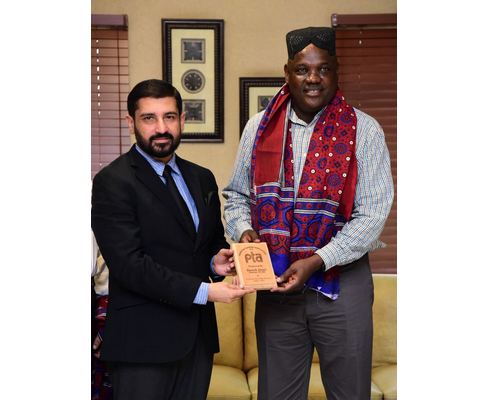
KARACHI, SEPT 1 /DNA/ – Lieutenant General (Retired) Peter Mbogo Nauru, High Commissioner of the Republic of Kenya and former Chief of Army of Kenya, along  with Mr. Bonface Njoroge Njuguna, Commercial Attaché, Republic of Kenya, and Mr. Muhammad Hanif Janoo, Honorary Consul of Republic of Kenya, visited the office of Pakistan Tanners Association (Southern Zone).

They were warmly received by Mr. Hamid Zahur, Chairman PTA – Central, and Dr. Danish Aman, Chairman PTA (S.Z). During the meeting, matters relating to enhancing bilateral trade in the leather sector and the promotion of natural products were thoroughly discussed.

On this occasion, Mr. Hamid Zahur and Dr. Danish Aman presented the crest of Pakistan Tanners Association to His Excellency as a token of goodwill.

Subsequently, His Excellency visited a leather garment manufacturing unit, where he expressed great interest and appreciation upon witnessing the detailed processes involved in producing a finished leather garment.

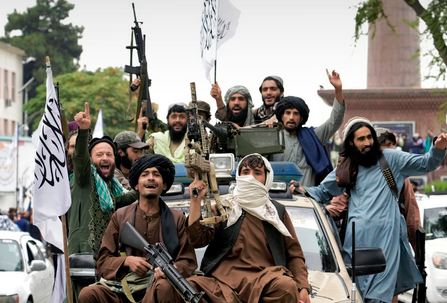
Afghanistan under Taliban

Afghanistan under Taliban

The future of Afghanistan under Taliban rule presents a complex picture of internal challenges, strained international relations, and cautious regional engagement. Since their return to power the Taliban have sought to project a new image of a more pragmatic and diplomatic entity, yet their governance remains marked by severe human rights abuses, particularly against women and girls.

One of the most pressing issues is the Taliban’s regressive policies on human rights. Despite initial promises of a more moderate approach, the regime has systematically rolled back freedoms, especially for women. Girls are banned from attending school beyond the sixth grade, women are prohibited from most forms of employment, and their freedom of movement is severely restricted. These policies, which some human rights organizations describe as “gender apartheid,” have not only caused immense suffering but have also crippled the country’s economy by excluding a significant portion of the workforce. The Taliban have also been accused of arbitrary arrests, torture, and enforced disappearances of activists and political opponents. The justice system has been replaced with a strict interpretation of Islamic law, leading to public floggings and executions, which have been widely condemned by the international community.

The Taliban’s foreign policy has been a delicate balancing act. They have had limited formal diplomatic contact with most countries, with only a few, like Russia, granting them official recognition. However, many of Afghanistan’s neighbors, including Pakistan, Iran, and China, have engaged with the Taliban out of necessity to address shared security and economic interests.

Pakistan’s relationship with the Taliban has been particularly complex. While Pakistan had historically maintained close ties with the group, the new regime has created fresh challenges. Border clashes, coupled with a surge in attacks by the Tehrik-i-Taliban Pakistan (TTP) operating from Afghan soil, have strained relations. Despite these tensions, there are ongoing diplomatic efforts to improve ties, as both sides recognize the need for stability in the region.

China, for its part, has a strong interest in a stable Afghanistan. It views the country as a crucial link for its Belt and Road Initiative (BRI) and is concerned about the potential for extremist groups to use Afghanistan as a base to threaten its western regions. China has engaged the Taliban on security and economic fronts, including discussions about extending the China-Pakistan Economic Corridor (CPEC) into Afghanistan. Beijing’s engagement is a pragmatic move aimed at protecting its investments and ensuring regional security.

In their previous rule, the Taliban were isolated due to their unyielding and extremist policies, which ultimately led to their ouster. This time, it appears they have learned some lessons from the past. They are actively seeking to engage with the outside world, particularly with regional powers, to secure much-needed economic aid and political legitimacy. While this new approach has not yet translated into a fundamental shift in their internal policies, it suggests a recognition that they cannot survive in complete isolation.

The future of Afghanistan is uncertain, but it is clear that regional cooperation is paramount. The Taliban must demonstrate a willingness to address humanitarian and human rights concerns to gain international acceptance. The international community, in turn, faces the difficult decision of how to engage with a regime that violates basic human rights while also trying to prevent a complete collapse of the Afghan state.

Stay Connected

64FansLike
60FollowersFollow

Latest Reviews

Exchange Rates

USD - United States Dollar
EUR
1.17
GBP
1.35
AUD
0.72
CAD
0.73