Home Blog Page 515

Pakistan’s name to remain alive, eternal: Hanif Abbasi

Pakistan’s name to remain alive, eternal: Hanif Abbasi

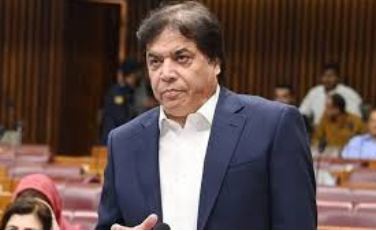
ISLAMABAD, SEP 2 (APP/DNA): Federal Minister for Railways Hanif Abbasi on Tuesday said that the name of Pakistan would remain alive and eternal, crediting the nation’s survival and defense to the sacrifices of the armed forces and martyrs.

Addressing the National Assembly, he said Pakistan’s defense was acknowledged worldwide. “The powerful is not the one who captures others’ land but the one who protects his own honor, life, property, and country,” he said.

He paid rich tribute to the collective sacrifices of the armed forces and the people for the protection of the motherland.

Expressing deep sorrow over the recent floods, he sympathized with the victims, saying a home lost to natural disasters meant the loss of years of hard work and left behind indescribable pain. He stressed that the entire House must feel the suffering of those affected.

The minister regretted that some politicians sought fame by blaming the bureaucracy and state institutions. “If this is all they have to say, they should leave the government benches and sit in the opposition, because such language does not suit the treasury benches,” he added.

Highlighting Rawalpindi’s development, Abbasi said the Punjab government had improved hospitals, educational institutions, sanitation, drainage, and transport systems, all of which stood as evidence of public service.

He added that blaming the entire bureaucracy was unfair, noting that the obsession with going viral in politics had become a “disease.”

He criticized the opposition for failing to play its role responsibly, accusing it of acting under the influence of the PTI founder.

“The government carries the real responsibility of delivering according to public expectations. Alhamdulillah, today Pakistan’s economy and defense are in strong hands,” he asserted.

Abbasi praised Prime Minister Shehbaz Sharif’s foreign policy, saying that in 77 years, Pakistan had never received the level of global recognition it was now witnessing. “This foreign policy is presenting Pakistan to the world as a victor,” he said.

Referring to a recent tragedy in Rawalpindi, he said a retired colonel and his daughter had lost their lives in a flood wave, yet some elements mocked the incident on social media. He urged steps to curb such indecency and ridicule online.

Istanbul Airport becomes busiest airport in Europe

Istanbul Airport becomes busiest airport in Europe

ISTANBUL, SEP 2 (APP/DNA): Türkiye’s Istanbul Airport was the busiest in Europe with an average of 1,635 daily flights on Aug. 18-24, according to weekly data by the European Organization for the Safety of Air Navigation (Eurocontrol).

Istanbul Airport was followed by Amsterdam with 1,450 daily flights, Paris Charles De Gaulle Airport with 1,432 flights, Frankfurt Airport with 1,384 flights, and London Heathrow Airport with 1,346 flights.

The Turkish Riviera hub, Antalya Airport, with 1,055 daily flights, was the eighth-busiest airport in Europe.

Shehbaz Sharif Meets Xi Jinping, Putin During China Visit

Shehbaz Sharif Meets Xi Jinping, Putin During China Visit

ISLAMABAD, SEPT 2 /APP/ – Prime Minister Shehbaz Sharif is scheduled to meet Chinese President Xi Jinping at the Great Hall of the People in Beijing. He will also hold talks with Russian President Vladimir Putin, Tajikistan’s President Emomali Rahmon, and Chinese Premier Li Qiang.

What is the purpose of Shehbaz Sharif’s visit to China?
The visit aims to strengthen Pakistan-China relations, enhance bilateral cooperation, and discuss regional and international issues with other world leaders attending the Shanghai Cooperation Organization (SCO) meetings.

What are the key events on his agenda?

  • Meeting with Xi Jinping and Li Qiang
  • Talks with Vladimir Putin and Emomali Rahmon
  • Visit to a Beijing hospital
  • Interaction with Chinese businessmen
  • Attendance at the military parade commemorating the 80th anniversary of the World’s Anti-Fascist War

Where did Shehbaz Sharif travel from?
He arrived in Beijing from Tianjin by bullet train after attending the 25th Meeting of the SCO Council of Heads of State and the SCO Plus summit, where he also met Iran’s President Masoud Pezeshkian and Azerbaijan’s President Ilham Aliyev.

Why is this visit important?
The meetings are expected to boost Pakistan’s strategic partnership with China, deepen economic ties, and expand regional cooperation through the SCO platform.

NAHE launches professional development training for IPFP fellows

NAHE launches professional development training for IPFP fellows

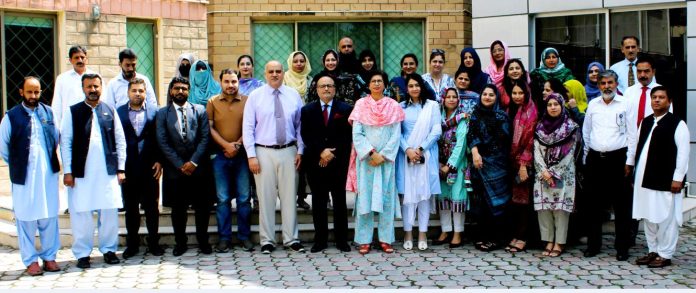
ISLAMABAD, AUG 2 /DNA/ – The National Academy of Higher Education (NAHE), Higher Education Commission (HEC) inaugurated a three-week Professional Development Training Program for 27 fellows of Interim Placement of Fresh PhDs (IPFP) at NAHE – HEC, Islamabad.

The opening ceremony was graced by Dr. Noor Amna Malik, Managing Director NAHE, as the Chief Guest, while Engr. M. Raza Chohan, Adviser (HRD), HEC, attended as Guest of Honor.

Welcoming the participants, Mr. Sulaiman Ahmad, Director NAHE, provided an orientation on the format of the training program. He told the participants that Faculty Development Program not only underscores NAHE’s unwavering commitment to academic advancement and innovation but also directly supports and contributes to several United Nations Sustainable Development Goals (SDGs). These include SDG 4: Quality Education, which focuses on enhancing teaching methods and promoting lifelong learning; SDG 5: Gender Equality, which encourages equitable participation and leadership in academia; SDG 8: Decent Work and Economic Growth, which aims to bolster employability and foster innovation; SDG 10: Reduced Inequalities, which ensures equal opportunities for professional growth; SDG 13: Climate Action, which integrates sustainability education into academic curricula; and SDG 16: Peace, Justice, and Strong Institutions, which strengthens institutional frameworks through enhanced leadership and administrative capabilities.

He further informed that NAHE has introduced a series of innovative learning approaches designed to enrich the training experience and foster holistic development among participants. These initiatives include Read & Reflect, where each participant will read an assigned book and submit a reflective report, encouraging critical thinking and personal engagement with the material. Plant a Promise requires participants to plant a sapling as a symbolic commitment to growth and sustainability. Dastan Sarai provides an opportunity for participants to share a personal or meaningful story, promoting narrative skills and cultural expression. Community Connect encourages each participant to dedicate 2–3 hours to community service, fostering civic responsibility and social awareness. Finally, Learning Together introduces a peer mentoring program designed to promote collaborative learning and mutual support throughout the training duration.

These initiatives reflect NAHE’s commitment to experiential learning and the development of well-rounded educators. Active participation and support from all team members will be essential to ensure their successful implementation.

Speaking on the occasion, Engr. M. Raza Chohan congratulated the selected scholars on their induction into the IPFP program. He appreciated NAHE’s new initiatives for faculty development. He urged participants to adopt a strategic approach towards their future careers and encouraged them to “learn, unlearn, and relearn” to add value to their professional journey.

In her keynote address, Dr. Noor Amna Malik inspired participants with her motivational words and emphasized the importance of active participation, discipline, and decorum throughout the program. She highlighted that the fellows are fortunate to receive this structured training and expressed her expectations that they would transform into skilled, dedicated, and impactful teachers ready to serve in higher education institutions across Pakistan.

The training initiative exemplifies NAHE’s unwavering commitment to cultivating the next generation of higher education faculty and advancing academic excellence across Pakistan’s universities.

China assures Pakistan of continued support in economic growth, counter-terrorism

China assures Pakistan of continued support in economic growth

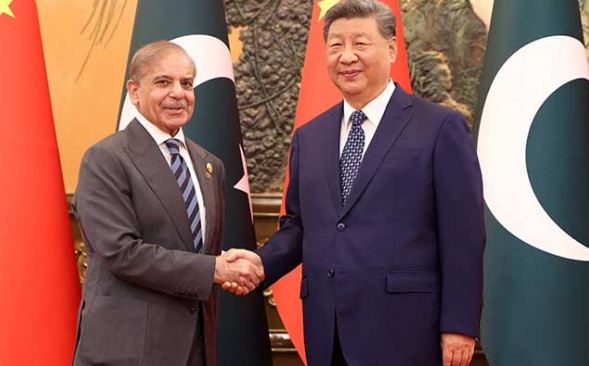
ISLAMABAD, SEPT 2: Prime Minister Shehbaz Sharif and Chinese President Xi Jinping, during their meeting on the sidelines of the Shanghai Cooperation Organisation (SCO) summit on Tuesday, reaffirmed their strong resolve to further deepen and strengthen the bilateral partnership founded on strategic cooperation between Pakistan and China.

Congratulating President Xi on successfully hosting the SCO Heads of State Summit, PM Shehbaz lauded the Chinese leader’s vision and leadership.

“Pakistan is very proud of China’s achievements,” the premier said, adding that Pakistan will always be ready to work with China on this great journey.

During the high-level meeting, also attended by Deputy PM and Foreign Minister Ishaq Dar, Chief of Army Staff Field Marshal Asim Munir and others, PM Shehbaz and President Xi reaffirmed their commitment to further strengthen the bilateral strategic cooperative partnership.

Lauding President Xi for his vision and leadership, the premier felicitated him on the 80th anniversary of the “World Anti-Fascist War”.

Underscoring the significance of the Chinese president’s Belt and Road Initiative (BRI) as a major project, PM Shehbaz reiterated his desire to continue working with China for the next phase of the China-Pakistan Economic Corridor (CPEC).

“Pakistan fully supports President Xi’s historic initiatives [which] include global governance, global development, global security and global solarisation initiatives”.

“These initiatives will contribute to regional and global peace, stability and development,” he added.

Meanwhile, President Xi reaffirmed Beijing’s commitment to stand by Pakistan in all areas of economic growth.

“Focus is being placed on Pakistan’s most important economic sectors,” President Xi told PM Shehbaz while saying that the CPEC had entered its second phase.

Also, reassuring China’s continued support to Pakistan in the fight against terror, Xi expressed hope that Islamabad would take effective measures to ensure the security of Chinese personnel and projects in the country.

With the two leaders discussing regional and global developments, coupled with the agreement to continue close cooperation, PM Shehbaz reiterated the invitation to President Xi to visit Pakistan next year.

PAJCCI, GPCCI sign MoU to strengthen bilateral and regional cooperation

PAJCCI, GPCCI sign MoU to strengthen bilateral and regional cooperation

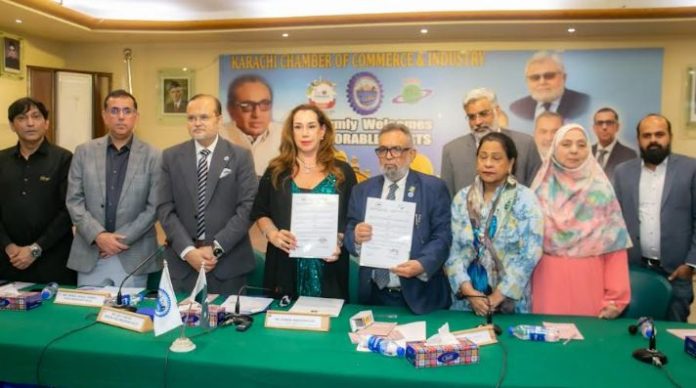
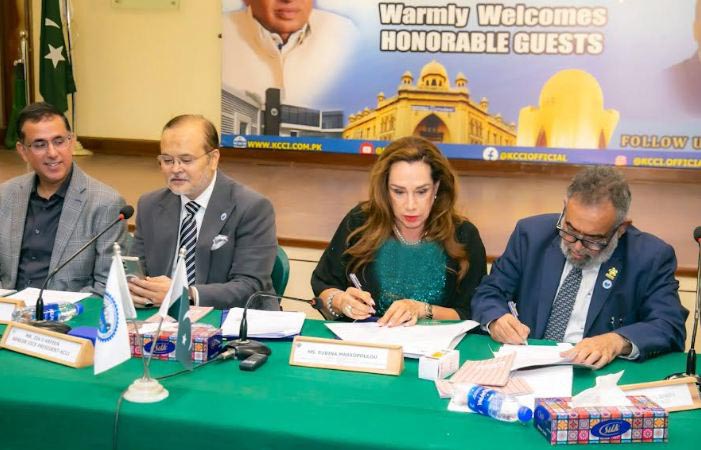
ISLAMABAD, SEPT 2 /DNA/ – The Pakistan-Afghanistan Joint chamber of Commerce & Industry (PAJCCI) and the Greek-Pakistan Chamber of Commerce & Industry (GPCCI) have officially signed a Memorandum of Understanding (MoU) at the Karachi Chamber of Commerce & Industry (KCCI) today.

The MoU was signed by Mr. Junaid Makda, President PAJCCI, in the presence of distinguished members of both Chambers and representatives of the Karachi Chamber of Commerce & Industry.

Speaking on the occasion, President PAJCCI Junaid Makda stated that this MoU marks a significant step toward building stronger trade and investment ties not only between Pakistan and Greece but also in fostering connectivity that can benefit Afghanistan and the wider region. He emphasized that PAJCCI has always been at the forefront of advocating bilateral and transit trade, enhancing regional linkages, and serving as a platform for policy reforms and private-sector representation.

Through this partnership, both Chambers aim to explore new avenues of cooperation, facilitate business-to-business linkages, and create opportunities for joint initiatives that will contribute to economic growth and prosperity.This collaboration highlights PAJCCI’s continued commitment to expanding its outreach internationally, while furthering its vision of peace, trade, and connectivity across borders.

Honour Killing: Pakistan’s Pervasive Abuse

Honour Killing: Pakistan's Pervasive Abuse

Dr Muhammad Rizwan Bhatti

 Honour killings represent a grim and stark aspect of society, a blatant manifestation of entrenched patriarchal and male chauvinistic attitudes. Honour killing is often considered a crime of passion, frequently triggered by sudden provocation. The stark causes and intrinsic drivers of honour killings typically stem from ethnicity, punitive measures for disobedience or intransigence, self-stigma following rape, the pursuit of divorce and mainly under the pretext of illicit and extramarital relations. Gender discrimination, imbalanced gender power dynamics and the cultural appropriation of the female entity also form the bedrock of honour killings. Amnesty International observes that “the honour killing of a woman by a male relative is not an individual act of violence, but one that is collective, planned, sociologically predictable and socially approved by both men and women in the family and community concerned.

Honour killing signifies the egregious murder of a woman on account of her engaging in illicit, pre-marital, or extramarital relations with a paramour, which profoundly contradicts the socio-cultural norms of our society. Elopement, in particular, is considered a profound disgrace for the entire family and community at large. The oppressive pressure of patriarchal hegemony gives rise to the intent to kill the girl or woman to reclaim lost and defiled honour. Human rights organizations estimate that around 1,000 women are brutally murdered in the name of honour every year across Pakistan.

The socio-political, cultural, and religious fabric of Pakistan is intricately woven with factors that contribute to honour killings.  With local court systems like jirgas frequently superseding federal legislation, political favoritism and a deeply ingrained feudal structure enable wealthy families to shield offenders.  The state’s role is weak, and the low conviction rate is ascribed to poor investigations, corrupt police, and the belief that these are “family matters.”  The idea of ‘ghairat’, or masculine honour, is a major cultural motivator that is thought to be undermined by female autonomy and sexuality.  Although the majority of victims are women, men from lower socioeconomic backgrounds may sometimes be singled out. These elements are made more complex by the abuse of religious scriptures to support the violence, even though fatwas have been issued against the practice and prominent religious authorities have condemned it. These factors come together to show how the state fails to safeguard its people and apply the law fairly.

The glaring fact is that most of the honour killing cases have been unreported as the family involved in the murder of a girl. According to recent news reports, a macabre incident of honour killing took place in Balochistan in which a girl was shot to death at the behest of local elders. Likewise, in Rawalpindi, Punjab, local elders reportedly ordered the murder of an 18-year-old girl named Sidra Bibi after she married a guy of her choice. Nine people have been detained in connection with the crime, including her father and ex-husband. Police retrieved her body after being buried by family members to conceal the evidence, and an examination revealed that she had been tortured before her death.

Statistics unequivocally reflect a continued and alarming trend. In 2022, there were approximately 590 reported honour killing cases nationwide, followed by 490 in 2023. More recently, at least 405 killings have been recorded in 2024 according to the Human Rights Commission of Pakistan (HRCP), with the vast majority of victims being women. HRCP data further delineates that across Pakistan in 2024, 405 individuals, predominantly women, were killed in honour-related crimes, with 168 cases reported in Punjab (the highest of any province) and closely followed by 151 in Sindh. Despite the gruesome murders in the name of honour, the conviction rate is shockingly low at 0.5%, emboldens the perpetrators and reflects the lacunas in the legal framework.

These figures, however, are likely stark underestimates, as numerous cases regrettably go unreported due to pervasive cultural and societal pressures. The Sustainable Social Development Organisation (SSDO) reports an unsettling total of 547 honour killing cases nationwide in 2024, including 225 in Punjab, 134 in Sindh, 134 in Khyber Pakhtunkhwa (KP), 32 in Balochistan and 22 in Islamabad Capital Territory. Alarmingly, conviction rates remain shockingly low, a mere 0.5% for honour killings nationwide, with only two convictions in Punjab despite 225 reported cases.

Though concerning, it is crucial to remember that these numbers frequently differ throughout businesses. For example, it is difficult to precisely track these crimes because many go unreported and different organizations utilize different procedures and sources for their data collection. This is demonstrated by the discrepancy between the HRCP’s count of 405, and the SSDO’s figure of 547 for 2024.

Socio-cultural and traditional norms assert that zarr (wealth), zan (women), and zameen (land) are integral stakes of honour. Historically, violence and massive killings have transpired to reclaim honour when any of these are perceived to be assaulted. Moreover, if a woman in the family is dishonoured, pestered, molested, disrespected, or sexually exploited by another man, it is invariably dubbed as an onslaught on the prestige of male family members. This egregious perception causes ill will and deep-seated grudge against the alleged culprit, which often culminates in his killing as well. If a married woman gets into extramarital relations with another man, being cuckolded is considered the most haunted curse.

When a husband tragically discovers the illicit relations of his wife with another man, honour killing frequently ensues. Similarly, suppose a girl establishes a romantic or sexual relationship with any boy or expresses a willingness to marry a boy from her own heart. In that case, these pre-marital relations are considered an infringement of honour by the male family members of the girl and are often unpardoned. There are thus obvious assumptions that honour-based violence against the girl is a natural concomitant of perceived dishonour.

However, the horrendous affair of honour killing in other Muslim countries is not much different. Honour murders are still common in many countries with a majority of Muslims and they are frequently oblivious of the punitive and legal systems. Despite reforms, courts in Jordan continue to mitigate penalties in roughly 23 reported cases annually. Husbands who claim infidelity are involved in 41% of these crimes in Egypt. Due to legal loopholes that shield male relatives, honour-related homicides account for up to 30% of all homicides in Iran. Despite life sentences, 200 to 300 cases are decided annually in Turkey. Over two years, 243 occurrences occurred in Afghanistan, although convictions were hampered by tribal influence. Cases that are tried under general homicide laws are less common in Malaysia. Despite legal reforms, victims seeking justice continue to face significant barriers due to deeply ingrained cultural norms throughout the Muslim countries.

It presents an exceptionally challenging task for civil society, the government and the judiciary to transform the deeply entrenched socio-cultural psyche of the people fundamentally. These individuals, regrettably, remain far more possessive and committed to their ethno-community-based socio-cultural patterns in comparison to their allegiance to society, the state and the law. The government must adopt draconian measures to unequivocally buttress police investigations and court procedures to bring the culprits to book. Justice should be served without equivocation, and the killer of a woman, who flaunts false pride, should justly perish in jail. Honour killing is an inhumane act and a macabre practice that savagely ravages families. It is a premeditated murder that starkly surfaces the offensive and dastardly aspects of society.

Given that most victims of honour killing and domestic violence cases are predominantly against women, economic independence can significantly strengthen this vulnerable segment of society. The rigorous enforcement of laws for the protection of women’s rights, especially the Anti-Honour Killing Laws Amendment Bill and the Anti-Rape Laws (Criminal Amendment) Bill of 2014, both passed by the Senate of Pakistan, is crucial. Furthermore, the compoundability provision, which currently allows for reconciliation in certain criminal cases, should be thoroughly deliberated upon in the context of the cold-blooded murder of women under the nefarious garb of honour killing, to prevent its egregious misuse.

Moreover, in honour killing instances, where the victim and the murderer frequently live in the same home, Section 311 of the Pakistan Penal Code, which permits victims’ relatives to pardon murderers, becomes especially troublesome. Criminals can evade justice because of the ongoing abuse of this legal loophole. However, a special legislative amendment is required in order to resolve the legal flaws adequately. The opportunity for families to pardon the culprit must be eliminated when the government proposes an amendment to make honour killings a non-compoundable offense. This would guarantee that murderers are held responsible and that the judicial system reflects the seriousness of the crime. For that purpose, political will needs to be strong.

The public conversation around honour killings in Pakistan has changed significantly as a result of social media platforms, independent female journalists and grassroots initiatives like the Aurat March. These platforms have brought previously ignored concerns to the public’s notice by elevating survivor’s voices, bringing injustices to light and questioning patriarchal norms. Youth have been mobilized, lawmakers have been pressured and cultural explanations for such violence have been refuted by digital activism, which has gradually changed public opinion from one of passive acceptance to one of collective condemnation of crimes based on honour. However, the significant role of Religious Ulemas cannot be ignored. To dispel long-standing misconceptions that incorrectly associate such violence with religious approval, mainstream religious scholars must vigorously and categorically condemn honour killings.

Despite the enormous barrier, enlightened religious leaders are speaking out. Honour murders have been openly denounced by mainstream academics and organizations, who contend that they are against Islamic principles and a perversion of religious ideals. Their work is essential to dispelling the fallacy that religious grounds may excuse these heinous atrocities. Delegitimizing these acts and reaffirming that faith does not excuse murder requires strong public denunciation.

Dr Muhammad Rizwan Bhatti is a Ph.D in Political Science and a Police Inspector. He can be reached at [email protected] X: @rizwanbh79

UK opens prestigious fellowship applications for Pakistani leaders

UK opens prestigious fellowship applications for Pakistani leaders

ISLAMABAD, SEPT 2: /DNA/ – The British High Commission is now accepting applications for its prestigious Chevening Fellowships, a gateway to world-class learning aimed at future leaders who wish to make a positive difference to Pakistan.

The Chevening South Asian Journalism Programme Fellowship, hosted by the University of Westminster, is an intensive eight-week experience tailored for seasoned journalists from South Asia. Fellows will sharpen their professional skills, explore the UK’s dynamic media landscape, and build lasting regional networks.

The Chevening Oxford Centre for Islamic Studies (OCIS) Fellowship offers a transformative six-month journey at Oxford. Designed for mid-career professionals and academics, this fellowship explores global challenges through the lens of Islamic thought, diplomacy, and policy — fostering deeper understanding of international relations and interfaith dialogue.

British High Commissioner, Jane Marriott CMG, OBE said:

‘These fully-funded fellowships are truly life changing opportunities. Not only do you get to study at world-class institutions, but you access a vibrant global network of Chevening alumni, who are truly leaders in their fields. It’s more than a fellowship, it’s a launchpad for future changemakers.’

20 people missing after deadly Indonesia protests

20 people missing after deadly Indonesia protests

JAKARTA, SEPT 2 (AFP/APP): At least 20 people were missing after violent protests sparked in Indonesia by lavish perks for lawmakers that have come to include anger against police, a rights group said Tuesday.

At least six people have been killed since protests rocked Southeast Asia’s biggest economy last week, intensified by footage spreading of the killing of a young delivery driver by a paramilitary police unit.

“As of September 1, there were 23 reports of missing persons. After the search and verification process, 20 missing persons remain unfound,” the Commission for the Disappeared and Victims of Violence (KontraS) said in a statement.

The group said the 20 were reported missing in the cities of Bandung and Depok on Java island, and the administrative cities of Central Jakarta, East Jakarta and North Jakarta that make up the wider capital city.

One incident took place in an “unknown location”, it said.

The National Police did not immediately respond to an AFP comment request.

Police arrested 1,240 people in protests in Jakarta since August 25, the city’s Metropolitan Police Inspector General Asep Edi Suheri told reporters Monday, state news agency Antara reported.

The unrest emerged in cities across the country, forcing President Prabowo Subianto into a U-turn on lawmaker perks.

They were the worst protests since the ex-general took power last year.

More protests were expected on Tuesday at parliament in Jakarta by a coalition of women’s groups, who a day earlier cancelled their protest.

The United Nations called on Monday for an investigation into alleged use of disproportionate force in the protests.

  “We are following closely the spate of violence in Indonesia in the context of nationwide protests over parliamentary allowances, austerity measures, and alleged use of unnecessary or disproportionate force by security forces,” said UN human rights office spokeswoman Ravina Shamdasani.

The military was deployed across capital Jakarta on Monday as hundreds gathered again outside parliament and clashes were reported in several other cities.

   Prabowo criticised protesters as he paid a visit to injured police at a hospital and said rallies should end by sundown.

In Bandung, protesters hurled Molotov cocktails at a provincial council building, before police overnight fired tear gas at “suspected… anarchists” who blocked a road.

   Officers clashed with protesters who police accused of trying to draw them into a student campus at the Bandung Islamic University and “instigate conflict”, Hendra Rochman, West Java police spokesman said in a statement Tuesday.

  On social media some users accused police of firing tear gas and rubber bullets into the campus and storming it. “Officers maintained a distance of approximately 200 metres from the campus and no shots were directed at the campus,” said Hendra.

   The university in a press conference denied its students instigated any unrest.

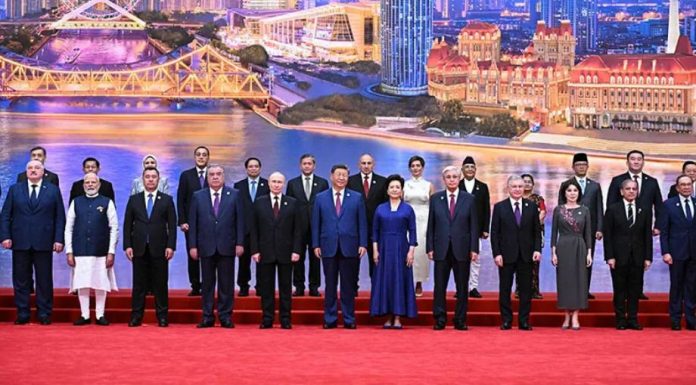
Key outcomes and agreements of the SCO summit

Key outcomes and agreements of the SCO summit

The summit resulted in the signing of over twenty documents, with the Tianjin Declaration serving as the central political outcome. A major achievement was the approval of a Development Strategy for 2026–2035, which outlines the long-term priorities for the SCO’s growth over the next decade. This new strategy is a testament to the organization’s commitment to adapting to changing global circumstances.

Economically, a pivotal decision was made to establish an SCO Development Bank, a proposal that had been under discussion for a decade. This bank is aimed at boosting infrastructure development and economic progress among member states, and it is seen as a way to create another multilateral platform in the Eurasian region. Additionally, a Roadmap for SCO Energy Cooperation until 2030 was approved, which is particularly significant given that the organization includes major energy producers (Russia, Iran, Kazakhstan) and consumers (China, India).

In terms of institutional reform, a major breakthrough was the decision to merge observer states and dialogue partners into a single category of SCO partners to improve efficiency. Laos was granted partner status, expanding the SCO to a 27-nation family.

Security remains a core focus for the SCO. The Tianjin Declaration strongly condemned the April 2025 Pahalgam terror attack in India, which killed 26 people, as well as other terror incidents in Pakistan. The declaration called for a united and uncompromising approach against terrorism, separatism, and extremism, and stressed that there can be no double standards in the fight against terror. To enhance security cooperation, four new SCO centers were inaugurated to counter security threats, cyber threats, drug trafficking, and transnational organized crime.

Pakistani Prime Minister Shehbaz Sharif used the platform to highlight the issues of Kashmir and Balochistan, even in the presence of his Indian counterpart. While the SCO’s charter does not allow for the discussion of bilateral disputes, Sharif’s move underscored Pakistan’s perspective that a lasting resolution to the Kashmir issue is essential for regional peace.

The summit also provided a critical opportunity for a diplomatic reset between India and China. Indian Prime Minister Narendra Modi and Chinese President Xi Jinping held a bilateral meeting—Modi’s first visit to China in seven years. Both leaders agreed to work towards a “fair” solution to the border issue and emphasized that their two nations should be seen as “development partners and not rivals.” They committed to expanding bilateral trade and investment while also addressing the significant trade deficit. The meeting signals a shift towards a more pragmatic engagement model, with both countries seeking to enhance mutual trust and cooperation while managing their differences.

As a new full member of the SCO, Iran played an important role in the summit. The Tianjin Declaration saw India join other members in strongly condemning the military strikes by Israel and the U.S. on Iran, a significant shift in India’s position. This demonstrates the growing influence of the SCO as a platform for its members to express a collective stance on geopolitical issues.

The summit’s outcomes collectively signal a move towards a more multipolar world order, where countries in the Global South are taking on a more prominent role in shaping global governance. The SCO’s focus on economic cooperation, institutional reform, and regional security reflects a growing desire among its members to create a more just and balanced international system.

Stay Connected

64FansLike
60FollowersFollow

Latest Reviews

Exchange Rates

USD - United States Dollar
EUR
1.17
GBP
1.35
AUD
0.72
CAD
0.73