Home Blog Page 513

Prime Minister condemns terrorist attack in Bannu

Shehbaz Sharif

Saifullah Ansar

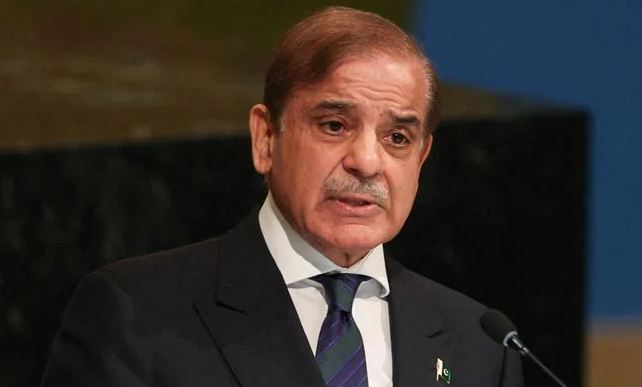
ISLAMABAD, SEPT 2: Prime Minister Muhammad Shehbaz Sharif praised the bravery of security forces who neutralized six terrorists in a recent attack on the Federal Constabulary headquarters in Bannu district. The Prime Minister referred to the terrorists as “Khawarij,” a term often used to describe those who sow discord, and condemned the attack as being sponsored by India.

The Prime Minister expressed his profound sorrow and grief over the martyrdom of six brave soldiers from the Federal Constabulary and the Army who lost their lives in the confrontation. He extended his condolences to the families of the martyrs, assuring them that the nation stands with them in this difficult time and shares in their grief.

Prime Minister Sharif vowed to continue the fight against the “menace of terrorism” until it is completely eradicated from the country. He paid tribute to the Pakistan Armed Forces, saying that the entire nation, including himself, stands side by side with the armed forces in their resolve to cleanse the country of terrorists. The Prime Minister’s message underscored the nation’s unwavering commitment to combating terrorism and ensuring the security of its citizens.

CM Gandapur says mistrust between establishment, Imran Khan persists

CM Gandapur says mistrust between establishment, Imran Khan persists

PTI founder is in favour of presidential system, says KP chief minister

DNA

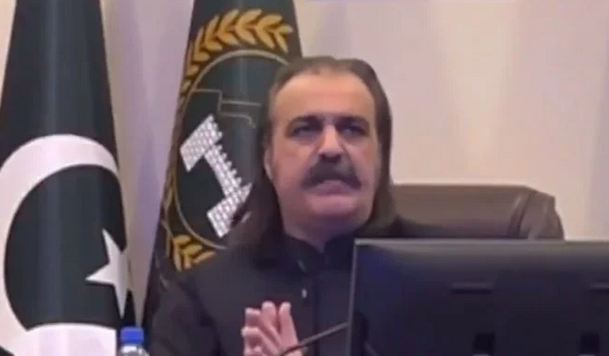
ISLAMABAD: In a rare insight into backdoor dialogue, Khyber Pakhtunkhwa Chief Minister Ali Amin Gandapur claimed that mistrust between the establishment and Pakistan Tehreek-e-Insaf (PTI) founder Imran Khan stemmed from past incidents, saying that although he took the initiative to start a negotiation process, the effort was later abandoned.

“A time will come when everyone will realise that sitting together for the country’s sake is unavoidable,” the provincial chief executive said while addressing a press conference in Islamabad.

The 71-year-old cricketer-turned-politician has been behind bars since August 2023 after he was booked in multiple cases ranging from corruption to terrorism since his ouster from power via the opposition’s no-trust motion in April 2022.

Calling for political reconciliation today, Gandapur urged all sides to “move beyond demands for apologies and egos”, arguing that progress was only possible if the past was left behind.

“An apology is sought only by those who have done wrong,” he said, adding that the establishment, which “stole our mandate and filed false cases against us”, should be the one apologising.

The chief minister pointed out that he had not been allowed to meet the party founder since April 2. “If I get the chance to meet him, I will urge him to sit with other political parties once, as it could bring improvements for the country,” he said.

He admitted, however, that Khan believed other parties were “thieves and looters” and was unwilling to engage with them.

Reflecting on past negotiations, Gandapur said there were offers on the table from the establishment that he could not disclose, but that he had delivered messages between both sides.

“Sometimes you are pushed to the front to take action, sometimes we are,” he remarked, adding that if something happened in 2018, “that too was wrong”.

He criticised the role of JUI-F chief Maulana Fazlur Rehman, claiming he had “no relevance left” in national politics. Gandapur said some “foolish” party members had been visiting him unnecessarily, while even the PML-N and PPP now preferred coalition governments without him.

“Whenever Maulana is part of a government, he blackmails it to get his demands met,” he claimed.

On governance, Gandapur said the army had never interfered in his administrative work, nor recommended transfers or postings in the province. He stressed that PTI’s policy was for every institution in Pakistan to function within its constitutional domain.

He also commented on the PTI founder’s political vision, saying he was in favour of a presidential system and would achieve a “clean sweep” under it. “It is true that the current system is not working for us,” Gandapur added.

He also criticised the existing Benazir Income Support Programme (BISP), saying its model needed reform. He proposed that the federal government allocate the province’s BISP budget to Khyber Pakhtunkhwa for two years, pledging to help people establish businesses worth Rs500,000 each.

Islamabad red zone vehicle inspection deemed unsatisfactory by Mohtasib

Islamabad red zone vehicle inspection deemed unsatisfactory by Mohtasib

ISLAMABAD, Sep 02 (APP/DNA): Terming the previous report regarding checking/examination of vehicles with regard to their environmental friendliness submitted by the authorities concerned as being unsatisfactory, the Wafaqi Mohtasib, Ejaz Ahmad Qureshi has summoned the SSP (Traffic), DC (ICT) and DG (Environment) on September 04, 2025.

The Registrar, Wafaqi Mohtasib Office, has issued notices to the all concerned in this connection,said in a Press Release issued here on  Tuesday.

It may be recalled that earlier the Wafaqi Mohtasib had, while taking serious notice of the long queues of vehicles in the red zone, Islamabad and the resultant congestion and inconvenience to the general public, called the officials concerned to his office on 29 August, 2025. However, the officials who attended the hearing on August 29 submitted the initial report, which was found lacking in substance and clearly failed to answer the pertinent questions framed in this regard.

Consequently, the Wafaqi Mohtasib, expressing his concern over the state of affairs, has directed to attend the next hearing positively scheduled for 04 September.

It may also be mentioned that the questionnaire submitted earlier specifically asked the authorities concerned as to why a sensitive place like the red zone in the federal capital was chosen for determining the environmental friendliness of the vehicles and whether any awareness campaign in the print and electronic media preceded this activity, make and models of the vehicles specified or not and whether any separate booth/counters established for women and senior citizens for this purposes.

According to the Mohtasib’s office, in absence of the specific information, people were found languishing in long queues only to be told at the end of the day that initially vehicles model upto 2015 are being examined in the first phase.

PM, Tajik President satisfaction on ongoing bilateral cooperation during call-on in Beijing

PM, Tajik President satisfaction on ongoing bilateral cooperation during call-on in Beijing

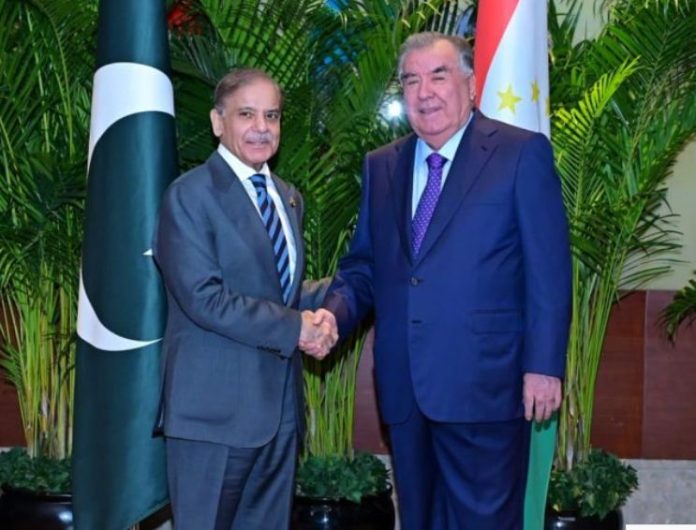
BEIJING, SEP 2 (APP/DNA): Prime Minister Muhammad Shehbaz Sharif on Tuesday met President of Republic of Tajikistan where both leaders expressed their satisfaction on the ongoing cooperation between Pakistan and Tajikistan in all areas of mutual interest.

The two leaders, met here, agreed to enhance collaboration in diverse fields including trade and investment, connectivity, energy, regional security, culture, and people-to-people exchanges, a Prime Minister’s Office news release said. 

Both leaders reaffirmed their commitment to further strengthening Pakistan-Tajikistan relations rooted in shared cultural, historical, and religious ties.

The two leaders also shared perspectives on regional and global issues of common concern.

Sharjah Toss Update: Afghanistan Captain Rashid Khan chooses to bat first

Sharjah Toss Update: Afghanistan Captain Rashid Khan chooses to bat first

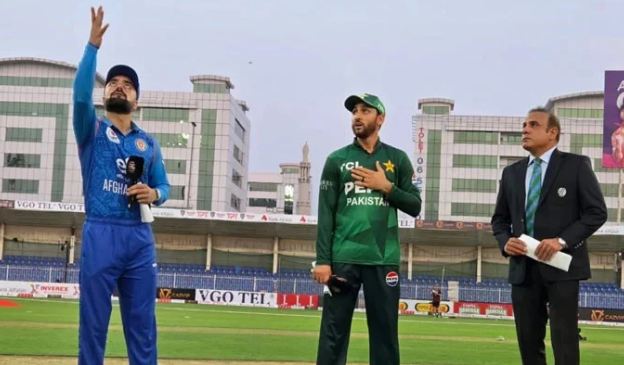
SHARJAH, SEP 2 – Afghanistan has won the toss and chosen to bat first against Pakistan in the high-stakes fourth match of the T20I tri-series at the Sharjah Cricket Stadium on Tuesday.

Who won the toss between Pakistan and Afghanistan?

Afghanistan won the toss and elected to bat first against Pakistan.

What are the playing XIs for both teams?

The teams have fielded the following line-ups:

  • Pakistan: Saim Ayub, Sahibzada Farhan, Fakhar Zaman, Salman Agha (capt), Hasan Nawaz, Mohammad Nawaz, Mohammad Haris (wk), Faheem Ashraf, Shaheen Shah Afridi, Haris Rauf, Sufiyan Muqeem
  • Afghanistan: Rahmanullah Gurbaz (wk), Ibrahim Zadran, Sediqullah Atal, Darwish Rasooli, Karim Janat, Azmatullah Omarzai, Rashid Khan (capt), Mohammad Nabi, AM Ghazanfar, Noor Ahmad, Fazalhaq Farooqi

What is the head-to-head record between Pakistan and Afghanistan in T20Is?

The head-to-head record in T20 Internationals favors Pakistan. The two teams have met eight times previously.

  • Total Matches: 8
  • Pakistan Wins: 5
  • Afghanistan Wins: 3

Notably, Afghanistan won the most recent bilateral series between the two nations in 2023 by a 2-1 margin.

What is the recent form guide for both teams?

The two teams enter the match with contrasting recent form:

  • Pakistan Form Guide (most recent first): W, W, W, L, W
  • Afghanistan Form Guide (most recent first): W, L, W, W, L

Pakistan also won the opening fixture of this tri-series against Afghanistan on Friday by a comprehensive 39-run margin. Batting first, Pakistan posted 182/7, powered by captain Salman Agha’s half-century (53 off 36 balls). In reply, Afghanistan were bowled out for 143, with Rashid Khan top-scoring (39 off 16 balls).

The outcome of this match is critical for determining the finalists of the tri-series, which also features Bangladesh.

Superpowers That Profess Peace but Endanger the Globe

Qamar Bashir

By Qamar Bashir

In a world where powerful nations proudly proclaim themselves as guardians of peace, human rights, and prosperity, humanity finds itself facing a bitter irony. The very countries that claim to champion democracy and protect innocent lives are also the largest producers and exporters of weapons of mass destruction. They present themselves as leaders of a compassionate, progressive, and peaceful global order, yet their economies thrive on creating machines of death that fuel wars, destabilize regions, and leave millions of innocent civilians suffering.

The United States sits atop this paradox, projecting itself as the ultimate protector of human rights, democracy, and freedom, while simultaneously leading the world in arms production. American defense giants like Lockheed Martin, RTX (Raytheon Technologies), Northrop Grumman, Boeing, and General Dynamics dominate the global weapons market, generating defense revenues exceeding $246 billion annually. These corporations design and build technologies so advanced and lethal that they could destroy the world many times over. More troubling is the reality that the survival of these companies, and the jobs and profits they sustain, depends on perpetual conflict. The more wars there are, the greater the demand for their weapons, and the greater the growth of their revenues and influence. In 2024, the United States alone accounted for 43% of the world’s total arms exports, while global military spending crossed an unprecedented $2.44 trillion.

Following closely behind, the United Kingdom proudly claims the mantle of being a defender of global rights and humanitarian values, yet its defense sector plays an equally significant role in perpetuating conflicts. Its leading defense contractor, BAE Systems, ranks among the top global arms manufacturers, earning nearly $30 billion annually from the production of fighter jets, warships, and missile systems that find their way into war-torn regions. While London speaks of upholding peace and protecting civilians, its weapons often contribute directly to the destruction of those very lives.

China and Russia, positioned as counterweights to Western dominance, are no less invested in the economics of militarization. China, under the banner of “peaceful modernization,” has emerged as the third-largest weapons producer, with companies like AVIC, Norinco, and CETC collectively earning over $57 billion annually. It has developed cutting-edge systems, including the J-20 stealth fighter, hypersonic missiles, and naval destroyers, strengthening its position across the Asia-Pacific. At the same time, the United States’ creation of an expansive ring of missile defense systems stretching across the South China Sea, Japan, and the Asia-Pacific has created a dangerous tinderbox where even a minor miscalculation could ignite a devastating conflict. Russia, through its state-owned conglomerate Rostec, generates over $21 billion annually by producing S-400 missile defense systems, Su-35 fighter jets, attack helicopters, and artillery systems, supplying weapons not only for its own military operations but also to proxy nations aligned with Moscow’s interests. In Ukraine, Russian-made weapons and Western-supplied arms clash daily, turning the country into a laboratory of destruction where innocent civilians suffer the consequences of great-power rivalry.

Amid these competing superpowers, Israel presents yet another paradox. While accusing other nations, particularly Iran, of pursuing weapons of mass destruction, Israel itself is a major arms exporter and maintains one of the most advanced nuclear and missile capabilities in the world. Its defense firms collectively generate over $12 billion annually, developing cutting-edge drones, anti-missile systems, and precision-guided munitions. Many of these technologies are exported to regions already embroiled in conflict, while others are deployed directly in Gaza and the West Bank, where their usage has caused devastating civilian casualties. Israel’s defense industry has positioned the country as both a buyer and seller of destruction, all while claiming to act solely in the name of security and self-defense.

This is the grim irony of our time: the countries that boast of being peacemakers and champions of human rights are also the largest merchants of war. Their economies are heavily tied to weapons production, creating a vicious cycle where economic prosperity depends on sustaining conflict. A single corporation like Lockheed Martin earns more annually than the combined GDP of many low-income nations. Instead of directing resources toward alleviating poverty, combating climate change, and advancing healthcare and education, the global powers pour trillions into developing weapons capable of wiping out humanity.

The consequences of this relentless militarization are profound. As these powerful nations produce increasingly destructive weapons, they make the world less stable, less safe, and less humane. Wars in Ukraine, Gaza, Yemen, Kashmir, and the South China Sea are not isolated tragedies—they are symptoms of a deeper sickness in a world where power, greed, and profit dictate global priorities. Civilians pay the ultimate price, as bombs flatten their homes, missiles kill their children, and entire generations grow up amid rubble and trauma. Every year, thousands of innocent men, women, and children are killed or maimed, not because they started wars, but because they are caught between powers competing for influence and dominance.

What makes this tragedy even more alarming is that the very powers manufacturing these weapons cannot escape the chaos they unleash. History has repeatedly shown that destruction spreads. A world destabilized by endless wars, fueled by weapons flowing across borders, eventually threatens the prosperity, security, and stability of the nations that created this vicious cycle. The illusion that they can remain islands of peace and prosperity while exporting destruction is fading. No society is immune to the blowback of perpetual conflict.

The rise of smaller players in the global arms trade further intensifies this dangerous dynamic. Countries like Turkey, once peripheral in weapons manufacturing, now have six firms ranked among the world’s top 100 arms producers, supplying drones, artillery, and combat vehicles used in conflicts stretching from Libya to the Caucasus. Israel, too, stands at the forefront of the military-industrial race, while increasingly volatile regions like the Middle East have become testing grounds for deadly technologies designed and exported by these so-called peacemakers.

The earth itself, a fragile blue dot in the vastness of the universe, sustains life only because of rare, delicate conditions that allow us to exist. Yet, in the race for military dominance and profit, humanity edges closer to undermining the very survival of this planet. Every year, advances in weapons technology push us further toward the precipice, while diplomacy and cooperation take a back seat to greed and power politics. If we continue down this path, the destruction these nations sow abroad will inevitably circle back, consuming the prosperity and security they seek to protect.

It does not have to be this way. The trillions spent on creating weapons of mass destruction could instead be invested in eliminating poverty, improving education, expanding healthcare, and combating climate change. Innovation and technology can uplift humanity rather than destroy it. But this requires leadership—true leadership—not the hypocrisy of nations that preach peace while building instruments of death. It requires recognizing that peace cannot be manufactured by fueling conflict, that real security lies not in amassing weapons, but in building trust, cooperation, and fairness among nations.

The nations that pride themselves on being the architects of a just and peaceful global order must confront the uncomfortable truth: as long as their economies depend on producing tools of destruction, genuine peace will remain out of reach. The business of war has made the world less safe, less fair, and less hopeful. And unless humanity takes a collective stand to break this cycle, we may find ourselves on a path from which there is no return.

This is the lesson history has taught us time and again, yet we forget it with dangerous consistency. If the powers that dominate today do not change course, they too will face the same destruction they unleash upon others. It is time to choose a different path—one that values life over profit, compassion over greed, and cooperation over conflict. The survival of humanity depends on our willingness to dismantle the engines of destruction we have built and embrace the possibility of creating a world where peace is more than a slogan; it is a reality.

By Qamar Bashir

Press Secretary to the President (Rtd)

Former Press Minister, Embassy of Pakistan to France

Former Press Attache to Malaysia

Former MD, SRBC | Macomb, Michigan, USA

Pak, Kazakhstan discuss ventures to boost trade via Gwadar Ports

Pak, Kazakhstan discuss ventures to boost trade via Gwadar Ports

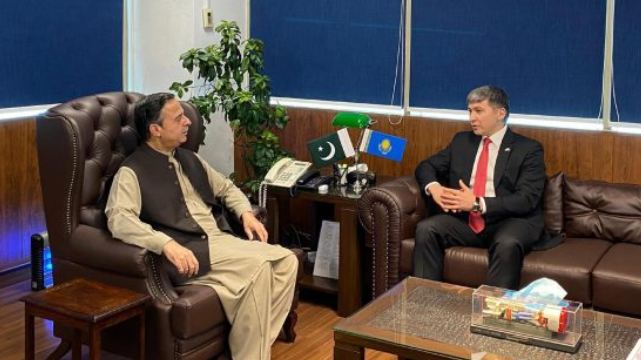
ISLAMABAD, SEP 02 (DNA) — Pakistan and Kazakhstan held discussions to enhance business cooperation through Pakistani ports, focusing on opportunities for joint ventures and trade facilitation. In a key meeting between Kazakh Ambassador Yerzhan Kistafin and Federal Minister for Maritime Affairs Muhammad Junaid Anwar Chaudhry, both sides expressed strong interest in expanding bilateral cooperation in the maritime sector.

Minister Chaudhry suggested initiating joint ventures at the Karachi and Gwadar ports, highlighting potential partnerships within Gwadar’s free zones. These efforts are intended to utilize Pakistan’s strategic port infrastructure to enhance trade access for Kazakhstan, a landlocked nation seeking wider maritime connectivity.

The Kazakh ambassador welcomed these initiatives, emphasizing Kazakhstan’s aim to use Pakistani ports as transit hubs not only for Kazakhstan but also for the broader Central Asian region. He also shared that a ministerial-level delegation, led by Kazakhstan’s Communication Minister who also oversees maritime affairs, is scheduled to visit Pakistan soon.

This delegation will conduct in-depth discussions with Minister Chaudhry to explore further cooperation in maritime trade and logistics. The minister stressed the critical role of Pakistani ports as gateways offering Kazakhstan and other landlocked Central Asian countries direct access to markets in the Persian Gulf, Africa, and Southeast Asia.

He further underlined Pakistan’s maritime sector’s dedication to becoming a regional trade hub by adopting innovative approaches and reinforcing international partnerships. The upcoming visit of the Kazakh delegation is expected to accelerate progress on joint ventures and trade facilitation, strengthening ties through maritime infrastructure development, logistics, and the blue economy.

The maritime minister noted these efforts align with regional cooperation frameworks and Pakistan’s wider goal to boost trade connectivity across South and Central Asia. Through this collaboration, Pakistan aims not only to enhance its port operations but also to position itself as a strategic trade and transit hub, benefiting from increased economic integration with Kazakhstan and the greater Central Asian region, the minister stated.

He said this growing partnership highlights a shared commitment to deepen economic ties via maritime channels, transforming Pakistan’s ports into key gateways for Central Asia’s access to global markets. — DNA

President Zardari greets China on 80th Victory Day

President Zardari greets China on 80th Victory Day

ISLAMABAD, SEPT 2 /DNA/ – President Asif Ali Zardari has offered heartfelt felicitations to the government and people of the People’s Republic of China on the occasion of the 80th anniversary of Victory Day, marking the victory of China in the World Anti-Fascist War.

The President stated that September 3rd is a powerful reminder of the monumental sacrifices made by the Chinese people and their courageous struggle against fascism and militarism. He said that observance of this historic day not only recognizes China’s key role in promoting global peace and harmony but also reinforces the timeless values of resilience, courage, and unity against oppression.

President Zardari said Pakistan and China enjoy time-tested, deep-rooted relations based on respect, trust, and a common vision for peace and mutual development. He reaffirmed Pakistan’s solidarity with China in commemorating this historic milestone and conveyed his best wishes for continued progress, and prosperity of China.

Attock begins phased repatriation of Afghan citizens, says DC

Pakistan: A Pivotal Bridge Aligning Economic Interests Between China and the Middle East

Qazi Shoaib Khan 

ATTOCK, SEPT 2 /DNA/ – Deputy Commissioner Attock, Rao Atif Raza, has said that in accordance with the directives of the Government of Pakistan, the phased repatriation of Afghan citizens will continue. He expressed these views while presiding over a meeting at the DC Office Attock.

The meeting was attended by DPO Attock Sardar Mowarah Khan, Additional Deputy Commissioner Revenue Waqas Aslam Marth, Additional Deputy Commissioner General Anil Saeed, Assistant Commissioner Anza Abbasi, District Emergency Officer Ali Hussain, and officers of law enforcement agencies.

On this occasion, the DC Attock said that Afghan citizens will be repatriated to their country with dignity and without discrimination. For this purpose, holding camps will also be established. He added that all concerned departments will play their full role in this process.

EU’s Kallas calls Dar, offers flood condolences and support

EU's Kallas calls Dar, offers flood condolences and support

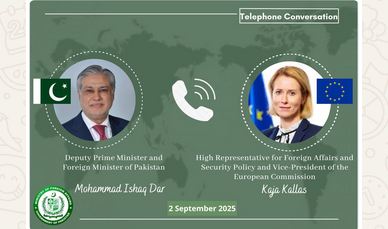
ISLAMABAD, SEPT 2 /DNA/ – Deputy Prime Minister/Foreign Minister, Senator Mohammad Ishaq Dar @MIshaqDar50, today received a call from EU High Representative/Vice President, Kaja Kallas @KajaKallas.

EU HR/VP conveyed condolences on the tragic loss of lives caused by the recent floods and expressed solidarity with the victims and their families. She also affirmed the EU’s support for Pakistan’s relief and recovery efforts.

The DPM/FM thanked her for the expression of solidarity and support, underscoring Pakistan’s vulnerability as one of the countries most severely impacted by the climate crisis.

They expressed satisfaction at the growing momentum in Pakistan-EU engagements and reaffirmed their shared resolve to further strengthen cooperation across all areas of mutual interest, particularly climate action, building resilience, and sustainable recovery.

Stay Connected

64FansLike
60FollowersFollow

Latest Reviews

Exchange Rates

USD - United States Dollar
EUR
1.17
GBP
1.35
AUD
0.72
CAD
0.73