Home Blog Page 511

OGRA Peshawar endorsement team, district administration conduct joint operation in Peshawar

OGRA Peshawar endorsement team, district administration conduct joint operation in Peshawar

ISLAMABAD, Sep 05 (APP):The Oil and Gas Regulatory Authority (OGRA) Enforcement Team, Peshawar, in collaboration with the District Administration, carried out a joint operation against illegal LPG activities in the city.

During the operation, action was taken against individuals involved in LPG decanting and filling in public service vehicles (PSVs), illegal dabba stations, and unauthorised LPG auto-refuelling setups.

As a result, six LPG shops, one illegal LPG auto-refuelling station, and one illegal dabba station were sealed on the spot. The enforcement team also confiscated LPG decanting equipment.

In addition, joint inspections of LPG storage plants, retail outlets, and CNG stations were conducted to assess their compliance with safety standards.

Both OGRA and the District Administration agreed to strengthen future collaboration and continue strict action against violators in the interest of public safety.

Govt. committed to safeguarding interests G-13 sector allottees: Pirzada

Govt. committed to safeguarding interests G-13 sector allottees: Pirzada

ISLAMABAD, Sep 05 (APP/DNA): Federal Minister for Housing and Works Riaz Hussain Pirzada on Friday assured the National Assembly of the government’s commitment to safeguarding the interests of thousands of allottees who had invested their savings over the past decade in flats at Islamabad’s G-13 sector.

Responding to a calling attention notice regarding delays in handing over possession of flats reserved for constitutional bodies, the minister said the Lifestyle Residency Apartments Scheme was launched in 2010 through a joint venture between the Federal Government Employees Housing Authority (FGEHA) and a private firm.

Under the agreement, 15 acres of land were allocated in two phases, while the private partner was to invest Rs600 million for the construction of 373 apartments. “Work on 10 acres began in 2016, of which 70 percent has been completed, and all units already sold,” he informed the House.

However, the project stalled due to the private partner’s financial constraints, internal disputes, the contractor’s illness and death, and the economic fallout of COVID-19. The joint venture agreement was ultimately terminated in December 2022.

To revive the scheme, FGEHA prepared a revised plan, dividing the remaining land into two parts. Three plots measuring 13 kanals were auctioned in 2024, with one successfully sold. A revised PC-I has been approved by the Development Working Party (DWP), and expressions of interest will soon be invited from new developers, Pirzada said.

Updating the House on the Kashmir Avenue Apartments Project, launched in April 2019 on 56 kanals, the minister said it comprised three towers with 1,467 flats. Initially awarded to M/s Concrete in 2020 at a cost of Rs 15.7 billion, the project was later halted due to inflation, material shortages, and contractual disputes. A revised PC-I worth Rs33 billion was approved in 2024.

He said fresh tenders were invited tower-wise, and four bids were received on February 26, 2025. However, technical evaluation disqualified some firms, while others filed appeals with NEPRA, delaying progress.

Pirzada assured the House that the government was determined to resume construction at the earliest in the interest of allottees, many of whom had deposited substantial amounts more than a decade ago.

National Assembly Speaker Sardar Ayaz Sadiq suggested holding a detailed briefing in the minister’s office, to which Pirzada agreed.

Polio eradication drive successfully concludes in AJK

Polio eradication drive successfully concludes in AJK

MIRPUR (AJK), SEP 05 (APP): In Azad Jammu and Kashmir (AJK), the five-day national anti-polio drive successively concluded on Thursday.

Over 7.42 lack children of  under 5 years of age across the liberated territory were targeted to be immunized with the polio vaccine during the campaign.

In AJK’s metropolis – Muzaffarabad, the target of 1,24,249 children up to five year age was set administered Polio vaccine drops during the nation-wide drive, the State Health Department sources told APP here on Friday.

For this purpose over 450 mobile teams were constituted and required number of  fixed and transit points were set up by Polio Eradication Committee with the coordination and assistance of the World Health Organization,(WHO).

The state health department’s Polio Eradication Committee had made adequate arrangement to executive the polio-eradication campaign in a befitting manner. The integrated campaign started on September 1st, which lasted for five days without any break.

It may be added that the state health authorities asserted that there had been no any case of polio disease to any child detected in any part of Azad Jammu & Kashmir during last 25 years.

Ambassador Misbah Khar meets Turkish ambassador

Ambassador Misbah Khar meets Turkish ambassador

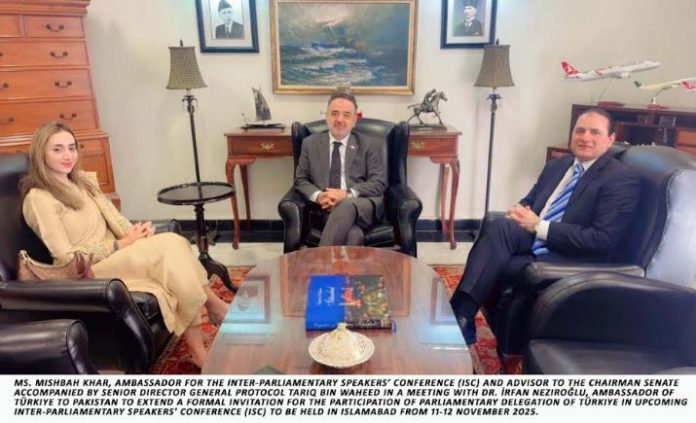
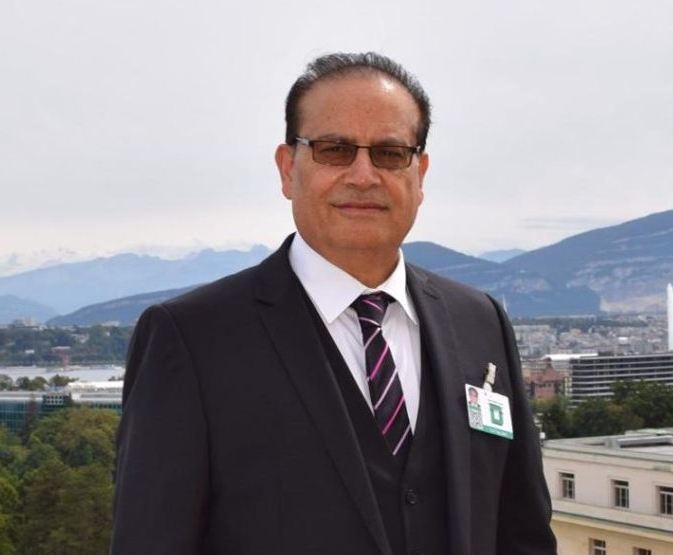
ISLAMABAD, SEPT 5 /DNA/ – Ambassador Misbah Khar, Advisor to the Hon’ble Chairman Senate, along with Mr. Tariq Bin Waheed, Director General (Protocol), Senate of Pakistan, visited the Embassy of Türkiye to meet with His Excellency Dr. İrfan Neziroğlu, Ambassador of Türkiye to Pakistan.

Ambassador Khar briefed Ambassador Neziroğlu on the Inter-Parliamentary Speakers Conference (ISC), a newly established global forum aimed at fostering dialogue and practical solutions through Speakers of parliaments and world leaders. She explained that the ISC is designed to bring nations together on critical themes such as peace, conflict resolution, stability, and security, providing an inclusive platform for constructive parliamentary diplomacy. She also noted that Pakistan’s Chairman Senate, Mr. Yousuf Raza Gillani, has been unanimously elected as the first President of this body, reflecting broad international confidence in Pakistan’s leadership role.

Ambassador Khar extended a formal invitation to the Speaker of the Grand National Assembly of Türkiye to participate in the first ISC session, scheduled for November 11–12, 2025, in Islamabad, under the theme Peace, Stability and Security.

Ambassador Neziroğlu reaffirmed the strong relationship between Pakistan and Türkiye, expressing his country’s full support for Pakistan and for the ISC as an emerging platform of global significance. In response, Ambassador Khar assured him of Pakistan’s commitment to strengthening parliamentary cooperation with Türkiye and working together to advance the ISC’s mission.    

Employment generation linked to business-friendly policies: Nasir Mansoor Qureshi

Employment generation linked to business-friendly policies: Nasir Mansoor Qureshi

ISLAMABAD, SEPT 5 /DNA/ – Nasir Mansoor Qureshi, President of the Islamabad Chamber of Commerce and Industry (ICCI), has emphasized that the business community is the real mover and shaker of the economy, and therefore, it must be actively involved in policymaking to boost trade and industry, generate employment, and broaden the tax base.

He expressed these views while talking to a visiting delegation of business leaders at ICCI. Senior Vice President Abdul Rehman Siddiqui and Vice President Nasir Mehmood Chaudhry were also present on the occasion.

Nasir Mansoor Qureshi highlighted that while the government has taken some steps towards ease of doing business, more concrete reforms are needed. He called for removing bureaucratic hurdles, introducing effective one-window operations for regulatory compliance, and putting an end to irrational tax collection practices that create difficulties for businesses.

Speaking on the occasion, Abdul Rehman Siddiqui, Senior Vice President ICCI, said that Pakistan’s economy can only grow sustainably if the government develops policies in partnership with the private sector. He added that the business community is ready to work hand in hand with the government to attract investment, promote exports, and create new jobs.

Nasir Mehmood Chaudhry, Vice President ICCI, said that arbitrary taxation and complex procedures discourage entrepreneurship and hamper economic activity. He urged the government to introduce consistent, business-friendly policies to enable industries and SMEs to flourish.

The ICCI leadership reiterated that meaningful consultation with the private sector is key to devising pragmatic economic policies. They assured the delegation that ICCI would continue to play its role as a bridge between the government and the business community to create a more conducive environment for investment and entrepreneurship in Pakistan.

FO spokesperson says future of refugees ‘up to Pakistan’

FO spokesperson says future of refugees ‘up to Pakistan’

ISLAMABAD, SEPT 5: Foreign Office (FO) spokesperson Ambassador Shafqat Ali Khan on Friday said that Pakistan will decide what to do with the refugees it is hosting, such as those from Afghanistan.

“Those Afghans waiting to travel to Germany should be deported promptly,” the spokesperson said while fielding questions during a weekly press briefing.

“Pakistani law will apply to those Afghans living here. We will decide what to do with refugees in Pakistan.

Serena Hotels launches flood relief effort in Pakistan

Serena Hotels launches flood relief effort in Pakistan

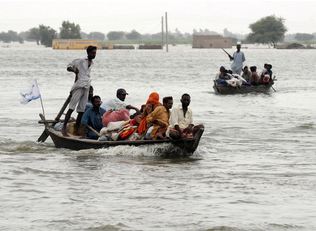
FAISALABAD, SEPT 5 /DNA/ – In response to the recent floods, Serena Hotels has launched a relief effort to provide essential food supplies to affected communities. Under its corporate social responsibility initiative, Jazba-e-Khidmat, the hotel is working tirelessly to support those in need.

Through this initiative, Serena Hotels aims to alleviate the suffering of flood-affected families by distributing food and other essential items. The hotel’s team has been collaborating closely with Faisalabad’s local administration to identify areas of greatest need and ensure effective aid delivery.

“We are committed to supporting our communities in times of crisis,” said Mr. Rashid Uddin, General Manager of Faisalabad Serena Hotel. “Through Jazba-e-Khidmat, we are proud to be making a positive impact in the lives of those affected by the floods.”

The food distribution drive is part of Serena Hotels’ ongoing efforts to demonstrate its commitment to social responsibility and community service.

America’s Ark of Defense vs. China’s Web of Power

Qamar Bashir

By Qamar Bashir

A few months ago, I argued in a widely circulated article that the United States was constructing an “ark of defense” around the South China Sea and the Asia-Pacific to contain China’s growing influence. Washington’s strategy involved building aggressive alliances, deploying military assets, and reshaping regional security architecture to assert dominance. Initiatives like AUKUS and QUAD, enhanced military integration with Japan and the Philippines, and intelligence sharing under Five Eyes became central to this containment plan. Through joint naval patrols, expanded military exercises, and command restructuring, the U.S. aimed to deter Beijing’s assertiveness and limit its geopolitical reach.

However, after the events of September 3rd, 2025, a deeper realization emerged: while Washington was openly building its ark of defense, China was quietly constructing a far more formidable wall. Unlike the United States, which relies on military pressure and transactional security guarantees, China is reshaping the world through economic integration, resource dominance, and strategic alliances. Where Washington builds fences, Beijing builds bridges. Where America threatens, China invests. And this difference in strategy is transforming global power dynamics in ways the U.S. underestimated.

America’s containment policy rests on three key levers: military pressure, economic de-risking, and diplomatic isolation. Militarily, AUKUS deepens defense ties with Australia and the U.K., enabling Canberra to acquire nuclear-powered submarines for operations in the Taiwan Strait and South China Sea. QUAD, which includes Japan and India, coordinates maritime security, supply chain resilience, and regional influence. Meanwhile, the Five Eyes alliance—comprising the U.S., U.K., Canada, Australia, and New Zealand—has intensified accusations against China over cyber espionage and AI-enabled surveillance, framing Beijing as a systemic technological threat.

Economically, Washington’s “de-risking” strategy aims to reduce dependence on China’s supply chains by reshoring manufacturing, diversifying sourcing to countries like Vietnam and India, and restricting Chinese access to strategic technologies such as 5G, AI, and semiconductors. At the same time, the U.S. has leaned on its allies to align with these restrictions, even when it conflicts with their economic priorities.

Diplomatically, Washington has deepened bilateral defense pacts, particularly with Japan and the Philippines, initiating joint maritime patrols in disputed waters and upgrading command structures. These moves aim to militarily encircle China and politically isolate it, but Beijing has responded with a more subtle, long-term strategy that prioritizes influence over intimidation.

China’s approach is deliberate and multidimensional. Through its Belt and Road Initiative (BRI), Beijing has invested more than $1.3 trillion across 150 countries, building highways, railways, deep-sea ports, power grids, and industrial zones. These are not symbolic gestures but economic lifelines that tether local economies to China’s ecosystem. From Pakistan’s Gwadar Port to Kenya’s Lamu Port, Beijing has forged relationships that cannot be easily disrupted by U.S. pressure. The result is a sphere of influence rooted in shared development rather than military dependency.

China has also built a strategic shield through its dominance over rare earth elements and critical minerals—resources essential for iPhones, EV batteries, satellites, AI chips, and advanced fighter jets. Controlling 70–80% of global refining capacity, China holds enormous leverage over industries vital to Western economies and defense systems. In a potential conflict, Beijing would not need to launch missiles to undermine its rivals; it could simply restrict access to the screws, magnets, and chips that power modern technology and weaponry.

Complementing this economic and resource advantage is China’s “String of Pearls” strategy, which secures critical maritime chokepoints across the Indian Ocean, South China Sea, and Pacific Rim. Through strategic investments in ports such as Hambantota in Sri Lanka, Kyaukpyu in Myanmar, and Djibouti, China has quietly built a logistics network supporting both trade and potential naval operations. These assets secure China’s dominance over shipping lanes carrying more than 60% of global trade and provide its navy with unprecedented reach and resilience.

Unlike the U.S., China has also cultivated an edge in soft power by avoiding costly interventions that leave destruction and instability behind. While Washington’s invasions of Iraq, Libya, Syria, and Afghanistan created deep mistrust, Beijing has avoided regime change and instead focuses on building schools, hospitals, housing, and industrial parks in developing nations. Across the Global South, this has fostered goodwill, portraying China as an enabler of sovereignty rather than a manipulator of dependency.

The post–September 3rd developments make this shift undeniable. As Washington’s alliances fragment, Beijing’s partnerships deepen. Through BRI expansion, BRICS enlargement, and new global trade corridors, China now exerts influence over economies representing 60–70% of global GDP. Strategic partnerships with Brazil, Russia, Pakistan, Indonesia, South Africa, and much of the Middle East have strengthened China’s leadership in emerging markets. Even traditional U.S. partners like Saudi Arabia and the UAE have moved closer to Beijing, attracted by investments, energy deals, and access to Chinese technology.

Meanwhile, under Donald Trump’s second term, America’s relationships with Canada, Europe, and NATO have deteriorated. Longtime allies now openly challenge Washington’s confrontational policies, calling for “European solutions to European problems” and pursuing greater independence from U.S.-led security frameworks. Washington’s attempts to isolate China have, ironically, isolated itself.

This strategic reversal is stark. For years, Washington envisioned China as the encircled power, constrained by alliances and tariffs. Yet today, it is the United States that risks isolation. Outside of Israel, Washington struggles to maintain unified global support, while Beijing’s expanding economic partnerships have earned it gratitude and loyalty across Asia, Africa, and the Middle East. China’s strategy of integration attracts; America’s strategy of pressure repels.

This is a decisive moment in global history. While the United States continues to invest in its ark of defense—military alliances, sanctions, tariffs, and deterrence—China has quietly built a durable web of power rooted in roads, ports, minerals, markets, and trust. Beijing’s message is simple yet powerful: “This world is big enough for all of us to thrive.” Washington’s message, however, remains uncompromising: “We make the rules; follow them or face the consequences.”

In the long run, it is the strategy of interdependence, not intimidation, that will define the future. While Washington flexes its aircraft carriers and military alliances, Beijing is quietly reshaping the global order beneath the surface—one port, one railway, one strategic partnership at a time. And as history unfolds, it is this silent wall, not America’s ark of defense, that may ultimately determine the balance of power in the decades ahead.

By Qamar Bashir

Press Secretary to the President (Rtd)

Former Press Minister, Embassy of Pakistan to France

Former Press Attache to Malaysia

Former MD, SRBC | Macomb, Michigan, USA

The unprecedented flooding of Gujrat: a man-made catastrophe

The unprecedented flooding of Gujrat: a man-made catastrophe

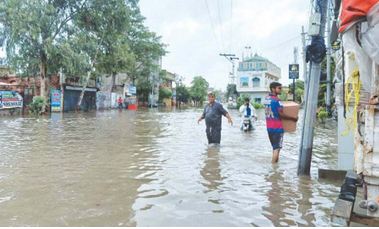
Gujrat, a city in Punjab, Pakistan, and its surrounding areas are grappling with an unprecedented flooding disaster, the likes of which have not been witnessed in recent memory. The floodwaters have not only inundated residential areas, but have also caused widespread displacement and destruction. What makes this crisis particularly alarming is that it is not solely a natural phenomenon, but a man-made one—a direct result of years of negligence, poor urban planning, and a blatant disregard for natural ecosystems.

The core of the problem lies in the fact that the floodwater has no natural exit. Gujrat and its adjoining areas are historically known for their intricate network of water channels and natural depressions that would typically absorb or redirect excess water. However, in a relentless pursuit of urban expansion, these vital water reservoirs have been encroached upon and, in many cases, completely occupied by sprawling housing societies. This rapid, unregulated construction has effectively choked off the natural drainage system, leaving the water with nowhere to go. The very ground that once served as a sponge, allowing water to percolate and replenish the groundwater table, is now covered in concrete, leading to a disastrous runoff.

The floodwater, in this case, has not originated from a single major river, but from the surrounding smaller water bodies and rainwater that, under normal circumstances, would have been absorbed or drained away. The relentless rains in the region have only exacerbated the situation, turning the city into a giant basin with no outlet. The water, instead of flowing, has stagnated, creating a quagmire that poses a serious threat to public health and infrastructure.

Another major contributing factor to this disaster is the Sialkot-Islamabad Motorway. While motorways are crucial for economic development and connectivity, their construction must be meticulously planned to account for the natural environment. In the case of the Sialkot-Islamabad Motorway, it appears that the natural waterways and flow patterns were largely ignored. The construction of the motorway has blocked and diverted the traditional paths of water, forcing it to inundate villages and low-lying areas that were previously safe. The poor planning and execution of this project have turned a vital piece of infrastructure into a barrier, trapping water and leading to widespread flooding.

The disaster in Gujrat serves as a stark reminder of the consequences of reckless development. The city’s authorities and planners failed to foresee the long-term impact of their actions. They did not factor in the critical role of natural drainage systems or the importance of respecting the flow of water. This is a classic case of short-sighted progress leading to long-term suffering.

Moving forward, it is imperative that the government and urban planners learn from this catastrophe. A comprehensive review of all development projects, particularly those that interfere with natural water bodies, is urgently needed. There must be a shift towards sustainable and eco-friendly urban planning that respects nature, rather than conquering it. The homes and villages of the people of Gujrat can be rebuilt, but the trust in a system that failed to protect them will be much harder to restore.

The transformative potential of Uzbekistan-Pakistan rail links

The transformative potential of Uzbekistan-Pakistan rail links

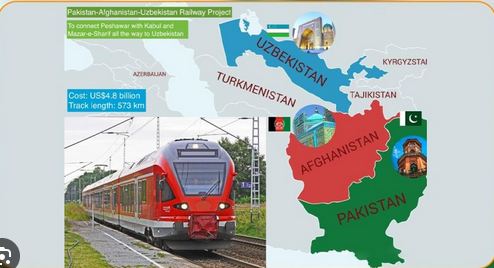
The commitment by Pakistan and Uzbekistan to enhance connectivity through a proposed rail link via Afghanistan marks a monumental step toward regional economic integration. This ambitious infrastructure project holds the potential to unlock vast trade opportunities, spur economic growth, and foster deeper people-to-people ties between Central and South Asia. With both nations already taking concrete steps, such as initiating direct flights, this rail corridor could be a true game-changer, transforming not just bilateral relations but also the broader regional economic landscape.

Central Asia, a region rich in natural resources and energy, has long sought efficient and reliable trade routes to access global markets. Pakistan, with its strategic location and the deep-sea Gwadar Port, offers a viable and crucial gateway. A direct rail link connecting Uzbekistan to Pakistan through Afghanistan would drastically reduce transportation costs and transit times, making regional trade far more competitive and attractive. Uzbekistan’s economy, with its significant exports of cotton, textiles, and minerals, could gain unprecedented access to the Arabian Sea. Conversely, Pakistan could supply a wide array of goods, including agricultural products, pharmaceuticals, and manufactured goods, to a new and expansive market. This enhanced connectivity would allow both nations to diversify their trade portfolios and integrate more deeply into larger, more efficient supply chains, benefiting industries and consumers on both sides.

Moreover, this rail link would serve as a powerful complement to the existing China-Pakistan Economic Corridor (CPEC). By linking major Central Asian hubs like Tashkent directly to key Pakistani ports like Karachi via Peshawar, the corridor could become a vital artery for broader Eurasian trade. This would not only attract significant foreign investment but also boost economic activity and create new jobs across the entire region. The project essentially extends CPEC’s reach, creating a seamless network that could redefine logistics and trade from China to Central Asia and down to the Indian Ocean.

The benefits of improved rail connectivity extend far beyond mere commerce. This project would also facilitate significant cultural, educational, and social exchanges. Central Asia and Pakistan share deep historical and civilizational ties, rooted in the ancient Silk Road and centuries of shared Islamic scholarship. Easier and more affordable travel would encourage a new era of tourism, academic collaboration, and cultural interactions, fostering mutual understanding and building bridges between people. Pilgrims, students, and entrepreneurs would all benefit from seamless movement, helping to forge lasting relationships that go far beyond government-level agreements. This human element is critical for building enduring regional stability and cooperation.

The biggest obstacle to this visionary project remains the persistent issue of Afghanistan’s stability. Security concerns and political uncertainties have long been the primary hindrance to transnational infrastructure projects in the region. However, there is a renewed, albeit cautious, sense of optimism. The current Afghan authorities have expressed public support for regional connectivity, recognizing its potential to bolster their own economy and stability. For this project to succeed, both Pakistan and Uzbekistan must engage with Afghan authorities to ensure the safe and efficient operation of the rail link. Additionally, securing international backing—particularly from major regional players like China and Russia, who have vested interests in Eurasian connectivity—could provide the necessary political and financial impetus to overcome challenges. Multilateral platforms like the Economic Cooperation Organization (ECO) and the Shanghai Cooperation Organization (SCO) should be leveraged to garner this broader support and coordinate efforts.

The recent introduction of direct flights between Tashkent and Islamabad demonstrates the serious commitment both nations have to deepening ties. The next logical step is to translate this goodwill into tangible rail infrastructure. The Uzbekistan-Pakistan rail link is not just a transportation project; it is a bridge between regions, economies, and civilizations. If realized, it could redefine trade dynamics, create jobs, and bring distant communities closer than ever before. While challenges remain, the political will displayed by both nations is incredibly encouraging. The time is ripe for bold, collaborative action to turn this vision into a reality, ensuring a more prosperous future for generations across Central and South Asia.

Stay Connected

64FansLike
60FollowersFollow

Latest Reviews

Exchange Rates

USD - United States Dollar
EUR
1.17
GBP
1.35
AUD
0.72
CAD
0.73