Home Blog Page 505

ECB set to hold rates steady with eye on France crisis

Frankfurt, Germany, Sept 8 The European Central bank is expected to hold interest rates steady again this week with inflation under control and US tariff tensions easing, even as France’s political crisis presents a new headache.
It would mark the second straight meeting in which the central bank for the 20 countries that use the euro keeps its key deposit rate on hold at two percent.
The pause follows more than a year of cuts as the ECB pivoted from tackling a surge in inflation to seeking to support the beleaguered eurozone.
Inflation has stabilised in the bloc, hovering around the central bank’s two-percent target in recent months.
“Any change in policy rates would be a big surprise,” analysts at HSBC said in a note on Thursday’s meeting.
In the United States, meanwhile, the Federal Reserve is widely expected to cut rates this month after a long period on hold as it seeks to support the job market, and following sustained pressure from President Donald Trump.

              - Lagarde worried about France -


              But for the Frankfurt-based ECB, while US tariff tensions have eased after a recent deal, policymakers now face a new headache due to a crisis in France, the eurozone's second-biggest economy.
              Prime Minister Francois Bayrou is set to face a confidence vote Monday over an austerity budget that aims to slash France's mounting debt, with chances high that he will lose.
              ECB President Christine Lagarde last week voiced concern about the risks of the government collapsing, warning that political turmoil in any eurozone country weighs on markets.
              "Political developments, and the emergence of political risks, have an obvious impact on the economy, on how financial markets assess country risk, and are therefore a concern for us," she said in a radio interview. 
              Last week the turmoil pushed up France's long-term borrowing costs to their highest level since 2011, when the eurozone was rocked by a debt crisis. 
              Lagarde is likely to face questions about whether policymakers might use a special mechanism aimed at combating disorderly movements in bond markets.
              But ECB officials have so far downplayed this possibility. 
              Andrew Kenningham, chief Europe economist at Capital Economics, told AFP that he did not expect Lagarde to "say anything meaningful" related to France, and that the crisis was unlikely to impact their rate decisions for now.
              An increasingly bleak outlook in Germany, where recent data has dashed hopes of a strong rebound for the eurozone's biggest economy, may also factor into the ECB's calculations as they mull their next rate move.


              - Deal gives 'clarity' -


              Meanwhile the tariff uncertainty that kept the ECB on its toes for months has subsided after Trump struck a deal with the EU in July, with most goods from the bloc facing a levy of 15 percent.
              The deal "provides some clarity", HSBC said. 
              ECB policymakers will remain vigilant about impacts on the export-dependent eurozone however -- negotiations on the details are continuing while some sectors complain they face higher levies than expected.
              The impact of the euro's recent strengthening against the dollar could also be in focus at the meeting. 
              A stronger euro makes imports cheaper and could further suppress inflation -- adding to concerns that consumer price rises could end up falling below the two-percent target for a long period. 
              The ECB will release new growth and inflation forecasts on Thursday but analysts expect little change from its last predictions in June.
              At her post-meeting press conference, there is little expectation Lagarde will give indications about the future path of rates -- though some analysts think the ECB could stay on hold for the rest of 2025.

Controversy stalks sparkling sprint talent Richardson

Paris, Sept 8 Sha’Carri Richardson’s talent is not in doubt as her stunning 100 metres world title in 2023 proved, but the American star is also like a moth to a flame when it comes to controversy.
The 25-year-old just cannot escape sparking headlines off the track.
Richardson was controversially barred from the delayed Tokyo Olympics in 2021 after testing positive for marijuana following her victory at the US trials.
She arrives in Tokyo for the defence of the world crown on the back of another headline-making incident.
She spent a night in jail after being arrested for domestic violence when she had an altercation with her boyfriend, fellow sprinter Christian Coleman, at an airport before this year’s US trials in August.
She scratched from the 100m at the trials and failed to reach the final in the 200m, but her place in the team for Tokyo was assured as a defending champion, although her best 100m time this season of 11.05sec leaves her way outside the favourites.
Coleman, who will be in Japan too as a member of the men’s sprint relay team, refused to press charges and defended her.
“She has things that she needs to work on for herself of course. So do I, so do you, so does everybody,” he told AFP.
Richardson later apologised to Coleman and admitted she was seeking help.
“I’m taking this time to not only see myself but get myself a certain level of help that overall is going to reflect who I truly am in my heart and my spirit,” she said.

              - 'We crave authenticity' -


              Richardson could not cut a more contrasting figure to that of her compatriot, Olympic 200m champion Gabby Thomas, although both hail from disadvantaged backgrounds.
              The clean-cut Thomas is a Harvard graduate, brought up by a single mother, who was then a teacher and is now a professor.
              Richardson, who has cultivated a striking image with long multi-coloured nails and tattooed arms, was brought up by her grandmother Betty Harp and an aunt.
              "My family has kept me grounded," she has said.
              However, while Thomas --  who will sit out these championships due to injury -- had a loving mother, Richardson yearned for that maternal love.
              In her apology to Coleman she revealed "due to my past trauma and pain, I was blind and blocked off to not only receive it (unconditional love), but give it."
              In a video posting in 2023, she explained: "Not having that bond of my biological mother during the transition of me getting older... I think that's what really got me.
              "She was supposed to be my world and now that she wasn't there I usually asked myself 'Why I'm I here?'
              "It really took me to a very dark place. When I was a junior in high school, I tried to commit suicide."
              Richardson has a tendancy of shooting from the hip and her hackles are easily raised.
              Such was the case in a bitter break-up with her one-time Jamaican girlfriend, 100m hurdler Janeek Brown, with whom she became embroiled in a bitter claim and counter-claim of mental, physical and verbal abuse.
              Brown said Richardson's going public about the relationship had been "malicious and calculated."
              It was a far cry from happier times when Richardson delighted Brown by sporting LGBTQ+ colours after winning the 100m at the US trials in 2021.
              Nevertheless Richardson has plenty of people who admire her for wearing her heart on her sleeve.
              One of those is US track legend Michael Johnson.
              "The thing with Sha'Carri is her purpose, talent and personality make her very interesting to watch," he told The Times last year.
              "She is out there and can be abrasive, but she can be very charming too.
              "She is a reflection of where society is heading. We crave authenticity and we don't want fake anymore."

China says trade grew in August, but below forecasts

Beijing, Sept China’s exports expanded 4.4 percent year-on-year in August, official data showed Monday, as the world’s second-largest economy navigated an uneasy trade war truce with the United States.
The increase in China’s overseas shipments last month fell below a Bloomberg forecast of 5.5 percent.
Imports similarly did not meet expectations, growing 1.3 percent year-on-year in August, compared with a forecast of 3.4 percent.
Data also showed that China’s exports to the United States, its largest trading partner, continued to fall, sinking 11.8 percent from the previous month, and down 33.1 percent on-year.
Trade tensions between the world’s two largest economies have been on a rollercoaster ride in 2025, with both countries slapping escalating tariffs on each other’s exports this year.
At one point, the tit-for-tat duties reached triple digits on both sides, snarling supply chains as many importers halted shipments to try and wait for the governments to settle matters.
Since then, Washington and Beijing have reached an agreement to de-escalate tensions, temporarily lowering tariffs to 30 percent on the United States’ side and 10 percent on China’s part.
In August, they delayed the threatened reimposition of higher tariffs on each other’s exports for another 90 days — meaning the pause on steeper duties will be in place until November 10.
That same month, Li Chenggang, China’s International Trade Representative and vice minister of commerce, led a delegation to Washington for trade talks.
He urged “equal dialogue and consultation” between the two nations during the visit, according to a statement from China’s commerce ministry.

Argentina’s Milei suffers major setback in provincial vote

Argentina's Milei suffers major setback in provincial vote

LA PLATA, ARGENTINA, SEPT 8 (AFP/APP): Argentina’s President Javier Milei vowed Sunday to “accelerate” his libertarian reforms after a crushing defeat in Buenos Aires provincial elections.

                  The 54-year-old economist has slashed public spending, dismissed tens of thousands of public employees and led a major deregulation drive since taking office in December 2023.

                  He acknowledged his party’s “clear defeat” by the center-left Peronist movement in the elections to the legislature of Buenos Aires province, the country’s economic powerhouse.

                  A deflated-sounding Milei admitted to unspecified “mistakes” which he vowed to “correct” but said he would not be swayed “one millimeter” from his reform agenda.

                  “We will deepen and accelerate it,” he said at a muted election night event in the resort of Mar del Plata, where he took the stage in silence, in marked contrast to his usual dramatic entrance to rock music.

                  With 91 percent of the votes counted, the center-left Fuerza Patria coalition had taken over 47 percent of the vote against nearly 34 percent for Milei’s ruling La Libertad Avanza (LLA), official results showed.

                  Buenos Aires’s votes are telling as a bellwether for Argentina. The province contributes more than 30 percent of Argentina’s GDP and accounts for 40 percent of all eligible voters.

                  The 13-point gap between Milei’s party and the left was far greater than opinion polls had predicted.

                  Turnout in the election was high, at around 63 percent.

                  The result poses major concerns for Milei, coming just six weeks before midterm elections.

                  Some members of his party downplayed the extent of the defeat, pointing out that the LLA had nonetheless increased its share of legislators in Buenos Aires.

Mexican deported by US to S.Sudan returns home: Mexico

Mexico City, Sept A Mexican man deported from the United States to South Sudan as part of President Donald Trump’s immigration crackdown returned home on Sunday after being repatriated by his government, officials said.
Jesus Munoz Gutierrez was one of eight men deported to South Sudan, one of the world’s poorest countries, on July 5.
Only one of the eight was from South Sudan.
The east African country is one of several in Africa and Central America where leaders have accepted taking in third-country migrants deported from the United States.
Munoz Gutierrez “arrived in Mexico City from Juba, the capital of South Sudan,” Mexico’s Foreign Ministry said in a statement.
He flew home via Ethiopia and Germany.
In announcing his expulsion in May, the US government claimed that Munoz Gutierrez had been sentenced to life in prison for murder, but the Mexican government said Sunday that he was taken to South Sudan “arbitrarily, after having completed a 25-year sentence.”
Speaking in Juba on Saturday, Munoz Gutierrez said he had “finished my time” in prison.
He said he was treated “well” in Juba.
South Sudan recently emerged from a bloody civil war, which left an estimated 400,000 dead between 2013 and 2018.

Trump warns foreign companies after S.Korean workers detained

ashington, Sept 8 President Donald Trump on Sunday warned foreign companies to obey US law after some 300 allegedly illegal South Korean workers were arrested at a Hyundai-LG battery plant being built in the southern state of Georgia.
The arrests were made in a raid by US authorities on Thursday during the largest single-site operation implemented so far under Trump’s nationwide anti-migrant drive.
“Please respect our Nation’s Immigration Laws,” the president posted on social media.
“Your Investments are welcome, and we encourage you to LEGALLY bring your very smart people… What we ask in return is that you hire and train American Workers.”
Footage of the raid showed detained workers, in handcuffs and with chains around their ankles, being loaded onto a bus.
LG Energy Solution has said 47 of its employees had been arrested — 46 South Koreans and one Indonesian.
The company has also said about 250 of those arrested were believed to be employed by its contractor, and most of them were South Koreans.
South Korea, Asia’s fourth-biggest economy, is a key automaker and electronics producer with multiple plants in the United States.
Its companies have invested billions of dollars to build factories in the United States in a bid to access the US market and avoid tariff threats from Trump.
President Lee Jae Myung met Trump during a visit last month, and Seoul pledged $350 billion in US investment in July.
Trump has promised to revive the US manufacturing sector, while also vowing to deport millions of undocumented migrants.
While admonishing investors to abide by the law, Trump appeared to acknowledge a skill deficiency in the domestic work force.
“ICE was doing right because they were here illegally,” he said of the raid by Immigration and Customs Enforcement that has strained relations with South Korea.
“But we do have to work something out where we bring in extras so that our people can be trained so that they can do it themselves.”
Seoul said Sunday that negotiations to secure the release of the detained workers had been concluded, and they would soon be freed and flown home.
“The immediate priority now is the swift release of both our LG Energy Solution employees and those of our partner firms,” company executive Kim Ki-soo told reporters before boarding a plane to Georgia earlier in the day.
Hyundai has said none of those arrested are its employees.

Asian shares rise as Japan politics weigh on yen

Hong Kong, Sept 8 Asian markets rose on Monday, with Tokyo up nearly two percent after Japanese Prime Minister Shigeru Ishiba’s decision to resign pushed down the value of the yen.
Investors were also digesting weak US jobs data, while crude prices climbed after eight key members of the OPEC+ alliance said they had agreed to again boost oil production.
“A combination of weak US labour market data coupled with rising political uncertainty in Japan dominated global markets as we started the week in Asia,” Michael Wan at MUFG said in a note.
Tokyo’s Nikkei index gained 1.9 percent, with Japanese exporters benefiting from a slide in the yen’s value — one dollar bought 148.14 yen in morning trade, up from 147.07 yen on Friday.
Japanese bond yields also climbed after Ishiba said Sunday he would step down after less than a year in power, heralding fresh uncertainty for the world’s fourth-largest economy.
“I don’t think we can say that the resignation of PM Ishiba is a complete surprise as it’s been mooted for some time but the timing of the announcement is certainly unexpected,” said Michael Brown, senior research strategist at Pepperstone.
“As for the market reaction, this obviously introduces significant downside risks for the (Japanese yen) and for long-end” Japanese government bonds (JGBs), he added.
Last week, the yield on 30-year JGBs hit a record high, following rises in the United States and Europe on the back of concerns about political uncertainty and public finances.
Potential candidates to be leader of Japan’s ruling party are “all likely to propose looser fiscal stances than Ishiba, hence further pressuring the long end of the curve, where demand for JGBs had already been waning quite significantly”, Brown said.
Hong Kong and Shanghai were 0.3 percent higher in morning trade, with Taipei up 0.5 percent and Seoul also gaining 0.3 percent.
Singapore rose 0.1 percent and Wellington was up 0.1 percent, but Sydney fell 0.3 percent.
Last week’s US jobs data has cemented expectations of a Federal Reserve interest rate cut later this month.
In Asia, “rising expectations of Fed rate cuts and with that lower US yields should be a welcome development to some extent providing some breathing space and policy room for Asian central banks”, said Wan of MUFG.
“Nonetheless, the key risk for Asian currencies would also lie in a sharp US slowdown and hard-landing recession through sharply slower exports to the US, which we stress is not our base case.”

              - Key figures at around 0200 GMT -


              Tokyo - Nikkei 225: UP 1.9 percent at 43,816.02
              Hong Kong - Hang Seng Index: UP 0.3 percent at 25,499.10
              Shanghai - Composite: UP 0.3 percent at 3,825.83
              Euro/dollar: DOWN at $1.1711 from $1.1722 on Friday
              Pound/dollar: DOWN at $1.3501 from $1.3508
              Dollar/yen: UP at 148.14 yen from 147.07 yen
              Euro/pound: DOWN at 86.75 pence from 86.77 pence
              West Texas Intermediate: UP 1.3 percent at $62.66 per barrel
              Brent North Sea Crude: UP 1.3 percent at $66.32 per barrel
              New York - Dow: DOWN 0.5 percent at 45,400.86 (close)
              London - FTSE 100: DOWN 0.1 percent at 9,208.21 (close)

Racing betting tax hike will bring ‘communities to their knees’: Gosden

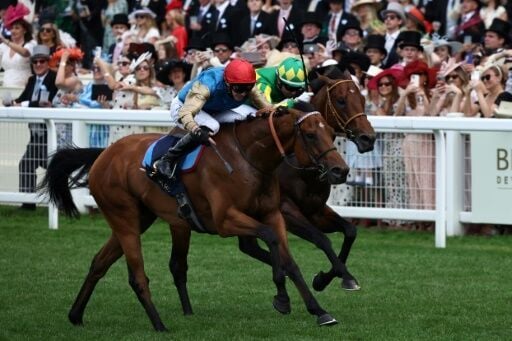
Paris, Sept 8 British racing is holding a one-day strike next week for the first time in its history in a tax dispute with the government.
All four race meetings on September 10 are cancelled in protest at the government’s proposal to raise online racing betting tax from 15% to the same level as casino and gaming at 21%.
The Labour government is desperately seeking to raise revenues to bolster Britain’s parlous finances.
The sport’s governing body the British Horseracing Authority (BHA) claim “one single rate would have devastating consequences …on an industry which is worth £4.1 billion ($5.5 billion) to the UK economy”.
The BHA will learn how effective their lobbying has been when British Finance Minister Rachel Reeves announces her budget on November 26.
The government’s plan has angered all sectors of the racing industry and AFP Sports offers a sample of the bitterness felt:
Trainer — John Gosden
The British training great told AFP the measure would hit rural areas especially hard as there will be less demand at the sales and result in less horses being bred.
The 74-year-old three-time Prix de l’Arc de Triomphe winning handler explained: “The breeding industry is based in rural areas.
“Having less horses causes unemployment (the BHA claim 2,800 jobs across the industry would be lost in the first year) and waste. A lot of communities will be brought to their knees.”
Gosden added: “If the tax goes up what will happen is it will encourage punters to bet where there is no protection whatsoever and is not regulated and the government get no tax returns.
“So the Treasury will end up with lower tax revenue.”
Gosden says at the moment it is estimated five billion pounds is wagered on racing globally via “black market sites based in the Cayman Islands and elsewhere”.
“I understand the need for the Exchequer to build revenues but don’t let’s go and destroy the second biggest spectator sport in the UK and a world leader in the racing and breeding industry.”

              Breeder -- David Redvers
              The betting tax is "another nail in the coffin" for British racing, Redvers says, just as it was staging a fightback with attendances improving.
              "British racing is taking a consistent amount of hits, for instance we are exporting our best horses due to a lack of competitive prize money here," Redvers noted.
              "We are in a downward spiral."
              Redvers highlighted the air of uncertainty at the sales over where the country will be in three years time.
              "People are reining back on investments generally and without confidence in the gambles they take, the whole industry goes into decline.
              "This government and its decisions are hugely damaging confidence at the moment."
              Redvers hopes Charles Allen the new chairman of the BHA, will ride to the rescue.
              Allen has strong ties with Labour and an impressive CV including overseeing London's victorious bid to host the 2012 Olympics.
              "His first task will be a career defining moment and we all hope he has the clout to navigate us safely through these troubled waters," said Redvers.
              Bookmaker -- Geoff Banks
              Banks believes the tax will be "catastrophic for racing and for regulated betting in the UK," as it is the bookmakers who contribute £380 million a year to the sport through taxes, media rights, and sponsorship.
              Banks says betting shops have been disappearing from the high street for years and the rise in online tax will spark an exodus of big firms abroad.
              "They are already set up and ready to go with a flick of the switch as they do not like the regulated environment in the UK," he said.
              "It represents a 67 percent tax hike on what we are presently paying and I do not know where the government come across this number."
              Banks is equally scathing of the racing authorities, like his fellow bookmakers, who are "angry" that they were not consulted over the day of action, saying "racing appears to be in a vacuum".
              "I think racing has worked itself into a position where it actively dislikes its own leading sponsors (for example a betting firm sponsors the Derby/Oaks and the oldest classic the St Leger) and funders of the sport, the bookmakers," he said.
              "They say we are not paying enough for the product.
              "The sport is going in completely the opposite growth direction, it is in decline."

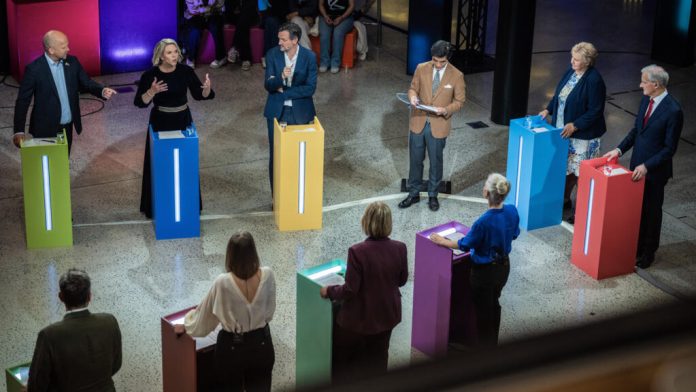
Norway votes in election influenced by wars and tariff threats

Oslo, Sept 8 Norway votes on Monday in a closely fought election in which geopolitical issues including US President Donald Trump’s tariff threats and the war in Ukraine could give a boost to the government.
Veteran Labour Prime Minister Jonas Gahr Store has a slight lead in opinion polls and observers said global uncertainty could push voters to back the perceived stability of a sitting government.
Much of the campaigning, however, has focused on domestic issues like the cost of living, healthcare, inequality, education and the possibility of abolishing the wealth tax, which has divided the two camps.
The first projected results are expected after the final polling stations close at 1900 GMT.
“There’s a lot of potential for everything to be better here,” Amalie Sydtveit, a 30-year-old physiotherapist, told AFP.
But give “the state the world is in, I believe that the stability of the government is important,” she added.
NATO member Norway shares a border with Russia in the Arctic and its economy is highly dependent on exports, so geopolitical issues can hit very close to home.
Political scientist Johannes Bergh flagged Store’s long experience in global affairs — his first stint as foreign minister began 20 years ago.
“The fact that Donald Trump was elected president in the United States, the talk about tariffs, and international trade is much more uncertain, there’s a war in Ukraine — all of those international issues make voters rally around the sitting government,” Bergh told AFP.

              - Fractious blocs -


              The prime minister, who now runs a single-party minority government, was boosted domestically earlier this year by the return to government of popular ex-NATO chief Jens Stoltenberg.
              But he is likely to need all of the other four left-leaning parties to back him to remain in power.
              But the left bloc itself is divided over issues including oil drilling, which Labour wants to continue but the Greens do not.
              Both parties favour close ties with the European Union and in the long-term Norwegian membership -- something opposed by the Centre and the far-left parties, along with most Norwegians.
              The far-left wants the country's sovereign wealth fund, the biggest in the world, to divest from Israel, which Labour opposes.
              On the streets of Oslo, Anne-Inger Hellekjaer said she wanted to see change.
              "Some new impulses. Some other politicians in charge," said the 42-year-old librarian.
              But the right-wing bloc is also divided.
              Former prime minister Erna Solberg's Conservatives have been overtaken by the anti-immigration Progress Party.
              While Store is the settled choice for prime minister among left parties, Solberg is battling with Progress Party's Sylvi Listhaug to be the figurehead. 
              Listhaug has done better in the polls but is a more divisive candidate, especially for moderate voters.
              The right-wing bloc also comprises two small centre-right parties, including the Liberals who are at odds with the Progress Party on a number of issues, including the climate, the EU and immigration.

Defence and Martyrs Day commemorated in Beijing

BEIJING, Sep 8 The Embassy of Pakistan in Beijing on Monday commemorated the Defence and Martyrs Day of Pakistan with a solemn and dignified flag hoisting ceremony.

The event was attended by Embassy officials, members of the Pakistani community in China and media.

On this occasion, Pakistan Ambassador to China, Khalil Hashmi hoisted the national flag to the tune of national anthem.

In his remarks, Ambassador Hashmi paid rich tribute to the courageous sons of the soil who successfully foiled evil designs of the enemy and defended the motherland with ultimate courage and professionalism.

The Ambassador underscored that bravery and commitment of the Armed Forces of Pakistan to safeguarding our homeland will never be forgotten. He lauded professionalism, discipline and bravery of the Armed Forces of Pakistan.

The Ambassador also reaffirmed Pakistan’s strong ties with China and its commitment for maintaining peace and regional stability.

Stay Connected

64FansLike
60FollowersFollow

Latest Reviews

Exchange Rates

USD - United States Dollar
EUR
1.17
GBP
1.35
AUD
0.72
CAD
0.73