Home Blog Page 502

UAE naval commander meets PAF chief to enhance defense collaboration

UAE naval commander meets PAF chief to enhance defense collaboration

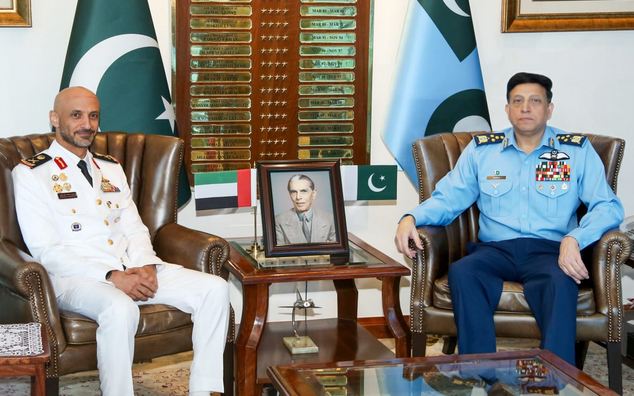
RAWALPINDI, 8 SEPT /DNA/ – Major General Humaid Mohammed Abdullah Alremeithi, Commander of the UAE Naval Forces, called on Air Chief Marshal Zaheer Ahmed Baber Sidhu, Chief of the Air Staff, Pakistan Air Force at Air Headquarters, Islamabad. The meeting focused on evolving regional security dynamics, with both sides exploring fresh avenues of engagement through joint training initiatives and deeper military-to-military cooperation.

During the meeting, Chief of the Air Staff expounded his vision to transform PAF into a modern, agile and technology-driven Air Force through state-of-the-art upgradation programmes in cyber, space, Artificial Intelligence, electronic warfare and aerospace domains. He highlighted the deep-rooted religious and historical ties between the two nations emphasizing Pakistan’s unwavering commitment to expanding military-to-military cooperation with the UAE, particularly in the areas of training and joint operational exercises.

Commander of the UAE Naval Forces expressed sincere gratitude to the Air Chief for the warm reception and gracious hospitality extended by Pakistan Air Force. He lauded PAF’s indigenization drive, appreciating its robust framework, homegrown capabilities and focus on technological advancement making it an operationally prepared and technologically advanced Air Force of the region. The visiting dignitary expressed the earnest desire of the UAE Armed Forces to draw from the Pakistan Air Force’s rich operational experience in multi-domain warfare. He underscored that PAF’s tested operational framework and combat-proven doctrine remain invaluable for regional and international partners alike. Commander of the UAE Naval Forces further conveyed UAE’s keen interest in conducting joint exercises with PAF, highlighting the immense value of mutual learning, operational synergy and enhanced interoperability. He also shared that the UAE Air Force is eager to participate in joint training initiatives in Pakistan, an undertaking he described as a vital cornerstone in further cementing the brotherly relations between the two nations.

The meeting between Chief of the Air Staff and Commander of the UAE Naval Forces signifies the commitment between the Armed Forces of both the countries in working together to address common challenges and the willingness to further strengthen their bilateral ties in the realms of defence and military cooperation.

Palestine welcomes Spain’s call for immediate Gaza ceasefire

Palestine welcomes Spain's call for immediate Gaza ceasefire

RAMALLAH, SEPT 8 /DNA/ – The Ministry of Foreign Affairs and Expatriates of the State of Palestine welcomes the advanced Spanish position announced by Spanish Prime Minister Pedro Sánchez regarding maximizing efforts to achieve an immediate ceasefire, protect and provide relief to civilians, increase support to them through UNRWA, halt the crimes of genocide, displacement, and annexation, and support European and international efforts to achieve peace, implement the two-state solution, and protect it from the risks of annexation and settlement.

While the Ministry once again commends the positions of the friendly Kingdom of Spain—its king, government, and people—it calls on countries, especially European countries, to follow Spain’s example and efforts to stop the war, achieve peace, and protect the two-state solution.

Niaz support becomes first globally to educate children of parents with disabilities

Niaz support becomes first globally to educate children of parents with disabilities

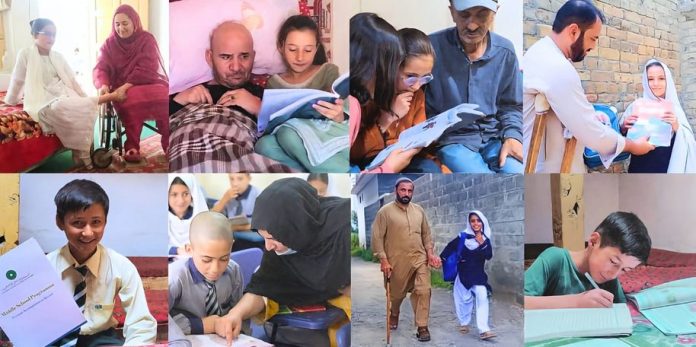
ISLAMABAD, SEPT 8 /DNA/ – Building on the success of its groundbreaking customized wheelchair initiative, Niaz Support, in partnership with Subah Sehar Foundation USA, has become the first organization in the world dedicated exclusively to educating the non-disabled children of parents with disabilities (PWDs).

For years, Niaz Support has been recognized for transforming mobility and dignity through customized wheelchairs. That initiative mobilised thousands of individuals across Pakistan. Today, together with Subah Sehar Foundation USA, Niaz Support expands its impact by ensuring that the children of PWDs – often overlooked – have the opportunity to pursue education and a brighter future.

“Our customized wheelchair initiative gave parents dignity and independence. Now, through education, we are investing in the futures of their children,” said Hussain Odhwani, Founder of Niaz Support.

Niaz Support’s new education initiative introduces scholarship gift cards, but unlike traditional vouchers, these are fully managed by Niaz Support. This ensures transparency, accountability, and the assurance that funds are spent directly on children’s educational needs. In addition to covering tuition, uniforms, books, and stationery, the initiative also provides dedicated mentors and guardians to guide children throughout their educational journey, comprehensive health insurance to safeguard their wellbeing, and occasional celebrations and community events to build confidence and belonging.

“These children deserve not just financial aid but also encouragement, guidance, and care,” said Fatima Mudassir, Director of External Relations at Niaz Support. “Through managed scholarship gift cards, mentorship, and health support, we are giving them the tools to succeed and thrive in every aspect of life.”

Niaz Support’s initiative is universal within Pakistan – dedicated solely to the children of parents with disabilities, regardless of region, religion, caste, or type of disability.

With this initiative, Niaz Support – a leading disability-focused social enterprise – continues to pioneer solutions that break cycles of disadvantage. They believe that no child should be left behind simply because their parent lives with a disability.

Ultrasound ‘helmet’ offers promising new approach to Parkinson’s treatment: Study

Ultrasound 'helmet' offers promising new approach to Parkinson's treatment: Study

ISTANBUL, Sep 8 (AA/APP): An innovative ultrasound “helmet” could transform the non-invasive treatment of Parkinson’s disease, a new research study said.

According to the study, published in the journal Nature Communications, “the newly developed system can reach brain regions 30 times smaller than conventional deep-brain devices,” The Guardian reported on Monday.

The device can target specific brain regions with up to 1,000 times greater precision than traditional ultrasound, presenting a promising alternative to deep brain stimulation (DBS) for treating neurological disorders, the report said.

In addition to Parkinson’s disease, this cutting-edge technology could also revolutionize the management and treatment of other conditions, including Tourette syndrome, chronic pain, depression, and Alzheimer’s.

DBS is a highly invasive surgical procedure in which electrodes are implanted into specific regions of the brain. These electrodes deliver controlled electrical pulses that modulate abnormal brain activity to help alleviate symptoms.

Unlike DBS, the new helmet eliminates the option of undergoing surgery.

In trials, the researchers achieved remarkable success, as the waves precisely reached the lateral geniculate nucleus, demonstrating the device’s effectiveness.

11 new dengue cases reported in ICT

ISLAMABAD, SEP 08 (APP): The district administration of Islamabad has released its latest dengue surveillance report, confirming 11 new cases across different union councils in the last 24 hours, and surveillance teams also carried out 365 inspections to identify mosquito larvae, with three positive and ten negative findings during the process.

According to official data, seven of the new dengue cases were detected in rural areas while four were reported from urban localities. The district administration said surveillance, inspections, and enforcement actions are continuing across the federal capital to prevent further spread.

The spokesman of district administration said that the dengue surveillance teams conducted 365 targeted inspections in different parts of Islamabad during the reporting period. These checks were aimed at locating stagnant water and potential breeding sites for dengue larvae. Out of these inspections, larvae were confirmed at three locations, while ten sites tested negative.

The spokesman stated that areas with confirmed larva presence have been treated immediately to curb mosquito breeding. Follow-up inspections are also planned to ensure the complete elimination of breeding grounds.

He said to control the rising trend of cases, enforcement actions against violations of dengue preventive Standard Operating Procedures (SOPs) were carried out across the capital. Assistant Commissioners and Magistrates inspected various sites, including residential and commercial properties, to check for water accumulation and non-compliance with preventive measures.

Several sites were sealed after violations were confirmed. In some cases, individuals were taken into custody for negligence in implementing dengue control measures. The district administration stressed that strict enforcement will continue in the coming days to minimize risks, he added.

In this regard, Deputy Commissioner Islamabad, Irfan Nawaz Memon, urged citizens to strictly follow dengue prevention guidelines. He advised residents to ensure that no stagnant water is left uncovered in their homes, workplaces, or surroundings, as it provides a breeding ground for mosquitoes.

The DC highlighted that community participation is vital to controlling the spread of dengue. “Surveillance and enforcement will only succeed when citizens cooperate by following SOPs at the household level,” he added.

Meanwhile, the district administration has directed all Assistant Commissioners, Magistrates, and surveillance teams to maintain daily monitoring in both urban and rural union councils. Inspections are being conducted in high-risk zones, including construction sites, junkyards, water storage areas, and commercial outlets.

Furthermore, awareness campaigns are also being carried out to inform citizens about preventive practices, including covering water containers, using mosquito repellents, and ensuring proper waste disposal.

Authorities stressed that despite inspections and enforcement, long-term dengue control depends on citizens adopting preventive practices at the community level. They urged residents to check rooftops, backyards, and water tanks for signs of mosquito breeding on a regular basis.

Pakistan reaffirms commitment to global peace

Pakistan reaffirms commitment to global peace

By Malik Faisal Munir / DNA

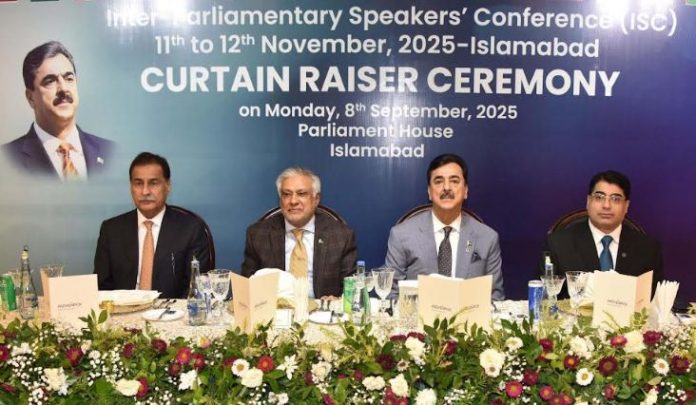
ISLAMABAD: The upcoming Inter-Parliamentary Speakers’ Conference (ISC), set to be hosted by the Senate of Pakistan in Islamabad this November, was officially launched with a curtain raiser ceremony attended by Parliamentary Leaders, Diplomats, and senior officials. A total of 38 ambassadors along with representatives from international organizations participated in the event, underscoring broad diplomatic support and global interest in the initiative.

In her welcoming remarks, Misbah Khar, advisor to the Chairman Senate and Ambassador ISC, underscored the significance of this initiative, noting that Pakistan’s foreign policy objectives are closely aligned with its parliamentary outreach. She emphasized that the ISC offers a platform to resolve conflicts through dialogue and promote global peace, especially at a time when humanity faces shared crises such as poverty and climate change.

In his keynote address, Chairman Senate of Pakistan, Syed Yousaf Raza Gilani, welcomed Deputy Prime Minister Senator Ishaq Dar, Speaker National Assembly Sardar Ayaz Sadiq, Secretary General of Inter-Parliamentary Speakers’ Conference Ek Nath Dhakal, Heads of Parliamentary parties, Diplomats, and distinguished guests, terming their presence a reaffirmation of Pakistan’s commitment to promoting peace, cooperation, and global solidarity.

Highlighting the inspiration behind the ISC, Chairman Senate reflected on his tenure as Prime Minister in 2008. He shared that during that time, he observed summits where world leaders set ambitious agendas for peace, development, and cooperation. However, the very institutions entrusted with translating those ambitions into laws — parliaments, the true custodians of legislation and public ownership — were missing from the table. This realization, he noted, became the driving force behind his vision to establish a dedicated platform for Speakers of Parliaments.

Underscoring climate change as a defining challenge, Chairman Senate shared his recent visit to flood-hit areas in Multan, noting that displaced families’ stories of loss and resilience underscored the urgency of global solidarity. “Climate change respects no border. No single government can respond alone. Governments need parliaments, and parliaments need each other,” he stated.

He outlined the Senate’s proactive steps in legislative diplomacy, including celebrating Pakistan–Africa Friendship Day and engaging with Central Asia and European partners. Referring to the inaugural ISC meeting held earlier this year in Seoul, which gathered over 45 Speakers of Parliaments, he stressed that the upcoming full-scale conference in Islamabad would focus on conflict prevention, food, water and energy security, climate action, sustainable development, good governance, and advancing parliamentary diplomacy.

Quoting John Donne’s famous words, “No man is an island, entire of itself; every man is a piece of the continent, a part of the main,” the Chairman underlined the essence of ISC as a “Continent of Parliaments” where each Speaker contributes to the collective good.

Expressing gratitude to diplomats, parliamentary leaders, and international partners, Chairman Senate Syed Yousaf Raza Gilani reaffirmed that the ISC in Islamabad would serve as a platform to transform commitments into concrete legislative pathways. “Parliaments are not merely instruments of national debate; we are architects of a more peaceful and prosperous world,” he concluded.

Deputy Prime Minister Senator Ishaq Dar also addressed the gathering, appreciating the Senate’s leadership and terming the ISC a “timely initiative with clear purpose.” Emphasizing that “without peace and security, there can be no development,” he said the upcoming conference is crucial for dialogue-based multilateralism.

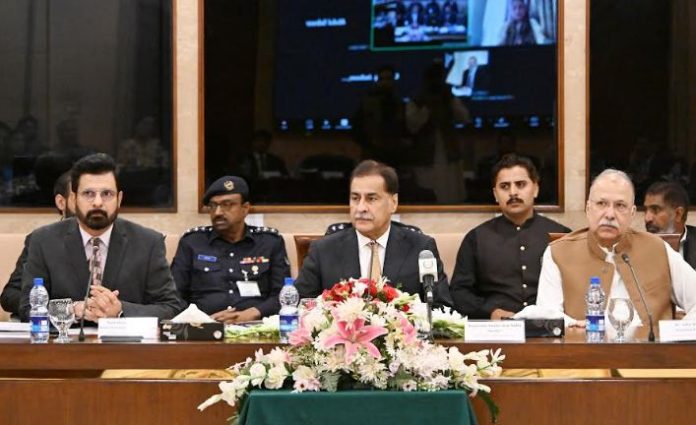
Speaker National Assembly Sardar Ayaz Sadiq commended the ISC initiative and extended full support. He emphasized the bipartisan nature of parliamentary diplomacy, stating that both Houses of Parliament must work together to represent the will of the people. He noted the growing impact of emerging technologies like AI, highlighting the importance of collaboration between parliaments to prevent misinformation and strengthen institutions.

Secretary General, Inter-Parliamentary Speakers’ Conference, Ek Nath Dhakal also acknowledged the leadership of Pakistan for graciously hosting the ISC, describing it as a key platform for advancing peace and sustainable development through legislative cooperation.

The curtain raiser has set the tone for what promises to be a landmark gathering of Parliamentary Leaders this November in Islamabad. The event reinforces Pakistan’s commitment to inclusive, bipartisan, and forward-looking legislative diplomacy that aspires to shape a more harmonious global future.

Ayaz Sadiq’s Vision: From Rules to Reform

Ayaz Sadiq’s Vision: From Rules to Reform

by Muhammad Mohsin Iqbal

In 2003, when I first assumed my responsibilities as a Research Officer in the National Assembly, I quickly realized that the foundation of my work rested upon the Constitution of Pakistan and the Rules of Procedure. Every assignment, every reference, and every note prepared for the proceedings of the House demanded a careful reading of these guiding documents. In that pursuit, one of my constant companions was the celebrated work Practice and Procedure of Parliament by M. N. Kaul, a book that served as both compass and lighthouse in the vast sea of parliamentary practices. Yet books alone could not always capture the subtle nuances of real-time parliamentary affairs. In such moments, I would seek guidance from the Worthy Secretary, Mr. Karamat Hussain Niazi, whose deep understanding and calm advice helped untangle complexities. Alongside him stood Mr. Muhammad Mushtaq, the living encyclopedia of Parliamentary Affairs, whose remarkable memory and clarity of thought turned even the most intricate legislative riddles into comprehensible solutions. My intellectual bond with him, forged in those early years, has endured till this day.

The dedication of these two guardians of procedure was extraordinary. During House proceedings, their alertness in advising the Speaker and their unwavering reliance on the Constitution and Rules were both unmatched and inspirational. Their example taught a vital lesson; that in parliamentary life, knowledge of the guiding framework is not a luxury but an absolute necessity. Without it, one risks stumbling in the dark. This truth became all the more apparent in the words of Speaker Sardar Ayaz Sadiq. He himself candidly admitted that when he first entered the Assembly as a Member in 2002, he was not very much familiar with the Constitution and Rules. Soon, however, he realized that he could never perform his duties effectively without understanding them. On his journeys from Lahore to Islamabad, he immersed himself in these texts, turning travel hours into sessions of serious study. His reflection was apt; to step into parliamentary life without knowing the Constitution and Rules was like attempting to ride a horse without a bridle—directionless, vulnerable, and unsafe.

When fate entrusted Sardar Ayaz Sadiq with the Speakership in 2013, his reverence for constitutional knowledge translated into action. His tenure became notable for decisions that were bold, unusual, and forward-looking. One of his earliest reforms was to transfer the authority of recruitment in the National Assembly to the Federal Public Service Commission, a move that brought transparency and merit to the process. He also sought to address the Assembly’s energy needs through renewable means, successfully introducing solar energy to meet its requirements—a step far ahead of its time. Among his forward-looking contributions was also the establishment of the Sustainable Development Goals (SDGs) Secretariat in the National Assembly, a pioneering initiative that aligned Pakistan’s parliamentary work with the global development agenda. This was not only the first of its kind in the region but also a model later admired and replicated internationally, reflecting the foresight of a Speaker who understood that parliaments must lead in achieving inclusive growth, social justice, and environmental sustainability.

Yet perhaps his most lasting contribution was in the realm of education. In 2015, recognizing the profound necessity of nurturing a citizenry educated in parliamentary principles, he pioneered the inclusion of Parliamentary Studies as a subject in academic curricula. For this, he convened Vice Chancellors, teachers, and education experts from across the country, and together they laid the foundation of an initiative that aimed not merely at academic enrichment but at shaping the very character of future citizens.

The importance of this step cannot be overstated. A democracy thrives only when its citizens understand the framework within which it functions. The Constitution is not merely a legal document—it is the soul of the state, the collective will of the people, and the safeguard of their rights and liberties. Similarly, the Rules of Procedure are not just technicalities for parliamentarians but guiding principles that ensure order, fairness, and respect within the legislative process. If citizens remain ignorant of these, they are left unaware of both their duties and entitlements. Such ignorance weakens the very foundations of democracy. On the other hand, when citizens are informed, they become guardians of their own rights, participants in governance, and partners in nation-building. An educated citizen who knows his Constitution is less likely to be misled, more likely to demand accountability, and better equipped to contribute to the creation of a civilized, just society.

Sardar Ayaz Sadiq’s vision did not stop with the initial introduction of Parliamentary Studies. A decade later, he revived the project with renewed vigor, once again inviting Vice Chancellors, professors, and experts to evaluate its progress and extend its scope further. The consensus was resounding; parliamentary studies must not only continue but expand, so that each new generation of Pakistanis grows with a sense of civic duty, awareness of rights, and respect for democratic norms. From these seeds, it was hoped, would emerge members of society who were not only law-abiding citizens but also future parliamentarians of substance and integrity.

Thus, from the quiet study of books and rules in 2003, to the visionary reforms in 2013 and beyond, this journey reflects a larger truth: the health of a democracy depends not only upon its leaders but equally upon its citizens. Every man and woman of Pakistan has a duty to acquaint themselves with their Constitution and the parliamentary framework it upholds. For without knowledge, freedom is fragile, and without understanding, democracy is hollow. If Pakistan is to move forward as a strong, progressive nation, it must ensure that its people are not merely subjects of governance but enlightened participants in it. Through such awareness lies the promise of a stronger Assembly, a more responsible citizenry, and a nation that stands secure upon the twin pillars of rights and duties.

Austrian exports down slightly in H1, 2025: Statistics Austria

VIENNA, Sep 8 The value of Austrian exports of goods decreased by 3.1% to €94.17 bn in the first half of 2025, as Statistics Austria on the basis of preliminary calculations reports.

At the same time, imports of goods increased by 2.9% to €97.46 bn. The resulting trade balance deficit amounted to €3.29 bn.

“Austria?s international trade remained stable in the first half of 2025. Compared with the same period last year, export values fell slightly by 3.1%, while imports rose by 2.9%. The decline in exports is mainly attributable to trade with the USA and Switzerland.

“However, Switzerland also contributed significantly to the increase in imports. Of all trading partners, imports from Switzerland rose the most, at +74.4%, followed by China, where imports increased by 13.0% in the first half of the year,” says Manuela Lenk, Director General Statistics at Statistics Austria.

In the period January to June 2025, the total value of imports of goods was nominally at €97.46 bn, while exports of goods amounted to €94.17 bn. Thus, imports increased by 2.9% and exports decreased by 3.1% compared to the first six months of the previous year. The trade balance deficit rose to a value of €3.29 bn, compared to a positive trade balance of €2.43 bn in the same period the year before.

In trade with the ten most important import partners, there were five increases and five decreases in imports in the first half of this year. Besides the increase with Switzerland (+74.4%), the largest absolute increases were seen in imports from China (+13.0%) and Germany (+1.0%). The largest absolute declines were recorded with France (-10.3%) and Poland (-4.6%). The trade with the ten most important export partners – apart from Italy (+5.1%) and Czechia (+3.6%) – showed decreases. The sharpest absolute decreases in exports were recorded with the United States (-14.4%), Switzerland (-11.5%) and France (-11.1%).

Austria imported goods worth €63.92 bn (+0.3%) from European Union member states in the first six months of 2025. The value of goods exported to EU countries recorded a slight decrease of 1.2% compared to the same period of the previous year and amounted to €64.39 bn. The positive trade balance with the European Union amounted to €0.48 bn, after an asset of €1.47 bn in the period January to June 2024.

International trade of goods with third countries showed an increase in imports (+8.1% to €33.55 bn) and a decrease in exports (-6.9% to €29.78 bn) compared to the same period last year.

ICCI to work hand in hand with policymakers for economic revival: Nasir Mansoor Qureshi

ICCI to work hand in hand with policymakers for economic revival: Nasir Mansoor Qureshi

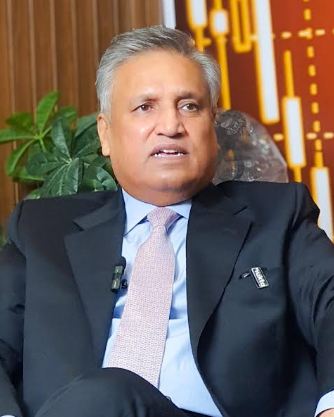
ISLAMABAD, SEPT 8 /DNA/ – President of the Islamabad Chamber of Commerce and Industry (ICCI), Nasir Mansoor Qureshi, has stressed the need for immediate and meaningful reforms to overcome deep-rooted economic challenges and unlock the true potential of Pakistan’s economy.

He said that infrastructural deficiencies, regulatory hurdles, and high energy costs continue to limit the manufacturing sector’s potential, thereby weakening Pakistan’s competitiveness both regionally and globally. He pointed out that the export basket remains undiversified and dominated by low-value goods, which is hampering efforts to achieve higher export growth and attract much-needed foreign investment.

The ICCI President emphasized that genuine structural reforms, including tariff discipline, are crucial, otherwise the circular debt crisis is bound to resurface. He added that weak infrastructure remains one of the most significant obstacles to sustainable economic growth.

Highlighting the importance of consensus-building, he said the most critical challenge is the lack of an inclusive political environment. He urged that all stakeholders, particularly the business community, must be on board in the reform process to ensure sustainability and long-term economic stability.

Nasir Qureshi reiterated that ICCI has always played its due role in promoting the country’s economic development through its effective advocacy and by submitting genuine policy recommendations aimed at national economic well-being.

He assured that ICCI will continue to work closely with policymakers to advocate for pro-business reforms, improve the investment climate, and enhance Pakistan’s presence in international markets.

Defence and martyrs day commemorated in Beijing

Defence and martyrs day commemorated in Beijing

BEIJING, SEPT 8 /DNA/ – Today, the Embassy of Pakistan in Beijing commemorated the Defence and Martyrs Day of Pakistan with a solemn and dignified flag hoisting ceremony. The event was attended by Embassy officials, members of the Pakistani community in China and media.

On this occasion, Ambassador of Pakistan to China H.E. Mr. Khalil Hashmi hoisted the national flag to the tune of national anthem.

In his remarks, Ambassador of Pakistan to China H.E. Mr. Khalil Hashmi paid rich tribute to the courageous sons of the soil who successfully foiled evil designs of the enemy and defended the motherland with ultimate courage and professionalism. The Ambassador underscored that bravery and commitment of the Armed Forces of Pakistan to safeguarding our homeland will never be forgotten. He lauded professionalism, discipline and bravery of the Armed Forces of Pakistan.

The Ambassador also reaffirmed Pakistan’s strong ties with China and its commitment for maintaining peace and regional stability.

Stay Connected

64FansLike
60FollowersFollow

Latest Reviews

Exchange Rates

USD - United States Dollar
EUR
1.17
GBP
1.35
AUD
0.72
CAD
0.73