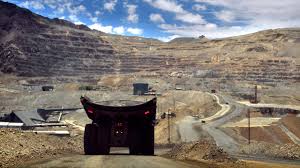
London, Sept 9 British mining group Anglo American and Canadian peer Teck Resources on Tuesday announced plans for a multi-billion-dollar merger, creating a champion of copper production and other critical minerals.
A combined group is worth more than US$50 billion according to the companies’ current market values, while the agreed deal is expected to complete in 12-18 months, subject to regulatory hurdles.
It will create Anglo Teck, headquartered in Vancouver and with a primary listing in London, according to a joint statement. It is the sector’s biggest tie-up for some years.
Copper demand has exploded in recent years as the world transitions to cleaner energy and artificial intelligence (AI).
The metal is needed for solar panels, wind turbines, electric-vehicle batteries and consumer electronics.
“This merger of two highly complementary portfolios will create a leading global critical minerals champion headquartered in Canada,” Teck chief executive Jonathan Price said in the statement.
Anglo American shareholders will own 62.4 percent of the new group and Teck shareholders the remainder.
Price added that the new company would be “a top five global copper producer with exceptional mining and processing assets located across Canada, the United States, Latin America, and Southern Africa”.
Miners Anglo American, Teck plan new copper giant
Tariff cuts set to reshape Pakistan’s auto industry: PIDE Report

ISLAMABAD, SEPT 9 /DNA/ -The Pakistan Institute of Development Economics (PIDE) has released its latest Policy Viewpoint titled “Impact of Tariff Reduction on Automobile Industry”, authored by Mr. Mohammad Shaaf Najib and Dr. Usman Qadir. The report provides a holistic assessment of the impact of the government’s five-year tariff reform plan on Pakistan’s automobile industry. The reform plan, announced in the Federal Budget 2025–26, seeks to move Pakistan’s economy from import substitution towards an export-led growth model. The reform will streamline the customs duty structure, reduce tariff slabs, and lower the average tariff rate from 19% to 9.5% by FY2030. Specifically, for the automobile sector, tariffs on Completely Built Units (CBUs) will fall from 20% to 15% over five years, while surcharges on used vehicles will be gradually removed by 2030.
According to PIDE’s analysis, these reforms will reshape the automobile industry in several ways. On the domestic front, increased competition from imports will push local manufacturers to enhance quality and efficiency. While smaller or weaker brands may struggle, established and globally integrated firms are expected to adapt and compete. Reduced tariffs on both CBUs and CKD imports will lower production costs, improve affordability, and potentially expand car ownership in Pakistan. While some jobs at OEMs may be at risk in the short run, new opportunities for businesses and employment are expected to emerge in import services, dealerships, after-sales, and parts markets. The net affect though will depend significantly on how the existing automobile firms react and adapt to the policy change.
At the macroeconomic level, increased imports could raise Pakistan’s import bill, creating pressure on foreign exchange reserves and the exchange rate unless export growth keeps pace. Considering this, PIDE recommends that the government must ensure availability of the required foreign exchange to finance the increased import bill. PIDE also stresses on the need to stick to the policy change and not roll back after initial challenges that may arise as that would prove much more detrimental for the automobile industry and consumers both. For consumers, however, the reforms promise significant benefits, including increased and improved choice and availability of the vehicles along with competitive pricing.
Further, PIDE also recommends a new import framework particularly for the import of used cars in the country instead of the current mechanism where imports are done under three different schemes. PIDE notes that the loopholes within these schemes are being used to import used vehicles in the country, and suggests a vehicle quality based mechanism for commercial import of vehicles in the country to uphold safety standards while ensuring fair competition and promoting consumer welfare.
It has also been stressed to facilitate the development of a robust after-sales networks and stronger incentives for electric vehicles to ensure a smooth transition to an environmentally friendly future. The view point concludes by noting that tariff rationalization is not just an industrial reform but also a vital step towards consumer protection, modernization of the auto sector, and Pakistan’s integration into global value chains.
August third-hottest globally on record, says climate monitor
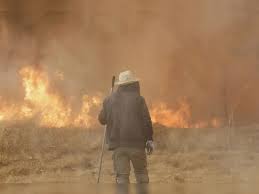
Paris, Sept 9 Devastating wildfires and blistering heatwaves during the world’s third-hottest August on record underscored the urgency of tackling climate change and preparing for its deadly consequences, the European global warming monitor said Tuesday.
Southwest Europe wilted through a third summer heatwave, fires tore through Spain and Portugal, while many parts of Asia experienced above-average temperatures during a scorching month that neared record highs.
The world’s oceans, which help regulate Earth’s climate by absorbing excess heat from the atmosphere, were also close to record high temperatures for the month. Hotter seas are linked to worsening weather extremes.
“With the world’s (oceans) also remaining unusually warm, these events underline not only the urgency of reducing emissions but also the critical need to adapt to more frequent and intense climate extremes,” said Samantha Burgess, strategic lead for climate at the EU’s Copernicus Climate Change Service.
Global temperatures have been stoked ever higher by humanity’s emissions of planet-heating gases, largely from fossil fuels burned on a massive scale since the industrial revolution.
Copernicus takes these measurements using billions of satellite and weather readings, both on land and at sea, and their data extends back to 1940.
The average temperature globally for August was 1.29 degrees Celsius above pre-industrial times, marginally cooler than the monthly record set in 2023 and tied with 2024.
Such incremental rises may appear small, but scientists warn that is already destabilising the climate and making storms, floods and other disasters fiercer and and more frequent.
In its monthly bulletin, Copernicus said that western Europe experienced the continent’s most pronounced above-average temperatures, with southwest France and the Iberian Peninsula particularly affected.
Spain suffered a 16-day heatwave that caused more than 1,100 deaths, according to the Carlos III Health Institute. Wildfires in Spain and Portugal forced thousands to evacuate.
Last week, scientists said human-caused climate change made the hot, dry and windy conditions that fanned the blazes 40 times more likely.
Outside Europe, temperatures were most above average across Siberia, parts of Antarctica, China, the Korean Peninsula, Japan and the Middle East.
Record-breaking ocean temperatures were measured in the North Atlantic to the west of France and the United Kingdom in August. Across the Mediterranean the picture was mixed and less extreme than 2024.
The UK, Japan and South Korea sweltered this year through the hottest summers since each country began keeping records, their respective weather agencies announced earlier this month.
Pentagon chief makes surprise visit to Puerto Rico
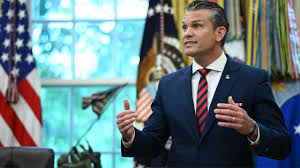
Washington, Sept 9 Pentagon chief Pete Hegseth made surprise visits to Puerto Rico and a US Navy ship Monday as the United States employs military assets in the Caribbean to target drug cartels.
Hegseth was accompanied by the top US military officer, General Dan Caine, and the two of them were welcomed by Jenniffer Gonzalez-Colon, the territory’s governor, who announced the visit in a post on X.
She also thanked President Donald Trump “and his Administration for recognizing the strategic value Puerto Rico has to the national security of the United States and the fight against drug cartels in our hemisphere, perpetuated by narco-dictator Nicolas Maduro.”
The United States alleges that leftist Venezuelan leader Maduro heads a cocaine trafficking cartel and recently doubled its bounty to $50 million in exchange for his capture to face drug charges.
A Pentagon official confirmed Hegseth had traveled to Puerto Rico, but provided no details.
Hegseth also visited the USS Iwo Jima — one of eight US Navy ships that are involved in counter-narcotics efforts in Latin America — on Monday, according to a post on X from a Pentagon account.
The post included a video of Hegseth addressing military personnel on the ship, telling them they were working to “end the poisoning of the American people” with drugs.
              - US-Venezuela tensions -


              Hegseth's visits to Puerto Rico and the Navy ship came around a week after the United States carried out a strike on an alleged drug-smuggling boat coming from Venezuela, an action that Trump said left 11 purported members of the Tren de Aragua gang dead.
              Tensions between Washington and Caracas have soared, as the Pentagon accused Venezuela of buzzing one of its ships in the Caribbean, while Maduro has denounced the buildup of US military assets in the region.
              In addition to the eight US warships in the region -- seven in the Caribbean and one in the Pacific -- Washington is also dispatching 10 high-tech F-35 jets to Puerto Rico.
              Trump vowed Friday to shoot down Venezuelan military jets if they pose a danger to US forces, while Maduro on Sunday announced the deployment of 25,000 troops to the country's borders to ensure "the defense of national sovereignty, the security of the country and the fight for peace."
              Drug-smuggling vessels are usually seized and their crews arrested once they are identified, making the US strike on the alleged traffickers an extremely rare event.
              Trump's administration designated Tren de Aragua as a terror organization earlier this year, and the use of deadly force against the group's alleged members without due process echoes US actions against purported militants during its years-long "War on Terror."
              US officials, including Hegseth, have said that strikes targeting drug cartels will continue.
Major social media sites back online in Nepal after deadly protests
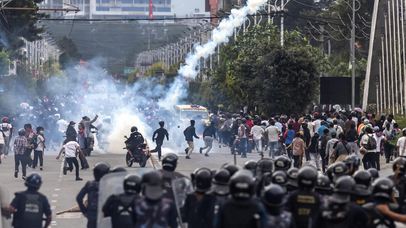
KATHMANDU: Nepal rolled back its social media ban on Tuesday, a day after at least 19 people were killed in protests demanding that the government lift its restrictions and tackle corruption.
All major social media apps were working, an AFP reporter in Kathmandu said, as the government ordered a probe into the violence that saw police launch a deadly crackdown on protesters.
Several social media sites — including Facebook, YouTube and X — were blocked on Friday in the Himalayan nation of 30 million people, after the government blocked 26 unregistered platforms.
The ban sparked widespread fury, especially among the younger generation who rely heavily on the apps for communication. Many took to the streets on Monday demanding it be repealed.
Amnesty International said live ammunition had been used against protesters, and the United Nations demanded a swift and transparent probe.
One eyewitness said she had “never seen such a disturbing situation” at the hospital where dozens of the 400 injured were treated.
“Tear gas entered the hospital area as well, making it difficult for doctors to work,” said Ranjana Nepal, information officer at the Civil Hospital, speaking during the protests.
– ‘Silencing an entire generation’ –
Prime Minister KP Sharma Oli, 73, in a letter issued overnight, after an emergency cabinet meeting where the interior minister resigned, said he was “deeply saddened” by the deaths.
“The government was not in favour of stopping the use of social media and will ensure an environment for its use”, Oli wrote in a letter, adding that an “investigation committee will be formed to investigate and analyse” the protests.
Nepal’s Minister for Communication Prithvi Subba Gurung was quoted by local media as saying that the government has withdrawn its ban.
The ban fed into anger at the government in a country where unemployment hovers around 10 percent and GDP per capita at just $1,447, according to the World Bank.
Crowds held protests on Monday in the capital and other cities.
Police in Kathmandu clashed with the crowds when protesters pushed through barbed wire and tried to storm into a restricted area near parliament.
Seventeen people were killed in Kathmandu, police said, and two more in the eastern district of Sunsari, according to local media.
Kathmandu police spokesman Shekhar Khanal said about 400 people were injured, including more than 100 police.
Since Friday, videos contrasting the struggles of ordinary Nepalis with the children of politicians flaunting luxury goods and expensive vacations have gone viral on TikTok, which was not blocked.
Popular platforms such as Instagram have millions of users in Nepal who rely on them for entertainment, news and business.
“This isn’t just about social media — it’s about trust, corruption, and a generation that refuses to stay silent,” the Kathmandu Post newspaper wrote.
“Gen Z grew up with smartphones, global trends, and promises of a federal, prosperous Nepal,” it added.
“For them, digital freedom is personal freedom. Cutting off access feels like silencing an entire generation.”
Nepal has restricted access to popular online platforms in the past.
The government blocked access to the Telegram messaging app in July, citing a rise in online fraud and money laundering.
It lifted a nine-month ban on TikTok in August last year after the platform agreed to comply with Nepali regulations.
Belarus’ Devid Nhuyen makes top 10 at Karate 1-Series A in Salzburg

MINSK, Sep 9 The Belarusian athlete Devid Nhuyen has made the top ten at the Karate 1-Series A tournament of the World Karate Federation, held in Salzburg, Austria, BelTA has learned.
Competing in the men’s -75 kg category, Devid Nhuyen started by defeating Denmark’s Christoffer Nielsen before losing to the eventual champion, Raiki Funato of Japan. In the repechage, he secured wins over opponents from France and Slovenia but was narrowly defeated 9:10 by Germany’s Roman Raiswich in the bronze medal match qualifier. This placed him seventh overall in a field of 95 competitors.
The tournament in Salzburg featured over 1,200 karatekas from 82 countries, with the Belarusian team represented by 11 athletes. Maryia Azarava (women’s -61kg category) had the best finish among the Belarusian women, reaching the round of 16.
At the previous Series A tournament held in Larnaca, Cyprus, in February, Belarusian Ivan Kudzinau won gold in the men’s 84+ kg category. The final stage of the 2025 Karate Series A will be held in the capital of Malaysia, Kuala Lumpur, in early October.
Calls grow to shift UN HQs to Geneva
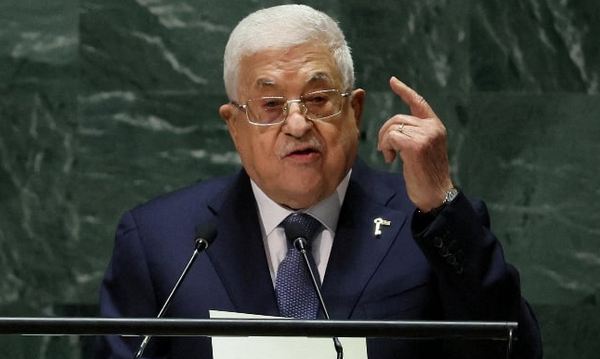
The United States’ refusal to grant visas to Palestinian President Mahmoud Abbas and around 80 members of his delegation has triggered a global debate over whether the United Nations (UN) can function effectively while its headquarters remain in New York. The move has sparked mounting calls for relocating future sessions of the UN General Assembly (UNGA) to a more neutral venue, such as Geneva, Switzerland, to ensure impartiality and accessibility for all member states.
The controversy erupted just weeks before the high-level annual debate at the UNGA, scheduled from September 23 to 27, with the session concluding on September 29. This year’s debates were expected to feature historic discussions and decisions regarding the recognition of Palestine as an independent state. A one-day special conference on the two-state solution, hosted by Saudi Arabia and France, was also planned for September 22 in New York. President Abbas had been due to attend, along with senior Palestinian officials, but the US decision has derailed those plans.
The Trump administration’s blanket refusal to grant visas marks a significant escalation in Washington’s opposition to Palestinian participation at the UN. Reports suggest the US denied visas to about 80 officials linked to the Palestinian Authority (PA).
Observers have noted parallels with 1988, when the US blocked late Palestine Liberation Organization (PLO) leader Yasser Arafat from travelling to New York. Then, the UNGA convened an emergency session in Geneva to ensure Arafat could deliver his address. However, this is the first time in UN history that such a comprehensive ban has been imposed on an entire delegation.
Analysts argue the decision is aimed at preventing Palestinian leaders from influencing what could be one of the most consequential UN gatherings since the Oslo Accords of the 1990s. The upcoming debates could see states such as Britain, France, Australia, and Canada move towards recognising Palestine.
Critics say Washington’s move contravenes the 1947 UN Headquarters Agreement, which obliges the host country to permit access to foreign diplomats attending UN sessions. While the agreement allows the US to deny entry for security or foreign policy reasons, applying it to exclude a whole delegation is seen as a violation of the UN’s founding principles of inclusivity and equality among nations.
“America is exploiting its role as host country to manipulate the UN process,” said one Middle East analyst. “This undermines the credibility of the UN as an independent institution and calls into question whether New York is the right location for its headquarters.”
The latest episode has reignited a long-standing debate over whether the UN should remain headquartered in New York. Advocates of relocation argue that the UN, as a body meant to represent all nations impartially, should not be subject to the policies or domestic politics of a single country.
Switzerland, long recognised for its neutrality and already home to numerous UN agencies in Geneva, is increasingly seen as the logical alternative. Moving the General Assembly, or even the entire headquarters, to Geneva would not only symbolise independence but also remove the risk of member states being denied participation due to bilateral disputes with Washington. The UN has to be out of the control of the United States if it is to function smoothly.
The refusal of visas has not only provoked outrage in the Arab and Muslim world but also unsettled many Western capitals. France, a co-sponsor of the two-state conference, expressed “deep concern” at the situation. Rights organisations, including Human Rights Watch, have urged the UN Secretary-General to take a firm stance to ensure equal treatment of member states.
Amnesty International issued a statement describing the US action as “a deliberate attempt to silence Palestinian representation at a critical juncture,” warning that it could set a dangerous precedent.
For Palestinians, the timing could not be more critical. The General Assembly session was seen as an opportunity to secure broader international recognition, potentially shifting the dynamics of the decades-long conflict with Israel. The US decision, critics argue, reflects Washington’s entrenched bias towards Israel and undermines global consensus-building efforts.
The 1988 Geneva session, convened after Arafat was barred, serves as an important precedent. Then, the international community swiftly adapted to uphold the principles of equal representation. Many diplomats are now urging the UN to consider a similar move, either by relocating this year’s debates or by making a long-term shift of the headquarters.
“History is repeating itself, but this time the stakes are even higher,” said a former UN official. “The refusal of visas to an entire delegation challenges the very legitimacy of the United Nations as a platform for diplomacy.”
UN Secretary-General António Guterres faces a difficult balancing act. While the UN is bound by its headquarters agreement with the US, it also has a responsibility to ensure inclusivity. Some member states have already suggested an emergency resolution demanding that the venue for the 2024 General Assembly be moved to Geneva if the US does not reverse its decision.
Behind closed doors, diplomats acknowledge that relocating the UN headquarters would be an enormous logistical and political undertaking. However, a compromise—such as holding critical debates in Geneva while keeping the administrative base in New York—could emerge as a practical solution.
For many analysts, the crisis reflects deeper questions about the UN’s credibility. If one of its founding members can prevent another recognised observer state from participating, critics argue, the institution risks becoming irrelevant.
As the session approaches, pressure is mounting on both Washington and the UN leadership. The fate of Palestine’s participation—and perhaps the UN’s global standing—hangs in the balance.
Nepali Prime Minister KP Sharma Oli Resigns After Deadly Protests Over Social Media Ban

Agencies
KATHMANDU: Nepal plunged deeper into political turmoil on Tuesday as Prime Minister KP Sharma Oli resigned following nationwide protests that left at least 25 people dead and hundreds injured. The resignation came just hours after the government rolled back its controversial ban on major social media platforms, which had triggered unprecedented demonstrations.
Oli, 73, stepped down late Tuesday evening after an emergency cabinet meeting, during which Interior Minister Ramesh Lekhak had already tendered his resignation. In a statement, Oli said he was “deeply saddened” by the deaths and acknowledged that the government had mishandled the crisis.
The protests erupted after the government blocked Facebook, YouTube, Instagram and X on Friday, claiming the platforms were operating without proper registration. The move outraged the public—particularly Nepal’s younger generation—who rely heavily on social media for communication, business and activism.
On Monday, thousands poured onto the streets of Kathmandu and other cities, chanting slogans against corruption and government censorship. Clashes broke out when protesters attempted to breach barricades near parliament. Police opened fire, with rights groups accusing security forces of using live ammunition. Amnesty International condemned the crackdown, while the United Nations called for a swift and transparent investigation.
According to police, 17 protesters were killed in the capital alone, and two more in Sunsari district. Nearly 400 people were injured, including more than 100 policemen. Witnesses described scenes of chaos, with hospitals overwhelmed and tear gas even seeping into emergency wards.
The social media blackout had intensified anger over longstanding grievances, including unemployment, corruption, and inequality. Viral TikTok videos contrasting the lavish lifestyles of politicians’ children with the hardships of ordinary citizens further fueled resentment.
“The ban was the final spark,” said one protester in Kathmandu. “This isn’t only about Facebook or Instagram. It’s about a corrupt system that refuses to listen.”
By Tuesday morning, the Ministry of Communication confirmed that the ban had been lifted. But Oli’s resignation later in the day signaled the depth of the political crisis in the Himalayan nation of 30 million.
The Kathmandu Post wrote in an editorial: “For Gen Z, digital freedom is personal freedom. Silencing social media meant silencing an entire generation—and they refused to accept it.”
Nepal has seen repeated restrictions on online platforms in recent years, including a nine-month ban on TikTok lifted only last year. Analysts say the latest unrest could push the country toward new elections or another coalition reshuffle.
For now, the streets of Kathmandu remain tense, with protesters vowing to continue their demonstrations until accountability is ensured for the deaths.
Serena Hotels extends flood relief support to Baltistan division
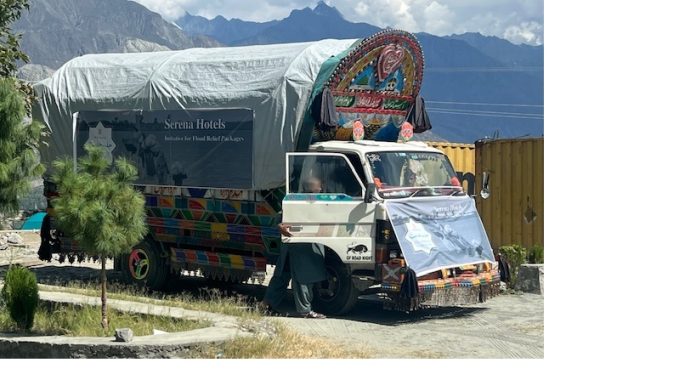
Serena Hotels continues to collaborate with local authorities and stakeholders to ensure aid reaches the most affected areas promptly and efficiently
ISLAMABAD: Continuing its unwavering commitment to community service and disaster relief at first phase, Serena Hotels has dispatched two truckloads of essential food supplies under its Jazba-e-Khidmat initiative to support flood-affected areas of Baltistan Region, this relief effort will directly assist 175 households across three districts:
- 72 households in Skardu District
- 44 households in Shigar District
- 59 households in Ghanche District
Each family will receive food rations bag and basic hygiene kit to help them recover from the hardships caused by recent flooding. This initiative is part of Serena Hotels’ broader Corporate Social Responsibility (CSR) efforts, focused on uplifting vulnerable communities in times of need.
“Jazba-e-Khidmat is more than a relief program, it reflects our deep-rooted values of compassion and service,” said a spokesperson for Serena Hotels. “We are committed to standing with our communities during challenging times and doing our part to rebuild lives with dignity and hope mention in the press release by General Manager North.”
Serena Hotels continues to collaborate with local authorities and stakeholders to ensure aid reaches the most affected areas promptly and efficiently.
Serena Hotels is renowned not only for its excellence in hospitality but also for its dedication to community development and sustainability. Through various CSR initiatives, Serena strives to create a lasting positive impact in the regions where it operates.
France plunged into political turmoil
DNA
PARIS: France has been thrown into fresh political turmoil after Prime Minister François Bayrou was ousted in a dramatic vote of confidence on Monday, triggered by fierce opposition to his proposed budget reforms.
Bayrou, who had called the surprise vote himself, described the moment as a “test of truth” and appealed to lawmakers to rally behind his debt-cutting measures. However, the outcome was never in doubt, with a broad coalition of opposition parties uniting against him.
The defeat marks a major setback for President Emmanuel Macron, who must now move swiftly to appoint a new prime minister. The Élysée Palace said Macron will name Bayrou’s successor “within days,” with speculation mounting over possible candidates. Economy Minister Bruno Le Maire, Interior Minister Gérald Darmanin, and former Prime Minister Élisabeth Borne are among the names circulating in Paris political circles.
France’s towering debt burden, which Bayrou had sought to confront with spending cuts and tax adjustments, remains unresolved. Critics argue that his proposals unfairly targeted public services, while supporters insist drastic measures are unavoidable to stabilize the country’s finances.
Analysts say Bayrou’s fall underlines the fragility of Macron’s government, which lacks an outright majority in the National Assembly and faces an emboldened opposition from both the left and far right.
“Removing Bayrou does not remove the problem,” commented one senior EU diplomat. “France’s fiscal crisis is still looming, and whoever takes over will face the same difficult choices.”
The political crisis comes at a sensitive time for France, with Paris under pressure from Brussels to meet EU deficit rules and maintain stability ahead of next year’s European elections.
For now, Bayrou’s departure leaves Macron scrambling to restore authority, as France once again finds itself wrestling with political instability and economic uncertainty.