Home Blog Page 498

Ambassador-designate to Kyrgyz Republic calls on the President Zardari

Ambassador-designate to Kyrgyz Republic calls on the President Zardari

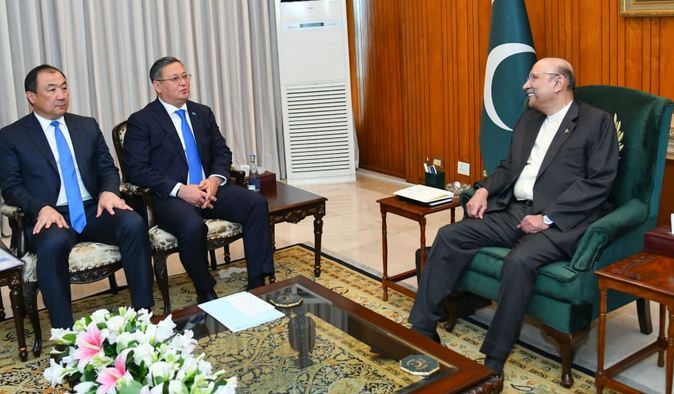
ISLAMABAD, SEPT 9: /DNA/ – Altamash Wazir Khan, Ambassador-designate of Pakistan to the Kyrgyz Republic, called on President Asif Ali Zardari, at Aiwan-e-Sadr today.

The President congratulated Mr. Altamash Wazir Khan on his new assignment and wished him success in further strengthening Pakistan’s fraternal ties with Kyrgyzstan. He said that Pakistan values its close relations with the Kyrgyz Republic, rooted in shared faith, history, and culture.

The President underscored the importance of enhancing cooperation in trade, energy, connectivity, and education, and expressed confidence that the new Ambassador would make dedicated efforts to further deepen the bilateral partnership.

Monal, Rizq Foundation serve meals in flood zones

Monal, Rizq Foundation serve meals in flood zones

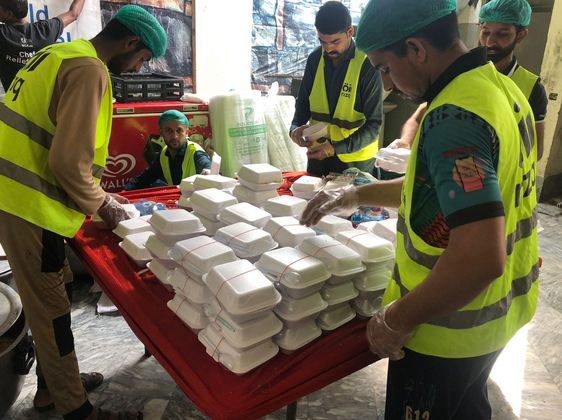
ISLAMABAD, SEPT 9: /DNA/ – In a swift response to the devastating recent floods, the Monal Foundation has announced a critical collaboration with the Rizq Foundation to provide immediate food relief to displaced and affected communities across Punjab.

The joint initiative, “Donate a Meal,” has established operational mobile kitchens in severely impacted areas, including Head Mohammad Wala (Khanewal), Hafizabad, Sialkot, Gujranwala, and Jalalpur. These kitchens are working tirelessly to prepare and distribute nutritious meals daily to thousands of individuals and families who have lost their homes and livelihoods.

“The scale of this disaster requires a unified response,” said a spokesperson for the Monal Foundation. “Our partnership with Rizq Foundation, with their proven on-ground expertise, allows us to efficiently channel resources directly to those in desperate need. A single meal can provide not just sustenance, but also hope.”

The public is urgently appealed to support this life-saving mission. A contribution of just Rs. 100 can provide one meal to a person in need.

Donation Details:

  • Account Title: Monal Foundation
  • Account Number: 07020010032981570018
  • IBAN: PK55ABPA0010032981570018
  • Bank: Allied Bank Limited, Blue Area Branch, Islamabad

All donations will be used exclusively for the procurement, preparation, and distribution of meals through the established mobile kitchen network.

𝑺𝒆𝒏𝒂𝒕𝒆 π‘ͺπ’π’Žπ’Žπ’Šπ’•π’•π’†π’† π‘Ήπ’†π’—π’Šπ’†π’˜π’” π‘«π’“π’–π’ˆ π‘·π’“π’Šπ’„π’†π’”

𝑺𝒆𝒏𝒂𝒕𝒆 π‘ͺπ’π’Žπ’Žπ’Šπ’•π’•π’†π’† π‘Ήπ’†π’—π’Šπ’†π’˜π’” π‘«π’“π’–π’ˆ π‘·π’“π’Šπ’„π’†π’”

By Malik Faisal Munir / DNA

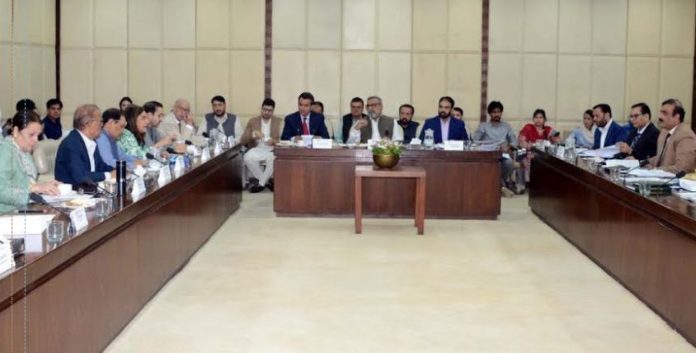
ISLAMABAD: The Senate Standing Committee on National Health Services, Regulations and Coordination met under the chairmanship of Senator Amir Waliuddin Chishti.

The meeting was attended by Senator Syed Masroor Ahsan, Senator Irfan-ul-Haque Siddiqui, Senator Fawzia Arshad, Senator Rubina Khalid, Senator Dilawar Khan, Senator Sarmad Ali, Senator Dr. Zarqa Suharwardy Taimur, Senator Danesh Kumar, Senator Mirza Muhammad Afridi, Federal Minister for National Health Services, Regulations and Coordination, Syed Mustafa Kamal and other officials from the ministry.

The Senate Standing Committee on National Health Services, Regulations and Coordination, in its meeting, discussed the Drug Regulatory Authority of Pakistan (Amendment) Bill, 2025, introduced by Senator Dr. Zarqa Suharwardy Taimur.

Senator Dr. Zarqa highlighted that medicine prices are continuously rising, making them unaffordable for the common people, particularly in the aftermath of the devastating floods. She emphasized the urgent need for measures to ensure access to affordable medicines.

The Officials from the Ministry informed the Committee that certain medicines are imported, which contributes to their high cost. The Committee was further apprised of the alarming prevalence of counterfeit medicines being sold in the market at high prices. The Chairman Committee directed the Ministry to submit a detailed report on medicine pricing in the next meeting.

The Minister for National Health Services, Regulations and Coordination, informed the Committee that an online portal has been launched to streamline regulatory procedures regarding import of Medical devices. He stated that following its launch, applicants no longer need to visit the DRAP office, and 180 cases have already been processed through the portal.

The committee took up a Point of Public Importance raised by Senator Danesh Kumar. Senator Danesh Kumar raised concerns that nowadays every pregnancy is going through C-section and its not fair with women and Doctors are prescribing lot of medicines to patients because by this they get commission in form of trips and other benefits. Senator Irfan-ul-Haque Siddiqui appreciated Senator Danesh Kumar and said he had raised a very serious issue and said take details of the dr that how many C-section they had done in their services. The Chairman Committee recommended that submit the data of the federal and all provinces of all the hospitals that how many C-section they had done. On the request of Honorable senators, chairman committee approved to make a Sub committee to probe into the matter further.

Senator Danesh Kumar highlighted the alarming trend of an increasing number of pregnancies being delivered through C-sections, terming it unfair to women. He also pointed out that many doctors were prescribing excessive medicines to patients to secure commissions in the form of benefits, including trips and incentives.

Senator Irfan-ul-Haque Siddiqui endorsed the concern and termed it a very serious issue. He recommended that details be obtained from doctors regarding the number of C-sections performed during their service. The Chairman Committee directed the Ministry to collect and submit comprehensive data from federal and provincial hospitals on the number of C-sections performed, for review in the next meeting.

The Committee considered the concern raised by Senator Mirza Muhammad Afridi regarding the schedule of the MDCAT examination. Senator Mirza Muhammad Afridi emphasized that due to the devastating floods in several parts of the country, it would be extremely difficult for students from affected and underprivileged areas to appear in the test. He urged that the examination be delayed to provide equal opportunity for all candidates, particularly those belonging to poor and flood-hit families.

The Minister for National Health Services, Regulations and Coordination informed the Committee that a meeting with the test-conducting body is scheduled for tomorrow to review the matter. He assured that all aspects will be taken into account and the Committee will be apprised of the final decision accordingly.

Senator Fawzia Arshad expressed concern over the rising number of dengue cases in Islamabad Capital Territory (ICT) and stressed the need for immediate preventive measures, by spraying, to control the spread of the disease. Senator Rubina emphasized that after the recent floods, people in Qambar and Bangladesh areas are facing severe health challenges. She urged that special measures be taken to address the medical needs of flood-affected communities.

Senator Fawzia Arshad informed the Committee that she had raised two queries with PMDC, but no response had been received so far. She further questioned the closure of the PMDC portal, stating that the system had provided significant convenience to students. She urged that the portal be reopened to facilitate students and ensure transparency in procedures.

In the End, Senator Masoor Ahsan & Senator Fawzia Arshad asked for followup on the previous recommendations from the earlier meeting.

President Condoles the Martyrdom of Major Adnan Aslam

President Condoles the Martyrdom of Major Adnan Aslam

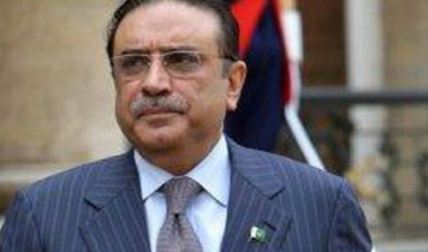
ISLAMABAD, SEPT 9: /DNA/ – President Asif Ali Zardari has expressed deep grief and sorrow over the martyrdom of Major Adnan Aslam, who embraced shahadat after succumbing to injuries sustained during a terrorist attack in Bannu a few days ago, while fighting against the Indian-backed Fitna al-Khawarij.

The President lauded Major Adnan’s bravery and devotion, noting that he fulfilled his duty with exemplary courage and embraced martyrdom in the service of the nation. He said that Pakistan will always remember and honour such heroes whose sacrifices strengthen the country’s resolve against terrorism.

President Zardari strongly condemned the cowardly acts of terrorism, reaffirming that the sacrifices of the martyrs will not go in vain and the fight against terrorism will continue until its complete eradication. He prayed for the departed soul and for strength to the bereaved family to bear this irreparable loss.

Pakistan, Kazakhstan agree to deepen ties in key sectors

Dar highlights opportunities for enhanced Pakistan–Kazakhstan cooperation

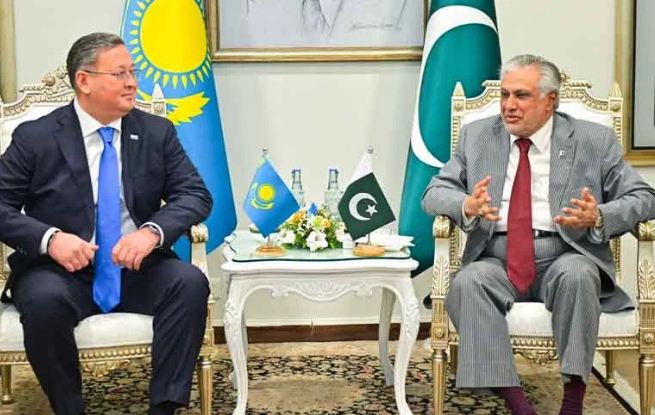
ISLAMABAD, SEPT 9: /DNA/ – Delegation-level talks between Pakistan and Kazakhstan were co-chaired by H.E. Senator Mohammad Ishaq Dar, Deputy Prime Minister and Foreign Minister of Pakistan, and H.E. Mr. Murat Nurtleu, Deputy Prime Minister and Foreign Minister of Kazakhstan. The Kazakh DPM/FM was accompanied by Kazakhstan’s Ministers of Transport and Trade, Vice Ministers for IT and Agriculture, and other important officials.

Before the delegation-level talks, meetings of the visiting Kazakh delegation were held with Pakistan’s Ministers of Communications, Railways, and Commerce. Moreover, the meetings of Joint Working Groups (JWGs) on IT and Agriculture were also held. The Kazakh delegation also visited the National Aerospace Science & Technology Park (NASTP) to explore cooperation in the IT sector. Moreover, the Kazakh DPM also held a business meeting with Pakistani conglomerates.

During the delegation-level talks, the two sides reviewed the entire spectrum of bilateral relations. Discussions focused on enhancing trade and investment flows, expanding agricultural cooperation, advancing collaboration in information technology, education, culture, and tourism, and strengthening regional connectivity through logistics and transport links. They also exchanged views on enhancing coordination at multilateral fora.

The talks also firmed up preparations for the forthcoming visit of the President of Kazakhstan to Pakistan in November 2025. The last visit by the Kazakh President to Pakistan was in 2003.

Following delegation-level talks, the two leaders also signed the Action Plan of Cooperation between the Ministry of Foreign Affairs of Pakistan and the Ministry of Foreign Affairs of Kazakhstan. The Action Plan provides a structured roadmap for intensified engagement in diverse fields including politics, trade and economy, defence and security, science and technology, culture, tourism, humanitarian assistance, and consular facilitation. It institutionalises regular consultations between the Foreign Ministries and underscores the resolve of both sides to further deepen ties through sustained interaction at bilateral and multilateral fora.

The adoption of the Action Plan is a significant milestone that reflects the robust political will of the leadership of Pakistan and Kazakhstan to elevate bilateral relations to a new level of dynamism, anchored in mutual trust, shared values, and a forward-looking vision for regional peace and prosperity.

The two DPMs also directed their respective teams to expeditiously finalise the agreements and MoUs expected to be signed during the forthcoming visit of the Kazakh President to Pakistan.

Dar highlights opportunities for enhanced Pakistan–Kazakhstan cooperation

Dar highlights opportunities for enhanced Pakistan–Kazakhstan cooperation

ISLAMABAD, SEPT 9: DEPUTY Prime Minister Ishaq Dar said on Tuesday that vast opportunities exist for expanding cooperation between Pakistan and Kazakhstan.

According to details, he held a focused-level meeting with his Kazakh counterpart. Dar welcomed the visit of the Kazakh delegation to Pakistan, and said that Pakistan holds an important role in promoting peace, stability and development in the region.

He added that Pakistan is keen to strengthen relations with Central Asian republics, and expressed anticipation regarding the upcoming visit of the President of Kazakhstan to Pakistan in November.

The Kazakh deputy prime minister has expressed gratitude for Pakistan’s hospitality. He said: “Kazakhstan seeks to further strengthen its relations, partnership and friendship with Pakistan.”

PM, Military Chiefs Attend Shaheed Major Adnan’s Funeral

PM, Military Chiefs Attend Shaheed Major Adnan's Funeral

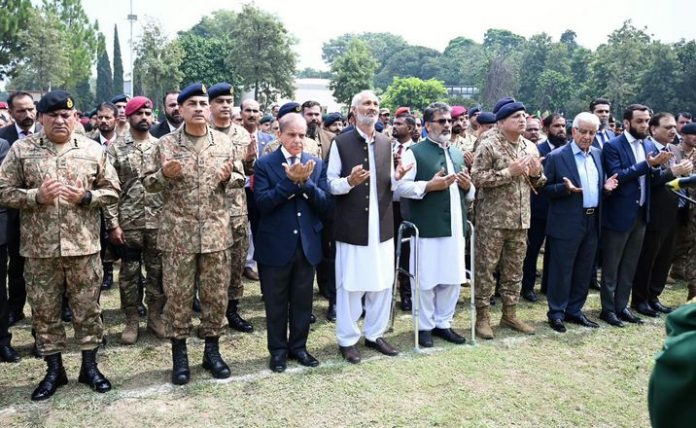
RAWALPINDI, SEPT 9 /DNA/ – Funeral prayers of Major Adnan Aslam Shaheed (age: 31 years, resident of Rawalpindi) who embraced martyrdom while undergoing treatment at Combined Military Hospital were held at Chaklala, Rawalpindi. The officer gallantly fought the Indian proxy Fitna al Khawarij during their cowardly attack in Bannu on 2 September 2025.

The Honourable Prime Minister of Pakistan Muhammad Shahbaz Sharif, Defence Minister, Information Minister, Field Marshal Syed Asim Munir NI (M), HJ, (COAS), serving Military and Civil Officers and relatives of Shaheed attended the funeral.

Major Adnan Aslam embraced shahadat with unflinching bravery, leading his men from the front. Prime Minister honoring the bravery of the officer said that today, we have lost a valiant son of the soil whose courage and sacrifice will forever remain etched in the nation’s heart. He represents the best of Pakistan: unwavering resolve, love for the homeland, and an unbreakable spirit of sacrifice.

Major Adnan’s martyrdom is a testimony that Armed Forces of Pakistan remain resolute in our mission to root out terrorism in all its forms.

Officer will be laid to rest in his hometown with full military honours

Rana Sanaullah secures Punjab Senate seat with 250 votes

Rana Sanaullah secures Punjab Senate seat with 250 votes

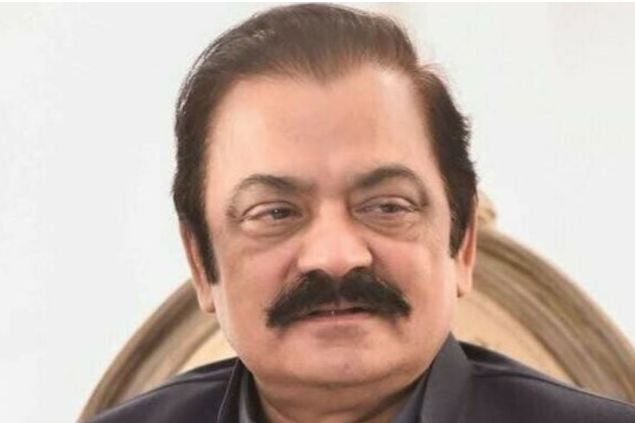
LAHORE: Senior Pakistan Muslim League-Nawaz (PML-N) leader Rana Sanaullah has been elected senator with 250 votes in the Punjab Assembly, according to unofficial results of Tuesday’s by-election.

The by-election was held to fill the Senate seat vacated after the disqualification of PTI leader Ejaz Chaudhry. He was convicted in cases related to damaging government property, military installations, and martyrs’ memorials during the May 9, 2023 protests.

In July 2025, the Election Commission terminated his membership after a 10-year prison sentence.

Government-backed alliance and support

Rana Sanaullah was fielded as the joint candidate of the ruling alliance, which includes PML-N, Pakistan Peoples Party (PPP), Istehkam-e-Pakistan (IPP) and PML-Q. He had the backing of 263 membersβ€”well above the 180 votes required to secure the seat.

Breakdown of support:

PML-N: 229 votes

PPP: 16 votes

IPP: 7 votes

PML-Q: 11 votes

Opposition’s candidate and boycott

The opposition nominated Salma Ejaz, wife of the disqualified PTI senator, for the seat. She had the support of 100 votes, including 73 from the Sunni Ittehad Council, 24 from PTI, and one each from Tehreek-e-Labbaik, Muslim League Zia, and Majlis-e-Wahdat-e-Muslimeen.

However, the opposition later announced a boycott of the process. Despite this, her nomination papers remained valid since the withdrawal period had expired. Deputy Opposition Leader Moin Qureshi warned PTI members not to vote, stating that participation would violate party policy.

Voting process in Punjab Assembly

Polling began at 9:00 am and continued until 4:00 pm at the new Punjab Assembly building under the supervision of the Election Commission.

Out of 363 active members, 251 votes were cast, while one was rejected. Six PTI members remain disqualified and two others are yet to take oath.

Tehran-Islamabad Direct Flights to Boost Tourism and Trade: ICCI leadership

Tehran-Islamabad Direct Flights to Boost Tourism and Trade: ICCI leadership

Islamabad: /DNA/ – The leadership of the Islamabad Chamber of Commerce and Industry (ICCI) has welcomed the establishment of direct flights between Tehran and Islamabad, appreciating it as a significant step towards strengthening bilateral relations.

In a statement issued here on Tuesday, ICCI leadership said that the commencement of this flight will play a vital role in promoting tourism, facilitating people-to-people exchanges, and enhancing business interactions between Pakistan and Iran.

It is noteworthy that the Iranian Ambassador to Pakistan, Reza Amiri Moghadam, on Tuesday announced the launch of a direct flight between Tehran and Islamabad, marking a new milestone in bilateral cooperation in the field of air transportation.

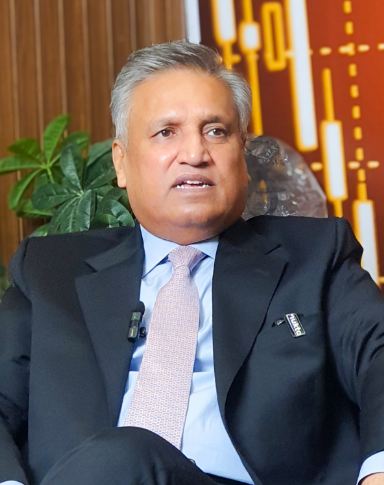
Nasir Mansoor Qureshi, President ICCI, warmly congratulated the peoples of Iran and Pakistan, as well as the tourism community, business circles, and the private sector of both nations, on this historic development.

Abdul Rehman Siddiqui, Senior Vice President ICCI, said that with the inauguration of this direct flight, tourism between the two countries will flourish more than ever before, particularly through increased visits of Iranian citizens to Pakistan’s beautiful landscapes and cultural attractions, while also strengthening bonds with the hospitable people of Pakistan.

Nasir Mehmood Chaudhry, Vice President ICCI, remarked that Pakistan and Iran enjoy close brotherly ties and that the direct flight will further cement connectivity and deepen trade and economic relations between the two countries.

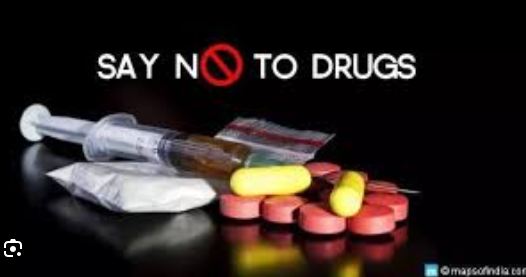
How to tackle drug addiction menace

Saifullah Ansar

Drug addiction rarely begins in a single way; rather, it emerges from multiple entry points that gradually pull individuals into dependency. One of the most common starting points is peer pressure, where friends or social groups introduce drugs during social gatherings, often under the pretense of enjoyment or bonding.

This exposure is particularly dangerous for young people, who are more susceptible to experimenting under the influence of their peers. Curiosity is another strong factor, as many individuals, especially teenagers and young adults, are tempted to β€œtry just once” in order to experience something new or thrilling, without fully understanding the long-term consequences.

At the same time, drugs often become a means of coping with stress, depression, and unresolved emotional or family issues. In societies struggling with economic hardship, unemployment, and lack of social support, drugs can appear as an easy escape from daily struggles, providing temporary relief from pain and anxiety.

A family background where substance use is present also significantly increases the risk, as children exposed to such environments may grow up considering drugs a normal or acceptable part of life.

Furthermore, the media plays a powerful role in shaping perceptions, with movies, music videos, and social media often glamorizing drug use, presenting it as a symbol of confidence, rebellion, or even success. Such portrayals can make drugs appear attractive, especially to vulnerable and impressionable minds.

Initially, the effects of drugs may seem pleasurable. Users often report feelings of euphoria, relaxation, confidence, increased energy, and even heightened creativity.

These short-term sensations give a false impression of control and satisfaction, which traps individuals into repeated use. However, the reality quickly shifts as the negative consequences begin to outweigh the temporary highs. Common side effects include drowsiness, confusion, paranoia, anxiety, hallucinations, aggression, mood swings, and loss of rational judgment. With prolonged use, the body develops tolerance, forcing users to consume higher doses to achieve the same effect, eventually leading to full-blown addiction.

Globally, the most commonly abused substances include cannabis, cocaine, heroin, methamphetamines, and prescription drugs such as opioids, sedatives, and stimulants. In Pakistan, heroin, crystal meth (commonly known as ice), hashish, opium, and the misuse of prescription medicines like painkillers and sleeping pills are particularly widespread.

Easy availability, weak enforcement of drug laws, and cross-border trafficking make these substances accessible even to young people and students.

The disadvantages of drug use are devastating, both physically and socially. On the health front, drug addiction can cause irreversible damage to vital organs, including lung failure, liver cirrhosis, kidney malfunction, and heart disease. Brain damage is another severe consequence, as prolonged drug use alters brain chemistry, impairing memory, concentration, and decision-making abilities. Injecting drugs with shared needles exposes users to life-threatening infections such as HIV/AIDS and hepatitis B and C, further straining healthcare systems. Mental health also deteriorates drastically, with many addicts suffering from anxiety, chronic depression, schizophrenia, suicidal thoughts, and violent behavior.

On a social level, drug addiction is one of the leading causes of broken families, domestic violence, unemployment, crime, and social isolation. Addicts often lose the trust of their loved ones, face difficulties in maintaining relationships, and eventually disconnect from society. Legal repercussions add another layer of hardship, as arrests, imprisonment, and criminal records restrict future opportunities and lock addicts in a cycle of poverty and despair.

Preventing drug addiction requires a multi-dimensional approach involving families, educational institutions, communities, and governments. Awareness campaigns in schools, colleges, and workplaces are essential to educate young people about the dangers of drugs and equip them with the confidence to resist peer pressure. Parents must maintain open communication with their children, provide emotional support, and encourage healthy activities such as sports, arts, and community engagement.

Strict regulation and monitoring of prescription drugs are also necessary to prevent their misuse. Overcoming addiction is not easy, but it is possible with professional help. Rehabilitation centers play a crucial role in detoxification, therapy, and medical treatment, while counseling, support groups such as Narcotics Anonymous (NA), and skill-development programs help recovering addicts rebuild their lives. Family and community support remain vital throughout the recovery process, as acceptance and encouragement strengthen the will to stay drug-free.

According to estimates by the United Nations Office on Drugs and Crime (UNODC) and the World Health Organization (WHO), nearly 300 million people worldwide are using drugs annually in 2025, with around 40 million suffering from severe drug-use disorders that require treatment. In Pakistan alone, 7–9 million people are estimated to be drug users, with the youth between 15 and 35 years being the most vulnerable group. This alarming situation calls for urgent government action.

Authorities must strengthen border controls to curb smuggling, dismantle drug mafias, and implement strict punishments for traffickers. At the same time, expanding rehabilitation facilities, improving access to mental health services, creating job opportunities for youth, and using digital monitoring to track drug-related crimes are crucial steps.

Community policing, neighborhood watch programs, and collaboration with religious and social organizations can also help in raising awareness and discouraging drug culture. Ultimately, fighting drug addiction is not the responsibility of one sector alone; it requires a collective effort from governments, families, schools, media, and society at large.

Only through unity, education, and compassion can future generations be protected from the destructive grip of drugs.

The writer is a staff member

Stay Connected

64FansLike
60FollowersFollow

Latest Reviews

Exchange Rates

USD - United States Dollar
EUR
1.17
GBP
1.35
AUD
0.72
CAD
0.73