Home Blog Page 496

How Trump’s Green Card Cuts Empower China

Qamar Bashir

By Qamar Bashir

There is a profound shift unfolding in U.S. immigration policy under the Trump administration—a radical transformation in how the nation admits new entrants. No longer is America’s visa and green-card system governed by long-standing principles of family reunification, open opportunity, or merit-driven inclusion. Instead, it is taking shape as a transactional marketplace, where entry, settlement, and ownership depend on purchasing power rather than potential—a system more “gold card for a price” than promise.

Immigration has long powered U.S. growth. Foreign-born individuals are markedly more likely to start businesses, and immigrants and their children founded almost half of Fortune 500 companies, driving value in technology, health care, and advanced manufacturing. Their presence in STEM is outsized: foreign-born workers now account for roughly one-fifth of the entire U.S. STEM workforce and 43% of doctorate-level scientists and engineers, a staggering share of the nation’s innovation engine.

The economic consequences are immediate and measurable in higher education alone: international students contributed an estimated $43.8 billion to the U.S. economy in the 2023–24 academic year and supported ~378,000 jobs nationwide, with modeling showing that a sharp drop in new enrollments could erase nearly $7 billion in revenue and more than 60,000 jobs in a single academic cycle.

Abroad, China’s evolution reveals a striking contrast. Inspired by the very American playbook that once defined U.S. leadership, Beijing has spent a decade building aggressive talent-magnet programs and is now doubling down. After high-profile recruitment schemes such as the Thousand Talents Program, China is rolling out a streamlined K-visa in 2025 to fast-track young STEM graduates and researchers without employer sponsorship, directly channeling global talent into labs and startups at scale.

This shift is not theoretical. U.S. analysts warn that curbs on visas and campus access risk ceding academic leadership to China just as its universities climb global rankings, with Tsinghua University breaking into the global top tier; and when U.S. policy sowed confusion, institutions in places like Hong Kong moved quickly to recruit displaced international students. The net effect is a global talent market realigning around openness and clarity, not uncertainty and transactions.

Inside the United States, mixed signals amplify the damage. One day, senior voices float ending family-based green cards; the next, they tease a purchasable “gold card.” Unclear timelines leave families wondering whether changes would apply retroactively, jeopardizing lawful lives and ongoing research, or only prospectively. That uncertainty alone pushes many students and skilled workers to choose Canada, Europe, or Asia, where pathways and timelines are predictable. The cost of the confusion is borne in stalled labs, deferred startups, and missed hiring cycles—losses that never show up as a neat line item but compound over years.

On the student side, leading design and arts schools such as Parsons report students from 100+ countries, mirroring a broader campus reality where international talent is central to teaching studios, orchestras, labs, galleries, and fashion houses. Crucially, the arts and cultural sector contributed $1.17–$1.2 trillion (≈4.2% of U.S. GDP) in 2023 and grew about twice as fast as the overall economy—a reminder that America’s creative edge is not ornamental but economically foundational. These ecosystems rely on a steady flow of foreign trainers, educators, creative directors, curators, and managers who cross-pollinate styles and technologies across fashion, film, museums, design services, and higher-education arts programs.

The connection between immigration and frontier innovation is equally visible at the highest echelons of science. Immigrants have won about 40% of the Nobel Prizes awarded to Americans in physics, chemistry, and medicine since 2000, and immigrants comprised 31% of U.S. Nobel laureates in economics through 2024, underscoring a century-long pattern of outsized scientific impact.

Zooming into sectoral contributions, the picture sharpens further. In technology and advanced computing, immigrant and H-1B talent anchor core research teams and patent generation; foreign-born workers constitute around one-fifth of the overall STEM workforce and nearly half of doctorate-level scientists and engineers, boosting productivity and startup formation in AI, semiconductors, and software. In health care, international physicians and nurses—often trained at U.S. universities on student visas before progressing to H-1B or permanent residency—staff hospitals and clinics in underserved regions, directly affecting health outcomes and workforce availability. In higher education and research, international students keep graduate programs viable, which in turn sustain federal research grants and the commercialization pipelines around them. In biotech and pharmaceuticals, immigrant scientists are overrepresented among venture-backed founders and patent holders, accelerating drug discovery and gene-editing platforms.

And in the creative economy—fashion, design, performing arts, museums, gaming, and media—the $1.2 trillion arts-and-culture sector interacts with tourism, retail, and tech, yielding spillovers in exports and city revitalization. Each of these five arenas is materially dependent on immigration-enabled talent flows that the current transactional turn places at risk.

This is why the administration’s broader transaction-first posture has proved so alienating to allies and so costly at home. The fashion and design industry—one of America’s soft-power amplifiers—has already warned the White House that tariff volatility and inward-looking rules are squeezing a $500 billion ecosystem and 10 million U.S. jobs across design, manufacturing, logistics, and retail, even as the sector pays a disproportionate share of import duties.

Meanwhile, competitors are not waiting. China is expanding scholarships, launching fast visas, and wiring capital into labs and studios to entice the very cohort America is deterring. European and Canadian universities, facing their own demographic cliffs, are scaling recruitment precisely where U.S. policy sends mixed messages. U.S. campuses and the towns that rely on them understand the stakes: the impending undergraduate “demographic cliff” and softer foreign-student demand could shrink enrollments by millions over the decade without robust international inflows, with adverse spillovers for local economies.

The danger is practical and ideological. Short-term revenues from visa sales and higher tariffs may look attractive on a monthly ledger, but the hidden costs—lost labs, offshored startups, and a thinner creative class—compound over years. The nation that once invited the world’s best and converted their ideas into prosperity is choosing status and transaction over openness and promise. History teaches that countries that build bridges to talent endure; those that price talent at the door get bypassed.

America stands at a clear fork. It can reclaim the strategy that made it great—open doors, predictable rules, investment in universities and research, pathways from student to founder—or it can retreat into a marketplace for status where visas are commodities and the future is auctioned to the highest bidder. One road renews the engine of growth; the other empowers competitors. In this contest, China is not stealing America’s playbook; it is using the pages America is tearing out.

By Qamar Bashir

Press Secretary to the President (Rtd)

Former Press Minister, Embassy of Pakistan to France

Former Press Attache to Malaysia

Former MD, SRBC | Macomb, Michigan, USA
Iranian border guards kill 6 Afghan migrants in Sistan-Baluchestan

Iranian border guards kill 6 Afghan migrants in Sistan-Baluchestan

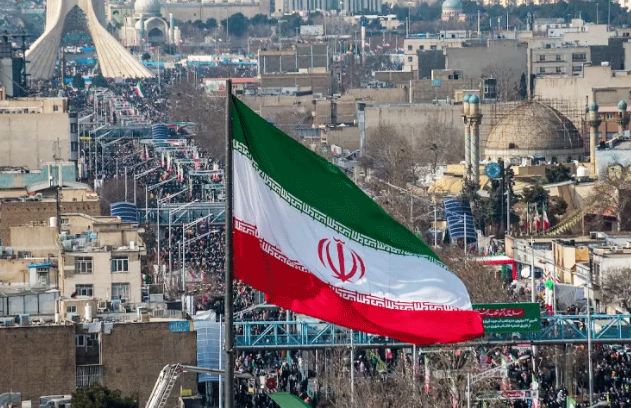
TEHRAN, SEPT 10: Iranian border guards opened fire on a group of Afghan migrants crossing into Sistan-Baluchestan province, killing six people and injuring five others, rights group Haalvsh reported on Tuesday.

The incident took place on September 8 in the Golshan border district, where around 120 Afghan nationals, including women, children and elderly people, came under fire. Haalvsh said Iranian forces used both heavy and light weapons, including a DShK heavy machine gun, without issuing any warning.

According to the group, five bodies were left at the scene, while one of the injured lost a leg due to heavy gunfire. Three of the wounded remain in critical condition after being hospitalized in Saravan. The group added that around 40 other migrants were detained by border forces.

The US-based Human Rights Activists News Agency (HRANA) condemned the attack as a violation of fundamental rights, citing the direct targeting of unarmed migrants with heavy weapons, lack of timely medical care and mass arrests as breaches of international law.

Haalvsh noted that similar incidents have been reported before. In October 2024, Iranian border guards opened fire on Afghan migrants, leaving dozens dead, wounded or missing.

HRANA’s annual monitoring found that in 2024, Iranian security forces shot 484 civilians, killing 163 and wounding 321.

Suryakumar Yadav faces backlash over handshake with Mohsin Naqvi

Suryakumar Yadav faces backlash over handshake with Mohsin Naqvi

Indian cricket captain Suryakumar Yadav has landed in controversy after shaking hands with Asian Cricket Council (ACC) President and Pakistan’s Interior Minister Mohsin Naqvi during the Asia Cup trophy unveiling.

The handshake, captured at the event, quickly spread across Indian media platforms and social networks. Many users expressed anger, calling the gesture inappropriate given Mohsin Naqvi’s political position and past remarks against India.

One social media user wrote that shaking hands with Pakistan’s Interior Minister was “the height of shamelessness.” Another added, “Suryakumar Yadav is shaking hands with the very man who threatened India after Operation Sindoor.”

Indian outlets also highlighted the handshake, questioning the captain’s decision in light of tense bilateral relations.

Mohsin Naqvi, who also serves as Pakistan’s Interior Minister, assumed charge as ACC President earlier this year.

Karachi reels under relentless rain, several areas inundated

Karachi reels under relentless rain

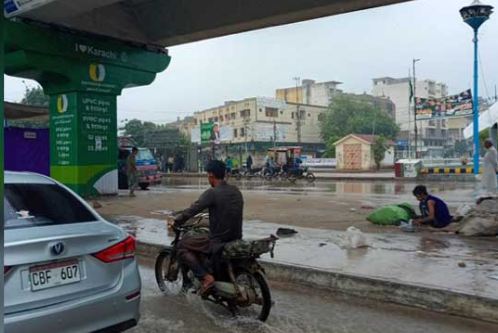
KARACHI, SEPT 10 – Persistent monsoon rain battered Karachi from Tuesday into Wednesday, leaving large parts of the city paralysed as overflowing drains and swollen streams flooded homes and roads. The heavy downpour caused severe waterlogging, brought traffic to a standstill, and damaged key infrastructure across the port city.

Rescue 1122 spokesperson said over 350 residents were evacuated from submerged neighbourhoods in joint operations with the district administration, while Pakistan Army teams helped pull several families to safety.

Relief centres were set up and water rescue teams deployed as floodwaters entered dozens of residential areas including Saadi Town, Essa Nagri, Nasar Basti and Machhar Colony.

The rescue service reported that 15 children, one elderly man and four women were rescued from Lassi Para near Sohrab Goth, while two more people trapped near Lyari River in Gulshan-e-Iqbal were safely pulled out alive.

Authorities warned that rain is likely to persist through Wednesday night, with brief heavy showers forecast for parts of western and southern Karachi later in the day, keeping the city on high alert.

The flooding trapped residents inside their homes, caused severe waterlogging on key thoroughfares, disrupted traffic and daily routines, and triggered extensive rescue and relief operations by the city administration.

According to the Pakistan Meteorological Department (PMD), the maximum temperature is expected to remain between 27°C and 29°C, with humidity recorded at 92%. Winds from the southeast were blowing at about 15 kilometres per hour on Wednesday morning.

The monsoon system persists in the form of a depression centred 60 kilometres west of Karachi, which may turn into a low-pressure area in the coming hours, bringing more rain-laden clouds towards the city. The weather system is also affecting Jamshoro, Thatta, and Sujawal districts.

Sindh Chief Minister Murad Ali Shah toured multiple rain-hit areas, including Qayyumabad, Korangi Causeway and Shaheed Bhutto Road, to inspect drainage and rescue efforts.

He was accompanied by provincial ministers Saeed Ghani, Makhdoom Mehmood, and Chief Secretary Asif Haider, who briefed him on the operations. Information Minister Sharjeel Inam Memon also joined the inspection of Malir River.

The CM remarked that Korangi Causeway resembled a river and assured it would reopen once water from Malir River receded.

He directed the administration to keep citizens informed about developments at Malir River, Korangi Causeway and other critical areas, and instructed DIG East to ensure traffic flow across the city with police deployed for public facilitation.

The CM added that KMC, PDMA, Rescue, police and other agencies remained fully mobilised across Karachi.

Earlier, the rising water level in Thado Dam caused flooding near the M-9 Motorway, close to Jamali Bridge, with authorities confirming that the water had reached the carriageway. Officials later clarified the overflow was from the Lath River, not the dam itself.

Karachi commissioner dispatched teams on the chief secretary’s directions, and a section of the motorway’s median wall was broken to allow the water to pass, as directed by Sindh Chief Minister Murad Ali Shah. He also ordered immediate clearance of the road to restore traffic flow.

Sindh government spokesperson Nadir Nabeel Gabol said 30 pumps had been deployed for drainage, with more being installed.

He explained that Shaheed Bhutto Road, still under construction, had been cut to give water a passage, adding that there were no cracks on the road and no cause for concern. He further said the project was being carried out by an international firm and negligence would not be tolerated.

Karachi Mayor Murtaza Wahab, who inspected waterlogging at Nagan Chowrangi, said rescue teams were deployed across the city and four relief centres had been set up.

Several neighbourhoods — including FB Area, Shafiq Colony, Essa Nagri, Nasar Basti, Sohrab Goth, Hasan Nauman Colony, Machhar Colony, Lassi Para, Yaar Mohammad Goth, and Saadi Town — reported water entering homes after streams overflowed. Videos circulating online showed Saadi Town streets under water, contradicting earlier claims that the reports were fake.

A screengrab taken from a video shows a neighbourhood in Saadi Town submerged in water on September 10, 2025. — Geo.tv
Rainfall data from the PMD showed Surjani Town received the heaviest downpour at 130 millimetres, followed by North Karachi (72mm), Korangi (71), Defence Phase VII (70mm) and Gulshan-e-Hadeed (69mm). PAF Faisal Base recorded 55mm, Nazimabad 54mm, Keamari 52mm and Saadi Town 51mm.

Gulshan-e-Maymar saw 48mm, Orangi Town 47mm, the Airport 47mm, M-9 Motorway 45mm, University Road 44mm and PAF Masroor Base 41mm. The lowest rainfall was measured at Jinnah Terminal with 29.8mm.

Traffic police shut the Korangi Causeway and several connecting roads, including Godam Chowrangi to Mehmoodabad, due to the strong current of water from the Malir River, diverting traffic towards Jam Sadiq Bridge and Qayyumabad.

A road from Teen Hatti to Guru Mandir collapsed due to faulty sewerage work, worsening traffic problems, while roads near Chowrangi Chowk and Jahangir Road were also submerged.

Waterlogging disrupted traffic at multiple spots including the National Stadium, Civic Centre, NIPA, Expo Centre, Kala Pul, Guru Mandir graveyard, Shahrah-e-Faisal, Korangi, Qayyumabad, Liaquatabad, Landhi and Dawood Chowrangi. Traffic police said personnel were on the ground working to regulate vehicular movement despite severe pressure.

The Karachi commissioner announced the closure of all educational institutions on Wednesday, while Dow University Hospital postponed all examinations scheduled for the day. Revised dates will be announced later.

Meanwhile, MQM-Pakistan convener Dr Khalid Maqbool Siddiqui criticised the Sindh government and local bodies, calling the situation “evidence of incompetence and negligence.” He warned of possible human and financial losses as Lyari and Malir rivers swelled into residential areas and blamed encroachments along storm drains on the provincial authorities.

He further alleged that the collapse of Bhutto Road, built with billions of rupees, symbolised corruption and said Karachi had been damaged by “non-local” governance.

Officials said water levels in rivers and streams were gradually falling, with the flow from the Kirthar Range weakening. The water level at the Malir River bridge on M-9 dropped from 12 feet to 8 feet, and authorities expressed hope that the situation would be under control a few hours after the rains stopped.

Rescue officials confirmed one fatality after a man was electrocuted at a puncture shop in North Nazimabad. Separately, a woman’s body was recovered from Gadap Nadi, while search operations are under way for three others reported missing.

Islamabad court issues arrest warrant for KP CM Gandapur in liquor, arms recovery case

Islamabad court issues arrest warrant for KP CM Gandapur

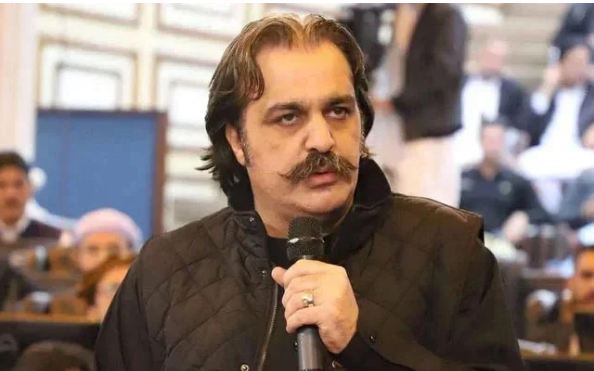
ISLAMABAD: A district and sessions court in Islamabad on Wednesday issued an arrest warrant for Khyber Pakhtunkhwa Chief Minister Ali Amin Gandapur in the alleged liquor and illegal weapons recovery case.

Judicial Magistrate Mubashir Hassan issued the warrant after no representative appeared on behalf of Gandapur in today’s hearing.

The court directed authorities to arrest CM Gandapur and produce him before it on September 17.

The development comes a day after an anti-terrorism court (ATC) in Lahore acquitted PTI leader Shah Mahmood Qureshi while sentencing Yasmin Rashid, Ejaz Chaudhry, and others to 10 years in prison over a May 9 riots case related to violence at Rahat Bakery Chowk.

ATC Judge Manzar Ali Gul issued the verdict in the case of burning of a Supreme Court judge’s car at Rahat Bakery Chowk on May 9, 2023. The hearing was held in Kot Lakhpat Jail, Lahore.

Similarly, PTI leaders Mian Mehmood-ur-Rasheed and Umar Sarfraz Cheema were also awarded 10 years’ imprisonment each.

The court also awarded a five-year sentence to PTI leader Khadija Shah in the same case. However, Rubina Jameel and Afshan Tariq were acquitted.

Last month, the Election Commission of Pakistan (ECP) de-notified many PTI lawmakers, including the opposition leaders in the Senate and National Assembly — Senator Shibli Faraz and Omar Ayub Khan — following their convictions in the May 9 cases.

Govt to abolish cross-subsidy, peak rates in industrial power tariff

Govt to abolish cross-subsidy, peak rates in industrial power tariff

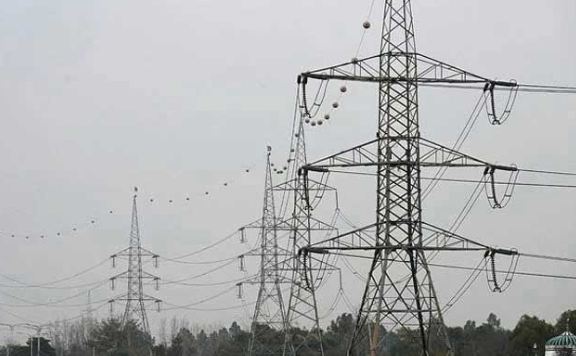
ISLAMABAD: The government has decided to abolish the cross-subsidy from industrial power tariff, and the end peak rates under the upcoming industrial policy to boost exports, The News reported on Wednesday.

The government has also decided to bring changes in laws, including introducing a unified insolvency law.

At the prime minister level, it has been agreed that industrialists would be protected from direct interference of the National Accountability Bureau (NAB), Federal Investigation Agency (FIA) and Federal Board of Revenue (FBR).

The decision has been taken to amend Section 41 B and Section 42A of the SECP Act 1947, whereby it would be mandatory to secure approval of the SECP before any action is taken by law enforcement agencies (LEA).

In the proposed changes in 41B for inquiry, investigation and other proceedings in respect of regulated persons, it is stated that notwithstanding anything contained in any other law, including but not limited to the National Accountability Ordinance, 1999 (XVIII of 1999), the Federal Investigation Agency Act, 1974 (VIII of 1975), the Prevention of Electronic Crimes Act, 2016 (XL of 2017), and the Pakistan Penal Code, 1860 (XLV of 1860), no action, criminal inquiry, investigation or proceedings against regulated person or its officer including, stock exchanges, central depositories and clearing houses, conventional and digital Non-Banking Finance Companies (NBFCs), Insurance Companies or brokers, in respect of any regulated activity, regulated securities activity, transaction, process or permission granted under this Act or any administered legislation, shall be taken, initiated or conducted by any federal or provincial investigating agency, bureau, authority or institution by whatever name called without reference from the Commission.

No proceedings shall lie before any agency, bureau, authority or institution at the instance of any party to a matter which is or has been in issue before the Commission, in respect of a matter which is actually or has been or might or ought to have been a proper subject of complaint to the Commission under the administered legislation.

The proposed amendment clearly defines foreign investors, including NICOP holders. Protection has been extended to provide certainty and ensure safeguards from arbitrary interference by external authorities.

“The Power Division shall remove cross-subsidy from industrial power tariff, and abolish Peak Rates,” top official sources confirmed while talking to The News here on Tuesday.

According to the draft of Industrial Policy, which is expected to be unveiled soon, the Ministry of Commerce has agreed to announce the drawback of local taxes and levies (DLTL) scheme for exporters, in coordination with the Finance Division and approval of the federal cabinet.

In a bid to clear stuck up refunds worth billions of rupees, the FBR will repay refunds including sales tax (deferred, Refund Payment Orders (RPOs), customs rebates, income tax, and provincial taxes & ensure clearance of the sales tax refunds within a reasonable time, with gradually reducing the time to refund. The Petroleum Division has agreed that it shall remove cross-subsidy from industrial gas prices.

To address tax anomalies, if the fiscal space is available after the end of the current IMF programme, the minimum tax as applicable on other businesses is to be applicable on exporters; the remaining taxes may be collected in the same mode of advance taxes as from other businesses in quarterly frequency if due.

The Industrial Policy envisages that the FBR shall simplify regulatory procedures and conduct audits of exporters, once every 3 years only. The existing legal instruments do not offer a comprehensive and cohesive insolvency framework.

This impedes the ability of the system to support effective restructuring and makes insolvency problematic and costly. The government has decided to bring amendments to the Corporate Rehabilitation Act, 2018 (CRA 2018) and Corporate Restructuring Companies Act, 2016 (CRCA 2016). The revision in CRA 2018 will broaden the scope of eligible debtors, protect companies, and facilitate them.

Prince Harry donates £1.1m to children in need

Prince Harry donates £1.1m to children in need

BAKU, Sep 10 (AZERTAC/APP):The Duke of Sussex has made a personal donation of £1.1m to a BBC Children in Need project in Nottingham supporting young people who have been affected by violence, according to BBC News.

Prince Harry is on the second day of a UK visit, where he’s been attending charity events.

In Nottingham he visited the Community Recording Studio, an initiative supported by BBC Children in Need, where he applauded a rap music performance, giving a hug to one of the young people taking part.

The prince hoped the donation, from his own money rather than his Archewell organisation, would help “changemakers in the city continue their mission to create safe spaces… and offer hope and belonging to young people who need it most”.

Prince Harry told the event that “Nottingham has been a place where I’ve heard harrowing stories, learned important lessons, seen resilience, and felt truly inspired”.

“The challenges remain serious and sadly aren’t getting any easier,” said Prince Harry. “Violence impacting young people, particularly knife crime, continues to devastate lives, cut futures short, and leave families in grief.”

He praised the efforts of those in the city who were working to tackle issues such as “food poverty, racism and educational inequality”.

Looking relaxed and wearing jeans, Harry met youth workers and local groups at the recording studio and heard about their efforts to tackle violence in Nottingham, in a scheme supported by BBC Children in Need.

“You gave me goosebumps,” he said after listening to a rapper called Paige.

“I was proper nervous,” Paige told Prince Harry about her first visit to the recording studio. “I’d never seen a booth or a mic or anything. So I’m listening to all these rappers on YouTube – and I’m like, ‘How do they even make that?'”

A young comedian, Ki’miya, teased Prince Harry about different backgrounds growing up by saying: “I bet you never had to stand on a chair to get a Hobnob.”

As well as showing a few dance moves when he arrived, and turning down the chance to sing backing vocals, Prince Harry joined conversations about creating more positive opportunities for young people.

BBC Children in Need is now one of the country’s biggest funders of independent youth workers.

Tony Okotie, the charity’s director of impact, said the donation would help “create spaces where young people feel safe, heard, and empowered to build brighter futures”.

There have been previous significant donations by the prince. He gave £1.2m of the proceeds from his memoir Spare to Sentebale, the charity he co-founded in southern Africa, which he subsequently left in an acrimonious dispute.

Prince Harry arrived in the UK on Monday – and went to lay a wreath on the grave of Queen Elizabeth II in Windsor, on the third anniversary of her death.

But it is still not known whether he will meet his father King Charles during this visit to the UK, despite much speculation that a meeting is on the cards.

The two men have not met face to face since February 2024 and Prince Harry has talked emotionally in a BBC interview about wanting a “reconciliation” with his family.

While Prince Harry has been in Nottingham, his brother the Prince of Wales has been carrying out his own engagements – visiting a housing project in south London as part of his Homewards campaign to tackle homelessness.

On Monday, Prince Harry had attended the WellChild awards in London, while his brother Prince William was at a Women’s Institute meeting in Berkshire, with guests remembering the legacy of the late Queen Elizabeth.

Trump issues rare rebuke to Netanyahu over Qatar strikes

Trump issues rare rebuke to Netanyahu over Qatar strikes

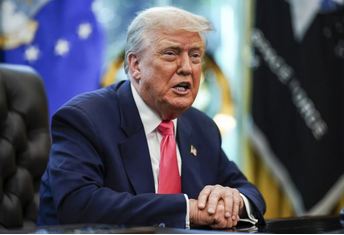
WASHINGTON, SEPT 10 (AFP/APP): President Donald Trump gave Benjamin Netanyahu a rare slap on the wrist Tuesday over Israel’s strikes against Hamas in Qatar, as he insisted he played no role in the attack by one close US ally against another.

Trump said he had tried but was “unfortunately, too late” to stop the Israeli attack on the Gulf state, a crucial broker in the negotiations between Israel and Hamas to end the Gaza war.

“This was a decision made by Prime Minister Netanyahu, it was not a decision made by me,” Trump said in a post on his Truth Social network.

“I view Qatar as a strong Ally and friend of the U.S., and feel very badly about the location of the attack,” he said — although adding that eliminating Hamas was still a “worthy goal.”

The Israeli attack on Doha could hardly be more sensitive as Qatar, in addition to its role in the Gaza negotiations, is home to a huge US airbase and hosted Trump during a Middle East swing earlier this year.

The fossil fuel-rich emirate also recently gave the United States a luxury Boeing 747-8 jet for Trump to use as his presidential plane, a move that sparked major ethical questions.

In a statement that largely echoed one issued earlier by White House Press Secretary Karoline Leavitt, Trump focused on the possible damage to his efforts to end the war in Gaza.

“Unilaterally bombing inside Qatar, a Sovereign Nation and close Ally of the United States, that is working very hard and bravely taking risks with us to broker Peace, does not advance Israel or America’s goals,” Trump said.

Whiter BRICS?

Whiter BRICS?

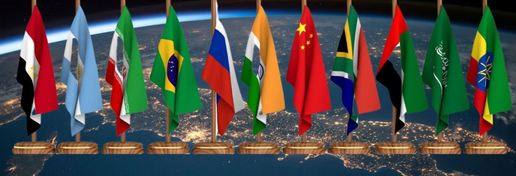
The BRICS coalition — consisting originally of Brazil, Russia, India, China, and South Africa — has evolved from a loose grouping of emerging economies into a significant geopolitical and economic force in the 21st century. With its recent enlargement to include Egypt, Ethiopia, Iran, Saudi Arabia, the United Arab Emirates, and Indonesia, the bloc now encompasses close to half of the world’s population and a substantial share of global GDP and energy production. This expansion heralds major shifts in global governance, trade, and international relations, but also comes with a complex matrix of challenges.

BRICS has positioned itself as a champion for a more multipolar world, contesting Western-dominated global institutions. Modern multilateral bodies such as the United Nations, International Monetary Fund (IMF), and World Bank have seen calls for reform to better represent developing countries and address systemic inequalities. BRICS, through mechanisms like the New Development Bank (NDB) and the Contingent Reserve Arrangement (CRA), champions inclusive governance and financial cooperation, promoting alternatives to Bretton Woods institutions that often marginalize the Global South.

The group’s inclusive approach based on consensus sees the potential to reform international institutions toward fairness and democracy, but the expanded membership introduces complexities in balancing diverse national interests while preserving unity.

With growing intra-BRICS trade, the coalition leverages complementary economic strengths: China’s manufacturing, India’s IT and service sector, Russia’s energy resources, Brazil’s agricultural base, and South Africa’s mineral wealth. The expanded BRICS+ includes oil powerhouses Saudi Arabia and UAE, enhancing the group’s influence over global energy markets.

The BRICS countries have also made strides in advocating bilateral and multilateral trade agreements, expanding investments within the bloc, and increasingly exploring trade in national currencies to reduce reliance on the US dollar — a move towards “de-dollarization” that resonates with many members’ strategic interests.

BRICS has taken collective action on issues such as climate change, public health, and sustainable development. The group actively pursues cooperation on technology transfer, capacity building, and innovation to meet Sustainable Development Goals (SDGs). Its role in vaccine production and pandemic response during COVID-19 underscored BRICS’ potential as a critical global problem-solver.

The New Development Bank’s infrastructure and green financing initiatives further reflect BRICS’ commitment to sustainable and equitable growth, especially in emerging economies.

BRICS members have distinct political systems, economic development levels, and strategic priorities. China and Russia often emphasize challenging Western hegemony and expanding BRICS’ geopolitical clout, sometimes advocating anti-Western stances. India and Brazil tend to favor a more moderate, balanced approach that maintains cooperation with Western nations while pursuing reform.

This ideological diversity complicates consensus decision-making, especially given BRICS’ equal voting system in institutions like the NDB, where economic weight varies dramatically among members. The expansion with countries of differing governance models raises questions about the bloc’s cohesion and the practicality of consensus-based leadership as membership grows.

BRICS’ growing influence has not gone unnoticed by Western powers, with some viewing the coalition as a rival bloc intent on reshaping or supplanting the current global order. Increased US-China tensions and the ongoing Russia-West conflicts inject volatility into the bloc’s dynamics. Pressure from the West on some member countries through sanctions or diplomatic coercion creates external stress, challenging BRICS’ unity and external engagement.

Economic uncertainties, such as trade protectionism, technological disruption, and global financial instabilities, also present challenges. Varying national economic health means that some BRICS members face structural reforms and growth limitations, which could dampen collective momentum.

The enlarged BRICS faces the challenge of institutionalizing its cooperative framework — including establishing a permanent secretariat and clear membership criteria. Managing expansion while maintaining effective governance and decision-making mechanisms is critical to ensuring the coalition’s functional integrity.

Additionally, the need for weighted voting or reform in decision-making may grow more acute as membership rises, particularly to balance China’s predominant economic power with that of smaller members.

By the mid-2020s, BRICS is expected to solidify its standing as a key actor in global affairs with enhanced economic integration, diplomatic influence, and strategic partnerships. The group’s expanded membership provides opportunity for diversified alliances, greater energy market control, and stronger voices in multilateral forums like the G20 and United Nations.

Balance internal diversity while forging common goals on reform, sustainable development, and economic collaboration.

Foster innovation in financial mechanisms such as the New Development Bank and BRICS Pay system to support trade and development in member currencies.

Navigate geopolitical tensions effectively to maintain constructive engagement without alienating significant global partners.

Institutionalize frameworks that allow efficient decision-making amidst expansion, possibly adapting consensus models or adopting weighted systems.

India’s upcoming chairmanship in 2026 and Brazil’s current leadership reflect ongoing efforts to steer BRICS toward pragmatic and inclusive agendas, focusing on climate action, food security, and health cooperation.

The future of BRICS embodies both promise and complexity. As a unique coalition representing emerging and developing economies, BRICS has the potential to accelerate the transition toward a more balanced and multipolar world order. Its growing economic heft, demographic weight, and institutional innovations position it as a significant global player.

However, realizing this potential requires surmounting internal frictions, external geopolitical challenges, and governance maturation. With concerted diplomacy and strategic vision, BRICS can become a catalyst for global reform, equitable growth, and sustainable development, profoundly shaping the 21st-century international system.

Pak-ASEAN ties poised for growth, says Philippine envoy

Pak-ASEAN ties poised for growth, says Philippine envoy

EXCLUSIVE

Ansar Mahmood Bhatti

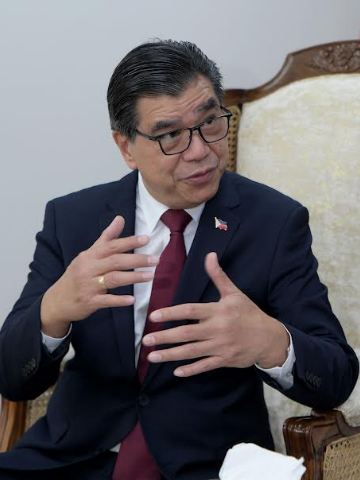
In an exclusive conversation with Diplomatic News Agency, H.E. Dr. Emmanuel R. Fernandez, Ambassador of the Philippines to Pakistan, outlined a comprehensive roadmap for strengthening Pakistan’s engagement with the Association of Southeast Asian Nations (ASEAN).

Dr. Fernandez highlighted that ASEAN–Pakistan relations are evolving from aspirational dialogue to practical cooperation, covering areas from trade and economics to education and cultural exchange. He noted that the timing is crucial, given ASEAN’s 58th anniversary and growing momentum in regional partnerships.

“The Philippines, as a founding ASEAN member and as an active partner in Pakistan, sees real potential in deepening ties,” he said. “This partnership is about shared values and the recognition that regional cooperation is vital to meeting global challenges.”

The Ambassador underlined the importance of ASEAN centrality in regional frameworks such as the ASEAN Regional Forum (ARF). Pakistan, he stressed, has been a consistent contributor since joining ARF in 2004. At the 32nd ARF Ministerial Meeting in Kuala Lumpur in July 2025, Pakistan’s Deputy Prime Minister and Foreign Minister reaffirmed the country’s commitment to preventive diplomacy, rule of law, and addressing emerging non-traditional security threats including climate change, cyber risks, pandemics, and maritime challenges.

“Pakistan’s active engagement at the ARF signals its readiness to shift from dialogue to deeper, action-oriented cooperation,” Dr. Fernandez observed.

On concrete steps Pakistan can take to enhance its ASEAN partnerships, the Ambassador pointed to a multi-dimensional strategy. This includes sector-specific agreements under the Special Investment Facilitation Council (SIFC), particularly in digital trade, renewable energy, halal food, and logistics. He cited the Vietnam–India model as an example of starting with small but focused cooperation agreements and then expanding into larger sectors like defense and joint ventures.

He also underscored economic complementarities: “Pakistan’s textile and halal-certified products align strongly with ASEAN’s import needs. There is scope to integrate Pakistani textiles into the Philippine garment export chain, and a halal trade agreement could open up new markets through aligned standards and joint trade missions.”

Education and human capital exchanges remain another priority. Expanding opportunities in medicine, engineering, and IT for ASEAN students in Pakistan, he said, would build long-term goodwill and strengthen people-to-people ties.

The Ambassador suggested institutional mechanisms such as establishing an ASEAN-focused center in Islamabad and launching a Pakistan–ASEAN Business Forum, modeled on successful ASEAN+ dialogues with countries like Japan. Similarly, engaging private sector players—from established chambers of commerce to emerging business alliances—would ensure a broad-based and sustainable approach to integration.

Turning to bilateral relations between the Philippines and Pakistan, Dr. Fernandez described them as historically friendly, dating back to 1949. “We have a solid foundation in diplomacy and multilateral collaboration. Recent momentum, including active ambassadorial exchanges and regular policy consultations, shows a shared intent to move forward,” he said.

While acknowledging that bilateral trade is modest and tilted in Pakistan’s favor, he pointed to promising sectors such as textiles, agribusiness, pharmaceuticals, and IT. Real progress, he suggested, would come from initiatives like improving logistics, aligning regulations, and promoting targeted trade facilitation.

“Relations between our two countries are on a stable footing,” he concluded. “The task now is to translate goodwill into concrete economic and development partnerships. The Philippines stands ready to work with Pakistan and ASEAN partners to build a cooperative, prosperous, and peaceful Indo-Pacific region.”

To be concluded

Stay Connected

64FansLike
60FollowersFollow

Latest Reviews

Exchange Rates

USD - United States Dollar
EUR
1.17
GBP
1.35
AUD
0.72
CAD
0.73