Home Blog Page 495

ISSI, Mishal host seminar on civilian protection in conflict

ISSI, Mishal host seminar on civilian protection in conflict

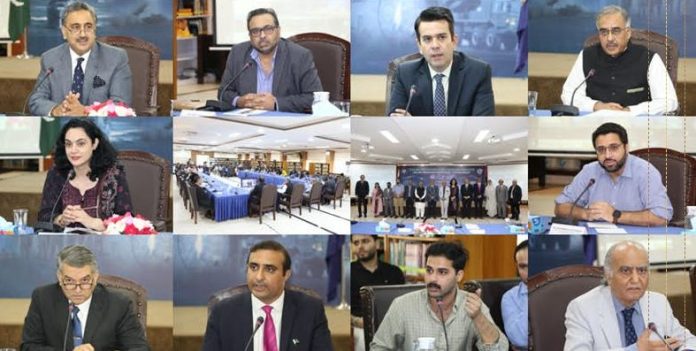
ISLAMABAD, SEPT 10 /DNA/ – The India Study Centre (ISC) at the Institute of Strategic Studies Islamabad (ISSI), in collaboration with Mishal Pakistan, hosted a Seminar, titled “Civilian Protection in Multidomain Conflicts: Legal and Humanitarian Perspectives on Operation Sindoor.” Mr. Ahmer Bilal Soofi, prominent International Law expert and Pakistan’s former Minister of Law, Justice, Parliamentary Affairs, and Human Rights, graced the occasion as the Guest of Honour. Speakers included Mr. Rehman Azhar, renowned journalist and Executive Director of Centre for Law and Security (CLAS); Dr. Marium Fatima, Assistant Professor, National Defense University (NDU); Mr. Muhammad Oves Anwar, Director, Research Society of International Law (RSIL); and Mr. Amir Jahangir, CEO, Mishal Pakistan.

In his remarks, Ambassador Sohail Mahmood said that India used the recent Pahalgam attack as a pretext not only to launch completely unjustified and reckless military aggression on Pakistan, but also expected the world to accept its false narrative and bellicose intentions against Islamabad without providing even a shred of evidence. In contrast, the international community saw Pakistan’s offer for a transparent, credible, and neutral international investigation into the matter as reasonable and a way to prevent serious threat to international peace and security.

Ambassador Sohail Mahmood noted that under the so-called ‘Operation Sindoor,’ India struck civilian areas in Pakistan and AJK —  including residential neighborhoods, Mosques, and essential services, resulting in 40 deaths, including those of children and women. These actions were in clear violation of international humanitarian law and relevant resolutions of the UN Security Council, beside breaching the time-tested principles of inter-state relations. The laws being violated by New Delhi during the course of ‘Operation Sindoor’ include Article 51 of the Additional Protocol of the Geneva Conventions of 1949, and UNSC’s foundational resolution S/RES/1265 (1999) on protection of civilians in the armed conflict. Ambassador Sohail Mahmood emphasized that Indian action of May 2025 must be seen as a continuum and part of a trajectory of serial abuses of human rights in IIOJK. Together, they represent not episodic misconduct, but a pattern of unremitting hostility and aggressive behavior on India’s part. This linkage emphasizes how vital it is to see violations in one domain leading to excesses in another – rather than treating each catastrophe as an isolated occurrence.

In his remarks, Mr. Ahmer Bilal Soofi presented a broad spectrum of international law and highlighted its interaction with political decision-making. He observed that while international law provides essential principles, political leaders at times prioritize their strategic preferences, which can overshadow legal imperatives. This, he explained, stems from the broader worldviews of states, making international law appear secondary in moments of political urgency.

Mr. Soofi emphasized the need for effective mechanisms to address atrocities against civilian in conflict zones. Strengthening mechanisms for legal documentation, he stressed, is vital for ensuring that evidence of civilian atrocities is preserved and presented effectively before international forums. Among other things, he observed, a Tribunal dedicated to investigating harm to civilians resulting from Indian action during the May 2025 conflict could be one legal recourse.

He further underscored the importance of analyzing key issues within their proper context to avoid oversimplification and misrepresentation. Concluding his remarks, Mr. Soofi asserted that the issue of civilian killings in IIOJK should be addressed through legal and international channels, offering a structured pathway toward justice.

Earlier, Dr. Khurram Abbas in his introductory remarks noted that despite extensive analytical, academic, and media reporting of the May 2025 crisis, due attention had not been paid to civilian casualties that the crisis inflicted. While the crisis has unveiled new dimensions of South Asia’s strategic stability and conflict management capabilities of the global powers, legal and humanitarian costs of the conflict must not be overlooked. Mr. Amir Jahangir emphasized that academic and practitioner insights can lead to bilateral arrangement to prevent or minimize civilian sorrows in the course of any future conflict.

Dr. Talat Shabbir noted that the tragedy of Operation Sindoor has underscored the grim reality of how civilians often bear the brunt of military conflict in which the attacker is not caring about the civilian casualities on ground. Beyond conventional battlefields, multidomain conflicts—spanning land, air, cyber, and information spheres—create new complexities for civilian safety. The erosion of humanitarian principles in such contexts not only deepens human suffering but also challenges the credibility of the global rules-based order.

Mr. Oves Anwar underscored that, instead of pursuing justice, India exploits international law as a political weapon. He underlined that India’s targeting of civilian populations and infrastructures, especially Mosques, is driven by a ‘Hindutva’ and Islamophobic agenda. Extending the debate, he linked this erosion of international law to Israeli aggression on Palestine, stressing weak enforcement mechanisms that allow states like India and Israel to act with impunity. Mr. Anwar noted that bilateralism with India has proven unworkable on such issues. Instead, Pakistan should focus on strengthening and prioritizing multilateral platforms and mechanisms, ensuring that its position is heard and reinforced at the international level.

Mr. Rehman Azhar, in his remarks, indicated that India tried to justify its aggression against Pakistan by the accusation that Islamabad did not take action against non-state actors targeting India from its soil. This way, India attempted to misuse Article 51 of the UN Charter to authorize its action while also violating Article 2 of the Charter. Mr. Azhar outlined various policy options in legal and diplomatic arena for Pakistan to hold New Delhi accountable. He suggested that Pakistan must use the forums such as UN Security Council, UN Human Rights Council, and OIC to highlight India’s perpetual actions targeting civilians inside Pakistan, IIOJK, and on its own soil.

In her remarks, Dr. Marium Fatima said that civilians in Pakistan being targeted by India is not a new phenomenon. Even before ‘Operation Sindoor,’ civilians were subject to violence and human rights abuses by India not only in IIOJK but also in mainland Pakistan through its state-sponsored terrorism in Khyber Pakhtunkhwa and Balochistan. Pakistan had credible evidence of Indian involvement in Jaffar Express incident earlier this year. Lately, India has also been leveraging from the U.S. and Israeli tactics to counter dissent under the garb of counter-terrorism, of which civilians are a frequent victim. Dr. Fatima suggested Pakistan to flex more diplomatic muscle and use the help of international law, human rights forums, and international media to expose the Indian tactics. Furthermore, she stressed, Pakistan should strengthen internal cohesiveness to counter India’s psychological warfare.

The seminar concluded with vote of thanks by Ambassador Khalid Mahmood, Chairman BoG, ISSI.
President underscores need for science and technology ecosystem in Pakistan

President Condoles the Martyrdom of Major Adnan Aslam

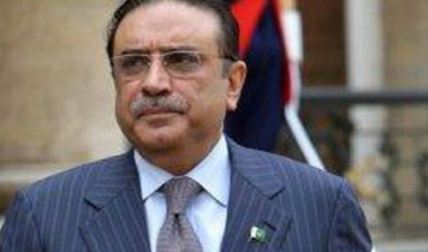
ISLAMABAD, SEPT 10 /DNA/ – Federal Minister for Science & Technology, Mr. Khalid Hussain Magsi, called on President Asif Ali Zardari at Aiwan-e-Sadr today.

During the meeting, the President emphasised the importance of building a comprehensive ecosystem for the promotion of science and technology awareness in Pakistan. He said such an ecosystem must encompass education, culture, and industry, in order to fully harness the benefits of modern scientific advancement.

The President highlighted the need to regularly update curricula at schools, colleges, and universities to include the latest knowledge on modern sciences, critical thinking, and emerging technologies. He stressed that fostering a culture of innovation and inquiry among students is essential for preparing the next generation to meet future challenges.

Underscoring the importance of technology in governance, President Zardari called for adopting new and emerging technologies to improve transparency, efficiency, and service delivery in public institutions.

Pakistan Navy conducts extensive rescue operations in flood hit areas

Pakistan Navy conducts extensive rescue operations in flood hit areas

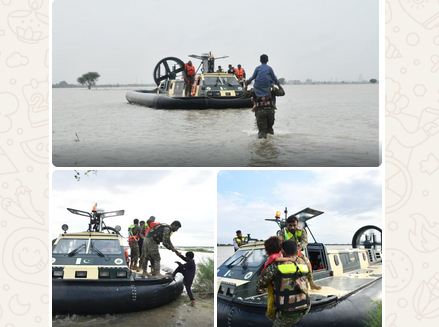
KARACHI 10 SEP /DNA/ – Pakistan Navy is actively engaged in relief operations across flood affected regions of Punjab, Sindh and Khyber Pakhtunkhwa. Emergency Response Teams (ERTs) are constantly operating to provide swift assistance and safeguard lives of those affected by the floods.

Pakistan Navy has promptly deployed hovercrafts in the flood affected districts of Kashmore, Ghotki, Sukkur and Shikarpur in Sindh, to evacuate affected people. These hovercrafts are capable of operating across land, water and swampy areas. In these districts of Sindh, 4,335 people and over 125 livestock have been successfully evacuated.

Pakistan Navy’s ERTs carried out rescue operation in multiple regions of Pakistan, including Ali Wahan, Alif Kacha, Bachal Shah Miani, village Haji Ghulam Mustafa Jatoi and Soomro Goth in Sukkur, Jam Ali Chachar and KK Bundh in Kashmore, Soomro Panvari in Pano Aqil, Ghumro Goth in Shikarpur and Shank Bund in Ghotki. In addition, Pakistan Navy’s relief and rescue operations are also ongoing in Kasur, Rajanpur, Dera Ismail Khan, Mirpur Khas, Sanghar, Sujawal, Buner, Shangla and Mingora.

Stranded individuals were transported to safe locations with the assistance of Pakistan Navy hovercraft and boats. Alongside evacuating residents, the teams ensured safe transfer of household belongings and fertilizer stocks. Pakistan Navy’s relief teams are also providing food supplies, healthcare services and vital medicines to flood affected communities. These operations are conducted in close coordination with local civil administration to ensure smooth execution of rescue and relief activities.

The timely and swift rescue missions are a reaffirmation of Pakistan Navy’s resolve to stand firm with the nation, remaining committed to relentless relief efforts until the safety of every affected citizen is ensured.

8th Provincial Steering Committee Meeting successfully convened

8th Provincial Steering Committee Meeting successfully convened


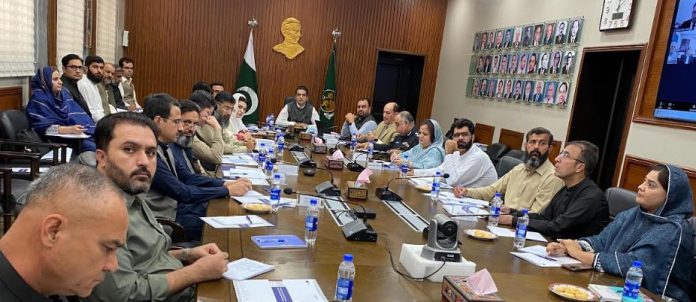
QUETTA, SEPT 10 /DNA/ – The European Union Delegation and United Nations Office on Drugs and Crime (UNODC) in collaboration with the Government of Balochistan and rule of law stakeholders, convened the 8th Provincial Steering Committee (PSC) meeting of the Rule of Law Roadmap in Quetta on 10 September 2025.  The Rule of Law Roadmap of Balochistan is financially supported by the European Union which fully funds the 10 million euro (Deliver Justice Project that is being implemented by UNODC, UNDP and UN Women.   The project focuses on improving institutional performance, enhancing citizen access to justice, and reinforcing accountability mechanisms across the province.

Chaired by Mr. Muhammad Hamza Shafqaat, Additional Chief Secretary of the Home Department, the meeting brought together representatives from European Union Delegation, provincial stakeholders, and development partners. Participants reviewed progress achieved since the last PSC meeting, and agreed on coordinated priorities to strengthen institutional capacity across the province for citizen-centric justice delivery.

Key achievements include the Government of Balochistan’s decision to seek Cabinet approval of five Criminal Justice Acts that will modernize legal processes and strengthen accountability; the approval of the revised PC-I with a budget of PKR 632 million to operationalize rule of law reforms; and a recent stock take exercise confirming progress on Mid-Term Evaluation recommendations, while underscoring the need for stronger coordination, monitoring, and capacity building.

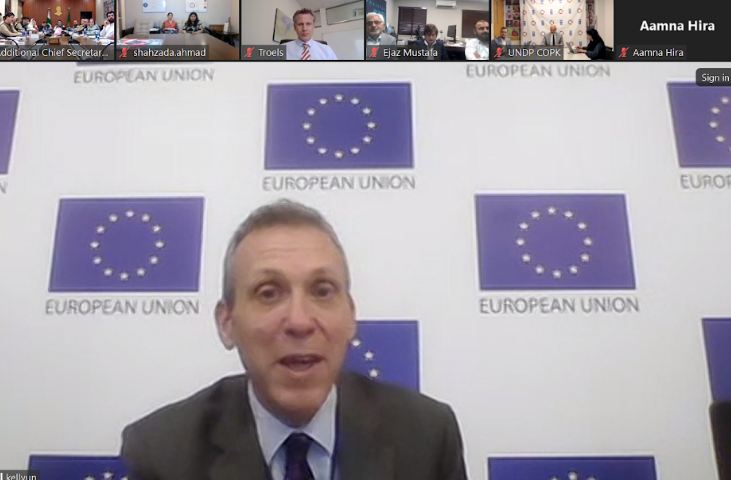
As the largest donor to Rule of Law reforms in Balochistan, the government appreciated the significant financial support from the European Union as a contribution towards stability, accountability, and good governance in Balochistan. Mr. Jeroen Willems, Head of Cooperation at the Delegation of the European Union to Pakistan stated ’We have been partnering with the Balochistan  authorities and judiciary to implement its Rule of Law Roadmap for the past 4 years and commend the progress made so far. We look forward to further deliverables in the coming 8 months, not least in areas to be addressed by the province under the GSP+ Scheme related to criminal justice, access to justice, child protection and human and gender rights’.

UNODC presented progress highlights, including the operationalization of Smart Police Stations across Quetta, Pishin, Loralai, Sibi, and Naseerabad. Participants appreciated how these reforms are improving public confidence in policing services. In addition, the meeting discussed strengthened case management systems and digital tools to improve efficiency across the justice chain. Capacity-building programs for prosecutors, prison officials, and police personnel were highlighted, alongside ongoing initiatives to integrate human rights standards into institutional practices.

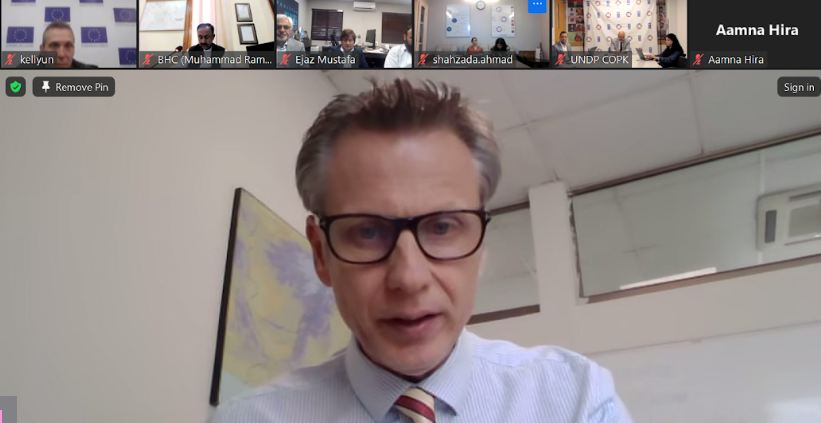
Mr. Troels Vester, UNODC Country Representative in Pakistan, appreciated the support from the EU and continued commitment of the Government of Balochistan, underscoring UNODC’s role as a trusted partner in advancing evidence-based reforms for strengthening the justice sector in Balochistan. In his closing remarks, Mr. Muhammad Hamza Shafqaat, ACS, Home Department,   appreciated the European Union for its financial support and UNODC, UNDP, and UN Women for their technical expertise and complementary roles, while reaffirming the Government of Balochistan’s commitment to strengthening the rule of law as a foundation for peace, justice, and development.

The PSC meeting concluded with an agreement on immediate priorities for the coming year, including the enactment of criminal justice Acts, Implementation of revised PC-I, Prison Reforms including operationalization and handover of PMIS, expansion of smart policing services, enhanced gender-responsive facilities in justice institutions, and scaling up data-driven monitoring of reforms.

Why families and society must unite against drugs

Why families and society must unite against drugs

By Saifullah Ansar

This is the story of my friend. When he was just 17, he was studying in matric class and was a well-known student in his school. He used to top his class and was very intelligent in his studies. His teachers admired him greatly, and he was also active in sports, especially cricket. He was an all-rounder, both a batsman and a bowler, and also the captain of his team. They played hard-ball cricket tournaments all over Pakistan and were recognized as one of the best teams. His life was going very well, and his family was living happily with him.

Unfortunately, one day he met the owner of a political group which had more than forty thousand members across Pakistan. The owner invited him to join, and without knowing the consequences, he agreed. That was the turning point in his life.

After joining, he started meeting group members daily. Most of them were much older than him, while he was just 18. Many of them used drugs. Slowly, he began losing interest in his studies and cricket, getting more and more involved with the group.

One day, he saw someone from the group smoking cannabis. The person looked so happy and relaxed that it caught my friend’s attention. The very next day, at a birthday party, another member offered him cannabis. At first, he refused, but under pressure, he tried it for the first time. He felt happy and relaxed but kept it a secret from his parents.

The next day, he asked one of the group members to give him more because he liked the feeling. From then on, he started using cannabis regularly. Since he came from a wealthy family, it was easy for him to afford it, and through the group, it was always available. Within six months, he became fully addicted.

Eventually, one of his group friends moved to another city but told him where to buy cannabis. My friend continued using it every day for over a year. Then, one day, his father found cannabis in his pocket. The whole family was shocked and angry. He finally confessed everything. By then, he had already left his studies and cricket, fighting with his parents constantly for money to buy drugs.

His parents decided to send him to a rehabilitation center in another city. He stayed there for 10 days, and the doctors declared him fine, but in reality, he wasn’t fully recovered. At first, he seemed better, but when his old friend returned from work, they started using cannabis again secretly. His parents thought he was recovering, but he was still addicted. Eventually, his father caught him again, and this time he involved the police, which led to the arrest of his drug-using friend.

Frustrated, his family sought help from an army officer, who suggested sending him to an army rehabilitation center. After a month of waiting, he was admitted and spent 40 days there. Though the living conditions were poor, he met many other addicts and, for the first time, realized how much he had ruined his life and disappointed his parents. Coming from a respectable and educated family, he finally decided to quit.

After three painful years of addiction, he managed to leave cannabis behind. However, the cost was huge: he lost his studies, his cricket career, and many good friends. Today, he is slowly rebuilding his life and living in a better way, but those three years were like hell for him and his family.

This story shows why the government must take strong steps to stop drugs in the country. The police have a major role to play, but unfortunately, many officers themselves are involved in selling drugs. The government should ensure strict accountability and checks on law enforcement. At the same time, families must keep a close eye on their children, and young people must choose their friends wisely. Society, family, and government together can help stop the spread of drugs.

The writer is a staff member.

PM Shehbaz declares climate, agri emergency

PM Shehbaz declares climate, agri emergency

PM acknowledged that Pakistan could not tackle climate change “overnight” and urged long-term measures to mitigate its impact

Saifullah Ansar/DNA

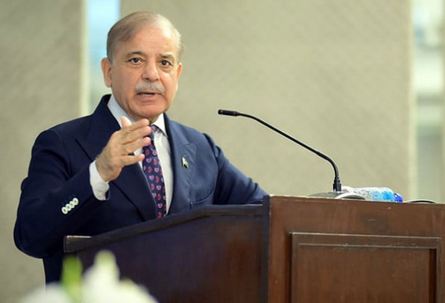
ISLAMABAD: Prime Minister Shehbaz Sharif has said the federal cabinet will announce climate emergency and agriculture emergency after consultations today in view of the human and economic losses caused by the floods.    

Chairing the federal cabinet meeting in Islamabad today, he said a committee headed by Minister for Planning and Development Ahsan Iqbal is also being constituted to deal with the situation arising out of floods.

Shehbaz Sharif said an apex level meeting will follow the cabinet meeting to be attended by the four chief ministers to formulate a policy to cope with the current situation. He said the federation is contributing its share, emphasizing the provincial governments will also have to contribute.

He said the floods claimed the lives of about one thousand people and left thousands of others injured. He said an assessment is being carried out to determine the damages caused by floods to crops.   

As regards his recent visit to China, the Prime Minister said the business conference in Beijing remained very productive. He said the event culminated in eight and a half billion dollars worth of joint ventures and MOUs.

He said Minister for Planning and Development Ahsan Iqbal will be visiting China on the 26th of this month for the formal launch of CPEC 2.0. He said the CPEC 2.0 will cover cooperation in agriculture and mines and minerals as well as B to B investment and special economic zones. For Karakoram Highway, he said Chinese investment will be eighty-five percent.

Shehbaz Sharif also mentioned the MOU signed with the US for investment in mines and minerals. 

The Prime Minister said Pakistan will improve its relations with the US and give new impetus to the strategic partnership with China.

Shehbaz Sharif paid tributes to the armed forces for their sacrifices in the war against terrorism. He said the nation is proud of its martyrs.

He strongly condemned the propaganda by certain elements against armed forces and its leadership, emphasizing that it is our collective national and political responsibility to confront and counter such actions.

Israel attacks new Gaza tower

Israel attacks new Gaza tower

News Desk

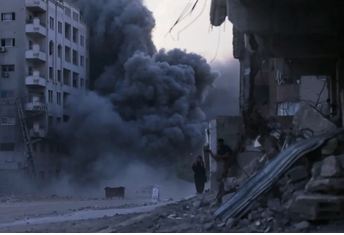
TELAVIV: Israeli airstrikes have destroyed a newly built residential tower in Gaza City, hours after explosions shook Qatar’s capital Doha in what Hamas officials described as an Israeli attempt to assassinate senior leaders.

The twin developments mark a dangerous escalation in the conflict, stretching beyond Gaza and deepening fears of a regional conflagration.


Witnesses said the tower, one of the last remaining high-rises in the city, was struck late Tuesday evening, reducing it to rubble. Families displaced from northern Gaza who had taken shelter there were forced once again to flee with their belongings. Civil defense teams reported dozens injured, with rescue efforts continuing into the night.

“The building collapsed like paper,” said Mahmoud al-Khaldi, a survivor who had relocated to the tower after his neighborhood was flattened in earlier strikes. “We have nowhere left to go.”

The Israeli military confirmed the strike, claiming the tower was being used as a Hamas command center. Hamas denied the allegation, calling it a “blatant attack on civilians.”


Meanwhile, Qatar has accused Israel of violating its sovereignty after several explosions were reported in Doha’s diplomatic district, where Hamas political leaders were holding talks with mediators on a U.S.-backed ceasefire proposal.

A Hamas source told Al Jazeera the explosions were an “assassination attempt” targeting its top officials. While no casualties have been confirmed, the incident has raised alarm across the Gulf.

Qatar’s Foreign Ministry issued a sharp condemnation, warning that the strikes represented a “reckless provocation” that threatened regional peace. The U.S. State Department said it was “urgently seeking clarity” from Israel.


The attacks have further complicated ongoing negotiations for a Gaza truce, already hampered by mutual distrust. Analysts say the move risks dragging new actors into the conflict.

“Israel’s decision to strike in Doha is unprecedented,” said Lina Khatib, a Middle East expert. “It could trigger a major diplomatic crisis, especially with Qatar hosting sensitive negotiations.”

As the war expands, humanitarian conditions in Gaza continue to deteriorate. The United Nations warned that repeated displacement and destruction of residential buildings are pushing civilians into “an impossible situation.”

For many in Gaza, the strike on the tower is another devastating blow. “Every time we build, they destroy,” said Umm Khaled, a mother of three who fled the rubble with her children. “We are being erased.”

We want to further strengthen ties with Pakistan: Indonesian envoy

We want to further strengthen ties with Pakistan: Indonesian envoy

Direct Flights Between Indonesia and Pakistan Are Essential: Zafar Bakhtawri ; Pakistani Delegation Will Actively Participate in Upcoming Trade Exhibitions in Indonesia: Waqar Bakhtawri

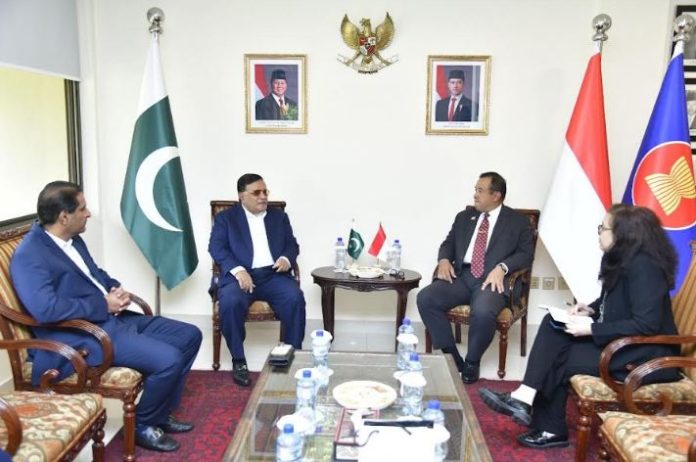
ISLAMABAD, SEPT 10 /DNA/ – Indonesian Ambassador to Pakistan, Chandra Warsenanto Sukotjo, has said that the completion of 75 years of diplomatic relations between Pakistan and Indonesia is a timely opportunity to take bilateral cooperation to new heights. He stated that Indonesia is keen to further strengthen ties with Pakistan in the fields of defense, culture, trade, and education. He also acknowledged the existing trade imbalance between the two countries and stressed that enhancing Pakistan’s exports to Indonesia is essential to address this challenge.

He expressed these views during a meeting with Chairman Pakistan–ASEAN Friendship Association, Zafar Bakhtawri, at the Indonesian Embassy. The meeting concluded with an agreement to further consolidate relations by promoting direct connectivity, cultural exchanges, trade cooperation, and educational opportunities.

The meeting was also attended by Waqar Zafar Bakhtawri, Member of the Executive Committee of the Federation of Pakistan Chambers of Commerce and Industry (FPCCI), and Mrs. Ingan Malem, Head of Economic Affairs.

Ambassador Sukotjo announced his personal initiative to establish a dedicated section at the National Library of Pakistan to preserve the history of Pakistan–Indonesia relations. He clarified that the project is being undertaken without government budget support and will be enriched with Indonesian books and cultural materials to make it more meaningful.

Highlighting economic opportunities, the Ambassador described Pakistan’s large youth population as a promising market for Indonesian products. He extended a special invitation to Waqar Zafar Bakhtawri to participate in the cosmetic exhibition in Indonesia this October.

On the occasion, Zafar Bakhtawri emphasized that the absence of direct air links between Pakistan and Indonesia remains a major obstacle for both the public and the business community. He stressed that launching direct flights is essential to promote tourism, trade activities, and people-to-people exchanges, and urged the Indonesian Ambassador to take concrete measures in this regard. He also expressed his willingness to host ASEAN ambassadors in Pakistan and organize collaborative events to strengthen regional cooperation. Extending further goodwill, he invited Ambassador Sukotjo to attend upcoming trade exhibitions in Pakistan.

Meanwhile, Waqar Zafar Bakhtawri stated that he is eager to actively participate in future trade exhibitions in Indonesia, showing particular interest in exploring new opportunities for cooperation in various sectors.

Villagers return after successful security operation in Kharsin, N Waziristan

Villagers return after successful security operation in Kharsin, N Waziristan
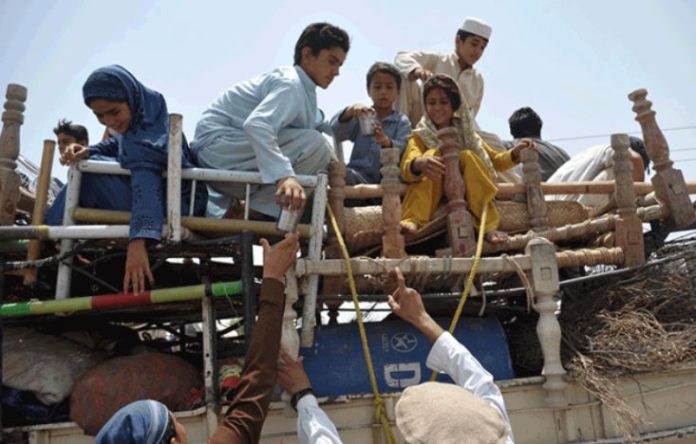
PESHAWAR, Sep 10 (APP/DNA):The security operation in Kharsin village of Zangoti area, North Waziristan, has been successfully completed, paving the way for displaced residents to return to their homes.

According to district official on Wednesday, the operation was finalized last night, after which families began safely moving back to their houses in the village.

To facilitate the returning residents, security forces arranged meals at the entry point, with lunch provided on-site and dinner delivered directly to the village.

In addition, a medical team, including one doctor and two lady health visitors, was stationed at the entry point to examine sick individuals and provide them with free medicines.

Pakistan, Japan renew resolve to enhance bilateral cooperation

Pakistan, Japan renew resolve to enhance bilateral cooperation

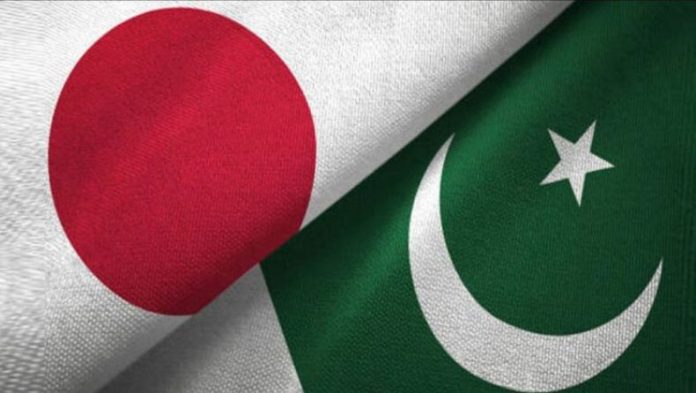
ISLAMABAD, Sep 10 (APP/DNA): Pakistan and Japan renewed their resolve to strengthening the longstanding economic and diplomatic partnership as the Ministry of Economic Affairs hosted the 9th Session of the Japan-Pakistan High-Level Economic Policy Dialogue (JPHLEPD) here.

According to press release issued by Ministry of Economic Affairs, the Pakistani delegation in the session was led by Secretary of the Ministry of Economic Affairs, Dr. Kazim Niaz while the Japanese delegation was headed by, Senior Deputy Minister for Foreign Affairs, Japan, AKAHORI Takeshi.

Both sides shared proposals to deepen bilateral ties, focusing on trade, investment, infrastructure development, and sustainable growth—reflecting both nations shared commitment to fostering economic prosperity and regional stability.

Secretary, EAD reiterated that Japan remains a key trade partner, with bilateral trade standing at $1.54 billion in FY 2024 – 25.

Pakistan is actively promoting its products at key Japanese trade exhibitions and facilitating Japanese business delegations at events like FoodAg and TEXPO. Key proposals included signing Mutual Recognition Agreements (MRAs) on sanitary and phytosanitary standards, establishing Japanese sourcing offices in Pakistan, launching JICA-supported compliance awareness programs, and enhancing SME participation in Japanese trade shows.

Pakistan side focus on skilled human capital development and labor mobility. In line with Japan’s Specified Skilled Workers (SSW) and Technical Intern Training Program (TITP), Pakistan side proposed the establishment of a Center of Excellence for Japanese Language Training with JICA’s technical support.

In his remarks, Dr. Kazim Niaz expressed deep appreciation for Japan’s continuous development support—over $11.38 billion in Official Development Assistance (ODA) through JICA since 1954.

Dr. Niaz emphasized expanding Japan’s grant-in-aid support, particularly for grassroots human security projects, and highlighted the potential for cooperation in renewable energy, climate action, IT, AI, chip manufacturing, mining, and skilled workforce mobility.

On the occasion, AKAHORI Takeshi reaffirmed Japan’s strong and enduring partnership with Pakistan. He welcomed the proposals shared by Pakistani ministries and expressed Japan’s interest in expanding collaboration in trade, investment, and development sectors. Highlighting Japan’s continued support through ODA, he emphasized cooperation in order to promote mutual prosperity and enhancing regional stability.

Both sides reaffirmed their commitment to deepening economic cooperation through sustained dialogue, mutual respect, and shared development goals. It was agreed to maintain regular follow-ups on the proposals discussed and to enhance institutional coordination between relevant ministries and agencies.

The two delegations expressed confidence that the outcomes of the 9th Session of the Japan-Pakistan High-Level Economic Policy Dialogue would pave the way for more robust trade, investment, and development cooperation, contributing to long-term economic stability and prosperity for both nations.

Stay Connected

64FansLike
60FollowersFollow

Latest Reviews

Exchange Rates

USD - United States Dollar
EUR
1.17
GBP
1.35
AUD
0.72
CAD
0.73