Home Blog Page 491

Religious leaders underline need for struggle against extremism

ISLAMABAD, SEPT 11 (DNA): Religious scholars and spiritual leaders have underlined the need for a concerted struggle against extremism, terrorism, sectarian violence and intolerance in Pakistan, stressing that the message of  Rahmat-ul-lil-Alameen (Mercy to the Worlds) must guide national efforts. They said Dr Muhammad Tahir-ul-Qadri has provided timely intellectual leadership to the Muslim world by exposing terrorism and the ideology of Khawarij, and his works remain a beacon of guidance for future generations.

They were speaking at the book launch ceremony  organized by Nizam-ul-Madaris Pakistan at the Pak-China Friendship Centre, Islamabad, where five new volumes authored by Dr Tahir-ul-Qadri on Quranic exegesis, principles of tafsir, Hadith and Seerah studies were unveiled.

Khurshid Nadeem, Chairman of the Rehmat-ul-lil-Alameen Authority, said that women’s role in religious scholarship is undeniable, and Dr Qadri set a practical example by empowering women to learn religion alongside men. He noted that Dr Qadri had been blessed with knowledge, wisdom, eloquence, and leadership, which made his services enduring for future generations.

Dr Hassan Mohiuddin Qadri said that Dr Tahir-ul-Qadri has written on every vital subject of the age, providing guidance to the Muslim Ummah. At a time of intellectual chaos and discord, he said, these scholarly works strengthened the call for unity and harmony.

Canadian scholar Sheikh Ahmad Badran remarked that Pakistanis are deeply devoted to the Prophet (PBUH), hospitable, and knowledge-loving, adding that Dr Qadri’s books offer practical solutions to the challenges facing Islam today.

Minhaj-ul-Quran Secretary General Khurram Nawaz Gandapur said the Pak-China Friendship Hall had now become a symbol of interfaith harmony, sectarian reconciliation, and knowledge-based dialogue.

Justice Dr Syed Muhammad Anwar of the Federal Shariat Court said Dr Qadri’s writings were proof that “the fountains of knowledge have not dried up,” describing each publication as a model of rigorous research.

Former Vice President of the International Islamic University Dr Sajid-ur-Rehman said Dr Qadri’s intellectual efforts had influenced both Eastern and Western academic circles, and his works reflect the legacy of early Islamic scholarship, making him truly deserving of the title “Shaykh-ul-Islam.”

Maj Gen (R) Syed Azhar Abbas, representative of the DG Religious Education, said Dr Qadri raised his voice against terrorism and extremism at a time when it was most difficult.


Azerbaijan, Black Sea Trade, Development Bank expand partnership opportunities

BAKU, Sept 11 Sahil Babayev, Minister of Finance and Governor for Azerbaijan at the Black Sea Trade and Development Bank (BSTDB), met with a delegation led by Serhat Köksal, President of the organization.
The meeting addressed the Bank’s recent operations, the current partnership framework between Azerbaijan and BSTDB, Azerbaijan’s involvement in the Bank, and prospects for future cooperation.
Minister Babayev briefed the delegation on Azerbaijan’s economic situation and positive trends, noting consistent steps to develop non-oil sectors. He highlighted achievements in agriculture, ICT, manufacturing, logistics, and green energy, emphasizing that these reforms strengthen the national economy’s resilience and ensure inclusive, long-term growth.
The Minister hailed the launch of the second phase of the Medium-Term Strategy and Business Plan, expressing confidence that the expansion of the resource base and full formation of the Bank’s Board of Governors would lead to major achievements in the coming years. He also underlined the importance of BSTDB’s investment in transport and logistics infrastructure, particularly regarding new transport corridors and the reconstruction of Azerbaijan’s liberated territories.
The visit also featured the signing of agreements with two banks, welcomed as a positive step. Officials stressed the importance of expanding financial operations in Azerbaijan, especially through direct loans to the private sector.
Serhat Köksal affirmed that cooperation with Azerbaijan holds strategic importance for the Bank, noting that ongoing reforms have created new opportunities for financial institutions. He added that BSTDB is interested in engaging in larger-scale projects in Azerbaijan and reiterated the Bank’s commitment to supporting joint initiatives.

‘Shift the narrative’ on suicide to prevent loss of 720,000 lives annually

BAKU, Sep 11 More than 720,000 people commit suicide every year and many more attempt it. Now the head of the UN’s World Health Organization (WHO) is calling for “shifting the narrative” on the issue “to challenge harmful myths, reduce stigma and foster compassionate conversations,” according to the official website of the UN.

Speaking on World Suicide Prevention Day, which is marked annually on 10 September, WHO’s Tedros Adhanom Ghebreyesus said that “each life lost leaves a profound impact on families, friends, colleagues and entire communities.”

All age groups are affected by suicide and was the third leading cause of death among 15–29-year-olds globally in 2021, the last year for which data has been gathered by WHO.

Suicide does not just occur in high-income countries and impacts all regions of the world.

Close to three quarters of global suicides occurred in low and middle-income countries in 2021.

The average number of suicides across the world in 2021 was 8.9 per 100,000 people.

In Africa the figure stood at 11.5, while in both Europe and Southeast Asia the number of suicides was recorded at 10.1 per 100,000 people.

Globally, the lowest suicide rate was in the Eastern Mediterranean region at 4.0 per 100,000, while in the Western Pacific it was 7.5 per 100,000.

Who’s at risk?

The link between suicide and mental disorders, in particular, depression and alcohol use disorders, and a previous suicide attempt is well established in high-income countries.

However, many suicides happen impulsively in moments of crisis with a breakdown in the ability to deal with life stresses, such as financial problems, relationship disputes, or chronic pain and illness.

In addition, experiencing conflict, disaster, violence, abuse or loss and a sense of isolation are strongly associated with suicidal behaviour.

Suicide rates are also high among vulnerable groups who experience discrimination, such as refugees and migrants, indigenous peoples, lesbian, gay, bisexual, transgender, intersex (LGBTI) persons and incarcerated prisoners.

Moving from silence to openness

“We must move from silence to openness, from stigma to empathy, and from neglect to support,” said Dr. Tedros.

“We must create environments where people feel safe to speak up and seek help,” he said.

“Shifting the narrative on suicide also means driving systemic change, where governments prioritise and invest in quality mental health care and policies to ensure everyone gets the support they need.”

According to the 2024 Mental Health Atlas report by WHO, median government spending on mental health has remained at a modest 2 percent of total health budgets since 2017.

Moreover, there is a significant disparity between high-income and low-income nations. Whilst high-income nations allocate up to $65 per person to mental health, low-income nations spend as little as $0.04.

WHO recognizes mental health as a universal human right.

Islamabad must view US-India ties with realism

US President Donald Trump, who is once again at the center of global political discourse, has signaled a likely meeting with Indian Prime Minister Narendra Modi in the coming days. In his remarks, Trump described Modi as one of his “closest friends,” a statement that marks a significant shift from his earlier, more combative approach toward India.

This change in tone is neither surprising nor entirely unexpected. While Pakistan had welcomed Trump’s previous tough line on India, it was always clear that Washington and New Delhi share structural strategic interests that are likely to override short-term irritants in their relationship. At the time, analysts in Islamabad cautioned against complacency, noting that Trump’s stance was unpredictable and subject to change. That change has now materialized.

Trump had at times taken a hard line on India, especially over trade imbalances and New Delhi’s protectionist policies. His administration briefly withdrew preferential trade benefits granted to India under the Generalized System of Preferences (GSP), accusing India of unfair treatment of American companies. On Kashmir, too, Trump surprised many by offering to mediate between India and Pakistan, a move New Delhi rejected outright.

These developments were initially welcomed in Islamabad, which saw Trump’s tougher posture as a sign that Washington might lean toward a more balanced South Asia policy. However, seasoned observers noted even then that Trump’s transactional style meant his positions were fluid. He was never one to be bound by ideological commitments; instead, he often recalibrated his stances based on personal rapport and perceived US interests.

Today’s warm rhetoric toward Modi must therefore be read in this context. Trump’s description of the Indian leader as a close friend signals not just personal chemistry but also a recognition of India’s long-term strategic value to Washington.

The evolving Trump-Modi dynamic reflects a broader reality: the United States and India are increasingly natural allies. Their partnership is anchored in shared interests, particularly in counterbalancing China’s growing influence in the Indo-Pacific. From defense cooperation to technology transfer, trade, and investment, Washington sees New Delhi as an indispensable partner in its global strategy.

This strategic alignment is unlikely to change significantly regardless of who sits in the White House. Even when Trump adopted a harsher tone, the underlying trajectory of US-India relations remained positive. Successive American administrations—Republican or Democrat—have consistently sought to deepen ties with India, recognizing its growing economic clout and strategic relevance.

For Islamabad, Trump’s latest overtures toward Modi serve as a timely reminder that Pakistan must frame its foreign policy with realism. While it is tempting to read too much into temporary rifts between Washington and New Delhi, the long-term direction of US-India ties remains steady and positive.

This does not mean Pakistan’s importance has diminished. Washington continues to recognize Islamabad’s role in regional stability, particularly in Afghanistan and counterterrorism efforts. However, the US-India partnership has its own momentum that Pakistan cannot wish away.

The prudent approach for Islamabad is to avoid emotional reactions to Trump’s shifting tone and instead focus on strengthening its own bilateral relationship with the United States on the basis of mutual interests. Pakistan’s strategic location, its role in regional peace, and its growing potential in trade, connectivity, and energy security remain relevant to American policymakers.

As Trump and Modi prepare for their likely meeting, the optics will undoubtedly emphasize personal warmth and partnership. This may disappoint some in Pakistan who had taken satisfaction in Trump’s earlier frustrations with New Delhi. But it should not come as a surprise. The US and India are bound together by structural interests that transcend personalities and political cycles.

For Pakistan, the key takeaway is not Trump’s unpredictability but the predictability of Washington’s broader approach toward India. Islamabad must continue to engage with the United States pragmatically, advancing cooperation where interests align, while also safeguarding its strategic relationship with China and deepening partnerships with other key players.

In international politics, friendships may shift, but interests endure. The Trump-Modi meeting will be another chapter in the evolving US-India story—one that Pakistan must watch closely, but without illusions.

Three dead, dozens wounded in Mexico City gas truck blast

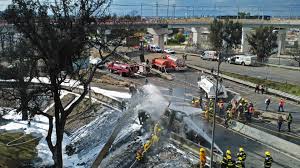
Mexico City, Sept 11 Three people died and 67 were wounded when a gas truck exploded in Mexico City on Wednesday, causing widespread damage, municipal officials said.
The vehicle blew up on a bridge in the densely populated Iztapalapa district in the capital’s east, leaving 19 people with second- and third-degree burns, Mexico City Mayor Clara Brugada said. She later announced that three people had died and 67 injured people were being treated in area hospitals, including several children.
Images distributed on television and social networks show the moment of the powerful explosion.
People can be seen with what appear to be serious burns, while others near the disaster zone flee fast-spreading flames that were later brought under control by firefighters.
Several other vehicles were damaged in the explosion, the causes of which are not yet known.
Images showed the burning truck, which was transporting 49,500 liters of gas, overturned on the road.
The smoke from the inferno reached a nearby trolleybus station, one of the main modes of transport in the city of 9.2 million inhabitants.

Azerbaijan, Black Sea Trade, Development Bank expand partnership opportunities

BAKU, SEPT 11 (AZERTAC/APP/DNA):Sahil Babayev, Minister of Finance and Governor for Azerbaijan at the Black Sea Trade and Development Bank (BSTDB), met with a delegation led by Serhat Köksal, President of the organization.

The meeting addressed the Bank’s recent operations, the current partnership framework between Azerbaijan and BSTDB, Azerbaijan’s involvement in the Bank, and prospects for future cooperation.

Minister Babayev briefed the delegation on Azerbaijan’s economic situation and positive trends, noting consistent steps to develop non-oil sectors. He highlighted achievements in agriculture, ICT, manufacturing, logistics, and green energy, emphasizing that these reforms strengthen the national economy’s resilience and ensure inclusive, long-term growth.

The Minister hailed the launch of the second phase of the Medium-Term Strategy and Business Plan, expressing confidence that the expansion of the resource base and full formation of the Bank’s Board of Governors would lead to major achievements in the coming years. He also underlined the importance of BSTDB’s investment in transport and logistics infrastructure, particularly regarding new transport corridors and the reconstruction of Azerbaijan’s liberated territories.

The visit also featured the signing of agreements with two banks, welcomed as a positive step. Officials stressed the importance of expanding financial operations in Azerbaijan, especially through direct loans to the private sector.

Serhat Köksal affirmed that cooperation with Azerbaijan holds strategic importance for the Bank, noting that ongoing reforms have created new opportunities for financial institutions. He added that BSTDB is interested in engaging in larger-scale projects in Azerbaijan and reiterated the Bank’s commitment to supporting joint initiatives.

France political crisis looms over ECB meeting

Frankfurt, Germany, Sept 11 France’s political crisis will likely take centre stage at a European Central Bank meeting Thursday, with turmoil in the eurozone’s second-biggest economy causing a fresh headache for policymakers.
The ECB is expected to hold its key interest rate steady at two percent for its second straight meeting, with inflation under control and trade tensions having eased since an EU-US deal was agreed in July.
But the latest French political crisis has thrown a new curveball at the central bank for the 20 countries that use the euro.
Francois Bayrou quit as prime minister on Monday following his defeat in a confidence vote over an austerity budget, and was replaced just 24 hours later by Sebastien Lecornu — France’s third prime minister within a year.
The turmoil sent France’s borrowing costs, a measure of investor confidence, surging above those of traditional eurozone debt laggard Italy.
ECB President Christine Lagarde is certain to face questions about the ructions in France, although she will likely stress that she does not comment on politics in individual eurozone member states.

Poland restricts air traffic in the east after drone raid

Warsaw, Sept 11 Poland on Thursday said it would restrict air traffic in the eastern part of the country, a day after it shot down reported Russian drones over its territory.
Air traffic along Poland’s border with Belarus and Ukraine will be closed to civilian flights, with rare exceptions, until December 9, the PAZP air traffic control agency said in a statement.
The measure “is being put in place to assure national security”, it said.
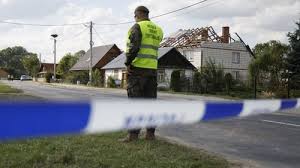
Polish authorities said on Wednesday that the NATO and EU member’s airspace was violated 19 times on Wednesday, with at least three drones shot down as Poland and NATO allies scrambled jets.

Chinese flying vehicle receives flight permit in UAE

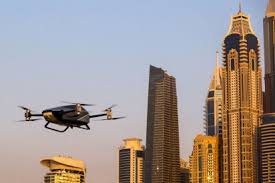
UAE, Sept. 10 “Land Aircraft Carrier,” a flying car developed by Chinese flying car company XPENG AEROHT, on Wednesday received a special flight permit in Ras Al Khaimah, the northernmost emirate of the United Arab Emirates (UAE).

The certification ceremony was attended by Sheikh Saud bin Saqr Al Qasimi, ruler of Ras Al Khaimah and member of the UAE Supreme Council, Zhang Yiming, Chinese ambassador to the UAE, and other senior officials.

The special flight permit was presented to Zhao Deli, founder of XPENG AEROHT, who said the UAE’s open innovation environment provides an ideal platform for validating flying car technology.

During the event, the Ras Al Khaimah Transport Authority signed a strategic memorandum of understanding with XPENG AEROHT to collaborate on flight testing certification and scenario applications, and to promote flying cars in such fields as government transport, tourism and emergency rescue.

Esmaeel Al Blooshi, director general of the transport authority, said that integrating Chinese flying vehicle technology enhances the UAE’s position in global smart mobility and low-carbon transportation, serving as a demonstration for the Middle East.

The “Land Aircraft Carrier” is a fully electric aircraft equipped with an intelligent large display and a single-stick control system. It supports both automatic and manual operation modes. Its advanced flight control system enhances operational safety, and its low noise levels along with environmentally friendly features make it well-suited for urban applications.

The UAE has been actively promoting low-altitude economic development and implementing policies to attract global companies in the smart transportation sector.

UAE, Italy to strengthen trade, investment, private sector collaboration

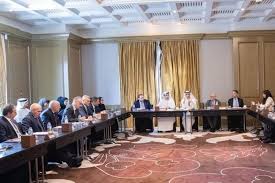
ABU DHABI, Sep 11 Dr. Thani bin Ahmed Al Zeyoudi, Minister of Foreign Trade, met with the Italian Business Council in the UAE to discuss strategies for increasing trade, investment, and private sector collaboration between the two countries. The meeting underscored the UAE’s commitment to strengthening its economic ties with Italy, a key partner within the European Union.

During the discussions, Al Zeyoudi emphasised the importance of the UAE-Italy economic relationship and noted the substantial growth in trade between the two countries, with non-oil bilateral trade reaching US$14 billion in 2024—a significant increase of 19.7% from 2023 and a 22.2% rise since 2022. In the first half of 2025, bilateral trade amounted to US$7.9 billion, marking a 14.6% year-on-year increase compared to H1 2024 and a 12.3% rise from H2 2024. In 2024, Italy stood as the UAE’s leading partner in non-oil trade among EU countries and 12th globally, making up 1.7% of its total global trade.

“The UAE is committed to further enhancing our economic partnership with Italy which has witnessed non-oil trade flows increase at a consistent rate over the last five years,” Al Zeyoudi stated. “Today’s discussions focused on expanding avenues for private sector collaboration that will be mutually beneficial. We are particularly eager to explore projects in technology, renewable energy, healthcare, and infrastructure that can drive growth for both our nations.”

Reflecting on the significance of the meeting, Al Zeyoudi remarked, “By working together, we continue to unlock new opportunities that not only drive economic growth but also contribute to the sustainable development of both our nations.”

The meeting served as a platform to discuss various ongoing initiatives and agreements aimed at leveraging the existing trade and investment framework for mutual benefit. Al Zeyoudi emphasised the importance of investing in sustainable and innovative projects that create jobs and generate lasting economic value in both countries. The UAE’s relationship with Italy has been on a positive trajectory, with both nations keen on fostering partnerships that lead to sustainable growth and technological advancements.

The meeting concluded with a shared commitment to further explore collaborative projects that will enhance trade relations and economic ties between the UAE and Italy, paving the way for a prosperous future for both countries.

Stay Connected

64FansLike
60FollowersFollow

Latest Reviews

Exchange Rates

USD - United States Dollar
EUR
1.17
GBP
1.35
AUD
0.72
CAD
0.73