Home Blog Page 490

Leonardo DiCaprio weighs in on the one film he deeply wishes a second chance at

Leonardo DiCaprio has just taken a trip down memory lane, and gotten honest about the one movie role he wants nothing more than to ‘reprise’ one day soon.

The actor shared everything while speaking to E! News, during a promotional event for his movie One Battle After Another.Admitting to the outlet he said, “It would be fun to do more Wolf of Wall Street stuff.”

The promotional event also included A-listers for co-stars, from Sean Penn, to Benicio Del Toro, Teyana Taylor, Regina Hall, and Chase Infiniti, as well as the director Paul Thomas Anderson.Prior to this conversation, the actor also spoke to Esquire magazine and named that project which he wishes he ‘hadn’t turned down’ as well. The biggest was Dirk Diggler in Anderson’s Boogie Nights.

At the time he said, “I’ll say it even though you’re here. My biggest regret is not doing Boogie Nights. It was a profound movie of my generation. I can’t imagine anyone but Mark in it. When I finally got to see that movie, I just thought it was a masterpiece.”

Floods force extension in Hajj registration deadline

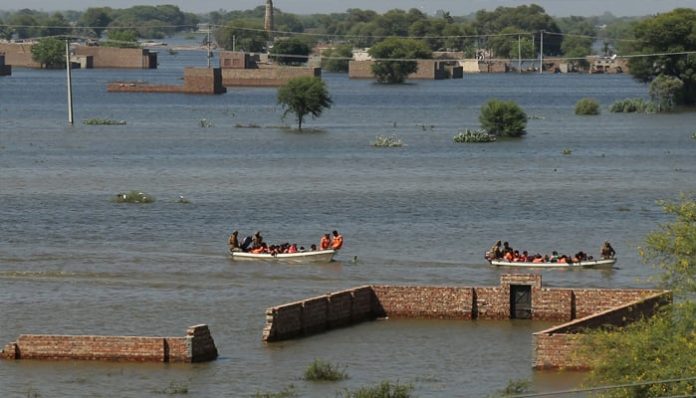
ISLAMABAD: The Ministry of Religious Affairs has announced an extension in the registration deadline for Hajj pilgrims under the private scheme due to disruptions caused by recent floods.

According to ministry sources, the registration process continues through the official online portal. Previously, pilgrims were required to complete registration by September 8.So far, more than 21,000 pilgrims have successfully registered. Sources confirmed that private Hajj operators are bound to give priority to those who were unable to perform Hajj last year despite completing the process.

Private operators will also be allowed to accept new applications against any unutilised quota.

Pilgrims who had submitted their deposits last year can perform Hajj this year without paying additional costs, while operators are obligated to facilitate them without charging extra.

However, those who withdrew their deposits after last year’s cancellation will not be eligible to avail the previous package rates.

Apple Watch hypertension feature wins FDA nod, rollout next week: report

Apple will roll out a hypertension detection feature on its smartwatch next week after receiving U.S. Food and Drug Administration (FDA) clearance on Thursday, Bloomberg News reported.

Apple and the FDA did not immediately respond to Reuters’ requests for comment.The company unveiled a blood pressure monitor in its latest Apple Watch at the September 9 event, where it also introduced a refreshed iPhone lineup, including a slimmer iPhone Air.

The feature, pending regulatory approval, will not detect every case of high blood pressure, but could alert about a million people, Apple said.

Available in 150 countries, the tool will use data from the watch’s optical heart sensor to track how a user’s blood vessels respond to heartbeats over 30 days, the report said, citing Apple.

The feature will be available on the Apple Watch Series 9, Series 10, Series 11, and its more expensive Ultra 2 and Ultra 3 smartwatches, Bloomberg News said.

Pak-China joint ventures Can Unlock Billions in Trade, Says Valimuhammad

Pak-China joint ventures Can Unlock Billions in Trade, Says Valimuhammad

DNA

Karachi: In a bid to deepen economic integration, Pakistan and China have been urged to expand bilateral trade through joint ventures and enhanced cooperation in the textile and chemical sectors. Speaking at the “2025 China-Pakistan Textile Chemical Technology and Investment Trade Forum,” Salim Valimuhammad, Chairman of the Pakistan Chemicals & Dyes Merchants Association (PCDMA), emphasized the need for stronger linkages between the business communities and governments of both nations.

The forum, held in Lahore and attended by over 100 delegates including government officials, industry leaders, and scholars, was hailed as a landmark moment for industrial collaboration. Sponsored by ShaOKing Haicheng Chemical Co., Ltd. and co-organized by CCPIT Ningbo Chemical Sub-council and the China Dyestuff Industry Association, the event spotlighted innovation, investment, and technology transfer.

Salim Valimuhammad highlighted the strategic role of textile and chemical industries in Pakistan’s economy and called for Chinese investment in local manufacturing to reduce import dependency. “This forum is a testament to the growing ties between Pakistan and China. By fostering partnerships, exploring new technologies, and investing in our textile and chemical sectors, we can unlock new opportunities and drive economic growth,” he said.

The PCDMA Chairman extended his gratitude to the China Dyestuff Industry Association for its pivotal role in organizing the conference. He also acknowledged the efforts of Rahim Chiktai, Aziz Chiktai, and the organizing committee for ensuring the successful execution of the forum. He also paid special tribute to Speaker of the National Assembly Ayaz Sadiq for attending the forum.

Valimuhammad was of the view that industry observers at the event emphasized that the textile and chemical sectors are critical pillars of Pakistan’s industrial growth, and increased technology transfer from China could help Pakistani businesses modernize and compete in global markets.

PCDMA Chairman further urged that bilateral trade must be seen as a shared responsibility of both governments and private sectors. “I believe this platform will pave the way for joint ventures, knowledge sharing, and innovation. Let’s work together to take our industries to new heights and strengthen the bonds between our nations,” he said.

The forum concluded with a consensus to pursue sustainable partnerships and position the textile-chemical collaboration as a model for broader economic cooperation under the China-Pakistan strategic framework.

NAHE celebrates HEC’s founding anniversary

ISLAMABAD, SEPT 12 /DNA/ – The National Academy of Higher Education (NAHE), Higher Education Commission (HEC), celebrated the 23rd founding anniversary of HEC with a graceful ceremony at its premises. Dr.Syed Mahmood Raza, Former Advisor HEC and a distinguished member of the founding team, was the Chief Guest. The event was also attended by 27 IPFP Fellows who joined in commemorating HEC’s remarkable journey of over two decades in transforming higher education in Pakistan.

Speaking on the occasion, Dr. Syed Mahmood Raza highlighted the pivotal role of the HEC in transforming Pakistan’s higher education landscape since its inception. He acknowledged the collective contributions of universities, faculty, researchers, and students in strengthening the sector and reaffirmed HEC’s mission to promote quality, innovation, and inclusivity in higher education.

In her remarks, Dr.Noor Amna Malik, Managing Director NAHE, emphasized that as the institution marks its anniversary, it remains committed to expanding access to higher education, supporting cutting-edge research, strengthening governance, and aligning academic programs with the evolving needs of society and the economy.

The event was also attended NAHE officers and staff. In his remarks, Mr.Sulaiman Ahmed, Director, NAHE reaffirmed commitment to a renewed transformation of HEC—strengthening its vision and mission to effectively respond to the dynamic needs of society, industry, and the knowledge economy.

The celebration featured a cake-cutting ceremony and special tributes to HEC’s founders, leadership, and partners whose vision and contributions have shaped its progress over the years. The ceremony concluded with a collective pledge by all participants to continue striving for the advancement of higher education in Pakistan.

PMDC reschedules MDCAT 2025 amid devastating floods

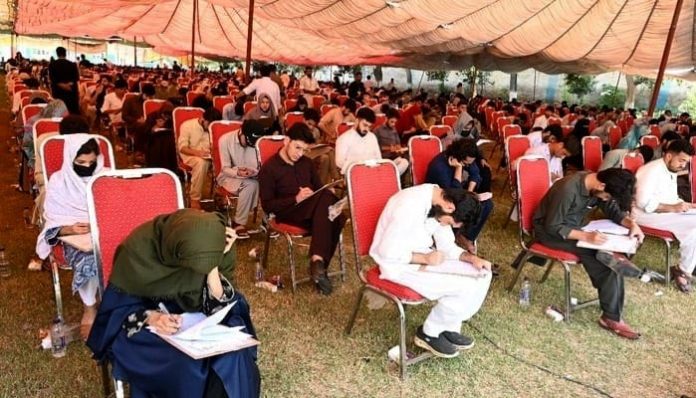
The Pakistan Medical and Dental Council (PMDC) has rescheduled the Medical and Dental College Admission Test (MDCAT) in view of the prevailing flood situation across the country. 

The PMDC said the test, earlier scheduled for October 5, 2025, will now be held on October 26, 2025 (Sunday).The council said the decision was made after consultations with representatives from all four provinces, Azad Jammu and Kashmir, and Gilgit Baltistan.

The decision has been taken in the best interest of students to ensure equal educational opportunities for all, PMDC said in a statement.

The development came after Federal Health Minister Mustafa Kamal instructed the PMDC to revise the schedule.

Reacting to the decision, the health minister said that step was taken in the larger interest of students.

UK announces £3 million flood relief Support

UK announces £3 million flood relief Support

Saifullah Ansar

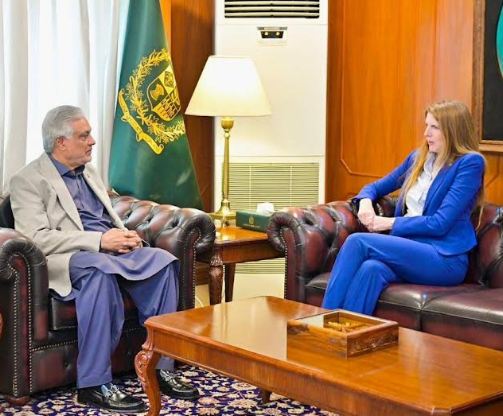
ISLAMABAD, SEPT 12 /DNA/ – The British High Commissioner to Pakistan, Ms. Jane Marriott, called on Deputy Prime Minister and Foreign Minister Senator Mohammad Ishaq Dar today to express the United Kingdom’s solidarity with Pakistan in the wake of the devastating floods and ongoing monsoon season.

High Commissioner Marriott announced £3 million in emergency relief and response assistance, with further humanitarian support to follow. She assured that the UK would continue to work closely with the Government of Pakistan and the National Disaster Management Authority (NDMA) to support both immediate relief and longer-term recovery efforts.

Senator Ishaq Dar appreciated the UK’s timely commitment and understanding of the scale of devastation caused by the floods. He conveyed Pakistan’s gratitude for the UK’s solidarity and support at this critical hour.

The meeting also covered discussions on bilateral relations, the importance of high-level exchanges, and recent regional and international developments.

‘Pakistan will have to adapt to floods as the new normal’

With millions displaced and close to a thousand people dead, the Pakistan floods that have been ongoing since June are worryingly reminiscent of the floods that devastated the country in 2022. As the country fights to keep its head above the rising floodwaters, many questions abound. Could the damage so far have been contained? How has climate change contributed? Has India’s release of floodwater — which it had warned about — exacerbated the loss and damage of its lower riparian neighbour? Have the floods been down to bad governance, or a lack of preparedness?

To understand these matters, Dialogue Earth spoke to Muhammad Ehsan Leghari, an expert on water resource management and member for the Sindh province at the Pakistani water regulator, the Indus River System Authority. He discussed the factors that have contributed to the unprecedented floods in Pakistan, what has and hasn’t worked for flood control, and how the country can manage future floods effectively. This conversation has been edited for length and clarity.What are the main natural and human-made factors that cause recurrent floods along the Indus River and its tributaries, particularly the massive inflows in the Punjab rivers?

As the geographer Gilbert F White noted in 1942, “Floods are ‘acts of God’, but flood losses are largely acts of man”. Human choices in building and managing floodplains can turn natural hazards into disasters. The world, including Pakistan, has been slow to adopt behavioural adjustments alongside engineering, often implementing solutions poorly or unnecessarily.

There are some key factors, generally, regarding the exacerbation of flood impacts. Weak governance turns emergencies into disasters, as seen in recent deaths from floods in Khyber Pakhtunkhwa and other parts of Pakistan. Lack of rational spatial or land-use planning exacerbates urban and riverine flooding. Top-down planning ignores real issues and experiences for most Pakistanis. Political and bureaucratic elites prioritise “brick-and-mortar” development that increases flood and hazard impacts.

Intense monsoons with 200 to 300mm rainfall that had been forecasted, glacial melt and storms, predicted amid northern heatwaves, are natural factors that caused the floods. But human-made factors cannot be ignored: deforestation increases runoff, and urbanisation and encroachments block natural flows. Similarly, the Ravi Urban Development Authority’s paving of floodplains along the Ravi River in Punjab turned absorbent areas into concrete, inviting devastation by turning them into river paths.

Reports like Pakistan’s 2025 Monsoon Prediction, the National Adaptation Plan and the updated Climate Change Policy highlight reduced river capacity from bridges and encroachments. They’ve urged resilience through wetlands and habitat restoration, but have been ignored.

The 2025 inflows have been a result of exceptional upstream rains, Himalayan melt, and India’s dam releases amid heavy rainfall that overwhelmed Punjab’s flatlands, displacing over 2 million people and impacting more 3.6 million, with millions more at risk as waters reach Sindh. This exposes systemic issues: encroached plains displace water onto communities, costing billions. Enforced zoning is needed to break the cycle.

How do glacial melt and changing monsoon patterns contribute to flooding in Pakistan?

They drive unpredictability. Accelerated melting in the Himalayan, Hindu Kush and Karakoram mountain ranges due to warming heightens during heatwaves, synchronising with erratic, concentrated rains that overload the Chenab and Sutlej rivers in Punjab. The province faces riverine overflows, while Khyber Pakhtunkhwa and Sindh see flash and urban floods.

With Pakistan contributing to less than 1% of global emissions, it’s an unjust hit when the country suffers from climate extremes, and in turn, USD 2 billion in losses. Pakistan will have to adapt to this new normal via basin monitoring, integrating it into development paradigms.

How effective are barrages, embankments and canals in managing floods? Do they worsen downstream flooding?

Controlled systems often increase downstream floods and droughts. Punjab mostly managed its headworks (structures at waterway diversion points) and barrages well during 2025 peaks, ensuring safely passing overflows. But Head Panjnad, a barrage where five rivers converge, faced aggressive flood waves, as forecasts by the Flood Forecasting Division had forewarned us. Punjab has rehabilitated most of its barrages; Sindh is upgrading its Guddu and Sukkur barrages.

However, these hydraulic structures can cause bottlenecks, blocking river paths and causing breaches, shifting burdens without adequate warning. Our infrastructure is old and inadequate, fostering a false sense of security for nearby developments. The solution is to shift strategy: live with floods, remove bottlenecks, let rivers flow and nourish floodplains. In addition, we must combine nature-based solutions – such as restoring floodplains — and controlling overflows with modern technology like automated barrage gates and AI forecasting.

What role does silt and sediment buildup in rivers and barrages play in increasing flood risks?

They raise riverbeds. Sediment buildup has elevated the River Indus riverbed, reducing the river’s flood handling capacity by 17.75%. Research has shown that over a 24-year period, this issue, combined with diminished water flow, has decreased the river’s capacity to manage high water levels by nearly half. Without management, sediment buildup causes spills, erosion, breaches and waterlogging.

It’s a cyclical issue: earlier deforestation upstream caused more soil to wash into the river, and the continued failure to manage this sediment has made recent floods, such as those in 2025, much worse, costing billions and impacting thousands of people. We need basin-wide sediment strategies such as integrated watershed management for the Indus, involving India and Afghanistan.

How is climate change expected to alter the intensity and frequency of floods in the Indus River basin over the next 20–30 years?

Climate change will increase the intensity and frequency of floods in the basin over the next few decades. This will mainly be caused by more intense monsoon rains, surging glacier melt and rising sea levels that block drainage in Sindh. It will lead to a new normal of more severe flooding, such as that seen in the 2010, 2022 and 2025 events. That means increased losses and vulnerability, with models predicting even more economic and human damage. Research from the World Weather Attribution supports the overall trend of rising flood vulnerability.

To counter this, a combination of nature-based solutions like restoring wetlands to help absorb floodwaters and engineering solutions are needed, along with improved governance across the entire river basin.Which groups or regions in Punjab have been most vulnerable to floods, and what local strategies could reduce their risk?

In my opinion, with around four million people affected, the low-lying districts along the Sutlej, Chenab, Ravi and Indus rivers, especially Multan, Jhang, Layyah, Dera Ghazi Khan, and Bahawalnagar, have borne the brunt of recent floods. Urban risk zones include cities like Sialkot, Rawalpindi, Chakwal and Lahore; they face serious flood threats due to drainage and planning challenges.

If we seriously want to safeguard these regions, several measures will have to be taken, such as rebuilding and maintaining concrete embankments, in addition to offering seasonal relocation incentives for local people, deploying mobile and veterinary health units, and mobilising elder-led evacuation plans that draw on ancestral knowledge. Also, empowering communities through bridging skills gaps \[in disaster preparedness] can lower risks drastically.

Are flood warning systems in Pakistan good enough, and if not, how can they be improved?

While flood warning systems have gotten better since 2010, they still need improvement. There is a definite lack of preparedness. Currently, one of the main problems is poor communication. Warnings don’t always reach rural areas, and sometimes they aren’t broadcast in local languages or communication channels. We also have accuracy issues: the information is not always reliable or delivered in real time. This is occasionally made worse by a lack of shared data between countries, as seen in the 2025 events involving India, particularly the suspension of the Indus Waters Treaty in April.

To improve these systems, we need to take steps such as using 24/7 monitoring and expanding communication through community radio and text message alerts, and ensure better coordination between all groups involved, especially at the community level. Most importantly, we need to shift from a top-down, reactive approach, to a bottom-up, community-driven one that empowers local people, especially the most vulnerable.

Did India release water that caused Punjab’s floods?

India released excess dam water — including from the Bhakra dam upstream of Pakistan’s Punjab province — worsening monsoon surges. Under the Indus Water Treaty, India should have restored effective communications mechanisms. Pakistan implies that India may have used water as a weapon; however, warnings came earlier through diplomatic channels — the first since the Indus Waters Treaty suspension — on humanitarian grounds.

What should Pakistan prioritise in order to mitigate floods?

Pakistan should prioritise rainwater harvesting, urban water reuse, developing green building codes, restoring its wetlands and floodplains, watershed management and forestation, which together can cut flood peaks by 10-20%. A 2023 Dutch white paper also stresses integrated resilience through three methods: water “reuse” (spreading so as to recharge groundwater) and “retention/reduction” (via cross-drainage and flood channels), as well as the concept of “removing”, or making space for the river through bridge redesign and bund removals, rather than resort to mega-dam projects.

Dams are not the solution. They bring high costs, ecological damage, displacement, and can even worsen floods. We saw this in 2025, when water was released from India’s full dams on the Ravi and Sutlej rivers into encroached plains, and the part

of the Chenab river without dams surged to 1 million cusecs (cubic flow per second). Dams are widely seen as anti-poor, anti-environment and unjust.

Which province has suffered the most in the floods of 2025?

Nationwide, since late-June, there have been over 900 monsoon-related deaths, and as of 11 September, Khyber Pakhtunkhwa has had the most fatalities (504) from flash floods, landslides and cloudbursts. From 14 to 16 August, cloudbursts triggered flash floods in the province. Buner, a district in Khyber Pakhtunkhwa, was worst hit, with at least 380 deaths. Shangla, Swat and Swabi, also in Khyber Pakhtunkhwa, saw similar destruction. Intense rain, deforestation, valley blockages and unregulated construction turned debris deadly, showing an urgent need for mountain-area planning and regulation.

Punjab faces the biggest infrastructure and agricultural losses. Sindh has suffered the longest inundation and displacement due to its flat [and poorly draining] terrain. The terrain drives impacts; Khyber Pakhtunkhwa’s slopes are deadly, while Punjab and Sindh bear economic and geographically spread-out damage [due to being relatively flat]. The whole country is in need of multidimensional recovery.

What are the risks to Sindh, as the lower riparian province?

Sindh’s lower riparian status exposes it to unmanaged upstream floods. But despite that, it lacks input on water releases or land use. In the province, rains amplify to become disasters due to its flat terrain with no flood escape routes, forcing river flows to reclaim floodplains through devastating breaches and prolonged inundation.

What are the biggest governance or policy gaps preventing effective flood management in Pakistan?

The main obstacle is weak governance. More than 400 flood path obstructions were identified in 2011 in a government report I worked on, which mapped over 350 coordinates. Flood responses are often fragmented and reactive, while agencies like the National Disaster Management Authority (NDMA) and its provincial counterparts remain disconnected from communities.

Irrigation departments are under-resourced and politicised, and the 10-year Flood Plan IV has stalled. Spatial planning rules are poorly enforced, and elite development projects by the Ravi Urban Development Authority tend to overshadow public safety. Mandates remain unclear, with overlapping institutions and unresolved inter-provincial disputes. To move forward, Pakistan needs clearly defined roles — who is responsible, when, how and at what cost.


Farahnaz Zahidi Moazzam is a Karachi-based journalist whose work focuses human-centric feature stories, environmental issues like solid-waste management, blue carbon, and water initiatives in South Asia.


This article was originally published on Dialogue Earth website. It has been reproduced on Geo.tv with permission.


EU appoints Raimundas Karoblis as new Ambassador to Pakistan

The European Union has voiced optimism that Ambassador Karoblis’s appointment will inject fresh momentum into bilateral relations with Pakistan. Under his leadership, the EU aims to expand cooperation in key sectors including trade, governance, development, climate action, and regional stability

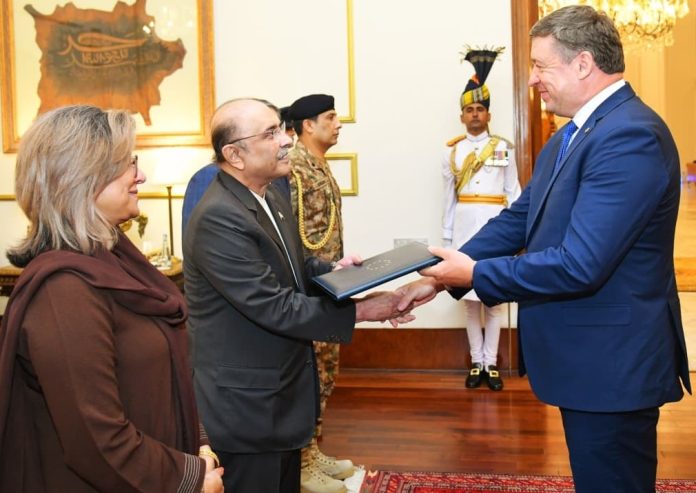
ISLAMABAD, Sep 12 (DNA):The European Union (EU) has appointed veteran diplomat Raimundas Karoblis as its new Ambassador to Pakistan, marking a renewed chapter in EU-Pakistan relations.

Ambassador Karoblis formally began his diplomatic mission in Islamabad after presenting his credentials to President Asif Ali Zardari on September 10, 2025, said in a statement issued here on Friday.

With more than three decades of experience in diplomacy, international trade, and security affairs, Karoblis is widely regarded as a statesman of exceptional calibre.

His career spans several key roles, including serving as the EU Ambassador to Tajikistan from 2022 to 2025, Lithuania’s Permanent Representative to the European Union from 2010 to 2015, and holding senior government positions overseeing EU affairs, foreign trade, and national security. A law graduate from Vilnius University, Karoblis is fluent in Lithuanian, English, French, and Russian, further reinforcing his diplomatic versatility.

During a meeting with the Ambassador of Turkmenistan, Karoblis underscored the EU’s commitment to strengthening regional cooperation. He expressed readiness to engage in constructive dialogue and enhance collaboration with Pakistan and neighbouring countries, particularly in areas such as sustainable development and infrastructure connectivity.

The European Union has voiced optimism that Ambassador Karoblis’s appointment will inject fresh momentum into bilateral relations with Pakistan. Under his leadership, the EU aims to expand cooperation in key sectors including trade, governance, development, climate action, and regional stability.

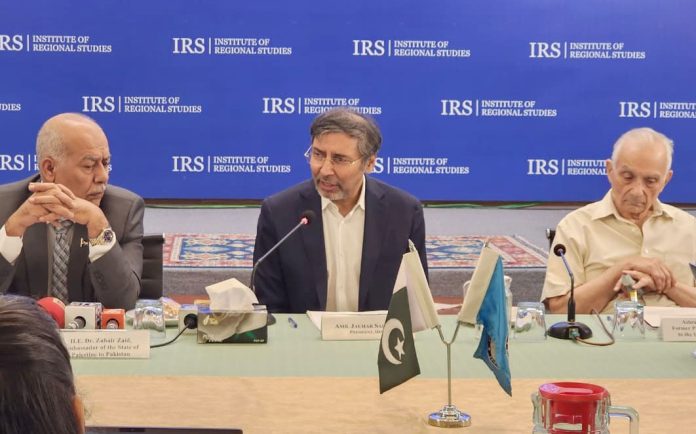
The Palestinian question: Policy imperatives for Pak and beyond

Ambassador Zohair Zaid, the Ambassador of Palestine to Pakistan, offered a moving account of the Palestinian struggle. He emphasized that the conflict is rooted not in religion but in dispossession, with Palestine historically a land for Muslims, Christians and Jews alike. 

DNA

Islamabad: The Institute of Regional Studies (IRS) convened a special roundtable discussion on “The Palestinian Question and Regional Stability: Policy Imperatives for Pakistan and Beyond.” The session examined the humanitarian crisis in Gaza, the historical and political dimensions of the Palestinian struggle and its implications for regional stability and Pakistan`s foreign policy. The session brought together Ambassador Zohair Mohammad Hamdallah Zaid, Ambassador Ashraf Jehangir Qazi and senior officials, with the discussion chaired by the President of IRS.

Opening the session, the President of IRS, Ambassador Jauhar Saleem described the unprecedented destruction in Gaza noting that more than 64,000 Palestinians, two-thirds of them women and children, have been killed and 80 percent of buildings have been demolished. Despite UN resolutions, ICJ and ICC rulings and widespread global condemnation, the devastation continues. He reaffirmed Pakistan’s longstanding position in support of a two-state solution, Palestinian self-determination and consistent advocacy in international forums.

Delivering the keynote address, H.E Ambassador Zohair Zaid, the Ambassador of Palestine to Pakistan, offered a moving account of the Palestinian struggle. He emphasized that the conflict is rooted not in religion but in dispossession, with Palestine historically a land for Muslims, Christians and Jews alike. “Palestine is not just a national issue. It is a land for all believers, Muslims, Christians and Jews. Yet it has been turned into an instrument to divide our region and keep it unstable,” he said.

Ambassador Zaid drew attention to the human cost of occupation pointing to mass displacement, systematic destruction of villages and continuing settlement expansion. He stressed that “what threatens Israel most is not our weapons, but our very existence on this land.” Despite the immense suffering, he reaffirmed Palestinian resilience. Ambassador Zaid concluded with a call for decisive international action; “The world should take practical steps. Put sanctions on Israel. This is the only way that can stop Israeli aggression and bring peace.”

Ambassador Qazi broadened the discussion to its global significance. He stated that “if Palestine is allowed to die, it will mark a colossal moral and civilizational failure.” He argued that U.S. and Israeli policies have rendered the two-state solution impossible and asserted that Israel has forfeited its legitimacy by threatening the very existence of the indigenous people of the land. “The only just solution now is the liberation of Palestine in a framework where people of all faiths; Muslims, Christians and Jews live together in justice and dignity,” he concluded.

The session concluded with a discussion in which participants highlighted the gap between political rhetoric and ground realities. Observations were made about the hypocrisy of the European states that continue to fund Israeli settlements despite official recognition of Palestine and about the double standards of international media that amplify isolated incidents in the West while remaining muted on daily Palestinian casualties. Participants agreed that sustained advocacy, solidarity and practical measures will be vital to ensuring that justice and peace ultimately prevail in Palestine.

Stay Connected

64FansLike
60FollowersFollow

Latest Reviews

Exchange Rates

USD - United States Dollar
EUR
1.17
GBP
1.35
AUD
0.72
CAD
0.73