Home Blog Page 487

Russian-Ukraine war: will there be peace?

Russian-Ukraine war: will there be peace?

The path to a lasting peace in Ukraine is a complex and highly charged issue, with multiple powerful players vying for influence. As the conflict grinds on, the desire for a resolution grows, but the terms of that resolution remain fiercely contested. The current landscape suggests that any eventual peace deal will not be a simple victory for one side, but a delicate and perhaps uncomfortable compromise, a “win-win” in the sense that it provides a way forward for all, even if no party gets everything it wants.

At the center of this diplomatic vortex is a U.S. President, Donald Trump, who has publicly and repeatedly expressed his desire to broker a peace deal. This ambition is not merely about foreign policy; it is deeply intertwined with his personal desire for global recognition, particularly the Nobel Peace Prize. He has a history of claiming credit for de-escalating international tensions, even when those claims are disputed. His administration has asserted that he played a pivotal role in brokering a peace deal between Armenia and Azerbaijan, and a ceasefire between India and Pakistan, claims that have been challenged by officials in those countries. This pattern of seeking high-profile diplomatic victories, regardless of the nuanced reality, provides a lens through which to view his approach to Ukraine.

However, bringing peace to Ukraine is a far more difficult undertaking than any of the regional disputes Trump has previously engaged with. The stakes are existential for Ukraine, and the geopolitical interests of Russia, the United States, and the European Union are deeply entrenched.

On one side, you have the European Union, which has been a steadfast supporter of Ukraine. European leaders have consistently emphasized their commitment to Ukraine’s sovereignty and territorial integrity, providing significant financial and military aid. They have also been a driving force behind sanctions on Russia. For the EU, a peace deal that compromises Ukraine’s independence or rewards Russian aggression is unacceptable. They are giving President Trump a tough time by insisting on a strong, unified front and pushing for terms that truly punish Russia and protect Ukraine. They have, in some instances, taken the lead in proposing additional sanctions and security guarantees for Ukraine, even as the U.S. under Trump has been seen as wavering in its commitment.

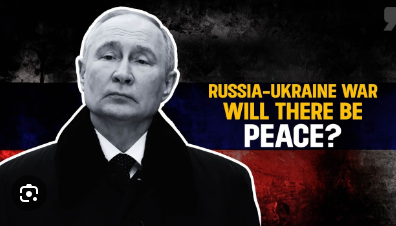
On the other side is Russia, led by Vladimir Putin. Russia’s terms for peace have been maximalist and unyielding. Putin has demanded that any deal recognize the territories it has annexed, and he has insisted on Ukraine’s “demilitarization” and “denazification,” which many observers interpret as a demand for a complete surrender of Ukraine’s national identity and sovereignty. Russia has little incentive to compromise from a position of strength, and it has used its military and economic leverage to make its demands clear. Putin is a shrewd negotiator who is unlikely to be swayed by mere talk; he will only respond to concrete pressure.

Given these opposing forces, a peace deal is not likely to be a simple affair. It will not be on Ukraine’s terms alone. Ukraine, a once beautiful country, has been utterly ravaged by war, much like Lebanon and Syria before it. The destruction is immense, and the human cost is immeasurable. While they have fought heroically to defend their nation, the reality of the devastation means that a complete military victory is a long shot. They will likely be under immense pressure to make concessions for the sake of ending the bloodshed and starting the process of rebuilding.

The ultimate deal, therefore, may well be a bitter pill for all to swallow. It might involve a ceasefire line that effectively cedes some territory to Russia, even if that is a non-starter for Ukraine in public. There may be a need for complex security guarantees for Ukraine that fall short of full NATO membership but are strong enough to deter future Russian aggression, perhaps involving a “coalition of the willing” from European nations. Economic aid will be a massive component, with the frozen assets of Russia potentially playing a crucial role in funding Ukraine’s reconstruction.

It is here that a “win-win” situation, in its most cynical sense, could emerge. For Trump, a signed deal, regardless of its true substance, is a “win” that he can use to burnish his image as a global peacemaker and pursue his Nobel aspirations. For Putin, it’s a “win” if he secures territorial gains and forces the West to engage with him as an equal. For the EU, it’s a “win” if the fighting stops and a more stable, albeit imperfect, security architecture is put in place, allowing them to focus on their own economic and political priorities. For Ukraine, the “win” is simply the cessation of a brutal war and the chance to begin rebuilding, even if it means sacrificing some of what it has lost.

This is the likely future. Not a triumphant end to the war, but a pragmatic, messy, and hard-fought truce. It will be a testament to the brutal truth that war is never a solution, and that peace, when it finally comes, often arrives with a heavy price tag and a complicated set of compromises that leave no one fully satisfied, but everyone with a path forward.

Pakistan Defeat Oman by 93 runs in Asia Cup Clash at Dubai

Pakistan Defeat Oman by 93 runs in Asia Cup Clash at Dubai

DNA

Dubai, September 12, 2025 — Pakistan outclassed Oman in their Asia Cup cricket tournament encounter at the Dubai International Cricket Stadium, securing a thumping 93-run victory and strengthening their position in the competition.

Batting first, Pakistan set a formidable total on the board, thanks to a solid top-order performance. Openers laid the foundation with a stylish half-century, while skipper anchored the innings with a composed knock. Contributions from the middle order pushed Pakistan’s score past the mark, leaving Oman with a daunting chase under lights.

Oman, in reply, began positively but soon ran into trouble against Pakistan’s fiery pace attack led by Shaheen Shah who ripped through the top order. The spinners tightened the grip in the middle overs, and Oman’s batting lineup crumbled under relentless pressure. Despite a brief resistance from [Oman Player Name], the team was bundled out for just 67 runs in 16.4 overs, handing Pakistan a comfortable victory.

This win not only boosts Pakistan’s chances of progressing to the next stage but also underscores their depth and dominance in both batting and bowling. Oman, on the other hand, will look to regroup quickly ahead of their next fixture.

The triumph was celebrated by a large crowd of Pakistani supporters in Dubai, who turned the stadium into a sea of green, cheering every run and wicket.

Four terrorists belonging to Indian proxy neutralised in Mastung

Four terrorists belonging to Indian proxy neutralised in Mastung

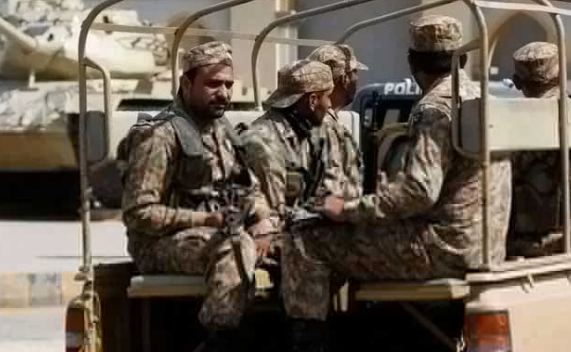
ISLAMABAD, SEPT 12: Security forces on Friday eliminated four terrorists belonging to the Indian proxy, Fitna al Hindustan, during an intelligence-based operation (IBO) in Balochistan’s Mastung.

During the conduct of the operation, the security personnel effectively engaged the terrorists’ location, and after an intense fire exchange, four Indian-sponsored terrorists were neutralised, the Inter-Services Public Relations (ISPR) said in a statement.

Weapons, ammunition and explosives were also recovered from the terrorists, who remained actively involved in numerous terrorist activities in the area.

The security forces were conducting a sanitisation operation to eliminate any other terrorists found in the area, it added.

The security forces “are determined to wipe out the menace of Indian sponsored terrorism from the country, and reaffirm the nation’s unwavering resolve to bring the perpetrators of terrorism to justice”, it concluded.

Pakistan witnessed a surge in terror activities, particularly in its Khyber Pakhtunkhwa (KP) and Balochistan provinces since 2021.

According to a report released by the Pakistan Institute for Conflict and Security Studies (PICSS), an Islamabad-based think tank, the country witnessed 78 terrorist attacks during the month of June, which resulted in at least 100 deaths.

Among the fatalities were 53 security personnel, 39 civilians, six militants, and two members of local peace committees.

A total of 189 people were injured, including 126 members of the security forces and 63 civilians.

Altogether, the violence and operations led to 175 deaths in June — among them, 55 security personnel, 77 militants, 41 civilians, and two peace committee members.

The security forces, along with the law enforcement agencies (LEAs) have been carrying out operations against the terrorists and even launched a targeted action against militants in KP’s Bajaur.

UN overwhelmingly endorses declaration on two-state solution for Israel, Palestinians

UN overwhelmingly endorses declaration on two-state solution for Israel, Palestinians

Centreline Report

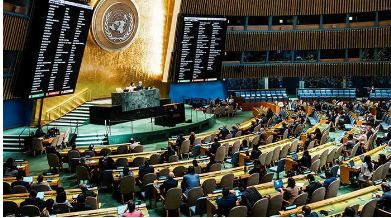
NEW YORK: The United Nations General Assembly (UNGA) overwhelmingly voted to endorse a declaration outlining “tangible, timebound, and irreversible steps” towards a two-state solution between Israel and the Palestinians ahead of a meeting of world leaders.

The seven-page declaration is the result of an international conference at the UN in July — hosted by Saudi Arabia and France — on the decades-long conflict. The United States and Israel boycotted the event.

A resolution endorsing the declaration received 142 votes in favour and 10 against, while 12 countries abstained.


Meanwhile, US President Donald Trump’s top diplomat, Marco Rubio, will fly to Israel this weekend amid tensions with fellow US allies in the Middle East over Israel’s strike on Hamas leaders in Qatar and expansion of settlements in the occupied West Bank.

State Department deputy spokesperson Tommy Pigott said on Friday that Rubio would depart on Saturday to visit Israel before joining up with Trump’s planned visit to Britain next week.

Rubio in Israel will emphasise Washington and Israel’s shared goals, Pigott said in a statement, citing the need to ensure Hamas never rules Gaza again and the return of hostages of October 7, 2023.

Rubio’s visit comes ahead of high-level meetings at the United Nations in New York later this month, where countries including France and Britain are expected to recognize Palestinian statehood.

CDA Hospital hosts awareness symposium

CDA Hospital hosts awareness symposium

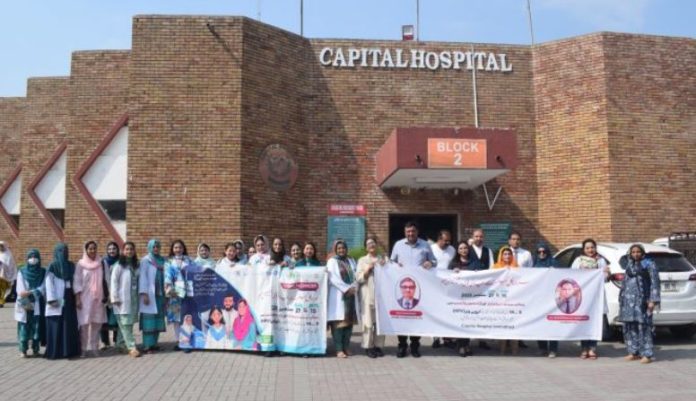
ISLAMABAD, SEP 12 (DNA) — The Capital Hospital CDA’s Department of Gynaecology, in collaboration with the Federal Directorate of Immunization (FDI) and the World Health Organization (WHO), organized an extensive awareness symposium on cervical cancer and the upcoming Human Papillomavirus (HPV) vaccination campaign.

The event marked the beginning of a major national effort, as Pakistan prepares for the first-ever large-scale HPV vaccine drive from September 15 to 27, 2025, aimed at protecting girls between the ages of 9 and 14.

At the gathering, experts and health officials shed light on the rising threat of cervical cancer and the critical importance of preventive measures. Globally, cervical cancer is the third most common cancer among women, with an estimated 660,000 new cases and 350,000 deaths every year.

Alarmingly, most of these deaths occur in low- and middle-income countries where awareness, timely screening, and vaccination remain limited. Pakistan mirrors this trend, recording around 5,000 new cases annually and facing the highest cervical cancer mortality rate in South Asia.

Speakers at the symposium noted that the majority of these deaths could be prevented through early screening and vaccination programs, but a lack of awareness, myths surrounding the vaccine, and weak healthcare infrastructure have made the fight against the disease more challenging.

Dr. Naeem Taj, Executive Director of CDA Hospital, urged families and communities to take preventive health seriously. He referred to WHO’s 90-70-70 strategy, which envisions eliminating cervical cancer by ensuring 90% of girls are vaccinated with the HPV vaccine, 70% of women are screened by the age of 35 and again by 45, and 70% of those with the disease receive proper treatment. “Pakistan cannot afford to lag behind on this,” he emphasized.

Dr. Sheeba Noreen, Head of Gynecology at Capital Hospital, highlighted the need to dispel myths surrounding HPV vaccination. She explained that misinformation often links the vaccine with stigma, preventing families from allowing their daughters to benefit from it. “The HPV vaccine saves lives. It is not just a medical intervention but an investment in the health and future of young girls,” she said.

Adding to this, Dr. Sofia Younas, Director General of FDI, said the campaign was a collective effort involving government institutions, international organizations, and communities. She underlined that prevention is far more cost-effective than treatment and pointed out that Pakistan’s growing population demands urgent preventive strategies.

“If we fail to act now, the burden of disease will continue to rise, threatening families and straining the health system,” she warned.From the gynecology team, Dr. Urooj Yasir Khan shared WHO data showing how underreporting remains a significant challenge. She noted that Pakistan currently lacks a national cancer registry, which makes it difficult to understand the full scale of the problem. — DNA

First ever EU-Egypt summit to take place in Brussels on October 22

First ever EU-Egypt summit to take place in Brussels on October 22

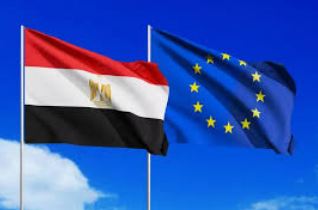
BRUSSELS, SEP 12 (WAM/APP): The European Council has announced  that the first-ever summit between the European Union and Egypt will be held on October 22 in Brussels. The EU will be represented by European Council President António Costa and European Commission President Ursula von der Leyen, while Egypt will be represented by President Abdel Fattah El-Sisi.

According to the Council’s statement, the summit comes within the framework of the comprehensive strategic partnership established in March 2024 that aims to deepen political and economic cooperation while supporting stability, peace, and shared prosperity.

The summit will also address pressing global issues, including the situation in the Middle East, as well as multilateralism, trade, migration, and security.

Interior Minister pays ribute to martyr Major Adnan Aslam, hails parents’ courage

Interior Minister pays ribute to martyr Major Adnan Aslam, hails parents’ courage

                ISLAMABAD, SEP 12 (APP): Federal Interior Minister Mohsin Naqvi and Minister of State Talal Chaudhry on Friday visited the residence of Major Adnan Aslam in Bannu, who embraced martyrdom while bravely fighting against Khawarij militants.

Naqvi met with the martyred officer’s parents and family members, offering heartfelt condolences and prayers for the elevation of Major Adnan’s ranks. He praised the parents’ unwavering courage, saying, “Your martyred son has written a new chapter of bravery and valor. Your resolve and determination are the nation’s strength, and we salute your greatness.” He added that even while wounded, Major Adnan continued to defend his comrades.

Talal Chaudhry called Major Adnan “a hero of the nation” and assured that his “great sacrifice will not go in vain,” emphasizing that the families of martyrs have earned the nation’s eternal gratitude.

The martyred officer’s father expressed pride in his son’s sacrifice, stating, “My brave son gave his life for the country and honored our name.” His mother, showing remarkable resolve, said, “Even if I had ten sons, I would sacrifice them all for the homeland. Adnan fulfilled my wish by giving his life for the country.”

Family members noted that Major Adnan Aslam was also an accomplished karate and martial arts athlete. Naqvi reviewed the awards and medals the late officer had received for his service.

Major Adnan Aslam was critically wounded in Bannu while rescuing a comrade during an operation against Khawarij terrorists and succumbed to his injuries during treatment. Chief Commissioner Islamabad Muhammad Ali Randhawa, IG Police Ali Nasir Rizvi, and Deputy Commissioner Islamabad Irfan Memon were also present during the visit.

Pakistan, Iran pledge greater cooperation on pilgrimage, religious harmony

Pakistan, Iran pledge greater cooperation on pilgrimage, religious harmony

By Rehan Khan

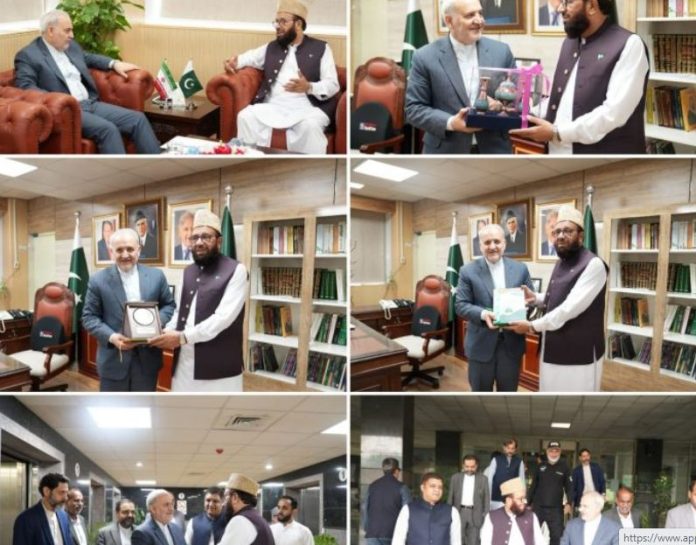
ISLAMABAD, September 12 (APP):Federal Minister for Religious Affairs and Interfaith Harmony, Sardar Muhammad Yousaf on Friday met with Iran’s Ambassador to Pakistan, Dr. Reza Amiri Moghadam, to discuss bilateral cooperation on religious affairs, promotion of interfaith harmony, and facilitation of pilgrims.

During the meeting, the Iranian envoy expressed deep sorrow over the loss of lives and property caused by recent rains and floods in Pakistan, assuring that Iran stood shoulder to shoulder with its brotherly neighbor in this time of trial.

The two sides held wide-ranging discussions on tackling global challenges, including religious intolerance, terrorism, sectarianism, and the need to strengthen interfaith dialogue.

Sardar Yousaf said Pakistan was taking steps to regularize the travel of pilgrims to Iran and Iraq. He announced that a memorandum of understanding (MoU) concerning Pakistani pilgrims and workers traveling to Iran would soon be signed, with the assistance of the Ministries of Religious Affairs, Interior, and Overseas Pakistanis.

The Iranian ambassador congratulated the minister and the government of Pakistan on hosting the 50th International Seerat-un-Nabi Conference, noting that contemporary issues, including the responsible use of social media, should be addressed in the light of the life and teachings of the Holy Prophet (Peace Be Upon Him).

He also expressed gratitude to Pakistan’s government and people for their support during Israel’s recent aggression against Iran, adding that Pakistan’s role in combating Islamophobia and terrorism remained highly significant.

Sardar Yousaf announced that Pakistan would host international Quran recitation competitions in November this year, describing it as another major honor following the International Seerat-un-Nabi Conference. The Iranian envoy welcomed the initiative, calling it a unique recognition for Pakistan.

Both sides agreed to enhance cooperation in facilitating Hajj and Umrah, as well as expanding exchanges of scholars and students from religious seminaries to promote modern education and mutual understanding.

FO rejects Netanyahu’s Pakistan remarks, condemns Qatar attack

FO rejects Netanyahu’s Pakistan remarks, condemns Qatar attack

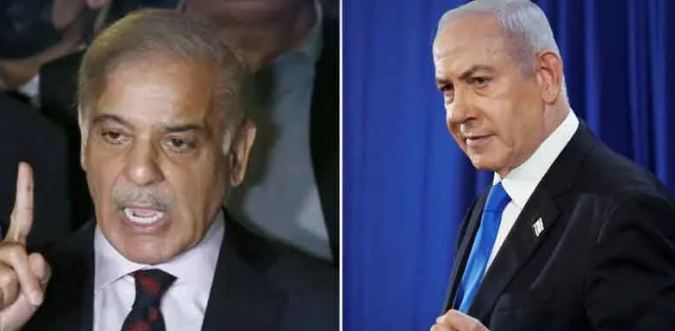
ISLAMABAD, SEPT 12: Pakistan has strongly condemned Israel’s attack on Qatar and rejected the alleged anti-Pakistan remarks of Israeli Prime Minister Benjamin Netanyahu.

The Foreign Office made it clear that Pakistan stands firmly with its “brotherly Islamic country” Qatar and urged the Muslim Ummah to unite against Israel’s ongoing provocations.

At his weekly press briefing on Friday, Foreign Office Spokesperson Shafqat Ali Khan said the Israeli strikes were “against international laws and the UN Charter” and posed a serious threat to regional peace and security.

Pakistan’s support for Qatar
The spokesperson emphasized that Israel’s attack on Doha was a direct assault on the security and sovereignty of Qatar.

“Pakistan stands with its brotherly country Qatar,” Khan said, adding that Muslim countries must “join hands to stop the path of the oppressor.”

Also Read: Israeli air strike targets Hamas officials in Doha

He further clarified that Pakistan does not consider it appropriate to respond directly to the statements of leaders “responsible for genocide”. He stressed that Pakistan was fully capable of defending itself.

Netanyahu’s remarks and call for Muslim unity
Responding to questions about Netanyahu’s alleged anti-Pakistan comments, Khan reiterated that Pakistan would not legitimize such rhetoric.

Instead, he called on Muslim nations to unite against Israeli provocations, stressing that Israeli aggression undermines regional stability and threatens ongoing diplomatic and humanitarian efforts.

PM’s position
Khan also highlighted Prime Minister Shehbaz Sharif’s stance on the issue, noting that the premier has called for an immediate halt to Israeli aggression in the Middle East.

The prime minister underscored that Muslim unity is essential to confront Israel’s provocations and safeguard peace in the region.

A day ago, Israeli Prime Minister Benjamin Netanyahu compared Israel’s attack on Qatar to the US killing of Osama bin Laden in Pakistan in 2011.

Also Read: Netanyahu vows more attacks abroad after Qatar strike

“So we did exactly what America did when it pursued Al-Qaeda terrorists in Afghanistan and then killed Osama bin Laden in Pakistan. Now, various countries around the world condemn Israel. They should be ashamed of themselves,” the Israeli prime minister said in a video statement.

He said, “What did they do after America killed Osama bin Laden? Did they respond by saying, ‘Oh, what a terrible thing was done to Afghanistan or to Pakistan?’ Instead, they applauded. They should applaud Israel for upholding the same principles and implementing them.”

He also threatened Qatar and other countries with expelling Hamas leaders or “bringing them to justice,” saying, “If you don’t, we will.”

Pakistan-UK relations clarified
The spokesperson also addressed speculation regarding Pakistan’s ties with the United Kingdom.

He dismissed claims that Pakistan was being targeted by any UK policy, clarifying instead that both countries are working together to confront shared challenges and maintain cooperation under existing agreements.

Also Read: Qatar urges collective response after Israeli strike on Doha

This response comes in the wake of recent reports of Shabana Mahmood, the UK’s new home secretary, saying Britain could suspend issuing visas to citizens of countries such as Pakistan that fail to “play ball” and agree to return deals for migrants.

Pakistan, India, Bangladesh, Nigeria, Iran, Iraq, and the Gambia have all previously been identified as being uncooperative.

Mahmood, the former justice secretary with a reputation for being a tough political operator, stated that securing the UK border was her “top priority”.

“For us, that means the possibility of cutting visas in the future to say we do expect countries to play ball,” she told reporters. Shabana went further: “Play by the rules, and if one of your citizens has no right to be in our country you have to take them back.”

Briefing on role of media in monitoring education budget 2025–26 implementation

Briefing on role of media in monitoring education budget 2025–26 implementation

PESHAWAR, Sep 12 (APP/DNA): A briefing was organized by Blue Veins organization to emphasize the important role of media in monitoring spending of Education Budget for the current fiscal year 2025–26.

The session underlined that media acts as a watchdog in ensuring effective resource implementation, gender-inclusive allocations, and addressing challenges that hinder the realization of education goals.

The Government of Khyber Pakhtunkhwa has announced an 11 percent increase in the education budget, rising from PKR 326 billion in 2024–25 to PKR 363 billion in 2025–26, with a development budget of PKR 18 billion.

Among the key initiatives are PKR 1.2 billion for the Education Emergency School Support Programme, a commitment under the Good Governance Roadmap to reduce out-of-school children by 50 percent, and the outsourcing of 1,500 schools under the public–private partnership model.

The budget also includes PKR 278 million for the construction of boundary walls and washrooms in 120 schools and introduces the Education Card Scheme to provide free textbooks, stipends, and other facilities to students. This year 29 new development projects have also been introduced.

Speakers at the briefing noted that while the budget reflects ambitious commitments, robust budget tracking, transparency, and accountability mechanisms are essential to ensure that these resources translate into meaningful impact, particularly for girls’ education, in line with the Free and Compulsory Education Act 2017 and its notified rules in 2025.

Highlighting the importance of girls’ education, participants stressed that the media must sustain pressure on policymakers to honor their commitments, ensuring that financial allocations lead to concrete improvements in enrolment, retention, and the quality of education for girls.

Qamar Naseem, Program Manager at Blue Veins, stated, “The increased allocations for education in 2025–26 show promise, but without vigilant monitoring, these resources risk being lost in inefficiencies. The media has the power to demand accountability, track progress, and ensure gender-responsive spending that leaves no child behind.”

Echoing the same concern, Farah Inam, Member of the Rise & Shine Girls’ Education Leadership Network, said, “For too long, girls have been deprived of their right to education due to systemic neglect. This budget provides opportunities, but only if it is implemented effectively. The media must amplify the voices of girls and hold the government accountable to its promises.”

Media representatives participating in the session also highlighted the need for training journalists in budget monitoring, budget tracking, and gender-sensitive budgeting so that the media can play a more effective role in ensuring accountability and transparency.

Such capacity building has the potential to transform the media into a stronger force for ensuring that education resources are utilized efficiently and equitably.

Stay Connected

64FansLike
60FollowersFollow

Latest Reviews

Exchange Rates

USD - United States Dollar
EUR
1.17
GBP
1.35
AUD
0.72
CAD
0.73