Home Blog Page 485

The Social Media Ban That Sparked a Revolution

The Social Media Ban That Sparked a Revolution

Laiba Bashir

BS International Relations

The protests in Nepal began shortly after the government banned 26 popular social media platforms on September 4, 2025. These included Facebook, Instagram, YouTube, WhatsApp, X (formerly Twitter), and LinkedIn. The government argued that the ban was necessary because these companies failed to comply with new regulations requiring them to register with Nepal’s Ministry of Communication and Information Technology. The rules were introduced to help authorities curb harmful content such as misinformation, hate speech, and online fraud. Despite repeated warnings and opportunities to register, the companies did not comply, leading the government to block their services nationwide.

For Generation Z—who rely heavily on social media for communication, news, entertainment, and even employment opportunities—the ban felt like a direct attack on their freedom of expression and connectivity. Many young Nepalis also used these platforms to expose corruption and highlight the privileges enjoyed by powerful political families. The hashtag #Nepokids (short for “nepotism babies”) gained traction, criticizing how the children of elites lived in luxury while ordinary citizens struggled with unemployment and limited access to basic services.The ban was therefore seen not just as a regulatory decision but as a political move to silence dissent and weaken youth-led anti-corruption activism. Social media had become a crucial organizing tool for young people to spread their message quickly and mobilize protests. Overnight, millions of Nepalis—nearly half the population—lost access to these platforms, sparking widespread anger and confusion. Many turned to VPNs to bypass the ban. This restriction became the spark that ignited larger demonstrations demanding honesty, accountability, and more opportunities for the country’s youth.

The median age in Nepal is 25, making young people a significant portion of the population. Unsurprisingly, it was this generation—Gen Z—that spearheaded the protests. What began as online resistance rapidly spilled into the streets, especially in Kathmandu and other major cities. The demonstrations were largely led by students and young workers who called for honesty, fairness, justice, and an end to the social media ban.Initially peaceful, the protests escalated after police attempts to disperse crowds. Security forces reportedly used water cannons, tear gas, rubber bullets, and even live ammunition. Human rights groups confirmed the deaths of at least 30 people, including three police officers, while hundreds were injured. Protesters retaliated by damaging government buildings, including the parliament and the Supreme Court, and setting fire to some politicians’ homes.The unrest forced Prime Minister K. P. Sharma Oli and several cabinet ministers, including the Home Minister, to resign. The Home Minister stepped down citing “moral responsibility” for the bloodshed. Authorities imposed curfews in Kathmandu and other urban centers in an attempt to restore order.

What made this protest movement unique was that it was largely independent of political parties. Most participants were motivated by frustration with corruption, nepotism, unemployment (over 20%), and poor economic conditions. Social media had previously been their most powerful tool for organizing, and the ban only deepened their determination. Despite the government crackdown, the protests demonstrated the ability of Nepal’s youth to mobilize effectively and demand change, marking a new chapter in the nation’s political history.

Although the social media ban was the immediate trigger, the protests were fueled by long-standing issues: widespread corruption, mismanagement, nepotism, and growing inequality. More than 20% of Nepali youth remain unemployed, and the economy depends heavily on remittances, which account for nearly one-third of national income. This reliance underscores the lack of domestic job opportunities.Such conditions created deep resentment among young people. The circulation of videos showing police violence, particularly the death of a young protester, further galvanized the movement. Reports that Prime Minister Oli’s wife had quietly left the country during the crisis added to perceptions of instability and elite detachment.Nepal’s youth movement mirrors similar protests across Asia, where digital-savvy young generations are challenging entrenched political systems and demanding jobs, fairness, and accountability.

The Gen Z protests in Nepal mark a turning point in the nation’s political trajectory. The government’s failure to address systemic issues—corruption, nepotism, and unemployment—has eroded trust in state institutions. When peaceful demonstrations turned violent, the army intervened to restore order and has since become a key player in negotiations over a transitional government that includes youth representation. This signals a potential new role for the military in Nepal’s governance.The events underscored the indispensable role of digital platforms in modern political life. Social media served not only as an organizational tool but also as a means of rapidly spreading information and uniting young Nepalis across the country’s challenging geography. Even after the government lifted the ban, the protests continued, proving that the movement’s demands went far beyond digital access. The youth called for transparency, job creation, accountability, and an end to entrenched corruption.Political leaders and the military now face mounting pressure to take Gen Z’s demands seriously. Experts argue that this could permanently reshape Nepal’s political landscape, embedding youth activism as a lasting force in policymaking and reform. While Prime Minister Oli and his ministers have resigned, the political situation remains fragile, with curfews and military patrols continuing in Kathmandu and other cities.

The youth-led movement is negotiating for a peaceful transition to a new, democratically elected government, emphasizing dialogue and reform.

Nepal’s Gen Z uprising represents a historic moment of political awakening. What began as a fight against a social media ban quickly evolved into a broader struggle against corruption, unemployment, and the outdated political order. Unlike earlier generations, this movement is fueled by digital connectivity, political awareness, and frustration with a system that has failed to deliver.The resignation of Prime Minister Oli is already a major achievement for the movement, but its true legacy lies in proving that young people can be a transformative force in politics. The future of Nepal will likely be shaped by this generation’s demands for transparency, inclusivity, and accountability.Yet challenges remain: ensuring peaceful reforms, bridging generational divides, and building public trust in new political institutions. Despite these hurdles, the protests have already altered Nepal’s political narrative. Gen Z has signaled that it is unwilling to accept the corruption and patronage of the past—and is prepared to fight for a more just and democratic future.
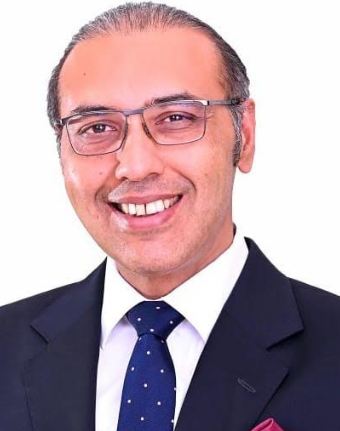
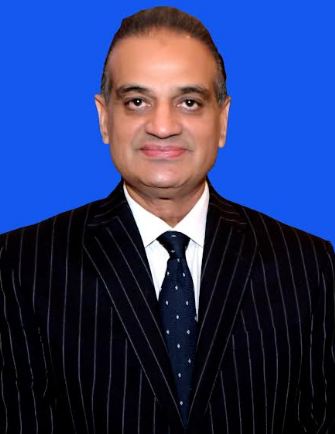
RCCI calls for at least 3% policy rate cut in upcoming SBP meeting

RCCI calls for at least 3% policy rate cut in upcoming SBP meeting

RAWALPINDI, SEPT 14: /DNA/ – The Rawalpindi Chamber of Commerce and Industry (RCCI) has called on the State Bank of Pakistan (SBP) to implement a substantial reduction in the policy rate — by at least 3 percentage points — in the upcoming Monetary Policy Committee (MPC) meeting scheduled for Monday, September 15.

RCCI President Usman Shaukat emphasized that while the central bank has halved the policy rate to 11% since June 2024, further monetary easing is both timely and essential. “With inflation projected to average around 6% in the current fiscal year, there is considerable room for an additional 300 basis point cut,” he stated.

Mr. Shaukat stressed that Pakistan urgently needs a more competitive interest rate environment to stimulate industrial activity, attract investment, and enhance the country’s regional economic standing. “Bringing Pakistan’s interest rates in line with those of neighboring economies is critical to lowering the cost of doing business — especially for small and medium-sized enterprises (SMEs), which remain disproportionately affected by high borrowing costs,” he said.

He also referenced a recent visit by Finance Minister Muhammad Aurangzeb to the Chamber House, during which the Minister hinted at the potential for a policy rate cut later this year, citing easing inflation and improving macroeconomic indicators.

 “The time for decisive action is now. A meaningful rate cut would not only provide urgent relief to businesses, but also restore investor confidence and create a more competitive environment for industry and exports,” Mr. Shaukat added.

The RCCI reiterated its long-standing call for comprehensive monetary and structural reforms aimed at promoting sustainable economic growth, safeguarding jobs, and strengthening Pakistan’s industrial base.

Zardari in China: strategic diplomacy or political foresight?

Zardari in China: strategic diplomacy or political foresight?

Opinion

Ansar Mahmood Bhatti

President Asif Ali Zardari, co-chairman of the Pakistan People’s Party (PPP) and one of the country’s most seasoned politicians, has embarked on a rare and strategically important 10-day visit to China. The unusually long duration of the trip itself makes it distinctive, since heads of state generally do not undertake such extended visits. This signals that both Beijing and Islamabad attach exceptional importance to this engagement. In many ways, Zardari’s visit is not just ceremonial diplomacy but a calculated move within the broader canvas of Pakistan-China relations, particularly in the context of the China-Pakistan Economic Corridor (CPEC) and its second phase, CPEC-II.

For years, we have been highlighting the undeniable fact that China has enormous stakes in Pakistan. CPEC, launched under the Belt and Road Initiative (BRI), is perhaps the most ambitious infrastructure and connectivity project in Pakistan’s history. It has brought roads, energy projects, ports, and industrial zones to a country whose successive governments had failed to prioritize infrastructure development. Without CPEC, Pakistan’s road network and energy sector would be far weaker. Whatever tangible development we see today is largely because of Chinese investment and planning, not due to the vision of our ruling elites who, more often than not, focused on filling their own coffers instead of the welfare of the people.

Now, with CPEC-II expected to be launched in the near future, China is carefully recalibrating its approach towards Pakistan’s domestic political landscape. Unlike the past, when Beijing leaned too heavily on one political party, China now seems determined to broaden its outreach to all major stakeholders.

History has shown that China’s earlier strategy of leaning primarily on the Pakistan Muslim League-Nawaz (PML-N) carried serious risks. During the PML-N government, relations were smooth, and CPEC advanced at a rapid pace. However, the dynamics changed dramatically when the Pakistan Tehreek-e-Insaf (PTI) under Imran Khan came into power in 2018.

The PTI leadership was openly skeptical of several Chinese projects. They believed that the agreements were clouded by corruption and inflated costs, with allegations of kickbacks and non-transparent deals. Consequently, Imran Khan’s government ordered a comprehensive audit of CPEC projects. While it is true that anomalies were discovered, China’s immediate reaction was to halt progress on almost all projects.

The atmosphere grew tense. The then Chinese Ambassador to Pakistan, Sun Weidong, reportedly took nearly two months before deciding whether to pay a courtesy visit to Imran Khan and congratulate him on becoming Prime Minister. The delay was symbolic, reflecting China’s dissatisfaction with the PTI government’s approach. For a time, the momentum of CPEC came to a standstill.

With the PML-N’s return to power, efforts were made to mend fences. The leadership of the party worked hard to restore Beijing’s confidence. These attempts have largely borne fruit, and today, Pakistan-China relations once again appear to be on a strong trajectory. According to reports, CPEC-II is now poised to take off.

However, the Chinese leadership has also learned a crucial lesson: over-reliance on a single political party is a flawed strategy in Pakistan’s volatile political environment. Pakistan’s politics are unpredictable. Parties that appear to have been pushed to the margins often stage surprise comebacks. Thus, engaging with all major political forces is the only way for China to secure long-term stability for its investments.

It is in this backdrop that the invitation to President Asif Ali Zardari becomes highly significant. By inviting Zardari on a 10-day trip, China has signaled its intent to cultivate closer ties with the PPP, which has substantial influence in Sindh. Beijing appears to be preparing for all possible political outcomes in Pakistan. If the PML-N government weakens or falls, the PPP could once again become a dominant player. Therefore, investing in a strong working relationship with Zardari makes strategic sense for China.

Zardari himself is a pragmatic leader with vast experience in international diplomacy. His extended engagement in China is likely to cover a wide array of issues—from CPEC-II projects to broader political cooperation, security collaboration, and people-to-people ties.

While strengthening ties with the PPP is wise, China must not stop there. If it is truly committed to safeguarding its long-term interests, it needs to extend similar outreach to the PTI as well. Despite the imprisonment of many of its leaders and the immense challenges it faces, PTI remains the most popular political force in Pakistan. Ignoring PTI would be short-sighted.

Pakistan’s political history is full of surprises. Parties and leaders often rise from what seemed like political oblivion. This unpredictability is why an all-inclusive approach is essential for Beijing. Working with only one or two parties exposes China to the risk of sudden policy reversals when governments change. By building bridges with the entire spectrum of political stakeholders—PML-N, PPP, and PTI alike—China can ensure that its strategic projects like CPEC remain insulated from domestic political turbulence.

Beyond the immediate political calculations, Zardari’s visit also underscores the depth of Pakistan-China relations. For Pakistan, China is more than just a development partner—it is the country’s most dependable ally on the global stage. At a time when Pakistan faces economic crises, security challenges, and shifting regional dynamics, Chinese support has been indispensable.

However, the relationship should not be viewed through a transactional lens alone. Pakistan must also shoulder responsibility by ensuring transparency, efficiency, and good governance in all projects. Corruption, mismanagement, and political infighting have often undermined the full potential of CPEC.

President Asif Ali Zardari’s extended visit to China is more than a diplomatic courtesy—it is part of a carefully crafted strategy by Beijing to diversify its engagement across Pakistan’s political spectrum. The visit reflects both opportunity and responsibility. For China, it offers a chance to secure its investments and strengthen trust. For Pakistan, it provides another opening to rebuild credibility and demonstrate political maturity.

The future of Pakistan-China relations lies in inclusivity. By reaching out to all major political players—including the PTI—China can shield its strategic partnership from domestic upheavals. For Pakistan, the lesson is equally clear: unless we rise above petty politics and corruption, even our closest friends cannot deliver miracles.

Zardari’s China visit may well mark the beginning of a new, more balanced phase in the Pakistan-China relationship—one that acknowledges the reality of Pakistan’s complex political landscape and the necessity of working inclusively for shared prosperity.

Call for Legal Reform: Murree community unites to end child marriage

Call for Legal Reform: Murree community unites to end child marriage

MURREE, SEPT 14: /DNA/ – As part of the ongoing project “Reduce Early Marriages to Enhance Gender Equality,” supported by the Norwegian Embassy in Islamabad, an awareness session was held in Murree to advocate for the amendment of the Child Marriage Restraint Act 2015 (Punjab). The proposed change calls for raising the minimum legal age of marriage for girls from 16 to 18 years.

Organized in collaboration with the Hill Fruit Research Sub-Station, Sunny Bank, Murree, the session was part of the second phase of the Avocado Festival. It brought together more than 30 participants from diverse backgrounds, all of whom unanimously supported the proposed legal amendment by raising their hands during the session. The discussion focused not only on legal reform but also on the broader protection of girls’ and women’s rights—particularly in disaster situations—and the urgent need to safeguard their legal identities during such crises.

Participants explored how recurring climate-related disasters, especially monsoon floods, have heightened the risks for girls in vulnerable communities. When identity documents such as national ID cards are lost or destroyed, access to essential services, protection, and legal safeguards is severely restricted. Under economic pressure and social insecurity, some families resort to marrying off young daughters, a practice that has led to the emergence of so-called “monsoon brides.” These are girls pushed into early marriage during or after flood disasters—a practice that undermines their rights to health, education, and personal development.

Project Manager Nabeela Aslam led the session and presented an overview of child marriage laws across Pakistan. She noted that while Sindh and the Islamabad Capital Territory have already legislated 18 as the minimum marriage age for both girls and boys—with strict penalties for violators including parents, family members, nikah khawans, and marriage registrars—Punjab still operates under a nearly century-old legal framework.

The Child Marriage Restraint Act, originally enacted in 1929, currently sets the minimum age of marriage at 16 for girls and 18 for boys. Ms. Aslam explained that Quaid-e-Azam Muhammad Ali Jinnah played a pivotal role in shaping the original legislation. However, in light of recent advancements in child protection and a Lahore High Court ruling, urgent reform is now required. The court declared the age disparity unconstitutional and directed the Punjab government to align the law with national and international standards by setting 18 years as the minimum age for both girls and boys, verified through national identity cards.

Participants raised pressing concerns during the discussion, such as how a young, uneducated girl can realistically be expected to shoulder adult responsibilities in traditional family settings. The session emphasized that early and forced marriage is not merely a cultural tradition or a survival strategy in crises—it is a human rights violation that disproportionately impacts girls, particularly in disaster-affected and economically marginalized areas.

The session concluded with a collective commitment among participants to advocate for legislative reform and broader public education. There was unanimous agreement that safeguarding girls’ rights, particularly in times of crisis, must be a national priority. Raising the legal age of marriage to 18 is a vital step toward ending harmful practices and ensuring no girl is left behind—especially in the face of escalating climate-related challenges.

Local folk singer Ali Sher presented a moving song urging the audience to support girls’ education. His performance highlighted education as the foundation of personal empowerment for girls and a critical driver of development for both communities and the country as a whole.

Supporters of slain US activist Charlie Kirk shut down critics

Supporters of slain US activist Charlie Kirk shut down critics

WASHINGTON, Sept 14 (AFP/APP):For some Americans on the far right, Charlie Kirk died a “martyr” and any criticism of the hugely popular conservative activist must be punished.

Online vitriol and grassroots persecution have exploded in the wake of the assassination of the 31-year-old who had been an electrifying presence on the US right, with the killing further deepening fraught political divisions in the country.

Laura Sosh-Lightsy, assistant dean of students at a university in the southern state of Tennessee, found herself in hot water after posting on social media about Kirk’s death.

“Hate begets hate. ZERO sympathy,” she said on Facebook after the killing, which happened Wednesday in front of a large crowd at a university in Utah.

Republican US Senator Marsha Blackburn quickly called out the comment — and Sosh-Lightsy.

“This person should be ashamed of her post. She should be removed from her position,” the Tennessee lawmaker said.

     Middle Tennessee State University’s president announced that same night an employee’s firing for a “callous” comment about Kirk.

  Kirk, who rallied his millions of followers to help President Donald Trump win a second White House term, was both revered and reviled for his pro-gun, anti-abortion and anti-immigrant rhetoric.

   Shooting suspect Tyler Robinson, who was arrested Thursday, is said to have engraved anti-fascist messages on his bullet casings. This has led to a large part of the American right labeling him a “far-left” killer.

    Some Kirk supporters have turned into online sleuths, searching out accounts that praised or celebrated Kirk’s murder.

    “If they have their picture on their profile, even without a name, download the picture and reverse image search it,” conservative influencer Joey Mannarino said.

       “Cross-reference it with their LinkedIn profile and find their place of employment. Call the place of employment, leave Google reviews.”

  These efforts have targeted teachers, firefighters and even military personnel, some of whom have lost their jobs.

   Kirk’s murder has been condemned by both sides of the political aisle. But Trump quickly blamed the country’s “radical left,” even as authorities were only just launching a manhunt for the killer.

                  Online trackers have targeted an Oklahoma teacher, who posted on social media: “Charlie Kirk died the same way he lived: bringing out the worst in people.”

                  That teacher has since been investigated by the state’s Department of Education, which described his comments as “abhorrent.”

                  – Stadium memorial service –

                  Trump, who praised Kirk as a “giant of his generation,” has led the US government in memorializing the activist, with high-ranking US officials working to weed out critics of Kirk and his legacy.

                  Trump ordered flags lowered to half-staff in honor of his ally, and Kirk’s body was flown from Utah to his home in Phoenix, Arizona aboard Air Force Two, escorted by Vice President JD Vance.

                  Meanwhile, Defense Secretary Pete Hegseth ordered members of the military to identify colleagues who mocked or celebrated Kirk’s death.

                  US Under Secretary of State Christopher Landau declared that “foreigners who glorify violence and hatred are not welcome visitors to our country.”

                  “I have been disgusted to see some on social media praising, rationalizing, or making light of the event, and have directed our consular officials to undertake appropriate action,” he said in a post on X.

                  “Please feel free to bring such comments by foreigners to my attention so the @statedept can protect the American people.”

                  Laura Loomer, a far-right conspiracy theorist who has Trump’s ear, has been one of the most high-profile attackers of Kirk’s critics.

                  She denounced an employee of the Federal Emergency Management Agency (FEMA), who had expressed disgust on Instagram that flags would be lowered for “the literal racist homophobe misogynist.”

                  Loomer shared the staffer’s LinkedIn profile and said: “These people hate us. They don’t belong near the levers of our National Power.”

                  Following Loomer’s post, FEMA said the employee was placed on leave for making “revolting and unconscionable” comments.

                  On Saturday, Kirk’s organization Turning Point USA announced a memorial service for its founder will be held on September 21 in a suburb of Phoenix.

                  The chosen venue hints at the expected turnout: a stadium normally home to a professional football team, with a seating capacity of more than 63,000.

President Zardari Travels by High-Speed Train in China

President Zardari Travels by High-Speed Train in China

dna

Mianyang, China, 14 September 2025: President Asif Ali Zardari today travelled from Chengdu to Mianyang by a high-speed train, covering the journey in around half an hour.

During the journey the President was briefed on the train’s operations, service, safety systems and environmental advantages. Officials highlighted that China now operates the world’s largest high-speed rail network of over 45,000 km of dedicated track, carrying more than 2 billion passengers annually. With trains running at up to 350 km/h, the network links almost all major Chinese cities. China has built a standardised, dedicated passenger system that has become a model of modern connectivity.

The President praised China’s achievements in sustainable and resilient transport, including pollution-free electric propulsion and earthquake early-warning technologies, describing them as a marvel of railway engineering. He noted that such innovations offer valuable lessons for other countries including Pakistan.

The President was accompanied by Pakistan’s Ambassador to China, Mr Khalil Hashmi, Chinese Ambassador to Pakistan, Mr Jiang Zaidong, who is travelling with the President throughout his visit, and Senator Saleem Mandviwalla.

On arrival, the President was received by Mr Wu Hao, Vice Mayor of Mianyang.

Pakistan to convey tough message to Taliban

Pakistan to contact IMF for relief in electricity bills to flood victims

Islamabad to

convey tough

message to

Taliban govt

TTP acquiring money, training in terrorism and weapons from India and enjoys safe havens in Afghanistan

Saifullah Ansar/DNA

ISLAMABAD: Pakistan’s Representative for Afghanistan, Ambassador Muhammad Sadiq Khan, will visit Kabul early next week with a stern warning from Pakistan for Afghanistan regarding the facilitation of Tehreek-e-Taliban Pakistan (TTP), The News reported on Sunday.

Sadiq, as per the diplomatic sources, will raise the issue of Kabul’s assistance to the TTP and the provision of safe havens for them on Afghan soil.

The envoy has been visiting Kabul frequently in recent months as part of shuttle diplomacy to impress upon the Taliban administration not to assist the TTP since this outlawed group is causing bloodshed in Pakistan.

It is acquiring huge money, training of terrorism and weapons from India. Pakistan has been providing strong evidence to Taliban interim government on this count.

The visit comes against the backdrop of the martyrdom of 19 soldiers in Khyber Pakhtunkhwa during separate operations from September 10 to 13, wherein at least 45 terrorists belonging to the Indian proxy Fitna al-Khawarij were killed, the Inter-Services Public Relations (ISPR) had said in a statement on Saturday.

The martyrdoms prompted a strong response from Islamabad, with Prime Minister Shehbaz Sharif demanding that Kabul choose between siding with terrorists or standing with Pakistan and warned there would be zero tolerance for ambiguity on the issue.

PM Shehbaz, during his Bannu visit on Saturday, made it clear that anyone speaking in favour of foreign elements or acting as their facilitator would be treated as their “instrument and would be answered in the same language they understood”.

Afghan nationals are involved in terrorist incidents in Pakistan, he said, adding that illegal Afghan residents would soon be expelled.

The premier’s remarks came as the two nations share a porous border spanning around 2,500 kilometres with several crossing points, which hold significance as a key element of regional trade and relations between the people across both sides of the fence.

However, the issue of terrorism remains a key issue for Pakistan, which has urged Afghanistan to prevent its soil from being used by groups such as the TTP to carry out attacks inside the former’s territory.

Islamabad’s reservations have also been confirmed by a report submitted to the United Nations Security Council (UNSC) by the Analytical Support and Sanctions Monitoring Team, which has revealed a nexus between Kabul and the TTP, with the former providing logistical, operational, and financial support to the latter.

Meanwhile, sources say that the Taliban government has been assuring Pakistan that TTP would not be allowed to carry out such nefarious activities while using the Afghan soil but at the end of the day, it had been backtracking from its promises.

The sources reminded that Deputy Prime Minister and Foreign Minister  Ishaq Dar had visited Kabul thrice in recent months.

The sources said that Muhammad Sadiq Khan, who played an important role in the Doha talks on Afghanistan in recent years, has dashed to the United Arab Emirates (UAE) on a mission, not specified. He is likely to return to Islamabad (Monday).

Asia Cup 2025: Sri Lanka defeat Bangladesh by 6 wickets

Asia Cup 2025: Sri Lanka defeat Bangladesh by 6 wickets

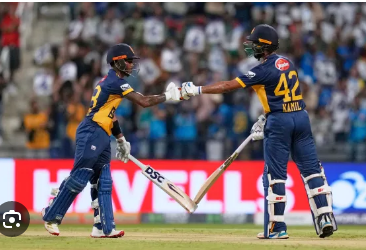
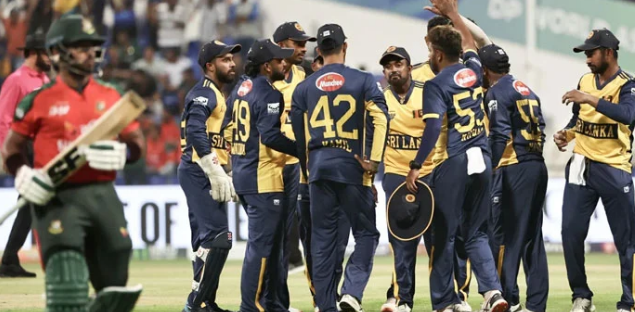
ABU DHABI, SEPT 13 – Sri Lanka defeat Bangladesh by 6 wickets. Sri Lanka lose another, but with just 17 needed to chase. Bangladesh managed to put up 139 for five in their allotted overs despite a shaky start, as their middle order salvaged the innings against Sri Lanka in the fifth match of the ongoing ACC Men’s Asia Cup 2025 at the Sheikh Zayed Cricket Stadium, Abu Dhabi on Saturday.

Sri Lanka captain Charith Asalanka’s decision to field first proved beneficial as Bangladesh could accumulate 139/5 in their allotted 20 overs.

The Tigers got off to a disastrous start to their innings as they lost both their openers, Tanzid Hasan and Parvez Hossain Emon, both duck and thus had been reduced to 2/0 in 1.4 overs.

Bangladesh lost another wicket inside the batting powerplay when Towhid Hridoy (eight) got run out in the fifth over while attempting to run a couple.

Following the early stutter, Bangladesh captain Litton Das attempted to launch a recovery with a sensible knock until falling victim to Wanindu Hasaranga in the 10th over. He scored 28 off 26 deliveries with the help of four boundaries.

With Bangladesh reeling at 53/5 in 9.5 overs, middle-order batter Jaker Ali and Shamim Hossain registered a gutsy sixth-wicket partnership, adding 86 runs in 61 deliveries.

Shamim remained the top scorer for Sri Lanka with a 34-ball 42, laced with three fours and a six, closely followed by Jaker, who made 41 from as many deliveries with the help of two boundaries.

Hasaranga was the standout bowler for Sri Lanka, taking two wickets for just 25 runs in his two overs, while Dushmantha Chameera and Nuwan Thushara chipped in with one scalp apiece.

Earlier, Sri Lanka won the toss and elected to bowl first against Bangladesh.

Playing XIs

Sri Lanka: Pathum Nissanka, Kusal Mendis (wk), Kamil Mishara, Kusal Perera, Charith Asalanka (c), Kamindu Mendis, Dasun Shanaka, Wanindu Hasaranga, Dushmantha Chameera, Binura Fernando and Nuwan Thushara.

Bangladesh: Tanzid Hasan, Parvez Hossain Emon, Litton Das (c & wk), Towhid Hridoy, Shamim Hossain, Jaker Ali, Mahedi Hasan, Tanzim Hasan, Rishad Hossain, Shoriful Islam and Mustafizur Rahman.

Asia Cup 2025: Bangladesh post 139 after collapse against Sri Lanka

Asia Cup 2025: Bangladesh post 139 after collapse against Sri Lanka

ABU DHABI: Bangladesh managed to put up 139 for five in their allotted overs despite a shaky start, as their middle order salvaged the innings against Sri Lanka in the fifth match of the ongoing ACC Men’s Asia Cup 2025 at the Sheikh Zayed Cricket Stadium, Abu Dhabi on Saturday.

Sri Lanka captain Charith Asalanka’s decision to field first proved beneficial as Bangladesh could accumulate 139/5 in their allotted 20 overs.

The Tigers got off to a disastrous start to their innings as they lost both their openers, Tanzid Hasan and Parvez Hossain Emon, both duck and thus had been reduced to 2/0 in 1.4 overs.

Bangladesh lost another wicket inside the batting powerplay when Towhid Hridoy (eight) got run out in the fifth over while attempting to run a couple.

Following the early stutter, Bangladesh captain Litton Das attempted to launch a recovery with a sensible knock until falling victim to Wanindu Hasaranga in the 10th over. He scored 28 off 26 deliveries with the help of four boundaries.

With Bangladesh reeling at 53/5 in 9.5 overs, middle-order batter Jaker Ali and Shamim Hossain registered a gutsy sixth-wicket partnership, adding 86 runs in 61 deliveries.

Shamim remained the top scorer for Sri Lanka with a 34-ball 42, laced with three fours and a six, closely followed by Jaker, who made 41 from as many deliveries with the help of two boundaries.

Hasaranga was the standout bowler for Sri Lanka, taking two wickets for just 25 runs in his two overs, while Dushmantha Chameera and Nuwan Thushara chipped in with one scalp apiece.

Earlier, Sri Lanka won the toss and elected to bowl first against Bangladesh.

Playing XIs

Sri Lanka: Pathum Nissanka, Kusal Mendis (wk), Kamil Mishara, Kusal Perera, Charith Asalanka (c), Kamindu Mendis, Dasun Shanaka, Wanindu Hasaranga, Dushmantha Chameera, Binura Fernando and Nuwan Thushara.

Bangladesh: Tanzid Hasan, Parvez Hossain Emon, Litton Das (c & wk), Towhid Hridoy, Shamim Hossain, Jaker Ali, Mahedi Hasan, Tanzim Hasan, Rishad Hossain, Shoriful Islam and Mustafizur Rahman.

Is Qatar the straw that breaks the camel’s back?

Is Qatar the straw that breaks the camel’s back?

Coming on the back of its merciless conduct of the Gaza war, Israel’s targeting of Hamas leaders in Qatar, gathered to discuss a US ceasefire proposal, potentially is the straw that broke the camel’s back.

For the first time in the war, condemnation of Israeli actions is unanimous, with the United States joining the choir in censoring Israel by endorsing a condemnatory United Nations Security Council statement.

Alongside a gathering gale of governmental and civil society efforts to sanction Israel, the US support for the Council’s statement could prove to be more than words.

That is, if Donald Trump concludes that the attack on Qatar and Prime Minister Binyamin Netanyahu’s threat to strike again in the Gulf state, and possibly Turkey, constitutes an effort to sabotage the US president’s endeavour to end the war.

POLLIs Qatar a watershed?Trump’s anger is storm in a teacupTrump will twist Israel’s armUS credibility is on the linePublic anger will force Trumps hand
LISTEN NOW · 15:37

Turkey this week denied involvement in an alleged foiled plot by a Turkey-based Hamas cell to assassinate ultra-nationalist Israeli National Security Minister Itamar Ben-Gvir, a particular bete noir of the international community.

US Secretary of State Marco Rubio was scheduled to fly to Israel this weekend in part to establish whether Israel’s attack on Gaza was intended to disrupt the ceasefire talks.

Few doubt that to be the case.

“The attack in Qatar cannot be divorced from the negotiations over the release of hostages and Netanyahu’s obvious and repeated attempts to foil any progress,” said journalist Amos Harel.

A State Department statement said Mr. Rubio would “convey America’s priorities in the Israel-Hamas conflict and broader issues concerning Middle Eastern security.”

Mr. Trump has repeatedly said he wants to see an end to the war and the release of Hamas-held hostages, abducted during the group’s October 7, 2023, attack on Israel.

At the same time, Mr. Trump, responding to the Israeli attack, described “eliminating Hamas” as “a worthy goal.

Mr. Trump, beyond the fact that he doesn’t take kindly to being crossed by others, is under pressure to demonstrate to the United States’ allies in the Gulf that America is a reliable security ally rather than a partner in crime with Israel.

Moreover, Mr. Trump values winners. Israel’s failure to kill any of Hamas’s senior leaders in the Qatar strike and the subsequent universal condemnation of the attack don’t rank Mr. Netanyahu as a winner.

Even so, Mr. Trump appears unwilling to make Mr. Netanyahu understand that angering or crossing the president has consequences, even if much of the Israeli security establishment opposed his decision to attack Qatar.

The price for Mr. Trump’s reluctance is likely to be accelerated talks with Gulf states aimed at securing more ironclad defence guarantees and provisions of what happens when the United States is perceived to be negligent in living up to its commitments.

The United States has long been negotiating defence arrangements with Saudi Arabia as part of a now moribund deal that would have involved the kingdom’s recognition of Israel.

In a first indication of the revival of such talks, Qatari Prime Minister Mohammed bin Abdulrahman Al-Thani this week reportedly discussed tighter defence cooperation with the United States during a dinner in Washington with Mr. Trump, as well as earlier talks with Vice President JD Vance and Secretary Rubio.

Qatar hosts the largest US military base in the Middle East.

Qatari officials, including Mr. Al-Thani, have been careful not to assert that the United States was complicit in the Israeli attack and have stressed the two states’ close ties.

Credit: OpenSecrets

Funded by hundreds of millions of dollars, Qatar, the seventh-largest spender on lobbying in Washington, has built one of the US capital’s more influential foreign lobbies and has curried favour by investing in sports teams and Newsmax, an influential far-right, pro-Trump media outlet.

“This is an attack orchestrated by a megalomaniac who is leading a radical government in Israel. It has nothing to do with the United States,” said Majed al-Ansari, an advisor to Mr. Al-Thani and the Qatari foreign ministry’s spokesman.

Ironically, the Israeli attack may push Gulf states to adopt a more unified regional defence posture long advocated by the United States, involving a joint air and missile defence command.

Israel attacked Qatar as the Gulf state, alongside Saudi Arabia, the UAE, and Jordan, among multiple others, participated in a joint two-week US-Egyptian exercise aimed at enhancing military interoperability and counterterrorism efforts.

The Gulf states are also likely to prioritise the development of a more robust regional military-industrial complex, building on existing Saudi and Emirati steps in that direction and a greater diversification of partners.

Meanwhile, the writing of Israel’s international isolation and mounting perceptions of the Jewish state as a pariah is on the wall.

The “Israeli leadership…may be misreading the global map and the opinion map and how people are looking at the crimes Israel has committed,” said Daniel Levy, a former Israeli peace negotiator-turned-staunch critic of Israel.

“Governments, whether in the region or elsewhere, who probably don’t want to take steps, but Israel is forcing them to come to terms with the reality that Iran isn’t the biggest threat in the region,” Mr. Levy said.

Mr. Levy suggested that discussions about the Middle East were beginning to focus on “how does one begin to contain this… There is a change (in) how Brand Israel is perceived.”

With Arab and Muslim leaders gathering in Doha for an emergency summit likely to pile the pressure on Mr. Trump, the president will want to prevent the possible unravelling of his crown foreign policy achievement in his first term in office: the forging of diplomatic relations with Israel by the United Arab Emirates, Bahrain, Morocco, and Sudan.

The UAE foreign ministry, in a rare rebuke of Israel that went beyond a public statement, summoned Israeli Ambassador Yossi Shelley to denounce what it called Israel’s “blatant and cowardly” attack.

Qatar and others are pressuring the UAE to withdraw its ambassador to Israel, if not break off diplomatic relations with the Jewish state.

A rupture in the diplomatic ties between Israel and the UAE, a driving force in the Arab establishment of relations and hitherto Israel’s best Arab friend, would be a blow for Mr. Trump’s projection of himself as a peacemaker.

Earlier, the UAE, following in the footsteps of several European countries, barred Israeli companies from participating in the Dubai Air Show, one of the largest aerospace exhibitions in the Middle East.

Similarly, Lana Nusseibeh, a senior UAE foreign ministry official, warned before the Israeli attack that Israeli plans to annex parts of the occupied West Bank would be a “red line” that would “betray the very spirit of the Abraham Accords.”

The accords, signed in a 2020 White House ceremony presided over by Mr. Trump, sealed the recognition of Israeli by the UAE, Bahrain, Morocco, and Sudan.

In addition, Gulf states are likely to be more assertive in countering Israeli actions.

That could have repercussions for Emirati, Saudi, and Qatari pledges to invest some $US3.6 trillion in the United States in the coming years.

The three states could refrain from investing in US companies that contribute to the Israeli war effort, although that could be self-defeating given the breadth and depth of US military support for the Jewish state.

A less problematic approach would be for Gulf states to be more supportive of legal proceedings against Israel and its leaders in the International Court of Justice (ICJ) and the International Criminal Court, as well as legal complaints against Israeli politicians and military personnel in various countries.

States like Saudi Arabia have so far played a modest role in legal proceedings.

That could change with Qatar vowing that it would respond to the Israeli attack legally and diplomatically.

In doing so, Qatar would join numerous governmental, public, and civil society efforts signalling rejection of Israel’s refusal to end the Gaza war and resolve the Israeli-Palestinian conflict with the creation of an independent Palestinian state.

Some of those initiatives may cause Israel further reputational damage and/or inconvenience Israeli nationals, others are likely to inflict varying degrees of pain. However, taken together, they amount to a gathering gale.

In some of the latest initiatives, the Netherlands this week joined Spain, Ireland, Slovenia, and Iceland in threatening to boycott next year’s Eurovision Song Contest if Israel were allowed to participate. Dutch broadcaster AVROTROS is one of the competition’s funders.

In a similar move, thousands of move industry workers, including actors and directors, pledged not to work with Israeli film institutions “implicated in genocide and apartheid against the Palestinian people.”

In Berlin, a human rights group filed a criminal complaint with the German Federal Public Prosecutor’s Office against a German-born Israeli military sniper suspected of killing unarmed Palestinians in Gaza, which constitutes a war crime.

The complaint is based on a media investigation by several European news organizations, including The Guardian.

Israel’s countering of sanctions and boycotts with similar measures of its own is a stillborn baby that weakens Israel rather than its targets.

With an economy driven by its cutting-edge technology sector, Israeli entrepreneurs are likely to pay the price for Communication Minister Shlomo Karhi’s decision to cancel Israel’s participation in Spain’s Mobile World Congress, one of the foremost technology sector events focused on mobile technology, cellular networks, and smartphones

.Spain may not be a major supplier of arms to Israel, but can hit Israel in ways it will feel the pain.

This week, Spanish Prime Minister Pedro Sánchez announced that Spain will ban Israel-bound ships and aircraft carrying weapons from calling at Spanish ports or entering Spanish airspace.

Spain controls the Strait of Gibraltar that connects the Atlantic Ocean to the Mediterranean Sea. Israeli vessels often dock at Spain’s Mediterranean ports – Algeciras, Valencia, and Barcelona, after passing through the Strait.

“The signal to…people everywhere in the world is not that this is futile and hopeless but that the sands are shifting and we can push this over the edge because that will be what gets Israel to a place where it has to reconsider its actions,” said Mr. Levy, the former peace negotiator.

Dr. James M. Dorsey is an Adjunct Senior Fellow at Nanyang Technological University’s S. Rajaratnam School of International Studies, and the author of the syndicated column and podcast, The Turbulent World with James M. Dorsey.

Stay Connected

64FansLike
60FollowersFollow

Latest Reviews

Exchange Rates

USD - United States Dollar
EUR
1.14
GBP
1.32
AUD
0.69
CAD
0.70