Home Blog Page 480

FPCCI, Malaysian envoy discuss reducing bilateral trade deficit

FPCCI, Malaysian envoy discuss reducing bilateral trade deficit

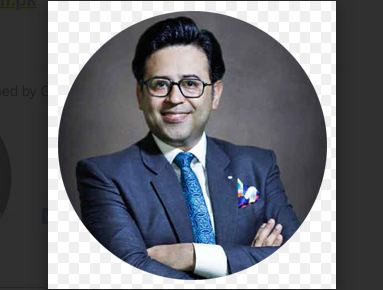
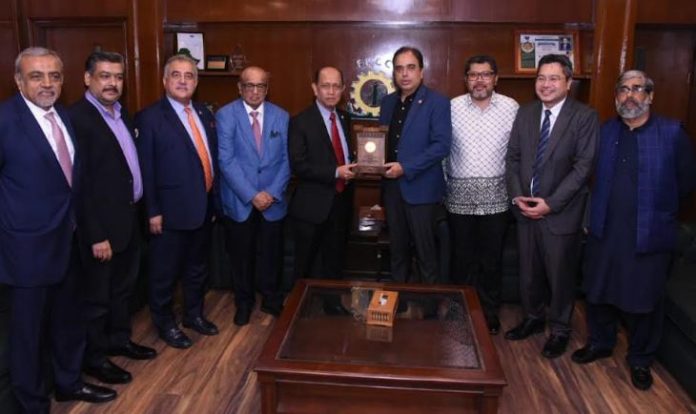
KARACHI, SEPT 16 /DNA/ – Atif Ikram Sheikh, President of the Federation of Pakistan Chambers of Commerce and Industry (FPCCI), has informed that the apex body has hosted a high-profile, interactive and consultative meeting with H.E. Dato’ Mohammad Azhar Mazlan, High Commissioner of Malaysia in Pakistan, aimed at fostering trade, industry and investment cooperation between the two brotherly countries.

President FPCCI mentioned that High Commissioner of Malaysia and his team of senior diplomats have assured their support in correcting Pakistan’s bilateral trade deficit with Malaysia through facilitating Pakistani exporters and enhancing market access.

Mr. Atif Ikram Sheikh apprised that the meeting was attended by prominent business leaders, FPCCI members and stakeholders; and, provided a dynamic platform to explore new avenues for bilateral cooperation – leveraging the Pakistan–Malaysia Free Trade Agreement (FTA) and facilitating collaboration in key sectors of the economy such as IT, agriculture, edible oil, textiles and renewable energy.

H.E. Dato’ Mohammad Azhar Mazlan, High Commissioner of Malaysia in Pakistan, shared insightful remarks – reaffirming Malaysia’s interest in strengthening economic partnerships with Pakistan. He highlighted Malaysia’s expertise in Islamic finance, palm oil, food processing, tourism and technology as areas ripe for collaboration; urging Pakistani businesses to leverage Malaysia as a gateway to ASEAN markets.

H.E. Dato’ Mohammad Azhar Mazlan added that he invites Pakistani businessmen from the platform of FPCCI to consider Malaysia as a serious business destination on the back of dynamic economy; favorable policies for investors & entrepreneurs and facilitation in establishing businesses. H. E. Mr. Herman Hardynata Ahmad, Consul General of Malaysia in Karachi, also accompanied the Malaysian delegation along with other senior diplomats.

Mr. Saquib Fayyaz Magoon, SVP FPCCI, highlighted the importance of expanding Pakistan’s exports to Malaysia – which currently contribute significantly in trade with ASEAN nations. He underscored FPCCI’s commitment to facilitating joint ventures and addressing trade barriers to enhance bilateral trade with Malaysia.

Mr. Saquib Fayyaz Magoon added that bilateral trade has been showing increasing trend; but, Pakistan is facing bilateral trade deficit of $445 million as our exports are $515 million and our imports from Malaysia are worth US$ 960 million.

Mr. Bashir Janmohammed, Chairman of Pakistan–Malaysia Business Council (PMBC) of FPCCI, delivered a warm welcome address, emphasizing the potential for deepened economic ties. “Malaysia is a strategic partner for Pakistan and this meeting is a critical step toward unlocking opportunities in technology, halal trade and sustainable development,” Mr. Janmohammed stated – drawing on his extensive experience in fostering Pakistan-Malaysia business relations.

The session concluded with a robust discussion on ways to enhance bilateral cooperation; where attendees explored strategies to boost trade, streamline business visas and promote joint initiatives in high-growth sectors like Edible Oil, AgriTech, FinTech and IT.

Seven projects win Aga Khan Award for Architecture

Seven projects win Aga Khan Award for Architecture

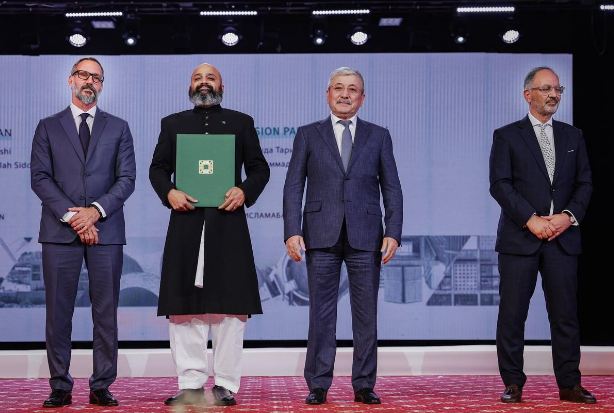
BISHKEK, SEPT 16 /DNA/ – Seven architectural projects that shield communities from climate risk, preserve cultural heritage and create affordable housing were honoured this evening at the Aga Khan Award for Architecture prize-giving ceremony at the Kyrgyz National Philharmonic Hall.

The Aga Khan accompanied His Excellency Adylbek Kasymaliev, Chairman of the Cabinet of Ministers of the Kyrgyz Republic, to preside over the ceremony. The winning designs, which will share a prize of US $1 million, demonstrate the power of architecture to address some of humanity’s most pressing challenges. Projects include flood-resistant bamboo homes that can be relocated when rivers shift; an incremental, community-led restoration of urban heritage; and a community centre that transforms abandoned oil company ruins into lively public space.

Distinguished laureates joined national officials, architecture experts, the Award’s Steering Committee and Master Jury, and other dignitaries for the event, which marks the culmination of the Award’s 16th triennial cycle. A series of events this week in Bishkek have brought together architects, designers, policymakers and community leaders to celebrate the transformative potential of architecture and urban planning to improve the world.

Vision Pakistan was one of the winners, placing Pakistan at the forefront of global recognition for social transformative and climate conscious design. Vision Pakistan in Islamabad, by DB Studios is a multistorey facility boasting joyful facades inspired by Pakistani and Arab craft, while housing a charity that aims to empower disadvantaged youth through vocational training. The Jury noted that the building not only contains a new type of education, but is full of light, spatially interesting and economically efficient.

Established by His late Highness Prince Karim Aga Khan IV in 1977, the Aga Khan Award is unique among architecture prizes. It spotlights projects that not only demonstrate design excellence but also improve quality of life, and considers the contributions of municipalities, builders, clients, master artisans and engineers alongside architects. Since its inception, the Award has recognised more than 130 projects worldwide, influencing the global discourse on architecture in the Muslim world and beyond. 

The Aga Khan elaborated on the importance of this pursuit: “Today, with the climate more volatile than ever, architects have a great responsibility, and an opportunity, to use their creativity to design the buildings that will buffer that volatility and protect us all – and especially the most vulnerable – from climatic risk,” he said.  “This quality – flexibility in the face of the unexpected – was at the heart of the jury’s concerns in this cycle of the award.” 

As well as environmental justice, the built environment is well placed to help solve issues of social justice, His Highness explained in his address: “It is not an exaggeration to say that affordability of our housing, ease of access to green space, education, health and cultural heritage all hinge on the creativity of our architects and the wisdom of our civic planners.”  Buildings, he added, have the power to raise living standards, inspire reverence and solve problems for generations to come. “Great architecture,” he went on to say, “has the power to answer directly to the most acute development challenges, and to create the inclusive, safe, dignified world that we want for everyone.”  Earlier in the day, His Highness also attended a special stamp cancellation ceremony, in which the Kyrgyz postal service issued a specially designed postage stamp to commemorate this year’s Award ceremony in Bishkek.

IHC orders removal of PTA chairman

IHC orders removal of PTA chairman

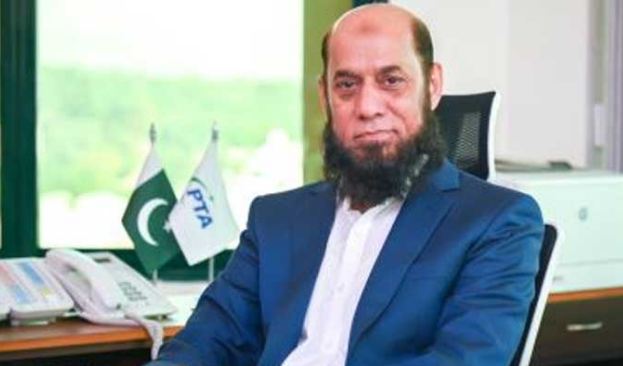
ISLAMABAD: The Islamabad High Court on Tuesday ordered the removal of Major General (retd) Hafeez Ur Rehman from his post as the chairman of the Pakistan Telecommunications Authority (PTA).

The 99-page judgement issued by Justice Babar Sattar, provides for the appointment of the head of regulatory authority’s head on temporary basis.

Samiya Hijab drops case against Hassan Zahid after settlement

Samiya Hijab drops case against Hassan Zahid after settlement

ISLAMABAD, SEPT 16 – A district and sessions court in Islamabad granted bail to Hassan Zahid on Monday after social media influencer Samiya Hijab withdrew the cases against him.

At the outset of today’s hearing, Hijab informed the court that she and the suspect had reached an out-of-court settlement, adding that she did not want to pursue the case anymore.

The social media influencer said she would have no objection if the court granted bail or acquitted the suspect.

The court then granted the suspect bail against surety bonds of Rs20,000 in each case.

Earlier this month, the Islamabad-based social media influencer had alleged that Zahid — with whom she had been in a relationship — had been harassing her for months with threats and demands to marry him.

In a video posted on Instagram, where she has a following of nearly 850,000, she claimed he appeared outside her residence, grabbed her phone, and tried to force her into his car.

“My mother was ill, my brother wasn’t home. When I stepped outside, he snatched my mobile, sat in his car, and forced me in as well,” Samiya had added.

Reports began circulating on social media that Hijab and Zahid had struck an out-of-court settlement after the complainant skipped the September 13 hearing.

ICC rejects PCB demand to remove Asia Cup match referee, claims Indian media

ICC rejects PCB demand to remove Asia Cup match referee, claims Indian media

DUBAI: The International Cricket Council (ICC) has turned down Pakistan Cricket Board’s (PCB) request to remove match referee Andy Pycroft from the ongoing Asia Cup, Indian media reported on Tuesday.

According to the reports, the ICC formally informed the PCB of its decision last night, dismissing Pakistan’s stance that Pycroft had acted at the behest of the Indian team.

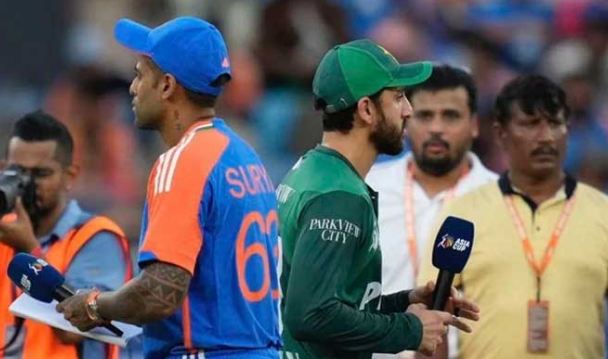
The PCB had filed an official complaint with the ICC accusing Pycroft of violating the “Spirit of Cricket” by allegedly asking the Pakistan and India captains not to shake hands at the toss before their Asia Cup 2025 fixture on Sunday.

The complaint also referred to the absence of the customary handshake between the two sides after the match.

There are reports of a possibility of ICC match refree Richard Richardson being appointed as the match referee for Pakistan’s upcoming Asia Cup fixtures, though no official confirmation has been made.

Sources earlier said Pakistan was considering withdrawing from the tournament if its demand was not met, describing the next few hours as crucial for future deliberations.

PCB Chairman Mohsin Naqvi is expected to consult senior government officials in Lahore later today to discuss the board’s next course of action.

The controversy arose after Pakistan and India captains avoided handshake at the toss during their September 14 Asia Cup 2025 fixture, an omission reportedly directed by match refree Pycroft.

The same was repeated towards the end of the match, when the players of the opposing teams shake hands as per cricketing tradition, where the Indian team skipped the customary post-match handshake.

While the Indian players congratulated each other at the dugout after the match, they refrained from acknowledging or shaking hands with the Pakistani team.

Pakistan’s players lined up expecting the customary handshake, only to see the Indian team retreat and close the dressing room doors.

India’s victorious captain, Suryakumar, defended his team’s decision not to shake hands with the Pakistan players saying that it was taken in alignment with their government and cricket board.

“We are aligned with the government and Board of Control for Cricket in India (BCCI). Some things are above sportsmanship. Is it really sportsmanship if you don’t even shake hands with the opposing team? That was our answer,” he said.

The move prompted a strong reaction from the cricketing fraternity as well as Mohsin Naqvi, who heads both the PCB and is also the serving head of the Asian Cricket Council (ACC).

Not only did Pakistan skipper Salman Ali Agha, in protest, refused to attend the post-match presentation ceremony, breaking from broadcast norms where captains usually share their thoughts, the PCB has filed a formal complaint with the ICC and the Marylebone Cricket Club (MCC), calling for the removal of match referee Andy Pycroft from the ongoing Asia Cup 2025 — for reportedly instructing the omission of the customary handshake.

Apart from taking up the matter with the ICC, the PCB has also come down hard on its own Director of International Cricket Usman Wahla and has suspended him over failure to promptly forward an official letter to the ICC concerning the Asia Cup handshake controversy.

The Sunday’s match, the first ever since the two countries were involved in an armed conflict triggered by India’s cross-border attack, followed by Pakistan’s retaliation and launch of “Operation Bunyan-um-Marsoos”.

The hostilities left more than 70 people dead in missile, drone and artillery exchanges, before a ceasefire was reached eventually.

The neighbours have not met on either side’s soil in a bilateral series since 2012 and only play each other in international tournaments on neutral ground as part of a compromise deal.

‘Morally bankrupt nation’: Minister slams India over handshake snub controversy

'Morally bankrupt nation': Minister slams India over handshake snub controversy

ISLAMABAD, SEPT 16: Federal Information Minister Attaullah Tarar on Tuesday assailed India for bringing politics into sports after Indian cricket team players refused to shake hands with their Pakistani counterparts in their recent Asia Cup 2025 match.

“A nation which is morally bankrupt and which has no values will always resort to this kind of theatrics in sports when you [India] can’t win in the military field,” Tarar said while speaking at an event organised by the Institute of Regional Studies (IRS).

“They’re trying to politicise cricket,” the minister remarked, terming the New Delhi’s move as a failed attempt to save itself from embarrassment after military defeat against Pakistan in the May conflict, where its jets were shot down and Pakistan’s response to cross-border attacks prompted it to request a ceasefire.

Tarar’s remarks refer to the ongoing controversy which arose after Pakistan and India captains avoided handshake at the toss during their September 14 Asia Cup 2025 fixture, an omission reportedly directed by match refree Andy Pycroft.

The same was repeated towards the end of the match, when the players of the opposing teams shake hands as per cricketing tradition, where the Indian team skipped the customary post-match handshake.

While the Indian players congratulated each other at the dugout after the match, they refrained from acknowledging or shaking hands with the Pakistani team.

Pakistan’s players lined up expecting the customary handshake, only to see the Indian team retreat and close the dressing room doors.

India’s victorious captain, Suryakumar, defended his team’s decision not to shake hands with the Pakistan players saying that it was taken in alignment with their government and cricket board.

“We are aligned with the government and Board of Control for Cricket in India (BCCI). Some things are above sportsmanship. Is it really sportsmanship if you don’t even shake hands with the opposing team? That was our answer,” he said.

The move prompted a strong reaction from the cricketing fraternity as well as Mohsin Naqvi, who heads both the Pakistan Cricket Board (PCB) and is also the serving head of the Asian Cricket Council (ACC).

Not only did Pakistan skipper Salman Ali Agha, in protest, refused to attend the post-match presentation ceremony, breaking from broadcast norms where captains usually share their thoughts, the PCB has filed a formal complaint with the International Cricket Council (ICC) and the Marylebone Cricket Club (MCC), calling for the removal of match referee Andy Pycroft from the ongoing Asia Cup 2025 — for reportedly instructing the omission of the customary handshake.

Apart from taking up the matter with the ICC, the PCB has also come down hard on its own Director of International Cricket Usman Wahla and has suspended him over failure to promptly forward an official letter to the ICC concerning the Asia Cup handshake controversy.

The Sunday’s match, the first ever since the two countries were involved in an armed conflict triggered by India’s cross-border attack, followed by Pakistan’s retaliation and launch of “Operation Bunyan-um-Marsoos”.

The hostilities left more than 70 people dead in missile, drone and artillery exchanges, before a ceasefire was reached eventually.

The neighbours have not met on either side’s soil in a bilateral series since 2012 and only play each other in international tournaments on neutral ground as part of a compromise deal.

RCCI expresses concern over SBP’s decision to maintain policy rate

RCCI expresses concern over SBP’s decision to maintain policy rate

RAWALPINDI, SEPT 16 /DNA/ – The business community has voiced serious concerns over the State Bank of Pakistan’s (SBP) decision to keep the policy rate unchanged at 11 percent, calling the move detrimental to industrialists, entrepreneurs, and investors.

 President of the Rawalpindi Chamber of Commerce and Industry (RCCI), Mr. Usman Shaukat, in a statement, expressed disappointment at the central bank’s stance, stating:

 “We are disappointed by the State Bank of Pakistan’s decision to maintain the current interest rate. Despite easing inflationary pressures and other favorable economic indicators, the central bank’s decision not to cut the policy rate will likely hamper economic growth. The Rawalpindi Chamber of Commerce and Industry has consistently advocated for a single-digit policy rate over the past three cycles. We believe such a move would have provided much-needed relief to businesses and stimulated economic activity. We strongly urge the State Bank to reconsider its stance and reduce the policy rate to single digits in order to support Pakistan’s economic growth and development.”

 The RCCI emphasized that the continuation of high interest rates has eroded business confidence, increased the cost of doing business, and constrained investment and expansion opportunities. The Chamber reiterated its call for pro-growth monetary policies to revive industrial activity, generate employment, and attract investment in the country.

Arab-Islamic summit in Doha: a show of unity amid disappointment

At Arab-Islamic summit, Qatar slams Israel for 'treacherous, cowardly' Doha strike

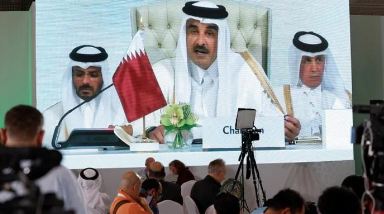
The Arab-Islamic Summit convened in Doha on Monday September 15, 2025, just days after an unprecedented Israeli attack shook the Qatari capital. Leaders and high-level delegations from across the Muslim world, including Saudi Crown Prince Mohammed bin Salman, Pakistani Prime Minister Shehbaz Sharif, Turkish President Recep Tayyip Erdoğan, and heads of state from dozens of other Muslim-majority countries, gathered in a rare display of solidarity.

The event, billed as a show of power and unity, came at a moment of heightened tensions in the region. The attack on Doha not only raised questions about Israel’s audacity but also about the broader security guarantees traditionally extended to Qatar by its Western allies, particularly the United States. Against this backdrop, the summit carried both symbolic and strategic significance, as Muslim leaders attempted to send a clear message to Israel and its backers: another such aggression would not go unanswered.

From the moment the summit opened, the optics were striking. The assembly of nearly all major Muslim leaders under one roof was in itself a political statement. Delegations from the Gulf Cooperation Council (GCC), North Africa, South Asia, and Central Asia underscored the breadth of Muslim representation.

The Saudi Crown Prince, seated alongside the Emir of Qatar, emphasized that the attack on Doha was not merely an assault on a sovereign nation but an affront to the dignity of the entire Muslim world. Similarly, Prime Minister Shehbaz Sharif reiterated Pakistan’s “unwavering support for Qatar” and called for “collective defense mechanisms” to safeguard Muslim states against external threats. Turkish President Erdoğan, never one to mince words on Israel, described the attack as “state terrorism carried out under the shield of American protection.”

The speeches and the carefully staged displays of fraternity projected an image of resilience. The symbolism mattered: Muslim leaders wanted Israel and the United States to know that while internal divisions persist, there is a line beyond which provocations could unify even the most disparate actors.

At the core of the summit was the warning delivered to both Israel and Washington. A joint communiqué released at the end of the session noted that “continued provocations against the sovereignty of Muslim nations will invite resolute responses.” Though carefully worded, the statement carried an implicit threat: further aggression might push the Muslim world toward collective retaliation.

Analysts observed that the summit’s timing and strong language were meant as much for Washington as for Tel Aviv. For decades, the United States has styled itself as the security guarantor of Gulf states, particularly Qatar, where it maintains the Al Udeid Air Base — one of its largest military facilities in the region. Yet when Israel struck Doha, Washington failed to protect its ally, instead appearing to side with Tel Aviv.

This failure has triggered introspection in Doha. “If the U.S. cannot protect Qatar against Israel, then who exactly can it protect us from?” asked one Qatari commentator. The implication is sobering: Qatar may need to reconsider the value of its security partnership with Washington, especially if American guarantees are conditional on Israeli interests.

Yet for all the powerful rhetoric and the spectacle of unity, the summit fell short of the bold outcomes many observers had anticipated. In the days leading up to the gathering, speculation swirled that Muslim nations might announce concrete measures: suspension of diplomatic ties with Israel, economic sanctions, or even coordinated security initiatives.

None of these materialized. Instead, the final communiqué was heavy on symbolism but light on actionable commitments. States that had normalized relations with Israel in recent years — including the United Arab Emirates, Bahrain, Morocco, and others — did not announce any rollback of ties. Despite calls from civil society groups and ordinary citizens across the Muslim world, these governments opted for caution.

The reason was not difficult to discern. U.S. pressure loomed large over the summit. Washington’s influence in the Gulf and across the Muslim world remains substantial, bolstered by military bases, economic partnerships, and diplomatic leverage. Even leaders most angered by Israel’s actions were reluctant to risk jeopardizing relations with the United States.

An important dimension of the summit was the conspicuous position of Iran. While nearly every Muslim state aligned cautiously with U.S. preferences, Tehran adopted a more uncompromising tone, openly urging Muslim countries to sever ties with Israel and to pursue retaliatory measures. Iranian leaders warned that “appeasement today will only embolden further aggression tomorrow.”

This posture set Iran apart but also underscored the divisions within the Muslim bloc. Many Arab states remain wary of Iran’s regional ambitions, making it difficult to forge consensus on how to confront Israel. The result is a paradox: while the summit projected unity outwardly, internally it reflected the same fault lines that have long plagued Muslim solidarity on the Palestinian and broader Middle Eastern question.

In the immediate sense, the summit achieved its tactical objectives. It conveyed anger, solidarity, and the warning that Muslim nations would not remain passive if Israel repeated its attack. The gathering also put Israel under diplomatic pressure, drawing international media attention and amplifying the costs of Tel Aviv’s actions.

But strategically, the event was a disappointment. By failing to adopt concrete punitive measures, the Muslim world signaled its limitations. The gap between rhetoric and action was glaring. While leaders spoke of collective strength, the reality remained that most of them were unwilling to cross Washington’s red lines.

For Qatar, the summit raised as many questions as it answered. The emirate has long relied on U.S. security guarantees, yet the attack on Doha has exposed the fragility of that arrangement. Going forward, Qatar may seek to diversify its security partnerships, possibly drawing closer to Turkey or even exploring cautious engagement with Iran.

For the broader Muslim world, the challenge remains how to transform symbolic unity into actionable strategy. Unless Muslim states are willing to collectively resist U.S. pressure, their ability to influence Israel’s behavior will remain limited.

The Doha summit, then, will likely be remembered as both a moment of solidarity and a missed opportunity. It showcased the Muslim world’s potential power but also laid bare its dependence on external actors. The message to Israel and the United States was sharp, but without action to back it up.

Cost not Condemnation

Cost not Condemnation

Dr M Ali Hamza

In response to Israel’s strike in Qatar; an attack that targeted senior Hamas leaders who were meeting to deliberate on a United States-backed ceasefire proposal, Doha witnessed an extraordinary Emergency Arab-Islamic Summit. More than 50Muslim majority states gathered under one roof, their leaders united in condemning Israel’s unprecedented escalation with the strongest possible words.

Before we start speculating about the potential outcomes of this summit, it is worth pausing for a reminder: the Organization of Islamic Countries (OIC) has a long history of passionate statements but little to show in terms of strategic or practical measures to halt aggression. Over the past several decades, from Palestine to Iraq, from Afghanistan to Libya, the collective voice of Muslim-majority countries has rarely translated into collective action.This pattern raises an urgent question: will Doha summit mark a turning point, or will it simply add another chapter to archive of rhetorical outrage of Muslim majority countries without consequence?

For more than seven decades, the Muslim world has been at the receiving end of wars, invasions, and occupations often driven or supported by Israel, the United States, or Western powers. Muslim-majority countries have witnessed repeated assaults under the banners of “security,” “counter-terrorism,” or “spreading democracy.” Yet, a recurring question looms: has the collective voice of the Muslim world, embodied in the OIC ever truly shaped global accountability, particularly at the United Nations?Let’s dive into history.

The story begins with 1948, when the creation of Israel led to mass displacement and wars that followed in 1967 and 1973. Israel’s occupation of Palestinian lands remains one of the longest-running injustices of modern history. Despite OIC’s formation in 1969, largely in response to the burning of Al-Aqsa Mosque, its role has mostly been rhetorical; issuing statements, hosting summits, and passing resolutions. Rarely has it translated into real political leverage at the UN Security Council.

Consider the US-led invasion of Iraq in 2003, conducted without explicit UN approval. Millions of Muslims saw Baghdad fall and civilian lives destroyed, yet the OIC’s response was limited to condemning the war and calling for restraint. The organization could not muster the political weight to influence UN sanctions against the US or its allies. Similarly, in Afghanistan (2001), the OIC had little more than a humanitarian voice.

OIC has consistently demanded UN sanctions and accountability for settlements, bombings, and human rights violations by Israel. Its not the first time but in 1981, the OIC proposed suspending Israel from the UN, but this never materialized. In contrast, the OIC did manage to push for the 2004 UN advisory opinion that declared Israel’s separation wall illegal, but even that ruling lacked enforcement power.

Muslim majority counties are largely been reduced to a toothless talk shop issuing statements that vanish into the air while bombs fall on Muslim cities. The time for symbolic outrage is over; what is needed now is strategy, unity, and action. So, what to do?

First, financial muscle. Sovereign wealth funds from the Gulf States, Türkiye, Indonesia and Malaysia together control trillions of dollars. These could be redirected away from Western defence industries and instead invested in creating independent military, technological, and media capabilities across the Muslim world. As long as Muslim nations fund Western economies while pleading for justice, insincerity will remain the order of the day.

Second, economic leverage. Muslim countries collectively control over 70% of the world’s proven oil reserves and are major suppliers of natural gas. In the 1973 Arab-Israel war, Arab states imposed an oil embargo, shaking Western economies to their core and forcing Washington to recalibrate its Middle East policy. That episode alone proves the West cannot simply ignore Muslim nations if they act in unison. Why hasn’t the OIC revived such leverage in the face of ongoing Israeli atrocities in Gaza or US interventions elsewhere? The answer is an open secret, because Muslim countries lack scientific supremacy, strategic planning and Arab-Ajam unity. Anyhow, a coordinated energy policy could instantly turn Muslim outrage into real pressure.

Third, legal warfare. Israel’s repeated violations of international lawfrom illegal settlements to collective punishment in Gazaare well documented. OIC nations should pool resources to pursue cases in the International Criminal Court and the International Court of Justice with relentless persistence. South Africa’s recent ICJ case against Israel shows what is possible when courage replaces timidity.

Fourth, collective defence. NATO exists to protect Western interests. Why hasn’t the OIC created even a minimal joint defence mechanism? Though a few years ago, Saudi Arabia spearheaded the formation of the Islamic Military Counter Terrorism Coalition (IMCTC), often dubbed a “Muslim NATO,” uniting over 40 Muslim-majority nations. Its stated aim was counterterrorism and collective security, but the alliance struggled with internal divisions, unclear objectives, and limited practical military coordination. Thus,a uniteddeterrent force, would alter the calculus of any aggressor.

Finally, Muslim-majority countries must urgently recalibrate their diplomatic strategies by aligning with emerging power blocs like China, Russia, and the Shanghai Cooperation Organization (SCO). Building stronger ties with non-Western alliances can create new avenues of support at the UN, dilute US and Israel dominance. By diversifying allianceswhether through BRICS, SCO, or Belt and Road partnershipsMuslim states can transform their diplomatic isolation into collective bargaining power.

History has shown that Western powers and Israel only respond to costs, not condemnations. If the Muslim world wants to stop being a perpetual victim, it must wield its oil, money, laws, and armies with purpose. Until then, Israel and other aggressors will continue to act with impunity, while the voice of Muslim majority countries remains more echo than action.

PIDE welcomes new MPhil, PhD scholars at orientation

PIDE welcomes new MPhil, PhD scholars at orientation

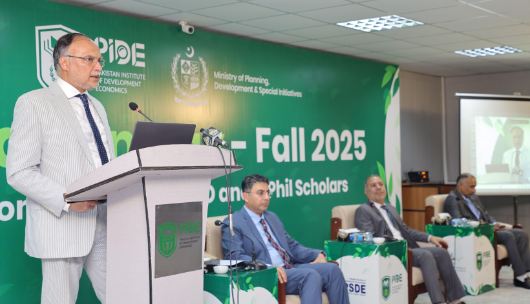
ISLAMABAD, SEPT 16 /DNA/ – The Pakistan Institute of Development Economics (PIDE) celebrated Orientation Day 2025 at its campus in Islamabad, warmly welcoming a new cohort of MPhil and PhD scholars embarking on their academic journey. The event featured orientation sessions, book stalls showcasing PIDE’s extensive research output, documentary screenings, and interactive engagements to familiarize students with academic rules and regulations.

Delivering the keynote address, Federal Minister for Planning, Development & Special Initiatives and Chancellor PIDE, Prof. Ahsan Iqbal Chaudhary (NI), welcomed the new scholars and emphasized that joining PIDE is not merely the start of an academic journey but an opportunity to shape Pakistan’s future through research, innovation, and policy engagement. Unlike other institutions where economics remains confined to classrooms, PIDE uniquely combines teaching with applied research, offering students direct exposure to real-world policymaking as a government think tank. This dual role, he noted, enables PIDE scholars to become problem-solvers whose work is academically rigorous and practically relevant.

Prof. Ahsan Iqbal expressed pride in having contributed to PIDE’s expansion, envisioning it as a hub that nurtures a new generation of economists capable of strengthening the foundations of Pakistan’s progress. Drawing lessons from history, he observed that Pakistan had once been ahead of regional peers through development plans like Vision 2010 and Vision 2025 but faltered due to political instability and inconsistent policies. While countries such as China, Vietnam, and Bangladesh advanced steadily, Pakistan missed key opportunities, resulting in slower industrial growth, stagnant exports, and developmental setbacks. He stressed that Pakistan now stands at a “fourth flight” in its development journey, where success depends on policy stability, continuity, and collective national effort.

Outlining the government’s URAAN Pakistan Program, the Federal Minister said the agenda rests on five strategic pillars: export-led growth to earn vital foreign exchange; technological transformation through digitalization, AI, fintech, and biotechnology; climate and environmental resilience to ensure food and water security; energy and infrastructure reform for affordable, green, and efficient systems; and equity and empowerment through stronger education, health, social protections, and inclusive development. He urged scholars to contribute to these national priorities through their research and innovation.

To guide their academic and professional journeys, Prof. Ahsan Iqbal shared three core principles. First, excellence — mediocrity cannot deliver transformation, so scholars must strive for global standards in their work. Second, relevance — knowledge should not be confined to libraries or journals but must address real national problems and improve lives. Third, resilience — progress demands perseverance and consistency, and setbacks must not weaken resolve.

Urging students to embrace curiosity, challenge assumptions, and commit to nation-building, the Minister described them as the next generation of researchers and policymakers whose intellect, creativity, and dedication will help Pakistan achieve prosperity, stability, and equity.

The program concluded with refreshments, offering students, faculty, and guests an opportunity to interact informally. With this orientation, PIDE reaffirmed its mission to nurture thought leaders, foster innovation, and provide evidence-based solutions to Pakistan’s pressing socio-economic challenges.

Earlier, in his welcome address, Vice Chancellor Dr. Nadeem Javaid (SI) congratulated the newly admitted scholars for securing admission through a highly competitive process, noting that more than 600 applications were received, and after rigorous screening, 110 candidates were selected for the PhD and MPhil programs. He highlighted several structural reforms introduced under his leadership, including the launch of two new PhD programs in Governance & Public Policy and Development Studies aimed at generating locally grounded, evidence-based solutions to pressing national challenges. He explained that course outlines for all programs had been collectively reviewed by the faculty to ensure market-relevant training, while PIDE’s research structure was redefined with the establishment of eight specialized research centers focusing on domains such as industry, trade, digital economy, climate change, agriculture, energy, and macroeconomic policy.

Dr. Javaid also introduced the concept of three-year rolling research plans, aligning individual faculty work with center-level strategies for a cohesive national research agenda. He noted that PIDE’s training mandate had been reshaped through the creation of the Executive Development Center, which will provide capacity-building opportunities to both the public and private sectors. Among the initiatives announced, he highlighted the Work Study Program (WSP), under which PhD scholars are placed in ministries and government departments to gain hands-on policy experience while receiving a monthly stipend of Rs. 80,000. He further shared that upcoming programs such as the Talent Hunt Program, new scholarship schemes, summer research grants, and incentives for quality publications will further empower PIDE scholars. Dr. Javaid emphasized that these reforms are designed to create an inclusive, research-driven environment that enhances academic excellence and strengthens PIDE’s role as Pakistan’s premier policy think tank.

Dr. Karim Khan, Dean Academics, in his introductory remarks shared PIDE’s institutional journey and emphasized the institute’s role as a premier think tank and research hub in Pakistan. He noted that PIDE alumni now hold leading positions in the State Bank of Pakistan, the Ministry of Planning, the Ministry of Finance, and other significant policy institutions.

Stay Connected

64FansLike
60FollowersFollow

Latest Reviews

Exchange Rates

USD - United States Dollar
EUR
1.14
GBP
1.33
AUD
0.69
CAD
0.70