Home Blog Page 477

Pakistan urges Taliban govt in Afghanistan to cut ties with TTP

Pakistan urges Taliban govt in Afghanistan to cut ties with TTP

ISLAMABAD, SEPT 17: Pakistan has asked the Afghan government to cut ties with the Tehreek-e-Taliban Pakistan (TTP) and meet its commitment to eliminate the group from Afghan soil, cautioning that failure to act would be treated as “hostile” activity.

Islamabad conveyed its message through the Afghan interim ambassador in Pakistan, who was summoned to the Foreign Office the other day. The envoy was told in clear terms that Afghanistan’s Taliban regime must ensure its soil is not used for terrorist activities, The News reported on Wednesday.

The envoy was summoned in the wake of a recent surge in terrorist activities of Fitna al-Khawarij terrorists, sheltering on Afghan soil and are funded and sponsored by Indian’s RAW — the Research and Analysis Wing.

Highly placed diplomatic sources told The News Tuesday evening that Afghan interim ambassador Sardar Ahmed Shakib was summoned to the Foreign Office.

Additional Foreign Secretary Syed Ali Assad Gilani conveyed Pakistan’s concern to the Taliban envoy.

Meanwhile, Special Assistant to the Prime Minister, with the status of Minister of State, Muhammad Sadiq Khan, has returned from the United Arab Emirates (UAE), where he had gone on an Afghanistan-related unannounced mission. He will be submitting a detailed report to the leadership about his undertaking.

He is likely to lead a delegation of senior officials to Kabul later this week to take up the latest developments in bilateral issues with the Taliban government.

Sadiq Khan will convey a stern message from Pakistan’s leadership to his interlocutors in the Afghan capital. He will also have a meeting with interim Afghan Foreign Minister Mulla Amir Muttaqi.

Meanwhile, sources told this scribe that 18 terrorists were killed near the Chahbahar area of Iran, who had a close association with the terrorist group BLA — the Balochistan Liberation Army. Sixteen terrorists were reportedly Afghan nationals.

Foreign Office spokesman Additional Foreign Secretary Shafqat Ali Khan was not available for comment on Afghanistan-related developments, as his phone went unanswered till late evening.

Pakistan Judiciary in the Dock

Pakistan Judiciary in the Dock

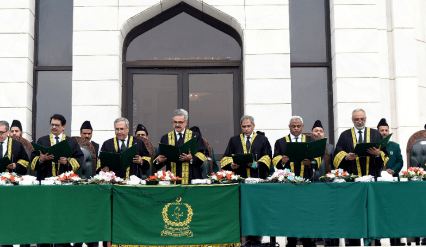
The credibility of Pakistan’s judiciary is once again under intense scrutiny. The Islamabad High Court’s Justice Tariq Mehmood Jehangiri has been barred from performing judicial work following an order passed by a two-member bench led by Chief Sarfraz Dogar. The bench observed that since a reference concerning Justice Jehangiri is pending before the Supreme Judicial Council (SJC), he should refrain from judicial duties until the matter is concluded.

This move has stirred fresh debate about judicial independence and internal divisions. Pakistan Tehreek-e-Insaf (PTI) Chairman Barrister Gohar Ali Khan noted that the decision made rifts within the judiciary more visible, describing it as “not a good omen for the country.” For a system meant to safeguard justice, such internal cracks erode public trust and signal institutional fragility.

Pakistan’s judiciary has long oscillated between being a defender of constitutional order and a tool of political engineering. From the Lawyers’ Movement of 2007, which restored Chief Justice Iftikhar Chaudhry, to the disqualification of elected prime ministers under controversial interpretations of law, the judiciary has often been thrust into the political spotlight.

Observers argue that today’s judiciary appears divided — not by accident, but by design. Vested interests, both political and institutional, have allegedly worked to align parts of the bench with competing power centers. The barring of Justice Jehangiri, regardless of its legal merit, feeds a growing perception that courts are no longer neutral arbiters but battlegrounds for influence.

No modern economy has succeeded without a functioning, impartial judiciary. Investors — whether domestic entrepreneurs or foreign corporations — need assurance that contracts will be enforced, intellectual property protected, and disputes resolved without bias.

Pakistan’s track record is poor. According to the World Justice Project’s Rule of Law Index 2023, Pakistan ranked 129th out of 142 countries, faring particularly badly on “absence of corruption” and “civil justice.” The World Bank’s Doing Business report (2020) highlighted that enforcing contracts in Pakistan takes on average 1,071 days — nearly three years . Such delays and unpredictability discourage investment and fuel capital flight.

When courts fail to deliver, the economic costs are severe. Investors take their money elsewhere, domestic businesses operate in uncertainty, and citizens grow disillusioned with state institutions.

The malaise goes beyond inefficiency. Transparency International’s Corruption Perceptions Index 2024 placed Pakistan at 140th out of 180 countries, a decline from previous years. Public perception is blunt: no government department functions without bribery. Sadly, the judiciary, instead of being a firewall, is often accused of being part of the same cycle.

Litigants complain of “buying” favorable orders in lower courts. Lawyers exploit adjournments to prolong cases, forcing clients to pay more. Judges themselves face allegations — whether of political partisanship, financial misconduct, or external pressure. Each scandal chips away at the credibility of the bench and by extension, the entire state apparatus.

The case of Justice Jehangiri is therefore not just about one judge; it highlights a system where accountability is opaque, delays are endemic, and internal divisions deepen public suspicion.

Other nations offer lessons Pakistan has yet to internalize. Bangladesh, despite its own political turbulence, ranks higher on several judicial efficiency indicators, enabling faster resolution of commercial disputes. India has invested heavily in digitizing court records and introducing e-filing systems, which, although imperfect, have improved transparency.

At the other extreme, Singapore demonstrates what a credible judiciary can achieve. In less than four decades, it built one of the world’s most trusted judicial systems, enabling it to become a global hub for trade, finance, and arbitration. The rule of law, more than natural resources or geography, turned Singapore into an investment magnet.

Pakistan’s inability to enforce contracts or deliver impartial justice keeps it stuck in a low-investment, low-growth cycle. Unless the judiciary reforms itself, no economic package or foreign bailout can substitute for lost credibility.

The judiciary is not just another state organ; it is the backbone of institutional reliability. When citizens cannot expect fair hearings, they either abandon formal channels or resort to alternative, often violent, methods of dispute resolution. This creates fertile ground for extremism, vigilantism, and organized crime.

We have seen this dynamic in Pakistan’s tribal areas, where parallel systems of justice emerged because state courts were slow, corrupt, or inaccessible. Such parallel systems, while filling immediate gaps, undermine the state’s authority in the long run.

Pakistan’s leadership often resorts to optics — suspending judges, reshuffling benches, or announcing “accountability drives.” Yet these cosmetic measures rarely restore confidence. The barring of Justice Jehangiri may satisfy procedural requirements, but it does little to fix systemic rot.

Without reforms, Pakistan’s judiciary will remain in the dock, and the country will remain trapped in its cycle of instability.

Ordinary Pakistanis are asking a simple question: for how long will this continue? A nation where courts are viewed as compromised cannot inspire confidence — not in its citizens, not in its investors, and not in the global community.

The world is watching. In today’s interconnected environment, judicial failures cannot be hidden behind political rhetoric. International investors, financial institutions, and foreign governments all track Pakistan’s governance indicators closely. A judiciary that lacks credibility translates into an economy that lacks opportunity.

As Barrister Gohar observed, the visible divisions within the judiciary are alarming. Pakistan stands at a crossroads: either embark on genuine reform and reclaim the judiciary’s role as guardian of justice, or continue down the path of decline where vested interests dominate and national development remains a dream deferred.

The time for optics is over. What Pakistan needs now is integrity, transparency, and the courage for institutional soul-searching. Only then can the judiciary emerge from the dock and reclaim its rightful place as the foundation of a strong and stable nation.

China-Foreign Youth Dialogue held with Pakistan and other countries’ representatives 

China-Foreign Youth Dialogue held with Pakistan and other countries' representatives 


BEIJING, SEPT 17 /DNA/ – The China-Foreign Youth Dialogue themed “Converging Global Wisdom, Uniting Youth Momentum: Traditional Media Transformation and International Media Cooperation Among Political Parties” was held here, according to a report carried by Gwadar Pro on Wednesday

Representatives of media and the publishing industry from 16 countries including China, Pakistan, India, Russia, Mongolia, Thailand, Malaysia, Nepal, and Sri Lanka conducted in-depth exchanges focusing on the transformation of traditional media and cross-border cooperation.

The event was co-hosted by the Bureau of Public Information and Communication of the International Department of the CPC Central Committee (IDCPC) and the Contemporary World Press. 

In his welcome speech, Li Shuangwu, President of the Contemporary World Press, stated that as the information technology revolution is profoundly reshaping the global communication landscape, it is particularly important to gather the strength of youth and promote media integration, innovation, and cooperation. 

He called on media institutions around the world to work together to build an open, equal, and mutually learning exchange platform.

Senthong Phasavath, Vice President of the Lao News Agency (KPL), emphasized that international media cooperation should be based on shared values, and efforts should be made to strengthen content sharing, talent co-cultivation, and network co-construction.

Liu Gang, President of Xinhua Institute, noted that while the Global South is rising economically, it is in urgent need of enhancing cultural confidence and breaking the shackles of Western ideological colonialism. 

He stressed that spiritual independence and cultural awareness are prerequisites for countries in the Global South to achieve truly independent development.

Guan Hong, Vice President of China Intercontinental Communication Center advocated that a “content innovation community”, a “digital technology sharing ecosystem”, and a “youth communication talent pool” should be built, as the global media has entered a new stage of in-depth integration of digitalization and intelligentization.

In the roundtable dialogue session, Vimukthi Yasas, Committee Member of the Media Unit of the Janatha Vimukthi Peramuna (JVP) of Sri Lanka, proposed that media cooperation should adhere to the principles of “mutual respect, shared responsibility, and a “people-centered approach”, and differences should be regarded as a source of dialogue rather than an obstacle. 

Supachai Siangjun, Social Media and Communication Manager of the People’s Party of Thailand, called for the establishment of cross-border media cooperation mechanisms to jointly address global challenges such as disinformation.

“While digital transformation poses challenges, it also offers powerful opportunities to renew traditional media. 

Pakistan-China media cooperation must be anchored in shared values, with special attention to content exchange, talent development, and stronger information networks,” Mukhtiar Ahmed Dhamrah, Former Pakistani Senator and PPP Hyderabad Division President said to CEN.

Pakistan, Palestine sign MoU to boost medical collaboration

Pakistan, Palestine sign MoU to boost medical collaboration

ISLAMABAD, SEPT 17 /DNA/ – Pakistan and Palestine have taken a significant step to expand bilateral relations in the health sector by signing a Memorandum of Understanding (MoU) in Islamabad.

The agreement was signed by Federal Minister for Health, Syed Mustafa Kamal, on behalf of Pakistan, while the Palestinian Ambassador represented his government at the ceremony.

Senior officials, including Federal Health Secretary Hamid Yaqoob, Additional Secretary Health, and the Director General Health, also attended the event. Their presence highlighted the importance attached by both sides to the new partnership.

According to the Ministry of National Health Services, the MoU is designed to enhance collaboration in advanced medical fields, professional training, and joint research. The move is expected to create long-term avenues for strengthening healthcare systems in both countries.

Federal Minister Mustafa Kamal announced that a Pakistan–Palestine Health Working Group will be established within the next 30 days. This body will supervise the implementation of the MoU and ensure that agreed initiatives are carried out effectively.

He explained that cooperation will cover a broad spectrum of medical specialties. These include interventional cardiology, organ transplant, orthopedic surgery, endoscopic ultrasound, burn treatment, and plastic surgery.

Pakistan will also assist Palestine in strengthening expertise in infectious diseases, ophthalmology, pharmaceuticals, and collaborative medical research. Training opportunities for Palestinian health professionals at Pakistan’s premier medical institutions are part of the plan.

“The purpose of this agreement is to foster closer collaboration for improving the health and well-being of the people of both brotherly nations,” Minister Kamal said. “The hearts of the people of Pakistan beat with Palestine, and we stand ready to assist our Palestinian brothers and sisters in every possible way.”

The Palestinian Ambassador welcomed the initiative and extended gratitude to the Government of Pakistan. He noted that Palestine highly values Pakistan’s unwavering support in political, humanitarian, and now medical spheres.

“Palestine and Pakistan are brotherly countries. Together, we will work for the improvement of health and well-being of our peoples,” he remarked.

Officials stressed that the agreement is not limited to symbolic gestures but represents a practical roadmap for cooperation. By enabling exchange of knowledge and expertise, it is expected to directly benefit the healthcare sectors of both nations.

The MoU underscores Pakistan’s consistent support for Palestine, extending it beyond politics to the vital domain of public health. Both countries reaffirmed their shared commitment to work as long-term partners in advancing medical science and improving patient care.

Uzbekistan discovers major gas deposit

Uzbekistan discovers major gas deposit

ISLAMABAD, SEP 17 (DNA): A significant gas field has been discovered at a depth of 6.5 kilometres on the Ustyurt Plateau, President Shavkat Mirziyoyev revealed during a meeting with university staff, according to Kursiv Media.

Until now, Uzbekistan’s oil and gas exploration was limited to depths of 2.5 to 3 kilometres. The president stressed that this was the first time in the country’s industrial history that drilling had reached beyond six kilometres.

Mirziyoyev also underlined the growing global demand for lithium and other metals, noting that Central Asia holds an estimated 15% of the world’s reserves of tungsten, molybdenum, zinc and titanium.

«To transform these vast resources into products with high added value, we need science, knowledge and innovation above all,» the president said.

According to the National Statistics Committee, Uzbekistan produced 25.3 bn cubic metres of gas in the first seven months of this year, down 3.4% compared with the same period in 2024.

Kursiv also reports that last month, a high-pressure gas blowout at an exploration well in Muynak, Karakalpakstan, has been successfully contained by Uzbekneftgaz.

Putin Oversees Final Stage of Zapad-2025 Strategic Exercise

 DNA

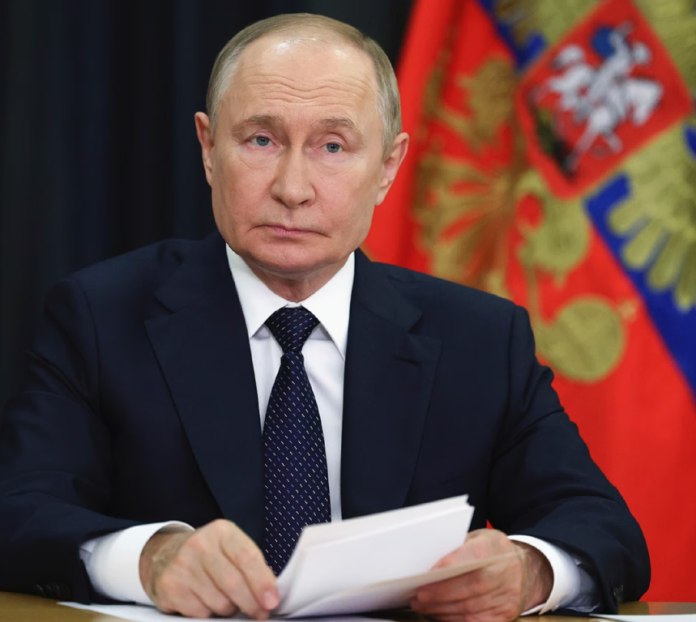
Moscow, September 16 — President Vladimir Putin oversaw the concluding stage of the Zapad-2025 joint strategic exercise, the largest annual military drill conducted by the armed forces of Russia and Belarus.

The five-day exercise, held from September 12–16 across 41 land and sea training grounds in both countries, is aimed at practicing operations to repel potential aggression against the Union State. Military officials noted that combat scenarios were designed based on lessons learned from Russia’s ongoing “special military operation.”

According to official figures, 100,000 personnel and 10,000 units of modern weapons and equipment were deployed. The arsenal included 333 aircraft — spanning tactical, strategic, and transport aviation — and more than 247 naval vessels, including surface ships, submarines, and auxiliary craft.

Putin inspected a range of weapons systems and military equipment at the training grounds and addressed participants, emphasizing the exercise’s focus on “absolute protection of sovereignty, territorial integrity, and the security of the Union State against any aggression.”

The event attracted international attention, with 25 foreign delegations present. Six countries dispatched military contingents to join the drills, while representatives from 16 states observed proceedings.

“The Zapad-2025 exercise demonstrates the readiness of our forces to respond to any threat and highlights the strength of Russia’s partnership with Belarus,” Putin said, before requesting a readiness report from the Minister of Defence.

Zapad-2025 marks the final stage of joint training between Russian and Belarusian forces this year and is regarded by Moscow as a key test of combat preparedness and interoperability.

Asia Cup 2025: Bangladesh thump Afghanistan to stay in Super Four race

Asia Cup 2025: Bangladesh thump Afghanistan to stay in Super Four race

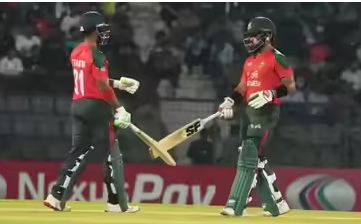
ABU DHABI: A disciplined bowling performance handed Bangladesh an eight-run victory over Afghanistan in the 9th match of the Asia Cup 2025 at the Sheikh Zayed Cricket Stadium in Abu Dhabi on Tuesday.

Bangladesh captain Litton Das’s decision to bat first bore fruit as his team’s batting unit yielded 154/5 in the allotted 20 overs.

The Tigers got off to a flying start to their innings, with their opening pair of Tanzid and Saif Hassan putting together a brisk 63 before Afghanistan captain Rashid Khan broke the partnership on the third delivery of the seventh over by dismissing the latter.

Pakistan joins global call for security of Global Sumud Flotilla following attacks

Pakistan joins global call for security of Global Sumud Flotilla following attacks

ISLAMABAD: Pakistan has joined the global call for the security of the Global Sumud Flotilla, a civil society initiative in which citizens of several countries are participating, following attacks on the vessels of pro-Palestinian activists carrying humanitarian aid to Gaza.

The foreign ministers of Pakistan, Bangladesh, Brazil, Colombia, Indonesia, Ireland, Libya, Malaysia, Maldives, Mexico, Oman, Qatar, Slovenia, South Africa, Spain and Türkiye express their concern about the security of the aid flotilla.

Former senator Mushtaq Ahmed Khan, Swedish climate campaigner Greta Thunberg, and Hollywood actress Susan Sarandon are also among the pro-Palestinian activists in the aid flotilla aiming to break the Israeli siege on the enclave.

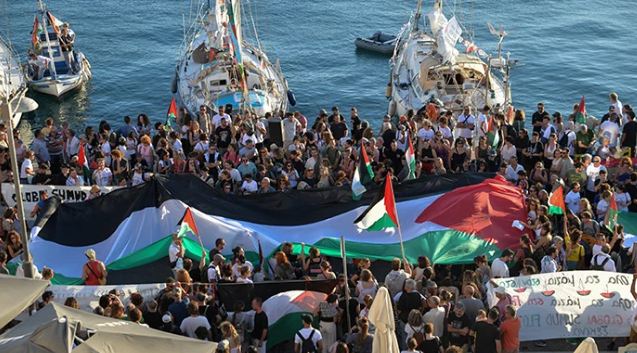
A screenshot from a drone video shows people lighting flares at the port of Ermoupolis during the departure of two sailing boats, Electra and Oxygen, part of the Global Sumud Flotilla aiming to reach Gaza and break Israels naval blockade, on Syros island, Greece, September 14, 2025. — Reuters
A screenshot from a drone video shows people lighting flares at the port of Ermoupolis during the departure of two sailing boats, Electra and Oxygen, part of the Global Sumud Flotilla aiming to reach Gaza and break Israel’s naval blockade, on Syros island, Greece, September 14, 2025. — Reuters
Jamaat-e-Islami’s senior leader and former senator Mushtaq, speaking on Geo News programme “Capital Talk”, said that Israeli drones were continuously flying over the maritime convoy travelling from Tunisia to Gaza.

“In one drone strike, two vessels have already been damaged. However, we will not be intimidated and will certainly proceed to Gaza with relief supplies,” he added.

Mushtaq demanded that the Pakistani government should establish a rescue and relief mission for Gaza.

Pakistan’s Ministry of Foreign Affairs said in a statement on Tuesday: “The Global Sumud Flotilla has informed about its objective of delivering humanitarian aid to the Gaza Strip, and raising awareness about the urgent humanitarian needs of the Palestinian people and the need to stop the war in Gaza.”

It added: “Both objectives, peace and humanitarian aid delivery, together with the respect of international law, including humanitarian law, are shared by our governments.”

Pakistan, along with 15 other countries, called on “everyone to refrain from any unlawful or violent act against the Flotilla, to respect international law and international humanitarian law.”

A screenshot from a drone video shows people gathering at the port of Ermoupolis during the departure of two sailing boats, Electra and Oxygen, part of the Global Sumud Flotilla aiming to reach Gaza and break Israels naval blockade, on Syros island, Greece, September 14, 2025. — Reuters
A screenshot from a drone video shows people gathering at the port of Ermoupolis during the departure of two sailing boats, Electra and Oxygen, part of the Global Sumud Flotilla aiming to reach Gaza and break Israel’s naval blockade, on Syros island, Greece, September 14, 2025. — Reuters
“We recall that any violation of international law and human rights of the participants in the Flotilla, including attack against vessels in international waters or illegal detention, will lead to accountability,” it concluded.

A flotilla bound for Gaza carrying aid and pro-Palestinian activists set sail from Tunisia a day ago after repeated delays, aiming to break Israel’s blockade and deliver aid to the famine-hit Palestinian territory.

More than 100 vessels in the fleet will converge in the Mediterranean, bringing together four regional alliances, including the Freedom Flotilla Coalition from Europe, the Global March to Gaza from the Middle East, Sumud Nusantara from Asia and Sumud Maghrib from Africa.

Pakistan, Sweden explore climate cooperation and green innovation

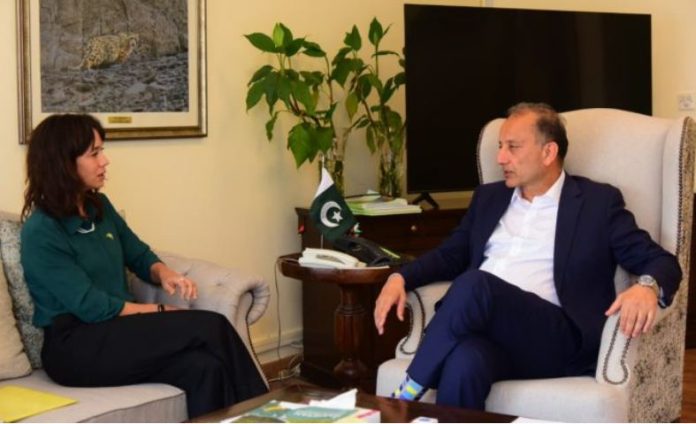
ISLAMABAD, Sep 16 (APP): Federal Minister for Climate Change and Environmental Coordination Dr. Musadik Malik on Tuesday met with Sweden’s Ambassador to Pakistan, Alexandra Berg von Linde, to discuss strengthening bilateral cooperation on climate action, sustainable development, and green innovation.

The meeting centred on the devastating impacts of recent floods in Pakistan, which have displaced millions, destroyed infrastructure, and disrupted livelihoods.

Dr. Malik stressed the urgent need for climate finance, technology transfer, and resilience-building initiatives to help vulnerable communities adapt to worsening climate shocks.

“Pakistan requires global support to recover from climate disasters and to build long-term resilience. This is not just about rebuilding homes, but about safeguarding futures,” he said.

Both sides explored opportunities to promote youth-led green startups and advance the proposed Green University of Pakistan, envisioned as a regional hub for climate education, research, and innovation.

They also discussed academic and research collaboration, including student and faculty exchange programs between universities in Pakistan and Sweden.

Ambassador Berg von Linde emphasized Sweden’s readiness to deepen cooperation, particularly in sustainable habitats and urban resilience.

She also extended an invitation to Dr. Malik to visit the Swedish Pavilion at COP30 in Brazil, where Sweden will showcase its innovations in climate technology and policy.

US issues fresh Iran-related sanctions

US issues fresh Iran-related sanctions

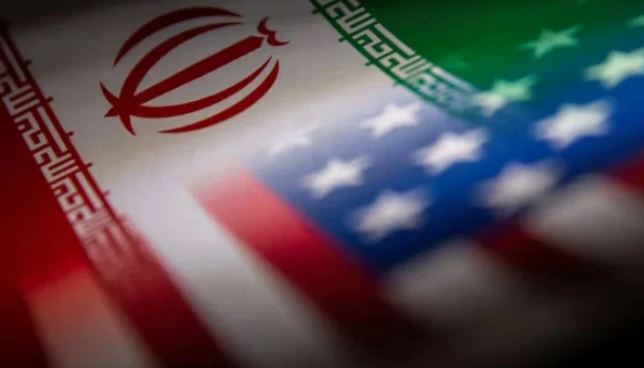
WASHINGTON: The US has issued a fresh round Iran-related sanctions targeting individuals and entities that Washington says finance Tehran’s military, including some in Hong Kong and the United Arab Emirates, the US Treasury Department said on Tuesday.

Those targeted have helped coordinate funds transfers, including from the sale of Iranian oil, that benefit Iran’s military force, the Islamic Revolutionary Guard Corp (IRGC)- Quds Force and its Ministry of Defense and Armed Forces Logistics (MODAFL), Treasury said.

“Iranian ‘shadow banking’ networks like these—run by trusted illicit financial facilitators—abuse the international financial system, and evade sanctions by laundering money through overseas front companies and cryptocurrency,” it said in a statement.

US sanctions generally prohibit American individuals and companies from engaging in any business transactions with those targeted.

Stay Connected

64FansLike
60FollowersFollow

Latest Reviews

Exchange Rates

USD - United States Dollar
EUR
1.14
GBP
1.33
AUD
0.69
CAD
0.70