Home Blog Page 475

Serena Hotels, Subhe Nau & Pak Scouts launch tree plantation drive

DNA

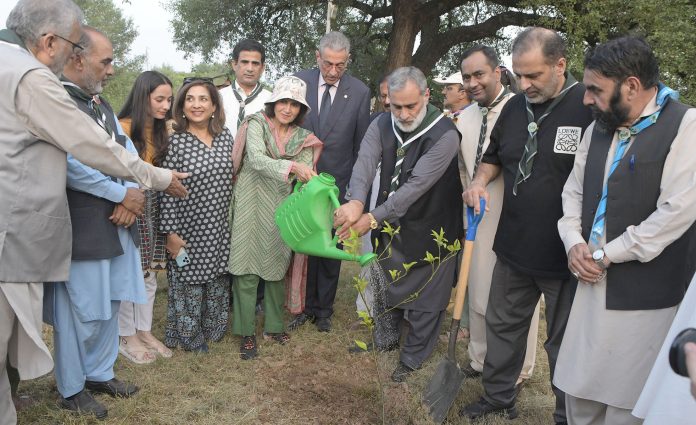
Islamabad— Serena Hotels, in collaboration with Subhe Nau and the Pakistan Scouts Association, hosted a Tree Plantation Drive. The event took place at the National Headquarters, Sumbol Park, Garden Avenue, Islamabad.

This initiative reflected the shared commitment of all three organizations towards environmental sustainability, community engagement, and the fight against climate change. The Tree Plantation Drive aimed to raise awareness about ecological conservation and the urgent need to expand green cover in Pakistan’s urban spaces.

Serena Hotels, through its Public Diplomacy initiative, has long been engaged in meaningful activities that promote cultural, social, and environmental development. Partnering with Subhe Nau, a well-recognized organization advocating for ecological well-being, and the Pakistan Scouts Association, which has a proud history of community service, this campaign embodies a collective effort for a greener future.

The drive witnessed active participation from community members, volunteers, scouts, and representatives of civil society, underlining the importance of unity in protecting the environment.

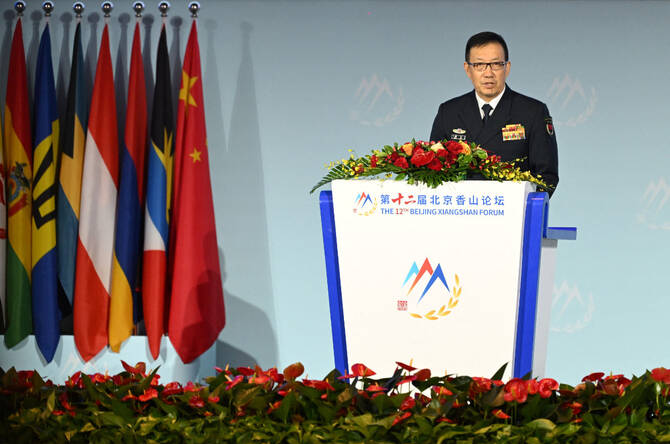
China defence minister slams ‘hegemonic logic’ at Beijing forum

BEIJING, SEPT 18 (AFP/APP/DNA):Chinese Defence Minister Dong Jun denounced “hegemonic logic and acts of bullying” during remarks Thursday at a Beijing forum that were full of thinly veiled references to the United States.

Organisers say about 1,800 representatives from 100 countries, including political, military and academic leaders, are gathering in Beijing for the Xiangshan Forum, considered China’s answer to the annual Shangri-La meeting in Singapore.

The three-day event comes as China presents itself as a mediator of fraught global issues including ongoing wars in Ukraine and Gaza.

Addressing attendees at the opening ceremony on Thursday, Dong warned of “new threats and challenges” now facing world peace.

“While the themes of the times — peace and development — remain unchanged, the clouds of a Cold War mentality, hegemonism and protectionism have not lifted,” he said.

“Historical memory must serve as a constant warning to recognise and oppose hegemonic logic and acts of bullying that are disguised in a new form.”

The comments were a subtle reference to the United States, China’s primary competitor in recent years across a wide range of economic and geopolitical arenas.

Dong’s remarks come two weeks after a grand military parade in Tiananmen Square to commemorate China’s 1945 victory over a Japanese invasion, which left millions dead.

The parade saw China unveil a host of new weapons, including advanced intercontinental ballistic missiles, drones and laser technology.

In attendance were several leaders that have long been at odds with Western governments, including Russia’s Vladimir Putin and North Korea’s Kim Jong Un.

Pakistan secures crucial 41-run victory over UAE in must-win Asia Cup clash

Pakistan secures crucial 41-run victory over UAE in must-win Asia Cup clash

DUBAI: Fakhar Zaman’s half-century and Shaheen Shah Afridi’s late blitz helped Pakistan post a competitive target of 147 runs for the United Arab Emirates (UAE) in the must-win match in the Asia Cup 2025 at Dubai International Cricket Stadium, Dubai, on Wednesday.

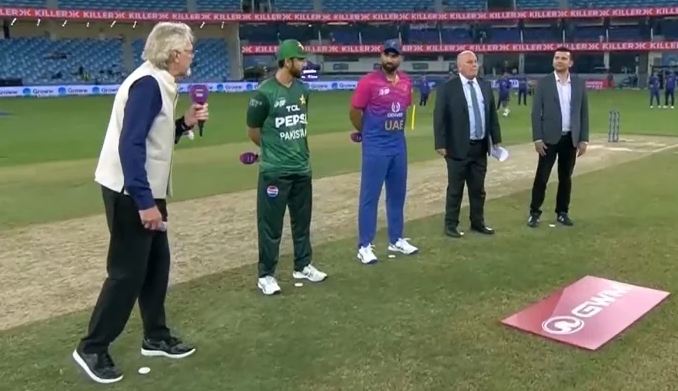
Earlier, the United Arab Emirates opted to bowl first after winning the toss against Pakistan.

Today’s match faced a delay of an hour as Pakistan took a stand not to appear after lodging complaint against ICC match referee Andy Pycroft following handshake row during the tournament’s high-stakes match against India.

However, the Pakistan Cricket Board (PCB) sent its team to the stadium after Pycroft apologised skipper Salman Ali Agha and manager Naveed Akram Cheema, terming the incident “result of miscommunication”.

Meanwhile, the International Cricket Council also expressed its willingness to conduct an inquiry into the code of conduct violation.

Playing XIs
Pakistan: Saim Ayub, Sahibzada Farhan, Mohammad Haris(w), Fakhar Zaman, Salman Agha(c), Khushdil Shah, Hasan Nawaz, Mohammad Nawaz, Shaheen Afridi, Haris Rauf and Abrar Ahmed.

UAE: Alishan Sharafu, Muhammad Waseem (c), Asif Khan, Muhammad Zohaib, Harshit Kaushik, Rahul Chopra (wk), Dhruv Parashar, Haider Ali, Muhammad Rohid Khan, Simranjeet Singh and Junaid Siddique.

Head to Head
Pakistan and the UAE have faced each other three times in T20 cricket. Pakistan have won all three encounters, while the UAE are yet to register a victory against them.

Matches played: 03
Pakistan won: 03
UAE won: 00
Form Guide
After their recent win over Oman, the UAE will turn their focus to a must-win clash against the Green Shirts, following a disappointing campaign opener against India.

Pakistan, with a better net run rate compared to the UAE, will also aim to reach the Super Four stage after securing a win against Oman in their opener and suffering a defeat to India in their second match.

UAE: W, L, L, L, L (most recent first)

Pakistan: L, W, W, W, L

MBS, Shehbaz Sharif sign strategic defense cooperation agreement

MBS, Shehbaz Sharif sign strategic defense cooperation agreement

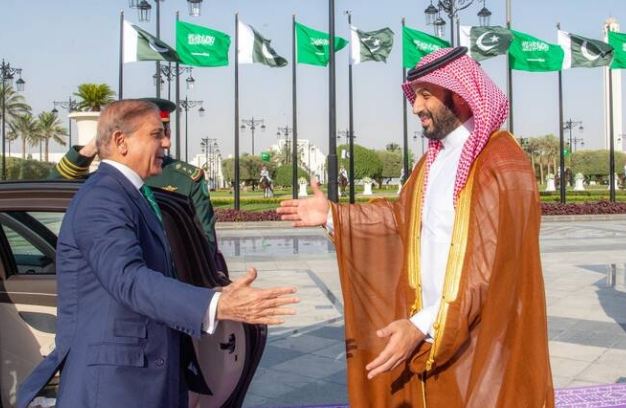
RIYADH, SEPT 17 /DNA/ – At the gracious invitation of His Royal Highness Prince Mohammed bin Salman bin Abdulaziz Al Saud, Crown Prince and Prime Minister, Mr. Muhammad Shehbaz Sharif, Prime Minister of the Islamic Republic of Pakistan, paid a state visit to the Kingdom of Saudi Arabia on 25/3/1447H, corresponding to 17 September 2025.

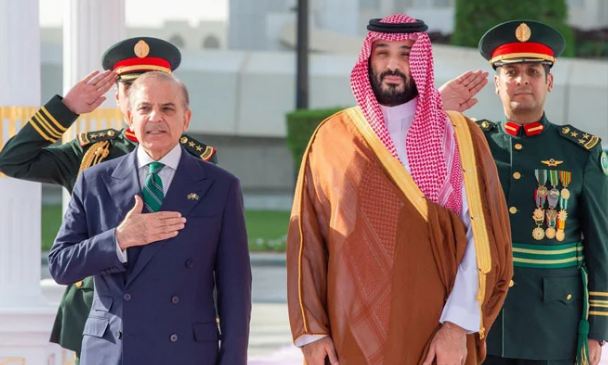
His Royal Highness Prince Mohammed bin Salman bin Abdulaziz Al Saud, Crown Prince and Prime Minister, received the Prime Minister of Pakistan at Al-Yamamah Palace in Riyadh. Both sides held an official session of talks in the presense of both counrties’ delegations. At the outset of the session، His Excellency the Prime Minister of Pakistan conveyed his greetings and warm wishes to the Custodian of the Two Holy Mosques King Salman bin Abdulaziz Al Saud. The two sides reviewed the historic and strategic relations between both countries, and a number of topics of common interest.

Building on the historic partnership extending for nearly eight decades between the Kingdom of Saudi Arabia and the Islamic Republic of Pakistan, and based on the bonds of brotherhood and Islamic solidarity, as well as shared strategic interests and close defense cooperation between the two countries, His Royal Highness Prince Mohammed bin Salman bin Abdulaziz Al Saud, Crown Prince and Prime Minister and His Excellency Mr. Muhammad Shehbaz Sharif, Prime Minister of the Islamic Republic of Pakistan signed the “Strategic Mutual Defense Agreement”. This agreement, which reflects the shared commitment of both nations to enhance their security and to achieving security and peace in the region and the world, aims to develop aspects of defense cooperation between the two countries and strengthen joint deterrence against any aggression. The agreement states that any aggression against either country shall be considered an aggression against both.

His Excellency Muhammad Shehbaz Sharif, Prime Minister of the Islamic Republic of Pakistan, expressed his sincere gratitude and appreciation to His Royal Highness Prince Mohammed bin Salman bin Abdulaziz Al Saud, Crown Prince and Prime Minister, for the warm welcome and generous hospitality extended to him and his accompanying delegation. His Excellency also conveyed his best wishes for the continued well-being of the Custodian of the Two Holy Mosques King Salman bin Abdulaziz Al-Saud and His Royal Highness Prince Mohammed bin Salman bin Abdulaziz Al Saud, Crown Prince and Prime Minister and the continued progress and prosperity, for the brotherly people of the Kingdom of Saudi Arabia. In turn, His Royal Highness extended his warm wishes for the good health and well-being of His Excellency the Prime Minister of the Islamic Republic of Pakistan, and for further progress and prosperity for the brotherly people of Pakistan.

Building Afghanistan’s future through education, connectivity, and Islamic legitimacy

Building Afghanistan's future through education, connectivity, and Islamic legitimacy

Dr. Farhana Qazi,

Halima Nasiri ,

Aziza Mukhammedova

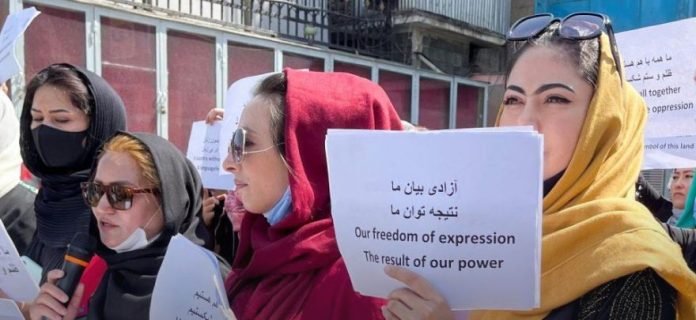
Afghanistan today stands on the edge of a generational turning point. The collapse of women’s education, the weakening of regional trade, and the persistence of cultural isolation have created a dangerous mix. Yet within this crisis lies a possibility: to rebuild Afghanistan’s stability through three pillars: education, connectivity, and Islamic legitimacy. Taken together, these foundations can provide the country with a durable path toward peace, prosperity, and inclusion. 

Education is the frontline of Afghanistan’s struggle for survival. When girls are barred from schools and universities, not only just their futures stolen, but the nation’s economic and social capital is dismantled. A society that denies education to half its population condemns itself to stagnation. Schools should not be considered as classrooms only; in fact, they are engines of resilience, equipping families and communities with the skills to navigate adversity. Historical experience shows this clearly. In the early 2000s, as Afghan girls returned to school in large numbers, literacy rates increased, and households benefited from improved health and higher income levels. The reversal of this progress since 2021 represents a human tragedy as well as an impending economic disaster. Reopening educational access for women and girls is therefore not an abstract right but a strategic necessity. Without it, Afghanistan risks producing a generation deprived of the very tools required to rebuild the country.

But education alone cannot sustain stability. Afghanistan must be reconnected with its neighbors. Regional connectivity offers both opportunity and leverage. The proposed Trans-Afghan railway, linking Central Asia with South Asia, symbolizes this vision. Beyond the physical rails, connectivity means trade corridors, cultural exchanges, and shared markets that anchor Afghanistan in interdependence rather than isolation. Uzbekistan’s advocacy for infrastructure and people-to-people diplomacy underscores this point. When goods, students, and ideas flow across borders, the appeal of extremism and exclusion diminishes. Connectivity provides the infrastructure of peace, transforming geography into opportunity. For Afghanistan, integration into regional networks is existential.

Yet even with education and connectivity, one barrier remains: legitimacy. No policy, however rational, can succeed in Afghanistan without cultural and religious grounding. This is where Islamic engagement becomes indispensable. The Qur’an and Sunnah provide ample support for women’s pursuit of knowledge. Islamic scholars across the region must engage their Afghan counterparts, offering reasoned fatwas that affirm education as a religious duty. Such religiously credible endorsements can open doors that external pressure cannot. Fatwas carry authority in ways that international appeals never will. To secure progress, reforms must be rooted in Islamic reasoning that resonates with Afghan society. Mobilizing ulema, providing religiously sanctioned solutions for women’s travel and study, and ensuring educational initiatives are embedded within an Islamic framework are critical for sustainability.

The fusion of these three pillars, education, connectivity, and Islamic legitimacy, creates a roadmap for Afghanistan’s recovery. Scholarships and online programs can bridge immediate gaps, ensuring Afghan women are not cut off from learning. Teacher-training programs can sustain quality and expand reach, especially in rural areas. Regional infrastructure projects can open corridors of trade and opportunity, while also binding Afghanistan into cooperative networks that reduce incentives for conflict. Religious dialogue can provide the cultural legitimacy that makes reforms sustainable, turning what might otherwise be foreign impositions into accepted norms.

The implications stretch beyond Afghanistan. For Central Asia, an educated and connected Afghanistan can unlock markets and reduce insecurity along its borders. For South Asia, it promises trade routes and stability in a region too often hostage to conflict. For the broader Muslim world, supporting Afghan women’s education within an Islamic framework is a test of credibility. If Muslim nations cannot uphold the right to knowledge as a religious duty, then their appeals to shared values will ring hollow. Conversely, if they succeed, they will demonstrate that Islamic reasoning can be harnessed to advance progress rather than obstruct it.

To transform this vision into reality, three conditions are essential. First, institutionalization. Universities, ministries, and regional organizations must establish dedicated units to manage scholarships, online learning platforms, and cultural exchanges. Second, sustainable financing. Long-term commitments, rather than one-off donor projects, are necessary to ensure that initiatives survive political transitions. Third, monitoring and accountability. Success must be measured not by announcements but by enrollment figures, graduation rates, and the number of partnerships that materialize.

The stakes are stark. If these measures are pursued with seriousness, Afghanistan can still build a foundation for stability. But if they are delayed or diluted, the cost will be severe: radicalization, poverty, and regional instability that will not stop at Afghanistan’s borders. The human cost, borne most heavily by women, will be matched by a geopolitical cost paid by all neighbors.

What Afghanistan needs now is not sympathy but strategy. The region possesses the tools: railways that link economies, classrooms that train generations, and a faith tradition that affirms learning as a sacred duty. To combine them is to give Afghanistan a future. To neglect them is to watch a generation slip away. The choice, though urgent, is still open. The question is whether the region has the resolve to act before it is too late.

Dr. Farhana Qazi is Religious Scholar and Assoicate Professor in University of Peshawar.

Halima Nasiri is Afghan Religious Scholar and the Principal of a private school.

Aziza Mukhammedova is a Senior Research Fellow at the Center for Afghanistan and South Asian Studies at the Institute for Advanced International Studies (IAIS), Uzbekistan.

Saudi Crown Prince Receives Pakistani PM in Riyadh

Saudi Crown Prince Receives Pakistani PM in Riyadh

DNA

RIYADH, SEPT 17: Saudi Arabia’s Crown Prince Mohammed bin Salman received Pakistani Prime Minister Shehbaz Sharif at Al-Yamamah Palace in Riyadh on Wednesday.

The prime minister arrived in Riyadh earlier in the day for a state visit, accompanied by a high-level delegation, the Saudi Press Agency reported.

Upon arrival at King Khalid International Airport, Sharif was warmly received by Prince Mohammed bin Abdulrahman bin Abdulaziz, Deputy Governor of Riyadh Region.

The two leaders discussed matters of mutual interest, with a particular focus on strengthening the historic and brotherly ties between Pakistan and Saudi Arabia. The relationship between the two nations has always been marked by mutual trust, respect, and support, with Riyadh consistently extending assistance to Islamabad in times of need.

Both sides reaffirmed their commitment to further enhance cooperation in trade, investment, energy, and defense, reflecting the excellent bilateral relations that continue to serve as a cornerstone of regional stability.

UK rolls out red carpet for the US President Trump

UK rolls out red carpet for the US President Trump

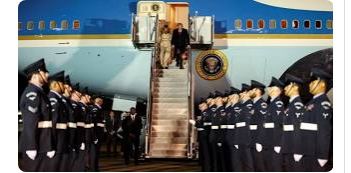
LONDON, SEP 17 (DNA) —   US President Donald Trump formally begins his unprecedented second state visit to Britain on Wednesday, with the royal pomp a grand veneer to key diplomatic talks and as difficult questions about Jeffrey Epstein linger.

King Charles and the royal family rolled out the red carpet for the president when he arrived at Windsor Castle, the oldest and largest inhabited castle in the world and family home to British monarchs for almost 1,000 years, with a carriage procession, gun salutes, a military flypast and a lavish banquet.

Britain says it was the largest military ceremonial welcome for a state visit in living memory.  Trump, an overt royal fan, has made little secret of his delight at being not just the first US leader, but the first elected politician to be invited by a British monarch for two visits. “I Love King Charles,” he posted on his Truth Social account in February.

 On his arrival, he said of Britain: “It’s a very special place.” UK hopes visit will cement ‘special relationship’ Prime Minister Keir Starmer is hoping to use that sentiment to Britain’s advantage as his government seeks to use the trip to cement the two nations’ “special relationship”, deepen economic ties, secure billions of dollars of investment, discuss tariffs and press the US president on Ukraine.

The visit has already delivered a new technology pact between the two countries with companies from Microsoft to Nvidia, Google and OpenAI pledging 31 billion pounds ($42bn) in British investments over the next few years, in AI, quantum computing and civil nuclear energy. Starmer also wants further progress on tariffs.

“Basically, I’m there also on trade. They want to see if they can refine the trade deal a littlebit,” Trump said when he left the White House for Britain on Tuesday. “They’d like to see if they could get a little bit better deal, so we’ll talk to them.”

While security for the visit was tight, with a massive police operation in place in Windsor and 1,600 officers deployed in London to deal with a demonstration by the “Stop the Trump Coalition”, protesters pulled off a stunt in Windsor.

Police said four people were arrested for malicious communications on Tuesday after images of Trump alongside late sex offender Epstein were projected on to one of Windsor Castle’s towers. Trump was not in Windsor at the time.Starmer last week sacked Peter Mandelson as Britain’s ambassador in Washington over his ties to Epstein, which could lead to awkward questions for Starmer and Trump, whose own relationship with the financier has also come under scrutiny.

London commuters had mixed views about Trump’s state visit on Wednesday morning, with some angry about the invitation and others saying it was smart politics and a good use of Britain’s soft power.“We’re looking to sort of make the best of a bad situation,” lawyer Kirstie Robertshaw, 54, said. — DNA

Asia Cup 2025: UAE win toss, elect to bowl first against Pakistan

Asia Cup 2025: UAE win toss, elect to bowl first against Pakistan

DUBAI: UAE have won the toss and opted to bowl first against Pakistan in the 10th match of the ACC Men’s T20 Asia Cup 2025 here at the Dubai International Cricket Stadium on Wednesday.

Squads:

Pakistan: Salman Agha (c), Abrar Ahmed, Faheem Ashraf, Fakhar Zaman, Haris Rauf, Hasan Ali, Hasan Nawaz, Hussain Talat, Khushdil Shah, Mohammad Haris (wk), Mohammad Nawaz, Mohammad Wasim, Sahibzada Farhan, Saim Ayub, Salman Mirza, Shaheen Shah Afridi and Sufiyan Muqeem.

UAE: Muhammad Waseem (c), Alishan Sharafu, Aryansh Sharma (wk), Asif Khan, Dhruv Parashar, Ethan D’Souza, Haider Ali, Harshit Kaushik, Junaid Siddique, Matiullah Khan, Muhammad Farooq, Muhammad Jawadullah, Muhammad Zohaib, Rahul Chopra (wk), Rohid Khan, Simranjeet Singh and Saghir Khan.

Head to Head:

Pakistan and the UAE have faced each other three times in T20 cricket. Pakistan have won all three encounters, while the UAE are yet to register a victory against them.

Matches played: 03

Pakistan won: 03

UAE won: 00

Form Guide:

After their recent win over Oman, the UAE will turn their focus to a must-win clash against the Green Shirts, following a disappointing campaign opener against India.

Pakistan, with a better net run rate compared to the UAE, will also aim to reach the Super Four stage after securing a win against Oman in their opener and suffering a defeat to India in their second match.

UAE: W, L, L, L, L (Most Recent First)

Pakistan: L, W, W, W, L

ICC match referee Andy Pycroft apologizes to Pakistan team

ICC match referee Andy Pycroft apologizes to Pakistan team

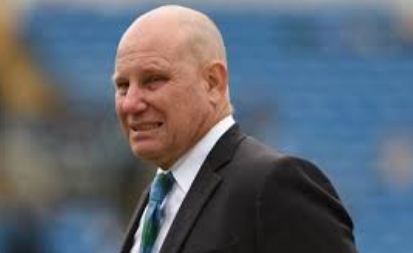
DUBAI, SEPT 17 /DNA/ – The ICC’s match referee, Andy Pycroft, has apologized to the manager and captain of the Pakistan cricket team.

Andy Pycroft had barred the captains of India and Pakistan from shaking hands during their match.

The Pakistan Cricket Board had strongly reacted to Andy Pycroft’s actions.

Andy Pycroft termed the September 14 incident a result of miscommunication and apologized.

The ICC has expressed its willingness to conduct an inquiry into the code of conduct violation that occurred during the September 14 match.

NADRA sponsors National Identity Day 2025 in Nigeria

NADRA sponsors National Identity Day 2025 in Nigeria
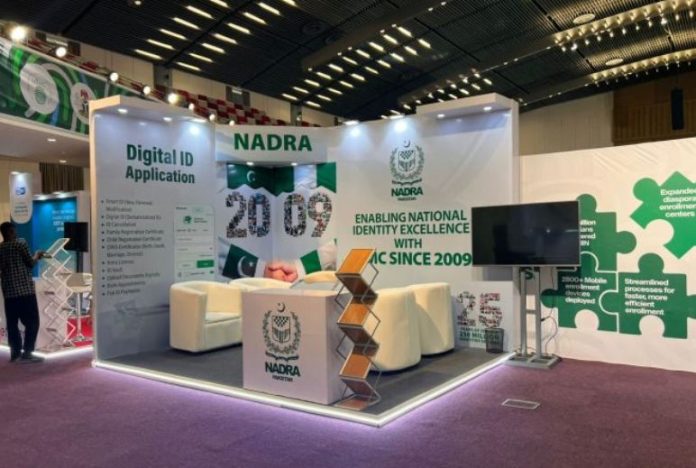
ISLAMABAD, Sep 17 (APP/DNA):National Database and Registration Authority (NADRA) has participated as a sponsor in Nigeria's National Identity Day 2025 celebration held in Abuja. 

The event was hosted by the National Identity Management Commission (NIMC) of Nigeria under the theme “Public Key Infrastructure: Backbone to Digital Infrastructure.”

Umar Khan Azad, CEO of NADRA Technologies Limited (NTL), delivered a goodwill message highlighting the enduring partnership between NADRA and NIMC, through which more than 120 million national identities have been successfully issued.

He reaffirmed NADRA’s commitment to continued collaboration with NIMC in advancing digital identity technologies, strengthening security frameworks and driving innovation in identity management.

NADRA has been a strategic partner of NIMC since 2009, having designed and developed the middleware and backend system for Nigeria’s National Identity project.

Stay Connected

64FansLike
60FollowersFollow

Latest Reviews

Exchange Rates

USD - United States Dollar
EUR
1.14
GBP
1.33
AUD
0.69
CAD
0.70