Home Blog Page 472

Azerbaijan-Pakistan joint chamber signs strategic MoU to boost bilateral trade

Azerbaijan-Pakistan joint chamber signs strategic MoU to boost bilateral trade

ISLAMABAD, SEPT 20 /DNA/ – In a significant move to strengthen economic ties, the Azerbaijan–Pakistan Joint Chamber of Commerce & Industry (APJCCI) today signed a Memorandum of Understanding (MoU) with prominent Azerbaijani business interests. The signing ceremony, held in the federal capital, marks a pivotal step towards enhancing trade and investment cooperation between the two brotherly nations.

The MoU was formally signed by Mr. Zafar Bakhtawari, Chairman of the APJCCI, and Mr. Babak Hussaini, a leading Azerbaijani businessman and investor. The agreement outlines a framework for collaborative efforts in key sectors, including energy, textiles, logistics, agriculture, and tourism.

The ceremony was witnessed by a delegation of high-profile business leaders from both countries, underscoring the broad-based support for this initiative. Attendees included Ms. Naima Ansari, Senior Vice President of APJCCI; Mr. Murat Gelpish, a noted Turkish businessman, highlighting the regional importance of the partnership; Ms. Samina Fazil, President of the Islamabad Women Chamber of Commerce; and Mr. Malik Nadeem Kakazai, among other distinguished participants.

Speaking on the occasion, Chairman Zafar Bakhtawari stated, “This MoU is more than a document; it is a testament to the deep-rooted fraternal bonds between Azerbaijan and Pakistan. We are committed to transforming this relationship into a robust economic partnership that creates opportunities for businesses in both countries and opens new avenues for joint ventures and investments.”

Mr. Babak Hussaini, representing the Azerbaijani business community, echoed these sentiments, saying, “Pakistan offers a dynamic market and tremendous potential for collaboration. This agreement provides a structured platform to connect Azerbaijani investors with their Pakistani counterparts. We are eager to explore the many possibilities and contribute to a new chapter of shared prosperity.”

Pakistan’s fragmented food chains need data-driven policy, Experts say

Pakistan's fragmented food chains need data-driven policy, Experts say

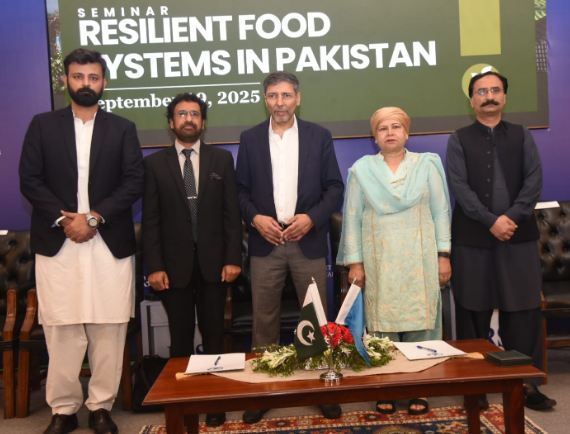
ISLAMABAD, SEPT 20 /DNA/ – The Institute of Regional Studies (IRS), Islamabad, hosted a seminar on “Resilient Food Systems in Pakistan” emphasizing the urgent need for Pakistan to transition from reactive disaster management to proactive climate adaptation strategies to strengthen food security.

Addressing the seminar, Ambassador Jauhar Saleem, President IRS, noted the irony that Pakistan, contributing less than 1% to global emissions, is among the most severely impacted countries by climate change. Citing cities like Lahore ranking among the world’s most polluted, he stressed that “Pakistan’s survival hinges on a new green revolution.”

Ms. Farrah Naz, Country Director of GAIN, highlighted South Asia’s alarming nutrition crisis, pointing out that nearly half of women of reproductive age in the region suffer from anemia, one in four infants are born underweight, and stunting rates continue to rise. She urged the adoption of nutrition-sensitive policies to address these systemic challenges.

Presenting data-driven insights, Dr. Zaffar Bukhari shed light on Pakistan’s fragmented value chains, food safety concerns, and limited dietary diversity. He underlined the importance of dashboards in guiding evidence-based policymaking for a more sustainable food system.

Dr. Haroon Malik, representing the Ministry of National Food Security & Research, highlighted the struggles of Pakistan’s smallholder farmers, who make up nearly 90% of the agricultural sector. He shared that the government is providing Rs.10,000 per farmer in support, expanding mechanization and rental services, and enhancing the Kisan Package 2022.
In the aftermath of the 2025 floods, he revealed that the government is exploring canola oil imports to reduce reliance on palm oil and strengthen resilience.

Moderating the session, Mr. Talha Tufail Bhatti, Assistant Research Officer at IRS, highlighted the concept of Food Sovereignty in Pakistan. The seminar was well attended by diplomats, researchers, journalists, and students, reflecting the growing concern over Pakistan’s food security in the face of climate challenges.

President Asif Ali Zardari visits Kashgar Free Trade Zone

President Asif Ali Zardari visits Kashgar Free Trade Zone

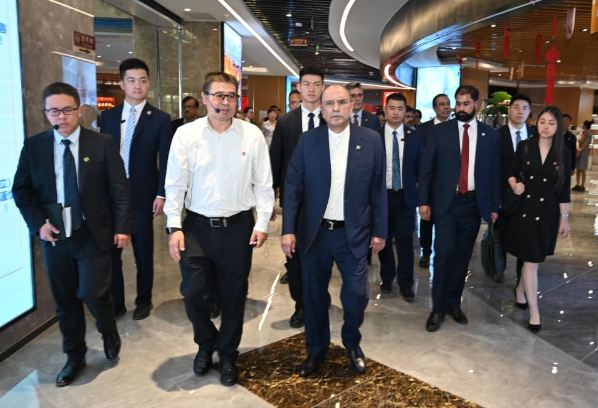
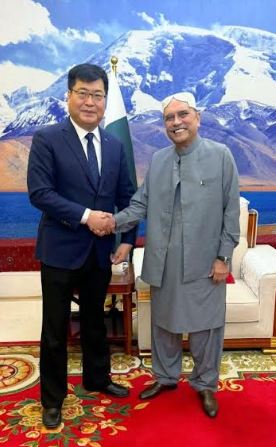
KASHGAR, SEPT 20 /DNA/ – President Asif Ali Zardari visited the Kashgar Free Trade Zone, the only facility of its kind in southern Xinjiang and an important hub for trade and logistics in the region.

The President was received by Mr Yao Ning, CPC Party Secretary of Kashgar, and was briefed on the zone’s growth since its establishment in 2015. Spread over 3.56 square kilometres, the zone brings together bonded warehousing, logistics, processing, customs clearance, and air freight services. It has trade links with 118 countries, with exports ranging from electric vehicles and batteries to solar cells, high-tech goods, and auto parts.

President Zardari was informed that the zone is connected by road, rail and air to both Asia and Europe, with its own international airport. It is linked with Sost port in Gilgit-Baltistan, just 400 kilometres away, and with Gwadar port at a distance of 2,000 kilometres. The zone handles both imports and exports through these routes.

The President also visited stalls and kiosks representing various countries, including Central Asian states, European countries, South Korea, and Japan.

Officials further briefed the President on the digital trade centre established in 2024, now home to more than 5,400 companies, and the cross-border e-commerce exhibition centre showcasing duty-free products from across Central Asia, Europe, and beyond.

President Zardari was also updated on the “Two Countries, Twin Parks” initiative, including an authorised Uzbekistan industrial park that enables warehouse-to-warehouse delivery within 72 hours, and a Kyrgyzstan-backed park under development for automotive assembly and LED production.

Senator Saleem Mandviwalla, Sindh Minister Syed Nasir Hussain Shah, along with the Pakistani Ambassador to China and the Chinese Ambassador to Pakistan, accompanied the President during the visit.

Personal data of nearly 300,000 Hajj applicants leaked on dark web: PTA chief

Personal data of nearly 300,000 Hajj applicants leaked on dark web: PTA chief

ISLAMABAD, SEPT 20 – Pakistan Telecommunication Authority (PTA) Major General (retd) Hafeez Ur Rehman has revealed that personal data of approximately 300,000 individuals who applied for Hajj has surfaced on the dark web.

The PTA chief made these revelations during a briefing to the Senate Standing Committee on IT, chaired by Senator Palwasha Khan, on Friday.

He added that there is a need for a comprehensive inquiry to identify the sources of these leaks. Rehman further said that the PTA had conducted an internal inquiry in 2022, while the Ministry of Interior has now initiated a formal investigation.

During the briefing, Senator Afnan Ullah Khan apprised the committee that data is stolen separately from various institutions, compiled, and subsequently sold, The News reported on Saturday.

The committee’s chairperson shared a personal experience of receiving a fraudulent call regarding a bank transaction and raised concerns about how fraudsters gain access to such sensitive information.

The telecommunication authority’s chairman clarified that during the last two years, no telecom data has appeared on the dark web, but emphasised the urgency of establishing a national-level mechanism for data security.

The Senate committee expressed concern over the delay in introducing legislation to secure personal data.

The Ministry of IT announced that a draft bill had been prepared and consultations with stakeholders were underway.

Senator Afnan Ullah cautioned that failure to enact data protection legislation would expose the country to serious consequences.

During the session, the committee also reviewed the delayed merger of Ufone and Telenor. Officials from the Competition Commission of Pakistan (CCP) informed that the merger deal was in its final stages and expected to be completed within two weeks.

They said that the process had already taken 18 months due to delays in the submission of the requisite data. The PTA chief clarified that until the merger is finalised, the auction of spectrum for 5G services cannot be undertaken.

Senator Kamran Murtaza, however, questioned the feasibility of completing the matter within two weeks when it had already been delayed for eighteen months.

Officials from the Ministry of IT briefed the committee that the 5G auction would be held in December. Rehman also said that the authority was fully prepared for the auction, though certain outstanding issues still required resolution.

ISSI launches Book ‘Pakistan and China: Connecting at People’s Level’

ISSI launches Book ‘Pakistan and China: Connecting at People’s Level’

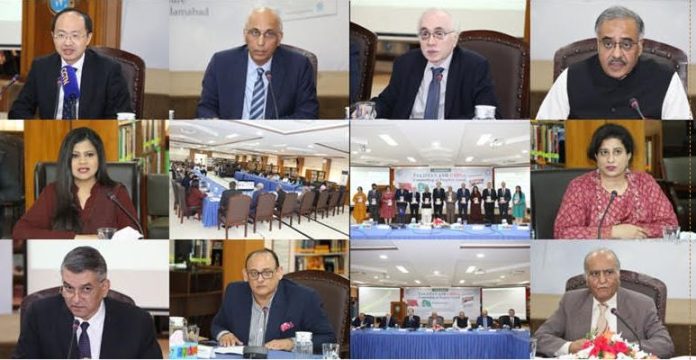
ISLAMABAD, SEPT 20 /DNA/ – The China-Pakistan Study Centre (CPSC) at the Institute of Strategic Studies Islamabad (ISSI) organised the launch of its latest book titled Pakistan and China: Connecting at People’s Level. The event featured remarks by Ambassador Masood Khalid, Pakistan’s former Ambassador to China; Ambassador Moin-ul-Haque, Pakistan’s former Ambassador Pakistan to China; Dr. Hassan Daud Butt, Senior Associate Professor at Bahria University; Dr. Sundus Mustaqeem, Assistant Professor at NUST; and Ms. Aiza Azam, Lecturer at Air University. Mr. Xu Hangtian, Minister-Counsellor at the Embassy of the People’s Republic of China was the guest of honour.

Director General ISSI Ambassador Sohail Mahmood, in his welcome remarks, termed Pakistan-China relations as ‘unique in inter-state relations,’ based on mutual respect, strategic mutual trust, and mutual support on each other’s issues of core interests. He highlighted that this all-weather strategic cooperative partnership has endured regional and global changes for more than seven decades, and continues to serve as a positive factor for peace, stability and development in the region and beyond. Ambassador Soahil Mahmood emphasized that the launch of this book is both timely and significant. He stressed that while CPEC and the Belt and Road Initiative have reinforced economic and physical connectivity, the human and cultural connectivity will secure the relationship for the future generations. He pointed out that the book makes a valuable contribution by shedding light on public diplomacy, cultural exchanges, academic linkages, tourism, and soft power, areas that need to be systematically strengthened.

Referring to the recently adopted China-Pakistan Five-Year “Action Plan” (2025–29), Ambassador Soahil Mahmood noted that a full chapter has been devoted to people-to-people exchanges and cooperation. He said this reflects the recognition at the highest levels that sustained friendship rests on social, cultural, and academic linkages. Looking ahead, he proposed that the 75th anniversary of Pakistan-China diplomatic relations in 2026 should be commemorated through special initiatives in these areas, with wider participation of the youth, students, artists, media professionals, and think-tanks. He also proposed closer collaboration in benefiting from China’s immense expertise in the field of sports as well as in preservation of civilizational and cultural heritage. He concluded by stressing the importance of visa facilitation and enhanced air connectivity to foster deeper P2P links.  

Ambassador Moin-ul-Haq underlined that Pakistan-China relations remain the cornerstone of Pakistan’s foreign policy. He highlighted the deep warmth and respect the Chinese people hold for Pakistan. He identified five priority areas for strengthening people-to-people ties: civilizational connections, cultural exchanges, economic partnerships, technological collaboration, and tourism. He highlighted the role of initiatives such as Gandhara civilization exhibitions and proposed establishment of joint IT parks in every province, as well as group tourism programs. He stressed that the forthcoming 75th anniversary of diplomatic ties in 2026 provides an ideal opportunity to launch people-centric initiatives.

Dr. Hassan Daud Butt noted that the book coincides with the second phase of CPEC, characterized by deeper institutional and societal linkages. He underlined that people-to-people interaction forms the backbone of sustainable partnerships and praised the book’s contribution in showcasing cultural, educational, and social dimensions, from student exchanges to maritime tourism. He said the findings align with President Xi Jinping’s Global Civilization Initiative and called for wider dissemination.

Dr. Sundus Mustaqeem stressed that education, culture, media, and tourism are vital for deeper people-to-people ties and urged Pakistan to strengthen its film and digital media presence. Ms. Aiza Azam highlighted that people-to-people connections span business, cuisine, education, and the arts. She emphasized the value of structured exchanges and academic dialogue in shaping a shared vision.

Ambassador Masood Khalid praised the inclusion of themes such as maritime tourism and the blue economy, noting that Pakistan could generate up to USD 1.5 billion annually from tourism with China’s collaboration. He stressed the importance of expanding sister-city partnerships, cultural exchanges, and think tank cooperation under the new five-year Action plan. He also cautioned that attempts are being made to create misunderstandings in Pakistan-China relations and argued that the best response is to deepen people-to-people linkages.

Mr. Xu Hangtian, echoing President Xi Jinping’s words, emphasized that people are the foundation of history and the future. He cited examples of solidarity between the two nations during COVID-19 and natural disasters, highlighting the resilience of the friendship. He noted rising cultural and educational exchanges, with sister-city linkages growing from 8 to 19 in the last decade and Pakistani student enrollment in China nearly doubling. He also pointed to the 17% rise in Chinese visas for Pakistani businessmen in 2024 and further increases in 2025. Stressing the importance of media, tourism, and youth engagement, he warned against disinformation campaigns and underlined the need for counterterrorism cooperation to unlock the full potential of exchanges. He reaffirmed China’s commitment to strengthening people-to-people ties under the five-year action plan, including new measures such as expanding direct air links.

Earlier, Dr. Talat Shabbir observed that the book highlights the often-overlooked people-to-people dimension of Pakistan–China relations. By focusing on education, tourism, cultural exchanges, media cooperation, and soft power, it shows how shared human experiences and cultural empathy can sustain the partnership beyond strategic projects like CPEC.

In his concluding remarks, Ambassador Khalid Mahmood highlighted the significance of people-to-people contacts in advancing Pakistan–China relations within the framework of public diplomacy. He commended CPSC for producing a timely and well-researched publication that makes a valuable contribution in this important domain.

The event brought together senior diplomats, academics, scholars, and policymakers to reflect on the often-overlooked social and cultural dimensions of Pakistan-China relations.

DC Islamabad, ICCI President partners to promote business-friendly environment

DC Islamabad, ICCI President partners to promote business-friendly environment

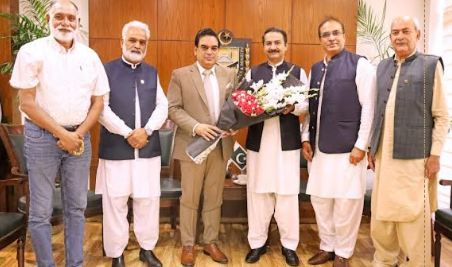
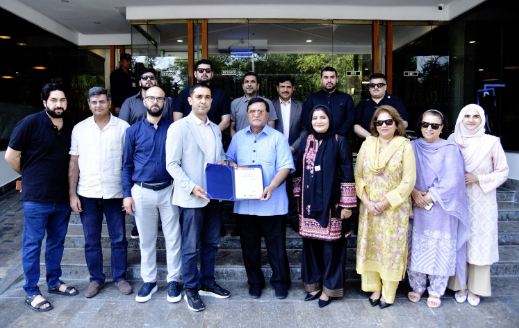
ISLAMABAD, SEPT 20 /DNA/ – Deputy Commissioner Islamabad, Irfan Nawaz Memon, praised the Islamabad Chamber of Commerce & Industry (ICCI) for its proactive partnership in creating a business-friendly climate and addressing civic issues that matter to the community.

Visiting ICCI to congratulate Sardar Tahir Mehmood on his unopposed election as President, the Deputy Commissioner highlighted that October and November are critical months for dengue outbreaks. He urged immediate preventive action, especially removal of stagnant water, and commended ICCI’s initiative in alerting and mobilizing the business community. He assured full administrative support to curb dengue and safeguard public health.

Memon further committed to tackling encroachments, waste management, and street beggary, alongside strict price controls on daily essentials, to ensure a clean, secure, and investment-friendly environment.

Earlier, welcoming the guest, ICCI President Sardar Tahir Mehmood called for collaboration over coercion, emphasizing that preventive and corrective measures are more effective than punitive fines, arrests, or business closures. He reaffirmed ICCI’s resolve to run citywide awareness drives on dengue and other civic concerns, with the goal of positioning Islamabad as a hub of world-class business activity.

Senior Vice President Tahir Ayub, Vice President Muhammad Irfan Chaudhry, Executive Member Waseem Chaudhry, and former Senior Vice President Khalid Chaudhry also underlined the need for strong public–private cooperation to address civic challenges and sustain economic growth.

Serene Air CEO calls on President Zardari in Kashgar

Serene Air CEO calls on President Zardari in Kashgar

KASHGAR, SEPT 20 /DNA/ – Yunchun Yang, Owner and CEO of Serene Air, called on President Asif Ali Zardari in Kashgar today and informed him of airline’s future plans for operations in Pakistan.

The President requested that Serene Air should increase the number of aircraft in Serene Air’s fleet to strengthen the airline’s network and connectivity.

Dr Yang, who holds a Ph.D. from the University of California and is founder and president of a listed semiconductor company in China with subsidiaries in Sweden and the USA, assured the President of his commitment to invest further in Serene Air’s operations in Pakistan.

Serene Air is the first Chinese private investment in Pakistan’s aviation sector and the first private Pakistani airline to operate flights to Beijing. Dr Yang also highlighted the company’s collaborative projects with the Pakistan Air Force on JF-17 avionics.

Senator Saleem Mandviwalla, along with the Pakistani Ambassador to China and the Chinese Ambassador to Pakistan, were also present at the meeting.

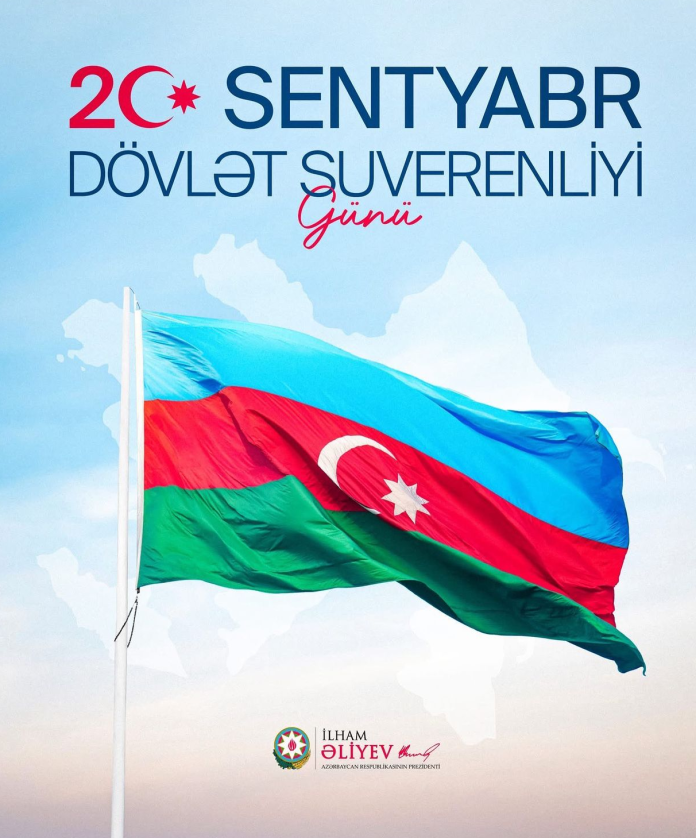
September 20 to mark State Sovereignty Day in Azerbaijan

September 20 to mark State founded on our national and moral values, on solidarity, humanism, justice, and the rule of law. Despite foreign interventions and the many deprivations our nation endured throughout history, Azerbaijani people preserved their national identity, safeguarded their spirit of struggle, and remained true to their ideals. At the end of the twentieth century, they restored their state independence.

On October 18, 1991, the Constitutional Act “On the State Independence of the Republic of Azerbaijan” was adopted, foreseeing the preparation of a new Constitution. However, the years 1991 to 1993 were marked by ineffective governance. The country faced a deep crisis in every sphere of public life, anarchy spread, mechanisms of state administration were not formed, and the principles of legality and the fundamental rights of citizens to live in freedom and safety could not be ensured.

It was only in 1993, when the people demanded the return to power of the National Leader of the people of Azerbaijan, Heydar Aliyev, that the course of events changed. Through his great mission of salvation, the dangerous processes unfolding in the country were brought to an end. Socio-political stability was restored, and a reliable foundation was created for modern state-building.

Under the direct leadership of Azerbaijan`s Great Leader, the first Constitution of the Republic of Azerbaijan was prepared and, on November 12, 1995, adopted by the people. This Constitution became the cornerstone of wide-ranging legislative and institutional reforms. It has served as a vital legal framework for protecting the independence, sovereignty, and territorial integrity of the state, for building a legal and secular system of governance, for ensuring a decent standard of living for Azerbaijanis, and for promoting cooperation with the countries of the world in an atmosphere of friendship and peace. It is precisely this year that the people of Azerbaijan proudly celebrate the 30th anniversary of the adoption of their Constitution.

The Preamble of the Constitution declares the protection of Azerbaijan’s state independence, sovereignty, and territorial integrity as one of its foremost objectives. Yet, for nearly three decades, the occupation of 20 percent of their lands as a result of Armenia’s aggression prevented the Republic of Azerbaijan from exercising its sovereign rights over those territories. Ending Armenia’s policy of occupation and restoring the territorial integrity and sovereignty of the country became one of the central goals of their national idea. All the resources of Azerbaijani society were mobilized to achieve this historic mission.

In response to Armenia’s provocations, the Patriotic War, which began on September 27, 2020, culminated in a historic victory. With the successful anti-terror operation carried out on September 19–20, 2023, the territorial integrity and sovereignty of Azerbaijan were fully restored, and the legal force of the Constitution of Azerbaijan was reestablished across all territories liberated from occupation. Therefore, by the Decree of the President of the Republic of Azerbaijan dated September 19, 2024, September 20 has been declared the Day of State Sovereignty of the Republic of Azerbaijan.

Today, guided by the national interests of Azerbaijani people and under the leadership of its head of state, the Republic of Azerbaijan continues its independent policy with even greater determination and principle in light of these new realities. The nation moves forward with confidence toward its strategic goals based on the requirements of their Constitution and their sovereign rights.

Taking into consideration all the above-mentioned, by the Decree of the President of the Republic of Azerbaijan, His Excellency Mr. Ilham Aliyev of December 28, 2024, 2025 was declared the “Year of the Constitution and Sovereignty” in the Republic of Azerbaijan.

EU envoy vows strong advocacy for human rights in Pakistan

EU envoy vows strong advocacy for human rights in Pakistan

ISLAMABAD, SEPT 19 /DNA/ – The European Union’s Ambassador to Pakistan, Raimundas Karoblis, has reaffirmed the EU’s commitment to promoting and safeguarding human rights in Pakistan, emphasizing that democratic health is closely linked to the ability of civil society and watchdog organisations to work without intimidation.

Speaking at his first public engagement in Pakistan, Ambassador Karoblis chose to address an audience of leading human rights defenders and organisations, including the Human Rights Commission of Pakistan (HRCP). He said it was an honour to dedicate his maiden interaction to those who play a vital role in upholding the rights of citizens.

“The ability of HRCP and other organisations to monitor and raise human rights issues without fear of reprisals is a crucial indicator of the country’s democratic health,” Ambassador Karoblis stated.

He further underscored that the European Union would remain a steadfast partner of Pakistan in this domain. “The EU will continue to diligently advocate for human rights in Pakistan during my tenure, and the upcoming GSP+ monitoring mission plays an important role in that regard,” he added.

The Generalised Scheme of Preferences Plus (GSP+) status allows Pakistan preferential access to EU markets, contingent upon compliance with international human rights and labour standards. The envoy noted that the monitoring mission later this year would be a significant milestone in assessing Pakistan’s progress on its commitments.

Human rights activists welcomed the envoy’s remarks, describing them as a timely reassurance of international support for civil society in Pakistan, where rights groups have often faced mounting pressure.

Diplomatic observers say the ambassador’s decision to prioritize human rights in his first public engagement signals the EU’s determination to keep the issue central to its engagement with Pakistan.

Asia Cup 2025: India secures 21-run victory over Oman

Asia Cup 2025: India secures 21-run victory over Oman

ABU DHABI: India secured 21-run victory over Oman. India set a 189-run target for Oman in the 12th match of the Asia Cup 2025 at Sheikh Zayed Stadium, Abu Dhabi, on Friday.

India captain Suryakumar Yadav’s decision to bat first paid dividends as his team’s batting unit yielded 188/8 in 20 overs.

The 2016 champions, however, got off to a contrasting start to their innings, as vice-captain Shubman Gill (five) was cleaned up by Shah Faisal in the second over with just six runs on the board.

Following the early setback, Samson, promoted up the order, joined Abhishek Sharma for a quickfire 66-run partnership for the second wicket, which culminated with the opener’s dismissal in the eighth over.

Sharma smashed five fours and two sixes on his way to a 15-ball 38.

Stay Connected

64FansLike
60FollowersFollow

Latest Reviews

Exchange Rates

USD - United States Dollar
EUR
1.14
GBP
1.33
AUD
0.69
CAD
0.70