Home Blog Page 470

PARC, KOPIA organize Farmer Field Day in Punjab

PARC, KOPIA organize Farmer Field Day in Punjab

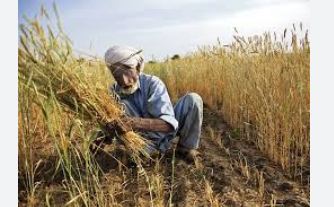
ISLAMABAD, SEPT 21: /DNA/ – The Pakistan Agricultural Research Council (PARC), in partnership with the Korea Partnership for Innovation of Agriculture (KOPIA), successfully organized a Farmer Field Day on “Breed Improvement of Cattle” in Arifwala, District Pakpattan, Punjab. The event was held under the framework of the KOPIA Technical Cooperation Project entitled “Breed Improvement through Efficient Artificial Insemination Services by Using Korean Holstein Semen in Cattle.”

The initiative seeks to strengthen Pakistan’s livestock sector by enhancing the genetic potential of indigenous cattle through the introduction of Korean Holstein germplasm. Compared to conventional Holsteins, the Korean Holstein line offers superior adaptability to high-temperature environments, making it particularly suitable for Pakistan’s climate conditions.

More than 300 smallholder farmers participated in the field day, reflecting strong community interest in breed improvement and modern breeding technologies. The program opened with welcome remarks, followed by a technical presentation from Dr. Muhammad Shafiq Haider on strategies for cattle breed improvement. Farmer representatives also shared their experiences and feedback on the services and progeny produced under the KOPIA project.

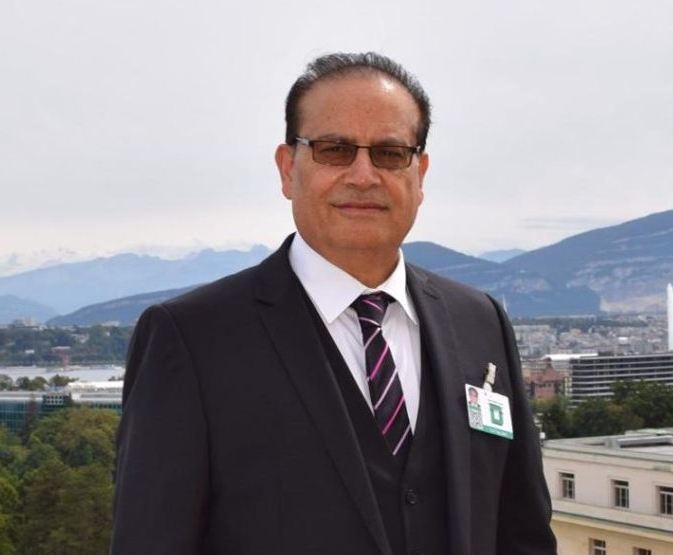
In his keynote address, Dr. Syed Murtaza Hassan Andrabi, Chairman PARC and Principal Investigator of the project, underscored the central role of livestock in Pakistan’s agriculture economy and emphasized the importance of adopting advanced breeding technologies. “Improving the genetic makeup of our livestock is key to achieving higher productivity, food security, and farmer prosperity. Through this project, PARC is bringing cutting-edge science to the farmer’s doorstep,” he said.

Mr. Park Intae, Director of KOPIA Pakistan, reaffirmed KOPIA’s commitment to improving the livelihoods of Pakistan’s smallholder farmers. “KOPIA’s mission is to transfer knowledge and technology that directly benefits farming communities. By supporting livestock breed improvement, we are helping farmers secure better incomes and ensuring sustainable food production systems,” he noted.

The event also featured a showcase of first-generation (F1) Korean Holstein progeny, and recognition shields for participating farmers and key partners. The session concluded with a vote of thanks by Dr. Aish Muhammad, KOPIA Coordinator, followed by media interviews and a networking lunch.

The Farmer Field Day received coverage from local and national media, helping to amplify awareness of livestock breed improvement initiatives across Pakistan.

Security forces kill 7 Indian sponsored Khwarij terrorists: ISPR

Security forces kill four terrorists in D.I.Khan

RAWALPINDI, Sep 21 (APP/DNA): Security forces killed seven Indian sponsored terrorists including three Afghan national khwarij and two suicide bombers in an intelligence based operation in general area Kulachi, Dera Ismail Khan District, on reported presence of Khwarij.

“During the conduct of operation, own troops effectively engaged the khwarij location and resultantly, seven Indian sponsored khwarij including three Afghan National khwarij and two suicide bombers were sent to hell,” said a news release issued by Inter Services Public Relations (ISPR) on Sunday.

Pakistan expects the Interim Afghan Government to uphold its responsibilities and deny its soil for terrorists’ activities against Pakistan, it further said.

“Sanitization operation is being conducted to eliminate any other Indian sponsored kharji found in the area, as the security forces of Pakistan are determined to wipe out the menace of Indian Sponsored Terrorism from the country,” the press release further said.

Pak-Saudi defence pact a guarantee of peace, unity in Muslim world: Ashrafi

Pak-Saudi defence pact a guarantee of peace, unity in Muslim world: Ashrafi

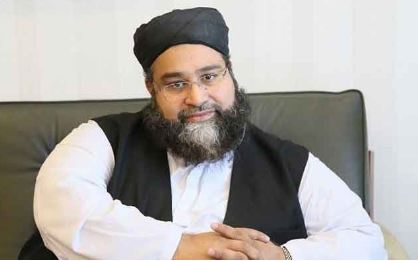
LAHORE, SEP 21 (APP/DNA): Pakistan Ulema Council (PUC) Chairman Hafiz Muhammad Tahir Mehmood Ashrafi has said the recently signed historic strategic defence agreement between Pakistan and Saudi Arabia would serve as a guarantor of peace and stability not only for both nations but also for the entire Muslim Ummah.

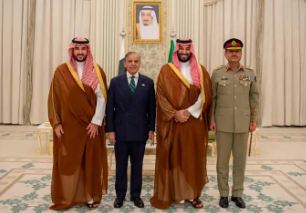
Addressing a press conference at Jamia Masjid Tauheed on Sunday along with scholars and religious leaders from different schools of thought on International Day of Peace, Ashrafi said the pact, finalized under the leadership of Prime Minister Shehbaz Sharif and Saudi Crown Prince Muhammad bin Salman, makes it clear that aggression against either Pakistan or Saudi Arabia would be considered an attack on both. “This agreement is a symbol of unshakeable unity and will inspire Muslim nations to stand together against any external aggression,” he said.

He stressed that true peace could only be achieved through the resolution of the Palestine and Kashmir disputes and by restoring the rights of oppressed people, particularly those in Gaza. He lauded Pakistan’s armed forces for their courage and sacrifices, describing them as a force rooted in faith, sacrifice, and the spirit of jihad fi sabilillah.

Tahir Mehmood Ashrafi recalled the sacrifices of martyrs and their families, citing the example of a mother who had expressed pride in her son’s martyrdom. “Our army is not standing on the borders for salaries but for martyrdom or victory. This is Pakistan’s honour, and it is our duty to always remember this reality,” he remarked.

Referring to the Palestinian cause, Ashrafi said Pakistan and Saudi Arabia had always stood by the people of Palestine, both through government initiatives and public support. He pointed out that on September 22 at the United Nations, when Palestinian President Mahmoud Abbas was denied permission to speak in person, Saudi Crown Prince Muhammad bin Salman, Turkish President Erdogan, and Prime Minister Shehbaz Sharif would represent the Palestinian cause, showing that “the Muslim world is united as Palestine itself.”

He said the defence pact had unsettled India and Israel because it symbolizes Muslim unity, even though the agreement is aimed at safeguarding peace. “Those worried about this pact should realize it is not a pact of war but of peace and security for Pakistan, Saudi Arabia, and the Ummah,” he asserted.

The PUC Chairman emphasized that jihad cannot be equated with terrorism or indiscriminate violence. He said, “Jihad is defined by the Qur’an and Sunnah, and ‘Paigham-e-Pakistan’ has clarified the difference between jihad and fasad (mischief). Suicide attacks in mosques, imambargahs, churches, or against Pakistan’s armed forces cannot be called jihad. In Pakistan, the only legitimate authority to wage jihad is the state and its armed forces.”

Highlighting interfaith harmony, Ashrafi noted that Islam is a religion of peace and compassion. He shared that during recent interfaith interactions, non-Muslims had facilitated Muslims in performing prayers in their churches and institutions. “We must break barriers of division. Respect for all faiths and sects is part of the Prophet’s tradition,” he said.

Commenting on Pakistan’s role in regional peace, he said that Pakistan had made unmatched sacrifices for Afghanistan and continued to host over 1.5 million Afghan refugees. He urged Afghan authorities to ensure their soil is not used for violence inside Pakistan.

On domestic peace, he urged the nation to unite against extremism, sectarianism, and social evils. He said the “Paigham-e-Pakistan” initiative and the Peace Committees were working to spread tolerance and mutual respect. “Justice must be swift, and those who commit crimes against children and women, whether in mosques, schools, or homes, must face strict punishment,” he added.

Tahir Mehmood Ashrafi also congratulated the leadership of Pakistan and Saudi Arabia on the successful pact. He praised Prime Minister Shehbaz Sharif, Chief of Army Staff Field Marshal Syed Asim Munir, Crown Prince Muhammad bin Salman, and Saudi Defence Minister Prince Khalid bin Salman for their role in making history. “The centre of Muslim unity is Makkah and Madinah, and Pakistan, founded on La ilaha illallah, is honoured to defend the Haramain Sharifain alongside Saudi Arabia,” he said.

To a question, he said that many Islamic and Arab countries are already in contact with the government regarding the Pakistan–Saudi Arabia defence pact. He noted that, as the Foreign Minister had also stated last night, discussions are ongoing, and very positive developments will soon emerge for both Pakistan and the wider Muslim world.

Ashrafi added that the long-standing dream of “Greater Israel” has collapsed after this historic alliance. He predicted that in the near future, leading countries of the world, including major European states, not just those from the Islamic world, would announce recognition of a free and independent State of Palestine.

Over 3.02 million rescued, as floods devastate Pakistan: NDMA

Over 3.02 million rescued, as floods devastate Pakistan: NDMA

ISLAMABAD, Sep 21 (APP):Over 3.02 million people have been rescued in 5,768 operations, with more than 273,524 relief items distributed and 662,098 people treated in 741 camps established in flood-hit areas since June 26, under the coordinated efforts of NDMA, PDMAs, the Pakistan Army, and other rescue teams, as relentless floods swept through most districts of Pakistan.

According to the latest figures released by the National Disaster Management Authority (NDMA), a total of 3,020,130 individuals have been rescued in 5,768 operations carried out in flood hit areas since June 26, as part of a coordinated response.
In Punjab, 2,819,767 people were rescued in 4,749 operations. Khyber Pakhtunkhwa saw 14,317 rescues in 211 operations. Sindh reported 184,011 individuals rescued through 753 operations. Balochistan had 19 rescues in 4 operations, while Gilgit-Baltistan evacuated 1,027 people in 25 operations. Azad Jammu and Kashmir saw 940 rescues in 18 operations, and 49 individuals were rescued in 8 operations in the federal capital.
According to the latest figures released by the National Disaster Management Authority (NDMA), at least 1,006 people have lost their lives in flood-affected regions of the country due to torrential rains and flash flooding. The fatalities include 275 children, 568 men, and 163 women.
At least 304 people have died in Punjab, including 110 children, 143 men, and 51 women.
In Khyber Pakhtunkhwa, the death toll has reached 504, with 90 children, 338 men, and 76 women among the victims. Sindh has reported 80 fatalities, comprising 35 children, 35 men, and 10 women.
Flash floods have caused widespread devastation in most areas of country , with Balochistan reporting 30 fatalities—including 20 children, 6 men, and 4 women. In Gilgit-Baltistan, 41 people lost their lives, among them 6 children, 26 men, and 9 women. Azad Jammu & Kashmir recorded 38 deaths due to the deluge, comprising 9 children, 17 men, and 12 women.
Meanwhile, in Islamabad Capital Territory (ICT), 9 individuals perished, including 5 children, 3 men, and 1 woman.

Flood-related incidents have left 1,063 people injured, including 321 children, 450 men, and 292 women.
Punjab reported the highest number of injuries with 661 individuals affected, including 200 children, 258 men, and 203 women, highlighting the severe impact on vulnerable populations across the province.
In Khyber Pakhtunkhwa, 218 people sustained injuries, comprising 70 children, 99 men, and 49 women. Meanwhile, Sindh reported 87 injuries, including 39 children, 29 men, and 19 women, reflecting the widespread impact of the floods across age and gender groups.

Balochistan reported five injuries, affecting two children, two men, and one woman. In Gilgit-Baltistan, 52 individuals were injured, including four children, 42 men, and six women, reflecting the widespread human toll of the floods across both regions.

Azad Jammu and Kashmir recorded 37 injuries, including 4 children, 20 men, and 13 women, while the Islamabad Capital Territory (ICT) reported 3 injuries, affecting 2 children and 1 woman, with no male injuries documented.

In a coordinated humanitarian effort, the National Disaster Management Authority (NDMA), in partnership with the Pakistan Army and other stakeholders, has distributed more than 273,524 relief items to communities impacted by recent flooding.

Essential supplies provided include tents, blankets, hygiene kits, ration bags, food packs, and safe drinking water. To bolster recovery operations, additional equipment such as solar panels, de-watering pumps, and generators has also been provided to flood hit people.

Severe flooding has wreaked havoc nationwide, damaging at least 12,569 homes—with 4,128 completely destroyed and 8,441 partially damaged.

The disaster has also resulted in the loss of 6,509 livestock, further deepening the hardship faced by vulnerable communities already struggling with displacement and resource scarcity.

In a proactive move to support flood-affected communities, the National Disaster Management Authority (NDMA) has established 1,690 relief and medical camps in flood hit areas.

Among these, 741 medical camps have delivered treatment to 662,098 individuals, while 949 relief camps have provided shelter and essential services to 152,252 people, ensuring timely assistance to those in need.

Since June 26, devastating floods in country have damaged 239 bridges and destroyed approximately 1,981.37 kilometers of roads, severely impacting infrastructure nationwide. The Khyber Pakhtunkhwa, suffered the loss of 52 bridges and 437.49 km of roads. Azad Jammu & Kashmir follows with 94 bridges and 201.5 km of roads affected.

Other regions also reported varying levels of infrastructure loss. Gilgit-Baltistan sustained damage to 87 bridges and 20.41 kilometers of roads. Balochistan saw the destruction of three bridges and 98.65 kilometers of roads. Sindh reported no bridge damage, but seven kilometers of roads were affected. Islamabad Capital Territory experienced damage to three bridges and 0.03 kilometers of roads.

PM commends security forces for successful DI Khan operation

PM commends security forces for successful DI Khan operation

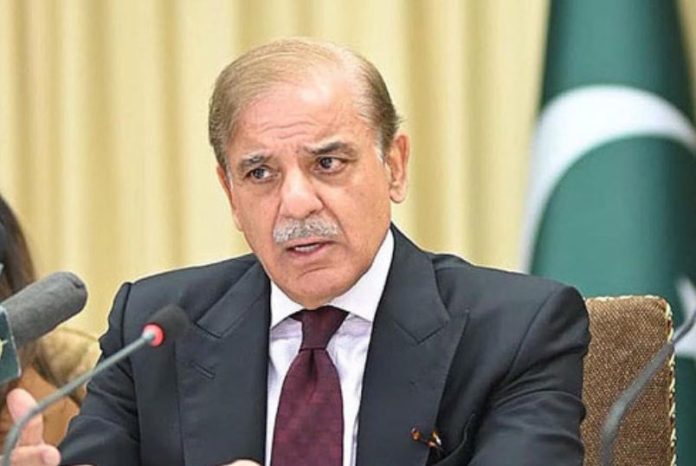
ISLAMABAD, Sep 21 (APP/DNA):Prime Minister Muhammad Shehbaz Sharif on Sunday appreciated the security forces for successful operation against terrorists of Fitna al-Khwarij in Kulachi, District Dera Ismail Khan.

The prime minister commended the security forces for killing seven terrorists of Fitna al-Khwarij during the operation, PM Office Media Wing said in a press release.

In the war against terrorism, he said the entire nation stood with the security forces.

The prime minister reiterated to completely eliminate all forms of terrorism from the country.

Overseas Pakistanis, public laud Saudi-Pak Defence pact

Overseas Pakistanis, public laud Saudi-Pak Defence pact

ISLAMABAD, Sep 21 (APP/DNA): Overseas Pakistanis and public on Sunday welcomed the Saudi-Pakistan defence agreement as a proud moment of Muslim solidarity, underlining that the Ummah speaks with one voice and stands ready to defend every inch of its soil.

Citizens from all walks of life, including students, teachers and overseas Pakistanis have warmly welcomed the recently signed Saudi-Pakistan defence agreement.

According to reports from national and private news channels, this pact is widely seen as a significant step towards strengthening Muslim solidarity and enhancing regional security.

Students from various cities expressed optimism that the agreement would foster greater cooperation between the two nations, while educators highlighted its potential to promote peace and stability in the Muslim world, adding, overseas Pakistanis lauded the pact as a powerful message of unity, emphasizing that the Muslim Ummah stands together in defending its lands against any external threats.

Muhammad Ishfaq, a teacher, praised the leadership, saying, “We must commend the efforts of Prime Minister Shahbaz Sharif and Pakistan’s army chief, Field Marshal Syed Asim Munir for securing this vital agreement. It is a beacon of hope for peace in the region and shows that the Muslim Ummah is united in protecting its sovereignty.”

               Dr. Faryal added, “Their vision and dedication have paved the way for stronger ties that will foster stability and create opportunities for educational and cultural exchange between our nations.”

               Dr. Quratulain noted, “This pact not only boosts defence ties but also strengthens the bonds of brotherhood among Muslim countries. All credit goes to our leaders for making this possible.”

                 Syed Nasir, a Pakistani living in Saudi Arabia also expressed pride and gratitude, stating, “As a Pakistani abroad, I deeply appreciate the efforts of Prime Minister Shahbaz Sharif and General Syed Asim Munir. Their leadership sends a powerful message to adversaries that our nations stand together, ready to defend our shared values and lands.”

                Fatima Khan, a university student, admired the Muslim unity highlighted by the pact, saying, “This agreement is a testament to the strength and solidarity of the Muslim Ummah. It is inspiring to see our nations come together so strongly.”

            Ahmed Raza, a businessman, praised Crown Prince Salman’ s role, adding, “Crown Prince Salman’ s leadership and vision have been instrumental in forging this historic partnership, showing true commitment to Muslim unity and regional peace.”

                    This historic agreement is being hailed as a symbol of resilience and mutual commitment, reinforcing the shared goal of safeguarding sovereignty and advancing collective security across the region.

Self Checkout; Journey into the Heart of U.S. Society

Qamar Bashir

By Qamar Bashir

The American economy is again showing signs of vitality. With the Federal Reserve cutting interest rates, the hope of lower borrowing costs has sparked renewed optimism in trade, investment, and employment. Markets are responding with resilience, businesses are regaining confidence, and households are cautiously optimistic about relief from inflation. Yet behind the statistics, the true pulse of the nation is best felt not in the halls of power, but in the daily interactions between ordinary citizens. For a newcomer, one of the richest ways to understand America is not only through its politics and headlines but through working shoulder to shoulder with its people, in their neighborhoods and workplaces. My journey since migrating in September 2024 has been exactly that—a yearlong immersion into the everyday life of the United States.

My introduction came swiftly through politics. Soon after arrival, I was hired by Working America, a grassroots canvassing arm of the AFL-CIO, tasked with door-to-door outreach. The mission was ambitious: convince voters in Michigan, a critical swing state, to support Vice President Kamala Harris and Senate nominee Alyssa Slotkin. The campaign invested heavily—over 400 workers were hired at competitive wages, mobilized to tilt the state blue. Yet, despite the effort, Harris and Slotkin both lost resoundingly, while Donald Trump’s message resonated strongly with voters. That experience of knocking on doors and engaging in candid conversations with American families was invaluable. I learned firsthand that the economy outweighed all other concerns for most households. Voters were blunt, pragmatic, and deeply invested in their livelihoods.

From politics, my path shifted to commerce when I joined Home Depot, one of the largest consumer hardware chains in the world. With over 2,300 stores across the United States, Canada, and Mexico, Home Depot is more than a retailer—it is a cultural institution. Its aisles of lumber, hardware, gardening supplies, and household goods are where America’s do-it-yourself ethos thrives. Over the course of a year, I interacted with more than 10,000 customers, an experience that revealed the diversity of American society, from the elderly woman lifting 50-pound bags of mulch on her own to immigrant laborers purchasing tools to build a future in their adopted land.

My colleagues reflected the same diversity. Many were students in their twenties, eager to earn money while completing their education. Others were retirees, working to stay active and engaged. Supervisors were consistently encouraging, patient, and generous with their knowledge, creating a work environment built on cooperation and mutual respect. The culture of sharing—skills, stories, and even personal aspirations—was profoundly enriching. These interactions created a microcosm of America itself: multigenerational, multiethnic, and bound together by a shared pursuit of opportunity.

Among customers, patterns emerged. The majority were middle-aged or elderly white Americans, often shopping as families. I witnessed countless examples of parents supporting their adult children in building or renovating homes—contributing not just financially but with their own expertise and labor. These acts of solidarity underscored a family-centric ethos, where generations stand behind one another in pursuit of stability and growth. Elderly women, in particular, impressed me with their resilience, unflinchingly hauling heavy bags of soil and fertilizer, embodying a spirit of independence that refused to yield to age.

Alongside them were immigrants from Ukraine, Poland, France, the Middle East, and Asia. Many were cautious with credit card transactions, double-checking details to protect themselves from fraud. South Asians, particularly Indians and Pakistanis, were polite, efficient, and meticulous in their purchases, often focused on home painting, plumbing, or gardening. East Asians—Chinese, Koreans, Vietnamese—approached shopping with equal caution, reflecting cultural habits of vigilance. Latino customers, frequently laborers, arrived in groups, often with limited English but remarkable resourcefulness, buying tools and materials for construction and repair work.

African American customers, too, left strong impressions. Many carried themselves with confidence and self-reliance, often declining assistance from associates. While some interactions required careful navigation, the majority revealed a pride in independence and a determination to manage their affairs on their own terms. Meanwhile, white Americans stood out for their openness and generosity, often splitting household expenses equitably between spouses, and approaching associates with courtesy and ease. Young white couples shopping with children brought life and laughter to the store aisles, their children’s golden hair and innocent chatter a reminder of the vitality of family life.

Religion, too, surfaced in subtle ways. Conversations revealed that many Americans are deeply Christian, with regular Bible reading shaping their worldview. When I explained Islam’s respect for Jesus and Mary, and the Quran’s insistence on reverence for previous prophets, several were surprised and intrigued. For many, this was their first time hearing of the similarities between Islam and Christianity. These dialogues, though small, were powerful in bridging understanding and dispelling misconceptions.

Through these experiences, I came to appreciate the dual fabric of American life: the resilience and industriousness of ordinary people, and the larger political and economic forces shaping their choices. On one hand, Trump’s “America First” agenda resonates strongly, promising to curb illegal immigration, reduce homelessness, combat gangs, and restore national pride. On the other, skepticism exists—rising costs of essentials frustrate households, even those who support the administration. Yet, optimism endures, rooted in the belief that once policies mature, they will deliver tangible benefits.

What struck me most was the balance between leadership and people. Politicians and policymakers set the stage, but it is in the hands of ordinary Americans—lifting heavy bags of fertilizer, saving meticulously for home repairs, canvassing neighborhoods, or splitting bills at the checkout—that the nation’s resilience resides.

One year after arriving in the United States, I feel enriched not just by professional experiences but by a deeper understanding of the American character. From politics to retail, from elderly gardeners to immigrant laborers, from religious dialogues to economic frustrations, I have seen America up close. And what I have found is a society marked by hard work, generosity, independence, and a cautious but enduring hope for a better tomorrow.

For me, this is the true greatness of America: not only in its vast economy or global influence, but in the everyday dignity of its people. Their struggles and triumphs, their resilience and openness, their ability to debate leadership yet unite in family and community—these are what sustain the nation. As America moves forward under shifting political winds and evolving economic realities, it is this spirit of ordinary people that will continue to make it great.

By Qamar Bashir

Press Secretary to the President (Rtd)

Former Press Minister, Embassy of Pakistan to France

Former Press Attache to Malaysia

Former MD, SRBC | Macomb, Michigan, USA

The Saudi-Pakistan Defense Pact

The Saudi-Pakistan Defense Pact

By Altaf Kumail

The Saudi-Pakistan Strategic Mutual Defence Agreement (SMDA), signed on September 17, 2025, marks a pivotal moment in the evolving geopolitics of the Middle East and South Asia. This pact, forged amid regional instability and shifting global alliances, underscores a deepening of the historic ties between Saudi Arabia and Pakistan while introducing new complexities to an already volatile region. It is a bold move that reflects both nations’ strategic imperatives but also raises questions about its long-term implications for regional stability, particularly concerning India and the broader Gulf dynamics.

The agreement’s timing is critical. The Middle East is reeling from Israel’s aggressive actions, including its war on Gaza, strikes on neighboring states, and the unprecedented attack on Doha. These events have eroded confidence in the U.S. as a reliable security guarantor for Gulf states, despite the presence of 40,000–50,000 American troops in the region. Saudi Arabia’s decision to formalize a mutual defense pact with Pakistan, the Muslim world’s only nuclear power, signals a pragmatic diversification of its security partnerships. For Pakistan, the deal strengthens its regional relevance at a time when its economy is fragile and its rivalry with India is escalating. The pact’s clause treating aggression against one as aggression against both is a powerful political statement, even if its operational details remain ambiguous.

However, this agreement is not without risks. For Saudi Arabia, aligning closely with Pakistan risks entangling it in South Asia’s nuclear-armed tensions, particularly with India, which has been cultivating stronger ties with Riyadh. The pact could complicate Saudi Arabia’s balancing act with Iran, a regional rival, and strain its cautious diplomacy with other neighbors. For Pakistan, the deal enhances its strategic leverage but may draw it into the Middle East’s complex rivalries, potentially at odds with its own interests, especially given its historically neutral stance in regional conflicts like the Saudi-Iran rivalry.

The suggestion of a “nuclear shield” for Saudi Arabia, while speculative, is a particularly sensitive issue. Although analysts like Sahar Khan clarify that the agreement does not explicitly extend nuclear assurances, the perception of such a possibility could alarm the U.S., India, and others, given Pakistan’s nuclear capabilities and Saudi Arabia’s interest in nuclear technology. This perception alone could trigger a new wave of alliance politics and arms races in both regions.

For India, the pact is a strategic setback. The May 2025 skirmish with Pakistan already heightened tensions, and this agreement strengthens Pakistan’s position by aligning it with a powerful Gulf ally. India’s response, as articulated by its foreign ministry, suggests a cautious but vigilant approach, likely intensifying its own regional and global diplomatic efforts to counterbalance this development.

The writer is freelance Writer, Lecturer and Political Analyst

Email: [email protected]

Bagram: The Happy Invasion, the Humiliating Exit

Bagram: The Happy Invasion, the Humiliating Exit

By Abdul Waheed Waheed

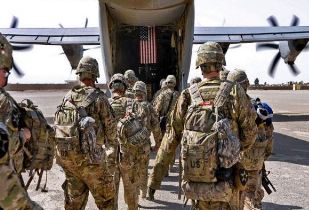
Recent U.S. policy signals point toward a potentially disruptive new phase in Afghanistan’s fragile political landscape. The U.S. House of Representatives has approved an amendment to the 2026 National Defense Authorization Act, instructing the Pentagon to share intelligence with remnants of the former Afghan army, police units, and other designated resistance forces in order to counter the Taliban.

Simultaneously, President Trump has publicly declared his intention to reclaim Bagram Air Base, emphasizing its strategic location near China’s nuclear facilities. Taken together, these moves suggest that Washington’s interest in Afghanistan is being rekindled—not solely for counterterrorism purposes but also for broader geostrategic calculations involving China’s rise and Afghanistan’s vast mineral wealth.

Trump’s claim that America must hold Bagram to “check China” resonates with his political base, but the reality is far more complex. On the surface, reoccupying Bagram fits neatly into his narrative of strength: the U.S. lost it in a “shameful” withdrawal in 2021, and regaining it would restore pride while countering Beijing’s influence. Yet translating this rhetoric into reality would mean violating Afghanistan’s sovereignty, navigating a hostile Taliban-led government, and risking another open-ended military entanglement. It would also provoke direct tensions with China, Russia, and other regional powers that now view Afghanistan as part of their security sphere. Trump’s bold framing masks the deeper geopolitical consequences of such a move.

Although Washington retains overwhelming military power, history shows that conquering territory is far easier than sustaining it. Bagram, both symbolic and strategic, has humbled great powers before. The Soviets held it in the 1980s, and the U.S. occupied it for two decades, yet neither succeeded in converting military presence into durable political control. Afghanistan’s unforgiving geography, fractured politics, and fiercely independent people have long resisted foreign domination. Even if Washington were to reestablish a foothold at Bagram, maintaining it would demand immense political will, vast financial resources, and, above all, local legitimacy—none of which are assured after America’s chaotic 2021 withdrawal. The true challenge lies not in seizing territory, but in governing and sustaining influence in a land that has historically defied external rulers.

Meanwhile, the Taliban continue consolidating power at home. From Kandahar to Badakhshan, they have restored a measure of order, curtailed corruption, and established a functioning—if harsh—system of justice. Yet international recognition remains elusive, while relations with Pakistan are fraught. The unresolved Durand Line, decades of mistrust, and Pakistan’s persistent interference collide with the Taliban’s anti-Pakistan rhetoric, creating a cycle of hostility that undermines regional stability.

The U.S. decision to share intelligence with anti-Taliban forces further complicates the situation. Framed as counterterrorism support, it bolsters resistance groups, undermines the Taliban’s domestic authority, and risks reigniting civil conflict. Coupled with Pakistan’s strategic maneuvers, these developments threaten to destabilize a country whose people are weary of endless war. Ordinary Afghans, hardened by decades of conflict, remain determined to resist any renewed attempt—by a superpower or a neighbor—to impose turmoil on their land.

Regional dynamics add another layer of fragility. The Taliban claim to restrict militant activity, yet neighbors—including Pakistan, China, Iran, and Uzbekistan—remain deeply concerned about foreign fighters finding refuge on Afghan soil. The failure of the August 20 trilateral meeting of China, Afghanistan, and Pakistan to issue a joint communiqué underscored both the limits of Taliban control and the difficulty of forging regional consensus on counterterrorism.

Afghanistan’s challenges are therefore not merely internal but deeply entangled with regional rivalries and global power plays. For the Taliban, the test lies in consolidating authority at home while engaging constructively with neighbors and demonstrating tangible commitments to counterterrorism. For the United States, the dilemma is whether backing anti-Taliban forces can genuinely produce stability—or risks plunging Afghanistan into renewed conflict. For Pakistan, the imperative is to abandon short-term proxy strategies and work toward durable, mutually beneficial relations that prioritize stability over leverage.

Afghanistan once again stands at a crossroads. Whether it consolidates fragile peace or slides back into turbulence depends on the actions of the Taliban, the United States, Pakistan, and other regional powers. But above all, it depends on the Afghan people—who, after generations of conflict, demand peace, stability, and economic security. Any external maneuver that ignores these aspirations is likely to face resistance from the very population it claims to protect.

A pragmatic way forward requires responsibility on all sides. The Taliban must move beyond rhetoric and implement credible steps toward fulfilling the Doha Agreement. The United States must resist the temptation of unilateral intelligence operations that risk reigniting proxy wars, instead investing in diplomacy, economic incentives, and reconstruction. Pakistan must reckon with its history of miscalculations, recognizing that long-term stability lies not in grievances or militant leverage, but in fostering cooperation.

History has shown that Afghanistan resists being reduced to a chessboard for external ambitions. Respecting that truth—and the resilience of its people—is central to shaping a stable and sustainable future.

PIDE seminar calls for gender-sensitive disaster response in flood-hit Pakistan

PIDE seminar calls for gender-sensitive disaster response in flood-hit Pakistan

The seminar collectively underscored that floods are not merely environmental events but also social stress tests that expose deep-rooted inequalities.

ISLAMABAD, SEPT 21: /DNA/ – The Pakistan Institute of Development Economics (PIDE) hosted a seminar titled “Understanding Gendered Vulnerabilities in Flood-Affected Areas of Pakistan,” highlighting how disasters exacerbate existing social inequalities, particularly for women, minorities, and marginalized groups. The session, moderated by Dr. Rabia Manzoor, Deputy Chief (Policy) PIDE brought together experts and practitioners including Ms. Nilofer Afridi Qazi (social worker and disaster management specialist), Mr. Raza Narejo (Acting Country Director, Islamic Relief Pakistan), and Ms. Jayaa Jaggi (Minority Women Forum).

According to the press release issued from the PIDE, Ms. Nilofer Afridi Qazi emphasized that disasters do not create vulnerabilities but amplify pre-existing ones such as poverty, illiteracy, and lack of resources. Drawing on her fieldwork in Khyber Pakhtunkhwa and Balochistan, she shared striking cases where women could not be rescued during floods because cultural taboos prevented male rescuers from assisting them. Similarly, women in purdah were often left out of aid distribution as they could not interact with male relief workers. She also highlighted neglected issues like menstrual health, pointing to her initiative on locally made reusable sanitary pads as a sustainable solution for displaced women.

Speaking from Islamic Relief’s decades-long humanitarian engagement, Mr. Raza Narejo stressed that women are systematically excluded during relief distribution. In conservative areas, aid was often handed only to men, leaving women without access to essentials such as clothing, hygiene supplies, and maternal health products. Pregnant and lactating women were particularly neglected. He underscored the urgent need for female rescue workers, noting that women in many communities were reluctant or unable to be evacuated by male responders. He also called for Pakistan to move beyond reactive disaster management and adopt long-term governance reforms in food security, water management, and resilience building.

Ms. Jayaa Jaggi shed light on the intersectional vulnerabilities of minorities, persons with disabilities, and female-headed households. Relief points were often physically inaccessible for wheelchair users and the visually impaired, while basic facilities such as toilets and water pumps were missing or unusable. She criticized Pakistan’s disaster governance framework as underfunded and poorly implemented, with little attention to gender-sensitive and inclusive planning. She argued that women-led organizations and local communities must play a central role in shaping disaster policies, from early warning systems and evacuation plans to budgeting and governance.

The seminar collectively underscored that floods are not merely environmental events but also social stress tests that expose deep-rooted inequalities. Cultural norms can turn emergencies into life-or-death barriers for women, institutional shortcomings in rescue and relief leave women’s needs unmet, and systemic governance failures deepen exclusion for marginalized groups.

Speakers called for a shift from reactive to proactive disaster governance that integrates gender sensitivity, cultural awareness, and inclusivity into every stage of planning and response. By centering the voices and needs of women, minorities, and vulnerable communities, Pakistan can transform its disaster management system into one that not only saves lives but also safeguards dignity and equality during crises.

Stay Connected

64FansLike
60FollowersFollow

Latest Reviews

Exchange Rates

USD - United States Dollar
EUR
1.14
GBP
1.33
AUD
0.69
CAD
0.70