Home Blog Page 47

Mufti Taqi Usmani’s fatwa rules cryptocurrency purchases impermissible

Mufti Taqi Usmani's fatwa rules cryptocurrency purchases impermissible

KARACH, JUL 10: A fatwa issued by Mufti Muhammad Taqi Usmani, president of Wifaq-ul-Madaris Al-Arabia Pakistan and Darul Uloom Karachi, stated that buying goods with cryptocurrency is not permissible under Islamic law (Shariah), The News reported.

According to the fatwa, based on the findings and opinions of experts consulted so far, cryptocurrency does not qualify as maal (property or wealth) in Sharia but is merely a record of notional numbers in an account.


Mufti Usmani said that purchasing goods through cryptocurrency is not permissible, whether the payment is made using USDT (Tether) or any other crypto token.

His son, Hassan Usmani, confirmed that the fatwa circulating on social media was authentic and had indeed been issued by Mufti Usmani.

The fatwa was issued in response to a question asking whether purchases made using cryptocurrency were valid under Islamic law. The questioner stated that he had bought two books from a person, one using a crypto token and the other using USDT (Tether), and asked whether the transactions were religiously valid and what he should do if they were not.

The questioner also sought guidance on purchasing an educational course from a person who was not authorised to sell it. According to the query, the course’s original owner had prohibited the buyer from copying, retaining or reselling the material, but the buyer had nevertheless kept a copy and started selling it to others. The questioner said he had purchased the course from that person using cryptocurrency and asked whether acquiring the course in that manner was permissible.

The query further explained that the seller created a group for buyers, added them to it after receiving payment and then shared different parts of the course through the group.

The fawa advised the citizen to return the books to the seller, as the purchase through cryptocurrency was impermissible.

Similarly, the fatwa said, the procurement of educational course was also not permissible, which also violated law. The fatwa instructed the questioner not to derive any benefit from the course, and advised him to permanently delete the course, which was stated to be in digital format.

10-year-old girl’s death at Lahore tuition centre caused by hanging: report

10-year-old girl's death at Lahore tuition centre caused by hanging: report

LAHORE: A post-mortem report on Friday revealed that the death of a 10-year-old girl student found at a tuition centre in Lahore’s Ichhra area was caused by hanging, while police continue investigating the incident.


Police handed over the girl’s body to her family after the post-mortem. According to the initial report, a clear ligature mark was found on her neck, while no signs of torture or forced assault were detected on her body.

Police said the door of the washroom — where she was found — was not locked when the incident came to light.

Investigators have sent fingerprints and other evidence collected from the scene to a forensic laboratory for examination, police said.

Meanwhile, police have taken the property’s owner into custody and launched a further investigation into the case.

The report comes after police registered a murder case after the 10-year-old girl was found dead in the bathroom of the private tuition centre. The case was registered on the complaint of the girl’s father, Muhammad Adnan.

According to police, The News reported, the victim ‘N’ had left her home to attend classes at the tuition centre in a house, where she had reportedly been studying for the past one-and-a-half years along with two other children of the same family. She was later discovered unconscious inside the centre’s washroom.

Eyewitnesses said that after teachers and the child’s family realised she was missing, they, along with local residents, broke open the locked washroom door. The girl was pulled out and rushed to the hospital. However, doctors pronounced her dead.

Speaking to the media later, SP Model Town said that investigators had initiated an inquiry and that the motive and circumstances surrounding the child’s death would only become clear after the investigation and post-mortem report were completed.

Meanwhile, the victim’s father recounted the sequence of events, saying he received a phone call informing him that his daughter had fallen unconscious at the tuition centre.

“I was informed that my daughter had fainted. She was brought to the hospital on a motorcycle with the help of local people,” he said. He claimed that doctors asked whether there had been marks on the child’s neck before the incident, but maintained that there were no such marks when she had left home.

“I believe someone has done this to my daughter. Who could do such a thing to children?” he said, while appealing to CM to ensure justice. Police officials have not ruled out any possibility at this stage and said all aspects of the case are being examined.

The death comes less than two weeks after 14 children died after the roof of a tutoring centre collapsed in Lahore. The dead children were aged 5 to 16 with most below 9.

China successfully tests sea-based rocket booster recovery system

China successfully tests sea-based rocket booster recovery system

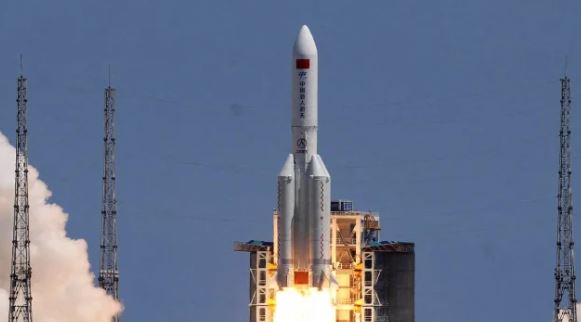
BEIJING: China on Friday successfully tested an experimental rocket retrieval system using a net attached to a sea platform, state media reported, in the hope of breaking US dominance in reusable rockets.

The Long March 10B rocket lifted off from the Hainan commercial space launch site in southern China at 12:15pm (0415 GMT) and, about six minutes after separation of its booster and upper stage, the booster returned vertically and was recovered on an offshore platform, state broadcaster CCTV reported.

The test marks China’s first successful retrieval of an orbital-class rocket, putting the country closer to developing reusable rockets.

Shares in Chinese aerospace firms jumped on the news, with China Spacesat and China Satellite Communications hitting their daily limits.

The Long March 10B has been compared to the Falcon 9, SpaceX’s widely used medium-lift rocket. It was developed for commercial aerospace by the country’s main state rocket developer, the China Academy of Launch Vehicle Technology, and is capable of carrying a payload of at least 16 metric tons to low-Earth orbit.

But unlike the Falcon 9, the Long March 10B does not autonomously land on deployable legs on a ground pad or drone ship, using instead “landing hooks” to catch the net attached to a sea platform.

By contrast, SpaceX landed a Falcon 9 rocket from an orbital flight for the first time in December 2015, followed by Blue Origin’s New Glenn in November 2025.

By now, SpaceX’s Falcon 9 launches around 150 times a year, or roughly three times a week, with its booster reused dozens of times if necessary. The engine-packed booster is generally viewed as the most valuable part of a rocket.

China has spent nearly a decade developing reusable rocket technologies, from early low-altitude hover tests to orbital-class booster recovery attempts in recent years. A system of reusable rockets will lower launch costs for China’s rapidly expanding commercial satellite constellations.

Private Chinese firms are also stepping up efforts to test their reusable rockets amid intense global competition to acquire the technology, and China has eased IPO rules for firms developing reusable rockets to help them raise funding.

Two attempts by private Chinese firm LandSpace and state-owned China Aerospace Science and Technology Corporation last year failed to complete the crucial final step of landing and booster recovery.

As part of the Long March 10 family being developed for China’s crewed lunar missions before 2030, the Long March 10B could also provide data and validate technologies relevant to the broader lunar programme.

China plans to use the Long March 10’s booster stage again for another launch by the end of this year, CCTV said.

HEC holds orientation for faculty, researchers of KP varsities on NRPU

HEC holds orientation for faculty, researchers of KP varsities on NRPU

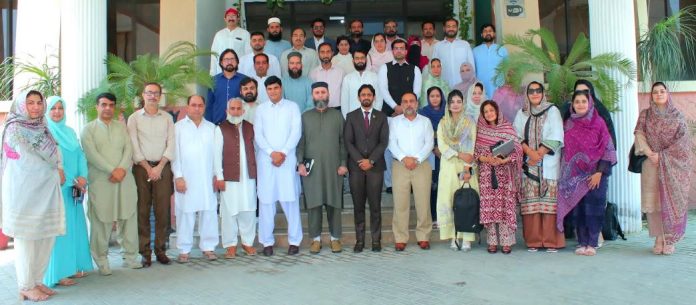
ISLAMABAD/PESHAWAR, JUL 10 /DNA/ – The Higher Education Commission (HEC) Regional Centre Peshawar organised an orientation session entitled “NRPU Overview, Evaluation Parameters and Strategies for Winning Research Grant” for faculty members and researchers from higher education institutions across Khyber Pakhtunkhwa.

In his welcome address, Director/In-charge HEC Regional Centre Peshawar Mr. Nauman Ahmed Khan highlighted the importance of research funding in promoting innovation, academic excellence, and evidence-based solutions to national challenges. He encouraged researchers to avail themselves of opportunities under the National Research Programme for Universities (NRPU) and emphasised HEC’s commitment to strengthening the research culture in universities.

During the session, the resource persons provided a comprehensive overview of the NRPU programme, including its objectives, eligibility criteria, funding mechanisms, and application procedures. They explained the key evaluation parameters used in assessing research proposals, such as originality, relevance, scientific merit, methodology, feasibility, and potential impact.

The speakers also shared practical strategies for developing competitive research proposals, highlighting the importance of identifying significant research problems, aligning projects with national priorities, adopting robust methodologies, and clearly demonstrating expected outcomes. The participants were further guided on common shortcomings in grant applications and ways to improve proposal quality. 

The interactive session enabled researchers to seek expert guidance on proposal development and the NRPU evaluation process. The participants appreciated the initiative and acknowledged the valuable insights shared by the resource persons, expressing confidence that the session would help them prepare stronger proposals for future funding opportunities. The event concluded with a question-and-answer session and a vote of thanks to the resource persons and participants.=DNA

Neighbours by Destiny

Neighbours by Destiny

by Muhammad Mohsin Iqbal

In the teachings of Islam, the bonds of human society are held in the highest regard, alongside the duties of worship. The rights of neighbours, in particular, have been emphasised time and again in the Holy Quran and the traditions of the Prophet Muhammad, peace be upon him. It is related that the Archangel Jibreel (AS) counselled the Prophet so persistently concerning the obligations owed to neighbours that the Messenger of Allah came to believe he might soon be instructed to make them partners in inheritance. Such is the profound importance attached to neighbourly conduct.

At the level of individuals, a man who finds himself at odds with his neighbour may, if he chooses, change his dwelling and settle elsewhere. Nations, however, enjoy no such liberty. Geography has bound them together, for better or for worse, and no amount of wishing can alter the map. This truth was brought home to me with particular force during an international conference held in Malaysia in 2008. Representatives from some thirty countries had gathered, including delegations from India, Sri Lanka, and Bangladesh. At the opening ceremony, as participants exchanged greetings, a certain coolness was evident between the Pakistani and Indian delegates. Yet through repeated interaction, the natural spirit of neighbourliness began to stir.

During the proceedings, a participant from Singapore approached me directly with a question that seemed to carry the weight of the entire gathering. “Why,” he asked, “has Pakistan not been able to develop as much as it should, given its vast potential in skills, resources, and human talent?” The query, posed in that international forum, visibly astonished many, particularly the Indian participants. By the grace of Allah, I found myself able to reply with composure. I told the questioner that his inquiry was of genuine importance. “Consider,” I said, “your own neighbours — Malaysia and Indonesia. Now imagine if, instead, you had a neighbour like India. How would your development fare then? We in Pakistan are compelled to devote enormous sums to defence because of persistent hostility from that quarter. Were those resources freed for constructive purposes, we should doubtless have advanced far beyond our present state.

My response appeared to satisfy many while displeasing some, as is often the case when plain truths are spoken. Yet the underlying reality remains beyond dispute; neighbours cannot be changed. Pakistan has, on numerous occasions, extended the hand of friendship toward India, only to meet with little or no positive response.

It is therefore heartening to note that, in recent days, more than a hundred prominent personalities from both India and Pakistan have jointly appealed through an open letter to Prime Minister Narendra Modi and Prime Minister Shahbaz Sharif according to the media report. They urge the two leaders to take concrete and permanent steps toward restoring peace, dialogue, and normal bilateral relations. The letter rightly observes that the long-standing tension between the two countries is depriving millions of young people of opportunities, prosperity, and a secure future. Among the practical measures proposed are the restoration of full diplomatic relations, the reappointment of high commissioners, the resumption of visa services, the reopening of airspace for commercial flights, and the reopening of the Attari-Wagah border for trade and movement. The signatories also call for the revival of the Srinagar-Muzaffarabad bus service and other cross-border connections.

India and Pakistan together are home to nearly one-fifth of humanity, the greater part of which is young. The appeal wisely recommends the reactivation of confidence-building measures, including the Kartarpur Sahib Corridor, access to religious sites such as Sharda Peeth, and comprehensive bilateral talks on all outstanding issues, including Jammu and Kashmir. It further suggests a review of the framework agreed between 2004 and 2007, a reduction in military tensions, and the addressing of legitimate security concerns on both sides. The letter concludes by inviting both governments to choose connectivity over isolation, dialogue over hostility, and cooperation over confrontation, for the sake of the welfare and aspirations of nearly two billion people.

Good relations between neighbours are indeed desirable, yet they cannot flourish on words alone. A knife in the side and a greeting on the lips will never mend what is broken. For any lasting improvement, India must abandon its policy of proxy warfare, its interference in Pakistan’s internal affairs, its support for terrorists and separatists, and its attempts to use water as a weapon. A just and honourable resolution of the Kashmir dispute remains essential. Pakistan has shown, through its efforts to bring even distant powers such as America and Iran to the negotiating table, that it possesses both the will and the capacity for diplomacy. Surely, then, the path to reconciliation with its closest neighbour is not beyond reach.

Ultimately, India must alter its attitude in a fundamental way. Trade agreements and occasional air corridors may offer temporary relief, but they cannot substitute for genuine goodwill. Only by confronting the core issues with honesty and courage can the two nations move forward. The future of South Asia need not be defined by division and conflict. With wisdom and sincerity on both sides, it may yet be shaped by peace, shared prosperity, and the common hopes of their peoples.


APNS welcomes Raisa Adil as new PIO

APNS urges implementation of advertising rate increase; calls for early clearance of pending advertising dues

DNA

KARACHI: The All Pakistan Newspapers Society welcomes the appointment of Ms. Raisa Adil as Principal Information Officer of Press Information Department.

Senator Sarmad Ali, President and Mr. Muhammad Athar Kazi, Secretary General of the All Pakistan Newspapers Society have hoped that during her tenure as Principal Information Officer Ms. Raisa Adil would protect and safeguard the freedom of press and address the problems of print media. They are confident that during her tenure, the print media will continue to enjoy good relations with the PID and the government.

The APNS officer bearers acknowledged the services of the outgoing PIO Mr. Mobishir Hassan and appreciated him for the support and cooperation extended to print media during his tenure.

The APNS officer bearers hoped that issues pertaining to the print media which are still pending would be addressed. These include the implementation of already approved increase in government advertising rates, increase in the quantum of government advertising and payments of long outstanding dues so that the print media could face the liquidity crunch.

Dar, Radman vow new chapter in Pakistan-Croatia bilateral ties

Dar, Radman vow new chapter in Pakistan-Croatia bilateral ties

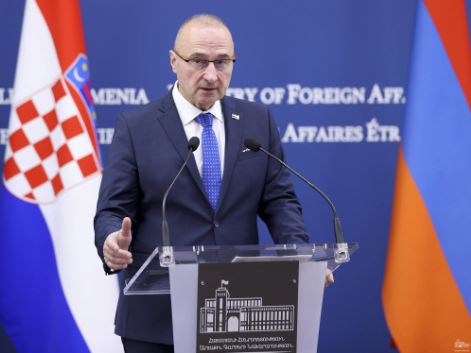
ISLAMABAD, JUL 9 /DNA/ – Deputy Prime Minister and Foreign Minister Senator Mohammad Ishaq Dar and Croatian Foreign Minister Dr. Gordan Grlić Radman held a joint press stakeout in Islamabad today, marking the first high-level visit from Croatia to Pakistan in years.

During the talks, both sides agreed to inject greater momentum into political and economic relations and decided to fully operationalize the MoU on Bilateral Political Consultations, with the first round to be held either in late 2026 or early 2027.

On the economic front, both countries acknowledged that bilateral trade remains below potential and agreed to revitalize ties by encouraging B2B exchanges and holding a future trade forum. Pakistan invited Croatian businesses to benefit from its investment-friendly policies, while both sides discussed collaborative arrangements between their ports, including Karachi Port.

A major breakthrough came on visa facilitation, as Minister Dar requested a Croatian visa processing facility in Islamabad to spare Pakistani applicants the inconvenience of traveling to Tehran. Minister Radman gave a positive response, and alternatives such as Gerry’s visa services are being explored.

On trade preferences, Pakistan noted it has initiated preparatory work for reapplication under the EU’s GSP+ scheme, with new regulations set to take effect on January 1, 2027. Both sides also agreed to work on legal pathways for skilled Pakistani labor mobility while combating human smuggling and illegal migration.

On regional and international issues, Minister Dar briefed his counterpart on Jammu and Kashmir as a long-standing UN agenda item, raised the situation in Gaza, and sought Croatia’s support for the restoration of the Indus Waters Treaty after India placed it in abeyance following the May 2025 conflict. Pakistan also briefed Croatia on its mediation role in the US-Iran conflict, which led to the Islamabad Memorandum of Understanding on June 18, a role that the Croatian side appreciated.

Both countries condemned terrorism in all forms, with Pakistan stressing the need for the Afghan Taliban to prevent the use of Afghan territory for attacks against Pakistan. The two sides also exchanged views on Ukraine and agreed on the need for peaceful solutions in line with international law.

Minister Dar expressed confidence that the visit would open a new chapter in Pakistan-Croatia relations, while Minister Radman, who arrived directly from the NATO meeting in Ankara, reaffirmed Croatia’s commitment to strengthening ties with Pakistan.

Public warn users to stay vigilant

Public warn users to stay vigilant

ISLAMABAD, 09 JULY (DNA) —Cybersecurity experts Thursday cautioned the public to remain aware and vigilant against sharing high-resolution images online, warning that Artificial Intelligence (AI) could be exploited by criminals to reconstruct fingerprints and carry out identity-related fraud.

Talking to a private news channel, cybersecurity expert Abdul Qadir highlighted growing digital privacy risks and urged people to exercise caution while sharing photos on social media platforms.  He warned users against posting high-resolution images showing gestures such as thumbs-up and victory signs, as such images may expose sensitive biometric details.

Abdul Qadir explained that advancements in Artificial Intelligence have increased the ability of cybercriminals to analyze publicly available images and potentially reconstruct fingerprint patterns from clear photographs, adding that fingerprints are unique biometric identifiers and should be protected like passwords.

The cybersecurity expert advised social media users to avoid sharing close-up images of their fingers, especially those captured with high-quality cameras, as criminals may misuse such information for identity-related fraud and other cybercrimes. He further encouraged the public to adopt responsible online habits, including reviewing privacy settings, limiting the amount of personal information shared publicly and being mindful of the potential risks associated with digital content.

Abdul Qadir said that awareness and caution are key to reducing cyber threats in an increasingly digital environment. He urged users to think carefully before uploading personal images online and to remain updated about emerging cybersecurity risks.  He emphasized that while social media platforms provide opportunities for communication and connection, users must also take necessary precautions to protect their personal data and digital identities.

The expert further encouraged social media users to review their privacy settings, limit the information they share publicly, and remain aware of the risks associated with posting personal images online.

  Abdul Qadir said that cyber awareness is the first line of defense against digital crimes and urged people to adopt safe online habits. He added that users should think carefully before sharing personal content and take necessary steps to safeguard their digital identities.

Concluding his remarks, Abdul Qadir warned that the rapid advancement of Artificial Intelligence could create serious challenges in the coming years, adding that by 2030, the volume of AI-generated and manipulated content could become so widespread that people may even struggle to distinguish real images of their own family members from fake ones. — DNA

Atif Ikram Sheikh calls for Pakistan-Türkiye business summit

Atif Ikram Sheikh calls for Pakistan-Türkiye business summit

KARACHI, JUL 9 /DNA/ – The President of the ECO Chamber of Commerce and Industry (ECO CCI) and FPCCI Atif Ikram Sheikh, has proposed convening a Pakistan–Türkiye Joint Business Meeting under the auspices of ECO CCI in collaboration with the Federation of Pakistan Chambers of Commerce & Industry (FPCCI) and the Union of Chambers and Commodity Exchanges of Türkiye (TOBB). The proposal has been formally conveyed to TOBB as a follow-up to the recent meeting between the Prime Minister of Pakistan and the President of the Republic of Türkiye in Istanbul, during which the two leaders agreed to enhance bilateral trade to US$5 billion.

Atif Ikram Sheikh stated that the leadership of both countries has provided a clear direction for strengthening economic and commercial relations, and it is now the responsibility of the private sectors of Pakistan and Türkiye to complement these efforts through stronger business-to-business engagement, investment partnerships, and institutional cooperation.

He observed that despite the longstanding brotherly relations between the two countries, bilateral trade remains significantly below its true potential. During 2025, Pakistan’s exports to Türkiye amounted to US$369.2 million, while imports from Türkiye stood at US$ 866.5 million, taking the total bilateral trade to US$1.236 billion. He emphasized that these figures clearly indicate substantial untapped opportunities for trade expansion and diversification.

The ECO CCI & FPCCI President noted that Pakistan’s principal exports to Türkiye include rice, textile yarn and fabrics, garments, leather and leather products, sports goods, surgical instruments, carpets, and agricultural products. Türkiye, on the other hand, exports machinery, iron and steel products, chemicals, electrical equipment, plastics, processed food products, and construction materials to Pakistan. He stressed that both countries possess strong industrial and commercial complementarities that can be leveraged to substantially increase bilateral trade and investment.

Atif Ikram Sheikh further stated that the proposed Pakistan–Türkiye Joint Business Meeting would bring together leading businessmen, exporters, investors, and sectoral associations to identify new avenues of cooperation, facilitate joint ventures, strengthen supply chain linkages, and promote investment in sectors of mutual interest. He added that the meeting would also provide an opportunity to formulate practical recommendations for achieving the bilateral trade target set by the leadership of the two countries.

He underscored that Pakistan and Türkiye are prominent members of the Economic Cooperation Organization (ECO), also work closely under the Islamic Chamber of Commerce and Development (ICCD), the D-8 Chamber of Commerce and Industry and CACCI. He expressed confidence that these regional platforms could play a vital role in promoting greater economic integration, trade facilitation, and private sector collaboration.

Atif Ikram Sheikh expressed optimism that through coordinated efforts of ECO CCI, TOBB, and FPCCI, the business communities of both countries would make a meaningful contribution towards translating the vision of their leaders into concrete economic outcomes and establishing a stronger and more dynamic Pakistan–Türkiye economic partnership

ICCI to pursue early resolution of fruit market issues with concerned authorities: Tahir Ayub

ICCI to pursue early resolution of fruit market issues with concerned authorities: Tahir Ayub

ISLAMABAD, JUL 9 /DNA/ – Acting President of the Islamabad Chamber of Commerce and Industry (ICCI), Tahir Ayub, has assured the traders of Fruit Market, Sector I-11/4, Islamabad that the Chamber will take up all their long standing civic, infrastructure and traffic-related issues with the relevant authorities to ensure their early and permanent resolution.

He expressed these views while talking to a delegation of the Fruit Market, Sector I-11/4, which called on him at the Chamber House on Thursday under the leadership of its Patron-in-Chief, Chaudhry Mohammad Arshad, to congratulate him on assuming the charge of Acting President of ICCI. The delegation also included Malik Khizer Awan, Vice Chairman, Chaudhry Sufian, Executive Member, and Chaudhry Arslan Izhar, Member.

The delegation briefed the Acting President on the key challenges confronting the market, particularly the closure of one carriageway of the main double road in front of the local police station, which they said has been causing severe traffic congestion and immense difficulties for traders, transporters, customers and visitors throughout the day. They urged ICCI to intervene for the reopening of the road to restore the smooth flow of traffic.

The delegation also highlighted several civic issues, including blocked sewerage lines, the shortage of safe drinking water, inadequate security arrangements and the growing problem of encroachments, which they said were disrupting business activities and creating hardships for the trading community.

Responding to the concerns, Tahir Ayub acknowledged the strategic importance of the Fruit Market in maintaining the uninterrupted supply of fresh fruits to Islamabad and adjoining areas. He emphasized that the smooth functioning of the market is essential not only for traders but also for consumers across the region.

He assured the delegation that ICCI would vigorously pursue all these issues with the Capital Development Authority (CDA), Islamabad Traffic Police, the district administration and other relevant departments to secure practical and lasting solutions. He stressed that the Chamber remains fully committed to protecting the interests of the business community and improving the overall business environment in the federal capital.

The Acting President further announced that he would personally arrange a visit of the Chief Traffic Officer (CTO) Islamabad, Ms. Kainat Azhar Khan, to the Fruit Market to assess the traffic situation firsthand and facilitate the removal of bottlenecks. He expressed hope that reopening the closed side of the main double road would significantly ease traffic congestion and provide much-needed relief to traders, transporters and the general public.

The members of the delegation appreciated the proactive approach of the ICCI Acting President and expressed confidence that, under his leadership, the Chamber would continue to effectively advocate for the resolution of issues confronting the business community and contribute to the sustainable development of Islamabad’s commercial sectors.

On this occasion Vice President Mohammad Irfan Chaudhry, executive member Imran Minhas, Israr-ul-Haq Mashwani, Chaudhry Sohail and Khawaja Ameer ul Hassan were also present.

Stay Connected

64FansLike
60FollowersFollow

Latest Reviews

Exchange Rates

USD - United States Dollar
EUR
1.15
GBP
1.34
AUD
0.70
CAD
0.71