Home Blog Page 469

Hard lessons for Pakistan after humbling defeat to India

Asia Cup Super 4: India grab 6-wicket victory over Pakistan

Pakistan’s much-anticipated clash with India in the Asia Cup T20 turned into a one-sided affair, exposing once again the glaring weaknesses in the national cricket setup. Despite posting what looked like a competitive total of 171, Pakistan’s bowling attack collapsed under pressure, allowing India to chase with ease. The result was not just a defeat—it was a reminder of the gulf that currently separates the two sides.

India, ranked No. 1 in the world, showcased why they are regarded as a compact and formidable team. With multiple match-winners across all departments—batting, bowling, and fielding—they looked calm, composed, and clinical in execution. In contrast, Pakistan, languishing at No. 7 in the rankings, appeared disjointed, without a single player capable of turning the game on his own. The comparison was stark: where India had depth, strategy, and consistency, Pakistan displayed inexperience, poor planning, and tactical errors.

Much of the blame for the defeat must be placed on captain Salman Ali Agha, who, though talented, lacks the experience required to lead at the highest level. His decisions on the field reflected nervousness and a lack of vision. Allowing the opposition to dictate terms, misusing bowlers, and failing to respond tactically were costly mistakes. Leadership in cricket, especially in high-pressure games against India, requires maturity and foresight—qualities Salman is still developing. His appointment, therefore, raises questions about whether the Pakistan Cricket Board (PCB) acted prematurely in entrusting him with such responsibility.

Another questionable decision by the management was sidelining proven performers like Babar Azam and Mohammad Rizwan. Whatever criticisms these senior players have faced, they remain Pakistan’s most reliable batsmen in crunch situations. Replacing them wholesale with relatively inexperienced players deprived the team of the balance and stability needed in high-stakes encounters. Senior players provide the backbone around which juniors can grow; without that spine, the team appears fragile and exposed.

This defeat also highlights a deeper malaise: the flawed selection and management process. Too often, Pakistan’s cricketing decisions seem influenced by favoritism, internal politics, or experimentation rather than merit and long-term planning. A team cannot be built on hand-picked choices or short-term gambles. What Pakistan needs is professionalism, vision, and above all, meritocracy. Only the right men in the right jobs—both on the field and in the management—can restore Pakistan’s standing in world cricket.

It is time for serious introspection. Senior, proven players must be reintegrated into the squad to provide guidance. At the same time, structural reforms in the team’s management are urgently required. If Pakistan cricket is to move forward, there must be accountability at all levels—selectors, coaches, and administrators included. Without it, defeats like the one against India will become the norm rather than the exception.

The Asia Cup defeat should not be seen merely as a sporting setback; it is a wake-up call. Pakistan cricket stands at a crossroads, and the choices made in the coming weeks will decide whether the team continues to stumble or begins to rebuild a pathway back to respectability.
Experts highlights Pak-Uzbek shared cultural, historical heritage

Experts highlights Pak-Uzbek shared cultural, historical heritage

General Ehsan stressed that Pakistan must further engage with Central Asian republics and extend its outreach to the Caucasus region, particularly Azerbaijan; Dr. Ziyo emphasized the importance of strengthening historical, cultural, and scientific cooperation between the two countries

Ansar Mahmood Bhatti

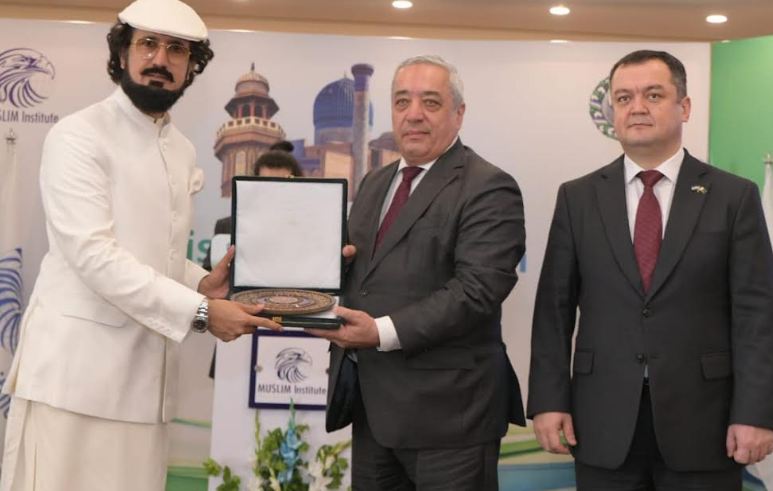
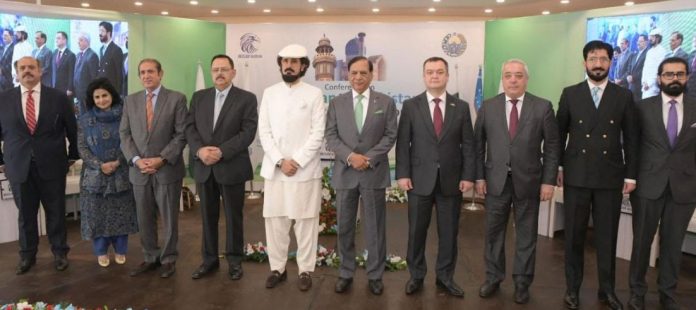
ISLAMABAD: A seminar focusing on the shared cultural and historical linkages between Pakistan and Uzbekistan was jointly hosted by the Embassy of Uzbekistan in Islamabad and the MUSLIM Institute. The event brought together scholars, diplomats, policymakers, and academics from both countries in an effort to explore avenues for deeper cooperation.

General (retd) Ehsanul Haq, who graced the occasion as the chief guest, underscored Pakistan’s deep regard for its fraternal ties with Uzbekistan. He recalled his personal experiences of visiting Uzbekistan and expressed satisfaction over the growth of bilateral connectivity. “It had been my wish for many years that Pakistan and Uzbekistan should have direct air links. Today, I am pleased to note that flights now connect Tashkent with both Islamabad and Lahore,” he said, highlighting that the Islamabad–Tashkent route is the shortest air corridor between the two nations.

General Ehsan stressed that Pakistan must further engage with Central Asian republics and extend its outreach to the Caucasus region, particularly Azerbaijan, with whom Pakistan enjoys excellent relations. He described Central Asia as an important bridge between South Asia, the Middle East, and Europe, adding that cultural diplomacy, people-to-people exchanges, and economic partnerships could pave the way for regional prosperity.

Among the distinguished speakers was Dr. Azamat Ziyo, Senator and academician from Uzbekistan, who also serves as Director of the Institute of History at the Academy of Sciences of Uzbekistan. Leading an Uzbek academic delegation to Pakistan, Dr. Ziyo emphasized the importance of strengthening historical, cultural, and scientific cooperation between the two countries. He praised the MUSLIM Institute and the Uzbek Embassy for arranging the seminar, describing it as a valuable platform for dialogue and collaboration.

Dr. Ziyo also expressed his gratitude for the warm hospitality extended to him and his entourage during their stay in Pakistan. Speaking briefly to Daily Islamabad Post, he shared that his delegation would travel to Lahore before returning to Tashkent. “This was my first visit to Pakistan, and I am deeply touched by the warmth and generosity of the Pakistani people,” he said.

Ambassador of Uzbekistan to Pakistan, Alisher Tukhtaev, lauded the role of the MUSLIM Institute in fostering cultural and intellectual dialogue between the two countries. He expressed optimism that ties between Pakistan and Uzbekistan would continue to grow stronger in education, culture, and trade. “Uzbekistan sees Pakistan not only as a partner but also as a brotherly nation with whom we share a rich heritage,” he remarked.

Chairman of the MUSLIM Institute, Sahibzada Sultan Ahmed Ali, in his address, called for establishing a cultural corridor linking Pakistan with Central Asian states. He emphasized that such initiatives would not only preserve shared history but also open new avenues of cooperation in education, arts, and tourism.

Ambassador Sarfraz Ahmed Sipra also addressed the gathering, underscoring the importance of cultural diplomacy in strengthening bilateral relations. Major General (retd) Amir Jaffery, meanwhile, fondly recounted his visits to Uzbekistan and stressed the significance of academic and cultural exchanges in bringing nations closer.

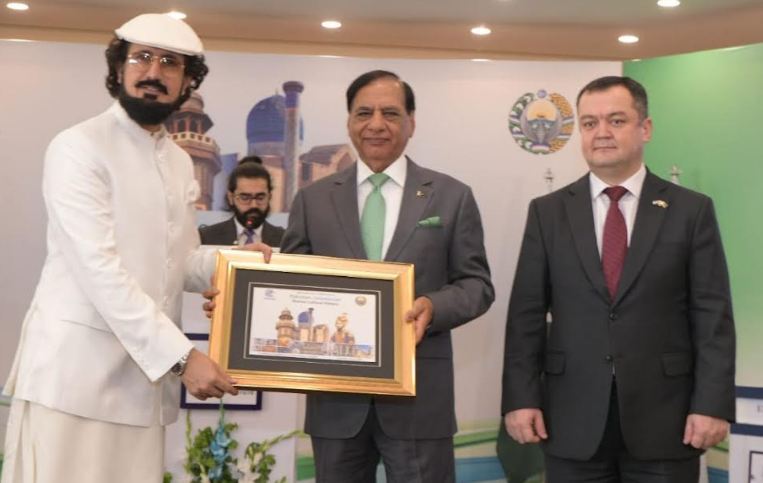
At the conclusion of the seminar, souvenirs were presented to the speakers and distinguished guests as a token of appreciation. The event served as a testament to the centuries-old civilizational links between Pakistan and Uzbekistan and underscored the commitment of both nations to carry forward this legacy into the future.

Asia Cup Super 4: India grab 6-wicket victory over Pakistan

Asia Cup Super 4: India grab 6-wicket victory over Pakistan

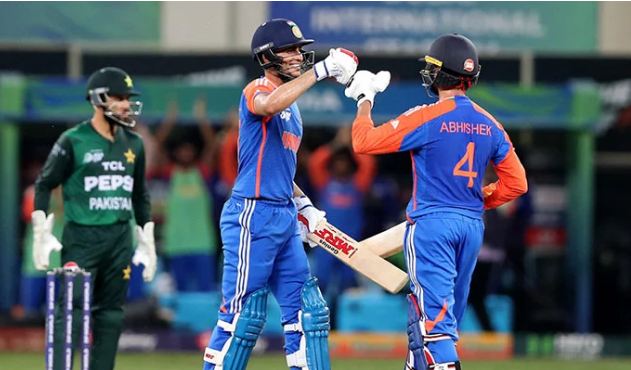
DUBAI, SEPT 21: India have inflicted a six-wicket defeat on Pakistan as bowlers failed to defend a competitive 172-run total in the Super Fours match at Dubai International Cricket Stadium, Dubai, on Sunday. Left-handed opener Abhishek Sharma’s quickfire half-century led India to a comprehensive six-wicket victory over Pakistan in the ACC Men’s T20 Asia Cup 2025 Super Four clash here at the Dubai International Cricket Stadium on Sunday.

Set to chase 172, the Men in Blue knocked the winning runs for the loss of four wickets and seven balls to spare.

India got off to a flying start to the pursuit as their opening pair of Abhishek and Shubman Gill put together a century-plus stand.

The duo added 105 runs inside 10 overs until all-rounder Faheem Ashraf cleaned up Gill, who made 47 off 28 deliveries with the help of eight boundaries.

Following his dismissal, India lost two more wickets in quick succession as Haris Rauf dismissed India captain Suryakumar Yadav, while Abrar Ahmed got rid of Sharma to bring the total down to 123/3 in 12.2 overs.

Sharma remained the top-scorer for India with 74 off 39 deliveries, featuring five sixes and six fours, while Suryakumar perished for a duck.

Wicketkeeper batter Sanju Samson and Tilak Varma then batted cautiously to add 25 more to the total off as many deliveries before Haris struck again, dismissing the former, who walked back after scoring 13 off 17.

Meanwhile, Varma remained firm and steered India over the line with an unbeaten 30 off 19 deliveries, laced with two sixes and as many fours. He was supported by all-rounder Hardik Pandya, who made seven not out.

Haris was the pick of the bowlers for Pakistan, taking two wickets for just 26 runs in his four overs, while Faheem and Abrar chipped in with one apiece.

Put into bat first, the Green Shirts accumulated 171/5 in their allotted 20 overs.

Pakistan got off to a relatively decent start to their innings as their new opening pair of Farhan and Fakhar Zaman put together a brisk 21 runs before the latter fell victim to Hardik Pandya in the third over after a debated decision by the third umpire.

Fakhar scored 15 off just nine deliveries with the help of three boundaries.

Farhan then shared a one-sided 72-run partnership for the second wicket with Saim Ayub, who made 21 off 17 deliveries before being dismissed by Shivam Dube in the 11th over.

The right-handed opener was then involved in a brief 17-run partnership with Hussain Talat (10) until Shivam Dube drew curtains on his valiant knock in the 15th over.

He remained the top-scorer for Pakistan with 58 off 45 deliveries, studded with five fours and three sixes.

Following his dismissal, Pakistan captain Salman Ali Agha and all-rounder Mohammad Nawaz shared a crucial 34-run partnership for the fifth wicket until the former copped a bizarre dismissal.

Nawaz made 21 off 19 deliveries, hitting one six and a four during his cameo.

Meanwhile, Agha remained unbeaten and walked back after scoring 17 off 13 deliveries, while all-rounder Faheem Ashraf made 20 not out from eight deliveries, comprising two sixes and a four.

For India, Dube led the bowling charge with two wickets, while Kuldeep Yadav and Hardik Pandya made one scalp apiece.

Govt committed for economic, trade integration with potential African market: Ambassador Asghar

Govt committed for economic, trade integration with potential African market: Ambassador Asghar

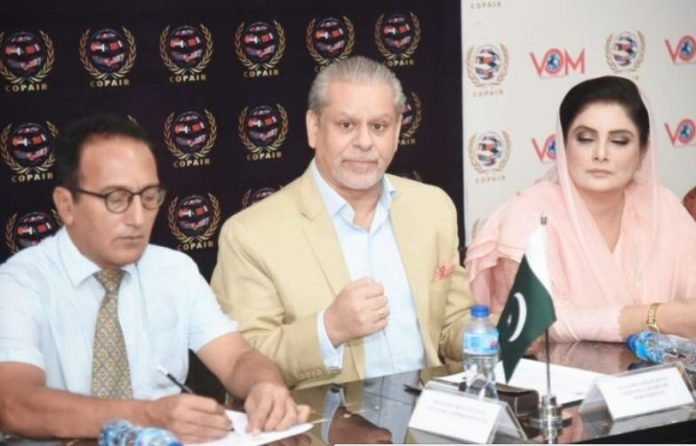
ISLAMABAD, SEP 21 (DNA): Additional Secretary Ministry of Foreign Affairs, Ambassador Hamid Asghar Khan has said that the government was committed to economic and trade integration with the African market according to the vision of “look African Campaign.”

He shared this in a roundtable with African envoys serving in Islamabad on “Pakistan Africa Connectivity – Engage Africa Policy of Pakistan.

The event was chaired by H.E Hamid Asghar Khan while Senator Mushahid Hussain Syed, President Pakistan Africa Institute for  Development Research  (PAIDAR) graced the event with his special appearance as keynote speaker.  Saleem Ahmad Ranjha, renowned ex official and business consultant

They included HE  Dr. Brahim Romani of Algeria, Ms Harerimana Fatou of Rwanda, Salih Mohamed Ahmed of Sudan, HE Titus Mehliswa Johnathan Abu Basutu of Zimbabwe, HE Lt. General (R) Peter Mbogo Njiru of Kenya, Rudolph Pierre Jordaan of South Africa, Yushau Mohammed of Nigeria, Mahmed Abdirahman Hersi of Somalia, DHM of Morocco, Umar Shahid Butt, Vice Consul Ghana.

The envoys shared the present status of cooperation between their countries and Pakistan. They pointed out the gaps to bridge and suggested the measures,if taken, can enhance the level of trade between the sides.

The Prime Minister of Pakistan has directed enhanced engagement with Africa, especially in trade, investment and commercial ties.

The TDAP shall be holding a single country exhibition in conjunction with MoFA and Pak Embassy at Addis Ababa from 16-18 October, 2025 with participation of over 100 Pakistani exhibitors.

Many African countries are willing to incentivize investment in industry and joint ventures to boost local manufacturing, said a release issued here on Sunday.

Agricultural cooperation and health care are but two of the areas where tremendous scope for collaboration exists.

Additional Secretary MOFA, Mr. Hamid Asghar Khan took note of the proposals and assured the envoys of every possible effort to do whatever is needful.

Asia Cup Super 4: Pakistan post 172-run target for India

Asia Cup Super 4: Pakistan post 172-run target for India

DUBAI: Pakistan posted a competitive target of 172 runs for India courtesy of Sahibzada Farhan’s fifty in the most-anticipated Asia Cup 2025’s Super Fours clash at Dubai International Cricket Stadium, Dubai, on Sunday.

Sahibzada Farhan smashed a half-century to give Pakistan a major boost. The right-hander’s brilliant half-century steadied Pakistan’s innings despite Fakhar Zaman and Saim Ayub’s departure. Hardik Pandya gave India an early breakthrough by dismissing dangerous looking Fakhar, who smashed 15 off 9.

Saim and Farhan took charge of the innings and formed a partnership of 72 runs.

Shivam Dube broke the partnership by dismissing Saim and Hussain Talat came in to join Farhan on the crease.

Saim was removed by Shivam Dube as his individual score was 21 off 17 deliverings.

Hussain also failed to build a partnership with Farhan, as he went back to pavilion after scoring just 10 for 11 balls.

Dube struck again and removed Farhan in 15th over.

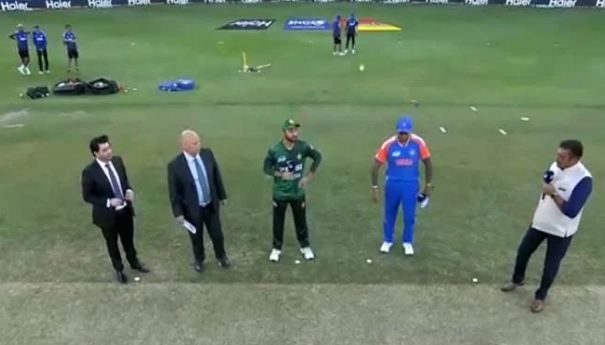
India won the toss and invited the Green Shirts to bat first.

Playing XIs
Pakistan: Saim Ayub, Sahibzada Farhan, Fakhar Zaman, Salman Agha(c), Hussain Talat, Mohammad Haris(w), Mohammad Nawaz, Faheem Ashraf, Shaheen Afridi, Haris Rauf, Abrar Ahmed

India: Abhishek Sharma, Shubman Gill, Sanju Samson(w), Suryakumar Yadav(c), Tilak Varma, Shivam Dube, Hardik Pandya, Axar Patel, Jasprit Bumrah, Kuldeep Yadav, Varun Chakaravarthy

Safety instructions for cricket fans
Dubai Police issued a Public Safety Alert for cricket fans, urging strict compliance with security instructions when entering the stadium.

According to Dubai Police, following the guidelines of security personnel and organisers is essential to ensure the safety of all spectators.

The officials instructed fans to verify their tickets and enter only through the designated gates assigned to them.

The public safety alert was automatically delivered to all mobile phones of individuals who came within the vicinity of Dubai Sports City, ensuring that everyone in the area received the message.

Dubai Police emphasised that the cooperation of fans is key to making the tournament safe and successful.

Head-to-head
Pakistan and India have come face-to-face 14 times in T20Is, with the Men in Blue dominating the head-to-head record with 11 victories, while Pakistan emerged triumphant thrice.

However, in their previous four meetings at the aforementioned venue, both teams won twice.

Matches: 14
India: 11
Pakistan: 3
Form Guide
Pakistan and India enter the blockbuster Super Four clash with similar momentum, as the Green Shirts have just one defeat in their last five completed T20Is, while India are on a five-match winning streak.

Interestingly, Pakistan’s only defeat in their previous five T20Is came against fierce rivals India last week.

Opting to bat first, the national team could accumulate 127/9 in 20 overs despite Sahibzada Farhan’s anchoring 40-run knock and Shaheen Shah Afridi’s blistering 33-run cameo at the backend.

The total ultimately proved to be insufficient for the reigning world champions as they romped to a resounding seven-wicket victory with 25 balls to spare.

Skipper Suryakumar Yadav top-scored in the run chase with an unbeaten 47 off 37 deliveries, while Abhishek Sharma and Tilak Varma chipped in with 31 each.

Pakistan: W, L, W, W, W (most recent first)

India: W, W, W, W, W

‘World Peace will come by resolving Kashmir and Palestine issues’

Pak-Saudi defence pact a guarantee of peace, unity in Muslim world: Ashrafi

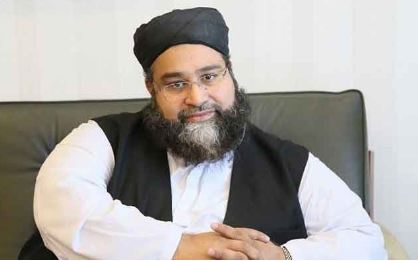
LAHORE, SEPT 21: /DNA/ – Chairman Pakistan Ulema Council Coordinator National Paigham-e-Aman Committee Hafiz Muhammed Tahir Mahmoud Ashrafi said that peace in the world will come from resolving the Palestine and Kashmir issues.

While addressing press conference here on Sunday along with Ulemas Mashaykh in Lahore, Hafiz Muhammed Tahir Mahmoud Ashrafi on the eve of the International Peace Day said that we should promise that we will give the oppressed their rights.

Hafiz Tahir Mahmood Ashrafi said that after the defense agreement between Pakistan and Saudi Arabia, Israel’s ‘Greater Israel’ dream has been shattered.

Hafiz Tahir Ashrafi said that on September 22, many countries will announce the recognition of an independent Palestinian state.

He said that Israeli Prime Minister Netanyahu, who repeatedly mentioned Pakistan’s name, is completely silent following the Pakistan-Saudi Arabia agreement.

While holding a press conference with religious scholars and Ulemas Mashaykh in Lahore, Chairman Pakistan Ulema Council Hafiz Muhammad Tahir Mahmood Ashrafi said that on the occasion of the International Day of Peace, we should promise that we will give the oppressed their rights.

He said that Pak-Saudi Arabia agreement will be a guarantor of peace in the whole world adding that the many Islamic and Arab countries are in contact with the Pakistani government.

Hafiz Muhammed Tahir Mahmoud Ashrafi said that September 22 is an important day in the United Nations in which Prime Minister Shahbaz Sharif, Deputy Prime Minister Ishaq Dar and the Saudi Crown Prince Muhammed bin Salman and the heads of other Islamic countries will address with UN session.

He said that the Palestinian delegation was not allowed to come to America to attend this UN session.

Hafiz Tahir Mahmood Ashrafi said that the dream of “Greater Israel” has been shattered by the Pak-Saudi Arabia defense agreement. He said that the most important countries are recognizing the independent state of Palestine. After Qatar, the Islamic world is thinking of making its own decisions.

Hafiz Muhammad Tahir Mahmood Ashrafi said that Afghan brothers should think about how long blood will be shed in Pakistan. Pakistan has made countless sacrifices for Afghan brothers. He said that if our people are being targeted from Afghan soil, is it permissible? If any Pakistani has ever shed anyone’s blood in Afghanistan, show it.

Hafiz Muhammad Tahir Mahmood Ashrafi said that Alhamdulillah, we are strong on the defense side and now we have to become strong economically. We have to moderate our differences, and moderate attitudes have to be strengthened in the society.

Hafiz Muhammed Tahir Mahmoud Ashrafi said that the true message of Islam has to be brought to the world. Islam has nothing to do with extremism and terrorism.

India win toss, opt to bowl first against Pakistan in high-stakes Asia Cup clash

India win toss, opt to bowl first against Pakistan in high-stakes Asia Cup clash

DUBAI: India won the toss and elected to field first against Pakistan in the most-anticipated Asia Cup 2025’s Super Fours clash at Dubai International Cricket Stadium, Dubai, on Sunday.

Playing XIs
Pakistan: Saim Ayub, Sahibzada Farhan, Fakhar Zaman, Salman Agha(c), Hussain Talat, Mohammad Haris(w), Mohammad Nawaz, Faheem Ashraf, Shaheen Afridi, Haris Rauf, Abrar Ahmed

India: Abhishek Sharma, Shubman Gill, Sanju Samson(w), Suryakumar Yadav(c), Tilak Varma, Shivam Dube, Hardik Pandya, Axar Patel, Jasprit Bumrah, Kuldeep Yadav, Varun Chakaravarthy

Safety instructions for cricket fans
Dubai Police issued a Public Safety Alert for cricket fans, urging strict compliance with security instructions when entering the stadium.

According to Dubai Police, following the guidelines of security personnel and organisers is essential to ensure the safety of all spectators.

The officials instructed fans to verify their tickets and enter only through the designated gates assigned to them.

The public safety alert was automatically delivered to all mobile phones of individuals who came within the vicinity of Dubai Sports City, ensuring that everyone in the area received the message.

Dubai Police emphasised that the cooperation of fans is key to making the tournament safe and successful.

Head-to-head
Pakistan and India have come face-to-face 14 times in T20Is, with the Men in Blue dominating the head-to-head record with 11 victories, while Pakistan emerged triumphant thrice.

However, in their previous four meetings at the aforementioned venue, both teams won twice.

Matches: 14
India: 11
Pakistan: 3
Form Guide
Pakistan and India enter the blockbuster Super Four clash with similar momentum, as the Green Shirts have just one defeat in their last five completed T20Is, while India are on a five-match winning streak.

Interestingly, Pakistan’s only defeat in their previous five T20Is came against fierce rivals India last week.

Opting to bat first, the national team could accumulate 127/9 in 20 overs despite Sahibzada Farhan’s anchoring 40-run knock and Shaheen Shah Afridi’s blistering 33-run cameo at the backend.

The total ultimately proved to be insufficient for the reigning world champions as they romped to a resounding seven-wicket victory with 25 balls to spare.

Skipper Suryakumar Yadav top-scored in the run chase with an unbeaten 47 off 37 deliveries, while Abhishek Sharma and Tilak Varma chipped in with 31 each.

Pakistan: W, L, W, W, W (most recent first)

India: W, W, W, W, W

Britain, Canada and Australia Recognise Palestinian State Despite Trump’s Warning

UK, Portugal to recognise Palestinian state ahead of UN debate

Centreline Report

NEW YORK: In a landmark diplomatic development, the United Kingdom, Canada, and Australia have formally recognised the State of Palestine, marking a significant shift in Western foreign policy amid the nearly two-year-old Gaza conflict. The announcement comes despite opposition from former U.S. President Donald Trump, who had privately urged London to delay such a move until all hostages held in Gaza were released.

British Prime Minister Keir Starmer, in a statement posted on X, declared: “Today, to revive the hope of peace for the Palestinians and Israelis, and a two-state solution, the United Kingdom formally recognises the State of Palestine.” Starmer said the decision was taken after repeated failures by Israel to meet conditions, including progress towards a ceasefire in Gaza and meaningful steps towards peace.

Trump, however, had personally warned the British leader against recognising Palestine at this stage. According to diplomatic sources, he insisted that recognition should only be considered once all hostages had been freed. But Starmer rejected this demand, telling Trump that recognition could not be indefinitely delayed and that Britain’s decision aimed to restore credibility to the peace process.

Australia and Canada joined Britain in making the announcement. Australian Foreign Minister Penny Wong said Canberra’s recognition was intended to “revive momentum for a two-state solution that starts with a ceasefire in Gaza and the release of hostages.” She added that Australia believed recognition would help shift the dynamics of the conflict from perpetual violence to meaningful negotiations.

Canadian Prime Minister Mark Carney also issued a statement, declaring: “Canada recognises the State of Palestine and offers our partnership in building the promise of a peaceful future for both the State of Palestine and the State of Israel.” Carney emphasised that Canada’s recognition was aligned with its long-standing position in favour of a negotiated two-state solution.

The coordinated move by three major Western powers is being seen as a challenge to Israel’s current policies and a diplomatic signal that patience with the prolonged conflict is running out. It also reflects growing frustration with the humanitarian crisis in Gaza, where thousands have been killed and millions displaced since hostilities began nearly two years ago.

While Israel has strongly rejected the recognitions, Palestinian leaders welcomed the decision as an “historic breakthrough,” urging other countries to follow suit. The move also raises questions about Washington’s next steps, as the U.S. remains hesitant to formally recognise Palestine without a negotiated settlement.

UK, Portugal to recognise Palestinian state ahead of UN debate

UK, Portugal to recognise Palestinian state ahead of UN debate

LONDON, SEPT 21 (AFP/APP): Britain and Portugal were on Sunday expected to recognise a Palestinian state, ahead of a key week at the UN’s gathering where a suite of nations are set to do the same to pressure Israel over Gaza.

A growing number of longtime Israeli allies have shifted positions in recent months as Israel has intensified its Gaza offensive, triggered by Hamas’s unprecedented 2023 attack.

The besieged Palestinian territory has suffered vast destruction, death and lack of food that have resulted in a major humanitarian crisis.

   World leaders will gather for a key debate at the UN General Assembly in New York this week where the so-called two-state solution to the Israeli-Palestinian conflict will be front and centre.

  Around 10 nations are expected to recognise a Palestinian state in the coming days, with UK media outlets like the BBC, reporting that Prime Minister Keir Starmer would announce the policy shift on Sunday — over fierce Israeli objection.

   Starmer had said in July that Britain would formally recognise the State of Palestine if Israel did not take “substantive steps” towards a ceasefire with Hamas by the time the UN General Assembly convened.

The Labour leader said at the time that the move would make “a contribution to a proper peace process, at the moment of maximum impact for the two-state solution”.

    In response, Israeli Prime Minister Benjamin Netanyahu accused him of rewarding “monstrous terrorism” and appeasing “jihadist” ideology.

DG ISPR visits Cadet College Palandri

DG ISPR visits Cadet College Palandri

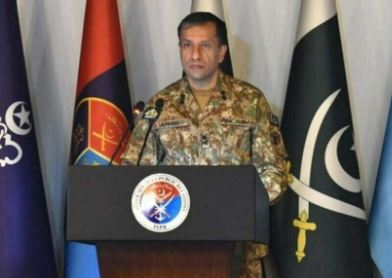
RAWALPINDI, SEP 21 (APP/DNA): Director General Inter-Services Public Relations (ISPR), Lt Gen Ahmed Sharif Chaudhry, visited Cadet College Palandri and held a special session with the students and faculty members.

According to a news release issued by ISPR, the students and faculty paid glowing tribute to the Pakistan Armed Forces for inflicting a humiliating defeat on India in Marka-e-Haq. They also thanked the DG ISPR for giving comprehensive answers to their questions.

Speaking on the occasion, the Principal said, “The DG ISPR’s words and resolve have further strengthened our morale.”

He said that as responsible citizens, it is essential to verify news circulating on social media.

The students and faculty members remarked that India would once again face humiliation if it attempted any aggression. “As Kashmiris, we firmly believe that Kashmir is the jugular vein of Pakistan,” they said.

They further said that Pakistan and Kashmir are inseparable, and no power could divide them. “As per Quaid-e-Azam’s vision, Kashmir was, is, and will remain a part of Pakistan,” they asserted.

They said the DG ISPR’s address provided them an opportunity to better understand the role and sacrifices of the Pakistan Army in the defense of the homeland.

“We are proud of the supreme sacrifice of Major Rab Nawaz Tariq, the first martyr of Cadet College Palandri,” they added.

The participants affirmed that they stand shoulder to shoulder with the Pakistan Armed Forces against any Indian aggression.

Stay Connected

64FansLike
60FollowersFollow

Latest Reviews

Exchange Rates

USD - United States Dollar
EUR
1.14
GBP
1.33
AUD
0.69
CAD
0.70