Home Blog Page 468

AMC-9 charts future of Pakistan’s microfinance sector

AMC-9 charts future of Pakistan's microfinance sector

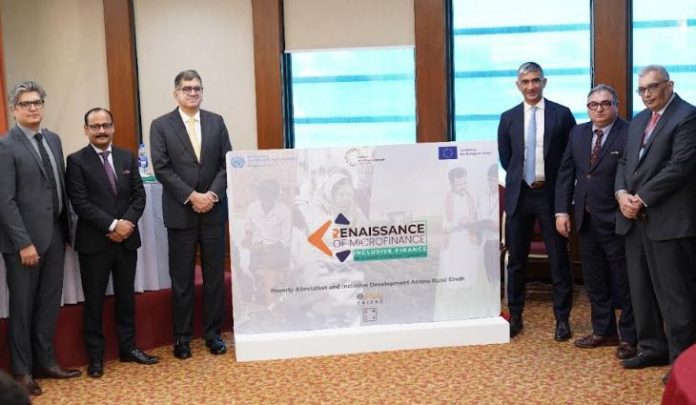
KARACHI, SEPT 22 /DNA/ – The Annual Microfinance Conference (AMC) is an annual feature, and its 9th edition is being held on Oct 7-9, 2025, in Karachi. The Annual Microfinance Conference 9 (AMC-9), themed “Renaissance of Microfinance”, is being organised jointly by the Pakistan Microfinance Network (PMN), in collaboration with UNIDO-PAIDAR. It will bring together industry leaders, policymakers, regulators including State Bank of Pakistan (SBP) & Securities & Exchange Commission of Pakistan (SECP), development partners including World Bank and Asian Development Bank (ADB), and innovators, to collectively explore strategic pathways for revitalizing the sector and enhancing its role in inclusive and sustainable growth.

AMC-9 shall feature dynamic formats including keynote speeches by sector leaders and global experts, panel discussions exploring critical issues in policy, innovation, risk, and outreach, and provide opportunities for networking among key stakeholders in the financial inclusion arena.

Speaking about the upcoming conference, Mr. Amir Khan, Chairman PMN and Mr. Ahsan Gaylani, UNIDO Representative emphasized that AMC-9 will serve as a national platform to not only reflect on the achievements and lessons of the past two decades, but to boldly reimagine the future of microfinance in Pakistan. By embracing innovation, strengthening partnerships, and committing to inclusion, the sector can position itself as a catalyst for economic transformation, social justice, and sustainable development in the country.

Key thematic areas to be focused on the conference include agriculture and rural finance, climate risk and adaptation, women’s financial inclusion, importance of blended finance in promoting financial inclusion among SMEs and rural enterprises, integration between microfinance players and fintechs, and inclusive insurance.

The conference will include in-depth discussions for rejuvenating microfinance through inclusive, resilient, and digitally enabled strategies. It will reaffirm the role of blended finance as a vital instrument in supporting both microfinance and SMEs, while also presenting policy recommendations for regulators and government stakeholders to foster an enabling environment for innovation and growth. In addition, AMC-9 aims to generate new partnerships among Microfinance Providers (MFPs), commercial banks, fintechs, and development sector players to scale impactful solutions across the sector.

The curtain raiser was attended among others by leading sponsors of the AMC 9 including Pakistan Microfinance Investment Company (PMIC), ASA-P Microfinance Bank, HBL Microfinance Bank and management of PMN.

China says combating ‘malicious’ content in social media crackdown

China says combating ‘malicious’ content in social media crackdown

BEIJING: China’s top internet regulator announced on Monday a sweeping two-month crackdown on social media, vowing to combat content containing “malicious incitement of conflict” and “negative outlooks on life such as world-weariness”.

Beijing requires social media companies to moderate content on their platforms, with posts strictly controlled to avoid anything deemed to be too subversive, vulgar, pornographic or generally harmful.

The notice from the Cyberspace Administration of China (CAC) follows announcements of penalties this month against three popular digital platforms, which it said had neglected content management duties.

On Saturday, the CAC said it would carry out “disciplinary and punitive measures” against micro-blogging platform Weibo and short video platform Kuaishou, accusing them of highlighting celebrity news and “undesirable” content.

The announcement followed similar action taken by the CAC on September 11 against the Instagram-like Xiaohongshu, known as Rednote in English.

Authorities have not specified what punitive actions are being taken against the three platforms.

The two-month campaign — whose start date was not specified in Monday’s statement — aims “to regulate the malicious incitement of conflict and the promotion of violence and vicious currents”, the CAC said.

The statement then listed specific online issues authorities hope to tackle in the crackdown.

They include “exploiting social hot spots to forcibly associate identity, region or gender with other information, stigmatising and hyping them”.

In practice, this could mean a clampdown on posts about discrimination. In July, local officials in eastern Zhejiang province warned comedians against stirring up gender discord through stand-up routines that joked about the battle of the sexes.

Other problems targeted by the campaign include disseminating “rumours” about the economy, finance, social welfare and public policy.

Kazakh President keen to have rail links with Pakistan: envoy

Kazakh President keen to have rail links with Pakistan: envoy

Kazakhstan Envoy Highlights Expanding Ties with Pakistan in IT, Connectivity and Trade

Ansar Mahmood Bhatti

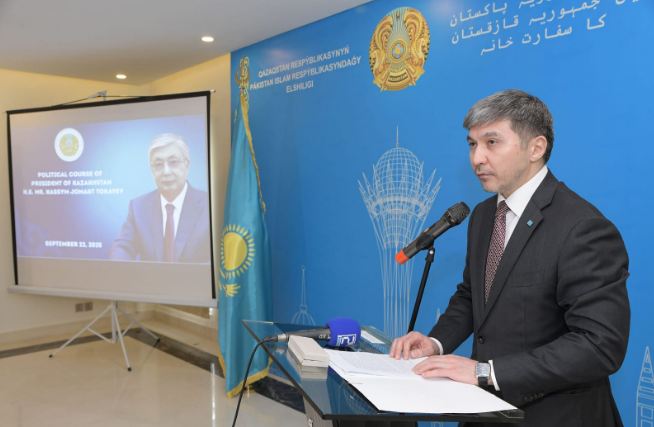
ISLAMABAD, SEPT 22 /DNA/ – Kazakhstan’s Ambassador to Pakistan, Yerzhan Kistafin, underscored the growing momentum in bilateral relations between the two countries, with a special focus on digital cooperation, trade, connectivity, and interfaith dialogue. Speaking at a press conference, the envoy said that Kazakhstan was entering a new era of partnership with Pakistan, marked by tangible initiatives and high-level engagements.

Ambassador Kistafin noted that this year’s State of the Nation address by President Kassym-Jomart Tokayev placed special emphasis on Kazakhstan’s IT sector and digital transformation. He highlighted that for the first time, Pakistan was directly mentioned in the presidential speech, reflecting the importance Kazakhstan attaches to cooperation with Islamabad.

He recalled that in September, the first in-person session of the Kazakhstan-Pakistan Joint Working Group on IT and Digital Communications took place in Islamabad. A delegation from Kazakhstan’s Ministry of Artificial Intelligence and Digital Development, along with national IT firms, held extensive talks with their Pakistani counterparts, including leading technology organizations. “This platform is expected to lay the foundation for long-term digital collaboration, including AI integration, digital education, and technology transfer,” the ambassador said.

The envoy highlighted President Tokayev’s announcement of a proposed railway line from Turgundi to Herat (Afghanistan), designed to link Kazakhstan with Pakistani seaports, particularly Gwadar and Karachi. He described the project as a game-changer that would elevate connectivity between Central and South Asia to “an entirely new level.”

He further stressed the importance of regional initiatives such as the Uzbekistan-Afghanistan-Pakistan railway project, which would serve as a vital corridor connecting Central Asian economies with South Asian markets. “Regional connectivity is the backbone of future cooperation,” he said, adding that such projects could significantly expand trade volumes.

Ambassador Kistafin also spoke about the 8th Congress of Leaders of World and Traditional Religions, held in Astana earlier this month, which drew 100 delegations from major faiths and international organizations. He praised Pakistan’s participation in the event, where leaders highlighted the role of spirituality in fostering peace amid global conflicts.

Messages from religious figures, including Pope Leo XIV and Patriarch Leopold III of Jerusalem, underlined the urgent need for interfaith dialogue in light of ongoing crises, particularly in the Middle East. “This dialogue is not symbolic—it carries real responsibility to heal divisions and strengthen shared human values,” the envoy remarked.

On the economic front, Ambassador Kistafin said the past year had been “historic” for Kazakhstan-Pakistan relations. In April, the two countries co-hosted their largest-ever business forum in Karachi, with around 500 participants, including 150 delegates from Kazakhstan. Commercial contracts worth $200 million were signed in a single day. The following day, the 30th session of the Intergovernmental Joint Commission convened, yielding agreements in trade, culture, sports, and investment.

He also disclosed that Kazakhstan’s sovereign wealth fund, Samruk-Kazyna, held talks with Pakistan’s Fauji Foundation, paving the way for major corporate partnerships.

The ambassador revealed that in early November, the President of Kazakhstan will undertake a state visit to Pakistan, the first such visit since 2003. “We believe this historic visit will elevate our bilateral cooperation to a new height,” he said.

Earlier this month, Kazakhstan’s Deputy Prime Minister and Foreign Minister, Murat Nurtleu, led a large delegation to Islamabad, including ministers of trade, transport, agriculture, and AI, as well as senior officials from the sovereign wealth fund. “Almost half of our government was in Pakistan,” Ambassador Kistafin noted, stressing the seriousness Kazakhstan attaches to this partnership.

Ambassador Kistafin emphasized that Kazakhstan and Pakistan are on the cusp of a transformative era in their relations. With progress in IT, connectivity, and trade, coupled with a shared commitment to interfaith dialogue, the two nations are poised to become pivotal partners in linking Central and South Asia.

DPM/FM Dar arrives in New York to attend high-level segment of UNGA’s 80th session

DPM/FM Dar arrives in New York to attend high-level segment of UNGA’s 80th session
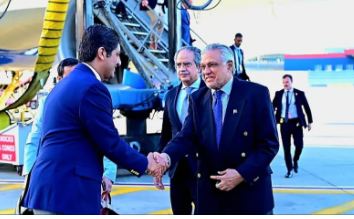
NEW YORK, Sep 22 (APP)::Pakistan’s Deputy Prime Minister/Foreign Minister, Senator Mohammad Ishaq Dar, flew into New York Sunday night to attend the high-level segment of the 80th Session of the UN General Assembly from 22-26 September 2025.

The Pakistan delegation will be led by Prime Minister Shehbaz Sharif, who is scheduled to arrive here on Monday afternoon.

On his arrival, the DPM/FM was received by Ambassador Asim Iftikhar Ahmad, Permanent Representative of Pakistan to the UN, Ambassador Rizwan Saeed Shiekh, Ambassador of Pakistan to the United States and senior officials of the Mission.

The DPM/FM will have a busy programme in New York.

Besides accompanying the prim minister to his many engagements, the DPM/FM will represent Pakistan in numerous ministerial and high-level meetings and also hold over a dozen bilateral meetings with his counterparts from around the world.

Punjab govt backs industrial estate proposal for Islamabad: Malik Shahbaz Khokhar

Punjab govt backs industrial estate proposal for Islamabad: Malik Shahbaz Khokhar

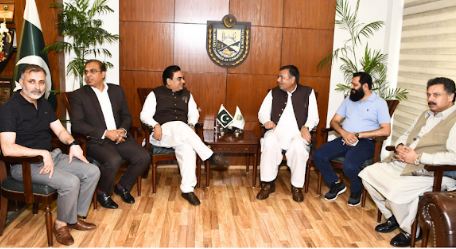
ISLAMABAD, SEPT 22 /DNA/ – Malik Shahbaz Ali Khokhar, Member Provincial Assembly Punjab and Chairman of the Standing Committee on Planning & Development, has assured that he will personally play his role for the establishment of a much-needed dedicated industrial estate in Islamabad. He urged the Islamabad Chamber of Commerce & Industry (ICCI) leadership to complete its homework at the earliest so the project could be pursued effectively.

He said this while visiting ICCI to congratulate Sardar Tahir Mehmood on his unopposed election as President of ICCI. Malik Shahbaz Khokhar said the business community is the true engine of economic growth and the Punjab Government is fully determined to facilitate them by addressing their challenges.

The Punjab Government, he added, is simplifying regulatory compliances by reducing licensing requirements for smooth and unhindered growth of trade and industry. He mentioned that in line with the vision of Chief Minister Punjab Maryam Nawaz, initiatives for Clean Punjab and city beautification are also in full swing to provide a healthier and more attractive environment for citizens. He added that effective action against encroachments is underway to reclaim public spaces and enhance the urban environment.

Earlier in his welcome address, ICCI President Sardar Tahir Mehmood appreciated the governance reforms in Punjab under the leadership of CM Maryam Nawaz. He highlighted the urgent need for the creation of a dedicated Industrial zone for Islamabad for the growth of businesses and attracting investments.  He also mentioned the difficulties of the real estate sector, particularly with the Rawalpindi Development Authority (RDA) in issuing No Objection Certificates (NoCs). He said removing such hurdles was vital to stop capital flight and create a truly business-friendly environment.

Sardar Tahir further emphasized that with the rapid population growth in major cities, the government must develop forward-looking strategies in consultation with the business community to ensure sustainable development and urban planning.

ICCI Senior Vice President, Tahir Ayub, briefed the visiting MPA on ICCI’s efforts for the business community and stressed the need for Punjab Government’s support in ensuring a more conducive environment for businesses.

The meeting was also attended by ICCI Vice President Mohammad Irfan Chaudhry,  Executive Members Zulqurnain Abbasi, Aftab Gujjar, Naveed Satti, former Executive Member Rana Qaisar Shehzad, General Secretary IEAA Zahid Rafiq, and others.

PM Shehbaz directs formulation of roadmap to boost trade, investment

PM Shehbaz directs formulation of roadmap to boost trade, investment

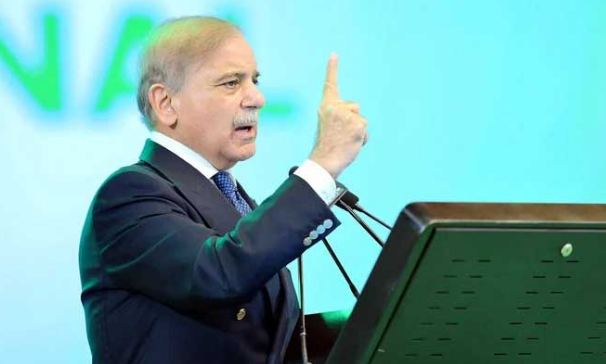
LONDON: Prime Minister Shehbaz Sharif on Monday directed authorities to develop a comprehensive roadmap and a reform agenda with practical projects to promote investment and trade in all key sectors.

Chairing a high-level meeting on enhancing investment volume, economic and trade activities in Pakistan, the premier emphasised that agriculture, IT, minerals, tourism, and renewable energy were important sectors that could attract foreign investment.

Along with investment, he said, promoting trade was also part of the government’s policy to significantly increase exports of the country.

PM Shehbaz said that targets had been given to the ministries to utilise all available resources to ensure the timely completion of all ongoing projects.

He also instructed all ministers to identify feasible projects and take immediate steps to put them into practice.

For this purpose, he said a roadmap and a reform agenda should be devised with the future in mind, so that progress toward our goals can be made in an organised manner.

The prime minister emphasised that the private sector will play a pivotal role in the economic roadmap and its participation will be ensured.

“Our ongoing economic and financial reform policies have given a new direction to the economy, and due to the innovation and transparency, the country is now on the path of development,” he added.

The meeting, held via Zoom from London, was attended by Federal Minister for Environment Musadik Malik, Federal Minister for Petroleum Ali Pervez Malik, Federal Minister for Finance Muhammad Jehanzeb, Federal Minister for Commerce Jam Kamal, Federal Minister for Information Attaullah Tarar, and Federal Minister for Economic Affairs Ahad Khan Cheema.

The premier’s remarks come as he reached the UK after signing a historic mutual defence pact with Saudi Arabia.

The PM is now set to lead Pakistan’s delegation at the 80th Session of the United Nations General Assembly, set to commence on Monday (today).

During his time in the US, the PM, as per the Foreign Office, will participate in a meeting of select Islamic leaders with US President Trump to exchange views on issues pertaining to regional and international peace and security.

Meanwhile, at the UNGA, the premier will urge the international community to resolve the situations of prolonged occupation and denial of the right to self-determination to the people in Indian Illegally Occupied Jammu and Kashmir (IIOJK) and Palestine.

Apart from holding bilateral meetings on the UNGA sidelines with several world leaders, he will also attend multiple high-level events, including important meetings of the UN Security Council, a high-level meeting of the Global Development Initiative (GDI), and a Special High-Level Event on Climate Action, among others.

Trump Wants Bagram Base Back to Protect Israel

Qamar Bashir

By Qamar Bashir

We begin with a prayer for sound judgment and for the protection of innocent lives: May those who hold the levers of power choose restraint over rashness, and may the suffering of ordinary families be spared the thunder of renewed war.

President Trump’s recent declaration that the United States “wants [Bagram] back” — and his warning that “bad things are going to happen” if the demand is not met — is not merely a rhetorical flourish. It is a public ultimatum aimed at a sovereign state now governed by a regime that has repeatedly insisted on its independence and territorial integrity. To speak of “getting it back” without acknowledging the scale of what that implies is to invite a darkness of consequence that cannot be measured simply in dollars or troop rotations.

This urgency — presented as if the cost could be traded away for strategic advantage — deserves a sober pause. Ask plainly: why, at this perilous moment, should the United States risk lives and treasure to re-establish control over a base it abandoned amid humiliation just four years ago? The calculus offered is blunt and chilling: the perceived need is to neutralize threats before they can reach Israel, to blunt Iranian influence that allegedly “barters” through Afghan soil, and to deter Pakistan’s conventional and nuclear capabilities from shaping the outcome of conflicts in the Middle East. That rationale, if true, places Israel’s security at the center of an American sacrifice that would demand fathers, mothers, sisters and brothers be risked abroad — a moral choice that must be argued openly, not imposed as an offhand strategic fait accompli. The president’s public boast that the base “belongs to those that built it” treats sovereignty like a ledger entry rather than a lived reality; it treats bodies and futures as collateral.

We should be brutally honest about the price. Bagram is not a symbolic hangar you re-enter with a small contingent; it was the logistical heart of a two-decade campaign — runways for the largest transports, detention facilities, hospitals, administrative complexes and entire life-support systems for tens of thousands of troops. The base was vacated during the chaotic U.S. withdrawal in July 2021; the departure remains a potent symbol of the limits of force and of the human cost of occupation. Any serious attempt to retake and hold Bagram would require a force posture that looks very much like re-invasion: large troop footprints, air defenses, long-term occupation forces and an open-ended commitment to secure supply lines against insurgents and regional spoilers. History warns that such ventures rarely end on the schedules or terms imagined by their planners.

Beyond the arithmetic of troops and treasure lies a web of regional dynamics that transform a tactical objective into a geopolitical tinderbox. China has quietly deepened its engagement with Kabul — courting mining contracts, infrastructure deals and incremental Belt-and-Road integration. Pakistan claims a deep strategic interest in Afghanistan; Iran watches its western neighbour for any shift that might threaten its influence; and a resurgent Taliban now trades in a complex mix of domestic control and international overtures. An American kinetic return to Bagram would not be an isolated operation; it would be a whiplash event that could provoke asymmetric retaliation from militant actors, diplomatic pushback from regional capitals, and a strategic confrontation with Beijing over the very infrastructure China is trying to build through soft power. The result would not be merely a regional skirmish; it would be a cascade of destabilising moves with human costs that ripple across borders.

There is also a moral dimension that many in Washington seem eager to elide. If the objective of recapturing Bagram is to create a buffer for Israel — then that aim must be debated openly in Congress and with the American public. Sacrificing American lives to serve another nation’s perceived buffer-zone preferences is a weighty judgment that should not be made in a propagandistic press moment. The American people deserve the facts, the alternatives, and the hard accounting of costs in blood and treasure before such a choice is made. To present threats in cinematic soundbites while concealing the true toll is a betrayal of democratic responsibility.

There is a better, more realistic path — and it is one the United States can actually afford both morally and strategically. Influence without occupation is not naïve; it is prudent. Jobs, roads, hospitals, schools and transparent investment frameworks win long-term leverage in fragile states far more effectively than boots do. Rather than threatening to seize territory, Washington should marshal humanitarian aid, underwrite infrastructure projects with strict governance and environmental protections, fund vocational training and support rule-of-law institutions that make communities resilient to extremist sway. Where extractive industries are concerned, revenue-sharing and oversight can reduce corruption and blunt local grievances that fuel insurgency. In short: rebuild with dignity, not coerce with force. Such an approach may be slower and less theatrical, but it matches moral legitimacy with strategic durability.

We must also confront the bitter irony: if the United States is prepared to pay any price to protect another country’s security ambitions, that willingness will be visible to regional powers and will seed resentment. It will feed narratives that the U.S. acts selectively, that American lives are expendable in service of foreign agendas, and that occupation is a policy tool rather than a last resort. Those narratives will be used by opponents to rally recruits and justify asymmetric attacks that will claim the very lives Washington professes to protect.

The choice facing Washington is, disturbingly, both strategic and moral. It can choose to replay the mistakes of the recent past — thunderous ultimatums, rushed deployments, and the false promise that territory can be held without hearts and minds — and thereby invite a long, painful entanglement whose costs are incalculable in mere budgets. Or it can choose to invest in reconstruction, partnerships and patient diplomacy that respect Afghan sovereignty and build durable influence. The latter requires humility, long-term funding commitments, and a willingness to measure success by human flourishing rather than by signage at a runway.

President Trump’s rhetoric — alternately promising peace and threatening occupation — sends the wrong signal to allies and adversaries alike. Tough talk may score at home; abroad it hardens resistance, rallies rivals, and complicates the very diplomacy Washington will need if it truly seeks influence in South and Central Asia. The moral urgency here is not merely about strategy; it is about responsibility to the families who will bear the cost if the sirens call of occupation is answered.

Let us end where we began: with a prayer for restraint, for wisdom, and for leaders who place human life before spectacle. The path that leads through reconstruction, coalition-building and respect for sovereignty is harder, less glamorous and slower — but it is the path that will spare the greatest number of lives and build a legacy worth defending. If America is to remain influential in a changing region, it must learn the hard lesson of Bagram: boots can seize terrain, but they cannot buy the consent that makes security last.

By Qamar Bashir

Press Secretary to the President (Rtd)

Former Press Minister, Embassy of Pakistan to France

Former Press Attache to Malaysia

Former MD, SRBC | Macomb, Michigan, USA

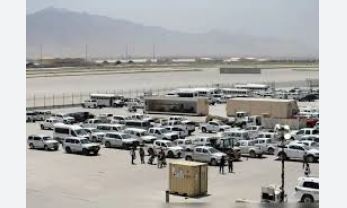
US intends to get back Bagram Air Base in Afghanistan, really combating of China is the purpose?

US intends to get back Bagram Air Base in Afghanistan, really combating of China is the purpose?

Shamim Shahid

Amidst fast global, especially regional level developments, the US President Donald Trump administration has demanded return of Afghanistan’s most vital Bagram Air Base. For the purpose, US administration says that from Bagram Air Base, it intends to counter what they called nuclear expansion of People’s Republic of China. Though turban-wearing Taliban leaders have rejected US demand so far but they (Taliban) are bound to keep in mind comments made with the US through well famous Doha Qatar Accord of February 29th 2020 last. One clause of this agreement is CLASSIFIED, which says Taliban are bound to honour US request or demand for making secure its interests in the region.

Similarly, besides others Qatar and Saudi Arabia are the guarteers of Doha Qatar Accord and it is impossible for the Emirate Islami to betray both the Arab States. Besides Pakistan, Saudi Arab and Qatar are amongst top of US led allies, backing sponsoring and financing turmoil first against former USSR and now against several regional and neighbouring countries from the soil of Afghanistan. The US made the announcement at the time when its two most trust-worthy allies Pakistan and Saudi Arab entered into a bilateral; defense treaty. So far debate on this treaty is in progress and almost analysts believes that this treaty meant countering Israel in the region.

No one can deny strategic importance’s of Bagram Air Base, situated in Parwan province in North of Kabul. Parwan is considered gateway to Kabul from Northern side of Afghanistan. Bagram had played a pivotal role in USSR backed Saur Revolution and had made capable almost of its patronized regimes right from Noor Muhammad Taraki till Dr. Najib Ullah of defending Kabul till last moment. Similarly the US lead allied troops after landing in Bagram air base with help of BM 52 bombardment, Taliban now governing Afghanistan, have been kept away from Kabul for a long period. Now if the US succeeded in materializing its decision of getting back occupation of Bagram air base, it could cause wide range politico-strategic changes in the region.

One of credible analyst from Gulf region Ahmad Khuzaie when requested to comment on Pak KSA bilateral defense agreement sais, “The Saudi–Pakistan defense pact is more than a bilateral agreement—it is a strategic earthquake. It redefines deterrence in the Gulf, complicates India’s regional ambitions, and sends a clear signal to Israel and Iran that Riyadh is no longer a passive actor. For Pakistan, the treaty elevates its strategic relevance beyond South Asia, embedding it firmly in Gulf security calculus. For Saudi Arabia, it marks a bold departure from hedging to hard alignment. And for the region, it inaugurates a new era of formalized alliances, nuclear ambiguity, and intensified rivalries. On one hand, it touches the Pakistani-Indian ongoing issue, putting Pakistan ahead; on the other hand the Gulf’s security, Iran wise and Israel wise. The Middle East has entered a new chapter—one where defense treaties are not just declarations, but instruments of strategic transformation.”

 But some others believes that US in reaction has announced coming back to Afghanistan and getting back control of strategically important Bagram air base. Similarly, in according to bilateral defense treaty, Pakistan is made bound to follow Saudi Arab in its strategic, politico diplomatic strategies in the region. Question arises what will be Pakistan stance if Saudi Arabia go ahead with strengthening of its  friendship with Israel. So far Saudi Arabia has neighther denounced Jewish aggression against Palestinian nor withdrawn its previous decision of allowing Israel on its soil for business and trade activities. A large number of Jewish companies are now engaged in trade and business activities throughout the Gulf Regions.

Though the US is justifying this decision in the wake of what it call over coming nuclear proliferation of China but Bagram is much more close to Pakistan compare to China. In the wake of US decision fir getting back occupation of Bagram airbase and Pak-KSA bilateral agreement, one can easily reconfirm that CHESS play is continue on the soil of already war devastated Afghanistan. Prior to well famous Doha Qatar Accord, the US had tabled similar text of a bilateral agreement before former President Hamid Karzai but he had refused to comply. Whatever might be claims and justifications on the part of Taliban  No one can deny the fact after re-empowering, the Taliban fighters feeling them independent in almost of their internal and external policies. They didn’t considering them as dependent instructions and patronization of Pakistan state organs and on the other some of its top brasses intends to get rid of commitments made with US through Doha Qatar Accord.

 It seems hard for the US to keep up its geo-strategic interests at this crucial stage when China and several others are making its best for establishing its strategic and economic influence in the almost Asian region. So far US initiated redeployment  in Bangladesh, which might be a lesson for almost Islamic countries especially Pakistan which is still jubilating collapse of Hasina Wajid regime. 

US-Europe alliance is hierarchical when it comes to the Middle East, experts

US-Europe alliance is hierarchical when it comes to the Middle East, experts

ISLAMABAD: SEPT 22 /DNA/ – In an webinar, organized by Institute of Regional Studies Islamabad, experts analyzed the ramifications of “snapback sanctions” on Iran. Dr Sika Sadoddin, former fellow at Portland University (USA) was of the view that the US had always treated Europe as a secondary partner in the Middle Eastern affairs.

She analyzed Europe’s quest for strategic autonomy as aspirational but limited in practice due to the financial and security dependence on the US. Dr Sadoddin pointed out that the US exploited secondary sanctions as a leverage against Iran and left little room for European diplomacy. Dr Sadoddin explained that any attempts by Europe to trade with Iran while bypassing US sanctions were rather symbolic.

 That’s why Europe criticized Trump’s withdrawal from JCPOA but was forced to adopt the sanctions regime against Iran. While comparing the approaches of different US presidents towards Iran, Dr Sadoddin mentioned that apart from Obama who preferred multilateral diplomacy, both Trump and Biden adopted unilateralism and US dominance in diplomatic spheres.

Ms Silvia Boltuc, Founder and Managing Director of Special Eurasia (Italy) argued that Europe’s policy towards Iran was contradictory. Europe’s silence on Israeli attacks against Iran but condemnation of Iran’s retaliatory attacks created mistrust in Europe-Iran relations, she mentioned.

Ms Boltuc also alluded to the fact that giving space to banned opposition of Iran like National Council of Resistance of Iran (NCRI) in Europe’s pubic spheres would further complicate the relations with the Islamic Republic.

Within Europe, the views varied as Italy intended to keep more commercial ties with Iran while Germany and France despised the policy of appeasement, she said. However, Europe’s insistence on negotiations was because of its own strategic interests to access Iran’s energy reservoirs especially after the Ukraine War and sanctions on Russia.

Gilani emphasis cementing bilateral ties with Australia

Gilani emphasis cementing bilateral ties with Australia

He lauded the outgoing Australian High Commissioner’s services, particularly in strengthening educational and cultural cooperation as well as development programmes

Saifullah Ansar

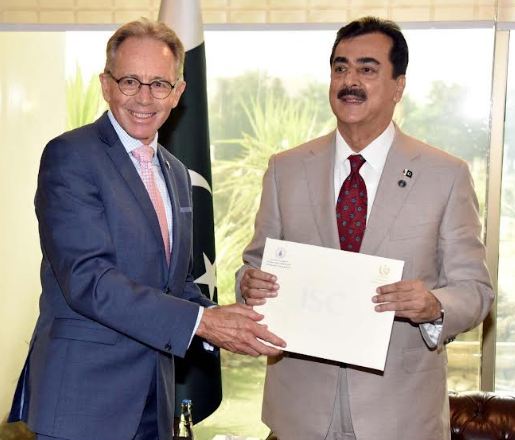
Islamabad, Sept 22 —  Australian High Commissioner Mr. Neil Hawkins called on Chairman Senate Syed Yousaf Raza Gilani at the Parliament House on Monday, where both sides held detailed discussions on advancing bilateral relations and exploring new avenues of cooperation in diverse fields.

The meeting covered a wide range of subjects, including trade, education, defence, parliamentary collaboration, cultural exchange, climate change, and people-to-people linkages.

Chairman Senate Gilani underlined the historic nature of Pakistan-Australia ties, recalling that diplomatic relations between the two countries were established in 1948 and have steadily grown stronger over the decades. He emphasized that both nations share democratic values and traditions of a bicameral parliamentary system, which serve as a foundation for closer cooperation.

He lauded the outgoing Australian High Commissioner’s services, particularly in strengthening educational and cultural cooperation as well as development programmes. Stressing the need to make parliamentary friendship groups more effective, Gilani highlighted that regular exchange of parliamentary delegations would further enhance mutual understanding and goodwill.

On trade and economic ties, the Chairman Senate noted that the current bilateral trade volume of USD 2.5 billion has considerable room for expansion. He proposed enhanced cooperation in agriculture, renewable energy, mineral resources, and information technology. Gilani said Pakistan is keen to boost its exports, particularly in textiles, surgical instruments, IT services, and food products, while also calling for the establishment of a joint forum for chambers of commerce and private sector stakeholders from both sides.

In the area of defence, Gilani called for deeper collaboration between Pakistan and Australia. He also appreciated Australia’s development assistance to Pakistan. On climate issues, he pointed out that Pakistan is among the most climate-vulnerable countries, having recently suffered devastating floods and rains. He stressed the need for international cooperation and a joint strategy to tackle climate challenges effectively.

The Chairman Senate further noted that Pakistan and Australia enjoy strong people-to-people ties, with a vibrant Pakistani diaspora residing in Australia and contributing to the country’s economy through remittances. He recalled his own official visit to Australia as Speaker, which he said added momentum to parliamentary engagement between the two nations.

Gilani also stressed the urgency of expediting high-level exchanges, institutionalizing annual joint parliamentary sessions, and creating thematic working groups. He underscored the importance of innovation, green transition, inclusive growth, and enhanced parliamentary coordination.

Expressing solidarity, the Australian High Commissioner conveyed his condolences over the loss of lives and damages caused by recent floods in Pakistan and assured continued cooperation.

Mr. Ginali also informed the Australian High commissioner about his visit to different areas of South Punjab where devastating flood floods have left thousands homeless. He called upon the philanthropists and welfare organisations to come forward and assist the flood affected people.

Chairman Senate Gilani also briefed the High Commissioner about the upcoming Inter-Parliamentary Speakers’ Conference (ISC), scheduled to be held in November this year. He extended a formal invitation to the Australian parliamentary leadership to participate in the conference, terming their participation crucial for its success.

Ms. Misbah Khar , Ambassador to ISC and Advisor to Chairman Senate informed the Australian High commissioner about the theme of ISC and overall aim of the conference.

Both sides reaffirmed their commitment to further strengthening Pakistan-Australia relations and working together for global and regional peace.

Stay Connected

64FansLike
60FollowersFollow

Latest Reviews

Exchange Rates

USD - United States Dollar
EUR
1.14
GBP
1.33
AUD
0.69
CAD
0.70