Home Blog Page 467

SC orders law on appeal rights for military court convicts in 45 days

SC orders law on appeal rights for military court convicts in 45 days

ISLAMABAD, SEPT 22: The Supreme Court of Pakistan has ruled that convicts sentenced by military courts must be granted the right to appeal, directing the government to legislate within 45 days.

The apex court released on Monday its detailed judgment on intra-court appeals concerning the trial of civilians by military courts.

Justice Aminuddin Khan authored the 68-page majority decision, with Justice Muhammad Ali Mazhar adding a 47-page concurring note.

Out of the seven-member constitutional bench, five judges upheld the intra-court appeals, while Justices Jamal Mandokhail and Naeem Afghan issued dissenting notes. The ruling confirmed the legality of military trials for civilians but emphasized the constitutional necessity of appeal rights.

In its order, the court instructed the federal government and Parliament to introduce legislation within 45 days, ensuring convicted civilians have the right to independent appeals before the High Courts.

The judgment highlighted that while the Army Act already contains basic procedural safeguards, it lacks an adequate appellate mechanism for ordinary citizens. The bench clarified that a constitutional response does not require striking down the relevant Army Act provisions altogether but demands the creation of a proper appeal forum.

Key highlights of decision

Restoration of Provisions: The court set aside Justice Muneeb Akhtar’s October 23, 2023 ruling, reinstating Section 2(1)(d)(i) and (ii) and Section 59(4) of the Pakistan Army Act, 1952.

Reasoning: Justice Aminuddin Khan noted that Justice Akhtar’s reliance on Article 8(5) to nullify these clauses was misplaced, as the provision merely prohibits the suspension of fundamental rights.

Bench Composition: Justices Aminuddin, Hasan Rizvi, Musarrat Hilali, and Shahid Bilal endorsed Justice Mazhar’s additional note, while the two dissenting judges opposed the ruling.

Proceedings and attorney general’s role

During hearings, Attorney General Mansoor Usman Awan repeatedly sought time to obtain government instructions on the appeal issue. At the May 5 hearing, he stated that if the court issued directions, legislation could be introduced in Parliament.

In the final decision, the Attorney General assured that the government would take the Supreme Court’s directive seriously.

The judgment comes nearly 10 months after the formation of the constitutional bench. The detailed ruling spans 69 pages, of which 62 pages record the arguments presented by petitioners and respondents, with reasons and orders outlined in the remaining sections.

The Supreme Court’s decision reaffirms the legality of military trials for civilians but strikes a balance by mandating an appellate safeguard, a long-demanded constitutional guarantee.

Nepal’s Gen Z Uprising: From Social Media Ban to Political Awakening

Nepal’s Gen Z Uprising: From Social Media Ban to Political Awakening

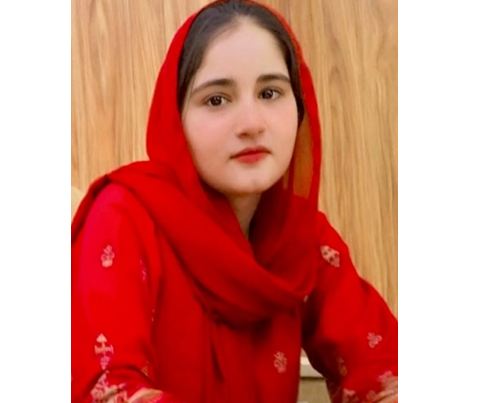
Laiba Bashir

The protests in Nepal began shortly after the government banned 26 popular social media platforms on September 4, 2025. These included Facebook, Instagram, YouTube, WhatsApp, X (formerly Twitter), and LinkedIn. The government argued that the ban was necessary because these companies failed to comply with new regulations requiring them to register with Nepal’s Ministry of Communication and Information Technology. The rules were introduced to help authorities curb harmful content such as misinformation, hate speech, and online fraud. Despite repeated warnings and opportunities to register, the companies did not comply, leading the government to block their services nationwide.

For Generation Z who rely heavily on social media for communication, news, entertainment, and even employment opportunities the ban felt like a direct attack on their freedom of expression and connectivity. Many young Nepalis also used these platforms to expose corruption and highlight the privileges enjoyed by powerful political families. The hashtag #Nepokids (short for “nepotism babies”) gained traction, criticizing how the children of elites lived in luxury while ordinary citizens struggled with unemployment and limited access to basic services. The ban was therefore seen not just as a regulatory decision but as a political move to silence dissent and weaken youth-led anti-corruption activism. Social media had become a crucial organizing tool for young people to spread their message quickly and mobilize protests. Overnight, millions of Nepalis nearly half the population lost access to these platforms, sparking widespread anger and confusion. Many turned to VPNs to bypass the ban. This restriction became the spark that ignited larger demonstrations demanding honesty, accountability, and more opportunities for the country’s youth.

The median age in Nepal is 25, making young people a significant portion of the population. Unsurprisingly, it was this generation Gen Z that spearheaded the protests. What began as online resistance rapidly spilled into the streets, especially in Kathmandu and other major cities. The demonstrations were largely led by students and young workers who called for honesty, fairness, justice, and an end to the social media ban. Initially peaceful, the protests escalated after police attempts to disperse crowds. Security forces reportedly used water cannons, tear gas, rubber bullets, and even live ammunition. Human rights groups confirmed the deaths of at least 30 people, including three police officers, while hundreds were injured. Protesters retaliated by damaging government buildings, including the parliament and the Supreme Court, and setting fire to some politicians’ homes. The unrest forced Prime Minister K. P. Sharma Oli and several cabinet ministers, including the Home Minister, to resign. The Home Minister stepped down citing “moral responsibility” for the bloodshed. Authorities imposed curfews in Kathmandu and other urban centers in an attempt to restore order.

What made this protest movement unique was that it was largely independent of political parties. Most participants were motivated by frustration with corruption, nepotism, unemployment (over 20%), and poor economic conditions. Social media had previously been their most powerful tool for organizing, and the ban only deepened their determination. Despite the government crackdown, the protests demonstrated the ability of Nepal’s youth to mobilize effectively and demand change, marking a new chapter in the nation’s political history.

Although the social media ban was the immediate trigger, the protests were fueled by long-standing issues: widespread corruption, mismanagement, nepotism, and growing inequality. More than 20% of Nepali youth remain unemployed, and the economy depends heavily on remittances, which account for nearly one-third of national income. This reliance underscores the lack of domestic job opportunities. Such conditions created deep resentment among young people. The circulation of videos showing police violence, particularly the death of a young protester, further galvanized the movement. Reports that Prime Minister Oli’s wife had quietly left the country during the crisis added to perceptions of instability and elite detachment. Nepal’s youth movement mirrors similar protests across Asia, where digital-savvy young generations are challenging entrenched political systems and demanding jobs, fairness, and accountability.

The Gen Z protests in Nepal mark a turning point in the nation’s political trajectory. The government’s failure to address systemic issues corruption, nepotism, and unemployment has eroded trust in state institutions. When peaceful demonstrations turned violent, the army intervened to restore order and has since become a key player in negotiations over a transitional government that includes youth representation. This signals a potential new role for the military in Nepal’s governance. The events underscored the indispensable role of digital platforms in modern political life. Social media served not only as an organizational tool but also as a means of rapidly spreading information and uniting young Nepalis across the country’s challenging geography. Even after the government lifted the ban, the protests continued, proving that the movement’s demands went far beyond digital access. The youth called for transparency, job creation, accountability, and an end to entrenched corruption. Political leaders and the military now face mounting pressure to take Gen Z’s demands seriously. Experts argue that this could permanently reshape Nepal’s political landscape, embedding youth activism as a lasting force in policymaking and reform. While Prime Minister Oli and his ministers have resigned, the political situation remains fragile, with curfews and military patrols continuing in Kathmandu and other cities.The youth-led movement is negotiating for a peaceful transition to a new, democratically elected government, emphasizing dialogue and reform.

Nepal’s Gen Z uprising represents a historic moment of political awakening. What began as a fight against a social media ban quickly evolved into a broader struggle against corruption, unemployment, and the outdated political order. Unlike earlier generations, this movement is fueled by digital connectivity, political awareness, and frustration with a system that has failed to deliver. The resignation of Prime Minister Oli is already a major achievement for the movement, but its true legacy lies in proving that young people can be a transformative force in politics. The future of Nepal will likely be shaped by this generation’s demands for transparency, inclusivity, and accountability. Yet challenges remain: ensuring peaceful reforms, bridging generational divides, and building public trust in new political institutions. Despite these hurdles, the protests have already altered Nepal’s political narrative. Gen Z has signaled that it is unwilling to accept the corruption and patronage of the past and is prepared to fight for a more just and democratic future.

Laiba Bashir

BS International Relations

University of Okara

Pakistan, China mark 76th PRC anniversary in Islamabad

Pakistan, China mark 76th PRC anniversary in Islamabad

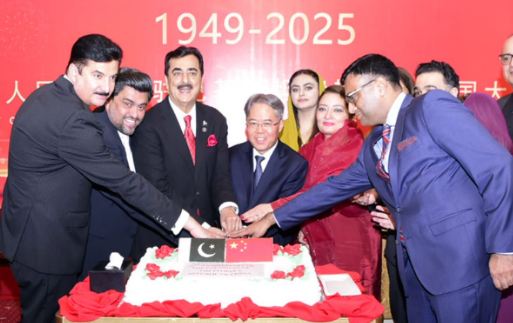
ISLAMABAD, SEPT 22 /DNA/ – A ceremony was held today at a local hotel in the federal capital to mark the 76th anniversary of the Founding of the People’s Republic of China. The event was attended by a distinguished gathering of officials, diplomats, and guests.

The Chief Guest, Chairman Senate Syed Yousaf Raza Gilani, joined the Chinese Ambassador to Pakistan, His Excellency Jiang Zaidong, in cutting a ceremonial cake to commemorate the historic occasion. The gesture symbolized the deep-rooted friendship and strategic partnership between Pakistan and China.

The ceremony served as a reaffirmation of the strong bilateral ties and the multi-faceted cooperation between the two nations, particularly under the framework of the China-Pakistan Economic Corridor (CPEC). The event was characterized by a warm and cordial atmosphere, reflecting the all-weather friendship between Pakistan and China.

Hardline MPs in Iran demand nuclear bomb

Hardline MPs in Iran demand nuclear bomb

Seventy members of parliament sign a letter calling for a ‘change in the defence doctrine’ of the nation.

News Desik

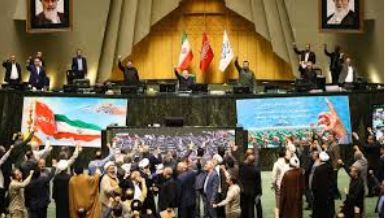
Tehran, Iran – Hardline lawmakers in Iran have once again demanded the country start building a nuclear bomb as Western powers are days away from reimposing United Nations sanctions amid concerns war could restart with Israel.

Led by a lawmaker from the ultraconservative holy Shia city of Mashhad in northeastern Iran, 70 members of parliament signed onto a letter calling for a “change in the defence doctrine” of the theocratic establishment.

The letter, published by the state-run Fars news website, was not directly addressed to Supreme Leader Ali Khamenei because his commands cannot be second-guessed by other authorities. Instead, it was directed at members of the Supreme National Security Council, which is in charge of the nuclear file and includes the president, judiciary and parliament chiefs.

Iran has long argued that its nuclear programme is for civilian purposes and it has no intention of pursuing an atomic bomb, even though archnemesis Israel is known to be the only nuclear-armed power in the region.

The lawmakers argued that a fatwa, or an ultimate religious ruling, issued by Khamenei about two decades ago that prohibits the use of nuclear bombs does not technically forbid building or keeping them as deterrence.

They warned that Israel “has reached the brink of madness”, “attacks without respecting any international obligations and kills innocent people”.

Such rhetoric has intensified significantly among the more hardline elements of Iran’s establishment in the aftermath of Israel’s surprise attacks on Iran in June that triggered a 12-day war and also saw Washington intervene on Israel’s behalf and bomb Iran’s main nuclear facilities.

The European powers, known as the E3, are remaining signatories of Iran’s 2015 nuclear deal with world powers that United States President Donald Trump unilaterally abandoned in 2018 and followed with tough sanctions. Despite strong opposition by China and Russia, which also negotiated and signed the 2015 nuclear agreement, the E3 triggered the “snapback” mechanism of the landmark accord and secured a vote at the UN Security Council last week.

Iranian Foreign Minister Abbas Araghchi arrived in New York early on Monday as the head of a delegation to hold negotiations with European and other powers. President Masoud Pezeshkian will be heading there on Tuesday to participate in the UN General Assembly, which will be heavily focused on Israel’s genocidal war in Gaza and recognition of a Palestinian state.

Last week, Araghchi presented what he called an “actionable plan” to his European counterparts, which media reports said included Iran recovering and diluting its supply of highly enriched uranium in exchange for deferring the snapback sanctions.

The diplomat said Iran was “faced with a litany of excuses and outright deflection, including the farcical claim that the Ministry of Foreign Affairs does not represent the entire political establishment”. He emphasised that he has the “full support” of the establishment, including the Supreme National Security Council.

Five things to know about Indonesia-EU trade agreement

Five things to know about Indonesia-EU trade agreement

Jakarta, Sept 22 (AFP/APP):Indonesia and the European Union will sign a trade agreement on Tuesday after nearly a decade of negotiations as they seek to mitigate the effects of US President Donald Trump's tariff policy.
              The agreement, to be signed on the resort island of Bali, will bring resource-rich Indonesia and the 27-member European bloc into closer economic ties.
              It is the third trade agreement the EU has signed with southeast Asian countries, after Singapore and Vietnam.
              Here are five things to know about the Indonesia-European Union Comprehensive Economic Partnership Agreement (CEPA):


              - Trump prompts 'urgency' -


              Indonesia has been in talks with the EU since 2016 but negotiations for a trade deal initially saw little progress.
              Issues such as palm oil and deforestation posed stumbling blocks but US President Donald Trump's sweeping tariff policy "created the urgency" to expedite an agreement, said Deni Friawan, researcher at the Centre for Strategic and International Studies (CSIS).
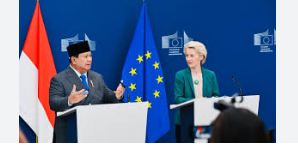
              In July, President Prabowo Subianto travelled to Brussels and announced with EU chief Ursula von der Leyen that the two sides had reached a "political agreement" to conclude the deal after 19 rounds of negotiations.
              Indonesian chief economic minister Airlangga Hartarto said uncertainties caused by the "tariff war and protectionism" between major countries pushed the two sides "to seek certainty through a stable bilateral agreement".
              The agreement was expected to "mitigate risks from the impact of the global tariff war", Airlangga told AFP in a statement.


              - Tariffs dropped -


              Around 80 percent of Indonesian exports to the EU will be tariff-free after the deal comes into force, Airlangga said in June.
              It is expected to benefit Indonesia's top exports to the the bloc including palm oil, footwear, textiles and fisheries, he added.
              Von der Leyen said in July the agreement would open new markets and "help strengthen the supply chains of critical raw materials that we need to power the clean and the digital transition".
              "We want not only a secure supply, but we want responsible supply," she said.
              "That means respect for the environment, respect for the local communities, and a clear focus on good jobs and local value creation."


              - Benefits -


              The EU is Indonesia's fifth-largest trading partner with bilateral trade reaching $30.1 billion last year.
              The agreement would further open up EU access to the Indonesian market of around 280 million people, Deni said.
              "With the CEPA, it means that it will be easier for them (EU) to enter" Indonesia, he said, underlining the size of the market and its growing economy.
              The deal would ensure Indonesian and EU businesses enjoyed equal legal protection, Airlangga said.


              - Green policy tensions -


              Ties had been frayed by issues including a proposed EU import ban on products linked to deforestation that has angered Indonesia, a major palm oil exporter.
              Under the EU deforestation regulation, exports of a vast range of goods -- including soy, timber, palm oil, cattle, printing paper and rubber -- are prohibited if produced on land deforested after December 2020.
              Airlangga said EU trade chief Maros Sefcovic had promised to give "special treatment" regarding the deforestation regulation for countries that have signed trade agreements with the bloc.
              EU has postponed the rule's implementation to the end of this year after a backlash.
              Activists are concerned the agreement would lead to more deforestation driven by increased demand for Indonesian palm oil.
              "The remaining natural forests in palm oil concessions will potentially be cleared in the near future (and) converted into plantations," said Syahrul Fitra of Greenpeace Indonesia.
              Brussels reportedly pushed to include provisions about deforestation in the agreement, but details have not been made public.


              - Next steps -


              After the agreement's signing, the two sides are expected to carry out steps including legal checks and translation of the official documents, Airlangga said.
              The deal will then have to be ratified by EU members, the European Parliament and Indonesia's parliament.
              The agreement is expected to be implemented by 2027, Airlangga added.

Dar attends Qatar-led OIC meet on UNGA in New York

Dar attends Qatar-led OIC meet on UNGA in New York

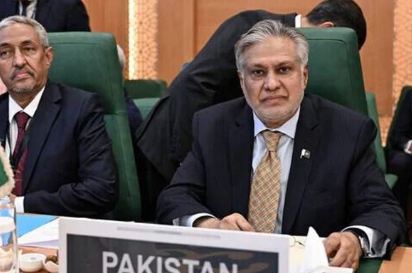
ISLAMABAD, SEPT 22 /DNA/ – The Deputy Prime Minister and Foreign Minister of Pakistan, Senator Mohammad Ishaq Dar, participated in consultations hosted by the Prime Minister and Foreign Minister of Qatar, H.E. Sheikh Mohammed bin Abdulrahman Al Thani in New York today. Other participants included the Deputy Prime Ministers of Jordan and UAE, and Foreign Ministers of Egypt, Indonesia, Saudi Arabia and Turkiye.

The Ministers exchanged views and coordinated positions for unified approach on some of the key issues at the UN General Assembly Session.

The DPM/FM Dar underscored the strong bonds of friendship and cooperation that existed between Pakistan and Islamic countries. He recalled that the people of Pakistan had great affinity for their Muslim brethren in the Middle East and would support all constructive endeavours aimed at fostering peace, stability and prosperity in the region and beyond.

ANF launches massive anti-narcotics drive in Balochistan

ANF launches massive anti-narcotics drive in Balochistan

ISLAMABAD, Sep 22 (APP): The Anti-Narcotics Force (ANF), in collaboration with the local administration, has launched a large-scale anti-narcotics drive in Balochistan to eradicate poppy cultivation and dismantle drug networks across the province.

The operation is being conducted under the directives of the Chief of Army Staff (COAS), Field Marshal Asim Munir, and the Government of Balochistan.

The campaign aims to make Balochistan a drug-free region and to eliminate the threat posed by narcotics permanently.

As part of these coordinated efforts, extensive operations have already led to the destruction of poppy crops in several areas. Authorities have also taken action against networks involved in the production and trafficking of drugs.

Moreover, it has been decided to provide alternative livelihood opportunities to local residents to break the nexus between drug traffickers and terrorists.

This initiative seeks to discourage communities from returning to poppy cultivation by offering sustainable sources of income.

Officials emphasize that dismantling the interconnected web of drugs, crime, and terrorism requires a strong and long-term

strategy.

The fight against drugs is a national responsibility, adding that it is essential for the government, security agencies, and every individual in society to play their part.

Modi Govt exposed for barring Sikh pilgrims from Guru Nanak anniversary in Pakistan

Modi Govt exposed for barring Sikh pilgrims from Guru Nanak anniversary in Pakistan

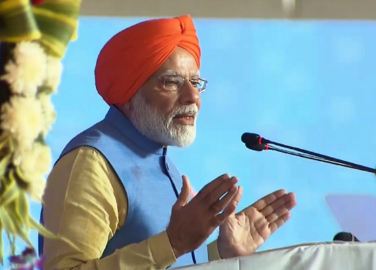
ISLAMABAD, Sep 22 (APP):The ugly face of the Modi government has been further exposed by its decision to stop Sikh pilgrims from visiting Pakistan on the eve of the death anniversary of Baba Guru Nanak.

Baba Guru Nanak’s 486th death anniversary, “Jyoti Jot”, will be commemorated at Kartarpur Sahib starting September 22.
However, India’s Ministry of Home Affairs has issued an advisory preventing Sikh pilgrims from traveling to Pakistan.

“Stopping Sikh pilgrims from visiting Pakistan on the occasion of Baba Guru Nanak’s death anniversary reflects the Indian government’s religious intolerance,” said Sardar Ramesh Singh Arora, head of the Pakistan Sikh Gurdwara Parbandhak Committee.

He said that this action is a blatant violation of religious freedom and part of a continued pattern of targeting minorities in India especially Sikhs and Muslims.

Sikh pilgrims from around the world have already arrived at Kartarpur to perform religious rituals, but the Indian government has shown a discriminatory attitude by preventing its own citizens from doing so.

There has been strong backlash against the Indian government’s decision to ban Sikh pilgrims from participating in these religious observances.

Sardar Ramesh Singh Arora termed the move as a violation of the fundamental religious rights of Sikhs to visit their holy sites.

A Sikh leader remarked, “If India can play a cricket match with Pakistan, then why can’t Sikh pilgrims visit Pakistan?”

Chief Minister of Indian Punjab, Bhagwant Mann said, “The central government has no right to interfere in religious freedom.”

AIOU to host Int’l conference on integrative biosciences on Sept 23

AIOU to launch BS, M.Phil programs on Seerat -un –Nabi

ISLAMABAD, Sep 22 (APP):Allama Iqbal Open University (AIOU) is all set to host an international conference on biosciences on September 23, aiming to foster collaboration and shape the future direction of biosciences.

The event would bring together national and international experts, researchers and scholars to discuss emerging trends, challenges and innovative research in the field.

The inaugural session will be presided over by the Minister of State for Education and Training, Wajiha Qamar whereas the Federal Minister for National Food Security and Research, Rana Tanveer Hussain will be the chief guest at the closing ceremony.

This conference is expected to serve as a milestone in shaping the future direction of biosciences and promoting research collaboration.

Ranks Without Returns: Pakistan’s Higher Education Faces a Reality Check

Ranks Without Returns: Pakistan’s Higher Education Faces a Reality Check

Dr Muhammad Naeem Khan

Lahore, Sept 22: Last winter, students at the University of Karachi poured into the admin block chanting against fee hikes, late-fee penalties, crumbling buses, and a “business model” creeping into public education. Within days the administration rolled back some penalties, but not the semester fee increase. A few months later, press releases and headlines celebrated Pakistani universities’ climb in global league tables. The dissonance is hard to miss. (Dawn)

Pakistan’s participation in higher education remains low by global standards. The World Bank’s latest tertiary gross enrolment ratio (GER) for Pakistan hovers around the low teens, far below the global average near 39–40 percent, according to UNESCO’s monitoring of SDG-4. In plain terms, a small share of Pakistan’s university-age population is actually in tertiary education compared with the rest of the world. (World Bank Data, UNESCO)

For those who do enrol and graduate, the job market is unforgiving. Pakistan Institute of Development Economics (PIDE) has repeatedly warned that roughly a third of educated youth struggle to find work—a picture echoed widely in national media. That weak demand is compounded by a sluggish industrial engine: Large-Scale Manufacturing has spent long stretches in contraction, and even official surveys depict a fragile, stop-start recovery—conditions that limit the economy’s capacity to absorb fresh graduates.

On campuses, a funding squeeze meets rising costs. Development allocations for higher education were cut sharply in the FY-2025/26 budget; experts warned of a sector “in crisis.” Student protests over tuition and fee penalties at Karachi University, and similar hikes elsewhere, are a barometer of household strain. Even where concessions came, core semester fees stayed higher than before. (Dawn, The Express Tribune, Geo)

And yet, in global rankings, Pakistan appears to be on the rise. Quaid-i-Azam University touts a placement around #315 in the 2025 QS World University Rankings and a top-401–500 slot in Times Higher Education’s 2025 table. LUMS publicized its QS positions (global ~#535; strong employer-reputation and international-faculty scores), while NUST celebrated a jump to #127 in Engineering & Technology by subject. National press amplified the story as “27 Pakistani universities” earning QS subject placements this year. (qau.edu.pk, Dawn, NUST, Top Universities)

So what gives? Are the rankings a hoax, a numbers game, manipulation, or do they actually mean something?

What Rankings Do Measure—and What They Miss

The leading systems (QS, THE, U.S. News) mix indicators such as citations, research reputation, faculty-student ratios, internationalization, and sometimes employer surveys. These can spotlight genuine strengths, especially research visibility in specific fields (hence Pakistan’s strong “citations per faculty” at some institutions). But they remain partial proxies for educational quality, learning gain, and real job outcomes. (Top Universities)

Scholars of quantification have long warned about “reactivity”, the tendency of measures to shape the behaviour they monitor. When a metric becomes a target, institutions can start optimizing for the score rather than the mission (a dynamic popularized as Goodhart’s Law and documented in higher-ed settings). Classic studies show that rankings can redirect resources toward easily countable outputs, reshape admissions, and spur tactical data reporting.

A major review in the Annual Review of Sociology argues that numbers don’t just describe reality; they produce it by channelling attention, incentives, and legitimacy. In higher education, that can mean chasing citation boosts or glossy inputs while harder-to-measure outcomes (teaching quality, advising, first-generation student support) lag. (SAGE Journals)

There’s also the non-trivial problem of gaming and data quality. The Columbia University episode—where the institution withdrew from the U.S. News ranking after acknowledging serious data issues—became a global cautionary tale. Soon after, dozens of elite U.S. law and medical schools publicly exited U.S. News over methodological concerns. If world-class institutions question the exercise, policymakers further down the income ladder should be cautious about using rank jumps as a proxy for sectoral health. (ResearchGate, LSE Research Online)

More broadly, critics now call for de-escalating the “ranking circus,” arguing that formula tweaks and opaque weightings aren’t a sound basis for funding or strategy. Beyond scholars, voices across the sector have urged a reset: make evidence for policy, industry, and society—not scoreboard position—the north star.

Pakistan’s “Rankings–Reality” Gap

In Pakistan’s context, the gap looks like this: while a handful of universities improve rank positions—often on research-centric indicators—system-level signals remain troubling. Enrolment growth is modest from a low base; household affordability is worsening; and the economy’s capacity to hire graduates is weak. If rankings encourage universities to double down on what’s measurable (citations, headcounts, promotional narratives) rather than what matters most to students (learning, mentoring, employability), the gap widens. (World Bank Data, UNESCO, Dawn, The Express Tribune)

Meanwhile, outbound student mobility keeps climbing. OECD and UIS trend notes point to a globally rising tide of internationally mobile students; Pakistan contributes to that flow as families—fearful of limited local options and seeking “name-brand” credentials—stretch finances for offshore degrees. That decision is often driven by the same rankings’ logic, now exported to household choice.

There are human costs, too. Studies link rank-obsessed environments to anxiety, status pressure, and “prestige chasing,” especially where a stark divide between “top-50” and “the rest” is ritualized. For Pakistani students facing fee spikes and uncertain returns, the psychological toll adds to the financial one.

So—Hoax, Numbers Game, or Useful Signal?

The honest answer is rankings can be a useful but very narrow signal. They can highlight islands of research excellence and global connectivity, and they help universities benchmark some activities internationally. But they are poor guides to sector health and poor proxies for student outcomes. When deployed without context, they invite gaming and misallocation—celebrating the scoreboard while classrooms, labs, counselling, and placement services remain underfunded. The academic literature—and recent high-profile withdrawals and corrections—backs this caution. (SAGE Journals, ResearchGate, LSE Research Online)

What Would Meaningful Progress Look Like?

If Pakistan wants rankings to matter for policy, industry, and society, it needs to re-anchor incentives:

  • Publish graduate outcomes: a national Graduate Outcomes Survey (one- and three-years post-degree) with program-level employment, earnings bands, and further-study rates—transparent and audited. Tie a slice of public funding to verified outcomes, not reputational votes.
  • Measure learning: adopt credible, low-stakes assessments of critical thinking, quantitative reasoning, and writing at entry and exit to track learning gain (institutional aggregates, not individual scores).
  • Reward partnerships: score and fund industry co-ops, apprenticeships, and SME problem-solving studios that convert study into experience.
  • Stabilize financing: reverse stop-start budget cuts that push public universities toward blunt fee hikes; prioritize need-based aid over across-the-board subsidies.
  • Track inclusion: set GER targets for women and underserved regions; publish annual progress with independent audit.

Until those basics improve, rising ranks will sit uneasily alongside empty labs, anxious families, and under-employed graduates.

Bottom line

Pakistan doesn’t need to quit rankings; it needs to downgrade their political importance and upgrade the metrics that matter. Celebrate real gains—where research is world-class and programs are genuinely delivering—but stop mistaking a better position on a global table for a healthier higher-education system. As one recent commentary put it, this is the moment to “stop the ranking circus” and rebuild higher-ed policy around evidence, equity, and employability.

The writer is the Assistant Professor at Beaconhouse National University.

Stay Connected

64FansLike
60FollowersFollow

Latest Reviews

Exchange Rates

USD - United States Dollar
EUR
1.14
GBP
1.33
AUD
0.69
CAD
0.70