Home Blog Page 466

France extends €500,000 support for flood-affected communities in Pakistan

France extends €500,000 support for flood-affected communities in Pakistan

Ansar M Bhatti

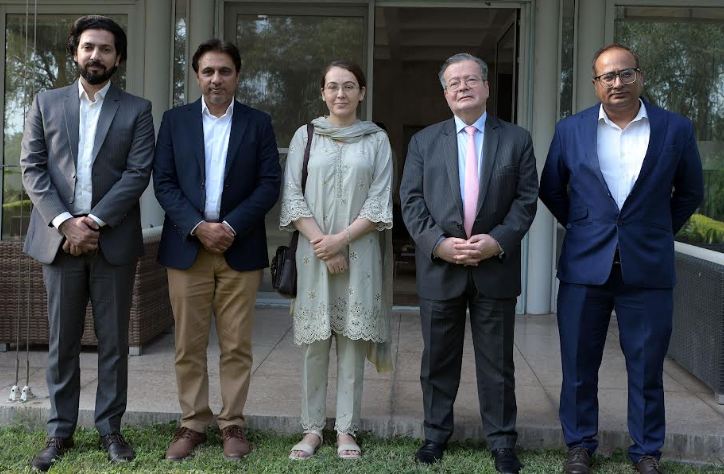
ISLAMABAD, SEPT 23 /DNA/ – French Ambassador to Pakistan Nicolas Galey has reaffirmed France’s solidarity with Pakistan as devastating floods once again hit parts of the country in 2025, severely affecting communities in Khyber Pakhtunkhwa and other regions. Speaking at an event organized with ACTED, one of France’s major NGOs working in Pakistan, Ambassador Galey highlighted France’s continued commitment to supporting vulnerable populations in times of crisis.

Recalling the tragic circumstances of the ongoing flood season, which claimed lives and damaged key infrastructure, water and sanitation systems, and disrupted education and livelihoods, the Ambassador extended France’s deepest sympathy and condolences to the people of Pakistan, particularly those directly impacted.

He noted that ACTED, like other NGOs, quickly mobilized in coordination with the French Embassy and France’s Crisis and Support Center (CDCS). The CDCS had previously been at the forefront of assistance to Pakistan during the catastrophic floods of August 2022. “This year, quite unfortunately, help and support is needed again,” Ambassador Galey said.

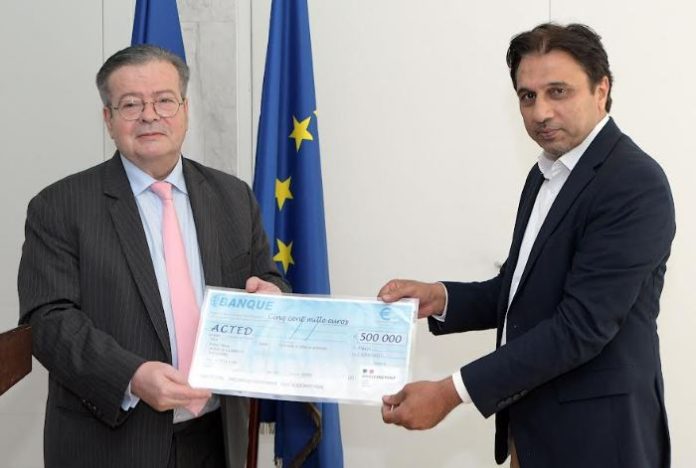
To respond to the crisis, the French government has allocated an initial grant of €500,000 to support flood-affected households. Through this assistance, ACTED will provide relief to 3,000 families in Swat and Guna, totaling about 21,000 individuals. The project will deliver a range of interventions including employment opportunities, rehabilitation of shelters and water systems, distribution of hygiene kits, livelihood improvement, and other integrated support measures.

“ACTED will work to promote and restore dignity and resilience for these families and will implement the project in full coordination and transparency with the relevant authorities,” the Ambassador said.

Ambassador Galey also underscored the broader challenge of climate change, warning that such devastating episodes are likely to continue posing threats to Pakistan in the years ahead. He stressed that France’s commitment to climate action remains unwavering—both in international forums, where it advocates for global climate resilience, and on the ground in Pakistan, where French support continues to reach those most in need.

Ambassador Galey praised ACTED for its responsiveness and the quality of its project delivery, as well as the French Embassy team for their strong cooperation with NGOs. “France stands by Pakistan in these challenging circumstances,” he said, expressing hope that the support will help restore hope, dignity, and resilience among the affected communities.

Russia warns U.S. against any attempt to take Bagram airbase

Russia warns U.S. against any attempt to take Bagram airbase

ISLAMABAD, Sept. 23 (DNA) – Russian Special Representative for Afghanistan Zamir Kabulov has warned the U.S. against any attempt to retake Bagram airbase following threats by U.S. President Donald Trump, according to reports.

“Moscow doubts that the US will decide to invade Afghanistan to return the Bagram air base, as the results for Washington could be disastrous,” Kabulov told RIA Novosti on Monday.

On Sunday, US President Donald Trump said on Sept. 21 that ‘bad things’ will happen if Afghanistan does not return Bagram air base.

China has also criticized Mr Trump’s remarks on Bagram.
On 3 July 2025, Russia became the first country to formally recognise the Taliban as Afghanistan’s legitimate government.
Moscow’s recognition of the Taliban government demonstrates that Russia has become the first country to officially recognize it, which may be part of a strategy to strengthen relations with Afghanistan and maintain regional stability.

Experts are of the view that Kabul, in turn, should consider cooperation with Moscow, which has experience in resolving the issue of militancy, which is seen as a stumbling block for Afghanistan.

Resolving the problem of armed groups’ activities will help stabilize the situation in the country, which will allow Kabul to count on developing trade and economic ties with neighboring states and Arab countries.

This, in turn, will lead to the recognition of the Islamic Emirate’s government by an even greater number of countries.

In addition, Afghanistan’s cooperation with Russia, China, Iran and Pakistan opens up the possibility for Kabul to integrate into the SCO, which will allow it to become a full-fledged regional player.

However, to achieve this goal, the Afghan government should take a more rational approach to interaction with the United States and its allies, primarily in the issue of the Trump Administration’s quest for deployment of military facilities on the territory of Afghanistan.

Their appearance, in addition to problems in relations with Moscow and Beijing, will most likely lead to destabilization of the situation in Afghanistan itself and, as a consequence, to a split within the Taliban movement and the beginning of internal confrontation.

The Afghan government has come up with a very reasonable response to President Trump’s recent threats to the Islamic Emirate in connection with Bagram air base. The U.S. instead of threatening Kabul, must re-check the understanding reached during the nearly 18-month tough negotiations in Qatar, which led to the signing of the landmark Doha agreement.

It was agreed upon during Doha talks that there would be no military presence in Afghanistan of the U.S. and any other country, but the U.S. will have normal relations with Afghanistan in different fields including economic and trade.

Mr Trump’s repeated calls for taking Bagram air base to keep an eye on China and other regional countries must be an eye opener for the Taliban government.

China, which became the first country to accredit a Taliban diplomat as an ambassador in December 2023, enjoys good relations with the Islamic Emirate and several countries are investing in the country ravaged by over 40-year war.

The U.S. must know that Taliban rulers would never allow anyone to spoil their relations with China. Wang Yi, the Chinese Foreign Minister, in his visit to Kabul in August, told Taliban leaders of his country’s intention to include Afghanistan in the Built and Road Initiative (BRI).

32 dengue cases reported in 24 hours, over 2,000 inspections in ICT

32 dengue cases reported in 24 hours, over 2,000 inspections in ICT

ISLAMABAD, SEPT 23 /DNA/ – The district administration of Islamabad has intensified its dengue control campaign as 32 new dengue cases were confirmed in the federal capital during the past 24 hours, while anti-dengue teams carried out 2,079 inspections across different parts of the city.

According to the latest dengue surveillance report, out of the newly reported cases, 20 patients were identified in rural areas and 12 in urban localities of Islamabad. The administration confirmed that surveillance teams are actively engaged in both preventive measures and enforcement of standard operating procedures (SOPs) to curb the spread of the virus.

During field inspections, officials conducted larvae sampling in various localities. The report highlighted that 26 samples tested positive, indicating the presence of dengue larvae, while 11 samples were found negative. Health officials warned that such findings reflect active breeding sites that require immediate attention and strict monitoring to prevent further transmission.

In addition to inspections, large-scale anti-dengue operations were carried out in high-risk areas. The surveillance report noted that fogging was conducted at 2,162 sites, while spraying was carried out at 1,661 locations. The purpose of these operations is to eliminate mosquito breeding sites and reduce the risk of further cases.

Authorities emphasized that high-risk zones are being prioritized for these preventive activities, particularly in areas where larvae were detected and new patients have been reported.

The district administration also launched enforcement actions against individuals and premises found violating dengue SOPs. The report confirmed that several locations were sealed, and multiple individuals were taken into custody for negligence that could potentially contribute to the spread of the virus.

Officials explained that common violations include failure to remove stagnant water, improper waste management, and lack of compliance with guidelines regarding construction sites and residential areas.

A spokesperson for the district administration stated that the anti-dengue campaign will continue without interruption until the complete eradication of the virus from the capital. The official stressed that dengue is a recurring seasonal challenge, and only sustained preventive efforts can bring long-term control.

The administration has also urged residents to extend full cooperation with inspection teams by ensuring cleanliness in and around their homes, removing standing water, and allowing access for inspections and spraying operations.

Meanwhile, health officials underlined the importance of community participation in the fight against dengue. They reminded citizens that the government alone cannot achieve eradication without public support. Citizens were advised to regularly clean water storage containers, cover open water sources, and report any suspected dengue breeding sites to the authorities.

The latest figures reflect that rural areas continue to report a higher number of cases compared to urban centers. Officials attribute this to larger open spaces, more water storage sites, and limited awareness in some rural localities. However, urban centers remain under constant surveillance due to dense population clusters, which can facilitate rapid spread if preventive measures are ignored.

Apart from technical operations, community mobilization drives are also being launched. The administration announced that awareness campaigns are being conducted through schools, mosques, and local gatherings. Pamphlets are distributed, and announcements are made to remind citizens about preventive steps.

Pakistan take on Sri Lanka in ‘must win’ Asia Cup 2025 match today

Pakistan take on Sri Lanka in 'must win' Asia Cup 2025 match today

ABU DHABI: Pakistan and Sri Lanka are set to lock horns in a crucial Super-Four match of the ACC Men’s T20 Asia Cup 2025 today (Tuesday) at the Zayed Cricket Stadium in Abu Dhabi, with both teams looking for their first win in the tournament’s second stage.

In their respective first matches of the Super-Four, the Salman Agha-led side was defeated by arch-rival India, while Sri Lanka lost to Bangladesh.

For Pakistan, its a must win match to survive in the tournament after two major defeats, both against arch-rivals India, in the group stage and Super Four.

The national side are likely to make changes for today’s match, with selectors expected to recall young batter Hassan Nawaz and possibly draft in an additional seamer to sharpen their bowling attack, The News reported.

Pakistan are at the bottom of the Super Four standings due to an inferior net run rate to third-placed Sri Lanka.

On the contrary, the 2016 champions, India, sit at the top due to a superior net run rate than Bangladesh, as both teams have two points each in one match.

Qualification scenario
Pakistan remain in contention for the Asia Cup 2025 final, but their path is uncertain and could depend heavily on net run rate (NRR). Even two wins from their remaining fixtures may not be enough, while in some scenarios a single victory could suffice.

If India sweep all three Super Four matches, and Pakistan defeat Bangladesh but lose to Sri Lanka, then India advance with three wins and the other teams finish level on one each — leaving NRR to decide the second finalist.

Another possibility sees Pakistan beating both Sri Lanka and Bangladesh, India defeating Sri Lanka, and Bangladesh upsetting India. In that case, three teams would end with two wins apiece, again pushing qualification to NRR.

If both Pakistan and India were to win all of their remaining fixtures, they would make it to the final to be played on September 26. In this case, India would have three wins, Pakistan two, Bangladesh one and Sri Lanka none, providing the most straightforward path to the final.

PM attends 80th UNGA session, meets Trump and leaders of Muslim countries today

PM attends 80th UNGA session, meets Trump and leaders of Muslim countries today

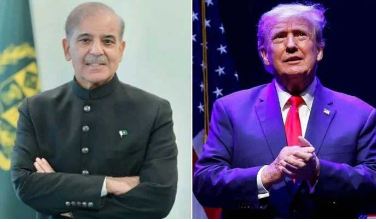
ISLAMABAD, SEPT 23: Prime Minister Shehbaz Sharif is set to attend the 80th session of the United Nations General Assembly (UNGA) and hold a much-anticipated multilateral meeting with US President Donald Trump, along with leaders of key Muslim countries today (Tuesday).

The premier — accompanied by Deputy Prime Minister and Foreign Minister Ishaq Dar and other ministers and senior government officials — reached New York a day earlier and is leading Pakistan’s delegation to the high-level segment of the UNGA, scheduled for today.

Apart from addressing the UNGA, PM Shehbaz will be part of a meeting between President Trump and leaders of key Muslim countries amid heavy focus on Israel’s war in Gaza at the forum.

White House Press Secretary Karoline Leavitt told reporters that Trump will hold a multilateral meeting with Pakistan, Saudi Arabia, the UAE, Qatar, Egypt, Jordan, Turkey and Indonesia. A person familiar with the matter said Gaza will be discussed.

Meanwhile, Axios has reported that Trump will present the group with a proposal for peace and post-war governance in Gaza.

Washington wants Arab and Muslim countries to agree to send military forces to Gaza to enable Israel’s withdrawal and to secure funding for transition and rebuilding programs, Axios added.

Levitt’s remarks echo with the earlier statement issued by the Ministry of Foreign Affairs, which said that the PM is scheduled to participate in a meeting of select Islamic leaders with US President Trump to exchange views on issues pertaining to regional and international peace and security

The meeting between the US president and the Muslim leaders comes amid Israel’s ongoing assault on Gaza which has resulted in the deaths of over 65,000 Palestinians and leaving Gaza’s entire population internally displaced and further setting off a starvation crisis. Multiple rights experts, scholars and a UN inquiry assessed it amounts to genocide.

Separately, with regards to the PM Shehbaz’s US visit, the premier, on the sidelines of the UNGA session, is also expected to hold meetings with several world leaders.

The premier will meet Austrian Chancellor Christian Stocker, Kuwaiti Crown Prince and PM Sheikh Sabah Al-Khaled Al-Sabah, World Bank head and the managing director of the International Monetary Fund (IMF).

He will also attend and address the Global Development Initiative meeting.

At the UNGA, he will urge the international community to resolve the situations of prolonged occupation and denial of the right to self-determination from Indian Illegally Occupied Jammu and Kashmir (IIOJK) and Palestine.

“He will draw the attention of the international community towards the grave crisis in Gaza, and call for decisive action to end the suffering of the Palestinians,” the FO statement read.

The statement said that PM would also highlight Pakistan’s perspective on the regional security situation, as well as other issues of international concern, including climate change, terrorism, Islamophobia, and sustainable development.

The premier will further attend several high-level events on the sidelines of the UNGA session, including important meetings of the UN Security Council, a high-level meeting of the Global Development Initiative (GDI), and a Special High-Level Event on Climate Action, among others, it added.

During the visit, the prime minister will have bilateral meetings on the sidelines with several world leaders and senior UN officials for an exchange of views on issues of mutual interest.

“He will also underline Pakistan’s resolve to work with all UN member states to uphold the UN charter, prevent conflict, foster peace and promote global prosperity in Pakistan’s current role as a member of the UNSC.

Pakistan welcomes Palestine’s recognition
Meanwhile, Pakistan has welcomed the recent recognition of the Palestinian state by France, the United Kingdom, Australia, Canada, Portugal, and others.

Attending a high-level International Conference on the Peaceful Settlement of the Question of Palestine and the Implementation of the Two-State Solution, DPM and Foreign Minister Ishaq Dar urged all countries that have not yet recognised the State of Palestine to take similar steps in line with their commitment to international law.

“Pakistan actively participated in the Conference, and also endorsed, without prejudice to its long-standing and principled position on the Question of Palestine, the Outcome Document — the New York Declaration,” the FO said, adding that the endorsement reflects Pakistan’s consistent commitment to the realisation of a just and lasting peace. Pakistan was among the first countries to recognise the State of Palestine in 1988, and has consistently called for Palestine’s admission as a full member of the UN.

Pakistan strongly condemns the ongoing Israeli aggression in Gaza, and calls for an immediate, unconditional and permanent ceasefire across Gaza and all occupied Palestinian Territories; a full and unimpeded humanitarian access to the besieged and starved Palestinian population.

“The DPM’s presence in the Conference reaffirmed Pakistan’s historic and unwavering solidarity with the Palestinian people. Pakistan has consistently supported the establishment of an independent, viable, and contiguous State of Palestine, based on the pre-1967 borders with Al-Quds Al-Sharif as its capital, in line with relevant UN and OIC resolutions and international legitimacy,” the ministry’s statement added.

Russian ambassador condemns Ukrainian “Terrorist” attacks on civilians

Russian ambassador condemns Ukrainian

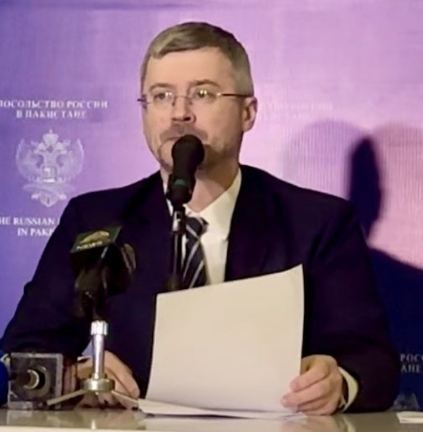
ISLAMABAD, SEPT 23 /DNA/ – In a media briefing held today, Ambassador of Russia, Albert P. Khorev provided a comprehensive update on recent developments concerning the resolution of the Ukrainian conflict.

Ambassador Khorev outlined Russia’s continued efforts to achieve a diplomatic settlement, highlighting the resumption of direct Russia-Ukraine negotiations in May 2025. He reported tangible progress, including the exchange of over 1,000 prisoners of war and the transfer of the remains of 6,060 Ukrainian soldiers. However, he expressed serious concerns regarding what he described as the Kiev regime’s unwillingness to engage substantively on ceasefire details.

“The evidence is clear,” stated Ambassador Khorev. “Despite insisting on an immediate ceasefire, Kiev has repeatedly demonstrated a lack of commitment to peace by rejecting limited truce initiatives and violating agreed-upon ceasefires. This suggests the true goal is not peace, but a pause to regroup and rearm with continued European financial and military aid, which has exceeded $70 billion.”

The Ambassador condemned recent terrorist attacks on civilian infrastructure in Russia’s Bryansk and Kursk regions, which resulted in numerous casualties. He questioned the feasibility of negotiating with what he termed a “terrorist” regime.

A significant portion of the briefing addressed internal policies within Ukraine. Ambassador Khorev criticized recent legislative acts, such as the “On the Foundations of the State Policy on National Memory of the Ukrainian People,” which he stated entrenches Russophobia, glorifies Nazi collaborators, and violates Ukraine’s constitutional and international human rights obligations. He detailed the erosion of democratic freedoms under martial law, including restrictions on speech, movement, and political opposition.

On the international stage, Ambassador Khorev noted that a global majority, including Pakistan, supports Russia’s UN resolutions against the glorification of Nazism. He expressed regret over what he characterized as biased approaches and double standards within the UN Secretariat, influenced by Western nations.

The briefing also touched upon the recent high-level talks between the Presidents of Russia and the United States in Anchorage, Alaska. Ambassador Khorev acknowledged a “demonstrated understanding” from the U.S. administration regarding the root causes of the conflict, including NATO expansion. However, he lamented that the mutual understanding achieved was “completely rejected” by the Kiev regime and European sponsors.

Ambassador Khorev firmly rejected the deployment of French or German troops to Ukraine under any pretext, stating it is “unacceptable and will not resolve the conflict.” He also dismissed claims of “Russian aggression” against NATO states as a myth designed to prolong the war.

In conclusion, Ambassador Khorev thanked the Government of Pakistan for its consistent policy of neutrality and its support for a diplomatic resolution to the conflict, a position he stated aligns with Russia’s stance.

“Russia remains committed to a professional discussion aimed at achieving a lasting peace, which must address the root causes of the conflict,” he said. “We are open to constructive cooperation with all genuinely interested in de-escalation and peace in Europe.”

President Asif Ali Zardari’s successful visit to China

President Asif Ali Zardari’s successful visit to China

By: Malik Faisal Munir

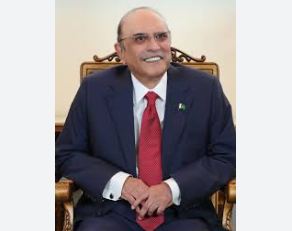
In international relations, nations are considered successful when they maintain ties of trust, cooperation, and mutual respect with their closest neighbors. The friendship between Pakistan and China is globally recognized as an “iron brotherhood,” and for decades this relationship has stood as a unique example, not only for the region but also in global politics. President Asif Ali Zardari’s recent ten-day successful visit to China has further expanded this friendship, created new economic opportunities, and strengthened mutual trust between the two countries.

This visit came at a time when the geopolitical landscape of the world is rapidly changing, global power blocs are rising, and South Asia is facing extraordinary challenges. In such circumstances, the partnership between Pakistan and China is not just a source of support for each other but also a backbone for regional peace and development. While the world acknowledges the everlasting bond between Pakistan and China, the current global situation demands that this friendship be transformed into deeper, more practical cooperation. President Zardari’s visit has proven to be a major step in that direction.

President Asif Ali Zardari has now returned to Pakistan after completing his historic ten-day visit to China. He visited Chengdu, Shanghai, and Urumqi, where he held meetings with provincial leadership and discussed bilateral relations, economic cooperation, and trade. Projects under CPEC and future connectivity initiatives were also deliberated upon. This visit has further cemented the strategic partnership between Pakistan and China, with long-term positive effects expected to unfold in the years ahead.

In Chengdu, President Zardari was hosted at a dinner in his honor by Wang Xiaohui, Party Secretary of the CPC Sichuan Provincial Committee. First Lady Asifa Bhutto Zardari and Chairman Bilawal Bhutto Zardari were also in attendance, along with Pakistan’s Ambassador to Beijing Khalil Hashmi and China’s Ambassador to Pakistan Jiang Zaidong.

During his stay in Chengdu, President Zardari also met with Li Shulei, member of the Political Bureau and Minister of the Publicity Department. Addressing the second Golden Panda International Culture Forum, the President emphasized Pakistan’s full support for China’s vision of “civilization exchange and mutual learning,” highlighting its significance for sustainable development, regional stability, and inclusivity in global institutions. He reiterated that Pakistan-China friendship is a living example of mutual respect and cooperation.

In Shanghai, President Zardari met with Wu Lei, Chairman of Shanghai Electric, and later visited the company’s facilities. He was accompanied by First Lady Asifa Bhutto Zardari and PPP Chairman Bilawal Bhutto Zardari. The Chairman briefed the President on the company’s projects in Pakistan, including coal, energy, and coal-fired power plants in Thar. President Zardari invited Shanghai Electric to invest in Pakistan’s transmission and distribution systems and assured that any pending issues would be resolved amicably in the spirit of mutual cooperation. On this occasion, a Memorandum of Understanding (MoU) was signed for the establishment of a coal gasification plant in Thar—the first of its kind in Pakistan—which will not only address energy needs but also support the agriculture sector by producing fertilizer.

President Zardari also visited the Memorial of the First National Congress of the Communist Party of China in Shanghai, located in the historic French Concession area where the CPC held its first session in July 1921. He appreciated the preservation of this historical heritage.

Furthermore, he attended the signing ceremony of three MoUs between Pakistan and China in Shanghai. These agreements focused on the development of agriculture, environmental protection, and mass transit in Pakistan. The first MoU was related to a Controlled Agriculture Science and Education Park to enhance agricultural output and food security. The second was with Shennong College for establishing a vocational institute to provide farmers with modern technology and training. The third was on tire recycling, aimed at promoting eco-friendly waste management.

President Zardari also held meetings with the heads of Chinese environmental technology companies, who expressed interest in investing in Pakistan. He met with CPC Secretary Chen Jining, where discussions were held on technology, IT, artificial intelligence, and innovation. The President invited Chinese companies to invest in Special Economic Zones and the Gwadar Free Zone.

In Urumqi, President Zardari witnessed the signing of three more MoUs: one for innovation in the livestock industry, another for the establishment of a modern textile industrial park in Pakistan, and a third for the supply of fire trucks and emergency equipment. These agreements are expected to improve food security, industrial growth, exports, and disaster management capabilities in Pakistan.

At a time when Pakistan faces serious economic and political challenges, President Zardari’s visit to China is a clear message that Pakistan still has the ability to strengthen its standing in the global community. This visit sends out a successful signal that Pakistan is pursuing a balanced foreign policy while taking practical steps to secure its economic future.

President Asif Ali Zardari’s visit to China reflects Pakistan’s firm commitment to regional peace, development, and stability. It will be remembered as a milestone in Pakistan’s diplomatic history that has illuminated new pathways toward a brighter future. This visit not only injected fresh momentum into Pakistan-China relations but also instilled hope among the people of Pakistan that the doors to a better tomorrow are opening. At a time when the world is heading toward new power realignments, the close partnership of Pakistan and China remains a guarantor of peace, development, and stability in the region.

Poverty in Pakistan – a Nation left behind

Poverty in Pakistan – a Nation left behind

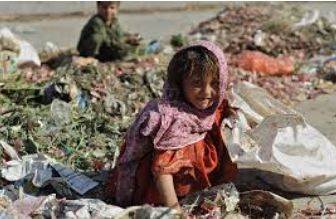
The latest report by the World Bank has delivered a sobering reality check for Pakistan. According to its findings, poverty in the country has surged by 7 percent, pushing the overall poverty rate to around 26 percent. This revelation should have shaken the conscience of policymakers, yet the silence and complacency surrounding the issue are deafening. What makes the situation worse is the World Bank’s observation that no comprehensive household survey has been conducted in Pakistan for the past three years. Without reliable data, even the grim figure of 26 percent may understate the true scale of human suffering across the country.

This rise in poverty is especially tragic given that the present government has repeatedly portrayed itself as “poor-friendly.” Lofty slogans of social justice, subsidies for the marginalized, and promises of inclusive growth have proven hollow. The bitter truth is that poverty is not only rising—it is becoming entrenched. Millions of families lack access to basic amenities such as clean drinking water, healthcare, education, and affordable housing. For the poor, daily survival itself has become a battle.

The contrast between the elite and the ordinary citizen has never been starker. While a small, privileged class enjoys lavish lifestyles—driving imported cars, holding extravagant events, and siphoning resources through corruption—the masses are left with little more than despair. This glaring inequality is not merely an economic issue but a moral crisis, eating away at the very fabric of our society. It breeds resentment, weakens social cohesion, and threatens the stability of the state itself.

Corruption lies at the heart of this malaise. When public resources meant for schools, hospitals, and social safety nets are diverted into private pockets, the poor are effectively told that their lives do not matter. The message is clear: if you are wealthy, the system serves you; if you are poor, you have no rights. Such a system cannot sustain itself. No nation can progress when nearly one-third of its population is trapped in poverty, robbed of opportunities, and denied dignity.

What is most alarming is the absence of urgency in addressing the crisis. Poverty alleviation requires more than token subsidies or temporary relief packages. It demands structural reforms: an overhaul of governance, a crackdown on corruption, investment in education and healthcare, and policies that generate jobs rather than mere rhetoric. Equally important is the need for credible data collection. Without accurate statistics, policymaking becomes guesswork—and guesswork has already cost this country dearly.

Pakistan stands at a crossroads. If the present trajectory continues—where corruption flourishes, inequality widens, and poverty deepens—the future will be one of perpetual economic stagnation and social unrest. But if leaders muster the will to act, prioritizing the welfare of the people over the comforts of the elite, there is still hope.

The choice is stark, and the time is running out. Poverty is not just an economic indicator—it is a national emergency. Unless confronted with honesty and determination, it will condemn millions more Pakistanis to lives of hardship and hopelessness, while the dream of a prosperous Pakistan remains out of reach.

President Zardari extends warm felicitations to Saudi Arabia on National Day

President Zardari extends warm felicitations to Saudi Arabia on National Day

ISLAMABAD, SEPT 22 /DNA/ – On behalf of the people of Pakistan, I extend my heartfelt felicitations to the Custodian of the Two Holy Mosques, King Salman bin Abdulaziz Al Saud, Crown Prince and Prime Minister Mohammed bin Salman bin Abdulaziz, and to the brotherly people of the Kingdom of Saudi Arabia on the occasion of their National Day. This day is a reminder of how, in a relatively short span of time, Saudi Arabia has set remarkable examples of progress and stability under its wise and determined leadership.

The bond between Pakistan and Saudi Arabia is rooted in trust, devotion and brotherhood. For the people of Pakistan, our spiritual connection with the Kingdom is deepened by the presence of Islam’s two holiest sites—the Holy Kaaba and the Masjid-e-Nabwi ﷺ. This sacred link lends an enduring strength and uniqueness to our friendship.

We take pride in the fact that in recent days our ties have reached new milestones. The fresh partnership forged in the fields of defence and security is not only a reflection of our mutual trust but also a vital step towards peace and stability in the region. Likewise, our enhanced cooperation under Saudi Vision 2030, particularly in trade and investment, promises new opportunities for our youth and for generations to come.

The people of Pakistan will never forget that in testing times, Saudi leadership has always stood by us. It is this spirit of solidarity that makes millions of Pakistanis regard Saudi Arabia as their second home, where they continue to contribute actively to its growth and development. Their hard work and service further reinforce the bonds of our friendship.

Pakistan remains firmly committed to strengthening this brotherly relationship and to expanding cooperation across every sphere. I pray that Almighty Allah blesses the Kingdom of Saudi Arabia with enduring prosperity, peace and glory, and may the fraternal ties between our two nations grow ever stronger.

Sahibzada says Pakistan confident they will face India again in Asia Cup final

Sahibzada says Pakistan confident they will face India again in Asia Cup final

ISLAMABAD, SEPT 22 – Pakistan batter Sahibzada Farhan has said his team is confident that it would face “India again in the final” of the men’s Asia Cup next Sunday.

India romped home on Sunday with a six-wicket win, chasing down the 172-run target with ease in their second high-intensity encounter against Pakistan in the tournament.

Pakistan rode on a brilliant 45-ball 58 from opener Sahibzada Farhan but managed 171-5 after romping to 93-1 in 9.3 overs.

Speaking at the pre-match press conference on Monday, before Pakistan clash with Sri Lanka tomorrow, the opener said: “We are confident that we will face India again in the final (of the Asia Cup).”

Speaking about his celebration after he scored his half-century against India, he said: “I hardly celebrate after a 50. It was a spontaneous thought to celebrate that way — I don’t care for what people are making of it.”

He added that Fakhar’s role from the other end gave him confidence to play his shots.

In Pakistan’s last match against India, the bitterness between the two sides — which started with India’s refusal of customary handshakes in the first encounter — had continued as Abhishek Sharma at the post-match ceremony said: “Today (Sunday) it was very simple, the way they (Pakistan) were coming (at) us for no reason, I didn’t like it at all, and this is the only way I could give [an answer] with my bat.”

Pakistan skipper Salman Ali Agha, speaking after the match, had said, “We are yet to play the perfect game. We batted really well — but I think when it came to the bowling, they took the game away in the powerplay.”

Earlier, Bangladesh beat Sri Lanka by four wickets in their match in Dubai on Saturday.

The top two teams from Super Four will play the Asia Cup final in Dubai on September 28.

Stay Connected

64FansLike
60FollowersFollow

Latest Reviews

Exchange Rates

USD - United States Dollar
EUR
1.14
GBP
1.33
AUD
0.69
CAD
0.70