Home Blog Page 464

Pakistan, Saudi Arabia celebrate 95th national day, renew commitment to strong bilateral ties

Pakistan, Saudi Arabia celebrate 95th national day, renew commitment to strong bilateral ties

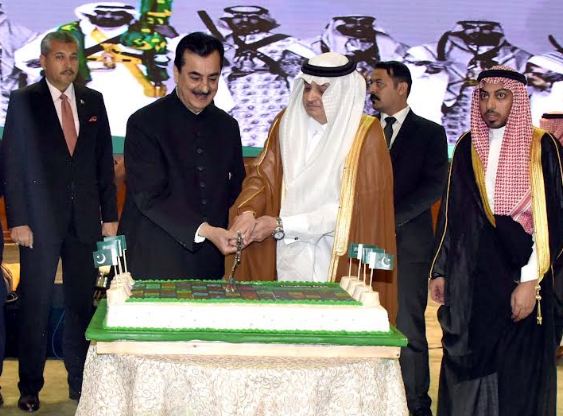
ISLAMABAD, SEPT 23 /DNA/ – Chairman Senate Syed Yousaf Raza Gilani joined Saudi Ambassador to Pakistan Nawaf bin Said Al-Malki at the Jinnah Convention Center, Islamabad, to celebrate the 95th National Day of the Kingdom of Saudi Arabia. The highlight of the ceremony was the traditional cake-cutting, symbolizing the enduring friendship between the two brotherly nations.

Speaking on the occasion, Chairman Senate Gilani lauded Saudi Arabia’s remarkable progress under its Vision 2030 and reaffirmed Pakistan’s commitment to strengthening ties with the Kingdom in all fields, including trade, investment, and cultural exchange. Ambassador Al-Malki, in turn, emphasized the depth of the Pakistan-Saudi partnership, calling it a relationship rooted in shared faith, history, and mutual respect.

Pakistan and Saudi Arabia enjoy excellent relations, often described as “strategic, fraternal, and time-tested.” The recent signing of a comprehensive defence pact between the two countries has further cemented this bond, reflecting the trust and confidence both nations place in each other. The agreement is expected to enhance cooperation in defence production, training, intelligence-sharing, and joint military exercises, underscoring the closeness of bilateral relations.

The event was attended by members of the diplomatic corps, senior government officials, and representatives from civil society. The celebration not only marked Saudi Arabia’s national pride but also highlighted the special place the Kingdom holds in Pakistan’s foreign policy framework.

Observers note that at a time of shifting regional dynamics, the Pakistan-Saudi alliance remains a cornerstone of peace and stability in the Muslim world, with both countries pledging to work together for regional security and prosperity.

Xi Jinping’s Era and Beyond

Xi Jinping’s Era and Beyond

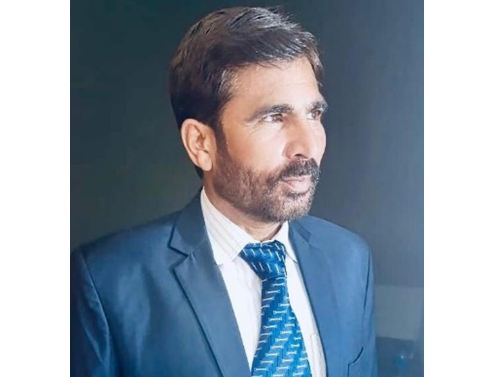
Dr. Muhammad Akram Zaheer

For over a decade, Xi Jinping, has consolidated power to an extent unseen and has reshaped the CCP elite through a sweeping anti-corruption campaign, curtailed civil society, restructured and modernized the military and expanded state involvement in the economy. He has also pursued assertive foreign policies escalating military activity around Taiwan, expanding China’s presence in the South China Sea, deploying confrontational “wolf warrior” diplomacy and deepening ties with Russia even after its invasion of Ukraine. This has ushered in what is widely viewed as Xi’s personal era in Chinese politics.

Past precedent shows that power transfers in China have been fraught with political intrigue, factional struggles and even instability. The 2012 leadership change from Hu Jintao to Xi occurred amid rumors though unsubstantiated of coups and assassinations, underscoring the volatility of such moments.

Succession politics often begin long before a leader steps down, as incumbents seek to secure their legacy by installing loyal successors. Mao Zedong’s fixation on preserving his revolutionary vision in his final decade led to the Cultural Revolution, while Deng Xiaoping ensured his economic reforms continued even after relinquishing formal titles. Xi is likely to follow the strongman precedent of Mao and Deng, selecting a successor ideologically aligned with him. However, survival in elite politics requires more than shared ideology successors must also navigate the rivalry of those passed over, making political cohesion fragile.

A critical determinant of succession success is military backing. Although the People’s Liberation Army (PLA) has never directly seized political control, it plays a decisive “kingmaker” role in internal CCP struggles. The Mao–Hua Guofeng transition illustrates this: Mao’s chosen heir lacked strong political and military standing, surviving only temporarily with top generals’ support before being ousted by Deng. Xi himself benefited from strong military ties upon taking office, enabling him to purge rivals and reshape the PLA leadership. Maintaining such control will be essential for any future leader.

Historically, personalist rulers in China have cycled through multiple would-be successors Mao discarded Liu Shaoqi and Lin Biao before settling on Hua, while Deng replaced Hu Yaobang and Zhao Ziyang before elevating Jiang Zemin. Such instability risks factional splits, as seen in the 1989 Tiananmen protests, which were partly triggered by Hu Yaobang’s death. Leadership transitions can also influence foreign policy Xi’s awareness of limited time could increase his willingness to take risks, particularly over Taiwan, which he views as central to national rejuvenation. Yet the potential costs of failure military defeat, economic sanctions and diplomatic isolation could temper such ambitions.

The PLA’s influence during succession raises the danger of politicized military assessments. Leaders may receive intelligence skewed to match their preferences, leading to strategic miscalculations. Deng’s 1979 invasion of Vietnam undertaken partly amid his maneuvering to oust Hua was a political gambit with poor battlefield results, illustrating how domestic power struggles can distort foreign policy decisions.

Determining Xi’s successor will be complicated by demographic and political constraints. None of the current seven members of the Politburo Standing Committee fit the ideal profile of a relatively young leader capable of ruling for many years. Older candidates risk short tenures, while younger “dark horse” picks would require sidelining an entire generation of senior politicians, potentially causing long-term fractures. Historical cautionary tales such as the Soviet Union’s unstable transitions in the 1980s loom large in Xi’s thinking.

If Xi dies unexpectedly without naming a successor, the CCP constitution calls for the Central Committee to elect a new leader. In reality, a smaller circle of elites, possibly including military figures, would likely decide beforehand. Premier Li Qiang could be a natural choice, but military-backed rivals could displace him. The best-case scenario for stability is for Xi to designate and gradually empower a successor in his final years, as Deng did with Jiang Zemin. This would require giving the heir key posts in party administration and military leadership to build competence and authority.

Failing to groom a capable successor increases the risk of a weak leader falling to internal challenges, destabilizing both Chinese politics and international relations. For the United States, the looming succession represents both a potential turning point and a source of uncertainty. However, Washington should resist the temptation to interfere both because of the risk of backlash and because the CCP still interprets the 1989 protests through the lens of perceived foreign subversion. Instead, careful observation and preparedness for post-Xi adjustments are advised.

A future leader could similarly steer China toward moderation and greater openness, though this outcome is far from guaranteed. Xi’s eventual succession will be a defining moment, shaping China’s domestic governance, its military orientation and its global posture for years to come.

Chunian: A Forgotten Jewel of Punjab

Chunian: A Forgotten Jewel of Punjab

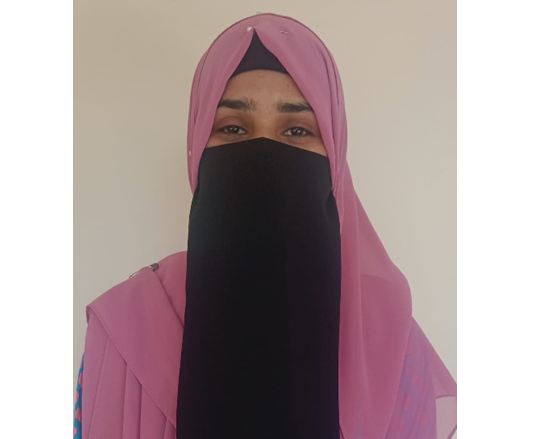
Kaynat Siddique

Punjab’s fertile plains have long been home to cities that carry centuries of cultural, political and spiritual heritage. Among these lies Chunian, a city whose roots stretch back nearly two centuries and beyond. While modern urban centers like Lahore, Faisalabad and Multan dominate contemporary discussions, Chunian quietly stands as a reminder of Punjab’s layered history. Its mosques, temples and neighborhoods echo the architectural diversity of bygone eras, while its myths, legends and ruins connect the present with a rich past.In its early days, the mighty River Beas flowed beside Chunian, not only serving as a lifeline for agriculture and trade but also inspiring poets and writers with its romantic atmosphere. Today, though the river has dried up, traces of its old course can still be seen, silently telling stories of a once-thriving riverine culture.

How Chunian acquired its name has been a subject of folklore and debate. Two dominant stories circulate. The first attributes the name to Chuni, daughter of Raja Todar Mal, the famed finance minister of Emperor Akbar. Following her father’s death, Chini ruled the region and the city came to be associated with her name. Over time, “Chini” transformed into “Chunian.” Interestingly, another town nearby Kanganpuris said to have been named after Chini’s sister, Kangan, reinforcing the tale’s credibility.The second version ties Chunian’s origins to Sufi traditions. It suggests that a woman disciple of the saint Kamal Shah settled in the area and her name also Chuni was immortalized in the city’s title. While the first story enjoys wider acceptance, both illustrate how history and spirituality often intertwine in Punjab’s towns.

The historical landscape of Chunian is not limited to Mughal legends. Archaeological findings suggest that its roots may go as far back as the Indus Valley Civilization. In the 1970s, local historian Syed Husain Zaidi discovered pottery fragments, copper coins and even a gold bead in nearby mounds. Experts later confirmed these artifacts to be more than 200 years old and they were placed in the Lahore Museum for preservation.From these discoveries, historians deduced that Chunian may once have been a peaceful manufacturing hub, producing swords and helmets for Mughal armies. Local lore even claims that the city has been destroyed and rebuilt seven times, reflecting both the resilience of its people and the challenges of surviving waves of invasions and migrations.

Its association with Syed Waris Shah, the celebrated Punjabi poet and author of Heer Ranjha, further highlights chunian’s cultural richness. Shah is said to have lived briefly in Chunian, where he penned verses that referenced the city. A manuscript in his handwriting remains preserved in the Waris Shah Academy, a treasure for lovers of Punjabi literature.This poetic connection elevates Chunian from a mere historical settlement to a cultural landmark, intertwining literature, spirituality and local identity.

The Mughal era gifted Chunian with recognition, but under British colonial rule, the city gained administrative importance. In 1885, Chunian was declared a Tehsil of Lahore and at the time, it was the largest in the district. Following independence, with the creation of Kasur District in 1976, Chunian was integrated as one of its Tehsils. Later, in 1992, Pattoki, Bhiphiro and Phoolnagar were carved out as separate units, reducing Chunian’s administrative reach but not its cultural significance.Local folklore also connects Chunian to the tragic Punjabi love tale of Sassi Punnu. According to legend, Sassi, abandoned by her father in a floating wooden box, was discovered near the shrine of Syed Kamal Mustafa (Mattoo Shah). Raised by a washerman, she later fell in love with Prince Punnu of Makran. Their separation and eventual demise in the desert remain immortalized in poetry and song, adding another layer of mystique to Chunian’s history.

While Chunian’s past is steeped in myths and ruins, its present reflects the vibrancy of Punjabi culture. Weddings, Sufi music and annual festivals are integral to daily life, while Punjabi remains the mother tongue, with Urdu and English increasingly used in education and administration.Chunian is well-connected to Lahore and Kasur, providing residents with access to better educational and economic opportunities. Modern infrastructure roads, electricity, gas and water has gradually transformed it into a semi-urban hub.

One of its most celebrated institutions is the Chunian Cardiac Hospital, established in 2012 during the tenure of Chief Minister Shahbaz Sharif. It offers free or low-cost treatment to patients from surrounding villages, embodying a rare example of accessible healthcare in rural Punjab. Alongside this, both government and private schools including branches of national chains like Army Public School and Smart School cater to the growing demand for modern education.

Not far from Chunian lies the legendary Changa Manga Forest, Asia’s largest man-made forest, dating back to 1866. Initially developed by the British for timber needs, it now serves as a recreational space for families, students and nature lovers. The forest is entwined with folklore as well its name comes from two bandit brothers, Changa and Manga, who supposedly hid in its dense thickets after looting travelers. Today, the forest is home to wildlife, a small railway line and picnic spots, making it a beloved retreat for people of the region.

Chunian also plays a role in Punjab’s agrarian economy through the Brother Sugar Mills, one of the province’s major sugar-processing units. Established in the mid-20th century, it provided employment to locals and a steady market for sugarcane farmers. However, financial scandals including a Rs. 6 billion default on farmer payments in 2016 led to its sealing by the Lahore High Court. Despite such setbacks, the mill remains symbolic of Chunian’s role in bridging agriculture and industry.

Chunian embodies the essence of Punjab: a fusion of history, folklore, culture and resilience. Yet, like many smaller cities, it risks being overshadowed by urban sprawl and neglect. Its archaeological heritage requires preservation, its cultural tales need systematic documentation and its infrastructure must be further developed to meet modern needs.As Pakistan redefines its urban and rural identities, cities like Chunian should not be forgotten. They remind us that history is not only written in capitals but also in the quiet resilience of smaller towns that carry the soul of a nation.

In the last, I thankful of Dr. Muhammad Akram Zaheer who graciously dedicated his time to guiding and mentoring me. Driven by a genuine passion, he goes above and beyond to help students enhance their writing skills and successfully complete their assignments. His expertise shines prominently in subjects such as Pakistan Studies, where he enlightens eager minds about the captivating history of Pakistan and its remarkable contributions. Dr. Muhammad Akram Zaheer truly embodies the essence of an inspiring educator, leaving an indelible mark on all those fortunate enough to be under his tutelage.

Kaynat Siddique

Student DPT University of Okara

[email protected]

PM Shehbaz, Austrian Chancellor meet at UNGA in New York

PM Shehbaz, Austrian Chancellor meet at UNGA in New York

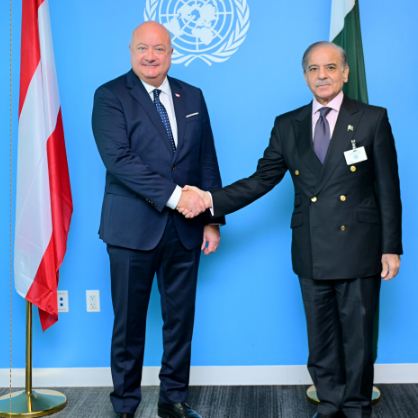
NEW YORK, SEPT 23 /DNA/ – Prime Minister Muhammad Shehbaz Sharif met the Federal Chancellor of the Republic of Austria, H.E. Christian Stocker earlier today, on the sidelines of the 80th session of the UN General Assembly in New York.

During the cordial and friendly meeting, the Prime Minister expressed Pakistan’s desire to further enhance its bilateral cooperation with Austria across all areas of mutual interest. He highlighted trade, tourism, climate change and education as possible avenues of positive collaboration and stressed upon the need to enhance bilateral trade ties.

The Austrian Chancellor thanked the Prime Minister for the meeting and also conveyed his desire to work together to create new avenues of cooperation between the two countries. Both sides agreed to exchange delegations to enhance cooperation in the field of tourism between the two countries.

Asia Cup 2025: Sri Lanka post 134-run target for Pakistan

Asia Cup 2025: Sri Lanka post 134-run target for Pakistan

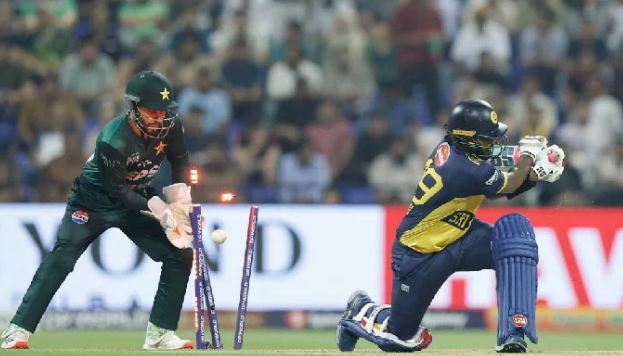
ABU DHABI: Sri Lanka set a modest target of 134 runs for Pakistan in the must-win Asia Cup 2025’s Super Fours match at Sheikh Zayed Stadium, Abu Dhabi, on Tuesday.

Put into bat first, the defending champions managed to accumulate 133/8 in their allotted 20 overs despite Kamindu Mendis’s half-century.

Sri Lanka got off to a shaky start to their innings as Shaheen Shah Afridi dismissed both openers – Kusal Mendis (zero) and Pathum Nissanka (eight) – in his first two overs.

The 2022 champions, however, were in a comfortable position by the end of the batting powerplay as they had piled up 53 runs despite losing another wicket.

But Pakistan captain Salman Ali Agha’s decision to bring Hussain Talat in pushed Sri Lanka to the back foot as the all-rounder struck twice in his first over, bringing the total down to 58/5 in 7.3 overs.

Following the slump, star all-rounder Wanindu Hasaranga (15) joined Kamindu in the middle for a cautious 22-run partnership until getting cleaned up by Abrar Ahmed in the 13th over.

Kamindu, on the other hand, stood his ground firm and went on to score a fighting half-century for Sri Lanka. He was dismissed by Shaheen in the penultimate over, soon after he amassed the milestone.

The left-handed batter top-scored for Sri Lanka with a valiant 50 off 44 deliveries, smashing three fours and two sixes.

Shaheen was the standout bowler for Pakistan, taking three wickets for just 28 runs in his four overs, followed by Haris Rauf and Talat with two each, while Abrar chipped in with one.

Pak-Saudi Defense Pact a Historic Success: Ch Shujaat Hussain

Pak-Saudi Defense Pact a Historic Success: Ch Shujaat Hussain

By Malik Faisal Munir / DNA

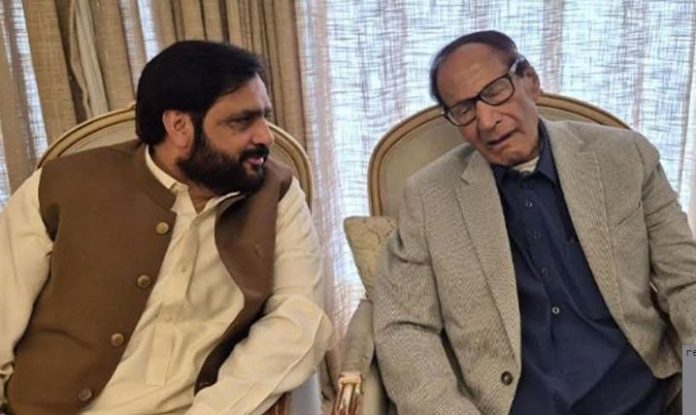
ISLAMABAD: Pakistan Muslim League (Q) President Chaudhry Shujaat Hussain has said that the Pakistan-Saudi defense agreement is a major achievement in the country’s history, for which the government, the armed forces, and the entire nation deserve congratulations. He said Pakistan is gaining recognition for its positive role in the world and is moving forward on the path of progress and prosperity. In such times, every patriotic citizen has a duty to contribute to the country’s development.

Speaking about sports patronage, Chaudhry Shujaat Hussain said that the Pakistan Bodybuilding Federation has requested his support, and he has always encouraged constructive and positive activities. He highlighted that he served as the President of the Pakistan Kabaddi Federation for 16 years, during which kabaddi was elevated to the level of an international sport. He noted that during his tenure, the Kabaddi Federation achieved remarkable success in the Prime Minister’s Cup and the SAF Games. He also mentioned that the current President of the Kabaddi Federation is his son, Chaudhry Shafay Hussain.

He emphasized that sports should remain free from external pressures so that the youth are attracted towards positive activities. The government, he suggested, should focus not only on cricket but also on hockey, football, volleyball, tennis, and other sports, so that young people are provided with healthy recreation and opportunities.

Pakistan Navy, PHF collaborate to boost national hockey

Pakistan Navy, PHF collaborate to boost national hockey

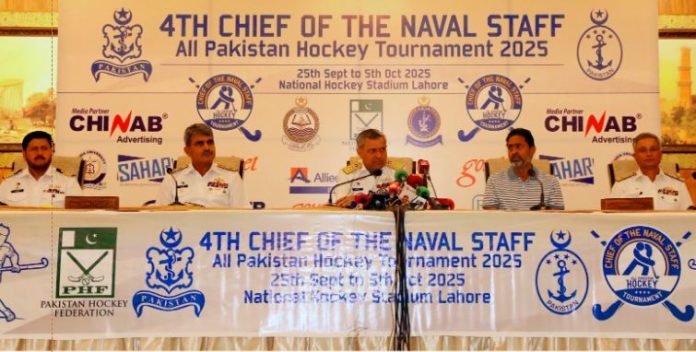
LAHORE, SEPT 23 /DNA/ – A media briefing for 4th Chief of the Naval Staff All Pakistan Hockey Tournament 2025 was held in Lahore. Commander Central Punjab, Rear Admiral Sohail Ahmad Azmie, shared details of the tournament, which is scheduled to be held from 25 September to 4 October 2025 at National Hockey Stadium, Lahore.

While addressing the media personnel, Commander Central Punjab highlighted that sports instil discipline, patience and tolerance in society. He said that Pakistan Navy provides its officers and sailors equal opportunities to engage in healthy activities, enabling them to represent Pakistan nationally and internationally.

He further stated that while hockey’s past has been glorious, the game has unfortunately declined due to numerous reasons. Pakistan Navy has been organizing this tournament in collaboration with Pakistan Hockey Federation to promote hockey and to express national unity since 2016. The 3rd Chief of the Naval Staff All Pakistan Hockey Tournament was successfully held in Karachi in 2021 and received high acclaim.

Eight top teams including Pakistan Army, Pakistan Navy, Pakistan Air Force, Mari Engineers, Rangers, Police, Port Qasim and National Bank of Pakistan are participating in the 4th edition of CNS All Pakistan Hockey Tournament.

Commander Central Punjab underscored that the tournament will provide players with an excellent platform to showcase their talent, raise awareness about the significance of hockey among youth and offer thrilling contests for spectators. Pakistan Navy will also award cash prizes to the top three teams, along with special prizes for the Best Player, Top Scorer, and Best Goalkeeper of the tournament. He also expressed heartfelt gratitude to Pakistan Hockey Federation, Sports Board Punjab, Sponsors and the management of National Hockey Stadium Lahore for extending full support to Pakistan Navy in organizing this event.

Pakistan calls for restraint to de-escalate tensions over Russia-Ukraine war

Pakistan calls for restraint to de-escalate tensions over Russia-Ukraine war

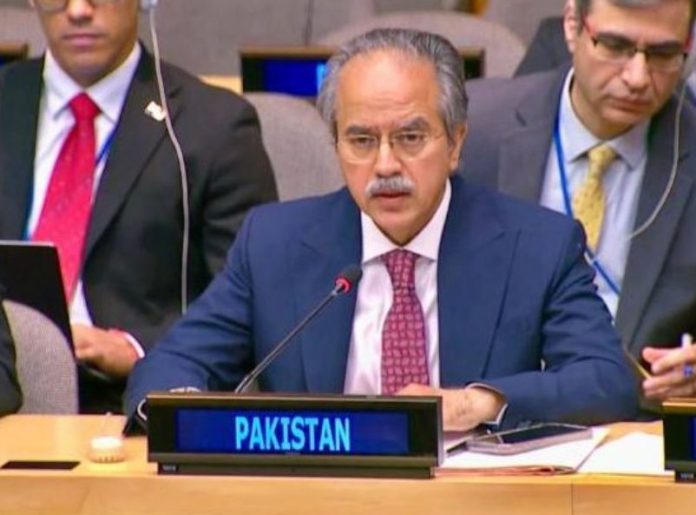
UNITED NATIONS, Sep 23 (APP):On the heels of reported incursions into Polish and Romanian airspace by Russia, Pakistan has called for dialogue and restraint to prevent an escalation of the situation.

“Cessation of hostilities and return to diplomacy remain the ONLY path for achieving sustainable peace,” Ambassador Asim Iftikhar Ahmad, permanent representative of Pakistan to the United Nations, told the UN Security Council which met in an emergency session on Monday.

The 15-member body met under its agenda item on “Threats to International Peace and Security”, following receipt of a letter from Estonia informing the Council that, on 19 September, three Russian Federation MiG-31 fighters violated Estonian air space.

Referencing the intensifying attacks by Russia on Ukraine and reported casualties inside Russia, “the world simply cannot afford such danger to spiral out of control,” said UN Assistant Secretary-General Miroslav Jenca in his briefing to the Council.

In his remarks, Ambassador Asim Iftikhar Ahmad said that Pakistan stands for sovereignty and territorial integrity of all member States that must be respected universally.

“The ongoing conflict in Ukraine, now into its fourth year, has generated numerous challenges both for the regional and international peace and stability,” he said. Pakistan had repeatedly drawn attention to the negative consequences of this conflict, and the need to bring it to an end.

The Pakistani envoy called on the parties to demonstrate restraint, avoid escalation, and scrupulously adhere to the international humanitarian law.

“We firmly believe that only a meaningful dialogue which addresses the security concerns of all sides, is anchored in the principles of UN Charter and international law and respects the relevant multilateral agreements can help secure peace– a peace that is both just and lasting.”

Pakistan, he added, stands ready to support all regional and international efforts that can pave the way for a peaceful resolution of the current conflict.

“As for the facts,” said Russian representative Dmitry Polyanskiy in the ensuing debate, “the facts prove that, on the nineteenth of September, three Russian MiG-31 fighter jets conducted a planned flight from Karelia to an airbase in Kaliningradoblst, carried out in strict accordance with international airspace-use rules.”
He declared: “Today, we are compelled to watch part two of the spectacle titled ‘Blame Russia for Everything’.” While “our neighbours have imagined” that Moscow is at fault for an incursion into Estonian airspace, he said that — “as always” — there is no proof, except “Russophobic hysteria” from Tallinn.

However, Margus Tsahkna, Minister for Foreign Affairs of Estonia, underscored that the “violation is crystal clear” as he held up radar screenshots and photographs of combat-ready MiG-31 fighter jets.

He also stated that this was the fourth violation of Estonian airspace by Moscow in 2025, and part of a broader pattern of the Russian Federation’s provocations against its neighbours.

Pakistan reaffirms commitment to further strengthening multifaceted cooperation with GCC member states

Pakistan reaffirms commitment to further strengthening multifaceted cooperation with GCC member states

NEW YORK, Sep 23 (APP):Deputy Prime Minister/Foreign Minister (DPM/FM), Senator Mohammad Ishaq Dar on Tuesday met the Secretary General of the Gulf Cooperation Council (GCC), Jasem Mohamed AlBudaiwi, on the sidelines of the 80th UN General Assembly session.

During the meeting, the DPM/FM underscored the importance Pakistan attaches to its relations with the GCC and reaffirmed Pakistan’s commitment to further strengthening multifaceted cooperation with the Member States of the Council.

The two sides exchanged views on enhancing cooperation in various sectors, as well as expanding institutional linkages between Pakistan and the GCC.

Rana Mashhood extends National day greetings to Saudi Arabia

ISLAMABAD, Sep 23 (APP/DNA):Chairman Prime Minister’s Youth Programme, Rana Mashhood Ahmad Khan, has extended warm congratulations to the leadership and people of the Kingdom of Saudi Arabia on the occasion of their National Day, celebrated on September 23.

He stated that Saudi Arabia’s National Day is a symbol of unity, progress, and national pride, and it also reflects the deep-rooted bonds of brotherhood and friendship between Pakistan and Saudi Arabia.

Rana Mashhood said that the day celebrates Saudi Arabia’s historic achievements and modern transformation. He praised the Kingdom for establishing itself as a modern state with global influence, under wise and visionary leadership.

He emphasized that Saudi leadership has played a pivotal role in ensuring peace, stability, and development across the region. Their foresight and wisdom, he said, have guided the Kingdom toward rapid progress.

Highlighting Saudi Arabia’s economic growth, technological advancements, and global outreach, he observed that the Kingdom continues to inspire the world through its balanced approach of modernity and tradition.

The Chairman noted that Pakistan and Saudi Arabia enjoy a special relationship rooted in mutual respect, trust, and cooperation, which has grown stronger with every passing decade.

He said the youth of Pakistan deeply admire Saudi Arabia’s development journey and look forward to greater opportunities for educational, scientific, and cultural collaboration with their Saudi counterparts.

Rana Mashhood also stressed the spiritual significance of Saudi Arabia, home to the holy cities of Makkah and Madinah, which remain the spiritual heart of the Muslim world.

He affirmed that Saudi Arabia’s leadership continues to serve as a beacon of unity, faith, and heritage for the entire Islamic world.

Praising the Kingdom’s ability to maintain traditions while embracing modernization, he called Saudi Arabia a remarkable and inspiring model for other nations.

He said the National Day is not only a celebration of past achievements but also a promise of a brighter future for the Kingdom and its people.

On behalf of the youth of Pakistan, Rana Mashhood extended heartfelt prayers and best wishes for Saudi Arabia’s prosperity and continued success.

He concluded by stressing that cooperation between Pakistani and Saudi youth will open a new chapter of shared growth, opportunities, and stronger ties.

Stay Connected

64FansLike
60FollowersFollow

Latest Reviews

Exchange Rates

USD - United States Dollar
EUR
1.14
GBP
1.33
AUD
0.69
CAD
0.71