Home Blog Page 463

RCCI hosts Pakistan-Bangladesh Business Tourism Opportunity Conference

RCCI hosts Pakistan-Bangladesh Business Tourism Opportunity Conference

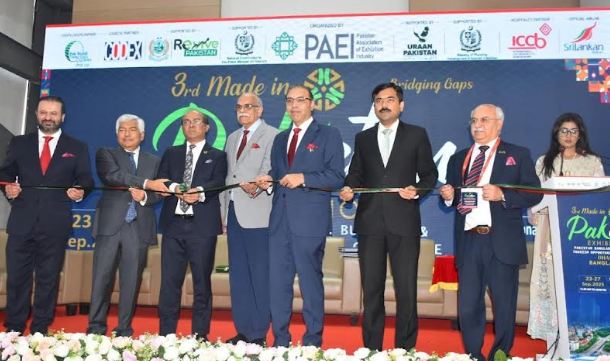
RAWALPINDI, SEPT 24 /DNA/ – The Rawalpindi Chamber of Commerce and Industry (RCCI) has inaugurated the Pakistan-Bangladesh Business Tourism Opportunity Conference alongside the 3rd Pakistan Exhibition at the International Convention City Bashundhara (ICCB), Dhaka. The three-day exhibition, showcasing key sectors including textiles, pharmaceuticals, and other industries, will run until 27 September.

The event brings together leading business figures, policymakers, and industry representatives from both countries to explore avenues for enhanced bilateral and regional trade.

In his inaugural address, RCCI President Usman Shuakat emphasized the importance of strengthening bilateral trade, expanding business opportunities, and fostering people-to-people linkages.

The session was attended by SAARC Chamber of Commerce and Industries President Md Jashim Uddin, who expressed optimism about greater cooperation between the two nations, particularly in mobile financial systems. He also announced Bangladesh’s plans to inaugurate a Bangladesh Fair in Pakistan next year to further boost regional trade ties.

Pakistan Deputy High Commissioner in Dhaka, Muhammad Wasif, formally inaugurated the exhibition. In his remarks, he highlighted the strong bilateral relations between Bangladesh and Pakistan and underscored the potential for expanding opportunities in regional trade and connectivity.

The event also featured participation from RCCI Vice President Fahad Barlas, Former RCCI President Abdur Rauf Chaudhry, representatives of the SAARC Chamber, as well as business leaders from textile, pharmaceutical, and other key sectors.

PIDE Study Shows Half of Beneficiaries Lifted Out of Poverty Under Graduation Programme

PIDE Study Shows Half of Beneficiaries Lifted Out of Poverty Under Graduation Programme

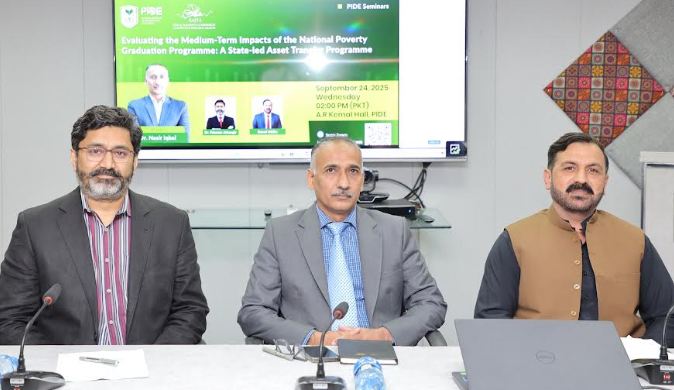
ISLAMABAD, SEPT 24 /DNA/ – The Pakistan Institute of Development Economics (PIDE), under its flagship RASTA (Research for Social Transformation and Advancement) project, organized a seminar on “Graduation Programme: A State-led Asset Transfer Programme.” The event was moderated by Dr. Faheem Jehangir, Dean (Policy) at PIDE and Project Director of RASTA, with the keynote presentation delivered by Dr. Nasir Iqbal, Registrar and Associate Professor at PIDE, and commentary by Mr. Saeed Uddin, Project Director of the National Poverty Graduation Programme (NPGP).

The seminar focused on evaluating the medium-term impacts of the NPGP, Pakistan’s largest state-led asset transfer programme designed to lift ultra-poor households out of poverty through assets, skills, and institutional integration. Presenting the results of a rigorous four-year study using Regression Discontinuity Design (RDD), Dr. Nasir Iqbal highlighted that the programme has had significant positive impacts on beneficiaries’ economic well-being. Results showed increased income, consumption, and welfare scores, with over 50% of beneficiary households officially crossing the poverty score threshold (23) and “graduating” from poverty, while nearly 85% showed improvements in welfare indicators.

Beyond economic outcomes, Dr. Iqbal underscored the programme’s role in systemic integration, enabling beneficiaries to obtain CNICs, access formal healthcare, and develop a stronger sense of citizenship and connection to the state. However, he cautioned that the programme’s long-term sustainability faces critical challenges. Vulnerability to climate shocks, as seen during the 2022 floods, left many households falling back into poverty due to the absence of protective mechanisms such as asset insurance or emergency shelters. He also pointed to potential negative trade-offs, including instances where children were withdrawn from school to support family micro-enterprises, undermining long-term human capital development. Furthermore, scalability remains a challenge, as the intensive programme model reaches only a small fraction of Pakistan’s poor. Outcomes also varied geographically, performing better in Punjab where infrastructure and market access are stronger compared to weaker results in Sindh.

To address these challenges, Dr. Iqbal proposed reimagining the model for scalability and resilience. Recommendations included the creation of Village Economic Zones by repurposing public spaces (such as schools after hours) into community markets, diversifying asset transfers beyond livestock to include enterprises like street vending, packaging, and logistics, and shifting the state’s role from direct asset provision to creating an ecosystem that facilitates access to finance, markets, and private sector linkages.

He further stated that the report was shared with the Islamic Development Bank, World Bank, and GIZ, where it received significant appreciation and recognition.

Discussant Mr. Saeed Uddin emphasized the practical value of PIDE’s evaluation, noting that the positive findings were instrumental in securing new funding from the Islamic Development Bank for expansion into 25 additional districts. He outlined future programme adaptations, such as offering smaller livestock options for quicker income generation, incorporating digital skills training, and establishing 16 Business Development Centers (BDCs) to provide beneficiaries with continuous business support. He also raised critical questions for future programme design, including the need to assess gender-differentiated impacts, determine the optimal cost for asset transfers, and identify strategies for improving results in lower-performing regions.

Moderator Dr. Faheem Jehangir placed the programme in context, contrasting the NPGP with other initiatives such as the Benazir Income Support Programme (BISP), noting that while BISP provides unconditional cash for consumption smoothing, NPGP is focused on sustainable economic empowerment. He also highlighted targeting challenges, including instances of household splitting to appear poorer and qualify for benefits, a common issue in large-scale social protection systems. Stressing the bigger picture, Dr. Jehangir reiterated that the ultimate solution to poverty lies in creating widespread, systemic economic opportunities—moving from small-scale “proof-of-concept” interventions to scalable models of inclusive growth.

ICCI holds 41st AGM: President Sardar Tahir Mehmood shares vision for business growth

ICCI holds 41st AGM: President Sardar Tahir Mehmood shares vision for business growth

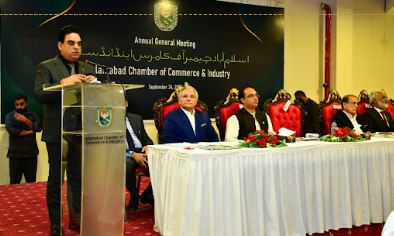
ISLAMABAD, SEPT 24 /DNA/ – The Islamabad Chamber of Commerce and Industry (ICCI) held its 41st Annual General Meeting (AGM) on Wednesday, which was attended by a large number of members including former Presidents, Council Members, and Executive Members. The AGM unanimously approved the minutes of the 40th AGM, adopted the annual report of the Chamber for 2024-25, the Audit Report 2024-25, the Budget for 2025-26 presented by the Secretary General Ghulam Murtaza  and appointed auditors for the year 2025-26.  Sardar Tahir Mehmood, President ICCI, in his address expressed deep gratitude for being elected unopposed, terming it a great honour to lead the premier Chamber of the federal capital. He reaffirmed his resolve to promote trade and investment, foster a conducive business environment, and play a proactive role in national economic development.

Highlighting the pressing concerns of the business community, the ICCI President said that rising costs and regulatory hurdles continue to hamper ease of doing business. He assured that he and his team would spare no effort to secure a business-friendly atmosphere in Islamabad through strong advocacy and constructive engagement. Stressing that ICCI is the “second home” of the business community, he said that under his open-door policy, all decisions would be taken in consultation.

On a key development, Sardar Tahir MehmoodS apprised the AGM with pride that the Islamabad High Court (IHC) had suspended the Capital Development Authority’s (CDA) notification regarding an increase in property tax. The Court has held that the collection of property tax falls under the jurisdiction of the Metropolitan Corporation of Islamabad (MCI), not CDA, and directed that tax should continue to be charged at previous rates. He further informed that another writ petition filed against the enhancement in transfer fees is fixed for hearing on 29th instant and expressed confidence that it too would be decided in favour of the business community.

Outlining his priorities, the ICCI President said that resolving issues of markets and industrial areas, organizing national and international exhibitions, holding Business Opportunity Conferences and Awards, and strengthening B2B linkages with overseas chambers will remain high on his agenda. He stressed that since most of the challenges of businesses are linked with CDA, building a strong and result-oriented working relationship with the civic body would be among his foremost objectives.

Tariq Sadiq, Chairman Founder Group, congratulated Sardar Tahir Mehmood on his election and expressed confidence that with his God-gifted qualities and vision, he would deliver exemplary performance during his tenure. Senior Vice President Tahir Ayub also assured that the team would make every effort to deliver on commitments, while Vice President Muhammad Irfan Chaudhry pledged to resolve market issues through close consultation with elected representatives.

Former Senior Vice President Abdul Rehman Siddiqui and Vice President Nasir Mehmood Chaudhry expressed gratitude to the executive members for their cooperation, which made their tenure successful. Former ICCI President Mohammad Ejaz Abbasi conducted the proceedings of the AGM in an efficient and impressive manner.

Prominent among the attendees included former Presidents Zubair Ahmed Malik, Abdul Rauf Allam, Zafar Bakhtawari, Khalid Javaid, Mian Shaukat Masood,  Mian Akram Farid, Khalid Iqbal Malik and  Shaikh Amir Waheed.

Pakistan values ties with EU, says Seante chairman

Pakistan values ties with EU, says Seante chairman

ISLAMABAD, SEPT 24 /DNA/ – Chairman Senate Syed Yousaf Raza Gilani Meets with EU Ambassador Raimundas Karblis at Parliament House

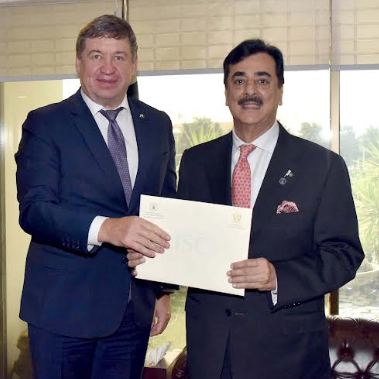
Ambassador of the European Union to Pakistan, H.E. Mr. Raimundas Karblis, paid a courtesy call on the Chairman Senate, Syed Yousaf Raza Gilani, at Parliament House today. The meeting offered a comprehensive review of Pakistan–EU relations, underscoring the importance of parliamentary diplomacy in promoting mutual understanding, regional stability, and people-to-people linkages.

Welcoming the Ambassador, Chairman Senate Syed Yousaf Raza Gilani expressed appreciation for the EU’s longstanding partnership with Pakistan, built on shared democratic values, respect for international law, and a common commitment to global peace and cooperation. He reaffirmed that Pakistan greatly values the EU’s continued engagement with its Parliament.

The EU Ambassador conveyed condolences and regret over the loss of life and property caused by recent floods and rains in Pakistan. Chairman Gilani expressed gratitude to the European Union for its timely assistance and solidarity during difficult times, including natural disasters such as earthquakes and floods.

Highlighting the broadening scope of bilateral cooperation, Chairman Gilani noted that Pakistan–EU collaboration spans trade, development cooperation, institutional linkages, and security. He lauded the EU as one of Pakistan’s largest trading partners and emphasized the positive impact of the GSP+ arrangement in fostering export diversification, job creation, and sustainable development.

On investment, the Chairman briefed the Ambassador about the Special Investment Facilitation Council (SIFC), a national platform aimed at creating a predictable business environment and attracting foreign investment in key sectors such as IT, renewable energy, agriculture, minerals, and infrastructure. He invited European investors to explore opportunities in alignment with the EU’s Global Gateway Strategy.

Chairman Senate also underscored Pakistan’s commitment to inclusive development, with special focus on women’s empowerment. He drew attention to the grave human rights violations in Indian Illegally Occupied Jammu & Kashmir, reiterating Pakistan’s principled stance for a peaceful resolution of the dispute in accordance with UN Security Council resolutions and international law. He further urged the international community, particularly the EU, to play its role in ensuring just and lasting solutions to global conflicts, including the Palestinian issue.

Ms. Misbah Khar, Advisor to the Chairman Senate on Parliamentary Diplomacy, apprised the Ambassador of Pakistan’s proactive role in global parliamentary forums. She highlighted that Chairman Senate Yousaf Raza Gilani was unanimously elected as the Founding Chairman of the Inter-Parliamentary Speakers’ Conference (ISC), a unique platform comprising 45 countries. She briefed the Ambassador on the objectives of the ISC, which fosters dialogue on peace, development, stability, and security.

Mustafa Kamal sets $30 bln pharma export target for next five years

Mustafa Kamal sets $30 bln pharma export target for next five years

ISLAMABAD, SEP 24 (DNA): Minister for National Health Services, Regulations, and Coordination, Syed Mustafa Kamal, on Wednesday set an ambitious target of achieving $30 billion in pharmaceutical exports within the next five years, assuring the government’s full support to the industry.

Kamal pointed out that while Pakistan recorded 35% growth in pharma exports last year, reaching $475 million, the figure was still far below the country’s potential. “If other nations can generate $300 billion through pharmaceutical exports, Pakistan must aim for $30 billion confidently,” he said.

The minister highlighted government measures to remove bureaucratic hurdles, including faster approvals, digitization, and regulatory reforms, to facilitate the industry. He also announced plans to upgrade Basic Health Units (BHUs) in Karachi and Islamabad with telemedicine facilities, ensuring healthcare access at the grassroots level and reducing pressure on tertiary hospitals.

Calling for local vaccine production, Kamal noted that 95% of vaccines are currently imported. He urged the industry to step up and build self-reliance by producing essential medicines and vaccines domestically.

Earlier, Pakistan Pharmaceutical Manufacturers Association (PPMA) Chairman Tauqeer ul Haq said pharma exports had crossed $500 million annually, with targeted growth in Afghanistan’s market. However, he warned that 90% of raw materials are still imported, posing a challenge to sustainable growth.

He praised Drug Regulatory Authority of Pakistan (DRAP) CEO Dr. Obaidullah for speeding up export registration processes, calling it a “major step forward.”

Haq also urged the government to establish an independent trade body, PharmEx, to focus on export promotion, noting that a summary had already been submitted to the Cabinet for approval.

Former PPMA Chairman Dr. Sheikh Kaiser Waheed stressed that reaching the $30 billion target would require government support in technology transfer, AI adoption, and regulatory reforms. He underscored the need for global competitiveness based on innovation, quality, and trust.

Meanwhile, DRAP CEO Dr. Obaidullah reaffirmed the authority’s commitment to aligning Pakistan’s pharma industry with international standards, including WHO, PIC/S, and MHRA certifications.

Pakistan, Poland chart new course for cooperation

Pakistan, Poland chart new course for cooperation

The discussions took place against the backdrop of intensified diplomatic activity — including recent engagements with ASEAN Ambassadors, ongoing work with Saudi Arabia on a trade enhancement roadmap

Mahnoor Ansar

ISLAMABAD, Sep 24 (DNA):Federal Minister for Commerce Jam Kamal Khan on Wednesday held an extensive meeting with Poland’s Ambassador to Pakistan, Maciej Pisarski, covering a wide spectrum of bilateral initiatives from trade and investment to energy, mining, and agriculture.

The discussions took place against the backdrop of intensified diplomatic activity — including recent engagements with ASEAN Ambassadors, ongoing work with Saudi Arabia on a trade enhancement roadmap, according to press release issued by commerce ministry.

Minister Khan lauded the presence of Poland’s leading energy company ORLEN (formerly Polish Oil and Gas Company), describing it as a “success story” that illustrates how persistence and patience leading to substantial returns.

Operating in Pakistan for more than 26 years, ORLEN has invested about USD 500 million in exploration and production, mainly in the Sindh–Balochistan belt, and now plans to double its investment over the next decade.

Ambassador Pisarski emphasized that ORLEN’s new exploratory concessions — including Baran and Sirmazarani West adjacent to its current operations in the Kirtan Mountains — are highly promising.

The Ambassador also raised the pending issues that need to be resolved for furtherance of mutual interests. Minister Khan assured him that Pakistan would facilitate the matter with relevant authorities to safeguard investor confidence and ensure smooth operations.

Building on Poland’s transformation of its apple industry into a year-round export success, the two sides discussed replicating that model in Pakistan.

Minister Khan invited Polish firms to partner with Pakistani public and private enterprises to establish cold storages, preservation, waxing, grading, and warehousing facilities in Gilgit-Baltistan and Balochistan. He cited the EDF’s successful solar-powered chili drying project as an example of the fund’s ability to fast-track such.

Ambassador Pisarski welcomed the proposal, noting Poland’s expertise in warehouse technology, phytosanitary measures, and logistics, which could help reduce transportation costs and improve export quality.

The Minister underscored that Polish know-how, combined with Pakistan’s low-cost raw materials and labor, could unlock significant value for both countries.

Minister Khan highlighted Pakistan’s strategic shift towards mineral and mining development alongside hydrocarbons over the next five years, citing vast exploration potential in Balochistan and the country’s growing energy needs. He suggested that Polish firms leverage their global experience in copper, lignite, and downstream processing to invest in Pakistan’s emerging mining sector.

Ambassador Pisarski noted that Poland is the fourth-largest producer of lignite and the eighth-largest in copper, and expressed readiness to explore joint ventures.

The Polish Ambassador also raised cultural initiatives, including a proposal to name a street in Islamabad after Air Commodore Wladyslaw Turovich, a Polish officer who helped establish the Pakistan Air Force in 1948 and later settled in Karachi with his family. Both sides agreed that recognizing this shared history would strengthen people-to-people ties.

The two sides committed to finalize concrete initiatives, potential agreements, and showcase projects through high-level engagements. Minister Khan stressed the importance of moving from ideas to implementation, ensuring that Pakistan’s regulatory and institutional support keeps pace with the investors’ expectations.

Norway stresses rules-based order, calls for stronger ties with Pakistan

Norway stresses rules-based order, calls for stronger ties with Pakistan

Dilating upon the International Order in the wake of World War II, Ambassador Albert said that the emergence of United Nations, NATO, Council of Europe and a rules-based order was a blessing, and it is high time deviations are checked for a peaceful and coordinated world order

Saifullah Ansar /DNA

ISLAMABAD: The Ambassador of Norway to Pakistan, Per Albert Ilsaas has said that sustainable development, rules-based order and economic progression are hallmarks of his country’s policy, and hoped that the world will be a better place if the Charter of the United Nations is adhered to in letter and spirit.

Speaking at the “Diplomatic Reflections” forum organized by the Islamabad Policy Research Institute (IPRI), the envoy said that Oslo has a policy of “no nukes and no bases”, and believes in deterring aggression, said a press release issued on Wednesday.

He remarked that irrespective of a country being an ally or an adversary, Norway believes in upholding International Law and principles of peaceful coexistence, and calls a spade a spade.

Dilating upon the International Order in the wake of World War II, Ambassador Albert said that the emergence of United Nations, NATO, Council of Europe and a rules-based order was a blessing, and it is high time deviations are checked for a peaceful and coordinated world order.

He underscored the need for more cooperation between Norway and Pakistan, and highlighted the progress attained in the last many decades.

He also said that he is pleased to learn about the passion for rule of law, supremacy of constitution, independence of judiciary from Pakistani Op-Eds, and said that both the countries share the denominator in economic progress and democracy.

Ambassador Albert talked about the richness of Arctic region and the economic opportunities in trade and navigation. He observed that Russia’s aggression over Ukraine and occupation of Crimea have created a security misbalance, and underscored the need for checking this tendency.

To a question on President Trump’s desire to takeover Greenland as part of ‘strategic depth’, the ambassador said that it is a point of concern for Norway, and Oslo’s positioning will be with the Danish government.

Ambassador Albert dispelled the tendency in international relations based on double-standards, and supported the two-state solution on Palestine. He condemned Israel’s Gaza massacre and genocide, and called for addressing the issue on an urgent basis.He also stressed the need for proactivity in regional organisations, and for working closely with Pakistan for the collective good of both the countries.

Efforts for a Durable Peace in Kurram

Efforts for a Durable Peace in Kurram

Shamim Shahid

Kurram, a tribal district in Khyber Pakhtunkhwa, Pakistan, holds strategic importance due to its shared border with Afghanistan. However, this region has been plagued by sectarian violence for over four decades, starting in the mid-1980s. These conflicts, which were externally and internally sponsored, have resulted in the tragic loss of hundreds of lives from both sides of the sectarian divide. Although authorities have recently managed to enforce a fragile peace, the underlying issues remain, threatening to reignite the conflict. To achieve a lasting peace, it’s crucial for the government to move beyond temporary measures and address the deep-seated, root causes of this animosity.

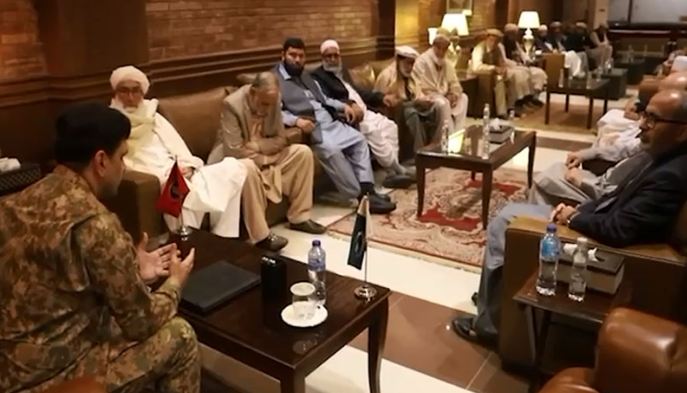
The recent peace agreement, brokered by authorities, represents a significant achievement. It involved disarming numerous individuals and forcing elders from both sides to sign a peace accord. A key event in this process was the Peace and Development Conference held in Parachinar, the district headquarters. This conference, organized by the 73 Brigade, brought together a wide range of stakeholders, including military and civil officials, tribal elders, religious scholars, and media representatives. The discussions focused on reviewing development projects, strengthening tribal harmony, and charting a path toward sustainable peace.

During the conference, speakers highlighted the importance of inter-tribal unity and the continuity of development initiatives. Tribal elders voiced their concerns, urging authorities to prioritize the resolution of revenue-related disputes, accelerate public welfare schemes, and ensure community participation in local governance. They also called for decisive action against those using social media and other platforms to incite hatred and unrest. The conference concluded with a collective promise from all participants to work together for the progress, peace, and prosperity of Kurram. The efforts of Commissioner Kohat and the Commander of the 73rd Brigade in organizing this event are commendable, as it marks a move away from the traditional, ineffective “business as usual” approach.

While these recent efforts are a positive step, they represent a fragile truce, not a durable solution. A lasting peace in Kurram requires a fundamental shift in strategy—from managing conflict to eliminating its root causes. For decades, sectarian and religious hatred has been mysteriously promoted for nefarious strategic and economic purposes, a legacy inherited from the Cold War era. This externally influenced animosity has not only destabilized regions like Pakistan and Afghanistan but has had a ripple effect across Asia and the world. The true objectives of this religious and sectarian extremism—including remote-controlled violence and terrorism—are now becoming clearer. They do not serve the interests of the local population, whether they are the governed or those in power.

The persistent violence has exhausted the people of Kurram, as well as the broader populace of Khyber Pakhtunkhwa and the entire country. They yearn for a durable and sustainable peace, which is a fundamental human right. Therefore, the responsibility now falls on those in positions of power—in parliament, the executive, the judiciary, and the media—to address their duties at this crucial juncture. Instead of acting as silent spectators or unwitting partners in the perpetuation of this conflict, they must focus on dismantling the mechanisms that generate and sustain sectarian and religious hatred.

This means tackling the financial and ideological networks that fuel extremism. It also means investing in education that promotes tolerance and unity rather than division. A crucial part of this is empowering local communities and giving them a genuine stake in their own governance and development. When people feel that their voices are heard and that they have a say in their future, they are less likely to be swayed by external forces seeking to sow discord.

The long-term solution must also involve economic upliftment. Poverty and a lack of opportunities often create fertile ground for extremist ideologies to take root. By accelerating public welfare schemes and resolving revenue-related issues, as requested by the tribal elders, the government can address some of the material deprivations that contribute to unrest.

The use of social media as a tool for inciting violence is another critical issue that requires a nuanced response. While freedom of speech is important, deliberate incitement to hatred should not be tolerated. Authorities must work with social media companies and local communities to develop effective strategies for combating misinformation and hate speech without resorting to heavy-handed censorship that could further alienate the populace.

Ultimately, a durable peace in Kurram is not just about a lack of fighting; it is about the presence of justice, opportunity, and reconciliation. It requires a holistic approach that acknowledges the historical, political, and economic dimensions of the conflict. By addressing these root causes, authorities can transform Kurram from a symbol of sectarian strife into a model of peace and progress, demonstrating that unity can overcome the most deeply entrenched divisions. The people of Kurram deserve to live in a secure and prosperous environment, and it is the collective responsibility of all stakeholders to make this a reality.

Strategic Mutual Defence Agreement: Saudi Arabia and Pakistan Cemented a New Security Chapter

Overseas Pakistanis, public laud Saudi-Pak Defence pact

By: Sadaf Noreen Awan

Pakistan’s bond with the Kingdom of Saudi Arabia has always transcended diplomacy, resting firmly on the sacred foundation of the Haramain, the holy cities of Makkah and Madinah for all Muslims. For the people of Pakistan, devotion to these sites is inseparable from their national identity, a sentiment evident since the country’s inception in 1947. Beyond being one of the largest groups of Hajj and Umrah pilgrims annually, Pakistan has historically demonstrated an unwavering commitment to the defense and sanctity of the Haramain whenever they were perceived to be under threat. In 1969, during the attempted armed seizure of the Grand Mosque in Makkah, Pakistan’s Air Force pilots, under the leadership of Air Commodore (later Air Chief) Nur Khan, flew missions in defense of Saudi territory, reinforcing Riyadh’s security when it was most vulnerable.

Similarly, throughout the 1980s and 1990s, Pakistani troops were stationed in the Saudi Kingdom as part of a long-standing defense cooperation agreement, ensuring the security of Islam’s holiest sanctuaries. The most visible demonstration of this commitment came in 1990-91 during the Gulf War, when Pakistan dispatched tens of thousands of troops to safeguard Saudi Arabia from potential spillover of the Kuwait conflict.

These historic actions underline that Pakistan’s pledge to defend the Haramain is not rhetorical, it has been upheld through concrete sacrifices, military deployments, and enduring vigilance. The religious obligation to protect the holy places has therefore remained a cornerstone of the Saudi-Pakistani alliance, shaping their partnership into one of spiritual duty as well as strategic necessity.

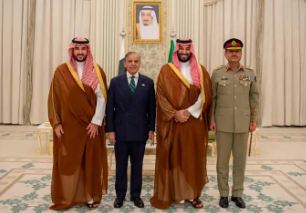
Subsequently, on 17 September 2025, Saudi Arabia and Pakistan formalized a historic Strategic Mutual Defence Agreement in Riyadh, transforming decades of informal military cooperation into an explicit pledge of mutual security. The accord, signed at Al Yamamah Palace in the presence of Prime Minister Shehbaz Sharif and Crown Prince Mohammed bin Salman, declares that any armed attack on one state will be considered an attack on both.

Officials described the agreement as a framework to deepen collaboration in training, joint exercises, intelligence and logistics, but the inclusion of a mutual-defence clause marks a clear elevation compared with past understandings.

Much attention has focused on nuclear implications. Pakistan’s Defence Minister stated that Islamabad’s nuclear programme “will be made available” to Saudi Arabia if required under the pact, which many interpreted as a signal of a nuclear umbrella. Analysts, however, caution that Pakistan’s arsenal is estimated at fewer than 200 warheads and there is no evidence of any intent to transfer nuclear weapons to Saudi territory.

For now, the pledge appears to be declaratory rather than operational, but it still introduces nuclear deterrence into Gulf security dynamics in a way not seen before.

The agreement comes against a backdrop of regional tensions and uncertainty about the reliability of traditional alliances. Gulf States have been broadening their security options, while Islamabad seeks to consolidate strategic and economic ties with Riyadh. Observers note that the pact reflects a larger shift: Middle Eastern and South Asian actors are recalibrating in response to changing power balances, with India and Iran expressing concern about potential instability.

Moreover, the Saudi-Pakistan defense pact is viewed with unease in Western capitals, particularly after Israel’s strike on Doha that killed senior Hamas leaders during ceasefire negotiations. For decades, the United States and its allies have acted as the principal guarantors of Gulf security, projecting military power through bases and fleets while shaping regional diplomacy. By binding itself to Pakistan through a mutual defense arrangement, Saudi Arabia has signaled that it no longer wishes to rely exclusively on the Western umbrella. For Washington and European powers, this represents an erosion of influence at a moment when Gulf stability is already strained.

What is even more troubling is the nuclear undertone of the pact. Pakistan, the only Muslim-majority country with an established nuclear arsenal, has hinted at extending its deterrence to Riyadh. Even if symbolic, this unsettles the carefully maintained balance of power in the region and raises fears of an accelerated arms race. For Israel, the implications are especially serious. Its strike on Doha was intended to demonstrate military reach and deterrence, but in the wake of this pact, such operations may now invite wider consequences.

If Saudi Arabia feels threatened and Pakistan stands committed to its defense, Israel could find its freedom of action constrained in ways it has not faced before. The pact introduces the possibility that any future confrontation involving the Gulf could draw in a nuclear-armed actor, thereby raising the stakes of miscalculation.

For Western powers, that have long promoted non-proliferation and sought to monopolize the security architecture of the Gulf, the agreement represents not just a challenge to their strategic dominance but a potential shift toward a multipolar security order that weakens their leverage and complicates their alignment with Israel.

As for as Pakistan is concerned, the deal underscores a longstanding reliance on Saudi partnership, which has included energy support and financial assistance. For Saudi Arabia, it signals readiness to expand beyond conventional Western security guarantees without abandoning them. Political debate has emerged across the region, for example in India, analysts worry about strategic consequences, while in Pakistan the pact is presented as an assertion of sovereignty.

International observers caution that without clarity on operational details such as thresholds for triggering defense commitments, command structures, or nuclear arrangements the agreement carries risks of misinterpretation and escalation.

The world will watch how this pact develops in practice, whether through exercises, equipment transfers or institutionalized joint commands. Western partners have reacted cautiously, emphasizing stability while monitoring non-proliferation implications. Neighbouring States are recalculating their policies in response to this new reality. What is clear is that the Saudi-Pakistan agreement extends far beyond symbolic gestures: it alters the strategic balance across two regions, binds two long-time partners more tightly, and raises difficult questions about crisis management and deterrence in a volatile environment.

To conclude, Saudi-Pakistan defense pact is poised to recalibrate the strategic architecture of both the Middle East and South Asia in ways that will resonate for decades. For Pakistan, it elevates the nation from being merely a regional actor to a pivotal guarantor of Gulf security, rooted not only in its military capability but also in its historic role as a steadfast defender of the Haramain Shareefain. For Saudi Arabia, it secures the backing of a nuclear-armed ally with proven battlefield experience, thereby diversifying Riyadh’s security portfolio at a time when traditional guarantees appear increasingly uncertain. The agreement projects a powerful message of unity, one that may serve as a deterrent to external threats while deepening the two nations’ interdependence.

Yet, its very strength is also what unsettles others, like the pact complicates Israel’s long-standing pursuit of regional military dominance and undermines the strategic space, it relies on to advance the vision of a “Greater Israel.” With Riyadh now shielded by Islamabad’s commitment, including the shadow of nuclear deterrence, Israel faces new constraints on unilateral action in the Gulf.  On the other hand, India will perceive it as a challenge to its strategic calculus, while Iran may interpret it as an encirclement.

In this sense, the pact holds the dual potential of stabilizing the region through deterrence or inflaming rivalries through perception of imbalance. Whether it cements peace or triggers contestation will depend less on the ink of the agreement and more on the statesmanship with which both Riyadh and Islamabad manage its execution. In either case, the pact has already altered the balance of power, making it one of the most consequential security developments in recent memory.

T20 Asia Cup 2025 Win against Sri Lanka keeps Pakistan hopes alive

T20 Asia Cup 2025 Win against Sri Lanka keeps Pakistan hopes alive

Saim Ayub, under pressure to deliver, failed to make any worthwhile contribution, continuing his poor run in the tournament

Sports Desk

ABU DHABI:— Pakistan kept their Asia Cup hopes alive with a crucial five-wicket victory over Sri Lanka on Tuesday. Despite yet another shaky start from the top order, the middle and lower-order batsmen held their nerve to guide the team to an important win. Hussain Talat and Muhammad Nawaz played a winning knock. Pakistan achieved the target in the 18th over.

Chasing Sri Lanka’s modest total, Pakistan once again faced early troubles as the top order faltered. Saim Ayub, under pressure to deliver, failed to make any worthwhile contribution, continuing his poor run in the tournament. Other top-order batters also struggled against disciplined Sri Lankan bowling, raising concerns for the team management ahead of the next fixtures.

However, Pakistan’s middle order staged a strong recovery. Sensible batting partnerships stabilized the innings, with calculated stroke play and maturity ensuring that the required target was achieved with five wickets in hand.

Earlier, Sri Lanka set a modest target of 134 runs for Pakistan.

Put into bat first, the defending champions managed to accumulate 133-8 in their allotted 20 overs despite Kamindu Mendis’s half-century.

Sri Lanka got off to a shaky start to their innings as Shaheen Shah Afridi dismissed both openers — Kusal Mendis (zero) and Pathum Nissanka (eight) — in his first two overs.

The 2022 champions, however, were in a comfortable position by the end of the batting powerplay as they had piled up 53 runs despite losing another wicket.

But Pakistan captain Salman Ali Agha’s decision to bring Hussain Talat in pushed Sri Lanka to the back foot as the all-rounder struck twice in his first over, bringing the total down to 58-5 in 7.3 overs.

Following the slump, star all-rounder Wanindu Hasaranga (15) joined Kamindu in the middle for a cautious 22-run partnership until getting cleaned up by Abrar Ahmed in the 13th over.

Kamindu, on the other hand, stood his ground firm and went on to score a fighting half-century for Sri Lanka. He was dismissed by Shaheen in the penultimate over, soon after he amassed the milestone.

The left-handed batter top-scored for Sri Lanka with a valiant 50 off 44 deliveries, smashing three fours and two sixes.

Shaheen was the standout bowler for Pakistan, taking three wickets for just 28 runs in his four overs, followed by Haris Rauf and Talat with two each, while Abrar chipped in with one.

Stay Connected

64FansLike
60FollowersFollow

Latest Reviews

Exchange Rates

USD - United States Dollar
EUR
1.14
GBP
1.33
AUD
0.69
CAD
0.71