Home Blog Page 462

UNDP rep, vows support for human rights

UNDP rep, vows support for human rights

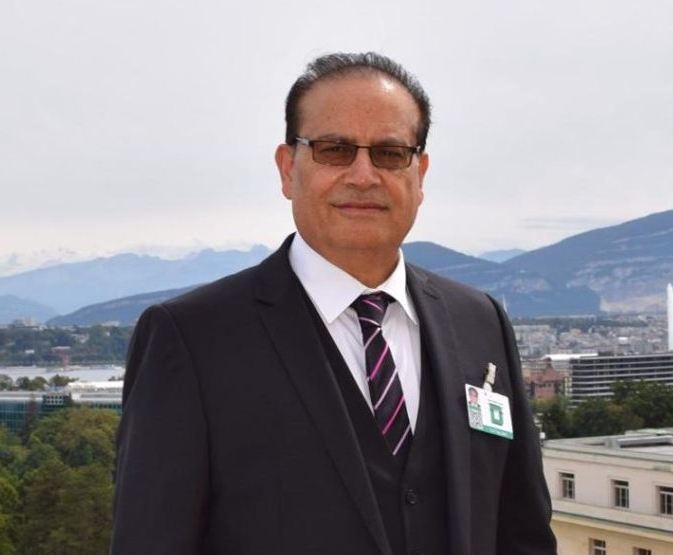
LAHORE, SEP 24 (DNA): United Nations Development Programme (UNDP) Resident Representative in Pakistan Dr Samuel Rizk called on Punjab Minister for Minorities Affairs Sardar Ramesh Singh Arora at the Human Rights & Minorities Affairs (HR&MA) Department on Wednesday.

He thanked the minister for continued partnership with the UNDP on human rights, minority rights, and peace building initiatives. He also offered condolences over the loss of lives and damage caused by recent floods, and inquired about the affected minority communities.

The meeting discussed strengthening human rights protection, interfaith harmony, and institutional support.

Dr Samuel Rizk reaffirmed UNDP’s commitment to collaborate on the National Action Plan on Human Rights 2026 and Business and Human Rights in Punjab.

Minister Sardar Ramesh Singh Arora said the government is committed to safeguarding minority rights, citing progress on legislative reforms including the Sikh Marriage Act, rules under the Hindu Marriage Act, and work on the Christian Marriage Act. He also mentioned support for minority youth at the Civil Services Academy, recognition of Punjab’s E-Learning Program, and relief for flood victims. Expressing regret over India’s refusal to send Sikh pilgrims to Pakistan, the Minister termed the move unfortunate and condemnable.

Dr Rizk commended the initiatives of the Punjab government and assured UNDP’s continued collaboration to promote human rights, protect minority rights, and strengthen institutional capacity across the province.

UNDP Assistant Resident Representative Rana Qaiser Ishaq, Human Rights Officer Madiha Fareed, Additional Secretary Human Rights Rizwana Naveed, and Consultant Syed Imran Sajjad also attended the meeting.

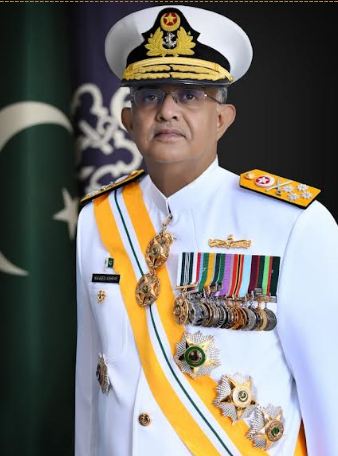
Pakistan Navy reaffirms commitment to maritime security on World Day

Pakistan Navy reaffirms commitment to maritime security on World Day

ISLAMABAD, SEPT 24 /DNA/ – On World Maritime Day 2025 being celebrated on 25th September, the last Thursday of the month each year, I extend my warmest congratulations to the global maritime community. It is especially dedicated to Pakistani seafarers, maritime professionals and coastal communities whose unwavering commitment and tireless efforts constitute the backbone of our nation’s economic progress and global connectivity. Their invaluable contributions under challenging conditions are not only elemental but crucial to Pakistan’s economic sustenance and resilience.

The International Maritime Organization (IMO) has aptly chosen this year’s theme as, ‘Our Ocean – Our Obligation – Our Opportunity’. It carries profound meanings, reminding us that the oceans which cover more than two-thirds of our planet not only connect the world but are the lifeline of humanity, sustaining livelihoods, enabling global commerce, supporting ecological balance and ensuring food and energy security. With these immense benefits, comes the paramount responsibility to protect, preserve and harness the oceans, both for our present as well as future generations.

The sea holds exceptional strategic, economic and developmental significance for Pakistan. Our coastline and Exclusive Economic Zone present unparalleled opportunities for economic growth through fisheries, shipping, energy and in fact, the all encompassing Blue Economy. This places a solemn obligation upon us to safeguard marine environment and ensure safe and healthy maritime practices.

Pakistan Navy (PN) remains firmly committed to these goals, safeguarding maritime security and promoting regional stability through its constant vigilance in the North Arabian Sea. PN also participates in international coalitions, humanitarian assistance and disaster relief operations. In addition, PN protects vital sea lanes and upholds the sanctity of freedom of navigation.

Concurrently, PN collaborates with national stakeholders to foster maritime awareness, drive sustainable development of maritime sector and acts as a lynchpin in realizing Pakistan’s vision of a thriving maritime nation. The Navy’s obligations towards safety and security at sea, cooperation with partner nations and economic progress underscores its indispensible roles in shaping a prosperous maritime future for Pakistan and maintaining maritime order in the region.

On this occasion, I reaffirm PN’s unwavering commitment to the IMO vision of safe, secure and environment friendly use of oceans. Guided by our national maritime objectives, we shall continue to play a constructive role in ensuring peace, security and stability at sea. May this day inspire us all to honour our obligations and seize the opportunities that the oceans offer for a more dependable, sustainable and prosperous future.

The Banquet, the Knighthood, and the Gaza Genocide

The Banquet, the Knighthood, and the Gaza Genocide

By Muhammad Mohsin Iqbal

US President Donald Trump holds the distinction of being elected to the highest office of the United States for the second time. During his tenure, he has made official visits to many parts of the world, each visit leaving behind a trail of newsworthy moments. Unlike his predecessors, Trump has carried himself in ways that defy convention, both in speech and in gesture. Few could rival his ability to generate headlines about himself, a skill that seems almost journalistic in its intent. His recent visit to England provided yet another illustration of this quality. On that occasion, he made a personal request that the Mayor of London, Sadiq Khan, be excluded from the state banquet hosted by King Charles III at Windsor Castle. “I didn’t want him there. I asked that he not be there,” Trump declared, before describing Khan as “among the worst mayors in the world.”

The irony of the situation could not be lost on observers. Just weeks earlier, Sadiq Khan had been knighted for his political and public service. On July 9, 2024, in a formal ceremony at Buckingham Palace, King Charles himself conferred the honour of knighthood upon Khan, acknowledging his long-standing service not only as Mayor of London, a position he has held since 2016, but also as a former Member of Parliament and government minister under Gordon Brown. The contrast between Trump’s scathing denunciation and the British monarchy’s recognition of Khan’s contributions underscores the complexity of politics and the wide gulf between American and British perspectives on governance.

By attacking Khan, Trump indirectly cast doubt on the administration and governance of London. Yet this criticism, when placed beside the realities of urban life in the United States, seems somewhat hollow. For while London remains one of the world’s most cosmopolitan cities, where people of different ethnicities, religions, and traditions live side by side, many American cities continue to grapple with dire problems of violence, poverty, and civic decay. In Memphis, Tennessee, the scourge of gang violence, carjackings, and theft undermines daily life. In St. Louis, Missouri, persistent gang wars and a lack of trust between police and communities cripple governance.

Detroit, despite attempts at revitalization, remains plagued by shootings, drug offenses, and economic stagnation, with abandoned properties a grim testament to urban decline. Baltimore struggles with gun violence, drug-related crimes, and widespread poverty, compounded by a legacy of mistrust between law enforcement and residents. In Oakland, California armed robberies, gang violence, and the drug trade persist, worsened by political tensions and deep-rooted disparities. Kansas City continues to battle alarmingly high homicide rates, despite programs of community policing and violence intervention. New Orleans, a city famed for its cultural vibrancy, faces high levels of drug-related violence and property crime, with longstanding governance issues and mistrust in law enforcement lingering in the background.

When weighed against these challenges, London does not appear as a city without difficulties, but one in which multiculturalism and democratic institutions still hold firm. It is also a city where public officials like Sadiq Khan do not hesitate to take bold stances on issues of international concern.

On September 18, 2025, Sadiq Khan openly condemned Israel’s war in Gaza, describing it as nothing less than genocide. He pointed to the starvation of children, the collapse of the health system, and what he called a man-made famine as evidence of atrocities. He cited the findings of a United Nations Commission of Inquiry and referenced the interim judgment of the International Court of Justice to substantiate his remarks. Nor was this his first statement on the matter. In July 2025, Sadiq Khan urged Prime Minister Keir Starmer to immediately recognize a Palestinian state, describing the images from Gaza as “absolutely harrowing.” He stressed that the international community, including the British government, had a duty to pressure Israel to halt the killing and permit the entry of humanitarian aid.

These pronouncements were not made in a vacuum. They came at a time when the United States was using its veto power in the United Nations Security Council to block repeated attempts at accountability. To date, America has employed its veto on forty-five occasions to shield Israel from resolutions critical of its actions, most of them pertaining to the Palestinian question. During the current war in Gaza, ongoing since October 2023, the United States has vetoed six separate resolutions demanding an immediate ceasefire or condemning Israel’s military conduct. The most recent veto, delivered on September 18, 2025, coincided with Sadiq Khan’s own strongest denunciation. These actions by Washington have underscored the growing diplomatic isolation of the United States and Israel, as other permanent and non-permanent members of the Security Council, including Britain and France, have supported the resolutions.

Thus, while Trump sought to belittle Sadiq Khan by excluding him from a banquet, the Mayor of London has positioned himself firmly within the moral debates of our age. His criticisms of Israel, though controversial to some, reflect the conscience of a politician unafraid to speak against war, famine, and the suffering of innocents. Trump’s remarks may capture headlines, but Sadiq Khan’s words resonate with communities who live the consequences of foreign policy decisions and who long for justice and peace. The contrast between the two men—one devoted to spectacle, the other to principled protest—illustrates the different roles political leaders may play on the stage of history.

Jahna bhigaye dastan choor aye

Trump’s UNGA Speech Collapses Before a Defiant World

Qamar Bashir

By Qamar Bashir

The United Nations General Assembly this year became the stage for one of the most dramatic reversals of American diplomatic influence in modern memory. Sponsored jointly by Saudi Arabia and France, the extraordinary emergency conference convened to debate Israel’s naked, blatant, and cruel aggression on Gaza and the West Bank. For decades, the United States, with its vast economic, military, and diplomatic clout, had compelled nations to fall in line—whether by promises of aid, threats of sanctions, or pressure through investment and trade. But this time, before the eyes of the world, Washington’s narrative failed.

The global mood was unmistakable. Israel’s policies of ethnic cleansing, occupation, and near-genocidal assault on the Palestinian people were denounced with unprecedented unity. Trump, standing at the podium, echoed Benjamin Netanyahu’s language of “security” and “self-defense,” but those words fell flat. What was once the unchallenged script for Western allies now sounded hollow, archaic, and dangerous. Far from rallying behind the United States, the overwhelming majority of nations broke away, defiantly recognizing Palestine as a sovereign state and announcing they would deal with it directly in bilateral and multilateral forums. This was not only a symbolic rebuke but also a practical shift: future investment, aid, and diplomatic engagement would now flow through Palestinian authorities, bypassing Israel.

What made the session even more remarkable was that not a single major leader spoke in favor of the United States or Israel. From Brazil’s Lula da Silva to Turkey’s Recep Tayyip Erdoğan, from Jordan’s King Abdullah II to France’s Emmanuel Macron, from Australia’s Anthony Albanese to Britain’s Keir Starmer, from Canada’s Mark Carney to South Africa’s Cyril Ramaphosa, and from South Korea’s Lee Jae-myung to leaders across Asia, Africa, and Latin America—the verdict was universal. Israel’s narrative, supported and promoted by Trump, had collapsed. The applause in the chamber made clear that the United States, for the first time in UN history, stood alone.

Trump did not hide his contempt. He lashed out not only at the leaders present but at the institution itself. Climate change, he declared, was the “greatest con job in history,” dismissing decades of scientific evidence on rising seas, melting glaciers, intensifying hurricanes, and the planetary threat of unchecked emissions. Gasps rippled through the assembly as he accused the UN of peddling fear and lies. He mocked international agreements on climate, insisting that America would burn coal, drill oil, and expand nuclear power without apology. To many, it was more than denial—it was an open invitation to environmental catastrophe.

Nor did Trump stop at Gaza or climate change. He derided the United Nations as useless, ineffective, and irrelevant. He promised to pull U.S. representatives out of key agencies, and he vowed to slash funding—funding that, for decades, Washington had leveraged as its ultimate instrument of control. But instead of weakening the UN, Trump’s threat spurred others into action. Within hours, China, the European Union, and several emerging economies pledged to fill the financial gap, signaling that they would seize the leadership America was relinquishing. It was a symbolic passing of the torch: power, influence, and responsibility were no longer to be monopolized by Washington.

For Trump, the United States remained the indispensable nation. He warned that no country could survive without its blessing, invoking America’s military might and economic reach. Yet his words rang hollow against the backdrop of near-total isolation. In the past, weaker nations might have bowed to U.S. pressure, clinging to trade deals or fearing the loss of aid. But now, emboldened by collective strength, they no longer needed to. The unifying cause of Palestine’s recognition had given the world a new confidence. America’s threats sounded less like the dictates of a superpower and more like the frustrated cries of a bully whose grip was slipping.

This shift was not sudden; it was the culmination of years of resentment. Trump’s doctrine of “America First” had alienated allies, embittered partners, and emboldened adversaries. By weaponizing tariffs, sanctioning friend and foe alike, and dismantling international agreements, Washington had eroded the very leverage it once wielded. Countries that once tolerated American dominance out of necessity now saw little reason to comply. As one European delegate noted privately, “When the U.S. withdraws, others rush in. They may have forgotten, but we have not.”

The recognition of Palestine marked a decisive moment. It was not simply a diplomatic statement; it was a strategic realignment. Humanitarian aid would bypass Israel. Sanctions would be imposed directly on Tel Aviv. Military sales would be withheld. Pension funds and sovereign wealth investments would be divested. These measures, adopted with overwhelming consensus, marked the first time Israel faced comprehensive, global punitive action. For decades, its occupation had been shielded by U.S. vetoes and Western complicity. Now, the shield was shattered.

Trump, furious, accused the assembly of hypocrisy and cowardice. He mocked the idea of collective will, insisting that only the United States could lead. But the chamber had already moved on. Leaders from every continent had made clear that the era of American dictates was over. The collective will of nations would no longer bow to one country’s interest. The loudest message of the day was not in the words of presidents or prime ministers but in the silence that followed Trump’s speech—an emptiness where once applause would have echoed.

Perhaps the greatest irony is that America’s own power remains immense. Militarily, economically, technologically, it still towers over much of the world. But power without legitimacy is fragile. Influence without trust is fleeting. Respect cannot be commanded by force alone. Those nations that are weak or dependent may still flatter America out of fear, but those that are strong from within—confident, stable, and united—see no reason to follow. They do not mistake America’s bluster for leadership.

What was witnessed at the UNGA was not just a rejection of a speech; it was the exposure of a failing doctrine. The belief that America could dictate terms, ignore science, crush weaker nations, and shield Israel indefinitely has collapsed. The world has spoken, not in whispers but in unison, and it has chosen a different path—one of defiance against aggression, of recognition for Palestine, of collective resistance to unilateralism.

The United States, under Trump, has forgotten the wisdom of humility, gratitude, and forgiveness. A truly strong nation does not alienate the world; it unites it. A truly great power does not cling to dominance; it earns respect through fairness and justice. By abandoning these principles, America has not only lost leverage but has endangered its own place in history. The verdict from the UN General Assembly is clear: the world will no longer be dictated to by a single power, no matter how mighty. The future will be shaped not by one nation’s arrogance but by the collective will of many.

By Qamar Bashir

Press Secretary to the President (Rtd)

Former Press Minister, Embassy of Pakistan to France

Former Press Attache to Malaysia

Former MD, SRBC | Macomb, Michigan, USA

Security forces kill 13 terrorists in KP: ISPR

Security forces kill four terrorists in D.I.Khan

Pakistan expects the interim Afghan government, run by the Afghan Taliban, to uphold its responsibilities and deny the use of its soil to carry out acts of terror

Burau Report

PESHAWAR: Security forces on Wednesday killed 13 terrorists in an intelligence-based operation (IBO) carried out in Khyber Pakhtunkhwa’s Dera Ismail Khan district, the military’s media wing said in a statement.

According to the Inter-Services Public Relations (ISPR), security forces conducted the operation in the Daraban area, upon the reported presence of terrorists “belonging to Indian proxy, Fitna al Khwarij”.

“During the conduct of [the] operation, [our] own troops effectively engaged the khwarij location and [as a result], 13 Indian sponsored khwarij were sent to hell,” the statement read.

The ISPR added that weapons and ammunition were recovered from the dead terrorists, who were involved in terrorist activity in the area.

The statement added that these terrorists were involved in “facilitation [of] a suicide bombing attack in Daraban in December 2023, [the] abduction and target killing of government officials and innocent civilians”.

“[A] sanitisation operation is being conducted to eliminate any other Indian sponsored kharji found in the area, as the security forces of Pakistan are determined to wipe out the menace of Indian sponsored terrorism from the country,” the statement concluded.

On September 21, security personnel launched an IBO in the same district, where they killed seven terrorists, including three “Afghan nationals”. In a statement, the ISPR said that the operation was carried out in the Kulachi area upon the presence of “khawarij”.

“During the conduct of [the] operation, own troops effectively engaged the khwarij location and [as a result], seven Indian sponsored khwarij, including three Afghan National khwarij and two suicide bombers, were sent to hell,” the ISPR said.

The statement added that Pakistan expects the interim Afghan government, run by the Afghan Taliban, to uphold its responsibilities and deny the use of its soil to carry out acts of terror.

Pakistan has lately been witnessing an uptick in terrorist activities, mainly in KP and Balochistan. In November 2022, the Tehreek-i-Taliban Pakistan, after breaking a ceasefire deal with the government, had vowed to escalate attacks against the security forces, the police, and other law enforcement agencies’ personnel.

Asia Cup 2025: Bangladesh win toss, elect to bowl first against India

Asia Cup 2025: Bangladesh win toss, elect to bowl first against India

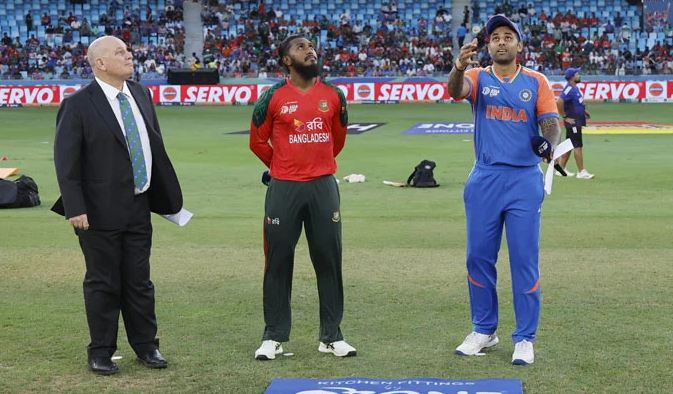
DUBAI: Bangladesh have won the toss and opted to field first against India in the high-stakes ACC Men’s T20 Asia Cup 2025 Super Four clash here at the Dubai International Cricket Stadium in Dubai on Wednesday.

Playing XIs

India: Abhishek Sharma, Shubman Gill, Suryakumar Yadav (c), Tilak Varma, Sanju Samson (wk), Shivam Dube, Hardik Pandya, Axar Patel, Kuldeep Yadav, Jasprit Bumrah and Varun Chakaravarthy.

Bangladesh: Saif Hassan, Tanzid Hasan Tamim, Parvez Hossain Emon, Towhid Hridoy, Shamim Hossain, Jaker Ali (c/wk), Mohammad Saifuddin, Rishad Hossain, Tanzim Hasan Sakib, Nasum Ahmed and Mustafizur Rahman.

Head-to-head

India and Bangladesh have come face-to-face 17 times in T20Is, with the former champions dominating the head-to-head record with 16 victories, compared to the Tigers’ one triumph.

Matches: 17
India: 16
Bangladesh: 1

Form Guide

The two teams enter the field with similar momentum as India are on a six-match winning streak, while Bangladesh have just one defeat in their last five matches.

India: W, W, W, W, W (most recent first)

Bangladesh: W, W, L, NR, W

Finance Minister virtually chairs ECC meeting

Finance Minister virtually chairs ECC meeting

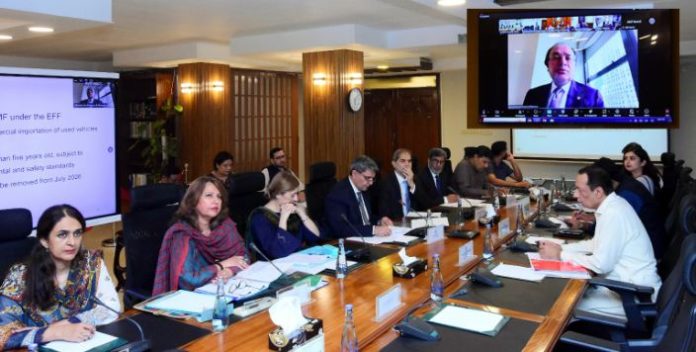
AISLAMABAD, SEPT 24 /DNA/ – meeting of the Economic Coordination Committee (ECC) of the Cabinet was held today at the Finance Division with the Federal Minister for Finance and Revenue, Senator Muhammad Aurangzeb, chairing the meeting virtually from the New York.

The ECC considered a summary regarding the commercial import of used vehicles and, after detailed discussion, accorded approval to the proposals.

The ECC decided to amend relevant provisions of the Import Policy Order, 2022 to allow the commercial import of used vehicles. Initially, only vehicles not older than five years will be permitted until 30th June 2026, after which the vehicle age limit shall stand removed. The ECC further directed that such commercial importation would remain subject to strict compliance with prescribed environmental and safety standards.

The Committee also approved the imposition of 40 percent Regulatory Duty (RD), in addition to the existing customs duties, on the commercial import of used vehicles (less than five years old). This enhanced duty will remain applicable until 30th June 2026. Thereafter, the duty shall be reduced gradually by 10 percentage points per year, reaching zero by 2029-30, in line with the recommendations of the Tariff Policy Board.

On another summary moved by the Cabinet Division, the ECC considered and approved allocation of Rs 800 million ad Technical Supplementary Grant in favour of the Pakistan Virtual Asset Regulatory Authority (PVARA).

The meeting was attended by Federal Minister for Petroleum Ali Pervaiz Malik, Federal Minister for National Food Security and Research Rana Tanveer Hussain, Federal Minister for Power Sardar Awais Ahmad Khan Leghari, federal secretaries and senior officials from concerned ministries and regulatory bodies.

Pakistan is a strong voice against Israeli atrocities in Gaza: Zeeshan Naqvi

Pakistan is a strong voice against Israeli atrocities in Gaza: Zeeshan Naqvi

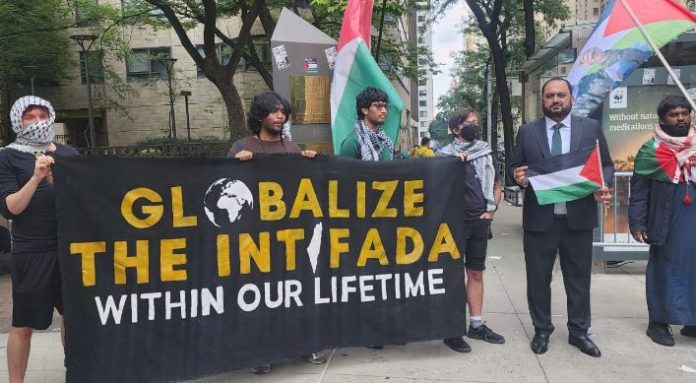
NEW YORK, SEPT 24 /DNA/ – Prime Minister’s Focal Person for Youth Program Syed Zeeshan Naqvi participated in a protest demonstration in favor of Palestine in front of the United Nations General Assembly. Representatives of different countries also participated in the demonstration in favor of Palestine on the occasion of the General Assembly.

Prime Minister’s Youth Program Focal Person Syed Zeeshan Naqvi, while addressing the demonstration against Israel, said that the world must take practical steps to prevent Israel’s terrorist acts. Netanyahu should be declared a terrorist for the Israeli genocide in Gaza.

Prime Minister Shehbaz Sharif will vigorously raise Israeli atrocities in the General Assembly. Muslim leaders have demanded an immediate ceasefire in Gaza from President Trump. Pakistan is raising a strong and powerful voice against Israeli atrocities.

Muslim leadership needs to come on one page to stop Israeli atrocities. Participants in the demonstration The individuals chanted strong slogans against Israel and demanded an immediate ceasefire in Gaza, access to food, and the immediate withdrawal of Israeli forces.

PPP slams Punjab govt over flood relief failure for farmers

PPP slams Punjab govt over flood relief failure for farmers

ISLAMABAD, SEPT 24 /DNA/ – The Central Information Secretary of the Pakistan Peoples Party (PPP), Nadeem Afzal Chan, and the In-charge of the Peoples Labour Bureau, Chaudhry Manzoor Ahmed, addressed a press conference at the Party’s Central Secretariat in Islamabad. Former Member of the National Assembly, Ghulam Murtaza Satti, was also present.

Nadeem Afzal Chan said that the Punjab government is avoiding its responsibility to provide relief to poor farmers affected by the recent floods. He emphasized that the Benazir Bhutto Income Support Programme (BISP) is the only welfare programme in Pakistan that has been internationally recognized and praised. Initiated for the underprivileged, BISP was the dream of Shaheed Mohtarma Benazir Bhutto and was practically launched by President Asif Ali Zardari. Today, it benefits nearly ten million poor families.

He strongly criticized Jamaat-e-Islami (JI) for recently branding BISP a fraud, reminding that this was the same Jamaat-e-Islami which had recruited innocent citizens in the name of the Afghan Jihad and collected billions of rupees in that failed project. “Was Jamaat-e-Islami’s Jihad project a success or a failure?” Chan asked, adding that JI sacrificed innocent lives in a futile war.

Chan further said that BISP’s reliable data could be used to provide relief to flood victims. “Will international institutions depend on patwari records for aid distribution?” he asked. “Our demand is not about whose picture is displayed on the aid packages. Anyone is free to put their picture, from the ballot box to the grave.”

Highlighting PPP’s track record, he noted that Pakistan achieved a wheat surplus only during PPP’s tenure. He said President Asif Ali Zardari had suggested setting the support price at Rs. 4,000, but the present government is instead benefitting foreign farmers while undermining local ones. He revealed that wheat worth Rs. 2 trillion had already been imported, with another Rs. 5 trillion to follow, yet no relief was being extended to domestic farmers.

Chaudhry Manzoor Ahmed, speaking next, said that questions remain as to whether water was deliberately used as a weapon. “If India carried out water aggression, how is it that East Punjab also faced devastation? Embankments were broken in many places, some to prevent greater damage, but others due to sheer negligence of the Punjab administration,” he said.

He emphasized that only BISP has the infrastructure reaching down to the Union Council level to deliver aid efficiently. “We are not demanding that Benazir’s picture be displayed on relief packages. But apart from BISP, there is no other mechanism with such reach,” he added.

Manzoor also accused Jamaat-e-Islami of exploiting the poor by pushing them into Zia-ul-Haq’s Jihad project. “That project was fraudulent, a failure, and history has proven it. JI even won seats in elections under the cover of that scheme. They must confine themselves to politics instead of exploiting people’s lives,” he said.

The PLB In-charge said that PPP does not wish to politicize the floods but wants to present facts and figures. He criticized the government for hiding behind IMF conditions instead of buying wheat from local farmers. By importing 3.5 million tons of wheat, the government has economically destroyed Pakistani farmers. He added that only 800,000 tons of wheat remain in reserve today, against the required 2.8 million tons. “Why is the government not allowing wheat to move to Khyber Pakhtunkhwa? Why impose a ban on inter-provincial transport of wheat, making bread more expensive in smaller provinces?” he asked.

Addressing the scale of destruction, Manzoor said: “The greatest losses from the floods have been in East and West Punjab. The real question is: did we drown naturally, or were we drowned?” He added that crops and the economy had suffered the most. Referring to Maryam Nawaz’s announcement of Rs. 20,000 for per flood victim, he questioned. “On what basis was this figure calculated? Twenty thousand Indian rupees equals sixty-five thousand Pakistani rupees. In Indian Punjab, fertilizers and pesticides are cheaper, and farmers are exempt from electricity bills, while here bills are only waived in areas where there is no power at all.”

Listing the devastation, he said maize, turmeric, cotton, and sugarcane crops had been destroyed, with each acre suffering at least Rs. 100,000 in losses and orchard Rs. 500,000/- per acre. He urged the government to provide alternative state-owned agricultural land to farmers whose lands had been rendered unusable by the floods. “The Punjab government is mocking our demands as well as the farmers’ plight. The BISP, with its geo-tagged database, is the only credible mechanism for relief distribution and it has been used effectively in the past,” he concluded.

Serena Hotels hosts Raabta panel discussion on World Heart Day

Serena Hotels hosts Raabta panel discussion on World Heart Day

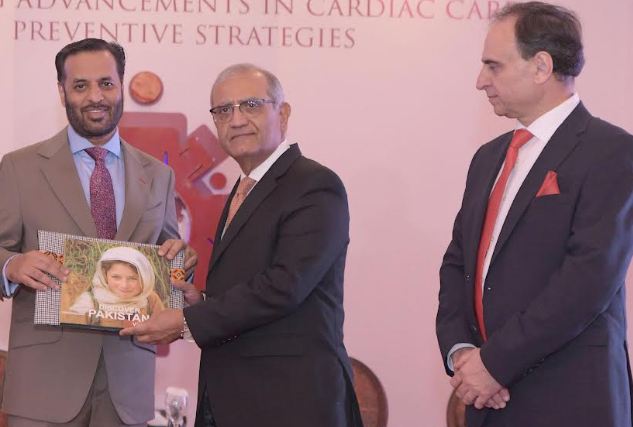
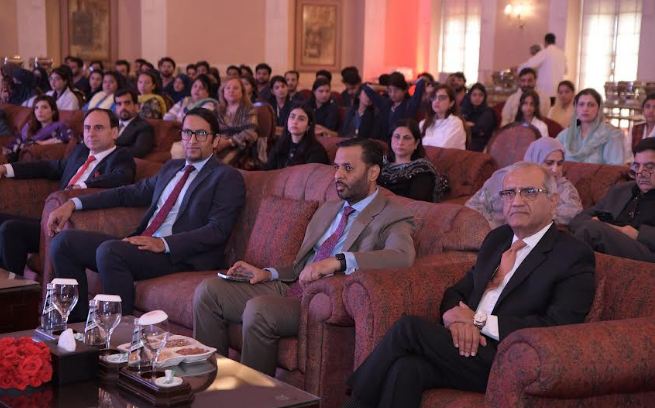
ISLAMABAD, SEPT 24 /DNA/ – Serena Hotels, under the Public Diplomacy Initiative, organized a special Raabta Panel Discussion to mark World Heart Day, in collaboration with Maroof International Hospital. The discussion brought together leading cardiologists, health experts, and media representatives to highlight advancements in cardiac care and the importance of preventive strategies for heart health.

The event was honored by the presence of Federal Health Minister Mr.  Syed Mustafa Kamal as the Chief Guest. Addressing the gathering, the Minister praised Serena Hotels and Maroof International Hospital for spearheading dialogue on cardiac health. He stressed the importance of adopting healthy lifestyles to prevent cardiovascular diseases, which remain a leading cause of mortality worldwide, and reaffirmed the government’s commitment to strengthening healthcare infrastructure and public awareness campaigns aimed at reducing the burden of heart disease in Pakistan.

The panel was moderated by Ms. Sidra Iqbal, a broadcast journalist and communication strategist, who navigated the conversation with insightful questions and reflections. The distinguished panel featured Dr. Mahim Malik, Congenital Heart Surgeon; Dr. Fahad Khalid, Consultant Interventional Cardiologist; Mr. Shahzad Alam, Representative of WHO; Ms. Nayyer Ali, Secretary of the National Press Club; and Dr. Rashid Ali Khan, Head of Psychiatry at Maroof International Hospital. Together, they shed light on the latest advancements in cardiac care, including minimally invasive procedures, improved diagnostic technologies, and the growing importance of integrated healthcare. They also emphasized preventive strategies such as regular exercise, balanced diet, routine screenings, and mental health management as essential components of heart health.

On this occasion, Mr. Haroon Naseer, CEO of Maroof International Hospital also shared his thoughts, stressing that World Heart Day serves as a powerful reminder to place heart health at the center of our daily lives. He appreciated the efforts of Serena Hotels in encouraging dialogue on such critical issues and added that creating awareness and encouraging preventive care are key steps toward building a healthier and more informed society.

Through the Public Diplomacy Initiative, Serena Hotels continues to provide a platform for meaningful dialogue on pressing social, cultural, and health-related issues, spreading awareness and community engagement.

Stay Connected

64FansLike
60FollowersFollow

Latest Reviews

Exchange Rates

USD - United States Dollar
EUR
1.14
GBP
1.33
AUD
0.69
CAD
0.71