Home Blog Page 460

President Zardari’s visit to China marks major strides in bilateral, strategic, economic ties: Mandviwalla

President Zardari’s visit to China marks major strides in bilateral, strategic, economic ties: Mandviwalla

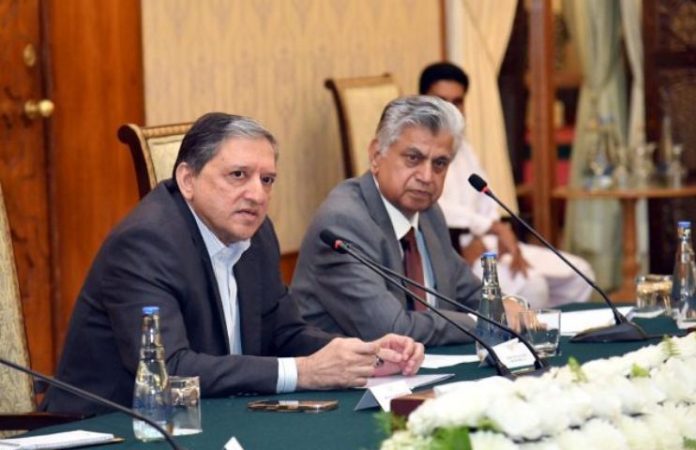
ISLAMABAD, Sep 26 (APP/DNA):President Asif Ali Zardari’s recent visit to China has further deepened strategic cooperation, expanded economic partnerships, and opened new avenues for bilateral collaboration between the two countries in diverse sectors, Pakistan Peoples Party (PPP) senior leader Senator Saleem Mandviwala said in a press conference on Friday.

Spokesperson to the president Murtaza Solangi also accompanied Saleem Mandviwalla in the joint press conference. 

Saleem Mandviwalla said that the president’s visit was aimed at strengthening business-to-business ties and fostering public-private partnerships across a a range of sectors. 

He said this was President Zardari’s second official visit to China since assuming office. However, he said that unlike the first visit when the president met with the top Chinese leadership, he focused on mid-level Chinese leadership, engaging extensively with provincial governors and Communist Party officials to promote investment and cooperation. 

President Zardari witnessed the signing of six key agreements with various Chinese institutions in areas including transportation, waste management, energy, education, and agriculture.

President’s spokesperson Murtaza Solangi highlighted that while President Zardari’s first visit included meetings with China’s top leadership, including President Xi Jinping, this visit deliberately focused on provincial-level engagement. “The President visited Shanghai, Urumqi, Kashgar, and Sichuan, covering a broad spectrum of sectors such as agriculture, public health, biotechnology, food security, transportation, and education,” he said.

One of the most notable aspects of the visit, Solangi noted, was the unprecedented presence of Chinese Ambassador to Pakistan Jiang Zaidong, who accompanied President Zardari throughout the tour on instructions from Beijing which reflected the level of bilateral relationships.

Saleem Mandviwala underlining the historic nature of President Zardari’s visit to Kashgar, making him the first Pakistani head of state to do so said that the visit came at the invitation of the Chinese government.

He also termed the president’s tour of the Aviation Industry Corporation of China (AVIC) a milestone, noting that Zardari became the first foreign head of state to be invited to the AVIC complex. The president was briefed on China’s latest aerospace capabilities including the J-10 fighter jet, JF-17 Thunder co-production, J-20 stealth aircraft, UAV technologies, and multi-domain command-and-control systems.

“This visit could pave the way for future agreements for the procurement of advanced defence technologies from China,” Mandviwala added.

Among the key outcomes of the visit was the signing of a Memorandum of Understanding (MoU) for the establishment of a Coal Gasification and Fertilizer Plant in Thar, Sindh, the first of its kind to utilize Thar coal. This project is expected to address energy needs while supporting Pakistan’s agriculture sector.

The president also witnessed the signing of three additional MoUs focused on modernizing Pakistan’s livestock industry, construction of a modern textile industrial park, and supply and after-sales services for fire trucks and emergency equipment, Mandviwalla said adding that another agreement was signed for waste and tyre recycling in Karachi, while President Zardari also experienced China’s high-speed rail network, expressing his desire to see similar technology adopted in Pakistan.

As regards the China-Pakistan Economic Corridor (CPEC), Mandviwalla confirmed that discussions were held to reinvigorate and expand the initiative. 

To a question, Mandviwalla clarified that the agreements and projects signed during the visit were not limited to Sindh, but were meant to benefit the entire country.

In response to another query, Senator Mandviwalla said that the Chinese leadership expressed satisfaction over Pakistan’s recent operational success in “Operation Bunyan um-Marsoos,” against India particularly noting the effective use of Chinese-made aircraft.

Both Solangi and Mandviwalla emphasized that President Zardari was continuing the strong foundation of bilateral cooperation laid during his previous tenure (2008–2013), and the recent visit further cements Pakistan-China ties as comprehensive and strategic partners.

ICC fines Indian Captain over political remarks

ICC fines Indian Captain over political remarks

DNA

DUBAI: India captain Suryakumar Yadav has been found guilty by the International Cricket Council (ICC) of breaching the code of conduct for his comments that alluded to brief military skirmish between India and Pakistan, after their group match in the Asia Cup on September 14, ESPNcricinfo reported.

“It is understood Suryakumar’s not-guilty plea was rejected by ICC match referee Richie Richardson and that he was fined 30 per cent of his match fee. India have appealed against the verdict,” the publication reported.

The move came after the Pakistan Cricket Board (PCB) lodged an official complaint with the ICC against Yadav for dedicating its September 14 win over Pakistan to “the families of the victims of the Pahalgam terror attack”.

At least 24 people had been killed in the April attack, which led to a brief military escalation between India and Pakistan, as New Delhi blamed Islamabad for the attack without evidence.

Tehran, Moscow sign $25bn deal to build nuclear plants in Iran

Tehran, Moscow sign $25bn deal to build nuclear plants in Iran

Each plant will have a capacity of 1,255 megawatts; The move comes as so-called snapback sanctions triggered by the European parties to a landmark 2015 nuclear deal with Iran are set to return

News Desk

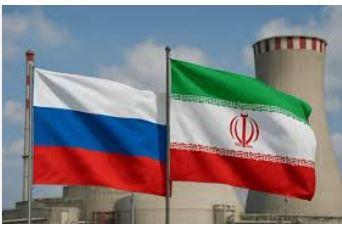
MOSCOW: Iran and Russia signed a $25 billion deal to build nuclear power plants in Tehran, Iranian state media reported on Friday, just hours ahead of the likely return of sweeping UN sanctions on Iran.

“A deal for the construction of four nuclear power plants with a value of $25 billion in Sirik, Hormozgan, was signed between the Iran Hormoz company and Rosatom,” state television said.

Iran has just one operational nuclear power plant in Bushehr in the south, with a capacity of 1,000 megawatts — just a fraction of the country’s energy needs.

According to state news agency IRNA, each plant will have a capacity of 1,255 megawatts, though no details were provided on the timeline.

The move comes as so-called snapback sanctions triggered by the European parties to a landmark 2015 nuclear deal with Iran are set to return by the end of Saturday.

Britain, France and Germany triggered the sanctions last month, accusing Iran of failing to adhere to its commitments under the agreement.

At a Security Council session on Friday, China, and Russia put forward a draft resolution to allow another half year for talks, but it is unlikely to garner enough support to pass.

Western countries have long accused Iran of seeking an atomic bomb — a charge Tehran vehemently denies, defending its right to a civilian nuclear programme.

The United States in 2018 unilaterally pulled out of the nuclear accord with Iran, prompting Tehran to begin walking back its commitments.

Talks between Washington and Tehran to strike a new deal were underway before being derailed by unprecedented Israeli strikes on Iran in June that began a 12-day war, briefly joined by the United States.

Iran had previously signed with Russia a nuclear energy deal in 1993, allowing for the construction of the Bushehr plant, after Germany had abandoned it in the wake of the Islamic revolution of 1979.

PM says Pakistan seeks peace in ‘our part of world’ after defeating India

PM says Pakistan seeks peace in 'our part of world' after defeating India

“This is my most sincere and serious offer before this assembly of the world nations,” says

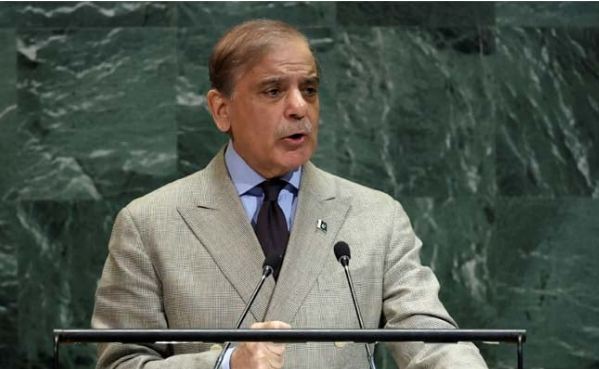
WASHINGTON: Prime Minister Shehbaz Sharif told the United Nations General Assembly (UNGA) that Pakistan sought peace in the region after it delivered a “bloody nose” to India in the May conflict.

“We have won the war, and now we seek to win peace in our part of the world, and this is my most sincere and serious offer before this assembly of the world nations,” the prime minister said at the August forum in New York.

Pakistan and India engaged in a four-day fight — their worst in decades — after New Delhi’s unprovoked assault on Islamabad following a terrorist attack in Indian Illegally Occupied Jammu and Kashmir. India blames Pakistan for the attack, a charge that Islamabad has vehemently denied.

At the outset of his speech, the prime minister noted that the world is more complex than ever before: conflicts are intensifying, international laws are being brazenly violated, humanitarian crises are multiplying, terrorism remains a potent threat, disinformation and fake news undermine trust, and climate change threatens our very survival — particularly in countries like Pakistan.

“Today, multilateralism is no longer an option; it is the need of the hour. Pakistan’s foreign policy, guided by Quaid-i-Azam, is based on peace, mutual respect, and cooperation. We believe in the peaceful settlement of disputes through dialogue and diplomacy,” he said.

“Last year, from this very podium, I had warned that Pakistan would act — and act most decisively — against any external aggression. Those words of mine proved true. I hoped they would not. But then, that is destiny. In May this year, my country confronted unprovoked aggression from our eastern front. The enemy came shrouded in arrogance; we sent them back in humiliation, delivering a bloody nose.”

“India sought to extract political gains from a human tragedy by spurning my sincere offer of an independent international investigation into the Pahalgam incident,” he said.

The prime minister added: “Instead, it attacked our cities and targeted our innocent citizens. When our territorial integrity and national security were violated, our response was in accordance with the right of self-defence under Article 51 of the UN Charter.”

“Our valiant armed forces, under the leadership of Asim Munir, mounted an operation of stunning professionalism and bravery, repulsing the enemy’s attack under the air chief marshal. Our falcons took flight and etched their answer across the skies, resulting in seven of the Indian jets turning to scrap and dust — a decisive response. A response to the aggressor that will echo through the annals of history.”

“To the fair architect of this victory, to every officer and soldier, heirs of our martyrs — their names are forever engraved in glory,” he said.

“The mothers of our martyrs — their courage guides our path forward, and their sacrifice shall never be in vain, God willing. And to every Pakistani, you stood as one unbreakable wall — Bunyanum Marsoos,” he added.

“Though in a position of strength, Pakistan agreed to a ceasefire facilitated by President Trump’s bold and vigorous leadership. We express our deep appreciation to him and his team for their active role in bringing about the ceasefire.”

He added that Trump’s efforts for peace helped avert a more threatening war in South Asia. Had he not intervened timely and decisively, the consequences of a full-fledged war would have been catastrophic.

“Who would have lived to tell what happened? And therefore, in recognition of Trump’s wonderful and outstanding contribution to promoting peace in our part of the world, Pakistan nominated him for the Nobel Peace Prize. I think this is the least we can do for his love of peace — truly, he is a man of peace.”

“We have won the war, and now we seek to win peace in our part of the world, and this is my most sincere and serious offer before this assembly of the world nations. Pakistan stands ready for a composite, comprehensive, and result-oriented dialogue with Indian on all outstanding issues.”

“South Asia requires proactive rather than provocative leadership. India’s unilateral and illegal attempt to hold the Indus Water Treaty in abeyance defies the provisions of the treaty itself as well as the norms of international law.”

“Pakistan has made it abundantly clear and led there be no doubt once again in anybody’s mind, as I said last year in this hall from this podium, we will definitely defend the inseparable right of our 240 million people on these waters. To us, any violation of this IWT represents an act of war.”

“Through this house, I wish to assure the Kashmiris that I stand with them, the people of Pakistan stand with them, and one day soon India’s tyranny in Kashmir will come to a grinding halt, Kashmir will gain its fundamental right to self-determination through an impartial plebiscite under the auspices of this very organisation, the UN.”

Azerbaijan’s triumph in Patriotic War restored justice and dignity, says Mushahid

Azerbaijan’s triumph in Patriotic War restored justice and dignity, says Mushahid

Ambassador of Azerbaijan Khazar Farhadov says Pakistan’s straightforward and principled stance gave Azerbaijan additional strength in its just struggle.

Ansar Mahmood Bhatti

ISLAMABAD, SEPT 26 /DNA/ – Senator Mushahid Hussain Sayed has said that the ongoing genocide in Gaza and the international community’s silence on it reflect the double standards of the West, which has repeatedly failed Muslim nations in times of crisis.

Azerbaijan’s triumph in Patriotic War restored justice and dignity, says Mushahid

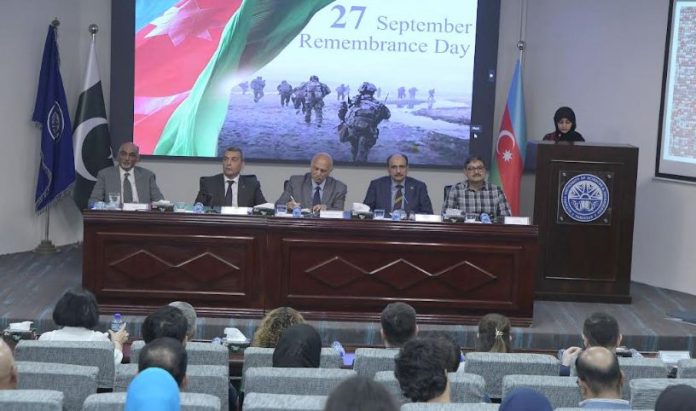
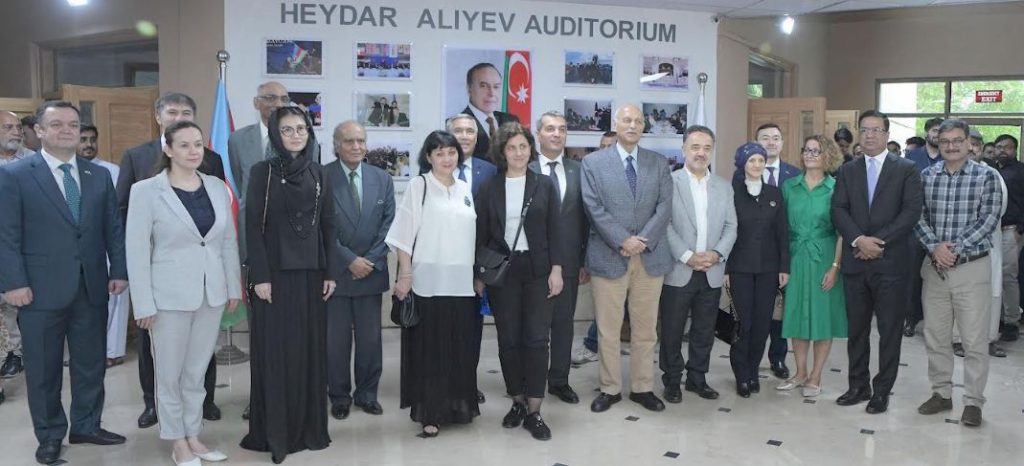
He was addressing a gathering on the occasion of the Remembrance Day organized by the Embassy of Azerbaijan at the Heydar Aliyev Auditorium, NUST University, Islamabad.

Senator Mushahid praised the leadership of Turkish President Recep Tayyip Erdogan, describing him as a leader of the Muslim world and the Global South. He lauded Azerbaijan’s President, calling him a “strong leader” who took decisive action to liberate Azerbaijani territories after years of injustice perpetuated by a strong Armenian lobby in the West.

He noted that Muslim nations have historically been left to defend themselves, citing the example of Cyprus in 1974 and Pakistan’s pursuit of nuclear capability as a deterrent against aggression. He criticized European leaders, particularly Germany, for supporting Israeli aggression, and condemned international guarantees as ineffective due to double standards often rooted in religion.

The senator concluded by stressing that Muslim countries must rely on their own strength to safeguard sovereignty, calling Palestine’s independence with Jerusalem as its capital the ultimate litmus test for global justice.

Azerbaijan’s Ambassador to Pakistan, Khazar Farhadov said that September 27 marks a day of great heroism and sacrifice for his nation, as it commemorates the beginning of the 44-day Patriotic War of 2020 which restored Azerbaijan’s territorial integrity after nearly three decades of Armenian occupation.

The ambassador recalled that the Patriotic War was conducted under the right to self-defense and in accordance with international law, ultimately ending Armenia’s long-standing military aggression. “This victory not only upheld Azerbaijan’s sovereignty but also restored the fundamental rights of almost one million displaced Azerbaijanis,” he said.

He praised the courage of the Azerbaijani Armed Forces under the leadership of President Ilham Aliyev, and acknowledged the political support extended by Pakistan and Turkey during the conflict. He said Pakistan’s straightforward and principled stance gave Azerbaijan additional strength in its just struggle.

Ending the occupation of the Azerbaijani territories exposed the extent of Armenia’s extensive illegal activities over the past three decades. There is clear evidence of the widespread mining of Azerbaijani lands, intentional destruction and appropriation of Azerbaijan’s historical, cultural, and religious heritage, plundering of natural resources, destruction of infrastructure, and other violations of international law, all of which have been properly documented and presented to the international community. We demand that Armenia be held accountable for its violations of international obligations, as well as international humanitarian and human rights law

Ambassador Farhadov also highlighted Azerbaijan’s ongoing efforts for peace, including the initiation of a peace agreement with Armenia in Washington in August. He stressed that lasting peace and regional prosperity depend on partnership and dialogue.

Paying tribute to Azerbaijan’s martyrs, he said their sacrifice paved the way for sovereignty, stability, and the future prosperity of the South Caucasus.

Pro Rector of NUST Maj Gen ® Arif Malik, Ambassador Ayaz, Adam Saud and Khalid Taimur Akram also spoke on the occasion.=DNA

=========

Sweden, Pakistan convene first textile matchmaking event in Karachi

Sweden, Pakistan convene first textile matchmaking event in Karachi

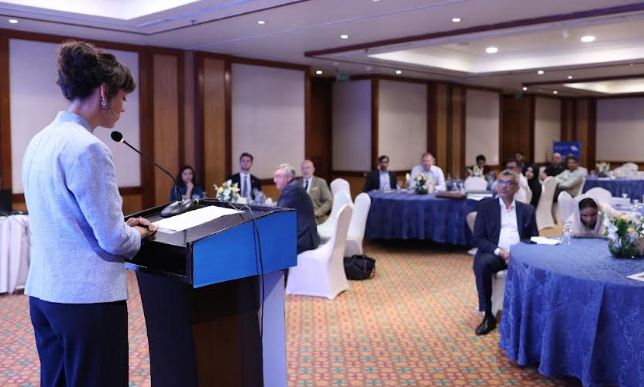
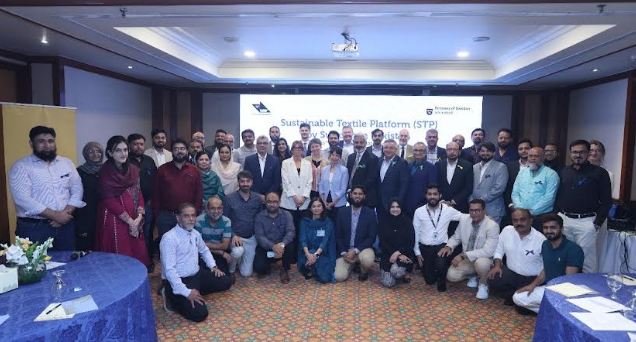
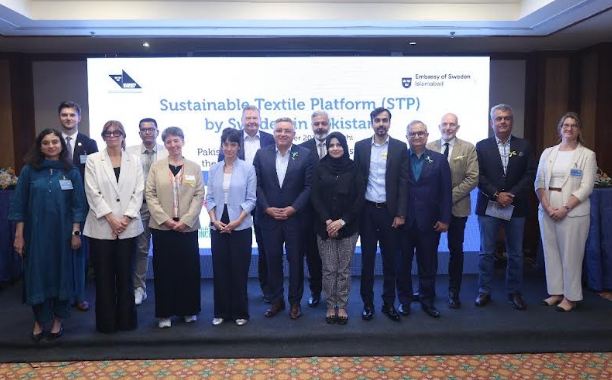
KARACHI, SEP 25 /DNA/ – The Embassy of Sweden in Islamabad, in collaboration with the export promotion agency Business Sweden, successfully hosted the very first matchmaking event under the Sustainable Textile Platform (STP) by Sweden in Karachi today. The event brought together Swedish companies, Nordic green-tech innovators, Swedish academia, and key stakeholders from Pakistan’s textile sector, fostering collaboration and knowledge-sharing for a more sustainable industry.

A delegation of Swedish and Nordic participants attended (see complete list below), including the platform’s partner companies H&M, IKEA, and Atlas Copco, as well as leading technology solution providers and academic representatives.The delegation brought expertise in automation, electrification, renewable energy, water technology, sustainable materials, and innovative production processes, which are the key areas critical to Pakistan’s textile transformation. By combining the global leadership of Swedish brands with cutting-edge solutions from technology innovators, the Sustainable Textile Platform is creating unique opportunities for collaboration and long-term sustainability.

The Sustainable Textile Platform, launched in Pakistan in 2024, aims to accelerate the adoption of sustainable practices and a green transition of the textile sector by connecting Swedish expertise with Pakistan’s textile industry. The platform focuses on renewable energy, energy efficiency, and water treatment, addressing key challenges of the industry while promoting innovation and competitiveness.

The event was structured in two sessions.The first half of the day featured presentations from Swedish brands, technology providers, and academia, showcasing innovative solutions and research-based insights for sustainability. The second half of the day focused on matchmaking, providing an opportunity for local textile suppliers to engage directly with incoming Nordic technology solution providers, explore partnerships, and discuss potential collaborations.

Sweden has long been a global leader in sustainability, and its commitment to supporting Pakistan’s green transition was reaffirmed by H.E. Alexandra Berg von Linde, Ambassador of Sweden to Pakistan, she said:

“We are delighted to see such active engagement from both Swedish and Pakistani stakeholders at this very first matchmaking event. By bringing together companies, innovators, and academia, the Sustainable Textile Platform creates new opportunities for collaboration, helping Pakistan’s textile sector transition towards greener, more competitive practices while strengthening our trade partnership.”

Mr. Emil Akander, Vice President, Region APAC, Singapore, Business Swedemhighlighted the role of Swedish companies in driving the green transition and advancing exchange of knowledge and expertise with Pakistan’s textile sector.Hecommented:

“This event highlights the growing interest in sustainable solutions within Pakistan’s textile sector. Swedish companies bring innovative technologies and climate-smart solutions, and the platform provides an excellent opportunity for exchange of knowledge and expertise with local manufacturers. The connections made today lay the foundation for long-term collaboration, innovation, and positive impact.”

The Sustainable Textile Platform by Sweden in Pakistanis a collaborative effort for ideas, innovation, and collaboration. By connecting Swedish expertise with Pakistan’s textile industry, it aims to accelerate the adoption of sustainable practices, inspire new partnerships, and unlock opportunities for a greener, more competitive future. This event was just the beginning of a journey that promises lasting impact for the textile industry and for the shared commitment of Sweden and Pakistanfor a sustainable and green future.

Iran sanctions look set to return after last-ditch UN vote

Iran sanctions look set to return after last-ditch UN vote

United Nations, Sept 26 (AFP/APP): Sweeping UN sanctions look likely to return on Iran despite a last-ditch effort on Friday by China and Russia for a delay to allow further talks, diplomats say.

  European powers were urging Iran to reverse a series of steps it took after Israel and the United States bombed its nuclear sites in June.

  Complaining that Iran has not complied with a landmark but moribund deal, the Europeans have triggered a return of sweeping UN sanctions — notably on its banking and oil sectors — that are set to take effect at the end of Saturday.

China and Russia at a Security Council session on Friday put forward a draft resolution, seen by AFP, that would give another half year for talks, or until April 18, 2026.

      But diplomats said they did not expect it to receive the nine votes on the 15-member Security Council for passage.

  French President Emmanuel Macron met Iranian President Masoud Pezeshkian on Wednesday and said a deal was possible to avoid the sanctions but that Iran had only hours left.

  One diplomat, speaking to AFP on condition of anonymity, said late Thursday that the Europeans believed they had “done everything to try to move things” but that Iran did not offer the desired flexibility.

  France — speaking for itself, Germany and Britain — has told Iran it must allow full access to UN nuclear inspectors, immediately resume nuclear negotiations and offer transparency on highly enriched uranium, the whereabouts of which has been the subject of speculation.

– ‘Illegal and irresponsible’ –

The 2015 deal, negotiated during Barack Obama’s presidency, lifted sanctions in return for Iran drastically scaling back its controversial nuclear work.

  President Donald Trump in his first term withdrew from the deal and imposed sweeping unilateral US sanctions, while pushing the Europeans to do likewise.

  The Chinese and Russian draft resolution, in a reference to the United States, would call on all initial parties to the deal to “immediately resume negotiations.”

     On Thursday, Iranian Foreign Minister Abbas Araghchi met his British counterpart, Yvette Cooper, to discuss the row.

Araghchi “strongly criticized the position of the three European countries as unjustified, illegal and irresponsible,” the Iranian foreign ministry said.

    Steve Witkoff, Trump’s real estate friend and roving envoy who had been negotiating with Iran until Israel attacked, said Wednesday that Iran was in a “tough position” but also held out hope for a solution.

  “I think that we have no desire to hurt them. We have a desire, however, to either realize a permanent solution and negotiate around snapbacks,” Witkoff told the Concordia summit on the sidelines of the General Assembly.

    “If we can’t, then snapbacks will be what they are. They’re the right medicine,” Witkoff said.

  Iran has long contended that it is not seeking nuclear weapons, pointing to an edict by Supreme Leader Ayatollah Ali Khamenei, and US intelligence has not concluded that the country has decided to build a nuclear weapon.

  But Israel, the United States and European countries have long been skeptical due to the country’s advanced nuclear work, believing it could quickly pursue a bomb if it so decided.

  Standing at the General Assembly rostrum this week, Pezeshkian showed pictures of people killed in the 12-day Israeli military campaign against Iran in June, which Tehran says killed more than 1,000 people.

  The United States joined in the campaign on June 22, striking several of Iran’s nuclear facilities.

Tourism through digital lens: Exploring Khyber Pakhtunkhwa’s untamed beauty for economic gains

Tourism through digital lens: Exploring Khyber Pakhtunkhwa’s untamed beauty for economic gains

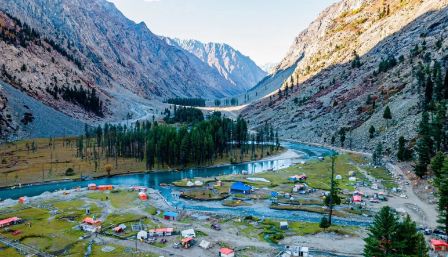
PESHAWAR, Sep 26 (APP):As the late summer sun peeks through rain-kissed clouds, the serene valleys of Khyber Pakhtunkhwa (KP) are welcoming a wave of tourists and adventure sports enthusiasts, all drawn by the region’s breathtaking natural beauty.

Nathiagali, perched in the western Himalayas, has turned into a canvas of colours, clouds, and cool breeze, creating a perfect prelude to the winter season.

After a night of rain, the scenic trails of Ayubia, Mukshpuri Top, and Donga Gali bustle with life. Children giggle on swings, couples ride the chairlifts, and amateur photographers scramble to capture the play of mist over the snow-capped peaks of Miranjani.

But beyond the Instagram-perfect moments lies a deeper story of economic opportunity, ecological balance, and a province finding its identity in ecotourism.

For many like Dr. Naveed Farooq, an assistant professor at Abdul Wali Khan University, KP’s mountain retreats are more than just a weekend escape and soul refreshing sanctuaries.

“I return every summer,” he shares while sipping tea in a Nathiagali café. “The serenity of Swat and Nathiagali recharges me. The trout fish, river rafting, snowfalls are a complete experience.”

“Today is the age of digital media and artificial intelligence. Such beautiful tourism destinations if properly highlighted through digital media platforms can bring an economic turnaround to Pakistan,” he says.

Dr. Naveed is among thousands of domestic travelers who have turned to KP’s eco-spots to unplug from the urban grind. And with smartphones in every pocket and drone cameras in the sky, KP’s hidden gems are now accessible to the world digitally.

However, this surge in tourism is not without challenges. Accommodation rates in Nathiagali and surrounding resorts have skyrocketed, often ranging between Rs7,000 to Rs20,000 per night  pricing out middle and low-income families.

“Nature belongs to everyone, not just those who can afford five-star lodges,” said Nasir Khan, a property dealer from Nowshera. “If unchecked, this kind of exploitation will discourage tourism rather than promote it.”

This pricing problem has drawn the attention of local authorities, who now face the difficult task of regulating the booming, but uneven, tourism economy.

In a bid to make nature affordable again, the KP Tourism Department has introduced eco-friendly camping pods across major tourist spots. These small wooden structures, often located near lakes, valleys, or dams, offer modest but comfortable stays at Rs3,500–5,000 per night which is far more accessible than private hotel rooms.

Already operational in places like Sharan, Swat, Chitral, and Tandyani, the pods are rapidly gaining popularity.

“Each pod has two to four beds, a washroom, and a kitchen area which is an ideal for families,” said a Tourism Department spokesperson. “These are not just accommodations; they are experiences that bring people closer to nature.”

KP is not relying solely on its famous peaks. The government is actively developing lesser-known destinations ie from the pine-laden valleys of Khanspur and Kumrat to the emerald waters of Mahudand Lake, and from the rugged beauty of Chitral’s Broghil Valley to the colonial-era hiking tracks in Upper Hazara.

Ecotourism spots are also being created near small dams like Tanda (Kohat), Chattri (Haripur), and Naryab (Hangu), allowing day-trippers and families to enjoy scenic getaways without long travel.

A key driver behind KP’s tourism boom is security and accessibility. The launch of Tourist Police in Hazara and Malakand divisions, fluent in multiple languages and trained in crisis response, has increased confidence among travelers.

For added assurance, the government launched a Tourist Safety App, enabling direct contact with emergency services — especially useful for solo travelers and foreign tourists.

Road infrastructure has also received a major boost, with smoother routes now connecting remote locations like Bishigram Lake and Kandal. Jeep tracks and hiking trails, once inaccessible, are being revived some dating back to the colonial era.

KP’s rich blend of ecological and cultural diversity makes it a unique destination. From archaeological ruins in Swat to Sufi shrines in D.I. Khan, and from traditional Kalasha culture in Chitral to the music of tribal communities as every journey here is a living story.

Director General Habib Arif of the KP Culture and Tourism Authority believes that ecotourism can empower youth, especially in rural areas.

“Every pod we build, every trail we revive, creates local jobs — guides, cooks, porters, drivers. That’s how you beat unemployment and protect nature at the same time,” he said.

With rising climate concerns and over tourism threatening Pakistan’s northern belt, KP’s pivot to sustainable, experience-based tourism is timely. If managed wisely, ecotourism can turn the province into an economic powerhouse — while preserving its natural treasures for generations to come.

As the mist settles over the Galiyat hills and camera lenses continue to click, one thing is clear that the world is watching KP, not just for its beauty, but for how it redefines tourism in the age of climate and culture consciousness.

PRCS, Norwegian Red Cross leadership unite to enhance global humanitarian action

PRCS, Norwegian Red Cross leadership unite to enhance global humanitarian action

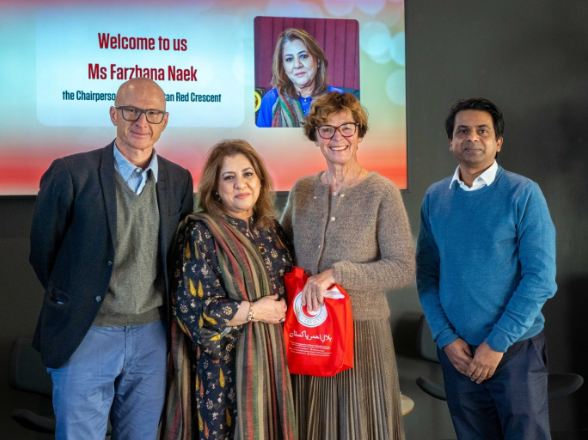
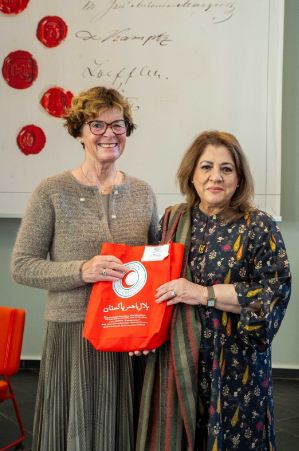
ISLAMABAD, SEPT 26 /DNA/ – The honourable Chairperson of the Pakistan Red Crescent Society (PRCS), Mrs Farzhana Naek, held a productive meeting with the President of the Norwegian Red Cross, Ms Siri Hatlen, to strengthen humanitarian cooperation and explore avenues for enhanced support to the people of Pakistan most affected by climate change.

During the meeting, Mrs Farzhana Naek emphasised that her visit to Norway was part of her ongoing advocacy for communities across Pakistan whose lives and livelihoods continue to be devastated by climate-induced disasters. She underscored that her primary objective was to mobilize greater international aid and grants, particularly in the area of health, to ensure long-term relief and rehabilitation of the flood affected population in different regions of Pakistan. She further added, Pakistan should be at the top of the list for climate aid, given the scale and severity of the impacts we are experiencing, Mrs Naek stated. “For me, International Humanitarian Law and Climate Justice remain a top priority, with a focus on protecting the most vulnerable communities.”

Ms Siri Hatlen said, we deeply value more than 20 years of strong cooperation and partnership with the PRCS, and we are proud of what we have accomplished together in Health, Clean Water, National Society Development, Finance Development, Sanitation, and Disaster Response. She also appreciated the efforts of PRCS and especially the transformation plan under the leadership of Ms Farzhana Naek.

On the sidelines of her visit, Mrs Naek also met with Mr Simen Saxebøl Acting Secretary General of Norwegian Red Cross and Mr Erik Abild, Director for the Humanitarian Department at Norwegian Agency for Development Cooperation (NORAD) for discussions focused on building climate-adapted health systems and engaging in international climate policy, strengthening humanitarian response to natural disasters and armed conflict, and addressing the humanitarian needs of Afghans returning to their home country.

This visit marks an important step in reinforcing the shared humanitarian mission of PRCS and Norwegian Red Cross to alleviate human suffering and build resilient communities.

Green shirts defeat Bangladesh: Asia Cup crescendo: it’s India vs Pak for the title

Green shirts defeat Bangladesh: Asia Cup crescendo: it's India vs Pak for the title

Final to be played on Sunday

Sports Desk

DUBAI, SEPT 25 /DNA/ – The stage is set for a historic clash as Pakistan defeated Bangladesh in the final Super Four match by 11 runs on Thursday to book their place in the Asia Cup 2025 final against arch-rivals India. The highly-anticipated final will be played on Sunday, September 28, in Dubai.

Pakistan’s victory sets up what will be the first-ever Asia Cup final between the two cricketing heavyweights, intensifying a rivalry that transcends sport.

In what was essentially a virtual semi-final, Bangladesh put up a spirited effort. Batting first, the Tigers’ bowlers executed a disciplined plan, successfully containing the powerful Pakistani batting line-up to a decent, yet chaseable, total.

However, the momentum shifted during the chase. Despite a commendable bowling performance, the Bangladesh batsmen struggled to build partnerships against a charged-up Pakistani attack. Their innings ultimately faltered, leading to a comfortable win for Pakistan and securing their spot in the final alongside India.

With India already securing their final berth earlier in the week, cricket fans across the globe will now witness the ultimate face-off for the continental title. The two teams have already met twice in the tournament, with India emerging victorious in both encounters.

All eyes now turn to Sunday, where the rivalry will finally culminate in a grand finale.

Earlier, Pakistan managed to post a modest target of 136 runs for Bangladesh.

Taskin Ahmed returned economical bowling figures of 3/28 and helped Bangladesh curtail Pakistan to a below-par total in the high-stakes match.

Bangladesh’s stand-in captain Jaker Ali’s decision to field first paid dividends as his team’s bowling unit restricted Pakistan to 135/8 in 20 overs.

Pakistan got off to a disastrous start to their innings as they lost in-form opener Sahibzada Farhan (four) and struggling Saim Ayub (zero) in the first two overs, with just five runs on the board.

Following the early stutter, Pakistan captain Salman Ali Agha joined experienced opener Fakhar Zaman in the middle to stabilise the innings, but the duo could add 24 to the total as the latter was dismissed by Rishad Hossain in the seventh over.

Rishad struck again in his next over, dismissing Pakistan’s last match hero Hussain Talat (three) and bringing the total down to 33/4 in 8.1 overs.

Pakistan captain Agha and wicketkeeper batter Haris then shared a brief 16-run partnership until Mustafizur Rahman got the former caught behind in the 11th over with just 49 runs on the board. Agha scored a cautious 19 off 23 deliveries, featuring two fours.

With the scoreboard reading 49/5 in 10.5 overs, Shaheen Shah Afridi was promoted and sent into bat at number seven ahead of regular all-rounders Mohammad Nawaz and Faheem Ashraf in a bid to lift the score.

The left-handed batter smashed two sixes on his way to a 13-ball 19 and fell to Taskin Ahmed in the 14th over.

Pakistan’s biggest partnership came for the seventh wicket when Haris and Nawaz added 38 runs in 24 balls, with the former leading the charge.

Haris, who appeared to have settled down, was eventually caught and bowled by Mahedi Hasan in the 18th over and walked back after top-scoring for Pakistan with a gutsy 31 off 23 deliveries with the help of three fours and a six.

Nawaz followed suit in the next over as he skied one off Taskin Ahmed and was brilliantly caught by Parvez Hossain Emon after scoring 25 off 15 deliveries, comprising two sixes and a four.

Taskin was the standout bowler for Bangladesh, taking three wickets for just 28 runs in his four overs, followed by Mahedi Hasan and Rishad with two each, while Mustafizur Rahman chipped in with one.

Stay Connected

64FansLike
60FollowersFollow

Latest Reviews

Exchange Rates

USD - United States Dollar
EUR
1.14
GBP
1.34
AUD
0.69
CAD
0.71