Home Blog Page 459

ICCI, Govt collaboration to boost business environment

ICCI, Govt collaboration to boost business environment

ISLAMABAD, Sep 26 (APP):Member National Assembly Malik Abrar Ahmed has said that Pakistan’s victory against India, the Pakistan–Saudi Arabia defence agreement, and historic advancements in Pakistan–US relations are indicative of the country’s successes on international fora. 

He said the honour of ensuring the security of Harmain Sharifain is a matter of immense pride for the entire nation.

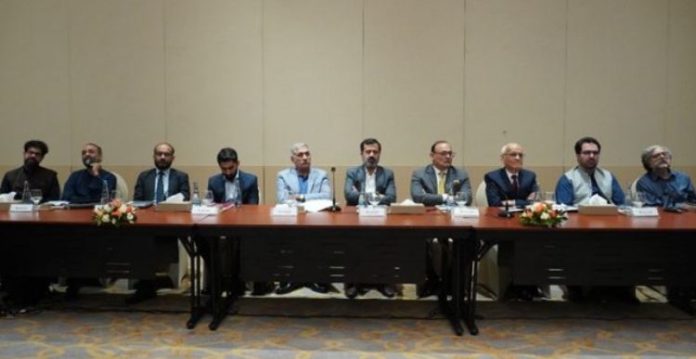
He expressed these views during his visit to the Islamabad Chamber of Commerce and Industry (ICCI) along with Members Provincial Assembly Punjab Chaudhry Sher Ali, Raja Mohammad Hanif, Malik Iftikhar Ahmad, and Malik Mansoor Afsar. Patron-in-Chief Founder Group Tarnol Chaudhry Wajid Ayub, President Talagang Chamber of Commerce and Industry Malik Shabbir, and other dignitaries also accompanied him to felicitate the newly elected President ICCI Sardar Tahir Mehmood.

Malik Abrar Ahmed said that the sitting PML-N government is taking all possible measures to create a conducive environment for ease of doing business in the country, which is crucial for attracting foreign direct investment and achieving economic stability.

He added that Pakistan’s immense tourism potential must be showcased through better coordination among institutions, facilitation for the business community, and adoption of pro-business policies.

He emphasized that anti-business and coercive measures must be avoided, and velvet hammering should be preferred, urging institutions like CDA and RDA to frame business-friendly policies in consultation with business leaders.

He praised ICCI for its dedicated role in serving the business community of Islamabad and assured his full support to the Chamber in ensuring a level playing field for entrepreneurs.

Members Provincial Assembly Chaudhry Sher Ali, Raja Hanif, Malik Iftikhar, and Malik Mansoor also lauded ICCI’s efforts in resolving business community issues.

They expressed confidence that under the leadership of Sardar Tahir Mehmood, ICCI would achieve new milestones in the coming years.

ICCI President Sardar Tahir Mehmood highlighted that due to rapid urbanization, the country is facing a shortage of nearly 20 million housing units, a challenge likely to worsen without proper planning and action.

He reaffirmed that the private sector is committed to working alongside the government to bridge this gap. He added that ICCI is focusing on enhancing trade and investment relations with friendly countries and has chalked out future initiatives to achieve this goal.

Secretary General United Business Group and former President ICCI Zafar Bakhtawari thanked the dignitaries for their consistent support to ICCI.

He expressed confidence that Sardar Tahir Mehmood’s tenure would be exemplary due to his dedication and capabilities.

ICCI Senior Vice President Tahir Ayub and Vice President Mohammad Irfan Chaudhry also thanked the visiting guests for their goodwill gesture.
Regional Quartet Reaffirms Commitment to Peaceful Afghanistan

Regional Quartet Reaffirms Commitment to Peaceful Afghanistan

DNA

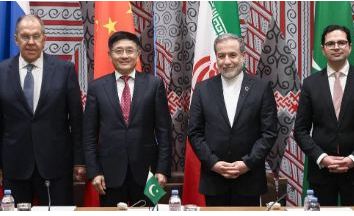
NEW YORK, SEPT 26 /DNA/  -On the sidelines of the High-Level Week of the 80th Session of the UN General Assembly, the fourth meeting of the regional quartet – comprising Russia, China, Iran, and Pakistan – was convened to discuss the Afghan issue.

Russian Foreign Minister Sergey Lavrov, along with senior representatives from China, Iran, and Pakistan, participated in the talks. The parties reviewed the current situation in Afghanistan and reiterated their aspiration for the country to become an independent and peaceful state, free from terrorism, conflict, and narcotics.

They highlighted the urgent need for enhanced constructive and pragmatic engagement by the international community with Kabul, aimed at strengthening Afghan statehood and ensuring regional as well as global stability.

Following the deliberations, a Joint Statement was adopted, reaffirming the quartet’s collective commitment to supporting Afghanistan’s stability, sovereignty, and development.

Islamabad emergency services to get GPS tracking, faster response system

Islamabad emergency services to get GPS tracking, faster response system
ISLAMABAD, Sep 26 (APP/DNA):Capital Development Authority (CDA) Chairman and Chief Commissioner Islamabad, Muhammad Ali Randhawa, on Friday emphasized the need for GPS trackers in ambulances and linked with private ambulance services to cut down emergency response times in the capital.

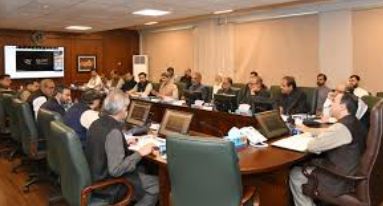
Chairing a meeting at CDA Headquarters, Randhawa said the new system will enable real-time tracking and monitoring of rescue operations through a modern Emergency Operations Center. “Response time should be further improved by integrating trackers in ambulances and linking with private ambulance services in the city,” he said.

The meeting reviewed plans to upgrade Capital Emergency Services with the help of the National Disaster Management Authority (NDMA).

Officials said drones, rescue motorbikes, and watchtowers would also be introduced to tackle emergencies, including forest fires.

Randhawa directed that staff recruitment and professional training be expedited, and low-cost substations be built at strategic locations, including within housing societies. “All available resources will be utilized to equip Capital Emergency Services with modern facilities and equipment,” he added.

Experts for addressing policy inconsistencies, transparency in Pakistan’s draft Integrated System Plan

Experts for addressing policy inconsistencies, transparency in Pakistan’s draft Integrated System Plan

ISLAMABAD, SEP 26 (APP/DNA): Experts and speakers at a consultative dialogue said that Pakistan’s recently introduced draft Indicative Generation Capacity Expansion Plan (IGCEP) and Transmission System Expansion Plan (TSEP) 2025-35 need to be more inclusive, transparent, and participatory, ensuring ownership by all the federating units so that an equitable, just and people-centric power sector planning can made and implemented.

The dialogue, titled “Critical Analysis of IGCEP and TSEP 2025-35: Inclusive Planning for a Just Energy Transition”, was organized by the Pakistan Renewable Energy Coalition (PREC) and the Alliance for Climate Justice and Clean Energy (ACJCE) here, said a press release issued on Friday.

The event brought together representatives of the federal and provincial governments, policymakers, civil society and research organizations, industry representatives, and energy investors.

Speaking at the event, Zeeshan Ashfaq, Chief Executive Officer of the Renewables First, a think-tank based in Islamabad, explained that IGCEP formulation process marked a shift from decades of ad-hocism to a formal and evidence-based planning process. While highlighting the key indicators of the successive iterations of IGCEP, he mentioned that the main purpose of power system planning is to meet the power and energy demand while also ensuring the energy system reliability at the least possible cost. He said the main critique on most IGCEP versions is that these have often violated their own foundational premise that only those power projects would be endorsed that fulfilled the least cost criterion. “Overtime, however, the quantum of pre-committed projects has decreased in IGCEP which is a positive development,” he said.

Criticizing the technical framework of IGCEP, SDPI’s energy economy expert Dr Khalid Waleed said that IGCEP 2025 relied excessively on top-down econometric models, ignoring massive solarisation being done by people on their own and electric vehicle projections given in a newly released policy while also treating battery energy storage systems narrowly. He also said that the plan overlooked climatic impacts on hydropower projects, failed to assess tariff implications of the projects included in it, and did not account for the European Union’s carbon border adjustment mechanism, which could undermine Pakistan’s industrial competitiveness.

Zain Moulvi, Research Director at the Alternative Law Collective (ALC) and member of the Alliance for Climate Justice and Clean Energy (ACJCE), argued that the plan overestimated GDP growth, ignoring Pakistan’s recent economic and demand trends. He criticized it for failing to account for ongoing floods and lacking climate and disaster stress testing. Zain also noted that the IGCEP disregards key policy measures under IMF commitments, which could significantly influence sectoral demand and investment. He emphasized that both the IGCEP and TSEP undervalue distributed generation, overlooking its least-cost potential in enabling community-based solutions like mini-grids and localized renewables. According to him, the draft plans lack transparency, especially in how transmission costs are allocated and how committed and strategic projects are assessed. He warned that the continued push for expensive and ecologically risky hydropower, combined with the arbitrary top down reshuffling of the committed project pool, risks undermining the authority of Council of Common Interests (CCI) and could lead to legal disputes.

Mr. Badar Alam, Chief Executive Officer (CEO) of the Policy Research Institute for Equitable Development (PRIED), noted that electricity is not merely a technical or financial issue, but a question of people’s rights, equity, and least-cost principles, which have often been violated in past plans. He stressed that any power sector development plan should put people’s needs and concerns at the center of energy sector development.

Dr Fiaz Chaudhry, Chairman of National Grid Company and Senior Advisor at Lahore University of Management Sciences, said though imperfect, IGCEP 2025 is a progressive step towards energy reforms. He said that least-cost planning principles allowed for meeting the same energy demand with $17 billion less investment compared to earlier estimates. He highlighted ambiguities in the past regulations and assured that stakeholder feedback would be incorporated into the final plan.

Maritime Minister urges roadmap to cement Pakistan’s role as Gulf–China bridge

Maritime Minister urges roadmap to cement Pakistan’s role as Gulf–China bridge
ISLAMABAD, Sep 26 (APP):Pakistan stepped up efforts to position itself as a regional logistics and transit hub, with Federal Minister for Maritime Affairs Muhammad Junaid Anwar Chaudhry chairing a high-level meeting on Friday to map out priority infrastructure projects linking the Middle East, Central Asia, China and beyond.

The minister urged senior officials from key ministries and state institutions to identify projects for rapid funding, propose regulatory reforms, and strengthen trade and transport corridors.

He also announced the creation of a joint working group, bringing together the maritime, communications, railways and defence ministries, to produce a shortlist of workable projects in its first meeting next week.

Discussions focused on integrating Karachi Port, Port Qasim and Gwadar Port with regional transport corridors through rail, road and air networks.

Junaid Chaudhry underlined the importance of the long-delayed ML-1 railway project, expected to boost freight and passenger traffic from Khyber Pakhtunkhwa to southern ports, and said Pakistan must match its development agenda with the connectivity needs of partner countries.

“We are not merely compiling lists of projects; we are shaping a national roadmap for logistics and connectivity,” he said, stressing that ports, shipping, aviation, IT systems, energy logistics and trade facilitation must all be factored into the plan. “Pakistan performs best under compressed timelines, and this is one such moment.”

Technical Advisor for Maritime Affairs Muhammad Jawad Akhtar proposed new projects with Saudi Arabia, including Karachi–KSA and Gwadar–KSA Gateway Terminals, expansion of the Pakistan National Shipping Corporation fleet under Saudi partnership, start direct shipping lines from Karachi to Jeddah and Gwadar to Dammam, and establish 20 green ship recycling yards at Gaddani.

Other ministries outlined their own connectivity priorities. The communications ministry called for laying fibre optic cables along railway lines and expanding submarine cable networks, while also urging swift completion of the M-6 motorway linking Karachi to Sukkur, described as a missing link on the China–Pakistan Economic Corridor. It also highlighted a planned M-10 extension through the Khirthar mountains to complement existing motorways.

A petroleum ministry representative said a $300 million feasibility study for a new merchant oil terminal at Hub was underway as part of Pakistan State Oil’s infrastructure expansion strategy.

In his concluding remarks, Junaid Chaudhry urged ministries to deliver a clear, investment-ready roadmap capable of attracting international financing and establishing Pakistan as a “central bridge” linking the Gulf with Central Asia and China.

ANF arrests 4 smugglers with over 3 kg of drugs worth Rs 1.3 mln

ANF arrests 4 smugglers with over 3 kg of drugs worth Rs 1.3 mln

RAWALPINDI, SEP 26 (APP/DNA): The Anti-Narcotics Force (ANF), conducting 4 operations across the country, recovered as many as

3.515 kilograms of drugs worth more than Rs 1.3 million and arrested 4 suspects, including a woman,

said an ANF Headquarters spokesman on Friday.

 He informed that 163 heroin capsules weighing 815 grams were recovered from the stomachs of a

man and a woman who were found dead at Bacha Khan Airport.

In another operation,150 grams of ice and 150 grams of hashish were recovered from the possession

of an accused near GT Road, Peshawar.

Similarly,2.4 kg of hashish was recovered from the possession of an accused near Haji Camp, Adda

Peshawar.

Cases have been registered against the arrested suspects under the Narcotics Control Act, and further

investigations are underway.

Governor Kundi calls poverty root cause of extremism, urges collective efforts for prosperity

Governor Kundi calls poverty root cause of extremism, urges collective efforts for prosperity

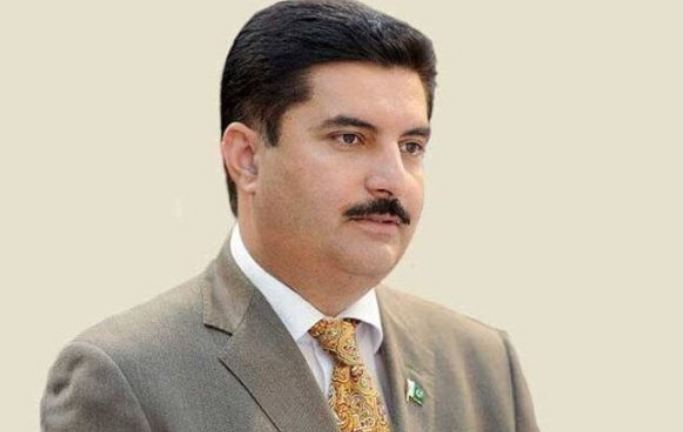
PESHAWAR, Sep 26 (APP):Governor Khyber Pakhtunkhwa Faisal Karim Kundi has said that poverty was the root cause of social disparities and extremism, stressing that equality, justice and collective efforts were essential to eradicate it. He added that a prosperous and peaceful future was directly linked to economic and social development.

Addressing as chief guest at a provincial conference titled “Strong Communities and Combating Extremism through Poverty Reduction Programs in Khyber Pakhtunkhwa”, organized by the Pakistan Poverty Alleviation Fund (PPAF) in collaboration with the KP Centre of Excellence on Countering Violent Extremism (CVE) and Paigham-e-Pakistan at Governor House Peshawar on Friday, the Governor said unemployment, poverty and lack of opportunities breed despair and exploitation.

Empowering communities economically and socially, he said, would serve as the strongest shield against extremism.

The conference was attended by MNA and Prime Minister’s Youth Program focal person Syeda Aamna Batool, KP Assembly members, Secretary National Commission on the Status of Women (NCSW) Humera Zia Mufti, PPAF CEO Nadir Gul Bareech, KP Red Crescent Society Chairman Farzand Ali Wazir, representatives of civil society organizations and a large number of women.

On the occasion, Governor Kundi visited stalls showcasing the province’s culture, distributed certificates among trained youth, and handed out interest-free loan cheques to skilled women. He also inaugurated two PPAF projects an infrastructure scheme and an olive project.

In his remarks, the Governor highlighted that the positive image of the people of Khyber Pakhtunkhwa is still alive and must be further promoted through a system based on equality and justice.

He emphasized narrowing the gap between the federation and provinces, ensuring fair distribution of resources, and extending development benefits to every corner of KP as key government priorities.

Appreciating PPAF’s efforts, Governor Kundi said the organization had made it its mission to serve the most vulnerable segments of society.

“Projecting the province’s soft image is our priority, and together we must work for a developed and prosperous Khyber Pakhtunkhwa,” he said.

He assured full cooperation of Governor House with the conference organizers. At the end of the event, the Governor presented shields to MNA Syeda Aamna Batool, Secretary Humera Zia, and PPAF CEO Nadir Gul.

Chinese Consul General calls on President Asif Ali Zardari

Chinese Consul General calls on President Asif Ali Zardari

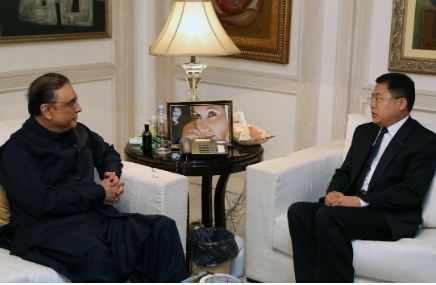
KARACHI, SEPT 26 /DNA/ – Yang Yundong, Consul General of the People’s Republic of China in Karachi, called on President Asif Ali Zardari in here today.

The Consul General congratulated the President on his successful visit to China, regarding it as a milestone in further deepening the long-standing friendship, time-tested and strategic partnership between the two countries.

President Zardari appreciated the warm hospitality and courtesies extended by the Chinese leadership during his visit. He said that the Memoranda of Understanding (MoUs) signed during the visit would open new avenues of cooperation and directly benefit the people of Pakistan, particularly farmers engaged in the agriculture and livestock sectors.

Referring to the 14th meeting of the Joint Cooperation Committee (JCC) on CPEC held in Beijing today, President Zardari welcomed the launch of CPEC Phase-II, focused on people-centred growth, innovation, agriculture, and export development. He expressed confidence that this new phase would open up fresh opportunities for Pakistan’s economic progress and further deepen the all-weather partnership between Pakistan and China.

The President also extended his felicitations to the Government and people of China on their forthcoming National Day, wishing them continued peace, prosperity, and progress.

US Navy Ship USS WAYNE E. Meyer concludes visit to Pakistan

US Navy Ship USS WAYNE E. Meyer concludes visit to Pakistan

DNA

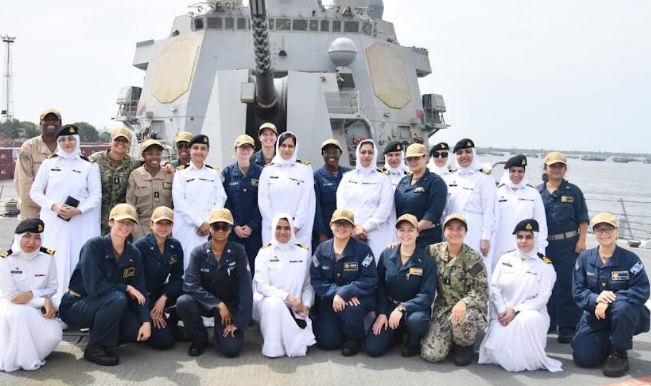
KARACHI, 26 SEP: United States Navy ship USS WAYNE E. MEYER departed Karachi after a successful two-day port call from 24–26 September 25, further strengthening the enduring maritime cooperation between Pakistan Navy and the U.S. Navy.

During the visit, Commanding Officer of U.S. ship called on Commander Pakistan Fleet, Rear Admiral Abdul Munib and matters of mutual interest were discussed. Visiting ship’s crew was also engaged in a range of activities including professional exchanges, sports events, and training sessions aimed at fostering mutual understanding and enhancing professional development. Personnel of both navies also undertook cross-ship visits, which provided valuable insights into each other’s operational practices.

The successful visit of USS WAYNE E. MEYER underscored the shared commitment of both navies towards promoting regional maritime security and stability. The engagement is also expected to pave the way for new avenues of collaboration between Pakistan and U.S. navies.

DG ISPR holds special session with students at Jamia Urwa tul Wuthqa

DG ISPR holds special session with students at Jamia Urwa tul Wuthqa

RAWALPINDI, SEPT 26 -A special session took place at Jamia Urwatul Wusqa, Lahore, between Inter-Services Public Relations (ISPR) Director General Ahmed Sharif Chaudhry and the institution’s scholars and students.

During the session, Principal Syed Jawad Naqvi described the awakening of national consciousness as essential for the education and upbringing of the new generation.

The students expressed appreciation for the Pakistani Armed Forces, recognising their role in the historic victory of Operation Bunyan-um-Marsoos.

They remarked that the openness with which the DG ISPR addressed their questions, offering clear and reasoned responses, was both welcome and encouraging. According to the students, this helped to dispel all confusion and concerns arising from negative propaganda on social media.

The students affirmed that the Pakistan Army represents the nation’s honour and pride, and that the entire nation – including all religious schools of thought – has stood, continues to stand, and will stand with its armed forces.

Stay Connected

64FansLike
60FollowersFollow

Latest Reviews

Exchange Rates

USD - United States Dollar
EUR
1.14
GBP
1.34
AUD
0.69
CAD
0.71