Home Blog Page 458

2nd CNS International sailing regatta 2025 culminates at Karachi

2nd CNS International sailing regatta 2025 culminates at Karachi

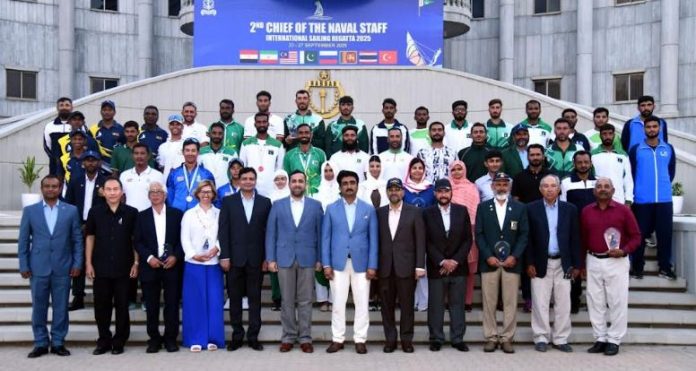
KARACHI, /DNA/ – The 2nd Chief of the Naval Staff (CNS) International Sailing Regatta 2025, held from 23 to 27 September 2025 in the waters off Karachi concluded with an impressive closing ceremony held at PNS RAHBAR, Karachi. The ceremony was graced by Mr. Zulfiqar Ali Shah, Minister for Culture, Tourism, Antiquities and Archives, Government of Sindh, who attended as the Chief Guest.

The week-long championship witnessed enthusiastic participation of sailors representing Egypt, Iran, Malaysia, Sri Lanka, Thailand, and Pakistan. The tournament featured competitive races in the categories of Laser Standard/ ILCA 7, Laser Radial/ ILCA 6, and Windsurfing RSX. A total of twelve races were successfully conducted in each category, with 38  participants, both national and international, showcasing their skills throughout the event.

In his address, the Chief Guest congratulated the participants for their remarkable performance and extended best wishes to the international teams. He also lauded Pakistan Navy’s efforts in promoting sailing and water sports in the region. Later, the Chief Guest awarded prizes to the winners and appreciated the high level of skills displayed throughout the event.

Khairulnizam bin MohdAfendy from Malaysia secured first position in the Laser Standard/ ILCA 7 category, while Arthit Mikhail Romanyk from Thailand finished as runner-up. Meanwhile, in the Laser Radial / ILCA 6 category, NoppassornKhunboonjan from Thailand claimed the top spot, followed by Muhammad AsnaviIqbal bin Adam from Malaysia in second place. Moreover, in the Windsurfing RSX category, Muhammad Irfan from Pakistan clinched first position, whereas Tariq Ali from Pakistan took the runner-up title. Players from Pakistan and Malaysia topped the list, each securing a gold, silver, and bronze medal. Meanwhile, players from Thailand won a gold and a silver medal each, and Egypt claimed one bronze medal.

The ceremony was attended by a large number of dignitaries from armed forces, foreign embassies and civil organizations.

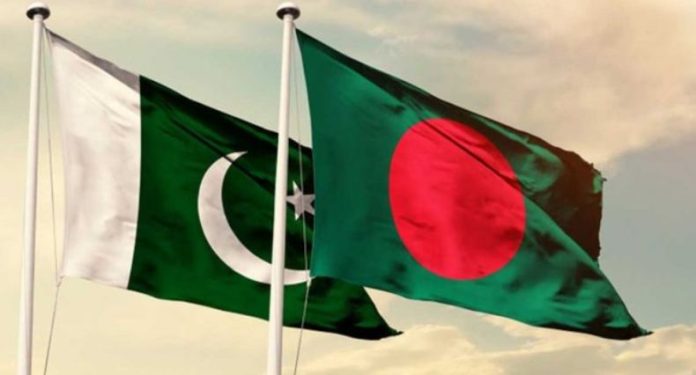
Pakistan, Bangladesh explore new avenues for trade, investment cooperation

Pakistan, Bangladesh explore new avenues for trade, investment cooperation

ISLAMABAD, Sep 27 (APP):Coordinator to the Prime Minister on Commerce Ihsaan Afzal Khan on Saturday concluded a visit to Bangladesh, holding a series of high-level engagements with chambers, businesses and financial institutions to deepen bilateral trade and investment cooperation.

During a networking session jointly organized by the Dhaka Chamber of Commerce and Industry (DCCI) and the Rawalpindi Chamber of Commerce and Industry (RCCI), he met DCCI President Taskeen Ahmed and board members, said a news release.

The discussions focused on unlocking opportunities in pharmaceuticals, automotive and minerals, with both sides stressing the need for a comprehensive business environment and follow-up on initiatives launched during the visit of Pakistan’s Commerce Minister.

At a dinner hosted by Chargé d’Affaires Muhammad Wasif at the Pakistan High Commission in Dhaka, Ihsaan Afzal interacted with senior representatives of the Metropolitan Chamber of Commerce and Industry, Bangladesh Knitwear Manufacturers and Exporters Association, Bangladesh Garment Manufacturers and Exporters Association, and other trade bodies. Talks centered on fostering mutual cooperation in trade and investment and encouraging stronger private-sector linkages.

He also visited the National Bank of Pakistan’s Dhaka branch, where he discussed banking sector collaboration and operational support for businesses with Country Director Mohammad Quamruzzaman and Deputy General Manager Jawad Raza Naqvi.

During a visit to Incepta Pharmaceuticals Ltd.’s Dhamrai facility, Ihsaan Afzal reviewed potential areas of collaboration between Bangladeshi and Pakistani pharmaceutical companies.

Concluding his trip, Ihsaan attended the certificate distribution ceremony of the Made in Pakistan Exhibition. He commended the exhibitors and the Pakistan Association of Exhibition Industry for showcasing Pakistani products, thanked the Bangladeshi government for its support, and invited reciprocal participation in Pakistan’s upcoming Food and Agriculture Exhibition in Karachi.

The visit reaffirmed Pakistan’s commitment to building stronger economic partnerships with Bangladesh, anchored in trade, investment and sectoral collaboration.

Pakistan’s trade with Central Asia, Afghanistan & Azerbaijan hits $2.41bn in FY25

Pakistan’s trade with Central Asia, Afghanistan & Azerbaijan hits $2.41bn in FY25

ISLAMABAD, Sep 27 (APP):Pakistan’s bilateral trade with Central Asian states, along with Afghanistan and Azerbaijan, surged to $2.41 billion in FY25, showing a sharp increase from $1.92 billion in the previous fiscal year.

Pakistan’s exports to these countries surged to $1.77 billion, while imports were recorded at $641 million. This represents a clear recovery from FY24, when exports were recorded at $1.34 billion and imports reached $581 million, said a documents available with Wealth Pakistan.

Afghanistan continues to dominate as Pakistan’s largest trading partner in the region, with exports rising to $1.39 billion and imports reaching $612.5 million.

Kazakhstan has also emerged as a significant partner, with exports from Pakistan increasing to $250.8 million while Uzbekistan followed with $91.4 million in exports and $20.3 million in imports in FY25.

Other partners, including Kyrgyzstan, Tajikistan, Turkmenistan, and Azerbaijan, maintained smaller yet consistent shares in bilateral trade.

The regional trade context highlights enormous untapped potential. Central Asian countries managed a massive $318.01 billion in global trade during FY24, yet Pakistan’s share in this remains under $0.5 billion.

The Pakistan-Central Asia transit trade stood at $410 million in FY25, signalling growing reliance on Pakistan’s corridors for regional connectivity.

Experts underline that while the current trade growth is encouraging, Pakistan’s real opportunity lies in establishing direct
connectivity and strategic trade routes with the Central Asian bloc.

Over 8 lakh children to be vaccinated during polio campaign

BAHAWALPUR, Sep 27 (APP/DNA): Deputy Commissioner Bahawalpur Dr. Farhan Farooq has announced that during the fourth round of the national anti-polio campaign, 824,301 children under five years of age will be administered polio drops.

He said that special measures will be taken in flood-affected areas to ensure 100 percent vaccination coverage there. The four-day campaign will run from October 13 to October 16 across the district. To achieve full success, 120 union councils will have monitoring officers in place, with 667 area in-charges, 3,276 mobile teams, 195 fixed teams, and 136 teams at transit points.

Chairing a review meeting in his office, Dr. Farhan Farooq instructed the District Health Authority to ensure that all “zero-dose” children are vaccinated. He stressed that vaccinating children against polio is a national duty and a way to save them from lifelong disability. He urged parents to play their part in protecting their children. The Deputy Commissioner also directed health officials to improve coordination, provide detailed guidance on finger marking, door marking, and ensure access to remote areas so that no child is left out. CEO Health Bahawalpur Dr. Aamir Bashir briefed the meeting on preparations. Additional Deputy Commissioner Revenue Capt (retd) Tayyab Sami Khan, assistant commissioners of Bahawalpur City and Bahawalpur Sadar, DHO Dr. Khalid Channar, WHO representatives, and other officials attended.

Over 550 stray dogs captured in Islamabad in three months, says CDA

ISLAMABAD, Sep 27 (APP/DNA): The Capital Development Authority (CDA) has reported that more than 550 stray dogs were captured across Islamabad between July and September this year as part of intensified operations to address rising public complaints.

According to CDA records, teams carried out drives in sectors G-14, D-12, F-6, F-7, I-9, I-10, G-10, and F-11, as well as in Saidpur, Margalla Town, Bhara Kahu, the Red Zone, and other rural areas.

Officials told APP on Saturday that the captured dogs were transported to the CDA’s Stray Dog Center in Taramri, where they are treated under the Trap-Neuter-Vaccinate-Return (TNVR) method — a humane process that involves sterilization and vaccination before relocation to secure sites.

A CDA spokesperson said the civic body is prioritizing swift response to complaints, supported by a 24/7 helpline (1334) and the Deputy Commissioner’s online portal. “The Stray Dog Center is fully functional and handling both existing and new complaints effectively,” the official added.

Chairman CDA and Chief Commissioner Islamabad Muhammad Ali Randhawa emphasized that the campaign is designed to “protect citizens while managing stray animals in a humane manner.”

The CDA said operations would continue across urban and rural areas of the capital to reduce public health risks and maintain safety.

Pakistan seek revenge against unbeaten India in Asia Cup final

Pakistan seek revenge against unbeaten India in Asia Cup final

DUBAI: Pakistan will be gunning for revenge, but an unbeaten India look firm favourites to retain the men’s Asia Cup title when the arch-rivals clash in a potentially testy final in Dubai on Sunday.

The Indian juggernaut has crushed every opposition on their path before swaggering into the final of the eight-team tournament looking every inch the reigning 20-over world champions.

Pakistan were beaten comprehensively twice, first in the group stage and then in Super Fours, by an India team containing the world’s top-ranked batter and bowler in the T20 format in opener Abhishek Sharma and spinner Varun Chakravarthy.

Six-hitting machine Abhishek is also the tournament’s leading scorer with 309 runs from six innings, often setting the tone of India’s batting in the first six powerplay overs.

In a low-scoring tournament where only Pathum Nissanka of Sri Lanka managed a century, Abhishek’s red-hot form at the top meant skipper Suryakumar Yadav’s struggle with the bat has not really been felt.

Wily seamer Jasprit Bumrah has helped India control the powerplay overs with the ball but left-arm spinner Kuldeep Yadav has been their wrecker-in-chief leading the bowlers’ chart with 13 wickets.

Fellow spinners Axar Patel and Chakravarthy have also kept it tight in the middle overs and the slew of all-rounders at his disposal has left Suryakumar practically spoilt for bowling choices.

Sparks flew and tempers frayed both times India and Pakistan met in what is their first tournament since a military conflict between the nuclear-armed neighbours in May.

India survived a scare in Friday’s dead rubber when they edged out Sri Lanka via Super Over after Sri Lanka managed to tie the match after getting 202 at Dubai. That should shake off any complacency that might have crept into their campaign.

“(I got) what I wanted from the boys — just to try and execute their plans, be clear and not to fear,” Suryakumar said of their flawless campaign heading into the final.

“That was really important, and I am sure everyone got what they wanted. Happy to be in the final.”

Pakistan will naturally be motivated to avoid a third defeat to the arch-rivals in a single tournament and will take heart from their thrilling victory in Thursday’s virtual semi-final against Bangladesh.

“Very excited,” Pakistan captain Salman Agha said of the final against India. “We know what we need to do, and we are a good enough team to beat anyone, and we will come on Sunday and try to beat them.”

LPG tanker with 24 Pakistanis aboard attacked by Israeli drone at Yemen port: Mohsin Naqvi

LPG tanker with 24 Pakistanis aboard attacked by Israeli drone at Yemen port: Mohsin Naqvi

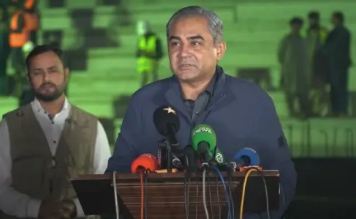
ISLAMABAD, SEPT 27 – Interior Minister Mohsin Naqvi said on Saturday that a liquefied petroleum gas (LPG) tanker with 27 crew members, including 24 Pakistanis, was attacked by an Israeli drone while it was docked at a port in Yemen.

After the Foreign Office said earlier today that Pakistanis aboard the LPG tanker were safe and sound and making their way out of Yemeni waters, Naqvi posted on X that the vessel was attacked on September 17 while it was docked at the Ras Issa port, which was under the control of Houthi rebels.

Earlier, the Foreign Office (FO) said 24 Pakistani nationals aboard an LPG tanker that caught fire off the coast of Yemen were safe and sound and making their way out of Yemeni waters.

In a statement released today, the FO said that the LPG tanker had caught fire off the coast of Yemen on September 17.

“The tanker was carrying a multi-national crew, including 24 Pakistani nationals,” it said.

“On receiving the news about the incident, the concerned Pakistan embassies established contacts with the authorities in Yemen to ensure the well-being of the crew. Efforts were made to set the tanker underway again,” it added.

The FO said that diplomatic missions also maintained contact with the family members of the Pakistani crew and kept them updated about the latest situation.

“Today, the LPG tanker has departed [from the] port and is making [its] way out of Yemeni waters. The entire crew, including Pakistani nationals, on board is safe and sound,” it said.

Security forces kill 17 Indian-sponsored terrorists in Lakki Marwat IBO: ISPR

Security forces kill 17 Indian-sponsored terrorists in Lakki Marwat IBO: ISPR

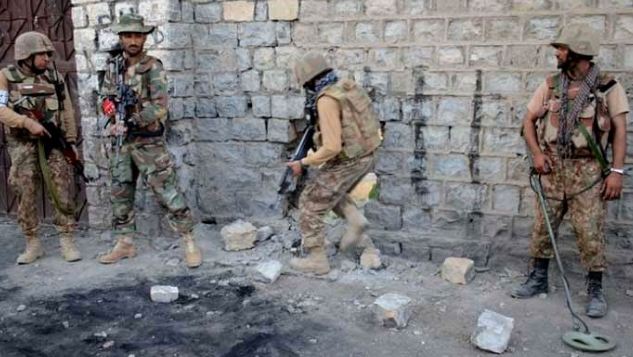
RAWALPINDI, SEPT 27 – Security forces have killed 17 terrorists linked to the Indian proxy Fitna al-Khawarij in Lakki Marwat district of Khyber Pakhtunkhwa, Inter-Services Public Relations (ISPR) said in a statement on Saturday.

The military’s media wing said that security forces conducted the IBO on the night of September 26-27 on the reported presence of terrorists belonging to Indian proxy Fitna al Khawarij.

“During the conduct of operation, own troops effectively engaged the khwarij location and as a result, 17 Indian sponsored terrorists were sent to hell,” the ISPR added.

“Weapons and ammunition were also recovered from the killed terrorists, who remained actively involved in numerous terrorist activities against the security forces and law enforcement agencies,” the communique further said.

Sanitisation operation was being conducted to eliminate any other Indian sponsored terrorists found in the area, according to the military’s media wing. “The security forces of Pakistan are determined to wipe out the menace of Indian-sponsored terrorism from the country.”

Security czar praises forces
Following the successful operation, Interior Minister Mohsin Naqvi lauded the professional capabilities and bravery of security forces.

“[The] action thwarted the terrorists’ malicious designs and prevented major threats to peace and stability,” Naqvi said. He also paid rich tribute to the soldiers who played a crucial role in the operation, declaring that their sacrifices and courage deserve the highest recognition. “I salute the brave personnel who ensured these terrorists met a humiliating end.”

“The people of Pakistan stand shoulder to shoulder with our security forces. Together, we will not allow terrorists belonging to Fitna al-Khawarij to find refuge in Pakistan,” the interior minister said in a statement.

Naqvi reaffirmed the government’s commitment to continue supporting the security agencies in their mission to eradicate terrorism and ensure lasting peace across the country.

The country has witnessed a surge in cross-border terror incidents since Taliban rulers returned to Afghanistan in 2021, particularly in the bordering provinces of KP and Balochistan.

In August, the incidents surged by 74% compared to July, according to a report by the Pakistan Institute for Conflict and Security Studies (PICSS). The Islamabad-based think tank recorded 194 fatalities from militant attacks during the month.

Recently, Pakistan, China, Iran and Russia have also expressed deep concern over the presence of terrorist organisations operating from Afghanistan, including Al-Qaeda, the banned Tehreek-e-Taliban Pakistan (TTP), the Balochistan Liberation Army (BLA) and other similar groups.

The four countries issued a statement after their fourth quadripartite meeting on Afghanistan, convened by Russia on the sidelines of the 80th United Nations General Assembly session in New York on Friday.

They urged the Afghan authorities to take “effective, concrete and verifiable actions” against terrorist outfits, dismantle training camps, cut off financing, and prevent recruitment and access to weapons.

The four sides also emphasised that Afghan soil must not be used against neighbours or beyond, while also pressing for the non-discriminatory elimination of all militant groups.

PM Shehbaz Sharif’s UNGA address: a powerful global message

PM says Pakistan seeks peace in 'our part of world' after defeating India

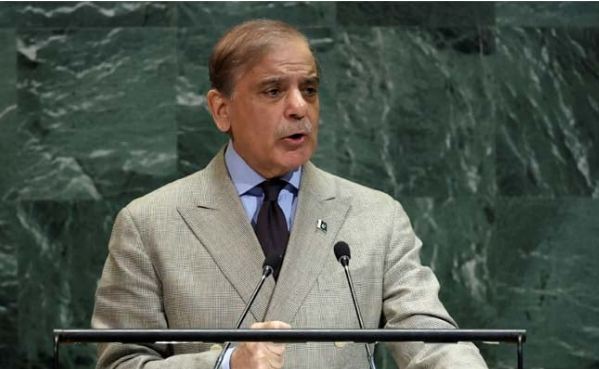
Prime Minister Shehbaz Sharif delivered a forceful and well-received speech at the 79th session of the United Nations General Assembly (UNGA) on September 27. His address touched upon pressing global and regional issues, particularly those concerning the Muslim world, and drew attention to the plight of Gaza, the Palestinian struggle, and the ongoing injustices faced by Muslims worldwide. He also warned India against any aggressive posture on water disputes and condemned Israel for its attack on Qatar, underlining Pakistan’s principled stance on regional security and international law.

While the speech was widely appreciated in diplomatic circles, the question remains whether such international posturing can translate into relief and progress for Pakistan’s struggling citizens back home.

The Prime Minister was notably vocal on Gaza, denouncing Israel’s actions and calling for an immediate end to violence against Palestinians. He urged the international community to hold Israel accountable for what he termed “systematic aggression and violations of international humanitarian law.” His firm condemnation of the recent attack on Qatar further highlighted Pakistan’s solidarity with Muslim nations, underscoring Islamabad’s position as a defender of Muslim causes at multilateral forums.

Shehbaz Sharif also addressed the Kashmir issue, reiterating Pakistan’s long-standing demand for the right to self-determination for Kashmiris under UN resolutions. He cautioned India against any adventurism regarding water resources, stressing that tampering with water rights could destabilize the fragile regional balance.

These positions were well-received by many Muslim states and developing nations, who often look to Pakistan to articulate shared grievances at the global stage. Indeed, the speech projected Pakistan as a confident voice, ready to challenge injustices and raise concerns that larger powers often overlook.

Despite the power of Shehbaz Sharif’s address, the situation inside Pakistan paints a contrasting picture. At home, the government faces a deeply divided political landscape. Opposition parties complain of being sidelined, media organizations have raised alarms over censorship and pressure, and public trust in state institutions continues to decline.

Corruption, nepotism, and lack of meritocracy remain widespread. While the Prime Minister spoke of justice and fairness abroad, critics argue that ordinary citizens in Pakistan see little evidence of those principles in their daily lives. Unemployment, rising costs of living, and dwindling opportunities dominate conversations in markets and homes across the country.

The result is a widening gap between the government’s international image and its domestic credibility. While speeches at the UN can strengthen Pakistan’s diplomatic footprint, their impact on everyday Pakistanis remains negligible unless followed by concrete reforms at home.

The World Bank’s recent report on Pakistan’s economic situation paints a grim picture. According to the findings, poverty in the country has increased by nearly 7 percent, reflecting the mounting struggles faced by lower and middle-income households. This rise in poverty is not merely a statistic; it translates into millions of families unable to afford basic necessities like food, healthcare, and education.

The Pakistani rupee remains under pressure, with the inflated dollar exchange rate taking a heavy toll on businesses and consumers alike. Imported goods, fuel, and essential commodities have become significantly more expensive, feeding into a cycle of inflation that disproportionately affects the poor.

Moreover, foreign investment remains sluggish, and structural reforms needed to revive the economy have been slow in implementation. While the government claims to be working on stabilizing macroeconomic indicators, the ground reality for the average Pakistani is worsening.

One of the most significant criticisms facing the current government is its inability—or unwillingness—to address governance failures. Despite having full support from the establishment, as many analysts point out, the government has yet to demonstrate strong resolve in tackling corruption, reforming institutions, or promoting merit-based decision-making.

This lack of accountability fuels public disillusionment. Citizens feel that the ruling elite, regardless of political party, often protect their own interests rather than prioritizing national welfare. While Shehbaz Sharif’s speech at the UNGA may project Pakistan as a nation standing tall on global issues, at home many perceive the leadership as disconnected from the harsh realities of ordinary life.

The contrast is stark: abroad, Pakistan speaks of justice, rights, and fairness; at home, citizens feel trapped in a cycle of corruption, inequality, and misgovernance.

For decades, Pakistani leaders have pointed to constraints, including lack of support, political instability, or external pressures, as reasons for poor governance. However, critics argue that this government enjoys unprecedented backing from the establishment and cannot afford to hide behind excuses.

The question then is: with power firmly consolidated, what prevents the leadership from delivering meaningful change? The onus is now squarely on Shehbaz Sharif and his team to prove that they can translate political stability into economic recovery, governance reforms, and tangible improvements in people’s lives.

Without such action, even the most eloquent speeches on international platforms will fail to resonate with citizens at home.

Pakistan stands at a crossroads. On one hand, the Prime Minister’s strong articulation of Muslim world concerns at the UNGA has reinforced Pakistan’s diplomatic profile and showcased its commitment to just causes. On the other hand, the mounting domestic crises—economic instability, growing poverty, political repression, and governance failures—demand urgent attention.

The government must focus on delivering relief to ordinary citizens by addressing inflation, stabilizing the currency, and creating jobs. Simultaneously, it must restore faith in institutions by promoting transparency, ensuring accountability, and safeguarding the independence of the media and judiciary.

Only then will Pakistan’s international standing be complemented by domestic credibility. Speeches, however powerful, cannot substitute for effective governance.

Prime Minister Shehbaz Sharif’s address to the UN General Assembly was undoubtedly impressive, commanding attention on issues ranging from Gaza to Kashmir, Israel to India, and the broader challenges confronting the Muslim world. His words resonated with many nations and reflected Pakistan’s long-held positions on critical matters of justice and peace.

Yet, back home, the situation remains bleak. Poverty is rising, the economy is struggling, governance is weak, and public trust is eroding. With full authority at its disposal, the government no longer has the luxury of excuses. The true test of leadership lies not in speeches abroad but in delivery at home. Unless concrete steps are taken to address the plight of common people, the disconnect between Pakistan’s global voice and its domestic reality will only deepen.

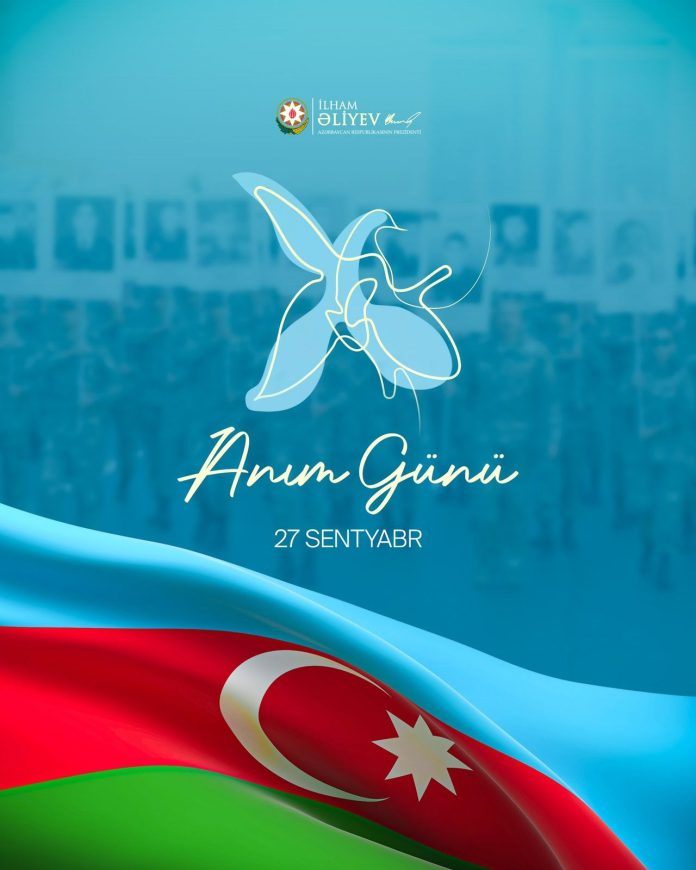
27 September – Remembrance Day: The Great Heroism

The date of September 27 marks the fifth anniversary of the start of the 44-day Patriotic War, which resulted in the restoration of Azerbaijan`s territorial integrity. On that day in 2020, the Armed Forces of the Republic of Azerbaijan undertook retaliatory actions in response to another military provocation from the Armed Forces of the Republic of Armenia. These actions initiated the 44-day Patriotic War, conducted under the right to self-defense and in full accordance with international humanitarian law, aimed at halting Armenia’s ongoing military aggression and ensuring the safety of the civilian population.  

The Patriotic War concluded Armenia’s nearly 30-year-long military aggression against Azerbaijan’s sovereign territory, upheld Azerbaijan’s territorial integrity, and restored the fundamental rights of almost one million Azerbaijanis. Azerbaijan acted independently to implement the relevant UN Security Council resolutions from 1993. The victory achieved through the courage of the Army of the Republic of Azerbaijan, under the leadership of President Ilham Aliyev, the Supreme Commander-in-Chief of the Armed Forces, ushered in a new era in Azerbaijan’s history and established international justice.

Pakistan was one of several countries that always stood side by side with Azerbaijan. During the Second Karabakh War, the Patriotic War, political support and straightforward statements from high-ranking officials of Pakistan supporting Azerbaijan’s just position gave them additional power and strength.

On September 19-20, 2023, in order to put an end to the existence of illegal Armenian forces, as well as to restore full sovereignty over all its territories, Azerbaijan carried out counter-terrorism measures within 24 hours in the Karabakh region.

Ending the occupation of the Azerbaijani territories exposed the extent of Armenia’s extensive illegal activities over the past three decades. There is clear evidence of the widespread mining of Azerbaijani lands, intentional destruction and appropriation of Azerbaijan’s historical, cultural, and religious heritage, plundering of natural resources, destruction of infrastructure, and other violations of international law, all of which have been properly documented and presented to the international community. Azerbaijan demands that Armenia be held accountable for its violations of international obligations, as well as international humanitarian and human rights law.

Immediately after the historic Victory of the Republic of Azerbaijan, large-scale restoration and reconstruction work, including key infrastructure projects, were launched in the Karabakh and East Zangezur regions, and thousands of people have returned to their native lands.

Azerbaijan has always advocated a peace agenda and actively pursued measures to achieve lasting peace and stability in the region. The country believes that the only way to reach stability and prosperity lies across dialogue and partnership. Azerbaijan `s efforts in this direction culminated in the initialing of a peace agreement in Washington in August of this year.

On August 8, 2025, a Joint Declaration was signed between Azerbaijan and Armenia in the witness of the US in Washington. Thus, an important historic step was made towards ending the long-lasting conflict between the countries and signing the peace agreement. Initialing of a peace agreement between Azerbaijan and Armenia creates favorable opportunities not only for the region but also for the wider geography. The full instauration of prosperity in the South Caucasus will open up opportunities not only for the region but also for the regions beyond.

On this significant day, September 27, the people of Azerbaijan honor with deep respect and gratitude the memory of the martyrs who gave their lives for the territorial integrity and sovereignty of their country, giving them this historic victory.

Stay Connected

64FansLike
60FollowersFollow

Latest Reviews

Exchange Rates

USD - United States Dollar
EUR
1.14
GBP
1.34
AUD
0.69
CAD
0.71