Home Blog Page 455

Aurangzeb, UNICEF envoy discuss efforts to combat child stunting

Aurangzeb, UNICEF envoy discuss efforts to combat child stunting

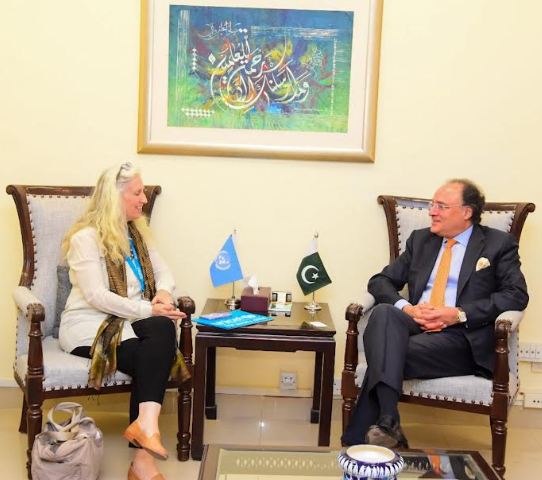
ISLAMABAD, SEPT 29 /DNA/ – Pernille Ironside, UNICEF Representative in Pakistan, called on Senator Muhammad Aurangzeb, Federal Minister for Finance and Revenue, at the Finance Division today.

The Finance Minister appreciated the technical support and knowledge transfer provided by UNICEF in Pakistan. He highlighted the two existential challenges facing the country—climate change and population growth—particularly their impact on child stunting and learning poverty. He discussed the Country Partnership Framework signed with the World Bank, noting that nearly two-thirds of the USD 2 billion expected every year under the program over the next year would be directed toward addressing population-related challenges. The Minister emphasized the importance of making the best use of available resources to address these pressing issues.

Senator Aurangzeb also underlined the important role of UNICEF and other development partners in supporting Pakistan’s efforts, particularly through close collaboration with the Ministry of Climate Change, Ministry of Population Welfare, and Ministry Of National Health Services, Regulations and Coordination. He stressed the need for greater coordination in identifying priority areas and projects requiring interventions, and in providing technical support and capacity building to the relevant ministries. He further emphasized the importance of effective coordination between federal and provincial governments for the operationalization of such projects.

Ms. Ironside reaffirmed UNICEF’s commitment to Pakistan, noting that UNICEF is actively working with relevant ministries and stakeholders across a broad range of sectors, with a particular focus on child care and girls’ education. She highlighted UNICEF’s provision of technical expertise through strategic partnerships and its leadership role in driving initiatives aligned with national priorities. She explained that UNICEF follows a multi-sectoral approach to community welfare, prioritizing projects in education, health, and climate resilience. She also discussed avenues for further strengthening UNICEF’s role and contribution in Pakistan.

Both sides reiterated their resolve to continue working together to address challenges faced by children and communities in Pakistan and to further strengthen cooperation for sustainable development.

German envoy meets finance minister to boost ties

German envoy meets finance minister to boost ties

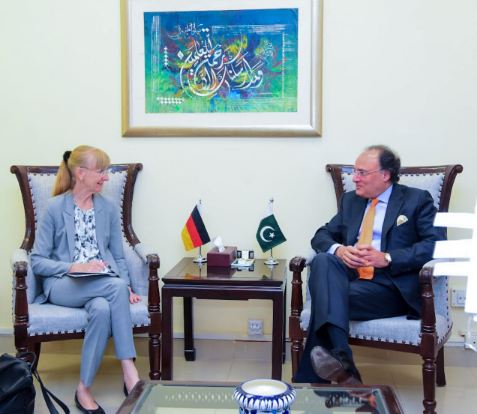
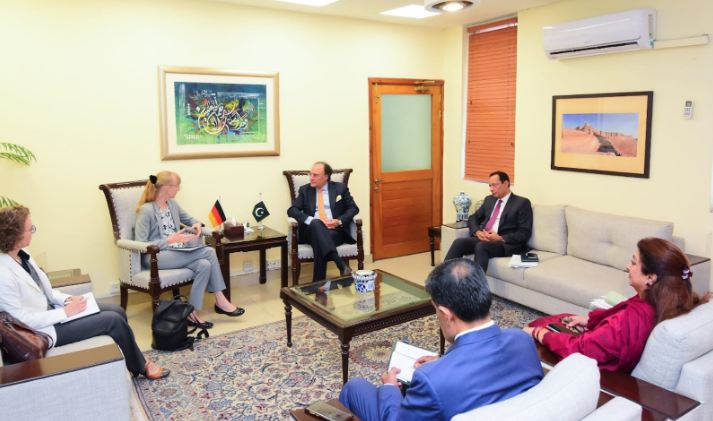
ISLAMABAD, SEPT 29 /DNA/ – Ina Lepel, Ambassador of the Federal Republic of Germany to Pakistan, called on the Federal Minister for Finance and Revenue, Senator Muhammad Aurangzeb, at the Finance Division today.

Welcoming the Ambassador, the Finance Minister extended his best wishes and assured continued engagement to further deepen bilateral cooperation. He thanked the Government of Germany for its valuable technical and financial assistance to Pakistan and emphasized the significance of investment by German companies in diverse sectors of the economy.

Senator Aurangzeb provided the Ambassador an overview of Pakistan’s economy, highlighting recent improvements in key indices. He briefed her on the ongoing IMF review mission and Pakistan’s progress on meeting quantitative and structural benchmarks under the program. The Minister also apprised her of the devastation caused by recent floods and the broader challenges posed by climate change. He outlined the government’s commitment to fostering an investment-friendly environment, noting that the Prime Minister was clear and keen on letting the private sector lead the country’s growth.

He assured the Ambassador of full support and facilitation for foreign investors, including German firms, in expanding their footprint in Pakistan, while ensuring ease in repatriation of profits and dividends and addressing allied matters.

Ambassador Lepel recalled her previous diplomatic assignment in Pakistan from 2013 to 2015, sharing her fond memories of that period. She discussed avenues for further promoting bilateral trade and investment and expressed support for the government’s efforts to achieve sustainable economic growth by encouraging private sector participation and foreign investment in a welcoming business climate.

Both sides reaffirmed their commitment to strengthening Pakistan-Germany economic cooperation and to exploring new opportunities for trade, investment, and development partnership.

UAE tops destinations for Egyptian engineering exports in 2025

UAE tops destinations for Egyptian engineering exports in 2025
CAIRO, Sep 29 (WAM/APP):The United Arab Emirates has emerged as the leading market for Egyptian engineering exports in 2025, amid continued growth of this vital sector in Egypt.

According to the Engineering Export Council of Egypt, under the Ministry of Trade and Industry, the sector’s exports grew by 12 percent between January and August 2025, reaching US$4.187 billion compared to US$3.746 billion during the same period in 2024.

May Helmy, Executive Director of the Council, said today that targeted markets witnessed significant expansion, noting marked increases in Egypt’s engineering exports to Europe, Asia, Africa and the Americas, as well as Arab markets, particularly the UAE.

Sherif El Sayad, Chairman of the Engineering Export Council, said the growth reflects the sector’s ability to boost its competitiveness in global markets despite international challenges. He added that current levels are the highest in the sector’s history for an eight-month period, supporting projections of exports reaching US$6 billion by the end of 2025.

Pakistan to fully digitalize Nursing Council for transparency

Pakistan to fully digitalize Nursing Council for transparency

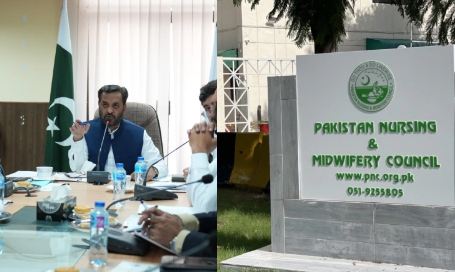
ISLAMABAD, SEPT 29 /DNA/ – Federal Minister for Health, Syed Mustafa Kamal, chaired an important meeting on the affairs of the Pakistan Nursing Council (PNC), attended by the Federal Health Secretary and Additional Secretary. During the session, the Ministry announced a landmark decision to fully digitalize the Pakistan Nursing Council to ensure efficiency, merit, and transparency in all of its operations.

Speaking on the occasion, the Federal Health Minister emphasized that all affairs of the Council will soon be computerized to minimize human intervention and eliminate inefficiencies.

“We will restore the lost credibility of the nursing profession and transform the Pakistan Nursing Council into a modern, effective, and internationally recognized institution,” said Mustafa Kamal.

The Minister underscored the vital role of nursing in Pakistan’s health system and highlighted the pressing shortage of nursing professionals. Pakistan currently faces a shortfall of nearly 900,000 nurses, while globally the shortage of qualified nurses stands at approximately 2.5 million. He reaffirmed the government’s commitment to strengthen the nursing sector through comprehensive reforms, robust policies, and modern digital systems.

Mustafa Kamal further noted that nursing is one of the most critical pillars of the health sector, and bold steps are being taken to bring the profession in line with international standards.

“We will modernize the nursing sector, ensure merit-based practices, and introduce effective reforms so that Pakistan’s nursing workforce can meet both national and international demands,” he added.

The Minister concluded by stating that reforms in the nursing sector will continue with a strong focus on transparency, merit, and modernization to uplift the profession and ensure quality healthcare delivery across Pakistan.

Chairman of Cabinet of Ministers of Kyrgyzstan arrives in Belarus on official visit

Chairman of Cabinet of Ministers of Kyrgyzstan arrives in Belarus on official visit

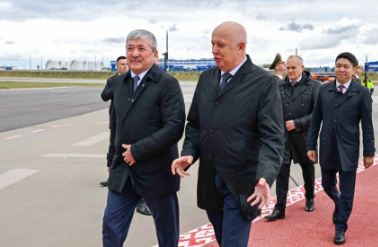
MINSK, Sep 29 (BelTA/APP): Chairman of the Cabinet of Ministers and Head of the Presidential Administration of the Kyrgyz Republic Adylbek Kasymaliev arrived in Belarus on an official visit on 28 September.

Upon arriving in Minsk, he took part in a ceremony to lay wreaths and flowers at the Victory Monument and the monument to Hero of the Soviet Union Jumash Asanaliev.

Civil-military leadership on one page over economic, foreign policies: PM Shehbaz

Civil-military leadership on one page over economic, foreign policies: PM Shehbaz

LONDON: Prime Minister Shehbaz Sharif has said that there is a consensus on all key issues, including foreign policy, between the country’s political and military leadership, and the two are “on the same page”.

“We consult on every issue. We are on one page and making sincere efforts [….] Mutual consultations are also held regarding the economic situation,” PM Shehbaz said while speaking in London.

“I pray for this coordination and harmony among political leadership and institutions to make Pakistan not only overcome the past losses, but also reach new heights,” he added.

Underscoring the close working relationship between the civil and military leadership, the prime minister lauded the army chief, saying: “COAS Munir is a true nationalist. He only cares for Pakistan. Under his leadership, both the army and air force have achieved remarkable successes. He is a man of vision and bravery. We discuss all important matters and make decisions in unity. It’s all for Pakistan”.

Speaking at the Pakistan High Commission following his return from a high-level diplomatic tour of the United States and Saudi Arabia, the premier said that South Asia would have witnessed a major war if not for the intervention of US President Donald Trump.

He said Pakistan had nominated Trump for the Nobel Peace Prize for his peace efforts in DRC, Ethiopia-Egypt conflict, and ongoing efforts for peace in Ukraine, recognising him as a “man of peace”.

Referring to the recently signed Strategic Mutual Defence Agreement (SMDA) with Saudi Arabia, PM Shehbaz said that the pact is not against any other country, as Pakistan is not in any power struggle but is pursuing a focused approach to achieve economic prosperity by exploiting its immense resources.

“Saudi Arabia and Pakistan are brotherly countries, bound by decades and centuries-old ties. This pact is against no one but a formalisation of these ties… Every Muslim has a belief and is ready to sacrifice his life to safeguard Roza-e-Rasool and Makkah,” he added.

He said that without indulging in any power struggle, Pakistan is striving to achieve its economic goals by addressing poverty, unemployment and exploiting immense potential in agriculture, artificial intelligence, mines and minerals as well as youth bulge by providing them education and skill training.

Premier Shehbaz apprised the media of his “fruitful and successful” visits to New York and Washington, particularly, the meeting on the Gaza situation co-chaired by President Trump and Turkish President Recep Tayyip Erdogan and attended by leaders from Pakistan, Qatar, UAE, Saudi Arabia, Indonesia, Jordan and Egypt.

“There was an encouraging discussion, and I’m confident that it will come up with a positive outcome for the Gaza ceasefire. After the meeting, my expectations have greatly risen [….] In our meeting in Washington, President Trump’s words were reassuring. Insha Allah, I hope you will hear good news very soon,” he remarked.

Condemning the unprecedented Israeli oppression and killings in Gaza, the prime minister said that at the UN General Assembly, Pakistan had effectively raised its voice in support of the people of Palestine and Kashmir, Pakistan’s water rights and also the Marka-e-Haq in which India had faced a humiliating defeat.

“We have won the war by grace of God through our brave armed forces, who fought with great courage and outstanding professional acumen, led by Field Marshal Asim Munir, who led from the front with an iron-clad resolve,” he said, highlighting the nation’s full support to its armed forces.

He said that after Marka-e-Haq, the world has recognised that Pakistan, while a nuclear power solely for defence purposes, was also highly skilled in conventional warfare.

Referring to his “highly fruitful, productive” meeting with President Trump, also attended by Field Marshal Munir, he said Pakistan-US relations were being revitalised, with discussions focusing on trade, investment, oil and gas exploration, mines and minerals, IT, AI, and other areas, as Trump also assured to accelerate the bilateral economic cooperation.

Responding to a question, the premier noted that terrorism had sprung back consequent to the imprudent decisions made in the past; however, the law enforcement agencies were targeting the havens of terrorists, including the Tehreek-e-Taliban Pakistan (TTP), Balochistan Liberation Army (BLA), Majeed Brigade, and other foreign elements opposing Pakistan’s prosperity.

Expanding on the economy, the prime minister said that it had stabilised at the macro level while the efforts were underway to achieve growth, highlighting that the floods have once again hit the country, killing over 1,000 people, injuring many others and destroying thousands of villages.

“We should take advantage of this time as friendly countries are willing to support, like the Gulf states, Saudi Arabia, the US and China. There can be no better conditions. Now all up to us. The only thing we lack is the will to do. If we have this will, no one can impede our progress,” he concluded.

SDAIA to discuss the future prospects of generative AI

SDAIA to discuss the future prospects of generative AI

RIYADH, SEP 29 (SPA/APP): The Saudi Data and AI Authority (SDAIA) will hold an online seminar to discuss the prospects of generative AI, examining its technical, investment, regulatory, and economic aspects.

The seminar will feature participation from a distinguished group of experts, academics, and industry stakeholders.

SDAIA aims to raise awareness of generative AI applications through the seminar, explore investment and regulatory opportunities, and anticipate future global and local challenges.

SDAIA invited the public, researchers, enthusiasts, and entrepreneurs to participate in the seminar by visiting the following link: https://nic-sagov.webex.com/webappng/sites/nic-sagov/meeting/webinar/4ed08b51a41f480893654cabb4ec426a?ticket=4832534b0000000796d47d8288856daae8390fec736a964652ea111584a0608d3f144360df009132×tamp=1759103049718&MTID=meab33a57950f7b11997268266269ca9d.

First Saudi earns ICAO classification in air transport facilitation

First Saudi earns ICAO classification in air transport facilitation

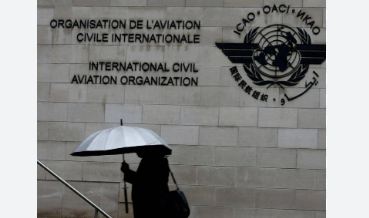
Montreal, Sep 29 (SPA/APP):Fahd bin Khalid Al-Ghamdi achieved an unprecedented accomplishment, becoming the first Saudi to receive the classification of the International Civil Aviation Organization (ICAO) in the field of air transport facilitation.

This achievement represents Saudi Arabia’s effective international presence and affirms the Kingdom’s global leadership in achieving its ambitious goals to be among the forefront of the world’s countries in the aviation sector.
Al-Ghamdi was selected by ICAO as one of only 12 international experts, serving as a certified trainer and reference for ICAO Annex 9 – Facilitation. His responsibilities focus on training representatives of member states, providing technical advice to governments, and contributing to the development of international legislation, protocols, and training materials. Additionally, his role involves updating Annex 9 of the Chicago Convention (1944) and supporting states in applying international standards.
Fahd Al-Ghamdi stated that the expertise he gained in the Kingdom, particularly during his tenure as Director-General of Air Transport Facilitation at the General Authority of Civil Aviation (GACA), formed the basis for his international success.

PRCS Chairperson meets Pakistan Ambassador in Norway

PRCS Chairperson meets Pakistan Ambassador in Norway

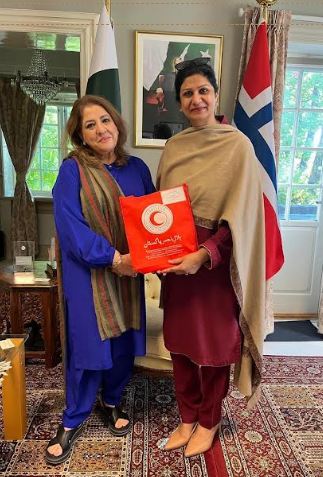
OSLO, SEPT 29 /DNA/ – The Chairperson of the Pakistan Red Crescent Society, Mrs Farzhana Naek, held a meeting with Pakistan’s Ambassador to Norway, Mrs Sadia Altaf Qazi, in Oslo.

During the meeting, Chairperson PRCS apprised the Ambassador on the PRCS auxiliary role to the Government of Pakistan and reiterated its strong commitment to supporting vulnerable communities, particularly in the aftermath of the recent devastating floods that have affected millions across Pakistan. She emphasized that, as global humanitarian funding continues to shrink, the Pakistani diaspora could play a vital role in extending support to flood-affected populations. Mrs Naek stressed that engaging the Pakistani community in Norway would not only be helpful for the provision of immediate relief for flood-affected people but also reinforce PRCS’s long-term recovery efforts. She further underlined PRCS’s extensive nationwide presence, with seven provincial branches, 62 district branches, and a dedicated network of 1.7 million volunteers serving communities across the country.

Ambassador Mrs Sadia Altaf Qazi commended PRCS for its dedicated efforts in humanitarian response and resilience building across Pakistan, recognizing the PRCS role in supporting vulnerable populations during emergencies. She also discussed potential funding opportunities through the engagement of the Pakistani diaspora and collaborations with organizations operating in Norway.

Pakistan Asia Cup defeat to India: a tale of Mismanagement

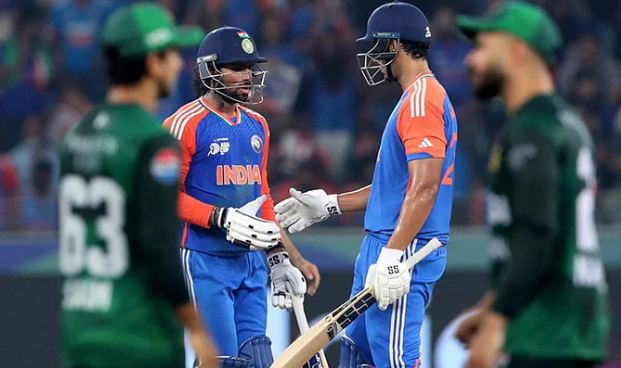
India overpowers Pakistan by 5 wickets to lift Asia Cup Trophy

Pakistan’s much-anticipated Asia Cup 2025 clash against arch-rivals India turned into yet another heartbreak for the Green Shirts. In what was expected to be a close contest, Pakistan faltered badly, managing only 146 runs in their innings, eventually conceding defeat to the tournament’s number one ranked side. While the scoreboard tells one part of the story, the underlying causes of this defeat are far more alarming, pointing to chronic mismanagement, questionable leadership, and a lack of meritocracy in team selection.

The match began with some promise as Pakistan’s openers provided a steady platform. For a brief period, there was hope that the team could post a respectable total against a formidable Indian bowling attack. However, once the opening partnership was broken, the middle order once again crumbled under pressure.

This pattern has become a recurring theme for Pakistan cricket in recent years: bright starts followed by inexplicable collapses. Against a team like India, who are known for capitalizing on opponents’ weaknesses, such a lack of resilience is unforgivable. The inability to rotate strike, poor shot selection, and a visible lack of planning doomed Pakistan’s innings, leaving the bowlers with very little to defend.

Much of the criticism following the loss has centered on newly appointed captain Salman Aga. Handed the reins of the team at a critical time, Aga’s leadership raised more questions than answers. His field placements were unimaginative, his bowling changes lacked strategy, and most concerningly, he appeared out of his depth when the game was slipping away.

It is not entirely fair to blame a young player thrust into the captaincy role prematurely. Leadership in cricket is as much about temperament as it is about talent, and Aga, though promising with the bat, is clearly not ready to shoulder such responsibility. The decision to appoint him skipper reflects poorly on the Pakistan Cricket Board’s decision-making process.

India’s dominance in world cricket is no accident. Their consistent policy of picking players purely on merit, avoiding favoritism, and sticking with a long-term vision has paid dividends. Every player in the Indian lineup is deserving of his place, having proven himself through domestic and international performances. This culture of accountability ensures that no undeserving player occupies a position in the squad.

Pakistan, by contrast, has allowed politics, nepotism, and favoritism to dictate selections. As a result, several players with questionable credentials continue to feature in the national side, while more deserving talents are ignored. It is this fundamental difference in approach that explains why India sits comfortably as the world’s top team, while Pakistan continues to struggle for consistency.

Beyond the players, the spotlight now falls on the Pakistan Cricket Board (PCB) and its leadership. Chairman Mohsin Naqvi has come under sharp criticism for his inability to run the board effectively. His tenure has been marked by ad-hoc decisions, frequent changes in management, and a tendency to surround himself with hand-picked cronies lacking experience or credibility in cricket administration.

Reports of corruption, favoritism, and lack of transparency have further eroded public trust. Many observers believe that the real problem lies not with the players but with the system that selects and manages them. Unless this culture of mismanagement is addressed, Pakistan will continue to stumble, no matter how much individual talent the country produces.

At least four players in the current squad, including captain Salman Aga, are widely considered unfit for international cricket at this level. Their continued presence in the team underscores the lack of accountability in the selection process. Names like Babar Azam and Mohammad Rizwan, once the backbone of Pakistan’s batting, are being discussed as possible reinclusions, given the team’s desperate need for experience and stability.

The absence of senior players who can anchor the innings and mentor younger talents is glaring. A balanced team requires both youth and experience, but Pakistan’s current setup seems to ignore this principle. The result is a fragile middle order, a leadership vacuum, and repeated failures on the big stage.

If Pakistan cricket is to recover from this downward spiral, it must begin with soul-searching at the highest levels. Cosmetic changes will not suffice. What is needed is a complete overhaul of team management and selection committees. Deserving players must be brought into the side, irrespective of politics or personal affiliations. The culture of nepotism and favoritism has to end if Pakistan wants to compete with the best.

Moreover, senior players must be reintegrated into the squad to provide balance and guidance. Leadership roles should be assigned based on merit and maturity, not experimentation or favoritism. Until these steps are taken, Pakistan cricket will continue to suffer humiliations like the one witnessed against India.

Ironically, Pakistan still came close to challenging the number one team in the world. With better planning and leadership, the result might have been very different. This near miss should serve as a wake-up call: talent alone is not enough. Without structure, strategy, and merit, even the most gifted players cannot deliver consistently.

India’s victory was not just a result of superior skill but of a system that rewards merit and accountability. Pakistan’s defeat, on the other hand, was a symptom of deeper structural flaws that continue to plague the national team.

Pakistan’s loss to India in the Asia Cup 2025 was not just about runs and wickets; it was about vision and management. Until the PCB reforms itself, embraces meritocracy, and puts an end to favoritism, Pakistan cricket will remain stuck in a cycle of underachievement and disappointment.

The humiliation at the hands of India should not be brushed aside as just another loss—it should be remembered as a turning point. If lessons are not learned now, then more humiliations await.

Stay Connected

64FansLike
60FollowersFollow

Latest Reviews

Exchange Rates

USD - United States Dollar
EUR
1.15
GBP
1.34
AUD
0.69
CAD
0.71