Home Blog Page 454

Nikah registrars in Gujrat call for effective laws to end child marriages

Nikah registrars in Gujrat call for effective laws to end child marriages

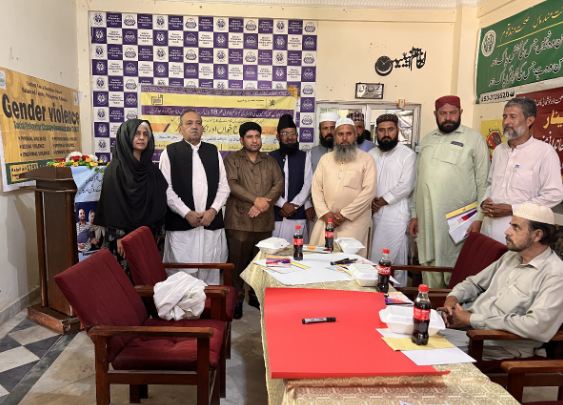
GUJRAT, SEPT 30 /DNA/ – Participants of a training session for Nikah Khawans and marriage registrars, organized in collaboration with the District Population Welfare Office, Gujrat, called on provincial legislators to urgently strengthen legal frameworks to protect the rights of girls and boys in Pakistan. Referring to the ICT Child Marriage Restraint Act, the participants stressed that all provinces should adopt and implement similar legislation to curb the practice of underage marriages.

The training, which brought together a large number of Nikah Khawans and registrars, provided a platform to reflect on the social, legal, and health implications of early marriages. Many participants expressed concern that child marriage continues to undermine fundamental rights, particularly the right to education, health, and personal development.

Umer Farooq, District Population Welfare Officer, Gujrat, described child marriage as a serious health risk. He noted that due to complications such as fistula, sudden increases in blood pressure, and excessive bleeding during pregnancy and childbirth, the rates of maternal and infant mortality in Pakistan remain alarmingly high. These realities, he said, make it imperative to raise the minimum age of marriage for girls to 18 years.

Participants also called for the introduction of mandatory blood testing prior to marriage to protect future generations from chronic and life-threatening diseases, including thalassemia. They further emphasized the crucial role of Nikah Khawans in ensuring that marriages are contracted only with the free and informed consent of both adult individuals. They pointed out that while girls are often forced into marriage, boys too can face pressure from their families to marry at an early age, sometimes to protect family property.

Advocate Khawaja Zahid Nasim, legal consultant for PODA, said that under Articles 35 and 38 of the Constitution, all provinces are bound to make laws for the protection of the child, the mother, the family, and marriage. He noted with concern that despite the presence of these provisions, which safeguard the family setup and promote social justice, the provinces have not adequately addressed these constitutional obligations. He underlined the urgent need for consistent legislation across the country to protect the rights of children and families.

Discussions also touched on harmful practices that perpetuate child marriage. It was noted that in many rural and marginalized communities, families marry off their daughters to settle debts or resolve disputes, leaving the girls vulnerable to abuse and lifelong deprivation. The participants collectively committed not to solemnize underage marriages and endorsed the practice of requiring identity cards as a prerequisite for marriage registration. This, they observed, could serve as a practical step to verify the age of the bride and groom and thereby reduce the incidence of child marriages.

Participants further recommended that clear criteria be developed for the official appointment of Nikah Khawans, along with salaries, so that they can work independently and without local pressures. They also termed digital skills as essential for themselves to perform their duties effectively and transparently.

A consensus emerged that the minimum age of marriage for girls must be fixed at no less than 18 years across all provinces. Furthermore, participants urged that violations of such laws be treated as cognizable, non-bailable, and non-compoundable offences to ensure effective deterrence and accountability.

The training was conducted by Advocate Khawaja Zahid Nasim and facilitated by Nabeela Aslam and Sohail Yousaf. It was part of the project “Reduce Early Marriages to Enhance Gender Equality,” supported by the Norwegian Embassy in Islamabad and implemented by PODA across 41 districts of Punjab.

The discussions were framed in the light of national and global challenges linked to child marriage. According to UNICEF, Pakistan is home to nearly 19 million child brides, placing it among the countries with the highest number of underage marriages. Approximately 18 percent of girls in Pakistan are married before the age of 18, and around 4 percent before the age of 15. Early marriages contribute to higher maternal and infant mortality rates, limit girls’ educational attainment, and restrict their economic opportunities, trapping families in cycles of poverty.

The event concluded with a pledge from Nikah Khawans and registrars to play their part in preventing underage marriages, ensuring the protection of children’s rights, and supporting the development of healthier and more equitable communities across Pakistan.

Nooh Butt sets sights on gold at World Championship

Nooh Butt sets sights on gold at World Championship

By our correspondent

ISLAMABAD: Pakistan’s Commonwealth Games hero and weightlifting star Nooh Dastagir Butt is set for a high-profile return at the VIRUS Weightlifting Finals & UMWF World Championships, to be held from December 3–6, 2025, in Daytona Beach, Florida.

Famously dubbed the “Hulk of Pakistan” after his record-breaking show at the 2022 Commonwealth Games, the three-time international strongman and powerlifting champion is eyeing nothing less than gold in his comeback — his first international weightlifting appearance in three years after a prolonged dispute with the Pakistan Weightlifting Federation (PWF).

During his absence, Nooh earned multiple gold medals in powerlifting and strongman events in Uzbekistan, South Africa and beyond. With the federation dispute now resolved through the efforts of Madam Nuzhat and Hafiz Jibran Butt, he has been cleared to represent Pakistan again. His comeback is being backed by Rd. Rizwan Aftab Ahmed, CEO ACTIVIT and Director National Hospital DHA Lahore, who has been sponsoring his training, nutrition and medical needs.

“I am grateful to Rd. Rizwan for supporting me and even helping with my parents’ medical needs. Now I have only one mission — to win international gold medals for Pakistan,” said an emotional Nooh, who trains daily in Gujranwala under the guidance of his father and former weightlifter Ghulam Dastagir.

His mother praised his relentless efforts, saying: “Our home feels like a training ground. His dedication is unmatched, and our greatest joy will be to see him win more medals for Pakistan.”

To further sharpen his skills, a post-tournament training camp in the U.S. is planned, giving him exposure to international coaches and world-class facilities. His roadmap includes the World Championships, the Commonwealth Games and the Asian Games, with the ultimate goal of global dominance.

Rd. Rizwan summed it up: “I want Nooh to leave a legacy that inspires generations. My only expectation is victory — for him to raise Pakistan’s flag high and become synonymous with excellence in world sport.”

Pakistan army successfully test-fires indigenously developed Fatah-4 Cruise Missile

Pakistan army successfully test-fires indigenously developed Fatah-4 Cruise Missile

RAWALPINDI, SEPT 30 /DNA/ – The Pakistan Army successfully conducted the training launch of the newly inducted, indigenously developed Fatah-4 Ground Launched Cruise Missile (GLCM) at a range of 750 kilometers, the Inter-Services Public Relations (ISPR) said in a statement on Tuesday.

Equipped with advanced avionics and state-of-the-art navigational systems, the Fatah-4 is designed to evade enemy missile defense systems through terrain-hugging flight capabilities. The missile can engage targets with high precision, significantly enhancing the Army’s conventional strike capability.

According to ISPR, the successful launch is a major boost for the Army Rocket Force Command, strengthening its reach, lethality, and survivability in modern warfare.

The training launch was witnessed by the Chief of General Staff, senior officers of the Pakistan Armed Forces, and teams of dedicated scientists and engineers who contributed to the missile’s development.

Following the successful test, the President, Prime Minister, Chairman Joint Chiefs of Staff Committee, and Services Chiefs congratulated the troops, scientists, and engineers for their remarkable achievement and commitment to national defense.

The Fatah-4 is the latest addition to Pakistan’s growing indigenous missile arsenal, reflecting the country’s advancing technological capabilities and emphasis on self-reliance in defense production.

PHC suspends notices issued to journalists under PECA Act

PHC suspends notices issued to journalists under PECA Act

PESHAWAR, Sep 30 (APP/DNA): The Peshawar High Court has temporarily suspended notices issued to journalists under the Prevention of Electronic Crimes Act (PECA).

A two-member bench, comprising Justice Ejaz Anwar and Justice Khurshid Iqbal, issued the ruling while hearing a petition filed by journalists.

The court also served notices to the National Cyber Crime Wing and other concerned authorities, directing them to submit a detailed reply at the next hearing.

During proceedings, the petitioner’s counsel argued that his clients, who are professional journalists, had been served notices by the FIA Cyber Crime Wing without any mention of a specific crime or allegation.

He further pointed out that the High Court had previously suspended similar notices and that clear directives were already in place.

After considering the arguments, the bench ordered the suspension of all such notices and instructed the authorities to provide a detailed response in the upcoming hearing.

Civil society urged for increasing voters turnout for October 19 by election: ECP

ECP notifies 36 KPK NA seat winners

PESHAWAR, Sep 30 (APP/DNA):The civil society members has been urged to play their role in increasing voter turnout in the third phase of the by-elections scheduled for October 19, 2025.

This was stated by the Joint Provincial Election Commissioner of Khyber Pakhtunkhwa, Muhammad Fareed Afridi, while chairing a meeting of the Gender and Disability Electoral Working Group here Tuesday.

The meeting was attended by Muhammad Ayub Khan from Blue Veins, Muhammad Javed from SPDA, Muhammad Haris Khan from EnlightLab, Muhammad Shafiq from URDO, Roshan Khan from Pak Women, Ms. Hasna Ali from Da Hawalwar, Noor Alam from CPDI, Director Elections Muhammad Nadeem Khan, and the Provincial Election Commissioner’s spokesperson Sohail Ahmed.

On the occasion, the Joint Provincial Election Commissioner said that the Election Commission is committed to ensuring the participation of all marginalized groups, including women, in the electoral process.

He emphasized the need to raise awareness among voters in districts where by-elections are being held, regarding the importance of casting their votes.

Muhammad Fareed Afridi also gave a detailed briefing on the procedure and legal status of postal ballot papers for persons with disabilities.

He explained that during both local government and general elections, disabled individuals who are registered but unable to go to polling stations can obtain a postal ballot by filling out the relevant form and submitting it to the Returning Officer.

He said everyone must play their part in increasing women’s participation in the electoral process. In 13 districts of Khyber Pakhtunkhwa, a campaign is ongoing in collaboration between the Election Commission and NADRA to help women who do not yet have Computerized National Identity Cards.

Mobile registration vans are being provided to facilitate easy access for women to get their CNICs.

He urged civil society to support the Election Commission in this campaign.

On this occasion, participants shared various suggestions regarding awareness campaigns.

Governor KP condemns Quetta suicide attack, expresses solidarity with victims

Governor KP condemns Quetta suicide attack, expresses solidarity with victims

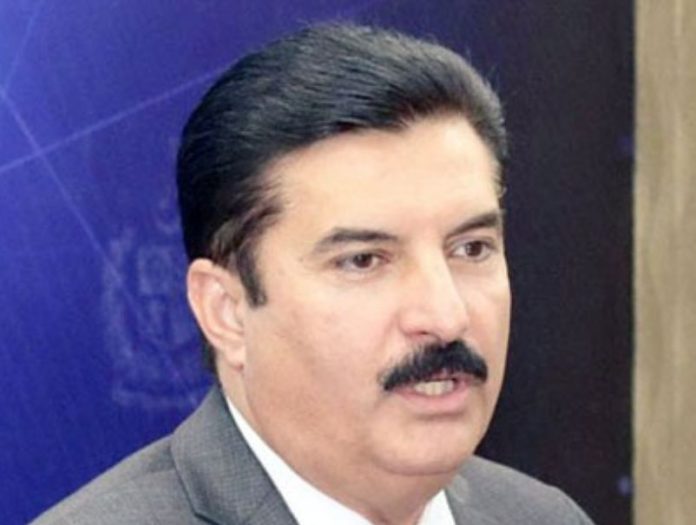
ISLAMABAD, Sep 30 (APP/DNA):Governor Khyber Pakhtunkhwa Faisal Karim Kundi on Tuesday strongly condemned the suicide blast near the Frontier Corps (FC) Headquarters in Quetta, expressing deep grief and sorrow over the loss of precious lives.

In his statement, the Governor said that terrorists backed by India could never succeed in sabotaging the country’s peace or in targeting innocent civilians to achieve their nefarious designs.

He emphasized that the blood of martyrs would not go in vain and that the entire nation stands united against terrorism.

Governor Kundi expressed heartfelt condolences and sympathy with the families of the martyrs and prayed for the early recovery of the injured.

He urged the federal and provincial governments, along with law enforcement agencies, to bring the perpetrators and their facilitators to justice.

He further said that the people of Khyber Pakhtunkhwa and Balochistan equally share each other’s grief and pain, reaffirming that the nation stands shoulder to shoulder with the armed forces and security institutions in the fight against terrorism.

The Governor also paid tribute to the security forces for foiling the terrorists’ bid and acknowledged their sacrifices for the country’s peace and stability.

Afghanistan under Taliban: isolation, suppression, and uncertain future

Afghanistan under Taliban: isolation, suppression, and uncertain future

The future of Afghanistan under Taliban rule presents a complex picture of internal challenges, strained international relations, and cautious regional engagement. Since their return to power in August 2021, the Taliban have sought to project a new image of a more pragmatic and diplomatic entity. Yet, beneath the façade of political engagement, their governance remains marked by repression, human rights violations, and decisions that further isolate the war-torn nation from the modern world.

In a move that has shocked both Afghans and the international community, the Taliban recently imposed a nationwide ban on internet services, plunging the country into an unprecedented communication blackout. The ban, which they justified on the grounds of curbing “immoral” content and foreign influence, has cut off millions of Afghans from access to information, business opportunities, education, and even contact with family members abroad.

In modern times, such tactics are not only impractical but also counterproductive. The internet is a lifeline for global connectivity, trade, education, and governance. By shutting it down, the Taliban risk further alienating themselves from the rest of the world while exacerbating the daily hardships of ordinary Afghans. Businesses reliant on digital transactions have collapsed overnight, universities cannot function, and humanitarian agencies face severe difficulties in coordinating relief efforts.

This blackout represents more than just a technical barrier; it symbolizes the Taliban’s desire to control thought, expression, and communication in an age where connectivity defines progress. Experts warn that such a regressive policy will deepen Afghanistan’s isolation, push its youth further into despair, and undermine any prospects for long-term economic recovery.

The Taliban’s rule continues to be defined by harsh restrictions, particularly on women and girls. Despite initial promises of moderation, they have systematically rolled back freedoms. Girls are banned from schooling beyond the sixth grade, women are excluded from most forms of employment, and their movement is tightly controlled. These restrictions, which human rights groups describe as “gender apartheid,” have robbed half the population of basic dignity and curtailed the nation’s potential for economic growth.

Reports of arbitrary arrests, torture, and enforced disappearances of activists, journalists, and political opponents are widespread. The justice system has been replaced with a strict interpretation of Sharia, often enforced through public floggings, amputations, and executions. Such punishments, condemned globally, reflect the Taliban’s rigid ideology and unwillingness to align with international norms.

The internet ban will only worsen this repression by silencing dissenting voices. Previously, social media and digital platforms provided at least some space for activism, debate, and global attention. Now, with that window closed, Afghans are left voiceless in the face of mounting authoritarianism.

The Taliban’s foreign policy remains a balancing act between pragmatism and ideology. They have limited recognition on the global stage, with only a few countries like Russia taking tentative steps toward formal engagement. For most of the world, the Taliban’s human rights record and extremist policies remain an insurmountable barrier to official recognition.

Relations with Pakistan, once considered their closest ally, are now strained. Border clashes, trade disruptions, and Pakistan’s accusations that the Tehrik-i-Taliban Pakistan (TTP) operates freely from Afghan soil have soured ties. While diplomatic channels remain open, tensions are at their highest in years, underscoring the complex dynamics between the two neighbors.

China has adopted a pragmatic approach, engaging the Taliban out of concern for security in its Xinjiang region and to explore economic opportunities through potential extensions of the China-Pakistan Economic Corridor (CPEC). For Beijing, stability in Afghanistan is crucial for the Belt and Road Initiative, but its engagement remains cautious, conditional, and primarily interest-driven.

Iran, meanwhile, continues to clash with the Taliban over water rights, refugee flows, and ideological differences, further complicating the regional picture.

During their previous rule in the 1990s, the Taliban’s hardline policies led to international isolation and ultimately contributed to their downfall. This time, they appeared initially to recognize the importance of international engagement, seeking aid and recognition from regional powers. Yet, their internal governance has shown little sign of reform.

By banning the internet, restricting women’s rights, and enforcing medieval punishments, the Taliban risk repeating history by creating a state that is ungovernable, impoverished, and isolated. The humanitarian cost is already staggering, with millions facing food insecurity, lack of healthcare, and unemployment.

The future of Afghanistan is clouded with uncertainty. Regional cooperation remains critical, but it will require the Taliban to demonstrate genuine flexibility and a willingness to address humanitarian concerns. The international community faces a dilemma: how to engage with a regime that systematically violates human rights while avoiding the complete collapse of the Afghan state.

Experts argue that cutting Afghanistan off entirely would only worsen the suffering of ordinary Afghans and create fertile ground for extremist groups to flourish. However, unconditional recognition of the Taliban would legitimize their oppressive policies. A balanced approach, combining humanitarian assistance with strict conditions on human rights, remains the most viable path.

Afghanistan today is trapped between the Taliban’s rigid ideology and the modern world’s demands for openness, rights, and connectivity. The internet ban is perhaps the clearest symbol of this disconnect—a futile attempt to suppress progress in a world driven by information.

For Afghans, the blackout represents yet another betrayal by a regime that promised moderation but delivered only repression and isolation. For the Taliban, it underscores their inability to adapt to the realities of the 21st century. Unless they change course, Afghanistan risks sinking deeper into darkness, cut off from both its region and the wider world.

Forced statelessness of Bengali Muslims in Assam: a humanitarian and legal crisis

Forced statelessness of Bengali Muslims in Assam: a humanitarian and legal crisis

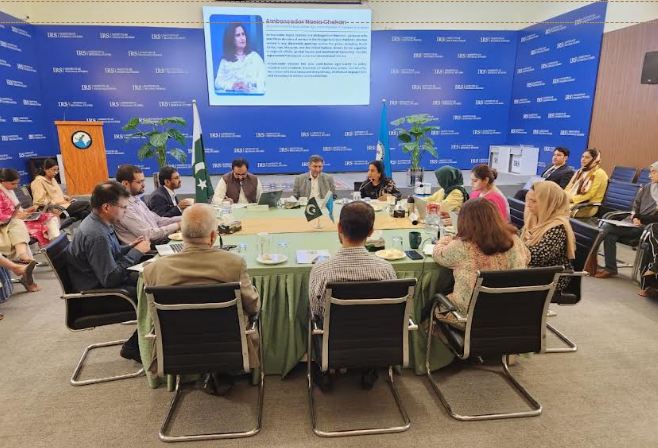
ISLAMABAD, SEPT 30 /DNA/ – Speakers at a roundtable held at Institute of Regional Studies expressed grave concern over the escalating dispossession and statelessness of Bengali-speaking Muslims in Assam, India. The discussion highlighted how discriminatory policies, arbitrary legal practices, and systemic marginalization under the BJP government have created a humanitarian crisis with regional and international implications.

Ambassador Jauhar Saleem underscored that India, despite branding itself the “world’s largest democracy,” has stripped nearly 1.9 million people of citizenship under the 2019 National Register of Citizens (NRC). He noted that Foreigners’ Tribunals exploit clerical errors to render people stateless, while entire families, including children, are denied their fundamental rights. “Citizenship—the foundation of all other rights—has been eroded in Assam,” he stated, calling these measures a violation of international human rights law.

Ambassador Naela Chohan emphasized that this manufactured statelessness is driven by ethno-religious discrimination. She noted that Bengali-speaking Muslims, despite their generations-long presence in Assam, are branded as “illegal” and subjected to arbitrary evictions and deportations. “These policies deepen poverty, fuel insurgencies, and erode human dignity,” she warned, adding that historical prejudices and Hindutva-inspired exclusion are systematically marginalizing Muslim communities.

Dr. Natalie Brinham drew parallels between the plight of Bengali Muslims in Assam and the Rohingya in Myanmar, stressing that both groups face dispossession through manipulated citizenship and identity systems. She termed this crisis “mass citizenship stripping,” describing it as a deliberate, state-led process that criminalizes communities with deep roots in their homeland.

Mr. Asad Shabbir highlighted the toxic propaganda environment, where senior BJP officials label Bengali Muslims as “termite infiltrators” to justify exclusion. He cautioned that such rhetoric normalizes dehumanization and fosters Islamophobia, not only in Assam but across India and South Asia.

Mr. Mukhlees Ur Rehman shed light on the brutal ground realities, arbitrary detentions, forced deportations, and entire families abandoned in no man’s land. He warned that the crisis risks destabilizing the wider region, with Bangladesh already raising concerns about spillover effects.

Participants called on the international community, human rights organizations, and neighboring countries to take urgent notice of the crisis. They stressed that India’s actions violate Article 15 of the Universal Declaration of Human Rights and the Convention on the Rights of the Child, undermining its global credibility on human rights.

The roundtable concluded that unless India shifts from exclusionary practices toward inclusive governance, the crisis will deepen, destabilizing both Assam and the wider South Asian region.

Chairman HEC urges rethink of education delivery and quality at online learning summit

Chairman HEC urges rethink of education delivery and quality at online learning summit

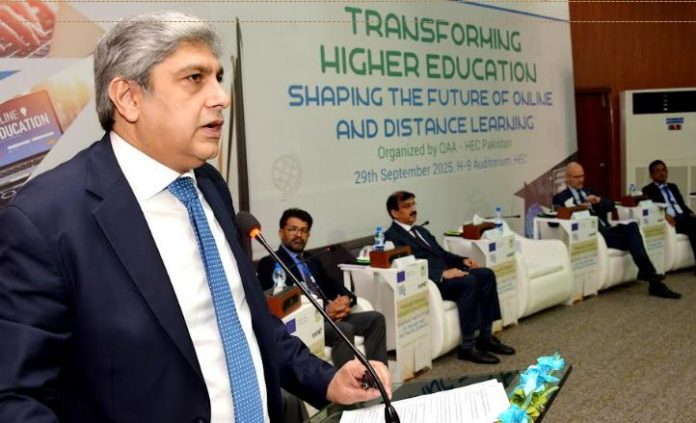
ISLAMABAD, SEPT 30 /DNA/ – The Higher Education Commission (HEC) of Pakistan, under the auspices of its Quality Assurance Agency (QAA), hosted a Summit on Quality Assurance of Online and Distance Education in Pakistan at the HEC Secretariat, Islamabad.  The event was organized in collaboration with Sukkur IBA University and international partners under the Erasmus+ Capacity Building in Higher Education (CBHE) Project “RAPID”.

The summit brought together distinguished national and international experts, policymakers, and academics to deliberate on enhancing the quality of online and distance education in Pakistan while aligning practices with international standards. Funded by the European Union Commission under Erasmus+ CBHE, the initiative represents a significant step in advancing institutional learning, global collaboration, and policy development for the higher education sector.

Addressing the inaugural session, Chairman HEC Mr. Nadeem Mahbub described the summit as a pivotal moment to rethink, reshape, and reimagine how education is delivered, assessed, and assured for quality in Pakistan. He emphasized that online and distance learning must serve as tools for equity, enabling access to higher education across Pakistan’s diverse geography, including underserved regions.

Stressing that technology is not a substitute for quality but a means to enhance it, he reaffirmed HEC’s commitment to strengthening digital infrastructure, conducting faculty capacity-building, enforcing policy frameworks, and integrating emerging technologies such as AI and virtual reality in ethical and effective ways. He urged that findings from the RAPID project be crystallized into next steps for policy refinement, calling upon stakeholders to see the summit as the beginning of sustained dialogue and collaboration.

In his welcome address, Executive Director HEC Dr. Zia Ul-Qayyum highlighted HEC’s resolve to strengthen quality assurance mechanisms in online and distance learning, noting that the RAPID project provides an opportunity to draw on European best practices while tailoring them to Pakistan’s needs. He stressed that building a resilient system of digital higher education requires collective ownership from universities, regulators, and international partners, and reaffirmed HEC’s commitment to steering this transformation in a structured and inclusive manner.

Mr. Philipp Gross, Chargé d’Affaires of the European Union Delegation to Pakistan, described the summit as a milestone that demonstrates how digital innovation, resilient policies, and international partnerships can strengthen Pakistan’s higher education system.

He stressed that RAPID is not only about digital tools but also about resilience, equity, and continuity in higher education.

Highlighting Pakistan’s global leadership in Erasmus+, where the country has ranked first worldwide for four consecutive years in Erasmus Mundus scholarships, he reaffirmed the EU’s commitment to supporting Pakistan’s digital transformation through faculty capacity building, infrastructure in remote universities, and long-term cooperation between European and Pakistani institutions.

Dr. Sher Muhammad Doudpota, RAPID Project Coordinator at Sukkur IBA University, emphasized that online education is the future of higher learning, accelerated by COVID-19 and the rise of generative AI. He underlined the need for Pakistan to adopt robust policies and quality assurance frameworks to remain relevant in the global education landscape.

Dr. Javed Ahmed Shahani, Co-Coordinator, highlighted the consortium’s achievements, noting that the project, comprising European and Pakistani universities with HEC’s Quality Assurance Agency as regulatory partner, has trained over 400 faculty members through webinars, seminars, and regional workshops, while 45 faculty benefited from mobility programs in Italy, Sweden, and Norway. He further shared that digital infrastructure is being established at the universities of Baltistan and Balochistan to bridge the urban–rural divide, and that a Policy Advisory Committee is working to refine Pakistan’s Open and Distance Learning framework.

The summit also featured technical sessions with leading international experts. Dr. Nicole Veelo of the Norwegian University of Science and Technology presented on “Technological Pedagogical Content Knowledge in Online Education.” Dr. Mexhid Ferati of Linnaeus University, Sweden, spoke on “Reflections on Hybrid Program Delivery.” Prof. Dr. Paolo Bottoni of Sapienza University of Rome, Italy, delivered a talk on “Managing Remote Learning: Risks and Opportunities.” This was followed by a presentation on ODL policy by Mr. Abaidullah Anwar.

The afternoon sessions highlighted Pakistan’s national context. Prof. Dr. Nasir Mehmood of Virtual University spoke on “Implementation Challenges of ODL,” while Dr. Tayyaba Tamim of LUMS and Dr. Zubair Khalid of IBA shared insights on “Gaps in the ODL Policy.” A panel on stakeholder engagement was moderated by Dr. Shakeel Ahmed Khoja of IBA Karachi, fostering discussion among senior academics and QA professionals on the way forward.

In his concluding remarks, Director General QAA Mr. Nasir Shah thanked participants and partners for their contributions, noting that while Pakistan has advanced in policy and capacity building, gaps remain in infrastructure, curriculum, and faculty training. He emphasized that the summit’s recommendations will be key to addressing these challenges and reaffirmed QAA’s role as a catalyst for translating them into actionable reforms that make online education a driver of inclusion and innovation.

The proceedings of the summit, including recommendations and outcomes, will be compiled and shared with stakeholders including the European Commission, partner universities, and HEC divisions. These findings will feed directly into the refinement of Pakistan’s national policy on online and distance education.

Ethiopian airlines a game changer in bilateral relations

Ethiopian airlines a game changer in bilateral relations

CM Sindh lauds Ethiopian Airlines as Key Instrument of Look Africa & Engage Africa Policies

DNA

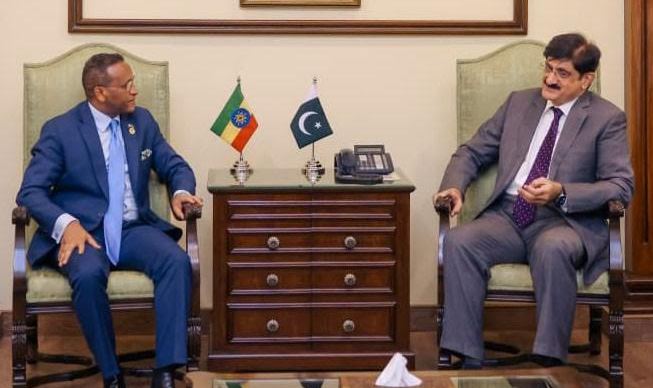
KARACHI: Jemal Beker Abdula, Special Envoy and Ambassador Extraordinary of the Federal Democratic Republic of Ethiopia (FDRE) to the Islamic Republic of Pakistan, called on H.E. Syed Murad Ali Shah, Chief Minister of Sindh, Pakistan at his office in Karachi on Tuesday.

The two sides discussed the growing bilateral cooperation between the two countries across various sectors, including trade, investment, aviation, tourism, culture, and climate change. They also explored new areas for partnership, specifically in agriculture and agro-processing, education, and health, to further strengthen bilateral relations.

The Ambassador commended the Chief Minister’s recent initiative to host a high-level Ethiopian delegation for a Green Dialogue at the Chief Minister Sindh House recently. This visit, he added, plays a crucial role in formalizing bilateral cooperation against climate change.

Ambassador Dr. Jemal Beker also briefed the Honorable Chief Minister on the preparations underway in Addis Ababa to host a large number of delegates for Pakistan’s Single Country Exhibition scheduled for October in Ethiopia.

He also praised the increasing connectivity between Pakistan and Africa facilitated by Ethiopian Airlines, underscoring its key role in Pakistan’s Look Africa and Engage Africa policies.

The Honorable Chief Minister called the Ethiopian Airlines as a game-changer for Pakistan-Africa relations, lauding the carrier as a key instrument of the Look Africa and Engage Africa policies.

The CM Sindh also appreciated the Ambassador’s effective role in strengthening the bilateral relations between the two countries.

The Honorable Chief Minister vowed to further enhance bilateral cooperation to elevate the relationship to the high degree.

Mr. Ibrahim Khalid Tawab, Honorary Consul of the FDR Ethiopia in Karachi, was also present during the meeting.

Stay Connected

64FansLike
60FollowersFollow

Latest Reviews

Exchange Rates

USD - United States Dollar
EUR
1.15
GBP
1.34
AUD
0.69
CAD
0.71