Home Blog Page 453

PPP, PML-N differences widen over flood relief funds

PPP, PML-N differences widen over flood relief funds

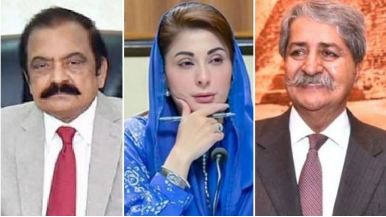
Differences between the Pakistan Peoples Party (PPP) and Pakistan Muslim League-Nawaz (PML-N) have once again come to the surface, this time over the distribution of flood relief funds. The issue has snowballed into a political tussle, with Punjab Chief Minister Maryam Nawaz openly criticizing the PPP leadership.

At the heart of the dispute lies the channel through which the funds should be disbursed. The PPP is insisting that the money be distributed via the Benazir Income Support Programme (BISP), a flagship scheme closely associated with the Bhutto legacy. The PML-N, however, is adamant that the Punjab government should distribute the funds directly to flood-affected families.

Both sides are accused of playing politics over a matter that directly concerns millions of suffering citizens. For PPP, using BISP would not only ensure centralized distribution but also allow it to reap political dividends, particularly in Sindh and southern Punjab where the party has traditional support bases. For the PML-N, allowing funds to pass through BISP would be tantamount to handing PPP the political credit—something Maryam Nawaz and her party are unwilling to concede. Instead, the Punjab government wants to ensure that affected communities see PML-N, and specifically Maryam’s administration, as the benefactor.

The tug-of-war highlights how disaster relief, instead of being treated as a humanitarian issue, is once again becoming hostage to partisan battles. Punjab government sources argue that direct disbursement ensures transparency and efficiency. PPP leaders counter that bypassing BISP is an attempt to weaken an institution that has built credibility over years of functioning.

Beyond the question of flood funds, the disagreement reflects a broader struggle for political space between the two parties. PPP is increasingly desperate to regain relevance at the federal level. With speculation rife that November could bring major political shifts following a possible extension for the country’s military leadership, PPP sees an opening to maneuver itself into a stronger position in Islamabad.

For PML-N, especially under Maryam Nawaz’s leadership in Punjab, the priority is to consolidate its hold on the province—the party’s traditional power base. Any perception of weakness, or of conceding ground to PPP, could undermine that goal. Hence, Maryam’s sharp criticism of the PPP leadership signals not just frustration over relief fund mechanisms but also an assertion of her political authority.

The growing friction is likely to intensify in the coming months. Observers believe that PPP’s insistence on BISP is not only about relief funds but also about strengthening its bargaining position in the federal coalition. On the other hand, PML-N’s strategy appears focused on keeping PPP at bay in Punjab while preparing for possible turbulence at the federal level.

With both parties unwilling to compromise, the rivalry risks overshadowing governance at a time when unity is required. For citizens in flood-hit regions, the political squabbling offers little comfort. But in the charged political climate of Pakistan—already bracing for November’s developments—the PPP-PML-N rivalry promises to add yet another layer of confrontation to an already volatile landscape.
Trump peace plan not inclusive of Pakistan’s full proposals: DPM Dar

Pakistan yet to decide on sending army to Palestine as part of peace troops: FM Dar

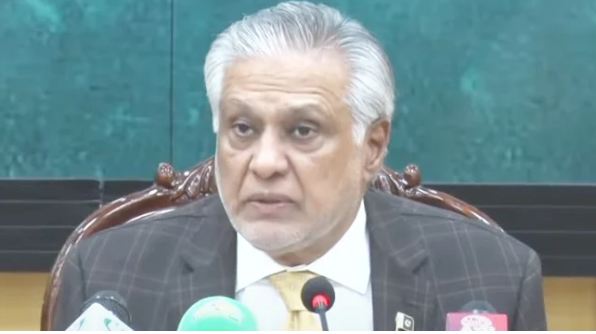
ISLAMABAD: Deputy Prime Minister Ishaq Dar has said that United States President Donald Trump’s proposed Gaza peace plan is not the one that contains all of Pakistan’s suggestions.

Dar explained that Islamabad held detailed discussions with Trump’s team, asking them what Washington had in mind. He, during a conversation on Geo News programme “Aaj Shahzeb Khanzada Kay Sath” said Trump’s team shared certain points, and Pakistan responded that within 24 hours it would submit its amendments to those points.

However, Dar stressed that the draft subsequently prepared by Washington did not include all of Pakistan’s proposed changes. “This draft does not incorporate all our amendments,” he reiterated.

He noted that Pakistan, along with several partner countries, issued a joint statement appreciating Trump’s efforts. At the same time, they repeated their own agenda, with Dar underlining that Islamabad would continue to pursue this agenda alongside Trump and his team.

Dar added that Saudi Arabia, Qatar, Jordan, Egypt, Pakistan, Turkey and Indonesia, along with another country, decided to quietly make serious efforts regarding Gaza. Leaders and foreign ministers of these eight nations scheduled a meeting with Trump and his team.

Before this meeting, the eight countries’ foreign ministers devised a joint strategy. According to Dar, Trump told them that within 48 hours his team and representatives of the eight nations should sit together to prepare a workable plan.

Dar’s statement came a day after Trump — standing alongside Israeli Prime Minister Benjamin Netanyahu — asserted that Prime Minister Shehbaz Sharif and Chief of Army Staff (COAS), Field Marshal Asim Munir, have fully backed his Gaza peace plan.

Just hours before the US president’s announcement, PM Shehbaz had welcomed Trump’s plan, saying a durable peace between the Palestinian people and Israel is essential for regional stability and economic growth.

White House released Trump’s 20-point plan that calls for a ceasefire, a swap of hostages held by Hamas for Palestinian prisoners held by Israel, a staged Israeli withdrawal from the Palestinian enclave, Hamas disarmament, and a transitional government led by an international body.

Troops on ground
In his press conference in Islamabad earlier in the day, Dar, who also holds the foreign minister portfolio, said Pakistan’s leadership will decide on the possible deployment of personnel to a proposed peace force for Palestine, reaffirming that the country’s policy on the issue remains clear with no change in its stance.

The foreign minister defended the country’s decision to back the Gaza peace plan, saying that ground operations in Palestine would primarily be handled by local law enforcement agencies.

“Indonesia has offered 20,000 personnel for the peace force,” he said, adding that Pakistani leadership would also take a decision in this regard.

“I’m sure Pakistan will also decide — the leadership will make the decision — and we have told them that whatever arrangement is made should be documented at the United Nations. There is also the UN peacekeeping force, but this was about a special force only for Gaza,” he added.

Hamas to accept?
Dar pointed out that five countries believe Hamas will accept the plan, and “we should trust their assurances.” The DPM added that the idea also includes establishing an independent technocrat government in Palestine, overseen by a supervisory body largely made up of Palestinians.

Dar clarified that Pakistan had not struck any deal directly with Israel. “If we had to deal with Israel, we would have done it directly. We dealt with the United States, and the United States dealt with Israel,” he asserted.

The deputy PM further confirmed that in his meeting with President Trump, Pakistan, along with seven other nations, agreed to the Gaza agenda. “We raised the matter of ceasefire and aid, and a secret understanding was reached for foreign ministers of the eight countries to hold further consultations with Trump’s team,” he disclosed.

He reiterated that Pakistan, alongside seven other nations, stands firmly united on the Palestinian policy. “Pakistan’s policy is absolutely clear, and there has been no change in it,” Dar underlined.

Engagements at UNGA
Highlighting Pakistan’s diplomatic role at the United Nations General Assembly (UNGA) session, Dar said Prime Minister Shehbaz Sharif led the delegation and held meetings with International Monetary (IMF) officials, the Chief Adviser of Bangladesh, the President of Sri Lanka, as well as leaders from Arab states.

The premier also met with the IMF Managing Director and participated in sessions on sustainable development goals and climate challenges, he added.

Dar said the prime minister vigorously raised the issue of Palestine at the global forum and also highlighted India’s violations of the Indus Waters Treaty. He added that several countries, including Palestine and Turkiye, thanked Pakistan for amplifying the Palestinian cause.

As foreign minister, Dar said he attended nine high-level meetings and over 20 bilateral engagements. These included participation in the OIC’s six-member committee meeting on Palestine, talks with the heads of state of Turkiye and Syria, as well as meetings with the foreign ministers of Canada and Hungary.

He also noted that Arab and Islamic leaders collectively met President Trump, with the leadership focused on stopping the bloodshed of innocent civilians.

Dar said eight countries, including Pakistan, Saudi Arabia, the UAE, and Turkiye, issued a joint statement reaffirming their commitment to resolving the Palestine issue under pre-1967 borders, with Al-Quds Sharif as the capital of an independent Palestinian state. Palestinian authorities, he added, welcomed the joint efforts.

He stressed that the agenda on Palestine was a major one, covering issues such as an immediate ceasefire in Gaza, humanitarian aid, resettlement of displaced Palestinians, stopping Israel’s attempts to annex the West Bank, and ensuring Israel’s complete withdrawal from Palestinian territories. He said the Saudi foreign minister remained in constant contact regarding the peace agreement.

Awais Leghari calls for enhanced collaboration for Clean Tech at COMSATS Seminar

Awais Leghari calls for enhanced collaboration for Clean Tech at COMSATS Seminar

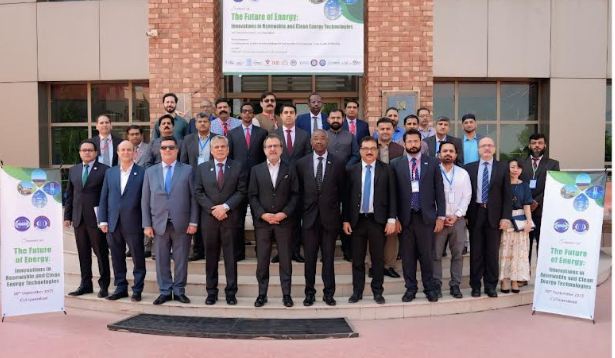
ISLAMABAD, SEPT 30 /DNA/ – The Commission on Science and Technology for Sustainable Development in the South (COMSATS), in collaboration with a number of national and international partner organizations, held international Seminar on The Future of Energy: Innovations in Renewable and Clean Energy Technologies.H.E. Sardar Awais Ahmed Khan Leghari, Federal Minister for Energy, Government of Pakistan, graced the inaugural ceremony of the event,as Chief Guest, held at COMSATS University Islamabad (CUI).Ambassadors and diplomats of Palestine, Philippines, Somalia, Syria, Sudan, and Zimbabwe also attended the inauguration.

The Federal Minister noted that although Pakistan contributes less than 1% of global emissions, it ranks among the most climate-vulnerable nations. “Harnessing our abundant solar, wind, and hydro potential is a national priority for energy self-sufficiency and sustainability,” he said. He outlined the Government’s reforms, including stronger governance through independent boards in distribution companies, steps toward privatization for efficiency, and digitization with smart and advanced metering.

He added that infrastructure alone is not enough; smart solutions, advanced forecasting, storage, and digital integration are also required. To this end, the Power Planning and Monitoring Company (PPMC) has been established to support evidence-based decision-making. Pakistan is committed to deriving 60% of its electricity from clean and renewable sources by 2030. He remarked: “our grid carries 2,000 MW of wind, 800 MW of solar, and over 10,000 MW of hydropower. Distributed generation, particularly net metering, adds nearly 7,000 MW more, underscoring our steady transition to a sustainable energy future.”

Heexpressed gratitude to the Executive Director COMSATS, Ambassador Dr. M. Nafees Zakaria, the Rector CUI, Prof. Dr. Sajid Qamar, and all of the collaborating institutions for organizing the event bringing together a diverse and distinguished audience. He commended COMSATS’ initiatives and reaffirmed the Government of Pakistan’s full support for the organization’s mission.

The Executive Director COMSATS highlighted that 15 collaborators from COMSATS Member states and International Partner organizations was a manifestation of the importance attached to Renewable Energy Technologies. He viewed energy security as a cornerstone of sustainable development and therefore called for ensuring access to reliable, affordable, and clean energy, as enshrined in SDG-7, He considered it essential to integrate digital technologies in energy systems. Ambassador Zakaria highlighted COMSATS’ initiatives to promote clean energy, particularly the development of indigenous Electric Vehicle (EV). He proudly shared that COMSATS Tech Partner has developed EV technology indigenously.

Prof. Seyed Komail Tayebi, President ECO Science Foundation, Prof. Liu Weidong, Executive Director ANSO, and Prof. Dr. Junaid Mughal, COMSATS University Islamabad delivered remarks during the inaugural session. They highlighted the significance of renewable and clean energy technologies and expressed pleasure on this collaboration. ED ANSO highlighted the ongoing activities of his organization, including scholarships, fellowships, collaborative R&D sand capacity building. He informed that ANSO is promoting international cooperation in S&T with support of its 78 member institutions. He noted that ANSO and COMSATS have common mandate and therefore unlimited opportunities of cooperation. He appreciated COMSATS programs and initiatives.

The seminar included four technical sessions during which 15 speakers from China, Iran, Morocco, Pakistan, Sri Lanka, Syria, Turkiye, and USA delivered talks on latest trends and futuristic technologies in renewable and clean energy, integration of digital technologies in energy systems, and policy interventions to promote clean energy adoption. They explore cutting-edge topics, inter alia, related to solar power, wind energy, biofuels, tidal energy, energy storage breakthroughs, and AI-driven energy systems and smart grids.

The event attracted over 70 in-person and 80 online participants. These included scientists, researchers, policy makers, faculty members and students from Bangladesh, China, Indonesia, Jamaica, Morocco, Nigeria, Pakistan, Palestine, Sri Lanka, Sudan, Syria, Türkiye, United States, and Zimbabwe.

Pakistan sees 46% surge in violence, 901 lives lost

Pakistan sees 46% surge in violence, 901 lives lost

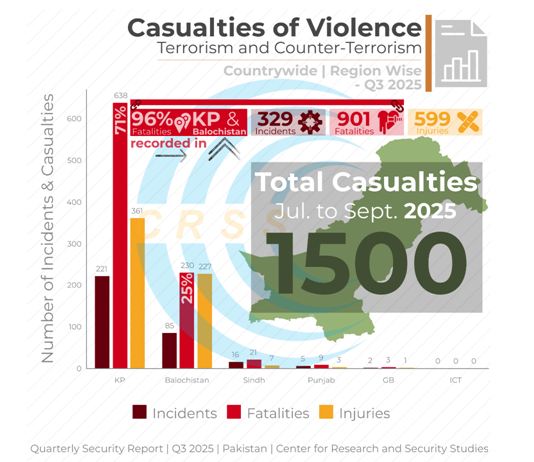
ISLAMABAD, SEPT 30 /DNA/ – With at least 901 fatalities and 599 injuries – among civilians, security personnel, and outlaws -resulting from 329incidents of violence, including terror attacks and counter-terror operations, Pakistan witnessed an over46% surge in overall violencein its security landscape for the third quarter of 2025, according to the Center for Research and Security Studies (CRSS).

In just three quarters, 2025 has proven nearly as deadly as all of 2024, with 2414 fatalities recorded compared to the entire tally of 2024 (2546), which, with an entire quarter still remaining, indicates that i) 2025 is on course to surpass last year’s toll, and ii) intensification of militant violence and the expanded scale of counter-terrorism operations. If the current trend continues, 2025 could mark one of the deadliest years in a decade.

A year-on-year comparison reinforces this shift. Between January and September 2024 (Q1-Q3), Pakistan recorded 1,527 fatalities. The toll of 2414 fatalities for the same period in 2025marks a 58% rise in violence. However, the source of fatalities has shifted; in 2024, security operations caused 505 deaths (33% of the total), while terror attacks claimed 1022. In 2025, security operations accounted for 1265 deaths – over half of the total fatalities.This shift underscores how the state’s response has intensified, with security forces inflicting heavier losses on militants.

Accounting for over 96% of the country’s violence in this quarter, Khyber Pakhtunkhwa (KP) and Balochistan stood out as the most volatile provinces. KP was the worst-hit region, suffering nearly 71% (638) of the total violence-linked fatalities, and over 67% (221) of the incidents of violence, followed by Balochistan,with over 25% fatalities (230) and incidents (85). The number of fatalities, injuries, and incidents recorded in all other regions remained relatively low.

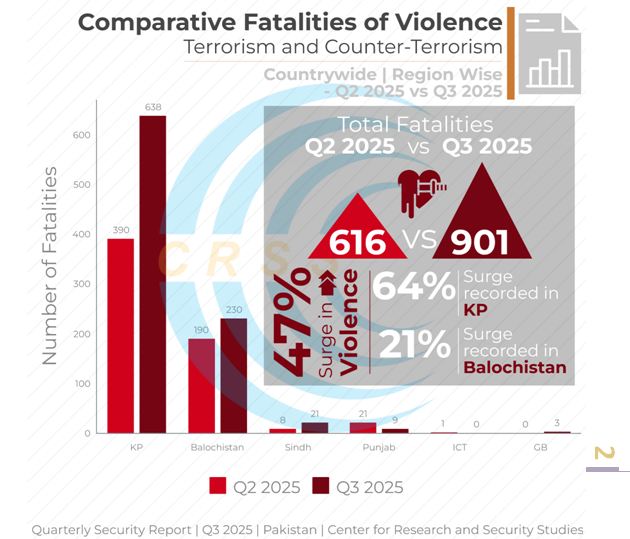
Compared to Q2, 2025, the total fatalities jumped from 616 to 901 in the period under review, a metric behind the reported over 46% rise in violence, where the most significant increase was recorded in KP and Balochistan, with 64% (from 390 to 638 fatalities) and 21% (from 190 to 230) surge, respectively. Sindh also recorded anupsurge in fatalities by 162%, though the number of fatalities was low; from 8 in Q2 to 21 in Q3, 2025.

It is worth noting that in the last quarter, CRSS had reported around 32% and 40% less violence recorded in Khyber Pakhtunkhwa (KP) and Balochistan provinces, respectively, compared to Q1.

Analysis of the security landscape in Q3, 2025 by the victims of violence reveals some interesting security trends; with both alarming and encouraging insights.
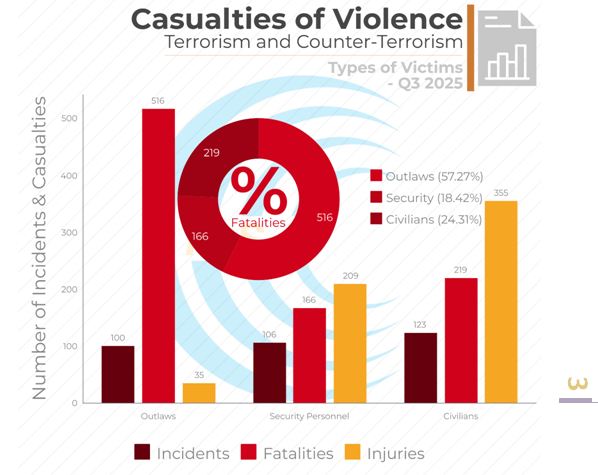
The total number of outlaws’ fatalities recorded (516) were still more than the fatalities suffered by security personnel and civilians combined (385).
The outlaws accounted for the majority of fatalities recorded in this quarter i.e. 57% (516), followed by civilians with over 24% (219) fatalities, and security personnel with over 18% (166).
Compared to Q2, 2025, these figures mark almost 55% more losses among outlaws (516 vs 333), over 43% among civilians (219 vs 153), and nearly 28% among security personnel (166 vs 130).
The outlaws may have suffered the majority of fatalities recorded in this quarter; however, the civilians were the most targeted group compared to security officials and outlaws, in terms of the number of attacks and injuries suffered, i.e. almost 123 terror attacks, compared to security officials suffering around 106 and outlaws targeted in roughly 100 security operations. Moreover, they suffered 355 injuries compared to security officials suffering 209 injuries and outlaws with only 35.

Also, the outlaws suffering the least number of injuries, being involved in the least number of incidents (which in their case were security forces operations), and still accounting for the majority of fatalities compared to civilians and security officials, indicates a high degree of lethality and precision in state-led counter-terrorism operations.

Although security operations were three times fewer than terrorist attacks, they still resulted in nearly as many fatalities as those caused by militant violence against civilians and security forces.

Pakistan endured twin crises in Q3, 2025: the twin blows of terrorism and environmental disasters. Flash floods, glacier melts, and cloudbursts inundated homes, public infrastructure, and livelihoods and claimed 1,006 lives, while militant violence took another 901. Together, they reveal a grim reality: Pakistan’s human security imperiled by both nature’s fury and man-made violence.

Differences between PML-N, PPP ‘family matters’: Tarar

ISLAMABAD, Sep 30 (APP):Federal Minister for Law and Justice Azam Nazeer Tarar on Tuesday said that differences between the Pakistan Muslim League-Nawaz (PML-N) and the Pakistan Peoples Party (PPP) were internal matters, but their alliance remained intact and was based on ideology and sincerity.

Responding to a point of order raised by PPP leader Syed Naveed Qamar in the National Assembly, he said, “If anyone has been hurt by words, we apologize. Politics comes with ups and downs, and such verbal exchanges happen. These issues will be resolved within the house, as our focus is to strengthen democracy and the country.”
He added that the alliance had delivered success for Pakistan “from Saudi Arabia to the United Nations,” stressing that it was founded on good faith. “Today, the Custodian of the Two Holy Mosques has declared Pakistan’s people as guardians of the Haramain Sharifain,” he noted.
Earlier, speaking on a point of order, Syed Naveed Qamar highlighted the flood situation across the country, particularly in his constituency, where villages and farmland were submerged.
He said that people were distressed and looking to the national leadership for relief and rehabilitation.
Quoting a Food and Agriculture Organization (FAO) report, he warned that upcoming Rabi crops were at risk and immediate recovery efforts were needed.
“Speeches alone will not solve the crisis. We must show compassion for those whose responsibility lies on our shoulders,” he said.
Naveed Qamar said PPP Chairman Bilawal Bhutto Zardari had visited flood-hit areas and even appreciated the Punjab Chief Minister’s response.
He said that while Punjab rarely faced such disasters, Sindh was affected every year, stressing the urgent need for post-flood rehabilitation.
Recalling the World Bank-supported housing project in Sindh after previous floods, Naveed said it had succeeded and encouraged other institutions to extend assistance.
“As coalition partners, we can advise, but criticism should not be taken negatively,” he added, expressing disappointment over recent political statements.

Aftershocks of Peshawar rally: Chief Minister got the chance of firing rivals 

Aftershocks of Peshawar rally: Chief Minister got the chance of firing rivals 

Shamim Shahid 

PESHAWAR, SEPT 30 /DNA/ – In the light of alleged poor performances and failure of bringing targeted audience to historical Peshawar rally Chief Minister Sardar Ali Amin Khan Gandhapur has initiated steps for reshuffling of his cabinet.

So far two provincial ministers have tendered resignations whereas a few others have been directed to do so. 

Soon after Peshawar historical rally Chief Ministet Sardar Ali Amin Khan Gandhapur russhed to Adyala Jail whereas he held exclusive merting with his jailed leader Imran Khan. Though details of such a meeting yet to be made piblic but advisor to Chief Minister Barrister Saif was quoted by a section media , “Imran Khan has shown satisfactions and directed us to go ahead.”

However, certain circles close to Pakistan Tehrik Insaf informed that through this historical rally Chief Minister has got the chance of settling scores with his rivals and trouble makers as well. During the meeting Sardar Ali Amin Ghandapur has informed Imran Khan about poor performances of some if ministers, poor response of certain persons in Peshawar rally and others. On such grounds Imran Khan reportedly permitted Sardar Ali Amin Ganfhapur for action against such persons. 

Two ministers Education Monister Faisal Tarakai and Irrigation Minister Saqib Ullah Khan have tendered resignations from their offices on Tuesday. Former Speaker of National Assembly and MNA from Swabi has confirmed tendering resignations of both from the offices. Saqib Ullah Khan is brother of Asad Qaisar whereas Faisal Tarakai is younger brother of MNA Shahram Khan Tarakai and son of Senator Liaqat Taraki. 

Though Asad Qaisar is believed to be leading his own group within PTI buy Tarakai family is associated with MNA Atif Khan from Mardan. Atif Khan’s close supporters Shakil Khan from Malakand was earlier removed fron Khybet Pakhtunkhwa cabinet. 

No needless to mention that Atif Khan a tobacco typhoon from Mardan and cousin of Shahram and Faisal Tarakai considering him close and favourite to Imran Khan since 2013 last. On such grounds he remained rivals to all its three chief ministers before Sardar Ali Amin Khan Gandhapur also  included Pervez Khattak and Mehmud Khan.

Resignations by two provincial ministers from their offices confirm wide range rifts and hostilities amongst the PTI ranks specially in Khybet Pakhtunkhwa cabinrt.

Gaza’s children need more life-saving nutrition, health services: UNICEF

Gaza's children need more life-saving nutrition, health services: UNICEF

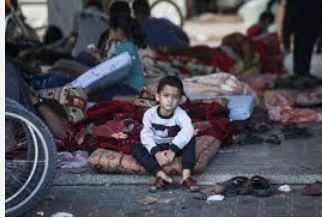
NEW YORK, Sep 30 (QNA/APP):The United Nations Children's Fund (UNICEF) confirmed that children in the Gaza Strip need more life-saving nutrition and health services in light of the ongoing Israeli occupation aggression on the Strip.

UNICE explained in a statement that one in five children in the Gaza Strip is born prematurely or has a low birth weight. UNICEF also noted that it provided essential hygiene supplies to hospitals and health centers in Gaza City this week, but emphasized that Palestinian children in the Gaza Strip need access to more life-saving nutrition and health services.

The UN renewed its call for immediate, large-scale aid to reach children, infants, and families in the Gaza Strip. It also renewed its call for a ceasefire in the territory, which Israel has imposed a systematic starvation on for months and a stifling blockade for nearly two years.

Petroleum Minister bids farewell to Australian High Commissioner Neil Hawkins

Petroleum Minister bids farewell to Australian High Commissioner Neil Hawkins

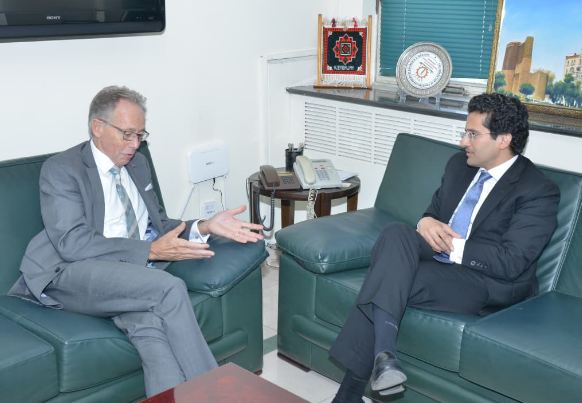
ISLAMABAD, SEPT 30 /DNA/ – The Federal Minister for Petroleum, Mr. Ali Pervaiz Malik had a farewell meeting at his office today with the outgoing Australian High Commissioner, H.E. Mr. Neil Hawkins, who is concluding his diplomatic assignment in Pakistan.

Minister Ali Pervaiz Malik lauded High Commissioner Hawkins as a “true friend of Pakistan” and commended his efforts in strengthening the bilateral relationship between the two countries. The Minister expressed his best wishes for the High Commissioner’s future endeavors and hoped he would depart with fond memories of his time in Pakistan.

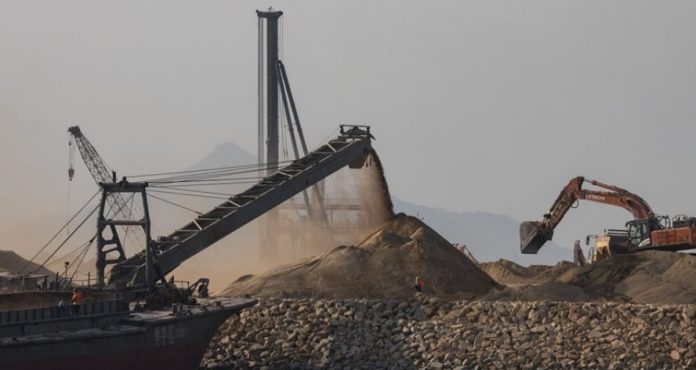
The discussion focused on the robust and growing partnership in the mining sector. High Commissioner Hawkins acknowledged the significant potential that Australian companies see in Pakistan’s mineral resources. He noted the existing footprint of Australian sub-contractors currently operating in Balochistan and highlighted Australia’s support for the Asian Development Bank (ADB) in the strategically vital Reko Diq project.

In response, Minister Malik reaffirmed the government’s full support for Australian investment and expertise. He emphasized that Pakistan’s mineral wealth is not limited to copper and gold but also includes extensive reserves of rare earth metals, which are crucial for modern technology and the global energy transition.

“Australia is a world leader in mining, and their growing interest is positive sign for Pakistan ,” stated Minister Ali Pervaiz Malik. “We are committed to providing a facilitative environment for international companies and value our partnerships as crucial for the development of our mining sector.”

Both sides expressed a shared commitment to further enhancing Pakistan-Australia cooperation in trade, investment, and energy.

Rising Xinjiang economy, developmentsignals a new era of economic cooperation with Pakistan

Rising Xinjiang economy, developmentsignals a new era of economic cooperation with Pakistan

BEIJING, SEPT 30 /DNA/ – The Xinjiang Uyghur Autonomous Region, long recognized for its strategic location and cultural diversity, is emerging as a key economic and logistical hub in China’s Belt and Road Initiative (BRI). With a focus on infrastructure modernization and cross-border cooperation, particularly with neighboring Pakistan, Xinjiang is playing an increasingly vital role in regional connectivity and trade.

Over the past decade, Xinjiang has witnessed significant investment in transportation, energy, and digital infrastructure. Modern expressways, high-speed rail lines, and expanded airports now connect major cities like Urumqi, Kashgar, and Hotan to the rest of China, as well as to Central and South Asia.

One of the flagship projects includes the Urumqi International Land Port Area, which has transformed the regional capital into a major logistics center for Eurasian freight. The China-Europe freight train routes, passing through Xinjiang, have increased substantially, reducing transit times and boosting trade.

Energy infrastructure has also advanced rapidly. Xinjiang, rich in coal, oil, gas, and renewable energy resources, has become a crucial supplier to China’s eastern provinces. Massive solar and wind farms in the region align with China’s goals for green development and energy security.

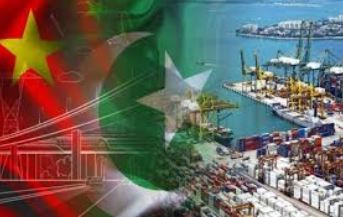
Xinjiang serves as the starting point of the China-Pakistan Economic Corridor (CPEC), a multi-billion-dollar initiative under the BRI framework. The corridor connects Kashgar in southern Xinjiang to the Gwadar Port in Pakistan, providing China with a shorter trade route to the Arabian Sea.

Highways like the Karakoram Highwayrecently upgraded with Chinese investment have improved trade and people-to-people exchanges between the two countries. Cross-border cooperation is also expanding in areas such as energy, agriculture, and education.

Joint ventures in hydropower and special economic zones have attracted investment and created jobs on both sides of the border. Kashgar has also emerged as a center for Sino-Pakistani trade delegations and business forums, fostering deeper economic integration.

According to official data, religious freedom has been preserved throughout Xinjiang’s development process. The region is home to 10 Islamic institutions, which collectively train nearly 1,000 clerics each year. As Xinjiang marks the 70th anniversary of its development, it stands as a testament to the region’s commitment to balancing sustained economic growth with social responsibility and the preservation of cultural heritage.

 President Asif Ali Zardari offered prayers at the historic MosqueEtigar Mosque during his visit to Kashgar in Xinjiang, experiencing the vibrant and well-preserved Islamic traditions of the local Muslim community. His visit underscored the importance of religious freedom and mutual respect in fostering deeper ties between Pakistan and China.

President Zardari’s participation in local religious practices highlights the ongoing efforts to promote interfaith harmony and cultural understanding. The visit was seen as a positive reflection of the respect for Islamic heritage in the Xinjiang region.

In light of this, scholars and educational leaders from Pakistan have expressed their support for enhancing religious and cultural exchange programs. “There is a great opportunity for both nations to strengthen ties by encouraging scholarly exchanges and facilitating visits to historical mosques and religious sites,” said Hafiz Muhammad Basharat, Member Board of Governors, FBISE. “We deeply appreciate such initiatives that promote unity, respect, and shared values.”

The gesture is being widely welcomed as a step toward greater people-to-people contact and cultural diplomacy between the two brotherly nations, besides providing opportunities to visit each other’s religious sites.

China builds world’s ‘largest, most comprehensive’ water infrastructure system

China builds world's 'largest, most comprehensive' water infrastructure system

ANKARA, SEP 30 (AA/APP): China on Monday announced that it has built the world’s “largest, most comprehensive” water infrastructure system, with total investment in water conservancy projects during the 2021-25 period expected to exceed 5.4 trillion yuan ($757 billion), state media reported.

Water Resources Minister Li Guoying said the total investment during the 14th Five-Year Plan period (2021-25) is expected to be 1.6 times higher than that of the 13th Five-Year Plan period (2016-20), according to the Global Times, an English-language daily.

Since the launch of the 14th Five-Year Plan, China has initiated 172 major water projects nationwide, accelerating improvements in the layout, structure, and integration of its water infrastructure.

By the end of 2024, China constructed 95,000 reservoirs, 200 large and medium-sized water transfer projects, 6,924 irrigation districts, and 318,000 kilometers (197,596 miles) of dikes — creating what officials describe as a world-leading system in terms of scale, functionality, and population coverage.

Li also stated that China has been advancing its flood and drought defense system.

According to the minister, China now has 185.6 billion cubic meters of reservoir flood storage capacity, dikes protecting 660 million people, and 109 billion cubic meters of national flood detention capacity.

Since the start of the 14th Five-Year Plan, flood losses as a share of GDP have dropped from 0.28% to 0.18%, Li said.

By the end of the plan period in 2025, the national water network is expected to cover 80.3% of the country. Irrigated farmland is projected to reach 72.7 million hectares (180 million acres), while rural tap water access will expand to 96% of the population.

Stay Connected

64FansLike
60FollowersFollow

Latest Reviews

Exchange Rates

USD - United States Dollar
EUR
1.15
GBP
1.34
AUD
0.69
CAD
0.71