Home Blog Page 452

Punjab, Uzbekistan pledge closer trade ties, boost investment cooperation

Punjab, Uzbekistan pledge closer trade ties, boost investment cooperation

LAHORE, Oct 01 (APP):A parliamentary and trade delegation from Uzbekistan called on Punjab Minister for Industries and Commerce, Chaudhry Shafay Hussain, at PISC House on Wednesday, reaffirming the commitment of both sides to enhance bilateral trade and investment cooperation.

The Uzbek delegation was led by Nurdinjon Ismoilove, Speaker of the Legislative Chamber (Oliy Majlis) of Uzbekistan, and included Uzbekistan’s Ambassador Alisher Takhtave, Honorary Consul General Najeeb Mushtaq Vohra, deputy chairmen of parliamentary committees and heads of various institutions.
During the meeting, both sides agreed to strengthen economic ties through increased trade cooperation and mutual investment opportunities. Focal persons were appointed to facilitate coordination, and it was decided that regular exchange of trade delegations would be carried out to foster deeper commercial linkages.
Speaking on the occasion, Provincial Minister Chaudhry Shafay Hussain highlighted the vast investment potential in Punjab, particularly within its Special Economic Zones. He invited Uzbek investors to explore joint ventures in key sectors including agriculture, tourism, energy, electric vehicles and manufacturing.
The minister informed the delegation that a Surgical City, Garment City and Pharmaceutical Valley are being established to attract and support foreign investment. He assured full facilitation for Uzbek investors.
The Uzbek Speaker, Nurdinjon Ismoilove, lauded Punjab’s investment-friendly initiatives, terming the establishment of a community center in Faisalabad as a commendable move. He underlined the need to bolster trade relations and announced that Uzbekistan would soon dispatch a business delegation to Punjab. He also extended an invitation to Minister Shafay Hussain to visit Uzbekistan for further engagement.
Ambassador Alisher Takhtave echoed the importance of concrete steps to deepen bilateral trade ties. He assured that the upcoming visit of the Punjab minister to Uzbekistan would include meetings with the local business community to explore avenues for cooperation.
Director of Punjab Board of Investment and Trade, Dr. Imran Hashmi, was also present during the meeting.

Global air travel forecasted to reach 9.8 billion passengers in 2025: ACI

Global air travel forecasted to reach 9.8 billion passengers in 2025: ACI

ASTANA, OCT 1 (Kazinform/APP): Global air travel is projected to reach 9.8 billion passengers for 2025, according to Airports Council International (ACI) World’s newly released World Airport Traffic Report (WATR). While international travel is driving growth, regional disparities and medium-term challenges signal a varied outlook, WAM reports. 

ACI World’s flagship annual report draws from over 2,800 airports across more than 185 countries and territories, offering the most extensive overview of the global airport industry.

Justin Erbacci, ACI World Director-General, said, “Air travel is on track to reach 9.8 billion passengers in 2025, underscoring aviation’s role as a driver of global mobility and economic growth. International travel remains the main engine of growth, but regional variations reflect a mix of structural strengths, policy challenges, and evolving travel patterns. To sustain air travel demand globally, regulators must foster policies and frameworks that enable improved connectivity, long-term resilience and sustainable growth.”

2025 global passenger traffic is projected to reach 9.8 billion passengers, reflecting a 3.7% Year-on-Year (YoY) growth from 2024. International traffic is expected to grow 5.3% in 2025, compared to 2.4% for domestic traffic.

By mid-2025 Year-to-Date (YTD), global passenger traffic was up 2.1% YoY; international traffic grew 4.9% YoY, while domestic traffic contracted 0.7% YoY. Africa: Forecasted to reach 273 million passengers in 2025 (+9.4% YoY), led by Northern Africa and boosted by tourism and rising middle-class demand.

Asia-Pacific: Forecasted to reach 3.6 billion passengers in 2025 (+5.6% YoY), with Southern and Southeast Asia driving growth; East Asia`s outlook remains cautious. Europe: Forecasted to reach over 2.5 billion passengers in 2025 (+3.6% YoY); international travel leading growth, while domestic volumes lag due to rail gains.

Latin America–Caribbean: Forecasted to reach 789 million passengers in 2025 (+4.1% YoY); momentum supported by leisure demand and low-cost carrier expansion. Middle East: Forecasted to reach 466 million passengers in 2025 (+5.9% YoY); underpinned by investment and tourism, though risks from geopolitical instability remain.

North America: Forecasted to reach 2.1 billion passengers in 2025. Global passenger traffic continues to grow unevenly across regions, reflecting a mix of structural strengths, policy challenges, and evolving travel patterns. Emerging aviation markets such as in Africa, Asia-Pacific, the Middle East, and Latin America are driving growth, supported by rising demand and a growing presence of low-cost carriers.

In contrast, advanced aviation markets, including parts of East Asia, Europe, and North America, face a more uncertain outlook amid geopolitical tensions, demographic shifts (such as ageing in some regions), and changes in traveller behaviour (such as uncertainty in travel and visa policies).

Overall, the global aviation market is expanding, but its trajectory remains sensitive to geopolitical events, macroeconomic conditions and region-specific headwinds.

Earlier, it was reported tourist accommodations across the European Union recorded 1.279 million overnight stays in the first half of 2025, marking a 2.3% rise compared with the same period in 2024 (1.249 million), according to data released by Eurostat, the EU’s statistical office, on the occasion of World Tourism Day, 27th September.

Nigerian High Commission visits Int’l Grammar School, Islamabad

Nigerian High Commission visits Int’l Grammar School, Islamabad

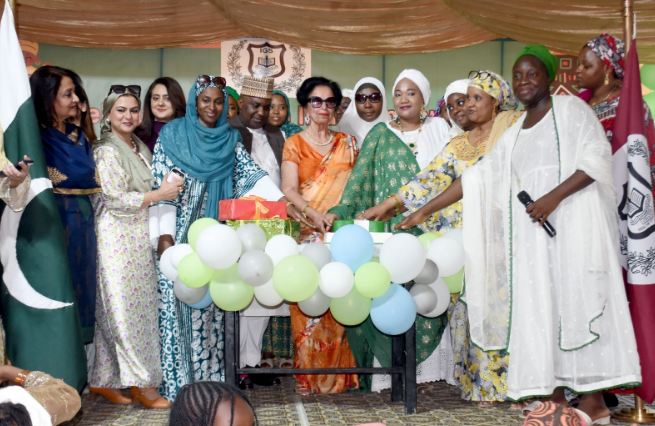
ISLAMABAD, OCT 1 /DNA/ – International Grammar School (IGS), F-11/4, was honored to host a distinguished gathering of diplomatic and educational leaders on Wednesday, fostering a spirit of international cooperation and community engagement.

The event was graced by the presence of Muhtari B.B. from the Nigerian High Commission in Islamabad, who attended as a representative of the diplomatic community. His participation underscored the strong ties between Pakistan and Nigeria.

Adding significant honor to the occasion was the presence of Aishatu Yushau Mohammed, the spouse of the Charge d’Affaires of the Nigerian High Commission.

The school community was further privileged to welcome Mrs. B.A. Kureshi, the esteemed Principal of IGS F-11/4, Islamabad. As a pillar of the local educational community, Mrs. Kureshi’s leadership and dedication to academic excellence were central to the event’s success.

The gathering served as a meaningful platform for dialogue and relationship-building between international representatives and local educational leaders, highlighting IGS’s commitment to fostering a global perspective.

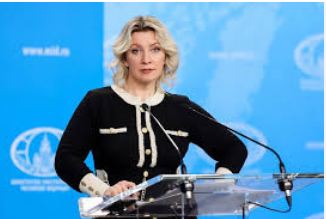
Zakharova on US Plan: Gaza peace requires independent Palestine

Zakharova on US Plan: Gaza peace requires independent Palestine

MOSCOW, OCT 1 /DNA/ – The Russian Federation has taken note of the proposed peace plan for Gaza presented by the President of the United States. In relation to this initiative, the Official Representative of the Russian Ministry of Foreign Affairs, Maria V. Zakharova, stated the following:

“Russia has consistently and firmly called for an immediate ceasefire and an end to the bloodshed in the Gaza Strip.

In this context, we believe that any measures and initiatives aimed at achieving this critical goal deserve to be supported. It is our sincere hope that a ceasefire will not only take hold but will become sustainable, ultimately leading to a lasting stabilisation of the situation in the Palestinian enclave.

The establishment of a durable calm is a fundamental prerequisite for launching large-scale, comprehensive efforts to rebuild the sector’s critical infrastructure, which has suffered near-total destruction during the course of hostilities.

A successful and unimpeded implementation of this plan must pave the way for the resumption of a constructive dialogue between the Israeli and Palestinian sides. The ultimate objective remains a comprehensive political settlement of all outstanding issues on a recognised international legal basis. This foundation provides for the creation of an independent Palestinian state, coexisting in peace and security with Israel and all other states in the region.”

Jordan, Pakistan vow to boost bilateral investment ties

Jordan, Pakistan vow to boost bilateral investment ties

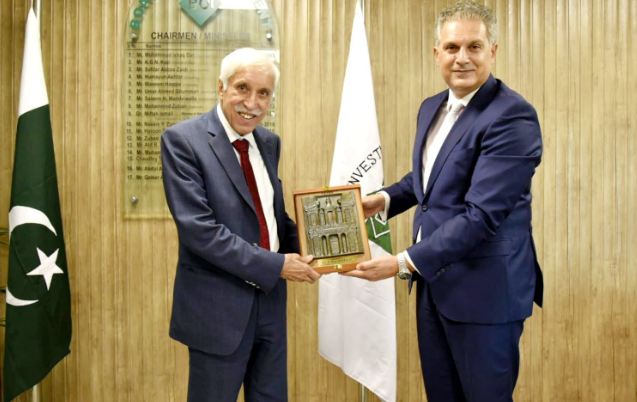
ISLAMABAD, OCT 1 /DNA/ – Maen Khreasat, Ambassador of the Hashemite Kingdom of Jordan to Pakistan, met today with Qaisar Ahmed Shaikh, Federal Minister for the Board of Investment.

The meeting focused on strengthening bilateral investment ties and exploring new avenues for economic cooperation between Jordan and Pakistan. Both sides reaffirmed their commitment to enhancing mutual collaboration in trade and investment sectors.

This engagement reflects the growing momentum in diplomatic and economic relations between the two brotherly countrie

AIOU enters landmark partnerships to boost education and digital learning

AIOU enters landmark partnerships to boost education and digital learning
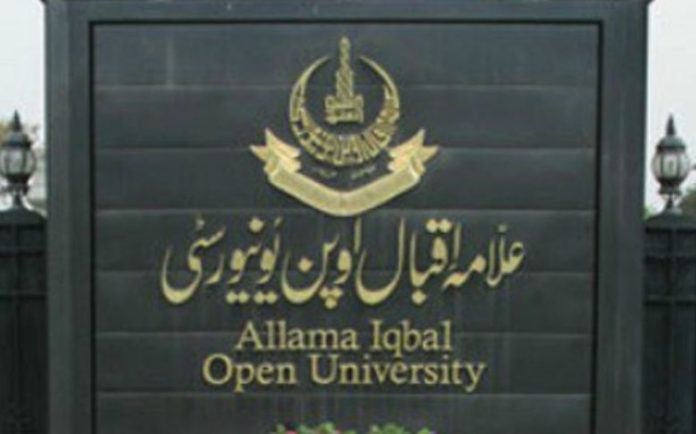
ISLAMABAD, Oct 1 (APP/DNA):Allama Iqbal Open University (AIOU), on Wednesday, signed separate agreements with two prominent institutions to promote education, research, implement modern teaching models and provide new opportunities in digital learning. 

AIOU signed these agreements with Alight Pakistan and Kohat University of Science and Technology (KUST), aiming to expand access to education, empower the youth and pave new pathways for academic development.

Under the agreement with Alight Pakistan, both institutions would jointly design programs to promote education, community development and youth skill enhancement. The collaboration seeks to broaden educational resources and introduce new initiatives for societal progress.

Meanwhile, the agreement with KUST focuses on facilitating access to quality education through online and hybrid learning models. This partnership includes joint research, academic and teaching exchanges and technical support for advancing digital education, further strengthening the educational vision of both institutions.

The signing ceremonies saw Dr Tariq Cheema, Chief Executive Officer (CEO) of Alight Pakistan and Professor Dr Nasir Mahmood, Vice Chancellor of AIOU, who represented their respective institutions. Similarly, the agreement with KUST was signed by Vice Chancellor Professor Dr Syed Zafar Ilyas and Professor Dr. Nasir Mahmood.

The ceremonies were also attended by the University’s deans, principal officers and faculty members.

On this occasion, Professor Dr Nasir Mahmood expressed that AIOU had a longstanding tradition of fulfilling its commitments to research and teaching.

He emphasized that these agreements would be implemented effectively to bring the light of education to every corner of the country.

Survivor pulled from Indonesia school collapse as parents await news

Survivor pulled from Indonesia school collapse as parents await news

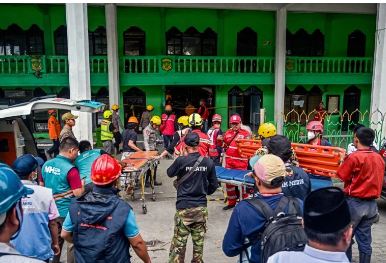
SIDOARJO, OCT 1 (AFP/APP):Rescuers pulled a survivor from the ruins of a collapsed school in Indonesia on Wednesday, as desperate parents demanded searchers speed up efforts to find dozens more still believed trapped in the rubble.

  Part of the multi-storey school on the island of Java gave way suddenly on Monday, as students gathered for afternoon prayers.

On Wednesday, rescuers said they had retrieved a survivor and a fourth body from the ruined building, but gave no details on either.

     Based on school records “91 people are suspected to be buried,” National Disaster and Mitigation Agency spokesperson Abdul Muhari said in a statement late Tuesday.

Tearful parents milled near the ruins throughout Wednesday, awaiting news of their children.

  “We believe our children might still be alive because they were crying for help,” said father Abdul Hanan, whose 14-year-old son is missing. “The rescue operation must be accelerated.”

  “We are racing against time now,” the 45-year-old added, bursting into tears.

  Nearby, Dewi Sulistiana was awaiting news of her 14-year-old son she was last in touch with on Sunday. The boarding school limits student access to cellphones.

   She rushed to the scene from Surabaya, several dozen kilometres (miles) away, after hearing about the collapse.

       “I have been here for days. I cried thinking about my son,” she told AFP. “Why is taking so long to find him, why is the search so slow? I haven’t had any updates, so I just wait.”

– Tunnels and drones –

The rescue operation is complex, said Mohammad Syafii, head of the National Search and Rescue Agency.

  “If vibration happens in one spot, it could affect other places. So now, to reach the spot where the victims are, we have to dig an underground tunnel,” he told reporters.

   Digging itself poses challenges, including possible landslides. And any tunnel will only provide an access route around 60 centimetres (about 23 inches) wide because of the structure’s concrete columns.

     Technology including thermal-sensing drones is being used to locate survivors and the deceased as the 72-hour “golden period” for best survival chances nears its end.

   AFP saw rescuers in orange uniforms appearing to snake cameras under the rubble to hunt for traces of survivors.

     So far, signs of life have been detected in seven areas, said Emi Freezer, of the National Search and Rescue Agency.

       Water and food was being sent in, but access was through a single point, he said. “The main structure has totally collapsed.”

  Complicating the operation, an earthquake struck offshore overnight, briefly halting the search.

   Around the ruins, local charitable organisations have set up posts offering families food and drink.

   The school collapse was so violent it sent tremors across the neighbourhood, said local resident Ani.

  “I felt a vibration and then I heard a noise. I immediately ran to save myself. I didn’t realise at first it was a building collapse,” the grocery stall owner told AFP.

“Many people then also ran to save themselves,” she added.

   Investigations into the cause of the collapse were ongoing, but initial signs point to structural issues and construction that did not meet building standards, experts said.

    The building collapsed after its foundation pillars failed to support the weight of new construction on the fourth floor of the school, said the national disaster management agency spokesman.

   Lax construction standards have raised widespread concerns about building safety in Indonesia, where it is common to leave structures — particularly houses — partially completed, allowing owners to add extra floors later when their budgets permit.s

  Earlier this month, at least three people were killed and dozens injured when a building hosting a prayer recital collapsed in West Java province.

Trump praises Pakistan for recognizing his efforts to stop conflict with India

Trump praises Pakistan for recognizing his efforts to stop conflict with India

WASHINGTON, OCT 1 (APP/DNA): U.S. President Donald Trump Tuesday said he called both Pakistan and India to stop the war between the two nuclear-armed countries and again praised the Pakistani leadership for acknowledging that by doing so he saved millions of lives.

“India and Pakistan were going at it. I called them both… They had just shot down seven planes… I said, if you do this, there’s not going to be any trade, and I stopped the war. It was raging for four days,” he told American military commanders at Quantico, Virginia, near Washington DC.

Trump said he leveraged U.S. trade to end the war that the two countries fought between May 7 and 10, engaging in one of the largest aerial combats in modern warfare.

Pakistan declared that it shot down six Indian fighter jets including super-sophisticated French Rafale jets. Later, India acknowledged the losses, though without revealing the exact number of jets lost.

“And in this case, I use trade. I’m not going to trade with you. You start two nuclear nations. Big nuclear. No, no, no. You cannot do that. You go into this freaking war and I stopped it.”

On May 10, Trump announced in a social media post that India and Pakistan had agreed to a ceasefire after U.S. diplomatic engagement.

Trump also said that he was “honoured” when Pakistan Army chief Field Marshal Asim Munir, who he called “a very important guy in Pakistan”, praised him for saving millions of lives.

“I have settled so many wars” in the nine months of his administration, he said. “I’ve settled seven. And yesterday we might have settled the biggest of them all, although I don’t know, Pakistan and India was very big, both nuclear powers. I settled that.”

Referring to his peace plan to end the Gaza conflict, announced on Monday, Trump said, “We got it, I think, settled. We’ll see. Hamas has to agree, and if they don’t, it’s going to be very tough on them. But it is what it is. But all of the Arab nations, Muslim nations, have agreed.” In his remarks, Trump again went back to the conflict between India and Pakistan and praised the Pakistani officials for lauding him for saving millions of lives.

In a sign of rapidly warming U.S.-Pakistan relations, Trump spoke of his Oval Office meeting with Prime Minister Shehbaz Sharif and Army Chief Field Marshal Asim Munir.

 “The prime minister of Pakistan was here along with the Field Marshal (Asim Munir) who’s a very important guy in Pakistan. And he was here three days ago,” the U.S. president noted, referring to last Friday’s meeting.

The US president said he was honoured by Pakistani military chief’s words.

“And I didn’t even realize it as beautifully as he (Asim Munir) said it, but he said that to a group of people that were with us…He (Asim Munir) said, ‘This man (Donald Trump) saved millions of lives because he stopped the war from going on,’” Trump said.

“That war was going to get very bad. I was very honored. I love the way he (Asim Munir) said it. Susie Wiles (White House Chief of Staff) was there. She said that was the most beautiful thing. But we saved a lot of them,” Trump added.

Experts warn of implementation gaps in Pakistan’s AI roadmap

Experts warn of implementation gaps in Pakistan's AI roadmap

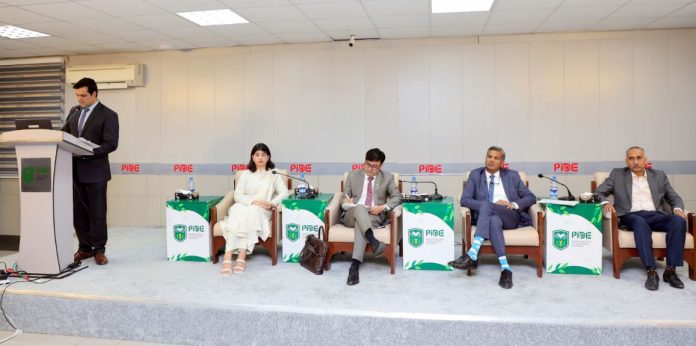
ISLAMABAD, OCT 1 /DNA/ – The Pakistan Institute of Development Economics (PIDE) hosted a high-profile seminar on Pakistan’s newly launched National Artificial Intelligence (AI) Policy, focusing on the theme “Bridging Gaps in Pakistan’s AI Roadmap: Opportunities, Challenges and the Way Forward.” The session brought together policymakers, academics, entrepreneurs, and industry leaders to deliberate on the transformative potential of AI for Pakistan’s economy, governance, and society.

The panel featured distinguished speakers including Dr. Anil Salman, Chair of the Government of Pakistan’s AI Policy Committee; Dr. Najibullah, Member Science and Technology at the Planning Commission of Pakistan; Ms. Suniya Shahid, CEO & Co-founder of Techvention Ltd.; and Dr. Naveed Iftikhar, CEO of Atomcamp, who joined virtually via Zoom. The discussion was moderated by Mr. Wajid Islam, Research Economist at PIDE.

Dr. Salman explained the policy’s vision as bold, ethical, and transformative, stressing inclusivity across economic, social, and technological dimensions. He highlighted that the policy was developed through extensive consultation with domestic and international stakeholders including UNESCO, ADB, and the Commonwealth. He projected that full implementation could boost GDP by 7–12% and create up to one million jobs by 2030.

Dr. Najibullah discussed the financial ecosystem and emphasized the importance of venture capital and accelerators to bridge Pakistan’s “valley of death” in scaling startups. He announced a Public Venture Capital Fund of PKR 2 billion and highlighted the need for global accelerators to support Pakistani innovators. He also stressed sectoral opportunities in agriculture, health, and education, and pointed out challenges around data infrastructure, payment gateways, and cybersecurity.

Ms. Suniya Shahid presented an industry perspective, stressing the importance of AI adoption in healthcare and the need for ethical auditing mechanisms to ensure responsible AI use. She advocated for dedicated AI funds for women-led startups, retraining programs for displaced workers, and greater use of social media campaigns to raise awareness among youth. She also warned that unless AI models are trained on localized datasets, Pakistan will continue to face serious implementation gaps.

Joining via Zoom, Dr. Naveed Iftikhar highlighted the gap between policy formulation and adoption, stressing that AI integration within government, universities, and industries remains slow. He emphasized the urgent need for upskilling across civil service, academia, and public sector organizations, and called for partnerships with Saudi Arabia, China, and global data centers to bridge Pakistan’s infrastructure gap.

In his concluding remarksDr. Nasir Iqbal, Associate Professor and Registrar at PIDE, reflected on the macroeconomic implications of AI policy. He stressed that the success of the policy must be judged on three fundamental pillars: productivity, inclusivity, and market competitiveness. He cautioned that while AI holds immense promise, it could also deepen inequality or lead to monopolistic structures if not implemented inclusively. He urged policymakers to think innovatively, beyond a project-based approach, and proposed measures like a “two-minute business registration model” to reduce barriers for entrepreneurs and village economic zones to empower rural communities and women.

The seminar concluded with consensus that while Pakistan faces significant challenges in infrastructure, financing, and inclusivity, the National AI Policy has set the right direction. Its success will depend on sustained collaboration between government, private sector, academia, and international partners.

Maryam Nawaz announces major development packages for Murree

Pakistan, Austria eye cooperation in Energy and IT

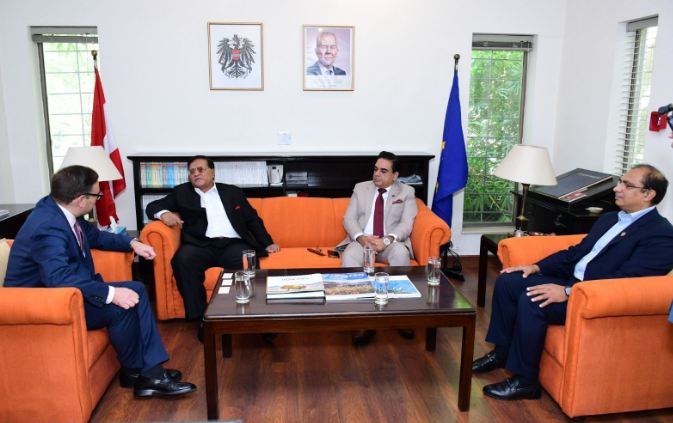
ISLAMABAD, OCT 1 /DNA/ – A delegation of the Islamabad Chamber of Commerce & Industry (ICCI) and the United Business Group (UBG) met with the newly appointed Ambassador of Austria to Pakistan, H.E. Mr. Wolfgang Oliver Kutschera, at the Austrian Embassy. The delegation comprised ICCI President Sardar Tahir Mehmood, UBG Secretary General Zafar Bakhtawari, and ICCI Senior Vice President Tahir Ayub.

The meeting was held in a cordial atmosphere and reflected a strong spirit of mutual understanding between the Austrian Embassy and Pakistan’s business community. The Ambassador expressed Austria’s willingness to further promote bilateral trade and business relations with Pakistan, assuring his full cooperation with ICCI in strengthening ties in the future.

He particularly highlighted opportunities for collaboration in renewable energy, infrastructure development, information technology, and agriculture, noting Austria’s expertise in these areas.

ICCI President Sardar Tahir Mehmood reaffirmed the Chamber’s commitment to working closely with the Austrian Embassy, expressing readiness for B2B meetings to explore partnerships in the IT, agriculture, mining, and business sectors. He further welcomed Austrian investors to Pakistan and announced that ICCI would extend full support to the Austrian Business Conference scheduled for November 18–19.

 Zafar Bakhtawari Secretary General  UBG , underscored the importance of peace and stability for business and economic growth, recalling Austria’s historic role as a neutral country during the Cold War. He emphasized that ongoing regional conflicts — such as the Russia-Ukraine war, tensions in South Asia, and instability in the Middle East — continue to pose challenges to global peace. Stressing that prosperity is only possible in a peaceful world, he noted that politics should not be allowed to spill over into areas such as sports, where unity and fair competition must prevail.

ICCI Senior Vice President Tahir Ayub highlighted the potential for agriculture cooperation, particularly the export of Pakistani fruits and vegetables, including mangoes, to Austria. He invited Austrian businesses to explore Pakistan’s agriculture sector and benefit from its vast investment opportunities.

The Ambassador, while appreciating these proposals, assured the delegation of his continued support in strengthening economic and cultural ties between Austria and Pakistan.

Stay Connected

64FansLike
60FollowersFollow

Latest Reviews

Exchange Rates

USD - United States Dollar
EUR
1.15
GBP
1.34
AUD
0.69
CAD
0.71