Home Blog Page 451

last Gaza flotilla boat intercepted by Israel

last Gaza flotilla boat intercepted by Israel

JERUSALEM, OCT 3 (AFP/APP):The organisers of a Gaza-bound aid flotilla said Israel intercepted its last remaining boat on Friday, after the interceptions of its fellow vessels drew protests worldwide.

The Global Sumud Flotilla set sail last month, ferrying politicians and activists including Swedish campaigner Greta Thunberg towards Gaza, where the United Nations says famine is taking hold.

The Israeli navy began intercepting the boats on Wednesday, and an Israeli official said the following day that boats with over 400 people on board had been prevented from reaching the Gaza Strip.

Israel said it would deport the activists to Europe, adding that none of the vessels had breached its maritime blockade of the territory.

“Marinette, the last remaining boat of the Global Sumud Flotilla, was intercepted at 10:29 am (0729 GMT) local time, approximately 42.5 nautical miles from Gaza,” the flotilla organisers said on Telegram.

The statement added that Israeli naval forces had “illegally intercepted all 42 of our vessels — each carrying humanitarian aid, volunteers, and the determination to break Israel’s illegal siege on Gaza”.

The interception of the final boat, which brings to an end this flotilla’s mission, came hours after protesters around the world held rallies condemning Israel’s actions.

   About 15,000 people marched in Barcelona in Spain, where the flotilla began its voyage, chanting slogans including “Gaza, you are not alone”, “Boycott Israel” and “Freedom for Palestine”.

  Hundreds also gathered outside the Irish parliament in Dublin, where Miriam McNally, whose daughter was sailing with the flotilla, said she was “worried sick”.

  Protests also took place in Paris, Berlin, The Hague, Tunis, Brasilia and Buenos Aires, according to AFP correspondents.

General Practice Hospital Launches Breast Cancer Awareness Initiative for October 2025

ISLAMABAD – OCT 3 (DNA): In recognition of International Breast Cancer Awareness Month, General Practice Hospital is proud to launch a community-focused health initiative aimed at promoting early detection and treatment of breast cancer. Throughout October 2025, the hospital will be offering subsidized screening X-Ray mammography for just PKR 3,000, along with free consultations from qualified female breast surgeons.

Breast cancer remains one of the most prevalent forms of cancer among women in Pakistan. However, when detected early, the chances of successful treatment and survival increase significantly. The hospital’s campaign is centered on increasing accessibility and awareness, especially among women who may not otherwise have access to reliable screening services.

Patients will be welcomed into a safe, hygienic, and confidential environment, ensuring their comfort and privacy throughout the process. The initiative is designed to encourage women to prioritize their health without the burden of high medical costs or social stigma.

“We understand the fear and uncertainty that can come with breast cancer screening,” said a representative from General Practice Hospital. “That’s why we’re committed to providing compassionate, affordable, and professional care during this awareness month. Early detection saves lives — and we want every woman to have that chance.”

The hospital also urges corporate organizations, educational institutions, and community groups to support the campaign by circulating this information among their members and encouraging participation.

This initiative reflects General Practice Hospital’s ongoing commitment to community health and women’s wellness. Women are encouraged to take advantage of this timely opportunity to get screened, seek advice, and take proactive steps toward a healthier future.

Appointments can be booked by contacting the hospital directly.

Together, we can help raise awareness, fight stigma, and save lives through early detection.

The Embassy of Japan Hosted Cultural Exchange for Japanese Learning Students: A Hands-On Experience of Tradition and Friendship

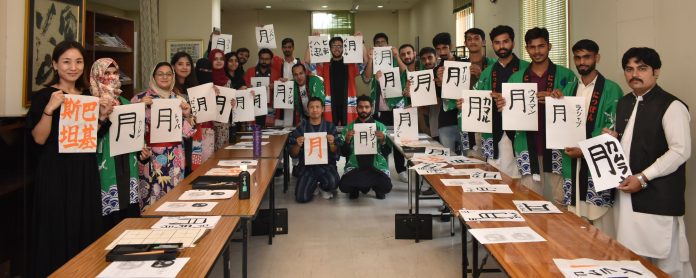
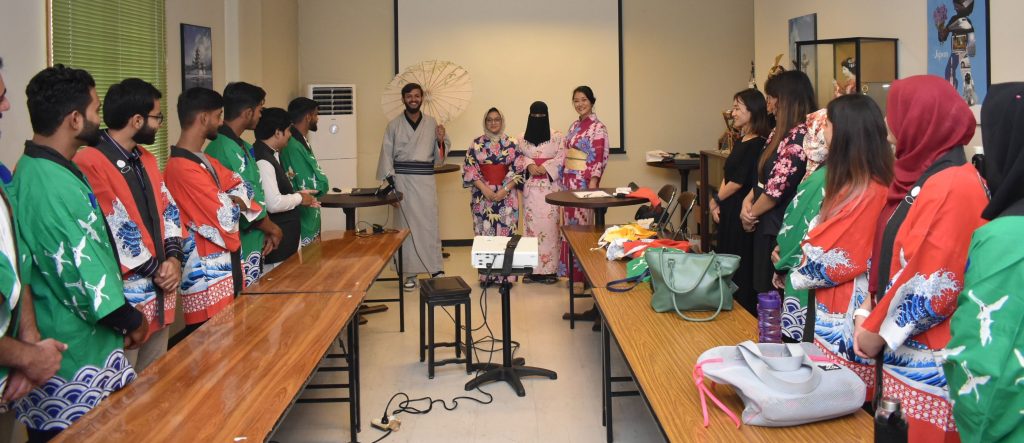
ISLAMABAD: OCT 2 (DNA):To foster cultural understanding and strengthen people-to-people ties, the Embassy of Japan successfully hosted a dynamic cultural exchange event on Wednesday October 1, for the students of Japanese language from the National University of Modern Languages (NUML)Islamabad. The event offered the students a unique and interactive opportunity to engage directly with traditional Japanese culture, enriching their understanding and appreciation.

While welcoming the students, Ms. Ura Mamiko, Deputy Head of Public Affairs, Embassy of Japan, expressed her deep appreciation for the students for their interest in learning the Japanese language and culture, calling it a bridge to bring the two people further closer.  

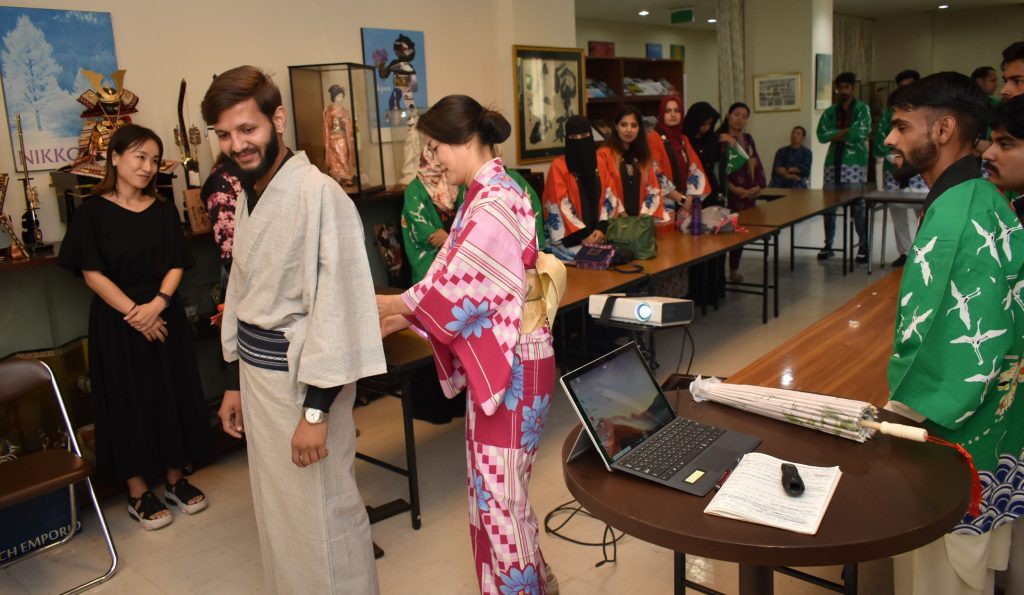
The event featured three engaging sessions designed to immerse participants in different aspects of Japanese culture and traditions. The first session introduced students to traditional Japanese attire, including the iconic Kimono and its various types. The highlight of this session was a lucky draw, where three students were selected to participate in a live demonstration on how to properly wear a Yukata, a lighter summer version of the kimono.

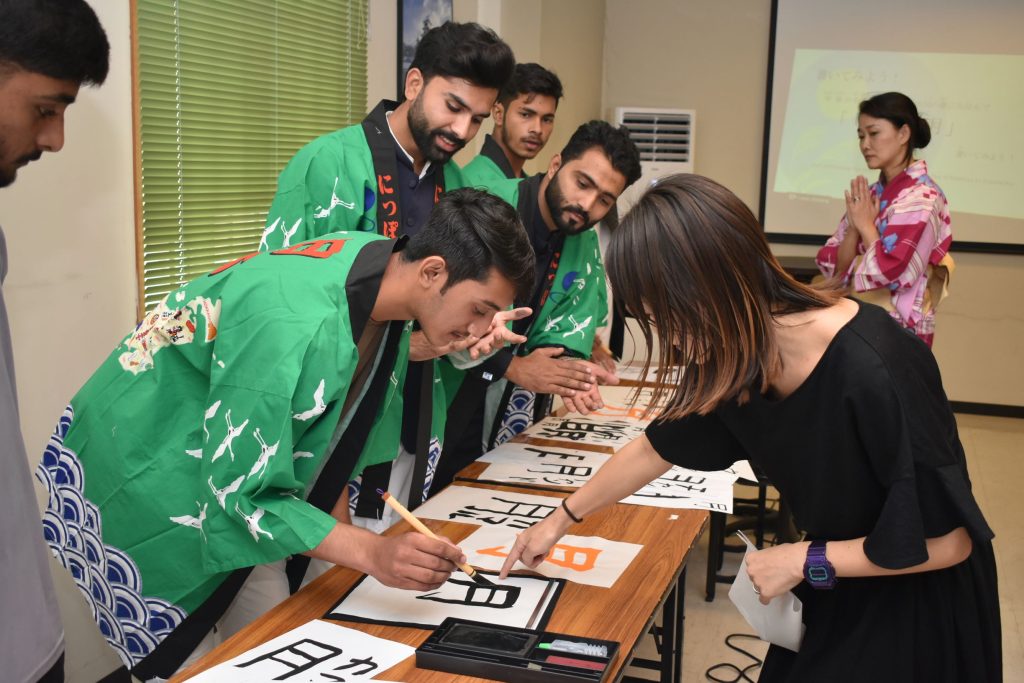
In the second session, students explored the art of Japanese calligraphy (Shodō) and enthusiastically practiced writing Japanese Kanji characters using traditional calligraphy brushes and ink, gaining hands-on experience with this centuries-old art form. The students filled with enthusiasm expressed their deep appreciation for this ancient art form.

The final session focused on Japanese dining customs where students were specifically taught the use of chopsticks. This interactive activity included a fun challenge, transferring beans from one plate to another using chopsticks. The top four performers advanced to a mini-tournament, and the final two winners were awarded small commemorative gifts from the Embassy.

In her concluding remarks, Ms. Mamiko stated that this cultural exchange event reflects the Embassy’s dedication to fostering youth-centered initiatives that promote mutual understanding and strengthen the friendship between Japan and Pakistan. She added that this cultural interaction is part of the Embassy’s ongoing efforts to enhance people-to-people ties and build enduring bridges between the youth of both nations.

While expressing their heartfelt gratitude and appreciation, the participants said that this event has been a great opportunity for them to experience the Japanese culture in an interactive way.

Islamabad police storm National Press Club, assault journalists

Level of aggression displayed by police was unprecedented, says PFUJ President Afzal Butt

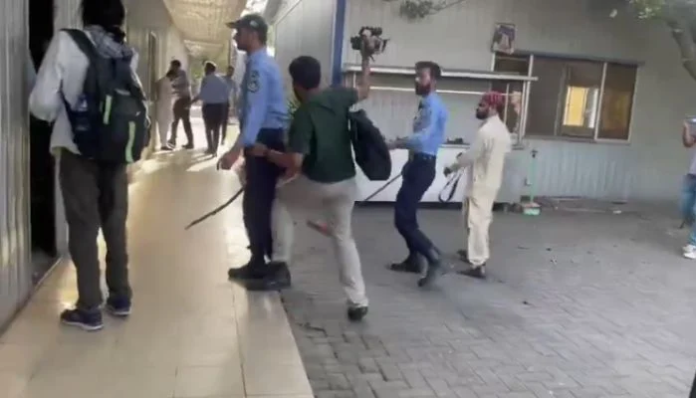
ISLAMABAD: Islamabad police forced their way into the National Press Club (NPC) on Thursday afternoon amid a demonstration by the Awami Action Committee, attacking journalists and vandalising the premises — an episode senior media figures condemned as one of the “worst incidents in history”.

The protest was scheduled for around 3pm at the National Press Club. When demonstrators gathered outside, police arrested them.

Journalists on the scene began documenting the events with photos and videos, but police attempted to stop them, even trying to snatch cameras and mobile phones.

Minutes after the police were asked not to manhandle media personnel by senior journalists, police personnel forced open the doors of the press club, with some climbing the walls and entering the building as if “terrorists were inside”.

They attacked multiple journalists, smashed their equipment, and also stormed the cafeteria, beating journalists who were having tea.

Despite journalists repeatedly informing the police that no protesters were inside, the assault continued. Cameras were thrown to the ground, while media workers were assaulted.

Pakistan Federal Union of Journalists (PFUJ) President Afzal Butt condemned the incident, saying police broke NPC’s furniture, assaulted both employees and office holders, and even arrested some of the staff.

He said the level of aggression displayed by police was unprecedented.

“Even during dictatorships, such behaviour was not witnessed. The police used to wait outside for a wanted person rather than raiding the Press Club,” Butt remarked.

He warned that Islamabad police would have to answer for the violence, otherwise, journalists would launch a strong protest.

Meanwhile, journalists at the NPC were holding discussions on their next course of action following the assault.

Following the incident, Minister of State for Interior Talal Chaudhry visited NPC and apologised to journalists following the police torture of journalists.

“I am sent by Federal Interior Minister Mohsin Naqvi. I unconditionally apologise to journalists over the incident of police torture,” he said.

ACTING PRESIDENT GILANI ADDRESSES PAKISTAN BUSINESS SUMMIT IN PESHAWAR

PESHAWAR: OCT 2 (DNA): Acting President and Chairman Senate, Syed Yousuf Raza Gilani, addressed the Pakistan Business Summit held in Peshawar today.

In his remarks, the Acting President said that Khyber Pakhtunkhwa holds great potential for business and investment. He expressed satisfaction that the summit had been organised to explore ways of boosting Pakistan’s economic growth and development.

Mr Gilani said that Pakistan’s economy was moving towards stability and that new opportunities for trade and investment were opening up. He noted that both local and international investors were showing confidence in Pakistan, as the government continued its efforts to ensure a secure and supportive environment for business.

He emphasised that Pakistan’s young population, which makes up around 60 percent of the country, is its greatest strength. He said that empowering the youth and helping them realise their potential is vital for a prosperous future. Mr Gilani also highlighted the importance of tourism, recalling that during his tenure as Minister for Tourism, he had established the Malam Jabba chairlift to encourage tourism in the region.

Speaking about Pakistan’s struggle against terrorism and extremism, the Acting President said that when dialogue failed, the government was left with no choice but to take firm action. “When we stood up against terrorism and extremism, the whole world supported Pakistan,” he said. He added that more than 2.5 million internally displaced persons were successfully rehabilitated within 90 days, in collaboration with the international community, which was a remarkable humanitarian effort that gained global recognition.

Mr Gilani shared that despite personal hardship, including the abduction of his son by terrorists, he chose the path of peace, progress and cooperation with the international community. He said that Pakistan’s sacrifices in the fight against terrorism, made by its people, armed forces, police, Levies and Frontier Corps, must never be forgotten or allowed to go in vain.

He recalled that as Prime Minister, he had invited 14-year-old Malala Yousufzai to his office and presented her with a national peace award for her courage and commitment to education, long before she received international acclaim.

Mr Gilani said that Pakistan and Afghanistan are bound by geography, faith, culture and history, describing the two countries as “twin brothers.” He added that a peaceful and stable Afghanistan is in Pakistan’s best interest and expressed hope that Afghan soil would never be used against Pakistan. He reaffirmed Pakistan’s commitment to maintaining constructive relations with Afghanistan as well as with all neighbouring countries, including China, Russia and Iran.

Reflecting on his interactions with world leaders, Mr Gilani said that Pakistan has always sought peace and dialogue in the region. Referring to the aftermath of the Mumbai attacks, he said that Pakistan had offered full cooperation and proposed resuming talks to resolve all outstanding issues, including Kashmir, Siachen and terrorism.

In conclusion, the Acting President said that nations learn from their mistakes and must move forward with unity and wisdom. Quoting an Urdu verse, he said, “Lamhoon ne khata ki thi, sadiyon ne saza paai,” reminding that Pakistan cannot afford further errors. “We have learned from our experiences. Now we must build a future founded on peace, stability and progress,” he said.

He expressed confidence that closer cooperation between the public and private sectors, together with lasting regional peace, would help strengthen Pakistan’s economy and create a more prosperous future for its people.

Governor Khyber Pakhtunkhwa Faisal Karim Kundi, senior PPP leaders and members of the business community were also present.

Turkmenistan current export infrastructure is outdated

Turkmenistan, despite American investment in some areas such as the Caspian Sea, still lacks updated energy statistics, with institutions like the Eurasian Development Bank no longer publishing data since 2018: Dr. Illeritsky

ISLAMABAD: The Institute of Regional Studies (IRS), Islamabad, through its Central Asia Program for Regional Connectivity and Cooperation, organized a thought-provoking session as part of its Eminent Speaker Series titled “Turkmenistan’s Perspective on Regional Energy Corridors: TAPI and Beyond”. The lecture was given by Dr. Nikita Illeritsky, Leading Research Fellow at the International Center for Central Asia (ICCA), Russian Academy of Sciences, Moscow.

Dr. Illeritsky emphasized that while Turkmenistan is energy-rich—with an estimated 24 trillion cubic meters of gas reserves—its current export infrastructure is outdated and underutilized.

Most of its gas is exported to China under arrangements that give Chinese corporations significant control over production. In this context, the Turkmenistan-Afghanistan-Pakistan-India (TAPI)pipeline emerges as a central project, offering potential access to South Asian markets.

 However, TAPI faces substantial obstacles, including limited capacity, high costs, and geopolitical complications, especially in Afghanistan, which remains the weakest link due to persistent instability and lack of infrastructure financing.

Dr. Illeritsky highlighted the broader context of regional energy dynamics, comparing three models of infrastructure development in Central Asia: the Russian model, which is based on legacy Soviet pipelines but is now outdated; the Chinese model, which is fast and efficient but entirely controlled by Chinese firms; and the Western model, which prioritizes selective, commercially viable infrastructure.

Energy trends across Central Asia further complicate the picture. Kazakhstan’s gas production is declining, Uzbekistan faces seasonal electricity shortages, and Kyrgyzstan is highly vulnerable to climate change—especially glacier melt, which threatens both hydro and fossil fuel projects. Turkmenistan, despite American investment in some areas such as the Caspian Sea, still lacks updated energy statistics, with institutions like the Eurasian Development Bank no longer publishing data since 2018. Additionally, various swap deals with Iran and Uzbekistan remain small in scale and lack transparency.

Dr. Illeritsky concluded that while macroeconomic indicators may suggest positive growth, they mask underlying structural issues tied to foreign investment, dependence on natural gas, and weak field development. For Turkmenistan, the pathway forward requires opening its economy to diversified investments, improving data transparency, and actively engaging regional partners. Projects like TAPI, though difficult, are essential to monetizing its vast gas reserves and integrating more deeply with South Asian markets.

He also stressed the role Pakistan can play in advancing the project, given its growing energy needs and infrastructure capabilities. However, challenges remain, especially with India’s reluctance to rely on Afghan transit routes and the broader lack of regional cohesion.

The session ended with a robust Q&A, with participants raising questions about geopolitical risks, pricing mechanisms, and the future of regional energy cooperation. The IRS reaffirmed its commitment to fostering informed dialogue on regional integration, economic cooperation, and energy security in Central Asia.

NUML Hosts Seminar to Celebrate International Translation Day 2025

ISLAMABAD, OCT 2 : The Department of Translation & Interpretation, Faculty of Languages, National University of Modern Languages (NUML), Islamabad, organized a seminar to celebrate International Translation Day 2025 at Jinnah Auditorium, Salam Block, NUML.

The event was graced by the presence of the Rector NUML, Maj. Gen. Shahid Mahmood Kayani HI (M) Retd, with enthusiastic participation from the university community including DG NUML, Brig (R) Nadeem Asghar, Pro-Rector, Deans, Directors, Heads of Departments, faculty members, and students.

The seminar commenced with opening remarks by Dr. Humaira Shahbaz, Director Department of Translation & Interpretation, who highlighted the significance of celebrating this day, 30th September, recognized by The United Nations, marked as International Translation Day under Resolution No. 288/75 passed on 24th May 2017. The theme for the year 2025 was announced as “Translation : Shaping the Future You Can Trust.”

Prof. Dr. Jamil Asghar Jami, Dean, Faculty of Languages, delivered the welcome address and emphasized that today, translation is held in high esteem precisely because of the sacrifices of those who laid down their lives, making this endeavor both meaningful and worthwhile.

The highlight of the event was the keynote address delivered by renowned scholar, educationist, poet, and anthropologist Professor Jalil Aali (TI). He particularly reflected on the complexities of translating poetry, with a special focus on creative writings and Naat, underlining the delicate balance between meaning, form, and cultural context.

Rector NUML, shared the university’s future plans and highlighted the upcoming project of “Bait-ul-Hikmah”, the House of Wisdom, where the House of Translation will play a pivotal role. He also announced that NUML will begin publishing books in the future.

A distinctive feature of the seminar this year was the acknowledgement of NUML’s teaching faculty for their contributions in the field of translation. For the first time, 17 faculty members were awarded certificates of acknowledgment and seminar shields in recognition of their published translated works. Certificates of acknowledgment and seminar shields were awarded to Prof. Dr. Muhammad Safeer Awan, Prof. Dr. Jamil Asghar Jami, and Dr. Ilyas Babar Awan from the English Department; Dr. Asma Naveed, Ms. Elena Sumina, Ms. Saniya Iskanova, and Ms. Yevgeniya Buch from the Russian Department; Dr. Abid Sial from the Urdu Department; Dr. Lubna Farrah and Dr. Muhammad Iqbal from the Arabic Department; Mr. Muhammad Safir Siddiqui from the Bangla Department; Dr. Aamir Zaheer from the French Department; and Dr. Amber Yasmin, Dr. Muhammad Safeer, Dr. Shagufta Yaseen Abbasi, Dr. Muhammad Fayyaz, and Dr. Humaira Shahbaz from the Persian Department. Their published translated works stand as a testament to NUML’s academic excellence and commitment to promoting intercultural understanding through translation.

The celebration concluded with an expression of gratitude to all participants, reaffirming NUML’s commitment to advancing translation studies, fostering cross-cultural understanding, and preparing students to shape a future built on trust and dialogue.

Infrastructure and Economic Prosperity: Inextricably Linked, Says Bilal Azhar Kayani

ISLAMABAD: OCT 2 (DNA):The Global Rail Conference and Exhibition, which is being held in Abu Dhabi from 30 September to 2 October 2025, has brought together transport ministers, policymakers, and industry leaders from around the world to shape the future of rail and infrastructure. Mr. Bilal Azhar Kayani, Minister of State for Finance and Railways, is leading the Pakistan delegation at the event.

Mr. Bilal Azhar Kayani participated in the high-level Ministerial Panel Discussion on “Building Connected Nations: The Role of Transport and Infrastructure in Sustainable Development.” In his remarks, he emphasized the central role of modern transport infrastructure in driving sustainable economic prosperity. “It goes without saying that infrastructure and economic prosperity are intertwined,” he noted, highlighting how robust connectivity can unlock growth, create jobs, and strengthen regional integration. He cited Pakistan’s infrastructure achievements, including the construction of vast network of motorways that have enhanced provincial connectivity and boosted freight movement across the country.

He also outlined Pakistan’s vision for transforming its railway sector into an efficient, reliable, and environmentally sustainable backbone of national transport. He particularly emphasized the upgradation of two major railway corridors—ML-1 and ML-3—which are critical to boosting regional trade and connectivity while aligning Pakistan’s rail network with international standards.

On the sidelines of the conference, Mr. Kayani held a series of engagements with key international stakeholders to explore collaborative opportunities in rail and infrastructure development. Notably, he met with Mr. Shadi Malak, CEO of Etihad Rail, to discuss avenues of cooperation between Pakistan Railways and Etihad Rail in areas such as freight logistics, technological exchange, and network development. He also visited the exhibition stalls of Etihad Rail and Hafeet Rail to gain insight into regional innovations in rail infrastructure.

Pakistan’s active presence at the Global Rail Conference 2025 reflects its strong commitment to advancing sustainable transport solutions and forging strategic international partnerships that support long-term economic development and connectivity.

First quarter moon Graces Northern Borders Sky

First quarter moon Graces Northern Borders Sky

ARAR, OCT 1 (SPA/APP):The first quarter moon of Rabi’ Al-Akhir 1447 AH, aligned with the Ostrich Star, was observed  on Tuesday evening over the skies of Northern Borders Region.

The first quarter moon phase is characterized by half of the moon’s surface being illuminated, as it lies midway between the new moon and the full moon.

Experts emphasize that such astronomical phenomena highlight the precision of celestial movements and provide an excellent opportunity to raise public awareness about astronomy, inspiring enthusiasts to observe and explore the night sky.

France honours artist Jamal Shah with Order of Arts and Letters

France honours artist Jamal Shah with Order of Arts and Letters

Ansar M Bhatti

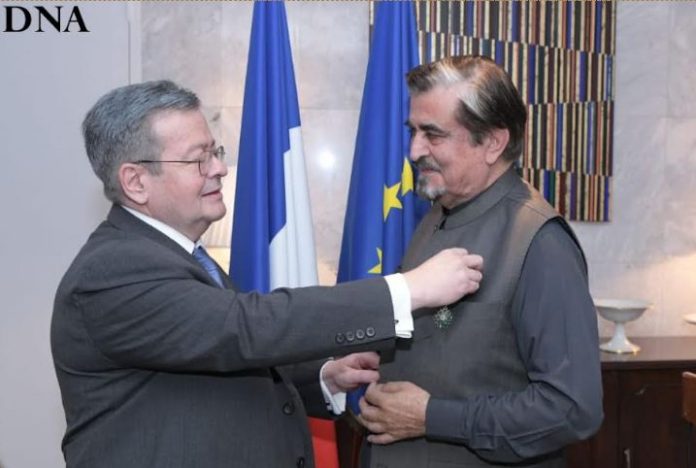
ISLAMABAD, OCT 1 /DNA/ – The Ambassador of France to Pakistan, Nicolas Galey, conferred the prestigious Ordre des Arts et des Lettres (Order of Arts and Letters) on renowned Pakistani artist Jamal Shah, in recognition of his lifelong contributions to art, culture, and heritage. The award ceremony, held at the French residence, was attended by leading artists, intellectuals, and cultural figures.

In his address, Ambassador Galey warmly welcomed Jamal Shah, his family, and friends of the embassy, praising Shah’s remarkable journey through multiple artistic disciplines. “We are gathered tonight to celebrate a singular contribution to the field of arts and culture, as you have been officially inducted into this Order of Arts and Letters,” he said. The award, established in 1957 by the French Ministry of Culture, honors distinguished global contributors in the realm of arts and literature.

Ambassador Galey highlighted Shah’s deep-rooted connection to Pakistan’s diverse cultural and historical heritage. Referring to Quetta, his hometown in Balochistan, the ambassador recalled the work of French archaeologists in nearby Mehrgarh, where remains of one of the earliest known human settlements were discovered. “This unique historical depth and rich cultural narrative is something you kept at heart as you navigated art forms as varied as sculpture, printmaking, acting, and painting,” he remarked.

He praised Shah’s academic journey through the National College of Arts (NCA), where he later became an influential teacher, and his 15-year tenure as founder and head of the Hunerkada College of Visual and Performing Arts. “Above all, we admire your deep attachment to transmission, giving back through teaching and social work. You exemplify the necessity for all artists of giving back and of belonging, but also art’s key role as a form of resilience and healing,” Galey said.

The French envoy underlined that Shah’s philosophy of “resistance through art and art through resistance” resonates strongly with France’s own cultural identity and diplomatic outlook. He recalled Shah’s visit to France in 2017 as a guest of the Ministry of Culture, and his tenure as Pakistan’s Federal Minister of National Heritage and Culture in 2023, where he sought to promote tourism, archaeology, crafts, and folk traditions.

For Islamabad’s cultural scene, Ambassador Galey noted, Jamal Shah had been a driving force—whether as Director General of the Pakistan National Council of Arts (PNCA), or more recently as Chairman of the Silk Road Cultural Center. “From art exhibitions to festivals and concerts, you have maintained and strengthened the diversity of partners, art forms, mediums, and themes that have characterized your career of more than 45 years,” he said.

The ceremony not only recognized Jamal Shah’s individual accomplishments but also symbolized the enduring cultural cooperation between Pakistan and France.

Jamal Shah reflected on his lifelong engagement with art, literature, and cinema, which he described as a constant “drift” rather than a specialization. “I consider myself to be a drifter. I drift from one thing to another so that I can enjoy life as much as I can,” he said, adding that art cannot be expressed effectively without first understanding life.

Recalling his formative years in Quetta, Shah narrated how a chance encounter with Jean-Paul Sartre’s works introduced him to philosophy. “I picked up Sartre’s book Nausea from a stall on Jinnah Road. It was a struggle to read, but when I began to understand, I felt born again—ready to face life as a freer individual,” he remarked. He later went on to read Sartre’s trilogy, which he said clarified many of his confusions and gave him a new lens to view existence.

Shah also shared a personal anecdote from his 2017 trip to Paris, where he attempted to meet Sartre’s long-time secretary. Despite his efforts, he missed the meeting, which he called a personal loss.

Paying tribute to French art, Shah praised painters like Henri Matisse, Gustav Klimt, and Gustave Courbet, the latter of whom he described as close to his own artistic philosophy of protest. “My art is the art of protest,” he declared, linking his work to the tradition of questioning and challenging norms.

Concluding his remarks, Shah emphasized that for him, art remains inseparable from life. “Art is for life, and life gives meaning to art,” he said, thanking the French government for the honor.

The ceremony highlighted France’s cultural ties with Pakistan and honored Jamal Shah’s contributions as a painter, sculptor, actor, and filmmaker whose work embodies both artistic freedom and social commentary.

Stay Connected

64FansLike
60FollowersFollow

Latest Reviews

Exchange Rates

USD - United States Dollar
EUR
1.15
GBP
1.34
AUD
0.69
CAD
0.71