Home Blog Page 447

ICT Police conduct grand search & combing operation in Tarnol

ICT Police conduct grand search & combing operation in Tarnol

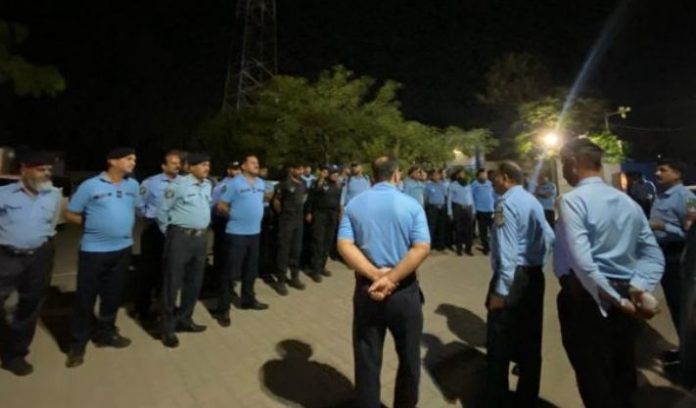
ISLAMABAD, OCT 05 (APP/DNA): Islamabad Capital Territory (ICT) Police conducted a grand search and combing operation in different areas of Tarnol Police Station’s jurisdiction to tighten security and curb criminal elements in the federal capital.

An official told APP on Sunday that the operation began after senior police officers briefed the participating teams about the objectives and security protocols. Teams from various police units, including female police officials, actively took part in the search activity.

He said during the operation, 150 individuals, 15 houses, 5 shops, 15 vehicles, and 55 motorcycles were checked, while 22 suspicious persons were shifted to the police station for legal action.

He added that the Islamabad Police has been carrying out similar search and combing operations in different parts of the city to ensure effective law enforcement and public safety.

Deputy Inspector General (DIG) Muhammad Jawad Tariq said the primary purpose of these operations was to tighten the noose around criminal elements and strengthen overall security in the city. He reaffirmed that indiscriminate actions against criminals, land grabbers, and drug dealers would continue without interruption.

China, Pakistan sign 11 agreements marking CPEC 2.0 launch

China, Pakistan sign 11 agreements marking CPEC 2.0 launch


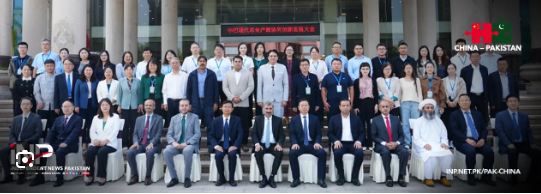
BEIJING, 05 OCT (DNA) — China and Pakistan signed 11 comprehensive education cooperation agreements during the China-Pakistan Conference on Collaborative Innovation in Modern Agriculture and Industry-Education Integration.


The ceremony, witnessed by senior Shandong Provincial officials, brought together a high-level Pakistani delegation led by Science Counselor Muhammad Khan, Secretary Nadir Chatta, and Vice Chancellor Prof. Dr. Muhammad Kamran, along with representatives from TEVTA and MNS University of Agriculture Multan, Gwadar Pro reported on Sunday.


Facilitated by UNI Services International Pvt. Ltd. and ITMC Technology China, and supported by the Chinese Business Council in Pakistan, the agreements aim to advance agricultural innovation, digital education, and vocational training.


Key partnerships include a Four-Party Overseas Training Base for agricultural technology transfer, a Center of Excellence for Food Safety and Inspection, and the Oasis Stella Workshop Project to boost dairy and buffalo industry development. Additional accords cover new diploma programs in floriculture, livestock, and modern agricultural technology.


Weifang Engineering Vocational College also signed cooperation agreements with the Islamia University of Bahawalpur (IUB) and MNS University of Agriculture Multan, while trilateral accords with ITMC and UNI Services focus on digital education and agri-tech integration.


Max Ma, CEO of UNI Services, called the agreements “a transformative step in Pakistan-China educational cooperation,” while ITMC Managing Director Wang Peng said they would bring China’s advanced vocational models to Pakistan, supporting human resource development under CPEC Phase II. Shandong officials hailed the signings as aligned with CPEC’s next-phase priorities and a major boost to agricultural modernization and education reform.— DNA

YPP hosts ceremony in honor of British MP Lord Shafique Mohammad

YPP hosts ceremony in honor of British MP Lord Shafique Mohammad
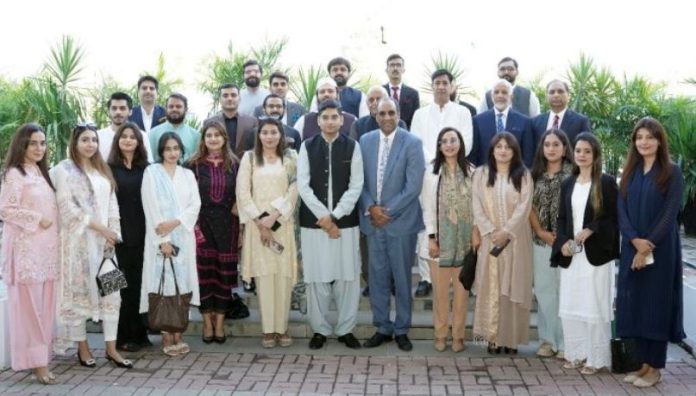
ISLAMABAD, Oct 05 (APP):The Youth Parliament of Pakistan (YPP) organized a dignified ceremony under the leadership of its President Obaid ur Rehman Qureshi and Secretary General Hammad Malik, to honor Lord Shafique Mohammad, Member of the British Parliament, currently visiting Pakistan.

Executive Member & In Charge, KPK Chapter, Faisal Jamshed was also part of the meeting.

The event brought together distinguished guests from Pakistan’s political, journalistic, and religious circles.

Prominent participants included Chairman of Ausaf and ABN Group Mian Mehtab Khan, Member of the National Assembly and former Senator Sehar Kamran, spiritual Sahibzada Saad Jameel ur Rehman (Eidgah Sharif), and Hurriyat Conference leader Abdul Hameed Lone. Members of the Youth Parliament delegation who recently visited the United Kingdom, Ms. Bakhtawar Mahmood and Ms. Sidra Akhtar, also shared their experiences from the visit.

Speaking at the occasion, Lord Shafique Mohammad praised the active participation of Pakistani youth in democratic and political processes, terming it a positive sign for the country’s future. He emphasized that stronger people-to-people ties between Pakistan and the United Kingdom could be achieved through dialogue and youth engagement. Appreciating the efforts of the Youth Parliament, he said the platform plays a vital role in nurturing young leadership.

Ms. Sehar Kamran, MNA, highlighted that Pakistani youth are not merely beneficiaries of democracy but its true stakeholders. She stressed the importance of women’s participation in politics and underscored that the country’s future development depends on the active involvement of young people.

Sahibzada Saad Jameel ur Rehman urged that young leaders must also seek moral and spiritual guidance alongside political training so they can serve the nation with sincerity and compassion.

Chairman of Ausaf and ABN Group Mian Mehtab Khan stated that the media plays a pivotal role in amplifying the voices of the youth nationwide. He affirmed that the collaboration between journalism and youth would steer Pakistan’s democratic narrative in the right direction. He appreciated the initiatives of the Youth Parliament and reiterated his group’s commitment to supporting youth-led causes.

Hurriyat leader Abdul Hameed Lone noted that the Kashmiri freedom movement could be further strengthened by the support and advocacy of Pakistani youth at the international level.

Executive Member Faisal Jamshed said that the Youth Parliament provides a vital platform for young people to prepare for future leadership roles. He added that the recent UK visit served as an opportunity for practical learning and for presenting Pakistan’s positive image globally.

During the event, Bakhtawar Mahmood and Sidra Akhtar shared their reflections on their UK visit, recounting their experiences at the House of Lords and their admiration for British democratic values.

In his address, President Obaid ur Rehman Qureshi reaffirmed the organization’s mission to engage youth in national decision-making processes. He said that the Youth Parliament has consistently played a constructive role both nationally and internationally, and vowed to continue its efforts.

Secretary General Hammad Malik, who conducted the proceedings, said that the organization aims to train youth in democracy, dialogue, and social service. He expressed gratitude to all the distinguished guests and reaffirmed the Youth Parliament’s commitment to empowering the next generation of leaders.

Nadra abolishes fee for cancelling identity cards due to death

Nadra abolishes fee for cancelling identity cards due to death

ISLAMABAD, OCT 5 – The National Database and Registration Authority (Nadra) has removed the fee for cancelling identity cards following a death. A spokesperson said a pilot project has been launched in three districts of Punjab to register deaths in the provincial Civil Registration Management System (CRMS) via a mobile app. This facility for registering births, marriages, divorces and deaths will be introduced nationwide within a few weeks.

The spokesperson added that data sharing with the provincial CRMS has been strengthened. After registering a death in the provincial system, identity cards can be cancelled through the Pak ID app.

These steps by the Nadra have improved data accuracy and significantly reduced fraudulent registrations.

Pakistan’s stature rises after “Marka-e-Haq,” claims Ex-Security Chief

Pakistan's stature rises after

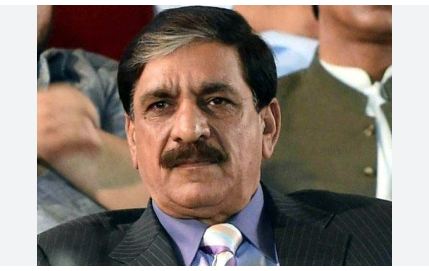
ISLAMABAD, OCT 5 /DNA/ – Former National Security Advisor Lt. Gen. (retd) Nasir Janjua has said that Pakistan and Pakistani forces have increased their stature in the world after the ” Marka-e- Haq”  India has become isolated in the world, he expressed these views while addressing a seminar on “Pakistan’s Recent Diplomatic Achievements, Future Hopes and Future Defense Strategy” at a local hotel.

He said that America killed all the leadership of the Muslim Ummah, destroyed Iraq, Libya, Egypt and Syria, bombed Iran, Pakistan is the only Islamic nuclear power of the Muslim Ummah, which the enemy fears.

On this occasion, foreign affairs expert Muhammad Mehdi, Vice Air Marshal (retd) Sajid Habib also expressed his views, while the forum was chaired by lawyer Safdar Ali Khan. Foreign affairs expert Muhammad Mehdi said that Pakistan’s parallel relations with China and the US are a diplomatic success.However, a lot remains to be done in this regard.

He said that America does not consider the Afghan Taliban and TTP as a threat to itself. The work regarding CPEC could not be done at the speed it should have been.

For the improvement of the Pakistani economy, it is necessary for Pakistan to increase its capacity. There is a dire need for capacity building. No foreign investment has come yet. Along with other institutions, the Foreign Office also needs to increase its capacity to face the new challenges emerging in the region.  Addressing the ceremony, Air Marshal (retd) Sajid Habib highlighted the excellent performance of the armed forces in Operation Banyan Al-Marsoos.

He especially informed the participants about the expertise and professional activities of the Pakistan Air Force.Rear Admiral (Retd) N. A. Rizvi said that Pakistan badly needs Gwadar Port and Pakistan Navy is always ready to deal with any threat. The enemy will have to face a  worst blow on the naval front as well.

Death toll from Indonesia school collapse rises to 37

Death toll from Indonesia school collapse rises to 37

SIDOARJO, Oct 5 (AFP/APP): The death toll from an Indonesian school collapse rose to 37 on Sunday, officials said, as rescuers recovered more victims buried under the rubble.

Part of the multi-storey building on Indonesia’s Java island suddenly collapsed on Monday as students gathered for afternoon prayers.

“As of Sunday morning, the number of recovered victims was 141 people. 104 were in safe condition, 37 were dead,” national search and rescue agency operations director Yudhi Bramantyo said in a statement.

  He added that 26 people were still missing.

The death toll included a body part that rescuers retrieved from the rubble on Saturday, Yudhi said.

The recovery operation was around “60 percent” complete, national disaster agency official Budi Irawan told reporters, adding that he hoped it would be concluded soon.

“Our hope is that by tomorrow everything will be levelled and we can determine the approximate number of victims who are in the rubble,” Budi said in a livestreamed press conference.

Local search and rescue agency head Nanang Sigit confirmed the death toll of 37 in a separate statement.

  Investigators have been looking into the cause of the collapse, but initial signs pointed to substandard construction, according to experts.

The rescue operation was complex because vibrations in one place could affect other areas, officials said.

But the families of the missing agreed on Thursday for heavy equipment to be used, after the 72-hour “golden period” for the best chance of survival came to an end.

Pakistan’s default risk plummets in global success story

Pakistan's default risk plummets in global success story

Bloomberg Data Highlights Pakistan as the Only Emerging Market with Consistent Quarterly Improvement, Signaling a Dramatic Restoration of Investor Confidence.

ISLAMABAD, OCT 5 /DNA/ – Recent data from Bloomberg underscores a remarkable turnaround in Pakistan’s economic standing, positioning the nation as one of the most improved sovereign credit stories globally. Over the past 15 months (from June 2024 to September 2025), Pakistan has achieved the second-sharpest reduction in sovereign default risk among global emerging markets, trailing only Turkey.

This improvement is measured by the Credit Default Swap (CDS)-implied default probability, a key market gauge of country risk. Pakistan’s default probability has plummeted by an extraordinary 2,200 basis points, marking the most significant decline among major emerging economies and far surpassing improvements seen in nations like South Africa (-3%) and El Salvador (-1.95%).

A critical differentiator in Pakistan’s performance is its consistency. Bloomberg analysis notes that Pakistan is the only country in the emerging market sample to have demonstrated sequential, quarterly improvement over the last year. This consistent positive trajectory stands in stark contrast to other EMs, including Argentina, Egypt, and Nigeria, which have seen their default risks increase during the same period.

This sharp decline in sovereign risk is a powerful signal of strengthening international investor confidence, underpinned by several key factors:

Macroeconomic Stabilization: Prudent fiscal and monetary policies have significantly curbed inflation and stabilized the currency.

Structural Reforms: The government has持续推进 structural reforms aimed at enhancing revenue collection, improving the energy sector, and fostering a more competitive business environment.

Timely Debt Servicing: A demonstrated commitment to meeting all sovereign debt obligations on time has been crucial in rebuilding market trust.

Commitment to the IMF Program: Adherence to the International Monetary Fund program has provided a credible anchor for economic policies and reform implementation.

Positive Ratings Actions: Leading credit rating agencies, including S&P Global, Fitch Ratings, and Moody’s, have taken positive actions, either upgrading Pakistan’s outlook or affirming its ratings, citing improving external dynamics and policy continuity.

Message to the Investment Community:

“Pakistan is steadily rebuilding its market credibility,” the data conclusively shows. The nation’s journey from a country of concern to one of the most improved sovereign credits in the emerging market universe is a testament to the positive outcomes of sustained policy discipline and reform commitment. For global investors seeking turnaround stories with demonstrable momentum, Pakistan now presents a compelling case of rapid and consistent improvement.

LCCI, PIAF want high tax-to-GDP ratio by broadening base

LCCI, PIAF want high tax-to-GDP ratio by broadening base

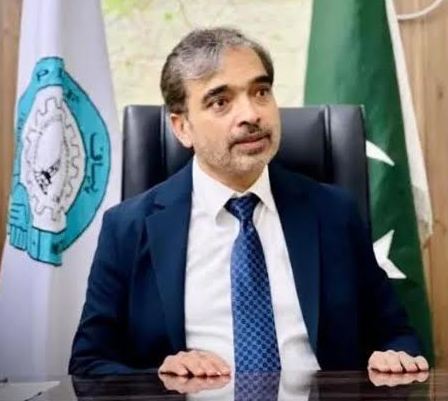
LAHORE, OCT 5 /DNA/ – The Lahore Chamber of Commerce and Industry (LCCI) and Pakistan Industrial and Traders Associations Front (PIAF) have said that the government’s target of lifting the tax-to-GDP ratio to 11 percent can be best achieved through genuine expansion of the tax base rather than imposing additional pressure on the already taxed sectors.

The LCCI newly appointed President and PIAF Chairman Faheeur Rehman Saigol said that while the government’s commitment to improving revenue performance is encouraging, the approach must remain growth-friendly and equitable to avoid discouraging economic activity.

Faheem Saigol observed that the recent revenue shortfall highlights structural weaknesses in Pakistan’s taxation framework, where the burden continues to fall on a narrow group of compliant taxpayers. “The government must recognize that increasing the tax ratio is not just a matter of enforcement or rate hikes — it is about widening the net. Sustainable growth in revenue requires inclusion of untaxed and under-taxed sectors, including agriculture, wholesale and retail trade, and real estate,” he said.

He noted that these sectors together account for a significant portion of Pakistan’s GDP but contribute only marginally to the total tax receipts. “Agriculture alone contributes nearly one-fifth of the economy yet remains outside the effective tax framework. If this imbalance continues, it will be impossible to achieve fairness or fiscal sustainability,” Saigol warned.

He urged the Federal Board of Revenue (FBR) to shift its focus from short-term collection drives and repeated audits toward long-term reforms that encourage voluntary compliance. “The FBR’s transformation plan must prioritize simplification, automation, and consistency. Taxpayers need confidence that the system is predictable and corruption-free,” he said, adding that a stable policy environment would encourage more individuals and businesses to register and file returns.

PIAF senior vice chairman Nasrullah Mughal said that improved coordination between federal and provincial authorities could also help enhance tax efficiency and transparency. “Many provincial taxes overlap or remain weakly enforced, especially in property and agricultural income categories. Integrating databases and digital records will create a clearer picture of actual incomes and assets,” he said.

PIAF vice chairman Tahir Manzoor Chaudhary suggested that the government should avoid excessive reliance on indirect taxes and super taxes, which increase the cost of production and fuel inflation. “The emphasis should shift toward direct taxation based on income and profits, not consumption. This will ensure fairness and promote industrial competitiveness,” he said.

Commenting on the ongoing fiscal reforms, Saigol said that greater transparency in governance would strengthen the credibility of Pakistan’s economic program. “Digital disclosure of asset declarations for senior officials and civil servants is a good step toward accountability, provided it is implemented uniformly across all institutions. A culture of transparency will restore public trust and encourage compliance,” he added.

The LCCI President said that the private sector was ready to cooperate with the government to achieve fiscal goals but stressed that reforms must not penalize those already contributing to the exchequer. “It is unfair to expect the same limited taxpayer base to bear the entire weight of the country’s fiscal adjustment. Broadening participation is the only sustainable way forward,” he said.

The PIAF chief pointed out that rising energy tariffs, inflation, and high borrowing costs have already eroded business margins. “Further tax hikes on industries or exporters will only reduce competitiveness and hurt job creation. The focus should be on expanding the pie, not slicing it thinner,” he remarked.

Warnings, retorts and the risk of escalation

Warnings, retorts and the risk of escalation

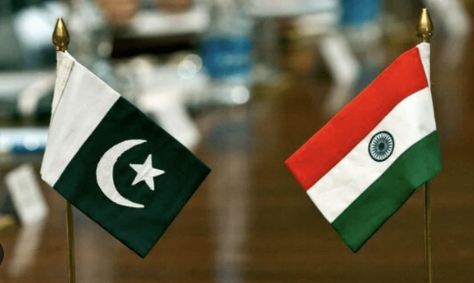
A fresh round of blistering rhetoric between New Delhi and Islamabad has raised alarm among diplomats and analysts, reviving fears that a sustained exchange of threats could slip into a wider—and dangerously unpredictable—military confrontation.

On October 3–4, senior Indian military and political leaders issued some of their sternest public warnings in months, with Indian Army Chief General Upendra Dwivedi bluntly telling troops that Pakistan must stop what he called support for “state-sponsored terrorism” if it wished to “retain its place on the world map.” He added that India would not exercise the same restraint it had in earlier operations, language that many interpreted as a veiled threat of large-scale action.

The statement drew an immediate and fiery response from Islamabad. Pakistan’s defence minister, Khawaja Muhammad Asif, publicly castigated the Indian leadership’s rhetoric as an attempt to restore credibility after setbacks in earlier clashes, and vowed that any fresh Indian adventurism would be met with an even stronger response. In a post on X (formerly Twitter) and comments to domestic media, Asif said India would be “buried under the wreckage of its planes” if it tried to strike again, framing his retort as both a morale message for Pakistani audiences and a direct rebuttal to talk of erasing Pakistan from the map.

The exchange comes against the ugly backdrop of air combat and mutual accusations earlier this year. Both sides have publicly disputed losses, but the episode in May—when each side claimed battlefield successes—remains a raw point of contention. Indian statements in August claimed its air defences had shot down several Pakistani aircraft during that confrontation; Pakistani sources and independent observers dispute some of those figures, but the incident hardened narratives on both sides and set the political context for the current rhetoric. Reuters+1

Rhetoric between nuclear-armed neighbours is more than posturing. It shapes public opinion, constrains diplomats, and can drive military commanders to adopt riskier postures. Analysts point to three immediate reasons why recent comments are especially worrying:

1.      Domestic political dynamics. Indian leaders, some commentators argue, are facing pressure to project strength at home following perceived setbacks; similarly, Pakistani leaders feel compelled to respond robustly to protect national credibility. Khawaja Asif explicitly linked New Delhi’s tone to domestic political calculations. Geo News

2.      Operational memories from May. The visceral memory of the clashes earlier this year—not least the contested claims over aircraft losses—creates a volatile psychological baseline. Both militaries now have recent operational experience facing one another, which lowers the threshold for miscalculation.

Regional and global players have already been drawn into the diplomatic fallout. China, Pakistan’s closest strategic partner, publicly urged restraint while emphasizing its interest in regional stability; Beijing has reiterated support for Pakistan’s sovereignty in recent diplomatic exchanges. Meanwhile, the United States has sought to play a calming role—President Donald Trump publicly said he hoped the fighting would stop and indicated readiness to help mediate, reflecting Washington’s broader interest in avoiding a major South Asian war. How outside powers position themselves will influence calculations in New Delhi and Islamabad.

Several commentators and former diplomats have stressed that military threats between nuclear-armed rivals are inherently destabilizing. Even limited cross-border strikes risk rapid escalation through misinterpretation, accidents, or pre-planned contingency responses. Both countries have historically relied on red lines, back-channel communications, and international mediation to prevent limited crises from becoming all-out wars. Those mechanisms will be tested if the current rhetorical spiral continues.

At this stage, much will depend on the interplay of domestic politics, military signaling, and international pressure. Islamabad’s strong public posture aims to deter further Indian action and reassure its own population; New Delhi’s warnings are designed to punish what it deems unacceptable cross-border activity and to shore up domestic perceptions of resolve. Diplomatic actors—particularly Beijing, Washington and other regional stakeholders—are likely to intensify quiet diplomacy to prevent miscalculation.

Responsible reporting and commentary must separate verified facts from inflammatory claims. While incendiary language—such as talk of “erasing” a country from the map—dominates headlines and social media feeds, policymakers and the public need sober analysis of capabilities, escalation risks, and the limited utility of threats. Mutual restraint, restored channels of military communication and independent verification of contested incidents would reduce the danger that words turn into irreversible action.

For now, the world watches nervously as both sides trade warnings. The international community’s immediate priorities will be to prevent further violence, protect civilian lives near flashpoints, and revive dialogue channels that can cool tempers before rhetoric turns to irreparable deeds. The costs of miscalculation, as recent history shows, would be catastrophic for the region—and for global security.

Syria selects members of first post-Assad parliament in contested process

Syria selects members of first post-Assad parliament in contested process

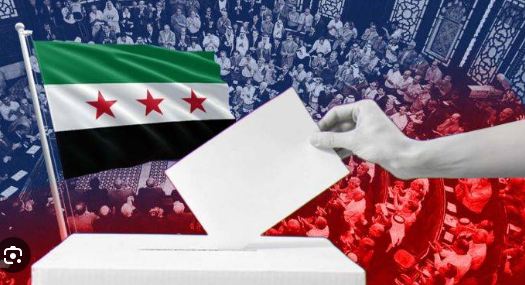
DAMASCUS, OCT 5 (AFP/APP): Syria will select members of its first post-Assad parliament on Sunday in a process criticised as undemocratic, with a third of the members appointed by interim leader Ahmed al-Sharaa.

The assembly’s formation is set to consolidate the power of Sharaa, whose Islamist forces led a coalition that toppled longtime ruler Bashar al-Assad in December after more than 13 years of civil war and five decades of one-family rule.

According to the organising committee, more than 1,500 candidates — just 14 percent of them women — are running for the assembly, which will have a renewable 30-month mandate.

  Sharaa is to appoint 70 representatives out of the 210-member body.

The other two-thirds will be selected by local committees appointed by the electoral commission, which itself was appointed by Sharaa.

But southern Syria’s Druze-majority Sweida province, which suffered sectarian bloodshed in July, and the country’s Kurdish-held northeast are excluded from the process for now as they are outside Damascus’s control, and their 32 seats will remain empty.

“I support the authorities and I’m ready to defend them, but these aren’t real elections,” said Louay al-Arfi, 77, a retired civil servant sitting with friends at a Damascus cafe.

“It’s a necessity in the transitional phase, but we want direct elections” to follow, he told AFP.

Under a temporary constitution announced in March, the incoming parliament will exercise legislative functions until a permanent constitution is adopted and new elections are held.

Sharaa has said it would be impossible to organise direct elections now, noting the large number of Syrians who lack documentation after millions fled abroad or were displaced internally during the country’s civil war.

Stay Connected

64FansLike
60FollowersFollow

Latest Reviews

Exchange Rates

USD - United States Dollar
EUR
1.14
GBP
1.34
AUD
0.69
CAD
0.70