Home Blog Page 445

EU envoys discover soul of Peshawar

EU envoys discover soul of Peshawar

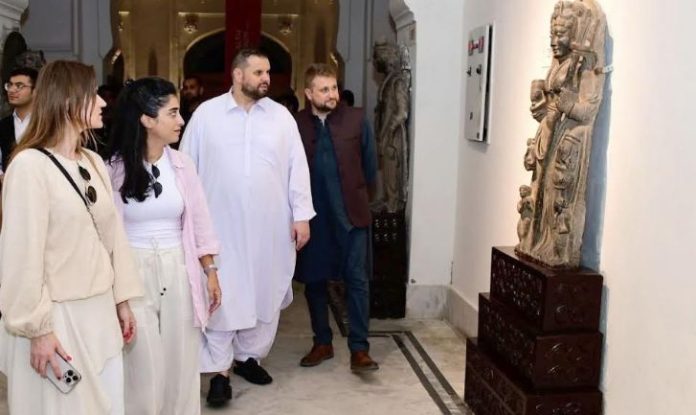
PESHAWAR, OCT 06 (DNA): The ancient city of Peshawar, with its vibrant bazaars, ornate havelis, Gandhara civilization and the scent of history lingering in its narrow alleys, welcomed an extraordinary group of visitors this week.

A delegation of ambassadors and dignitaries from the European Union (EU) embarked on a rare cultural journey through the heart of one of South Asia’s oldest living cities, which was an experience that turned into a celebration of heritage, hospitality, and human connection.

Amid the golden hues of autumn sunlight, the delegation was greeted by senior officials of the Khyber Pakhtunkhwa Directorate of Archaeology and Museums, who led them on an immersive tour through the city’s treasured historic sites.

 The visit, a part of ongoing cultural diplomacy efforts, aimed to highlight Peshawar’s centuries-old legacy as a crossroads of civilizations.

Their first stop was the iconic Gor Khatri, a site layered with archaeological wonders dating back nearly 3,000 years.

 Standing on the ancient mound, once a Mughal caravanserai and before that a Buddhist monastery, the ambassadors were visibly moved by the weight of time etched into the weathered stones beneath their feet.

Walking the Cultural Heritage Trail, which winds through 500 meters of Peshawar’s Old City, the visitors found themselves transported to a different era.

The trail, painstakingly restored by KP’s archaeology department, meanders past over 85 restored buildings from the Mughal, Sikh, and British periods. Each structure whispers stories of merchants, poets, and pilgrims who once passed through these streets.

At the heart of this journey lies Sethi House, which is a masterpiece of architecture and craftsmanship built in the late 19th century by a wealthy trading family originally from Jhelum.

Tucked away in the serene alley of Mohallah Sethian, this majestic haveli stunned the delegation with its fusion of Central Asian, Mughal, and British colonial design elements.

From intricately carved wooden balconies to hidden courtyards and water fountains, Sethi House tells a story not only of affluence but of artistic ambition. “This is not just a building,” one ambassador remarked, “it is poetry carved in wood.”

The visitors marveled at how the house’s architectural features such as natural ventilation, airy courtyards, and smart use of space echoed principles of sustainable design long before the modern term existed. Its construction, begun in 1835 by Sethi Karim Bakhsh and completed nearly five decades later, remains a testament to generational craftsmanship and vision.

Another highlight was the Peshawar Museum, originally built in 1906 in memory of Queen Victoria. Here, the ambassadors explored the world-renowned Buddha Gallery, where detailed biographical panels trace Lord Buddha’s life from birth to enlightenment.

With its Indo-British architectural fusion and treasured collections from the Gandhara civilization, the museum offered a profound look into the region’s spiritual and artistic heritage. “You don’t just observe history here,” said another delegate. “You feel it.”

Beyond the architecture and antiquities, it was the people of Peshawar who truly captured the hearts of the visitors. Local guides, artisans, and community members shared stories of their ancestors and the living traditions that still define their city today.

The famous Khattak dance impressed the visitors. The tour concluded with a scenic bus ride through the bustling streets, past Ghanta Ghar and the colorful stalls of Bazaar-e-Kalaan, where the aroma of spices such as Chappli Kabab, Matton Karahi and sounds of traders have remained unchanged for generations.

In a heartfelt gesture, the Khyber Pakhtunkhwa Culture and Tourism Authority presented each guest with a handcrafted souvenir, symbolizing the warmth and generosity of the local people.

 The ambassadors, visibly touched, expressed deep admiration for the city’s cultural depth and timeless charm.

Gaza peace deal — so close, yet so far

Gaza peace deal — so close, yet so far

For weeks the world has watched a fragile choreography play out in Cairo: negotiators in whispered corridors, technicians sketching timetables, and leaders offering cautious optimism that a deal to free hostages and end the bloodletting in Gaza might finally be within reach. U.S. statements and reporting from the region suggest momentum: technical teams are due to reconvene in Egypt and senior mediators have expressed hope that the first phase of an agreement could be concluded in days.

Optimism, however, is no substitute for hard guarantees. Headlines that declare a deal “imminent” should be read with the sober caveat that the devil is in the details: who withdraws which forces, on what timeline, how many hostages are released when, what legal and security architecture replaces an occupying force — and crucially, what guarantees exist to prevent a replay of mass destruction. Reports indicate Hamas may be prepared to release hostages and has accepted many of the practical demands on the table, but internal divisions and political sensitivities on all sides mean even a near-complete deal can still unravel.

If an agreement is truly imminent, the international community must be clear-eyed about what success looks like and what follows. First, ending active hostilities is only the beginning. Ceasefires that do not address the political status of Gaza, the humanitarian catastrophe, and long-term security arrangements will be fragile. Gaza needs immediate, large-scale humanitarian relief and a reconstruction plan that is fast, transparent, and protected by enforceable guarantees. Homes, hospitals, schools, and water and power infrastructure must be rebuilt without delay — and reconstruction must be supervised in a way that prevents illicit arms flows while allowing normal civilian life to resume.

Second, the fundamental political question remains unresolved: the national rights of the Palestinian people. Peace that treats Gaza as merely a deconfliction zone or a temporary administrative fix will store up future violence. The ultimate aim must be a just and durable solution that recognizes Palestinian statehood and political dignity — not as a bargaining chip, but as the endpoint of a process that includes Gaza and the West Bank, with Jerusalem’s status resolved by negotiation and mutual agreement. Recognition of Palestine as an independent state by the international community, including countries that have not yet done so, would be an historic step — but it must be carefully sequenced, inclusive of Palestinian leadership and public opinion, and coupled with concrete guarantees for minority rights and regional security.

Third, nobody who stayed in their homes during the fighting should face eviction after the guns fall silent. International law, basic morality, and the long-term prospects for reconciliation demand that Gazans be allowed to return to their property and live in dignity. Any population transfer or forced displacement would be a moral and strategic catastrophe — and the world must make it clear such moves will not be tolerated.

Fourth, there must be accountability and deterrence. World powers, regional actors, and multilateral institutions must design mechanisms that ensure Israel — or any actor — cannot repeat large-scale operations that reduce entire urban areas to ruins without proportional, political consequences. That does not mean reflexive punishment; it means binding constraints, transparent investigations of alleged violations, and a framework that links security needs to respect for civilian life. The goal is not to punish a single state but to prevent cycles of destruction that radicalize populations and destabilize the region.

For countries like Pakistan that have long-standing principled positions in solidarity with the Palestinian cause, the question of bilateral recognition of Israel — or any diplomatic shift — must not be rushed. Recognition is a strategic, moral and diplomatic act with deep domestic resonance. If states contemplate changing posture, they must do so in consultation with the Palestinian leadership, with clear criteria, and with full dialogue back home. The Pakistani nation — whose public opinion is passionately invested in the question — should be part of any national conversation that alters foreign policy on such a consequential issue.

Finally, the most important actors in any lasting peace are the Palestinians themselves. They must be central to the negotiation, the design of post-conflict governance, and the distribution of aid. External plans that ignore Palestinian ownership will fail. The United Nations, regional powers, and donors have a duty to support institution-building, economic recovery, and reconciliation among Palestinian factions — not to replace local agency.

A deal brokered in Cairo can open a door; whether we walk through it toward peace or step back into the same cycle depends on choices made in the coming days. If the parties and guarantors seize this moment to combine an end to active hostilities with a credible reconstruction timetable, robust safeguards against displacement, pathways to political recognition, and real Palestinian ownership, then “so close” can become “achieved.” If not, another temporary pause will simply postpone the next calamity.

History will judge whether the international community used its leverage to forge a durable peace, protect civilians, and finally recognize the political rights of the Palestinian people. The compass for action is clear: justice, reconstruction, and inclusion — pursued with patience, principle, and a ferocious insistence that what was done once must never be allowed again.

FIA registers FIR against Rina Saeed over corruption allegations

FIA registers FIR against Rina Saeed over corruption allegations

She is also the one who was behind closure of iconic Monal restaurant. In connivance with her friends in the higher judiciary she managed a verdict that led to closure of Monal. The action had reportedly rendered around 1,100 people jobless and turned one of Islamabad’s most scenic areas into a deserted site.

ISLAMABAD, OCT 6 /DNA/ – The Federal Investigation Agency (FIA) has registered a First Information Report (FIR) against Rina Saeed following the directives of the Islamabad High Court (IHC). Saeed, who had been associated with several wildlife and environmental initiatives in the capital, is accused of misappropriating millions of rupees received from foreign NGOs in the name of wildlife conservation.

According to reliable sources, Saeed allegedly transferred large sums of donor funds into her personal accounts, leading to financial irregularities and the closure of various wildlife-related projects.

She is also the one who was behind closure of iconic Monal restaurant. In connivance with her friends in the higher judiciary she managed a verdict that led to closure of Monal. The action had reportedly rendered around 1,100 people jobless and turned one of Islamabad’s most scenic areas into a deserted site.

For the past six months, Saeed had managed to delay legal proceedings by obtaining a stay order. However, after detailed investigations, the FIA moved forward with registering the case.

Sources further revealed that the agency has launched search operations at several locations to arrest the accused. The case has drawn significant attention, as it highlights growing concerns about transparency and misuse of foreign aid under the guise of environmental conservation projects in Pakistan.

France’s new PM resigns, hours after cabinet unveiled

France's new PM resigns, hours after cabinet unveiled

          Paris, Oct 6 (DNA):France’s President Emmanuel Macron on Monday accepted Prime Minister Sebastien Lecornu’s resignation just hours after unveiling his cabinet, the presidency said, plunging the European nation further into political deadlock.

                  France’s President Emmanuel Macron named Lecornu, a former defence minister, to the post last month.

                  But the largely unchanged cabinet he unveiled late on Sunday to work with Lecornu sparked fierce criticism across the political spectrum.

                  Lecornu had faced the daunting task of finding approval in a deeply divided parliament for an austerity budget for next year.

                  Lecornu’s two immediate predecessors, Francois Bayrou and Michel Barnier, were ousted by the legislative chamber in a standoff over the spending plan.

                  France’s public debt has reached a record high, official data showed last week.

                  France’s debt-to-GDP ratio is now the European Union’s third highest after Greece and Italy, and is close to twice the 60 percent permitted under EU rules.

                  Previous governments had rammed the last three annual budgets through parliament without a vote, a method allowed by the constitution but deeply criticised by the opposition.

                  But Lecornu promised last week to ensure lawmakers were able to vote on the bill.

                  France has been mired in deadlock since Macron gambled on snap parliamentary elections in the middle of last year in the hopes of bolstering his authority.

                  The move backfired, leaving the Macron-friendly bloc in the assembly in a minority.

24 killed after heavy rain triggers landslides in India’s West Bengal

24 killed after heavy rain triggers landslides in India's West Bengal

NEW DELHI, Oct. 6 (Xinhua/APP):At least 24 people were killed and many others injured after incessant rains triggered landslides in the eastern Indian state of West Bengal, officials said Monday.

The landslides hit the picturesque Darjeeling town, about 626 km north of Kolkata, the capital city of West Bengal, on Sunday and swept away homes, cutting off roads and isolating villages.

The tragedy wreaked widespread devastation and left hundreds of people, especially the tourists, stranded in the Himalayan foothill township.

The communication networks have also been snapped.

According to officials, Darjeeling received heavy rain Sunday night, leading to landslides in several areas, including Mirik and Sukhia Pokhari, prompting police and disaster management officials to launch a rescue operation.

Landslides have led to roadblocks on key routes, including the road connecting Sikkim and the one linking Darjeeling and Siliguri.

Officials have shut tourist spots in Darjeeling, including the Tiger Hill and Rock Garden, to prevent any untoward incident. The toy train services have also been suspended, reports said.

Residents and tourists have been asked to be careful and keep themselves updated on road and weather conditions.

West Bengal Chief Minister Mamata Banerjee on Sunday evening chaired an emergency meeting and announced that she would personally visit the affected areas on Monday.

“The situation is grave. Due to incessant rain in Bhutan, water has overflowed into North Bengal. This disaster is unfortunate; natural calamities are beyond our control,” Banerjee told a local news channel. “Over 300 mm of rainfall was recorded in just 12 hours, triggering landslides and floods across at least seven sites.”

Heavy rain has also affected other areas in north Bengal, such as Jalpaiguri, Siliguri, and Cooch Behar, leading to waterlogging in several areas.

Television images showed rivers in full spate, damaged bridges and washed-out roads.

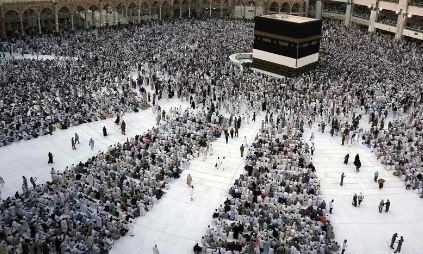
Saudi Arabia allows all visa holders to perform Umrah

Saudi Arabia allows all visa holders to perform Umrah

Holders of visas of various types can perform Umrah during their stay in the kingdom, says Saudi ministry

DNA

JEDDAH: Saudi Arabia’s authorities permitted holders of various types of visas to perform Umrah during their stay in the kingdom under the Saudi Vision 2030.

“All holders of visas of various types can perform Umrah during their stay in the kingdom,” the Ministry of Hajj and Umrah has confirmed in a statement.

The Ministry stated that the visas cover multiple categories, including personal and family visit visas, electronic tourist visas, transit or stopover visas, work permits, and other types can visit Makkah to perfrom Umrah.

The Ministry of Hajj and Umrah added that the initiative reflects the Kingdom’s ongoing commitment to facilitating the arrival of Muslims from across the globe, enabling them to perform their religious duties with comfort and peace of mind.“This comes as part of the Ministry’s efforts to facilitate procedures for the guests of Allah and to expand the number of beneficiaries of the services provided within the Hajj and Umrah system, in line with the goals of Saudi Vision 2030,” it said in the statement.

The Ministry of Hajj and Umrah added that it has recently launched the “Nusuk Umrah” platform for those wishing to perform Umrah directly. Through the platform, users can select a suitable package and issue an Umrah permit electronically with ease, in an integrated digital experience that allows booking services and selecting preferred times with great flexibility.

“These facilitative measures reflect the keenness of the Custodian of the Two Holy Mosques and His Royal Highness the Crown Prince — may Allah protect them — to enable Muslims to visit the Two Holy Mosques and perform their rituals in a spiritual and safe environment, while providing the finest services that enrich the experience of the guests of Allah and make their faith journey easier.”

APNS urges PID for fair distribution of advertisements and early payments

APNS urges PID for fair distribution of advertisements and early payments

The members of the Committee appreciated the recent decision of the Punjab Government to cancel declarations of 8,000 dummy newspapers, terming it a positive step towards strengthening genuine publications; The Committee resolved that in the forthcoming meeting with the PIO, it would request that future advertisements be allocated on a priority basis to APNS and CPNE members

ISLAMABAD, OCT 6 /DNA/ – The All Pakistan Newspapers Society (APNS) Federal Capital Committee has urged the Press Information Department (PID) to ensure fair and transparent distribution of government advertisements among member publications and to expedite the clearance of outstanding payments.

A meeting of the Federal Capital Committee, presided over by its Chairman Mr. Faisal Zahid Malik, was held to review issues being faced by member publications regarding the delayed release of advertisements and prolonged pending dues from PID.

Senator Sarmad Ali, President APNS, briefed the Committee that he had already discussed the issue of payments with the Principal Information Officer (PIO), who assured that the pending payments would be released during October. It was further decided that a delegation of the Federal Capital Committee, headed by the APNS President, would meet the PIO at the earliest to follow up on the matter.

The members of the Committee appreciated the recent decision of the Punjab Government to cancel declarations of 8,000 dummy newspapers, terming it a positive step towards strengthening genuine publications. They also urged the Punjab Government to ensure that advertisements are released to Islamabad-based publications without discrimination.

The Committee resolved that in the forthcoming meeting with the PIO, it would request that future advertisements be allocated on a priority basis to APNS and CPNE members.

The Committee also held a detailed discussion on the state of print media and emphasized the need for member publications to enhance their digital presence in line with modern media trends.

The meeting was attended by Mr. Faisal Zahid Malik (Chairman), Senator Sarmad Ali (President, APNS), Mr. Tahir Mughal (Daily Nawa-i-Pak), Mr. Khushnood Ali Khan (Daily Sahafat), Mr. Ansar Mahmood Bhatti (Monthly Centreline), and Mr. Rafey Khan Niazi (Daily Patriot).

General Practice hospital aims to serve humanity

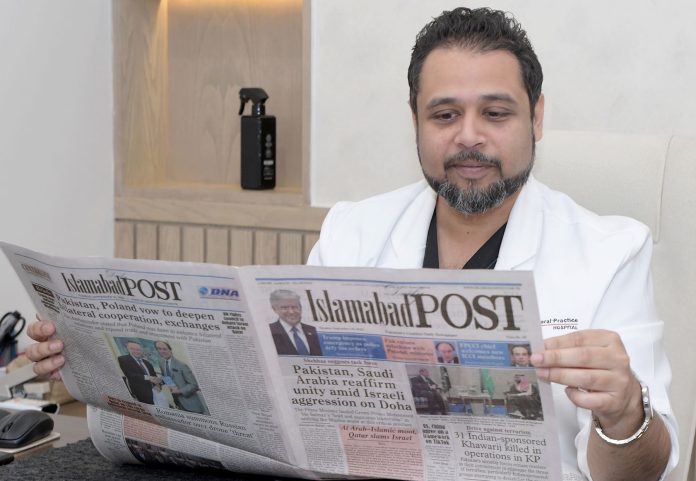
Dr. Ali Raza Nasir, founder of General Practice Hospital, shared his inspiring journey and mission in an exclusive interview with Centreline magazine and daily Islamabad POST

Ansar Mahmood Bhatti

ISLAMABAD: Driven by a vision to make quality healthcare accessible and compassionate, Dr. Ali Raza Nasir, founder of General Practice Hospital, shared his inspiring journey and mission in an exclusive interview with Centreline magazine and daily Islamabad POST.

Dr. Raza, who began his medical career at Shifa International Hospital before moving into private practice in 2017, said medicine has always been a calling rather than a career for him. “I have never been one to chase numbers. I focus on the quality of care I provide,” he remarked, emphasizing empathy and patient-centered care as the foundation of his practice.

Explaining the concept behind General Practice Hospital, Dr. Raza said the idea stemmed from his belief in holistic healthcare—providing comprehensive services under one roof. “Health is not fragmented. It requires continuity, compassion, and accessibility,” he noted, adding that the name General Practice reflects inclusivity for patients of all ages and backgrounds.

The hospital’s core mission, according to Dr. Raza, is to make healthcare accessible, reliable, and affordable for everyone. “Healthcare is a basic right, not a privilege,” he stressed. The institution’s philosophy revolves around ensuring dignity for patients, minimizing their struggles, and providing trustworthy, affordable medical services.

Dr. Raza envisions the hospital as a pillar of trust and education in the community. Beyond treatment, the hospital actively promotes preventive healthcare, awareness, and early screening. “We want to be known as the place where care comes first,” he said.

Describing what sets General Practice apart, Dr. Raza highlighted its blend of hospitality and healthcare, ensuring patients feel respected and cared for. The hospital’s systems—from OPD to ICU—are designed with patient comfort and ethical transparency in mind. “It’s not just a business; it’s a mission to improve healthcare delivery in Islamabad and beyond,” he emphasized.

Offering advice to young doctors, Dr. Raza said the foundation of a successful facility lies in purpose, teamwork, and uncompromising quality. “Profit follows service, not the other way around,” he stated.

Looking ahead, Dr. Raza sees General Practice Hospital expanding into a network of secondary-care and specialized centers across Pakistan within the next decade. Plans include integrating telemedicine, AI-assisted diagnostics, and public health outreach programs to extend their impact.

“In one sentence,” he concluded, “General Practice is the hospital where patients feel genuinely cared for—modern, affordable, and compassionate healthcare under one roof.”

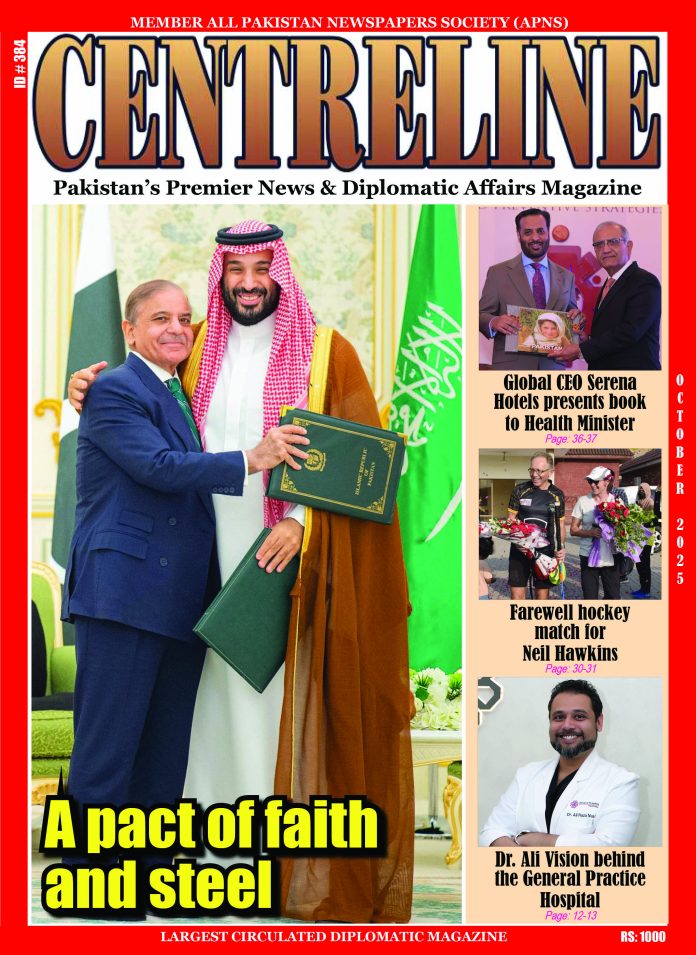
Centreline: Pakistan’s Largest and Most Respected Diplomatic Magazine

DNA

ISLAMABAD: For sixteen uninterrupted years, Centreline has held a singular place in Pakistan’s media landscape as the country’s largest and most respected diplomatic magazine. Distinguishing itself from other publications that touch on foreign policy and international affairs, Centreline focuses exclusively on diplomacy, international relations, and the institutions and personalities that shape Pakistan’s global engagement.

What sets Centreline apart is not only its editorial focus and longevity, but also its recognized standing within the professional press community: it is the only diplomatic magazine in Pakistan that is a full member of the All-Pakistan Newspapers Society (APNS). That membership underscores the magazine’s credibility, adherence to press standards, and its integration into the nation’s mainstream media ecosystem.

Centreline’s uninterrupted circulation for the past 16 years speaks to its consistency and the trust it has earned among diplomats, policy-makers, academics, and informed readers across the country. Each issue combines in-depth analysis, exclusive interviews, and timely reporting — material that informs debate and helps shape policy conversations. Its pages regularly feature contributions from seasoned diplomats, foreign-affairs experts, and leading commentators, making it essential reading for anyone engaged with Pakistan’s foreign relations.

Widely read and widely respected, Centreline remains the go-to publication for clear, authoritative coverage of diplomatic affairs — a magazine that not only reports international developments but also helps interpret their implications for Pakistan’s place in the world.

Israel Hell-bent on Sabotaging Trump’s Gaza Peace Plan

Qamar Bashir

By Qamar Bashir

President Trump’s Gaza Peace Plan has reached a critical moment. Both Israel and Hamas accepted it in principle, but both have already begun to test its limits. The ceasefire meant to stop the killing, the exchange of hostages meant to build trust, and the delivery of humanitarian aid meant to heal the wounds of war are all being delayed or distorted. The President has warned that time is running out, declaring with characteristic clarity that “time is of the essence, or massive bloodshed will follow.” His words now hang like a warning over every side that tries to play for advantage rather than peace.

In Gaza, the ceasefire has not brought calm. Instead of an unconditional pause to allow food, medicine, and relief into a starving land, Prime Minister Benjamin Netanyahu has linked every lull in fighting to the verified release of hostages. The sequence has been reversed: where aid was meant to come first, it is now held hostage to conditions. Even as Trump praised Israel’s “temporary halt” in bombing, the silence of the skies did not last long. The roar of jets and the thud of artillery soon returned. Crossings remain sealed, fuel is scarce, and trucks carrying flour and medicine are stuck behind barriers. The people of Gaza, already broken by war, are paying the price for a strategy that treats compassion as a bargaining chip.

Netanyahu’s government has also delayed the promised troop withdrawal. Instead of pulling back as the plan demands, Israeli forces have dug deeper into Gaza, creating buffer zones that extend control rather than reduce it. The plan called for a military drawdown in parallel with the arrival of international monitors. Yet what the world now sees looks less like withdrawal and more like consolidation. Within Israel’s ruling coalition, many regard the peace plan not as a step toward stability, but as a threat to years of expansionist ambition. A genuine truce, they fear, would force Israel to retreat from its newly secured zones, halt settlements, and eventually open the door to a Palestinian state — a vision utterly at odds with the idea of a “Greater Israel.”

Hamas, meanwhile, plays its own dangerous game. It has released some hostages but not all, offering gestures instead of commitments. It resists international monitoring and refuses to disarm fully, keeping its weapons hidden beneath Gaza’s ruins. Divided between its political negotiators abroad and its commanders trapped underground, Hamas sends mixed signals — one hand extended toward negotiation, the other still gripping a gun. Yet beneath the defiance lies exhaustion. Two years of relentless bombardment have shattered its infrastructure and leadership. The choice before it is stark: accept the peace plan as a path to survival or risk total annihilation. For Hamas, which has lost much of its command structure and morale, the plan offers a narrow corridor of escape, perhaps the last chance to save what remains of its movement and people.

In this sense, Israel and Hamas now stand on opposite slopes of the same mountain. Netanyahu fears that the peace plan could undo his long-cherished project of permanent dominance, while Hamas sees in it a possible lifeline. The plan’s success could mean the end of Israeli expansionism, the slowing of settlements, and the creation of a monitored Palestinian administration under international supervision — outcomes that threaten Israel’s far-right coalition. For Hamas, by contrast, successful implementation could spare its fighters from destruction and allow a gradual political reintegration through regional diplomacy. If Israel’s fear is loss of territory, Hamas’s fear is extinction.

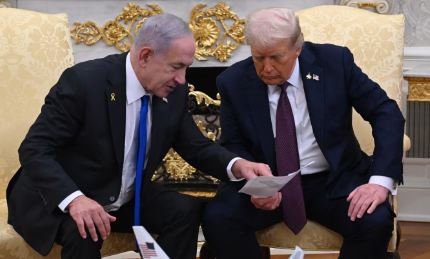
Amid these conflicting motives stands Donald Trump, the architect of the plan and now its enforcer. He has been watching both sides closely, issuing warnings with unmistakable urgency. “Move fast,” he insists, “or massive bloodshed will follow.” He has reminded Netanyahu that the continuation of bombing could endanger U.S. strategic ties and warned Hamas that renewed attacks will bring devastating consequences. Unlike the peace brokers of the past, Trump has tied his own credibility to the plan’s survival, using both American influence and global pressure to hold the sides accountable.

The upcoming Monday meeting in Egypt will test whether this vigilance can translate into progress. Representatives from Israel, Hamas, and regional partners will gather to confirm whether the ceasefire is real, whether hostages and prisoners are being exchanged according to schedule, and whether humanitarian routes are open. If these benchmarks are met, the second phase will begin: Israeli withdrawal, deployment of international monitors, and establishment of a temporary technocratic administration in Gaza. If not, Trump may use economic and diplomatic pressure to penalize non-compliance, while Arab states may withhold reconstruction funding until good faith is proven. It will be a day that decides whether peace takes a step forward or collapses into another round of blame and bloodshed.

Yet the danger looms that if the plan fails, Israel will swiftly point the finger at Hamas and resume full-scale military operations. Its goal would be not just to defeat Hamas but to eliminate it completely, take permanent control of Gaza and the West Bank, and then pursue a broader territorial expansion toward the east. Such a move would plunge the entire region into crisis. The United Nations, the United States, and the Muslim world must remain alert to this possibility. No violation, no provocation, no act of resistance from the Palestinian side should provide Israel with the excuse it seeks to dismantle the plan. The world must make clear that the true spoiler of peace will not be allowed to hide behind false accusations.

If this truth reaches Washington, if the American Congress and public come to see that it is Israel — not Hamas — undermining the process, the political ground beneath Tel Aviv could shift. The U.S. might then be compelled to reconsider its unconditional aid and arms support, leaving Israel exposed to the isolation it fears most. Without American protection, Israel would face immense pressure from every direction — diplomatic, economic, and potentially military. The recent Iranian strike demonstrated the limits of Israeli power when left on its own. Should the wider Muslim world act in unison, Israel would have no choice but to retreat to its recognized borders and accept the peace it has long resisted.

The stakes are immense. For the Arab world, the peace plan offers a way to stabilize the region; for Europe, a chance to reclaim moral credibility; and for America, an opportunity to prove that fairness, not favoritism, defines its leadership. But if this chance is lost — if the plan is sabotaged through arrogance or deceit — the result will not simply be another failed negotiation, but the end of the last viable hope for Gaza’s survival. In the days ahead, compliance and defiance will determine not only the future of two peoples, but the credibility of the global order itself.

History will judge those who let this moment slip away. If Israel and Hamas honor their commitments, Gaza may rise from its ruins. If they continue to play for time, the window will close, and with it, the dream of peace. President Trump’s warning still echoes across the desert skies: time is short, and the blood of the innocent is running out. The world must decide — will it stand guard over peace, or watch it die?

By Qamar Bashir

Press Secretary to the President (Rtd)

Former Press Minister, Embassy of Pakistan to France

Former Press Attaché to Malaysia

Former MD, SRBC | Macomb, Michigan, USA

Stay Connected

64FansLike
60FollowersFollow

Latest Reviews

Exchange Rates

USD - United States Dollar
EUR
1.14
GBP
1.34
AUD
0.69
CAD
0.70