Home Blog Page 444

Japan funds new primary school and water system in Pakistan

Japan funds new primary school and water system in Pakistan

ISLAMABAD, OCT 7 /DNA/ – The Government of Japan, under its Grant Assistance for Grassroots Human Security Projects(GGP) Program, has decided to provide grant assistance of USD 113,335 (equivalent to around PKR32Million) to two NGOs for development projects in Maskeenabad, Rawalpindi and Nowshera, Khyber Pakhtunkhwa.

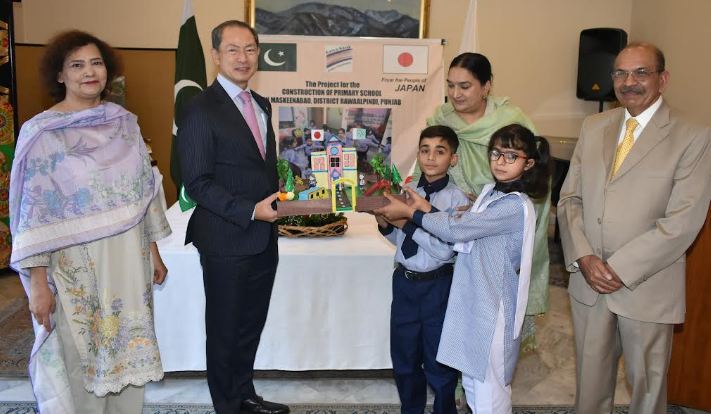
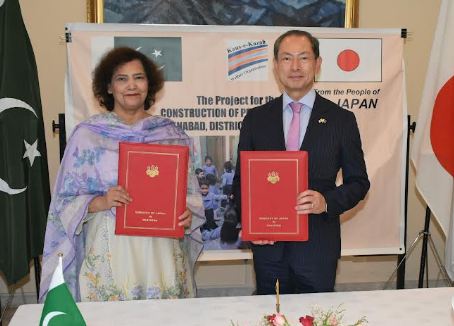
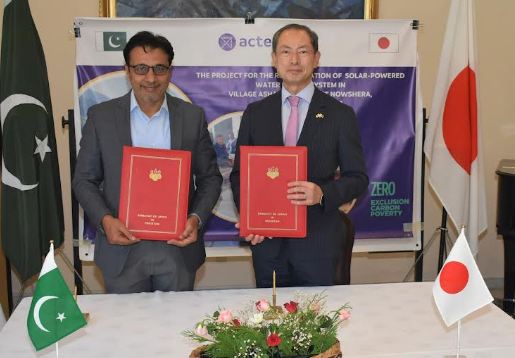
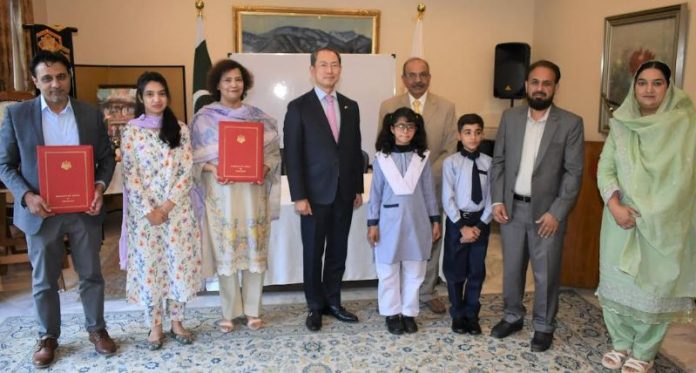
The grant contracts were signed between His Excellency, Mr. AKAMATSU Shuichi, Ambassador of Japan to the Islamic Republic of Pakistan and representatives of the two NGOs at the Embassy of Japan in Islamabad on October 7, 2025.The two NGOs that will implement the projects are ACTED and Kaus-e-Kazah Welfare Organization (KKO).

ACTED will receive the grant of USD 61,200 grant (equivalent to around PKR 17.3 million) to rehabilitate the Solar-Powered Water Supply Syste min one of the most underdeveloped areas in District Nowshera. The project includes the construction of distribution water tank and extending water pipelines to ensure a consistent and safe water supply to the community. This project will benefit 1,470 individuals residing in village Ashakhel directly. This is expected to free the women and children from the labor of fetching water.

KKO will receive USD 52,135grant (equivalent to around PKR 14.8 million)for the Construction of Primary School in Maskeenabad, District Rawalpindi. The school will offer the free education to all 300 students every year which intends to promote the enrollment of out-of-school children in surrounding areas. This project will bring a positive impact on the young generation, especially the families who could not afford for the education of their children.

At the signing ceremony, Mr. AKAMATSU Shuichi expressed his expectation that these development projects in cooperation with local communities would improve the living standards of Pakistani people at the grassroots level. He also had a heartful meeting with the children from Maskeenabad at the ceremony and emphasized that the education lays a strong foundation for a prosperous country and these young children would be the bright future of Pakistan.

Also, His Excellency, Mr. AKAMATSU Shuichi highlighted that basic infrastructure and education have always been a cornerstone of Japan’s Official Development Assistance strategy, reflecting Japan’s own journey of development. The Government of Japan will continue to provide flexible and timely support to local NGOs through grant assistance to uplift the social wellbeing of the people of Pakistan.

ISSI hosts International Seminar on “Pakistan–China Relations: Regional Stability and Economic Prosperity”

ISLAMABAD, OCT 7 /DNA/ – The China-Pakistan Study Centre (CPSC) at the Institute of Strategic Studies Islamabad (ISSI), in collaboration with the Pakistan Study Centre at Fudan University, hosted an International Seminar on “Pakistan–China Relations: Regional Stability and Economic Prosperity”.

Director General ISSI Ambassador Sohail Mahmood, in his welcome remarks, reaffirmed that Pakistan–China relations remain the “cornerstone” of Pakistan’s foreign policy. He noted that the enduring mutual respect, strategic mutual trust, and mutual support on each other’s issues of core interest have enabled this partnership to thrive despite global and regional uncertainties. Ambassador Sohail Mahmood underscored that CPEC has transformed Pakistan’s development landscape and serves as a catalyst for regional connectivity. He emphasized the importance of the recently agreed China–Pakistan Action Plan (2025–2029) as a framework for advancing cooperation in technology, digital economy, green development, and industrial upgrading. Ambassador Sohail Mahmood highlighted China’s peaceful rise as a consequential development of our times and reiterated Pakistan’s strong support for President Xi Jinping’s global initiatives — GDI, GSI, GCI, and GGI. He added that regional countries should consider how these initiatives could be leveraged to address the multiple deficits of development, security, and regional cooperation architecture in South Asia. He further underscored the importance of reimagining the architecture of regional economic cooperation and also proposed establishing a ‘China-South Asia Summit’ process on the analogy of China-Central Asia and China-GCC format. Ambassador Sohail Mahmood underlined that the forthcoming 75th anniversary of diplomatic ties in 2026 offers a historic opportunity to set an ambitious, forward-looking vision for Pakistan–China relations in both bilateral and regional dimensions.

The Chief Guest, Ambassador Imran Ahmed Siddiqui, Additional Foreign Secretary (Asia Pacific), Ministry of Foreign Affairs, underlined the resilience and strategic significance of the Pakistan–China partnership, describing it as a relationship anchored in trust, mutual support, and shared vision. He emphasized that Pakistan–China cooperation had withstood global and regional challenges and continued to expand into new domains. Ambassador Imran Siddiqui particularly highlighted the synergy between CPEC and Pakistan’s Economic Transformation Plan–URAAN, noting that this alignment would unlock new opportunities for sustainable growth. He stressed that the second phase of CPEC would not only strengthen traditional infrastructure and energy projects but also drive forward-looking cooperation in advanced sectors such as artificial intelligence, biotechnology, renewable energy, and digital innovation, thereby preparing both countries to meet the demands of the 21st century economy. He reaffirmed Pakistan’s firm support for China’s global initiatives and expressed confidence that the partnership would remain a cornerstone of peace and prosperity in the region.

The first working session on “Security Cooperation for Regional Stability” was chaired by Ambassador Masood Khalid. During the session, Dr. Zahir Kazmi, Advisor SPD, described security cooperation as a cornerstone of stability and proposed practical measures such as maritime safety networks and CPEC resilience exercises. Prof. Wang Zhen, Deputy Director, Institute of International Studies, Shanghai Academy of Social Science (SASS), highlighted the global significance of this cooperation, noting that education, youth empowerment, and poverty reduction must complement military measures. Prof. Huang Yunsong, Associate Dean, School of International Studies & Deputy Director, Institute of South Asian Studies, Sichuan University, presented the China–Pakistan Action Plan as a practical blueprint for institutionalized cooperation while underscoring the importance of people-to-people ties, scholarships, and training programmes. Dr. Asma Rashid, Lecturer Department of Politics and International Relations, International Islamic University, analyzed the evolving strategic culture underpinning bilateral ties, while Dr. Ma Zheng, Special Associate Research Fellow, School of International Relations, Sun Yat-sen University, pointed to renewed security challenges from TTP and Baloch militants, calling for joint platforms for dialogue and threat assessments.

The second working session on “Economic Cooperation for Regional Prosperity” was chaired by Ambassador Naghmana Hashmi. Dr. Ashfaque Hassan Khan, Principal & Dean, Department of Economics, School of Social Sciences & Humanities (S3H), NUST, proposed establishing a new organization SAECO Plus (China) and also suggested transforming CPEC into a truly regional initiative by expanding outreach to Afghanistan, Central Asia, Iran, and Azerbaijan. Dr. Hassan Daud Butt, Senior Associate Professor, Bahria University, emphasized regional integration through digital connectivity, green infrastructure, and renewable energy. From the Chinese side, Dr. Wang Shida, Acting Director, Institute for South Asian Studies, China Institutes of Contemporary International Relations (CICIR), underscored industrial cooperation in electronics, agriculture, and manufacturing, while Prof. Zhang Jiegen, Associate Professor & Director, Pakistan Study Centre, Fudan University, emphasized Pakistan’s transition from a geo-security to a geo-economic paradigm with CPEC as the enabler. Dr. Xie Chao, Associate Professor, Centre for South Asian Studies, Fudan University, called for CPEC 2.0 to be open and inclusive, highlighting the importance of “small and beautiful projects” that directly benefit local communities.

Earlier, in his introductory remarks, Dr. Talat Shabbir, Director CPSC, welcomed the participants and emphasized the time-tested and all-weather nature of Pakistan–China relations. He highlighted CPEC as a central pillar of cooperation that strengthens Pakistan’s economic foundations, fosters regional connectivity, and contributes to shared prosperity.

In his concluding remarks, Ambassador Khalid Mahmood, Chairman BoG ISSI, reaffirmed Pakistan’s strong support for partnership with China in advancing regional stability and economic cooperation.

The seminar brought together eminent diplomats, scholars, and practitioners from Pakistan and China for an in-depth exchange of views on bilateral ties and their regional implications.

Pakistan fully capable of responding to India’s war threats: Governor Kundi

Pakistan fully capable of responding to India’s war threats: Governor Kundi

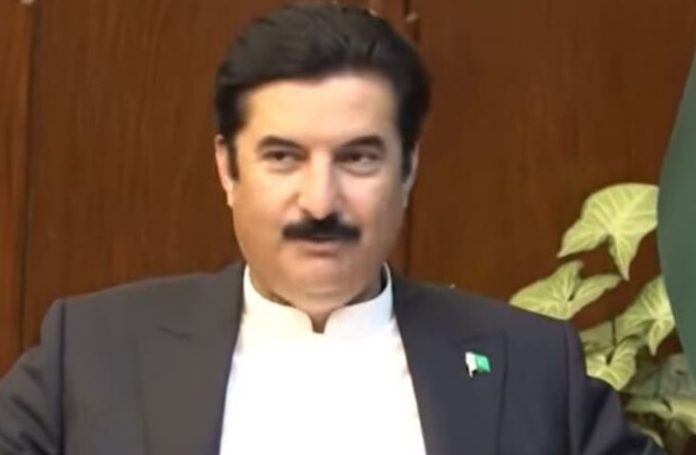
ISLAMABAD, Oct 06 (APP):Chairman of the Kashmir Council European Union (EU), Ali Raza Syed, called on Governor Khyber Pakhtunkhwa Faisal Karim Kundi at the Governor House in Islamabad on Monday.

The two discussed the situation in Indian Illegally Occupied Jammu and Kashmir (IIOJK) and Ladakh, as well as India’s escalating aggression in the region.

Governor Faisal Karim Kundi reaffirmed Pakistan’s unwavering support for the Kashmiri people and their right to self-determination, stressing that Pakistan would continue to raise the issue at all international forums.

He said India’s political and military leadership was issuing war threats to cover up the humiliation of its defeat in May, but Pakistan had the capability to respond strongly and effectively to any aggression.

Ali Raza Syed briefed the Governor on ongoing diplomatic and political efforts in Europe to highlight the Kashmir issue, emphasizing that global awareness of India’s human rights violations in the occupied territory was increasing.

He said that following Governor Kundi’s visit to Brussels in August and his meetings with European parliamentarians, the Kashmir cause and Pakistan’s position had gained significant attention across European capitals.

Both sides underscored the need for a peaceful resolution of the Kashmir dispute for lasting regional peace and stability, reaffirming their commitment to continue supporting the Kashmiri people’s struggle for freedom.

Ali Raza Syed also invited Governor Faisal Karim Kundi to attend the Islamabad launch of the upcoming book “Kashmir: Wait and See” by international journalist Cedric Gerbay, scheduled for November.

Meanwhile, General Manager Projects, SNGPL Engineer Syed Sajid Hussain Shah, called on Governor Faisal Karim Kundi and briefed him on the ongoing gas pipeline project in Dera Ismail Khan.

He informed the Governor that work on the 70-kilometre-long pipeline from Kot Palak to Sago and Sago to D.I. Khan was progressing rapidly and was expected to be completed by December, which would help address gas load-shedding and pressure issues in the areas.

He added that another 103-kilometre pipeline from Darazinda to Lakki Marwat was ready for launch soon after the current project’s completion.

Governor Kundi directed the authorities to further accelerate the work to provide early relief to the public, reaffirming the government’s commitment to timely completion of public welfare projects.

Engineer Shah said that labour camps had been established at Darazinda, Kot Palak, and Sago to ensure steady progress and timely completion of the project.

CA urges rights groups to increase visits to Bangladesh before national polls

CA urges rights groups to increase visits to Bangladesh before national polls

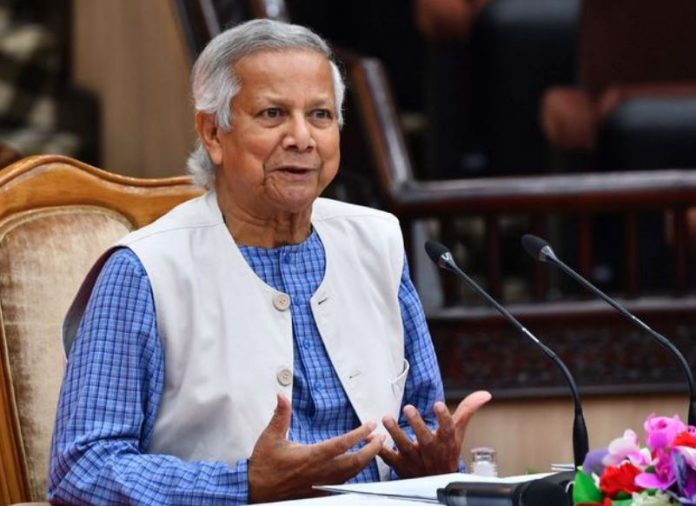
NEW YORK, Oct 6 (BSS/APP): Chief Adviser Professor Muhammad Yunus has called on international human rights organizations to increase their engagement with Bangladesh in the lead-up to the country’s crucial national election, scheduled for February next year.

Speaking during a meeting with a delegation of prominent human rights defenders at his hotel in New York, Professor Yunus stressed importance of their continued visits.

“The most important thing is that you keep visiting. Each visit brings long-ignored issues back into the spotlight. Ultimately, you are the voice of the people,” he said.

The hour-long meeting was led by Kerry Kennedy, President of Robert F. Kennedy Human Rights, and included representatives from several major international advocacy organizations.

During the discussion, Professor Yunus provided an overview of Bangladesh’s preparations for the upcoming election, ongoing reform efforts across various sectors, and recent initiatives to address human rights concerns.

The Chief Adviser said, “We started with a completely broken system. We invited the UN Human Rights Office to investigate the killings that occurred last year. Their report revealed a great deal. Since then, we’ve begun the process of establishing a UN human rights mission, an important step forward.” He also highlighted the formation of a commission to investigate enforced disappearances.

“People are now coming forward with horrific stories. Just one case would be disturbing enough, but this went on for years. People were held in secret detention centers known as ‘Aynaghar’ without even knowing why. The commission’s full report is still pending, but we are receiving regular updates,” Professor Yunus said.

He said 11 reform commissions have been formed to provide recommendations across key sectors. A national consensus-building commission is currently reviewing those proposals, with input from various political parties involved in the interim government.

“We expect the July Charter — outlining major constitutional reforms — to be drafted and signed by October,” he said.

Looking ahead to the February election, Professor Yunus stressed the government’s commitment to ensuring a free, fair, and peaceful vote, something he said Bangladesh has long lacked.

He said, “In the past, voter rolls were full of people who never showed up. This time, we want to welcome every voter, especially women, and encourage their participation. We’re launching a nationwide campaign to educate people about the voting process. Our goal is the highest voter turnout in Bangladesh’s history.”

However, he warned that some international actors appear to be attempting to disrupt the election process.

“Certain forces are determined to prevent the election from taking place. We don’t know who they’re working for, but there’s a lot of money involved — both inside and outside Bangladesh. They’re well-prepared, and that’s what makes the situation dangerous. The next few months are critical,” he added.

Professor Yunus also urged rights groups to raise their voices against global money laundering, noting that recovering stolen national wealth is extremely difficult under current legal frameworks.

“This is people’s money,” he said, adding, “Banks must not be safe havens for stolen wealth. Rights groups can play a vital role by speaking out on this issue.”

National Citizen Party leader Dr. Tasnim Jara, also present at the meeting, highlighted the role of young Bangladeshis in pushing for structural reforms to prevent a return to the conditions that led to the July uprising.

Delegation members emphasized the need for continued pressure on political parties to carry forward the reform agenda once a new parliament is in place, particularly in the security sector.

“To ensure long-term reforms, it’s critical that political parties remain committed after the election,” said John Sifton, Asia Advocacy Director at Human Rights Watch.

Catherine Cooper, Staff Attorney, Robert F. Kennedy Human Rights, Mandeep Tiwana, Secretary General, CIVICUS, Matthew Smith, CEO and Founder, Fortify Rights, Sabhanaz Rashid Diya, Executive Director, Tech Global Institute, Carolyn Nash, Asia Advocacy Director, Amnesty International, Mohammad Ashrafuzzaman, Visiting International Scholar, Ohio University and Jesselina Rana, UN Advisor, CIVICUS, among others, were attended the meeting.

Russia, China, Iran, Pakistan host talks on Afghanistan’s future

Russia, China, Iran, Pakistan host talks on Afghanistan's future

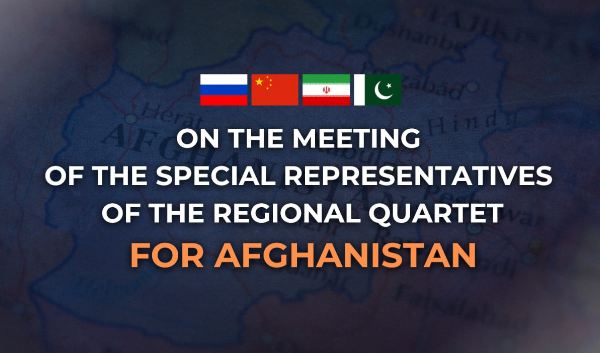
MOSCOW, OCT 6 /DNA/ – On the eve of the seventh meeting of the Moscow Format of Consultations on Afghanistan (MFC) – another meeting was held between the special representatives of the countries of the regional quartet (Russia, China, Iran, and Pakistan).

Zamir Kabulov, Special Representative of the President of the Russian Federation for Afghanistan, took part in the event on behalf of the Russian Side.

The quartet acts as the contact group of the MFC. The participants focused their discussions on substantive issues of the upcoming October 7 session of the Moscow Format of Consultations on Afghanistan, including the drafting of the final document.

Lt Gen Asim Malik to continue serving as ISI chief

Lt Gen Asim Malik to continue serving as ISI chief

RAWALPINDI, OCT 6: Inter-Services Intelligence Director General Lt Gen General Asim Malik will reportedly continue to serve on his incumbent post.

Sources said that 55-year-old Lt Gen Malik, who is also the country’s national security adviser, was appointed to the post of the ISI chief in September 2024, replacing Lt Gen Nadeem Anjum.

Lt Gen Malik is considered one of the best officers of the Pakistan Army.

The ISI chief was given the additional charge of the NSA back in May. A notification issued by the Cabinet Division stated that Lt Gen Asim Malik would hold the additional charge of the national security adviser with immediate effect. The posting came amid heightened tensions with India following the Pahalgam attack. 

https://youtube.com/watch?v=d2o4_c_uAFg%3Fsi%3DDz230wI4LDX3ntRn

Before being appointed as the ISI director general, Lt Gen Malik served as an adjutant general at the General Headquarters in Rawalpindi. 

In October 2021, the then Major General Asim Malik was promoted to lieutenant general and appointed adjutant general of the army.  Gen Malik previously served in the Balochistan infantry division and commanded the Waziristan infantry brigade, according to PTV News.

It stated that the ISI DG had received a Sword of Honour during his course. Aside from that, Gen Malik has worked as the chief instructor at the National Defence University in Islamabad and as an instructor at the Command and Staff College, Quetta.

The military officer graduated from Fort Leavenworth in the United States and the Royal College of Defence Studies in London.

Only a Palestinian State Can Break the Cycle of War

Only a Palestinian State Can Break the Cycle of War

Dr. Muhammad Akram Zaheer

The contemporary Middle East is undergoing profound geostrategic transformation, shaped by shifting alliances, resurging conflicts, and growing international polarization. At the heart of this turbulence lies the Israeli–Palestinian conflict, particularly the devastation in Gaza, which has escalated into one of the most pressing humanitarian crises of our time. While Israel continues its military campaigns under the rationale of security and deterrence, the conflict reveals the limits of force as a means of ensuring long-term peace. The recurring cycles of violence demonstrate that Israel is waging a war it cannot decisively win, because military supremacy alone cannot extinguish the political, social, and historical aspirations of an entire people. A sustainable resolution requires recognition of Palestinian statehood, not as a concession but as an indispensable precondition for regional stability. In this context, the international community must take a leading role in shaping a viable path toward peace.

Israel’s military power is widely acknowledged as the most advanced in the region, reinforced by cutting-edge technology, intelligence networks, and unwavering U.S. support. Yet, despite its superiority, Israel has repeatedly failed to achieve durable peace through military means. The wars of 2008–09, 2012, 2014, and the most recent escalation in Gaza underscore the cyclical nature of hostilities. Each round of conflict has left Gaza more devastated, Palestinian resentment more entrenched, and Israel more isolated diplomatically. This military-centered approach is inherently flawed because it reduces a deeply political struggle to a matter of force. Palestinian demands for sovereignty, dignity, and recognition cannot be silenced through bombardments or territorial control. Instead, violence tends to radicalize communities, perpetuating a cycle of resistance and retaliation. Israel’s insistence on security-first policies, without parallel political concessions, has thus failed to achieve its objectives of deterrence or normalization.

The war in Gaza has created a humanitarian catastrophe of staggering proportions. Thousands of civilians, including women and children, have been killed, and much of Gaza’s infrastructure has been reduced to rubble. Access to food, water, electricity, and healthcare has collapsed, with the United Nations repeatedly warning of famine and epidemic outbreaks. These conditions are not only morally indefensible but also politically counterproductive for Israel. Images of destruction and human suffering have galvanized international criticism, fueling mass protests across Europe, North America, and the Muslim world. Countries in the Global South, already skeptical of Western double standards, increasingly view the Palestinian plight as emblematic of broader injustices in the international order. The longer Israel prolongs its military operations, the deeper its legitimacy crisis becomes, even among its traditional allies.

At the heart of Israel’s predicament lies the impossibility of containing the Palestinian national movement indefinitely. History provides abundant evidence that nations cannot be subdued permanently through coercion. From Algeria to Vietnam, colonial and occupation regimes collapsed under the weight of indigenous resistance, despite initial military superiority. Similarly, the Palestinian struggle is not merely a local rebellion but a national liberation movement rooted in identity, memory, and international solidarity. Israel’s attempts to divide Palestinians between the West Bank and Gaza, between Fatah and Hamas may have achieved short-term tactical gains, but they have failed to extinguish the demand for statehood. On the contrary, continued occupation and blockade have reinforced the collective sense of dispossession, deepening the legitimacy of resistance among younger generations. This reality underscores why Israel is fighting a war it cannot win: the conflict is not about defeating an organization but about denying the aspirations of a people.

The Israeli–Palestinian conflict must also be understood within the broader context of global geostrategic realignments. The United States, Israel’s chief ally, faces mounting challenges to its global influence, particularly from China and Russia. The Ukraine war, the emergence of BRICS as a counterweight to Western dominance, and shifting energy politics in the Middle East have all contributed to a more multipolar world order. In this environment, the Palestinian issue has regained prominence as a moral and strategic fault line. The Abraham Accords, which sought to normalize relations between Israel and several Arab states without addressing Palestinian rights, have revealed their fragility. While some Gulf monarchies may have pursued pragmatic economic and security cooperation with Israel, the ongoing violence in Gaza has reignited popular anger across the Arab and Muslim world. Public opinion in these societies strongly supports the Palestinian cause, constraining governments from deepening normalization. Hence, regional realignment cannot bypass the Palestinian question; rather, it must confront it directly.

The two-state solution, long considered the cornerstone of peace efforts, remains the only viable framework to resolve the conflict. A sovereign Palestinian state, existing alongside Israel, would address the core grievances of dispossession, occupation, and statelessness. Without such a political resolution, neither Israel’s security concerns nor Palestinian aspirations can be satisfied. Critics argue that the two-state solution has become unfeasible due to settlement expansion, territorial fragmentation, and mutual distrust. While these obstacles are real, they do not diminish the necessity of a political settlement. Indeed, the absence of alternatives underscores its indispensability. A one-state solution whether democratic or apartheid-like would only perpetuate conflict, while indefinite occupation guarantees instability. Hence, reviving a credible path toward Palestinian statehood is not only desirable but also urgent.

The global community must shoulder responsibility in steering the conflict toward resolution. Historically, international actors have oscillated between mediation, neglect, and complicity. The United States has played a dominant role but has often been constrained by domestic political considerations, particularly its pro-Israel lobby. The European Union, despite its rhetorical support for Palestinian rights, has lacked the coherence to exert meaningful pressure. Meanwhile, the United Nations has repeatedly condemned Israeli actions but remains hamstrung by vetoes in the Security Council. In the emerging multipolar world, however, new opportunities exist for collective leadership. Rising powers like China and Russia, alongside regional actors such as Turkey, Egypt, and Qatar, can play constructive roles in brokering dialogue. The Arab League and Organization of Islamic Cooperation (OIC) must also move beyond symbolic gestures to coordinated diplomatic initiatives. Ultimately, the legitimacy of any peace process hinges on international guarantees for Palestinian sovereignty, economic viability, and security.

A genuine path to peace must rest on principles of justice, equality, and mutual recognition. For Palestinians, this means an end to occupation, the right to self-determination, and a viable state with territorial contiguity. For Israelis, it means secure borders, recognition from neighbors, and freedom from perpetual conflict. Achieving this balance requires bold diplomacy, sustained international pressure, and a willingness to confront entrenched political narratives on both sides.

The path will undoubtedly be arduous, marked by spoilers, mistrust, and domestic resistance. Yet, history shows that protracted conflicts can eventually yield to negotiated settlements, as in South Africa or Northern Ireland. The key lies in recognizing that perpetual war is unsustainable and that peace, however difficult, is the only rational alternative.

Don’t take the PPP for granted – Sherry Rehman

Don’t take the PPP for granted - Sherry Rehman

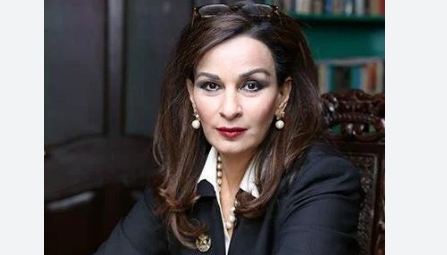
ISLAMABAD, OCT 6 /DNA/ – Vice President PPP Senator Sherry Rehman has expressed deep concern over the divisive rhetoric emerging from Punjab towards Sindh as well as the PPP leadership at a time when the entire country is reeling from the devastating floods.

 “The whole country is struggling right now and in need of unity. Over 6.5 million Pakistanis have been affected by the floods — these are not Punjabis or Sindhis, they are Pakistanis. And yet, instead of focusing on their plight, this divisive rhetoric has not only begun, it is amplifying each day. This is no way to manage either a crisis or a coalition .”

Senator Rehman criticised attempts to drag PPP’s leadership into needless controversy.

“It deeply troubled me that from Punjab, criticism didn’t stop at governance — it extended to Chairman Bilawal Bhutto Zardari, questioning his credentials and commitment to Pakistan,” Senator Rehman said. “Let’s recall — the Prime Minister himself placed full confidence in Bilawal when he made him Foreign Minister. Egos are not the way to deal with disaster, Chairman Bilawal Bhutto Zardari praised CM Punjab’s work. But her words and her spokespersons words have just unleashed a parochial war of words that benefit no one.”

Senator Rehman called the targeting of First Lady, Aseefa Bhutto Zardari, “beyond the pale.”

“That’s not acceptable. You can’t hold press conferences and hurl accusations at our top leadership and then expect silence. Of course, our jiyalas will respond. When you unfairly attack PPP leadership, they will answer — firmly, but responsibly,”

Senator Rehman pointed to the scale of the devastation that demands an all-hands-on-deck response.

“These floods have inflicted Rs3,856 billion in damages — about $13.6 billion — across Pakistan,” she noted. “Beyond the immediate loss, the economy faces another Rs740 billion in potential future losses. This is not a provincial problem. It’s a national crisis.

Pakistan’s total public debt rose by 13 per cent to Rs80.6 trillion by the end of FY25. How are we able to handle this outflow ? Why are we making this an ego issue ? “

Senator Rehman reminded that

“Punjab has reported damages worth Rs630 billion, 3.3 million acres of farmland have gone under water in Punjab alone. This is where our attention should be — not on point scoring.”

Turning to relief efforts, Senator Rehman emphasized that PPP’s only demand was for transparency and effective delivery.

“We are disappointed at tone and tenor of language being used. All the PPP has asked is for the Benazir Income Support Programme (BISP) — Pakistan’s most acclaimed social protection system — be used for relief delivery,” she said. “During the 2022 floods, BISP disbursed Rs70 billion to over 2.8 million families, each receiving Rs25,000 to rebuild their lives. We didn’t ask for anything for ourselves. We only asked that aid reach people who need it most.”

She said it was wrong to label international assistance as begging.

“Now you’re seeking flood relief from the IMF, and rightly so — we support that,” she said. “But you can’t call us beggars for seeking global aid. If that’s begging, then why does anyone take IMF money? Why did we ask for Resilience Funds at all ? Let’s not demean Pakistan’s needs. This is about survival.”

Senator Rehman said that instead of trading barbs, political leaders should be uniting around the national emergency.

“We did not start this war of words. This is not the way to run a coalition. Am appalled that the security of our parliamentary leader in Punjab has been withdrawn. Everyone knows Ali Haider Gilani was kidnapped by th Taliban. What message is being given to coalition partners? We have votes there and this is no way to treat the coalition. “

Senator Rehman concluded with a call for calm and collective action.

“When Sindh was hit by the 2022 floods, one-third of the country was underwater. We went straight to work with all stakeholders and declared Pakistan’s right to climate finance. “

She said the government must speak with one voice at this critical juncture.

“My training is not to do hate politics. PPP is the largest political party in the Senate of Pakistan. If we stop supporting the government, they will be in crisis. We don’t want to create a crisis for the federal government but after abusing our leadership, you cannot take our support for granted. This cannot become the new normal. “

Gilani leads Pakistan’s parliamentary delegation to 68th CPC

Gilani leads Pakistan’s parliamentary delegation to 68th CPC

ISLAMABAD, Oct 06 (APP/DNA): Chairman Senate, Syed Yousuf Raza Gilani, is leading Pakistan’s parliamentary delegation to the 68th Commonwealth Parliamentary Conference (CPC) being held in Barbados. During his visit, the Chairman Senate also made a brief stopover in the United Kingdom in transit.

The Commonwealth Parliamentary Conference brings together Speakers, parliamentarians, and representatives from member states across the globe. The event serves as an important forum for dialogue on strengthening democracy, promoting good governance, enhancing public representation, and fostering inter-parliamentary cooperation, said  news release.

Syed Yousuf Raza Gilani will hold a series of bilateral meetings on the sidelines of the conference with parliamentary leaders, law makers, and key global parliamentary figures. Discussions will focus on strengthening bilateral ties, deepening parliamentary partnerships, promoting people-to-people linkages, and enhancing regional collaboration.

Gilani is also scheduled to chair one of the key sessions of the CPC, where he will highlight Pakistan’s commitment to the promotion of peace, the strengthening of democratic institutions, and the country’s active parliamentary role in advancing dialogue and cooperation at regional and global levels.

In his engagements, the Chairman Senate will also draw attention to the humanitarian and environmental challenges arising from recent floods and heavy rains in Pakistan. He will emphasize the urgent need for global climate justice, enhanced international cooperation, and greater support to climate-vulnerable countries like Pakistan.

Before his departure, Syed Yousuf Raza Gilani underscored the vital role of the Commonwealth Parliamentary Association (CPA) in fostering democratic values, the rule of law, and people-centered governance among member states.

He reaffirmed that Pakistan attaches great importance to its partnership with the Commonwealth and views such platforms as pivotal in strengthening global parliamentary cooperation and promoting shared democratic ideals.

SDPI, Kyrgyz team explore new avenues for Central and South Asia Cooperation

SDPI, Kyrgyz team explore new avenues for Central and South Asia Cooperation

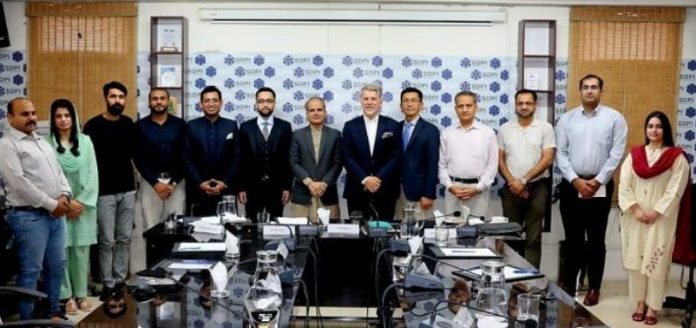
ISLAMABAD, Oct 06 (DNA): A high-level experts’ delegation from Kyrgyzstan on Monday visited Sustainable Development Policy Institute (SDPI) to explore avenues for enhanced collaboration between Central and South Asia, particularly in research, policy advocacy, trade, and connectivity.

Welcoming the delegation, Dr Sajid Amin Javed, Deputy Executive Director of SDPI, highlighted Pakistan’s renewed stance on strengthening ties with Central Asian Republics (CARs), in line with the vision of the Pakistan government, said a press release.

“Pakistan and Central Asia share deep historical and cultural roots,” he said, adding that “Our collective future depends on reviving those connections through research, policy dialogue, and sustainable cooperation.”

He added that SDPI is ranked among top 100 non-US think tanks globally by the University of Pennsylvania that continues to deepen its engagement across the region. “Central Asia is the least explored region, and SDPI aims to bridge that gap,” he said.

Dr Sajid briefed the delegation on SDPI’s core work areas of research, advocacy and outreach, and capacity building, and remarked that SDPI has over 100 active memorandums of understanding (MoUs) with national and international partners and regularly produces policy briefs, research papers, and working papers. The institute is also hosting Sustainable Development Conference (SDC) in November this year, which is Pakistan’s largest annual policy gathering for the past 28 years. This time the institute is set to organize the 16th South Asia Economic Summit and the UNESCAP Seventh SDGs Forum alongside the SDC.

Speaking on the occasion, Abdullah Dayo, Program Advisor, Friedrich-Ebert-Stiftung (FES) Pakistan mentioned the long-standing partnership between SDPI and FES, emphasizing their collaboration on “many cross-cutting policy issues.”

Prof. Dr. Emil Dzhuraev, political scientist and analyst in Kyrgyzstan lauded SDPI’s pioneering role in sustainability and public policy. “SDPI’s work predates the global sustainable development discourse by nearly a decade,” he remarked. Highlighting the potential of Central Asia–South Asia Trade Connectivity, he stressed that recent geopolitical shifts have opened new corridors for collaboration.

“The Central Asian Republics are increasingly engaging with Afghanistan and Pakistan to access seaports,” he said, adding that the region must overcome institutional inertia to build effective think-tank ecosystems.

Boburshoh Alimov, Project Officer, FES Uzbekistan, shared insights from Central Asia, noting that Uzbekistan and Kyrgyzstan are taking steps to strengthen ties with neighbouring states. “Uzbekistan, a double landlocked country, depends on Kyrgyzstan and Tajikistan for water. Water diplomacy and regional forums have therefore become essential,” he said. He pointed out that air pollution and climate challenges are shared concerns, and cities like Lahore, Bishkek, and Tashkent are ranked  among the region’s most polluted ones. Tourism and youth cooperation, he suggested, could be promising areas for Pakistan – Central Asia engagement.

Philipp C. Jahn, Regional Director, FES Kyrgyzstan, Uzbekistan, and Kazakhstan, noted that the Ukraine-Russia conflict has reoriented supply chains and opened new logistical opportunities through Pakistan and Afghanistan. “We are seeing an 11% GDP increase in some Central Asian countries following this shift,” he said.

He added that Kyrgyzstan and China are strengthening trade ties, while regional priorities such as climate change, biodiversity, youth leadership, and women’s empowerment remain central to FES’s mission.

Uzma T. Haroon, Head of SDPI’s SDC Unit, invited the delegation to the upcoming four-day Sustainable Development Conference, co-hosted with Allama Iqbal Open University, which will also feature the third Sustainable Investment Expo.

Concluding the session, Dr Sajid Amin Javed thanked the delegation and announced SDPI’s plans to expand faculty exchange programmes and collaborative research between Pakistan and Central Asian institutions.

Stay Connected

64FansLike
60FollowersFollow

Latest Reviews

Exchange Rates

USD - United States Dollar
EUR
1.14
GBP
1.34
AUD
0.69
CAD
0.70