Home Blog Page 442

Imran Khan terms Afghan expulsion ‘unfair’

Imran Khan terms Afghan expulsion ‘unfair’

Hopes new KP CM Sohail Afridi will take up issue with federal govt

News Desk

ISLAMABAD: Pakistan Tehreek-e-Insaf (PTI) founder Imran Khan has expressed concern over the expulsion of Afghan nationals from Pakistan, terming the move “unfair and inhumane.”

According to party sources, Khan made these remarks during a meeting with senior lawyer Salman Akram Raja at Adiala Jail on Wednesday. The PTI founder said that many Afghans had been living in Pakistan for decades and contributed to the country’s economy and society, adding that their sudden ouster was “not the right way” to handle the issue.

Khan expressed hope that the newly nominated Chief Minister of Khyber Pakhtunkhwa, Sohail Afridi, would raise the matter with the federal government. He said the policy of mass deportations should be reviewed to ensure that those who have long resided in Pakistan are treated with compassion and fairness.

The former premier also expressed confidence that Sohail Afridi would efficiently manage provincial affairs and continue PTI’s development and governance agenda in KP. He urged the party leadership to prioritize humanitarian considerations in policymaking and maintain stability in the province.

PTI removes Gandapur as KP chief minister

PTI removes Gandapur as KP chief minister

MPA Sohail Afridi next KP chief minister

News Desk

ISLAMABAD: The Pakistan Tehreek-e-Insaf (PTI) has removed Chief Minister Khyber Pakhtunkhwa (KP) Ali Amin Gandapur from his post, , marking a significant development in the province’s political landscape. PTI Secretary General Salman Akram Raja made this announcement after meeting with Imran Khan.

According to party insiders, the PTI leadership has shortlisted MPA Sohail Afridi as the replacement for Gandapur. Afridi, a relatively low-profile but loyal party member, is said to enjoy the confidence of the party’s central leadership and is being viewed as a consensus candidate to restore stability within the provincial setup.

The decision comes amid mounting internal rifts within the PTI, particularly between Gandapur and some members of the party’s central leadership. The chief minister had recently engaged in a public war of words with Aleema Khan, sister of PTI founder Imran Khan. Gandapur accused her of “working with agencies,” while Aleema Khan in turn alleged that Gandapur had deviated from the party’s core principles.

These exchanges exposed deepening fissures within the party, which have been simmering since the May 9 unrest and subsequent arrests of key PTI figures. Party insiders suggest that Imran Khan himself has expressed dissatisfaction over the performance of the KP government, particularly regarding governance issues and the handling of internal party affairs.

Ali Amin Gandapur, a fiery and outspoken politician, had been appointed as KP chief minister in early 2024 following PTI’s sweeping victory in the provincial elections. His tenure, however, has been marked by controversies, administrative challenges, and tensions between the provincial and central wings of the party.

If confirmed, Gandapur’s removal would signal a major reshuffle within PTI’s provincial leadership—one aimed at consolidating control and easing tensions between various party factions. Political observers believe the move could have far-reaching implications for PTI’s organizational stability ahead of possible national-level political developments.

For now, the party’s silence has only added to speculation, as KP awaits clarity on whether the province is set for another change at the top.

Pakistan Army warns India of ‘swift, destructive response’ to any aggression

Pakistan Army warns India of 'swift, destructive response' to any aggression

Field Marshal Munir says Pakistani forces ready to thwart hostile designs, warns India over aggression

Staff Report

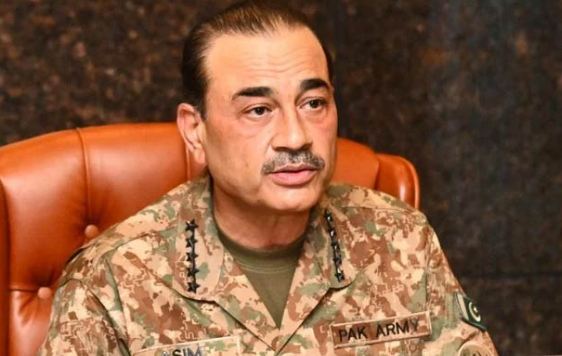
RAWALPINDI: The Pakistan Army on Wednesday vowed a “swift and destructive response” to any act of Indian aggression, as top military leadership cautioned that New Delhi’s provocative rhetoric risked destabilising regional peace.

The resolve came during the 272nd Corps Commanders’ Conference (CCC) held at the General Headquarters (GHQ), chaired by Chief of Army Staff (COAS) Field Marshal Asim Munir, the Inter-Services Public Relations (ISPR) said in a statement.

The forum expressed grave concern over “irresponsible and unwarranted statements” by India’s political and military leadership, calling them part of a pattern of “whipping up war hysteria for political gain.”

“The forum pledged to counter any Indian aggression with a swift and decisive response, shattering any perceived notion of India’s relative safety accruing from geography,” the statement said. “Any imaginary new normal will be met with a new normal of swift retributive response.”

The conference also reviewed Pakistan’s counterterrorism operations, ongoing security threats, and overall operational readiness. The participants reaffirmed the army’s commitment to neutralising Indian-sponsored terror proxies such as Fitna Al-Khawarij and Fitna Al-Hindustan, and vowed to dismantle networks undermining the state’s security.

“The existing nexus between terror and crime with vested political patronage which is gravely hurting the interests of the State and security of its people, will not be allowed to continue anymore, come what may,” it added.

The remarks came after provocative remarks by Indian military officials amid heightened tensions between Islamabad and New Delhi in the backdrop of a four-day armed conflict in May this year.

On October 3, Indian Air Force Chief Amar Preet Singh claimed that India downed five Pakistani fighter jets of the F-16 and JF-17 class during the intense fighting between the nuclear-armed neighbours in May.

“As far as air defence part is concerned, we have evidence of one long range strike…along with that five fighters, high-tech fighters between F-16 and JF-17 class, our system tells us,” Singh told reporters at the Indian Air Force annual day press conference.

However, he did not provide any evidence to back his claim.

The May fighting, the worst between the old foes in decades, was sparked by a terrorist attack on tourists in Indian Illegally Occupied Jammu and Kashmir’s (IIOJK) Pahalgam area, which New Delhi said was backed by Pakistan.

After the incident, India killed several innocent civilians in unprovoked attacks on Pakistan for three days before the Pakistan Armed Forces retaliated in defence with the successful Operation Bunyan-um-Marsoos.

Pakistan downed six IAF fighter jets, including three Rafale, and dozens of drones. After at least 87 hours, the war between the two nuclear-armed nations ended on May 10 with a ceasefire agreement brokered by the United States.

During today’s conference, the forum welcomed the recent Pakistan–Saudi Arabia Strategic Mutual Defence Agreement, describing it as a major step toward enhancing multi-domain cooperation and regional security. “This agreement underscores shared values, mutual respect, and a joint vision for peace and security in the Middle Eastern and South Asian regions,” it added.

The commanders reiterated unwavering support for the people of Kashmir and Palestine, reaffirming Pakistan’s commitment to the two-state solution based on pre-1967 borders with Al Quds Al Sharif as the Palestinian capital.

Pakistan Survey: Only 1 in 5 families can eat their desired meals

Pakistan Survey: Only 1 in 5 families can eat their desired meals

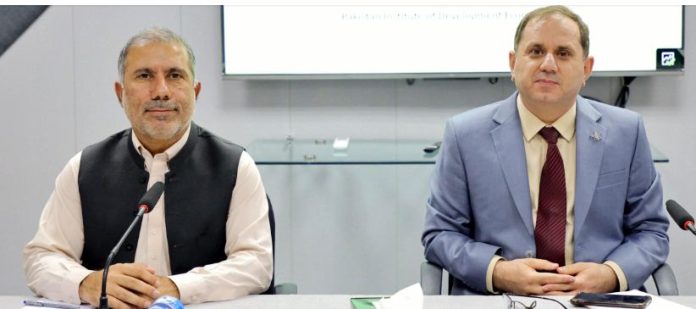
ISLAMABAD, OCT 8 /DNA/ – The Pakistan Institute of Development Economics (PIDE) unveiled landmark findings from the Pakistan Panel Household Survey (PPHS) 2024—the country’s only long-term, nationally representative household survey tracking economic and social change for more than two decades. The evidence-packed seminar titled “Pakistan Panel Household Survey (PPHS): Key Insights and Implications for Policymaking” featured Dr. Shujaat Farooq, Dean of Research at PIDE, and was moderated by Dr. Karim Khan, Dean Academics at PIDE.

Dr. Farooq announced that 76 percent of the households surveyed in 2010 were successfully re-tracked in 2024, an exceptional achievement in longitudinal research. Supported by RASTA-DDR and conducted in collaboration with the Pakistan Bureau of Statistics (PBS), the PPHS expanded from 16 to 30 districts, now including major urban centres such as Lahore, Karachi, Hyderabad, and Peshawar. The 2024 round covers 8,621 households nationwide and is the first fully digital survey, conducted via tablets for real-time monitoring and improved data quality.

The 2024 wave also introduced several new research modules, including learning poverty, care work, disability, financial literacy, and a detailed child well-being and parenting section, along with modernized consumption categories such as “eating out.” Education data from PPHS 2024 reveal both progress and persistent challenges. While literacy rates have improved, 34 percent of Grade 3–8 students still cannot solve Grade-2 level division problems, highlighting severe learning poverty. Affordability remains a key barrier, with 71 percent of parents citing financial constraints as the main reason for school dropout. Middle- and matric-level dropout rates stand at 34 percent and 21 percent, respectively, underscoring significant inequalities in learning outcomes.

Labour market data show mixed trends. Male labour force participation slightly declined from 80 percent to 78 percent, while female participation increased modestly from 23.7 percent to 26.9 percent over 14 years. Despite the small gain, women remain concentrated in agriculture and informal jobs, with limited access to higher-value sectors. Occupational mobility has also stagnated, as the shift from blue- to white-collar work remains minimal.

In terms of intergenerational mobility, the findings are encouraging. University graduates now make up 9 percent of the younger generation compared to only 1 percent of their fathers, showing progress in educational attainment. Ownership of inherited parental homes increased from 58 percent to 81 percent, and half of surveyed families (50 percent) perceive themselves as financially better off than their parents.

On the health front, the survey highlights major progress. Antenatal care coverage has increased by 28.5 percentage points since 2001, reaching 80.9 percent, while skilled birth attendance rose by 69.5 points to 88.5 percent. Home births have dropped sharply to 11.6 percent—a decline of 57.5 points—and TT vaccination coverage reached 72.3 percent, marking a 35-point improvement. However, regional disparities persist, particularly in Balochistan, where access to maternal healthcare remains limited.

Child malnutrition trends show improvement, with stunting declining from 60 to 43 percent and underweight children dropping from 50 to 33 percent, although wasting increased slightly. Food insecurity, however, remains widespread. Only 19.5 percent of households can always afford desired meals, while 30 percent sometimes go without three meals a day. Inflation was identified by more than 60 percent of households as the most severe shock impacting their livelihoods.

The PPHS also paints a nuanced picture of poverty and inequality. Using the Cost of Basic Needs (CBN) method, Pakistan’s poverty rate stands at 30.5 percent, 36.6 % in rural areas and 17.8 percent in urban areas. Rural poverty has declined from 46.1 to 37.5 percent, and urban poverty from 41.0 to 23.4 percent, yet income inequality has widened, with upper-income groups’ consumption rising faster than that of lower-income panel households. Analysis indicates that, with better inflation control, the poverty rate could have been lower by around seven percentage points.

Social protection coverage has improved significantly. Around 22 to 23 percent of households now benefit from programs such as BISP and Zakat, up from 10 percent in 2010, while 10 to 11 percent have access to microfinance networks. Additionally, around 60 percent of households report engaging in charitable giving, though mostly through informal channels.

Moderator Dr. Karim Khan commended the study’s methodological rigor, emphasizing that its precise tracking of households and split families makes PPHS an invaluable source for policy analysis. He noted that the findings directly inform inclusive social and economic policy design.

The seminar concluded with policy priorities centered on reducing learning poverty, expanding women’s economic participation, strengthening social protection systems, improving job quality, and investing in child well-being infrastructure such as playgrounds, libraries, and safe study spaces.

PIDE announced that the PPHS 2024 microdata will soon be made publicly available to researchers and students, alongside a 15-chapter, 200-page technical report prepared by RASTA. Dr. Farooq expressed optimism that this dataset will support “dozens of PhD theses and policy papers,” contributing to Pakistan’s evidence-based policy ecosystem.

As Pakistan’s leading think tank, PIDE, through its RASTA program in collaboration with the Planning Commission, continues to promote rigorous, data-driven research that shapes the country’s development and inclusive growth agenda.

PTI ‘decides’ to remove Ali Amin Gandapur as KP chief minister

PTI ‘decides' to remove Ali Amin Gandapur as KP chief minister

MPA Sohail Afridi likely next KP chief minister, say sources

ISLAMABAD: The Pakistan Tehreek-e-Insaf (PTI) has decided to remove Ali Amin Gandapur as the chief minister of Khyber Pakhtunkhwa (KP), sources told Geo News on Wednesday.

The sources within the PTI said that the party leadership is likely to nominate MPA Sohail Afridi as the KP chief minister.

Meanwhile, PTI leaders have yet to confirm or deny the development.

Meanwhile, PTI Chairman Barrister Gohar Khan denied having any knowledge about the decision.

“I have no information about Chief Minister Ali Amin’s removal,” he said, while speaking to Geo News.

The development comes amid reports of growing internal rifts within the party. Gandapur had earlier accused Aleema Khan, sister of PTI founder Imran Khan, of working with agencies, while Aleema had levelled counter-allegations against him.

Khan himself has reportedly expressed reservations over provincial governance and the handling of internal party affairs by the current KP administration, further fuelling speculation about an impending reshuffle.

ICCI-Uzbek Embassy agree to deepen trade ties, enhance connectivity

ICCI-Uzbek Embassy agree to deepen trade ties, enhance connectivity

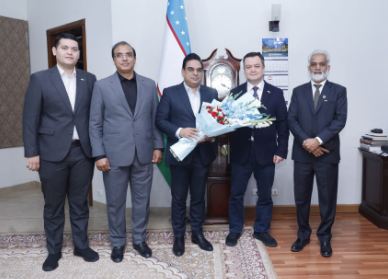
ISLAMABAD, OCT 8 /DNA/ – President Islamabad Chamber of Commerce and Industry (ICCI) Sardar Tahir Mehmood, along with Senior Vice President Tahir Ayub and Vice President Mohammad Irfan Chaudhry, paid a visit to the Embassy of Uzbekistan in Islamabad to discuss ways for strengthening bilateral trade and economic relations between Pakistan and Uzbekistan.

Upon arrival, the ICCI delegation was warmly received by the Ambassador of Uzbekistan, His Excellency Alisher Tukhtaev. During the meeting, the Ambassador highlighted the historic and friendly relations between the two brotherly countries and said there exists tremendous potential for enhancing trade in multiple sectors, including agriculture, textiles, sports goods, and surgical instruments.

The Ambassador noted that the current bilateral trade volume stands around USD 400–500 million, which is far below the actual potential. He emphasized the need to raise this figure to at least USD 2 billion within the next couple of years. He added that Uzbekistan is one of the leading importers of Pakistani goods among Central Asian Republics, while Pakistan imports a variety of products from Uzbekistan such as cotton yarn and fruits.

Discussing connectivity, the Ambassador underlined the importance of rail and air linkages to promote trade and investment between the two countries. He informed that Uzbekistan Airways is planning to double its weekly flights on the Tashkent–Islamabad–Tashkent route—from one to two per week. The addition of more flights, he said, would not only facilitate passengers but also strengthen business linkages, trade opportunities, and people-to-people contacts.

Speaking on the occasion, ICCI President Sardar Tahir Mehmood said that Pakistan offers immense potential for trade and investment, particularly in agriculture, manufacturing, and tourism. He expressed the business community’s desire to develop strong trade relations with Uzbekistan and underscored the importance of collaboration between ICCI and the Tashkent Chamber of Commerce and Industry to promote bilateral trade through B2B engagements and joint ventures.

Sardar Tahir Mehmood added that the growing partnership between Uzbekistan and Pakistan marks a new chapter in regional connectivity, economic cooperation, and shared prosperity. He also extended an invitation to the Ambassador to visit ICCI, which His Excellency graciously accepted, assuring that he would visit soon to further explore avenues for trade promotion and business cooperation.

Trade Counselor Alisher Duschanov, ICCI Senior Vice President Tahir Ayub and Vice President Irfan Chaudhry also shared their insights on the topic.

Turkmenistan, Italy to hold business forum to open new trade doors

Turkmenistan, Italy to hold business forum to open new trade doors

ASTANA, OCT 8 (Kazinform/APP): Turkmenistan and Italy are preparing to hold a business forum aimed at expanding trade and economic ties between the two countries, Trend reports via the Embassy of Turkmenistan in Italy.

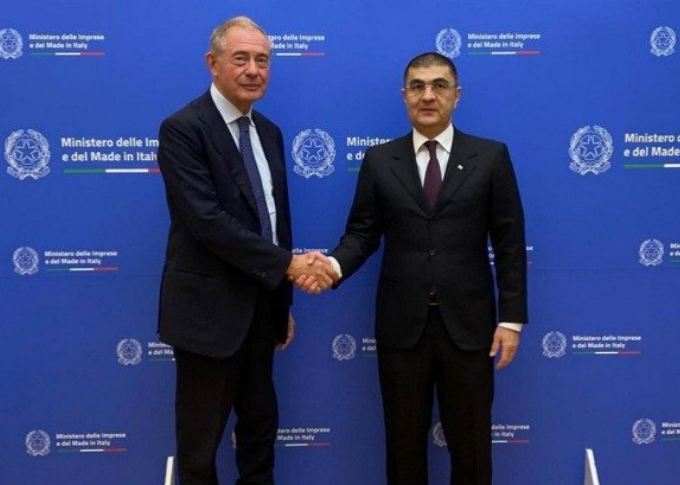
On October 6, Turkmenistan’s Ambassador to Italy, Toyli Komekov, held a meeting with Adolfo Urso, Italy’s Minister for Enterprise and Made in Italy, to discuss the forthcoming forum aimed at enhancing bilateral cooperation. The discussions centered on preparations for the event, which is set to convene later this month in Italy and will gather representatives from the private sector, government institutions, financial organizations, and leading companies from both countries.

The sides also exchanged views on enhancing cooperation through international organizations and agreed to continue joint efforts to strengthen bilateral relations in trade, investment, and industry. Plans were made to hold additional meetings involving heads of relevant departments to coordinate specific areas of partnership.

Following the talks, the sides reaffirmed their commitment to expanding Turkmen-Italian cooperation and expressed best wishes for continued prosperity for the peoples of both countries.

To note, Kazakhstan and Turkmenistan to join efforts in combating transnational crime.

Steps discussed to enhance wheat yield, curb smuggling in Murree

RAWALPINDI, Oct 08 (APP):A meeting aimed at enhancing wheat production and preventing its smuggling was held at the Deputy Commissioner’s Office, Murree, on Tuesday.

Deputy Commissioner Murree Agha Zaheer Abbas Shirazi presided over the meeting, which was attended by Additional Deputy Commissioner (General) Kamran Sagheer and officers from relevant departments.

The Agriculture Department presented various practical proposals and recommendations to achieve higher wheat yields. These included adopting modern farming techniques, training farmers, ensuring the provision of quality seeds, and making agricultural equipment easily available.

The meeting also reviewed measures to curb wheat smuggling, with instructions issued to strengthen monitoring at inter-district check-posts and take strict action against hoarding and illegal transportation.

Speaking on the occasion, Deputy Commissioner Sherazi said wheat was a staple food and its protection and enhanced production were among the top priorities. He directed all departments concerned to ensure effective vigilance and enforce a zero-tolerance policy against wheat smuggling.

He further urged close coordination among departments to make the ongoing wheat cultivation campaign a success.

Turkish village Ortahisar named among world’s 50 most beautiful

Turkish village Ortahisar named among world's 50 most beautiful

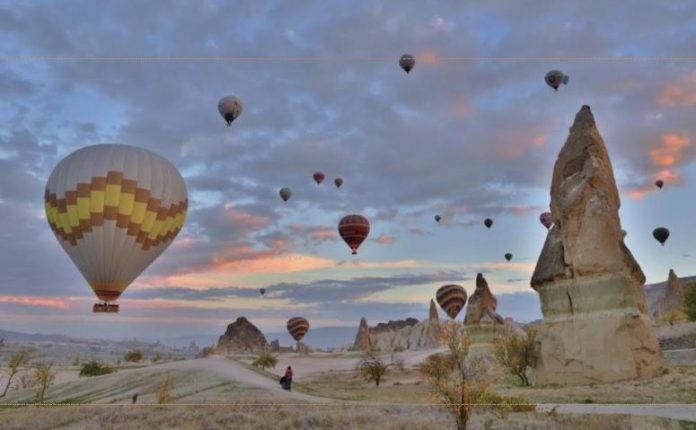
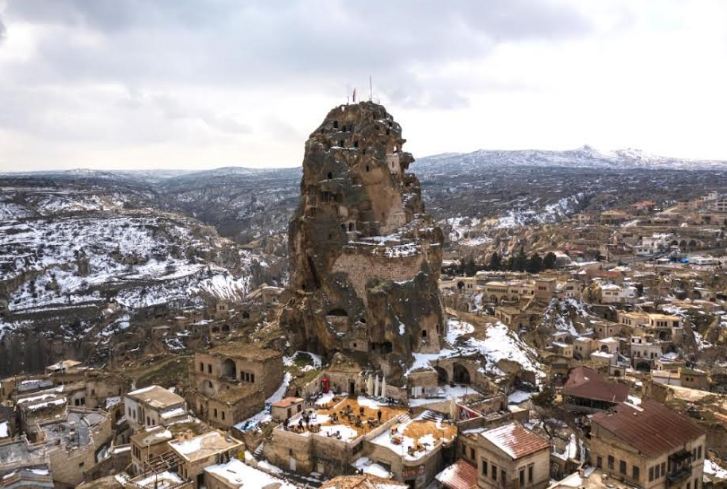
KARACHI, OCT 8 /DNA/ – Cappadocia, one of the world’s most extraordinary natural wonders, has received another global recognition with Ortahisar earning a place on Forbes’ 2025 list of The World’s 50 Most Beautiful Villages. Known for its iconic fairy chimneys and hot-air balloon rides, Cappadocia continues to enchant travelers, and Ortahisar, a historic village just six kilometers from Ürgüp, is now in the spotlight as a must-visit destination blending timeless heritage with breathtaking landscapes.

At the centre of Ortahisar rises its striking castle, believed to date back to the Hittite period. Carved into a towering fairy chimney, the castle’s labyrinth of caves, dovecotes, and tunnels once made it one of the earliest multi-storey settlements. Today, it remains one of the highest vantage points in the region, offering spectacular views of Cappadocia’s volcanic terrain shaped over millions of years by wind, rain, and eruptions from Mount Erciyes, Hasandağ, and Güllüdağ.

The village is also celebrated for its vernacular architecture and authentic atmosphere. Narrow stone alleys wind past apricot stalls and tea gardens, leading visitors toward valleys that once stored local produce in naturally cool cave cellars. The area is home to centuries-old churches and monasteries such as Sarıca, Cambazlı, Tavşanlı, and HallaçDeresi, reflecting Cappadocia’s deep religious and cultural heritage.

Beyond Ortahisar, Cappadocia offers travelers a wealth of experiences, from exploring mysterious underground cities and rock-carved churches to staying in unique cave hotels that combine history with modern comfort. Visitors can take horseback rides among dramatic rock formations, join pottery workshops, or unwind with spa treatments in luxury cave resorts. Cappadocian cuisine adds another dimension, with dishes slow-cooked in clay pots, regional fruits paired with tender meats, and drinks crafted from grapes grown in volcanic soil. The region’s culinary excellence was recently recognized by the MICHELIN Guide, which placed Cappadocia on its Türkiye map, reinforcing its status as a premier cultural and gastronomic destination.

With Ortahisar’s new accolade, Cappadocia reaffirms its position as one of the world’s most enchanting travel destinations, where nature, history, and culture seamlessly intertwine.

ECP announces by-election schedule on Omar Ayub seat

ECP announces by-election schedule on Omar Ayub seat

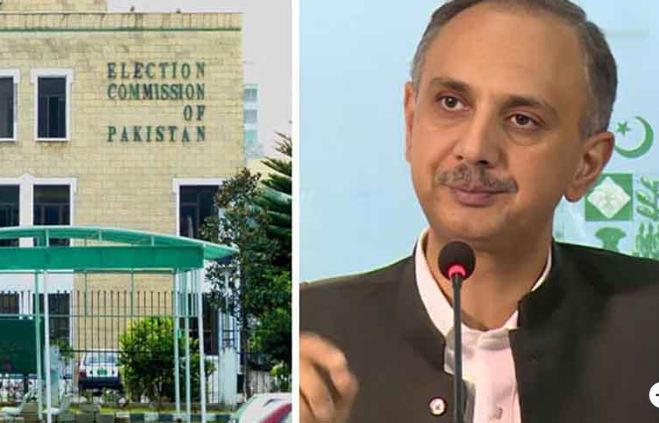
HARIPUR, OCT 08 (DNA): The Election Commission of Pakistan (ECP) has announced the schedule for the by-election in NA-18 Haripur following the disqualification of former Federal Minister and Member of the National Assembly (MNA) Omar Ayub Khan. The polling will be held on Sunday, November 23, 2025.

According to the notification issued by the ECP (No.F.8(5)/2025-Coord.-M/F(1)), Omar Ayub Khan was disqualified under Article 63(1)(h) of the Constitution through an earlier notification dated August 5, 2025.

The disqualification was upheld after the Peshawar High Court vacated the interim relief previously granted to the MNA through its judgment on October 1, 2025, in writ petitions Nos. 5170, 5171, 5062, 5337 and 5355-P/2025. Following the vacation of interim relief and the subsequent declaration of vacancy, the Election Commission, exercising powers under Article 224(4) read with Article 254 of the Constitution, called upon the electors of NA-18 Haripur to elect a member to fill the vacant seat in the National Assembly.

Under the election programme issued by the Commission, the Returning Officer will issue a public notice on October 13, while candidates will be able to submit their nomination papers from October 15 to 17. The names of the nominated candidates will be published on October 18, and the scrutiny of nomination papers will take place on October 22.

Appeals against acceptance or rejection of nomination papers may be filed by October 27 and will be decided by the Appellate Tribunal by November 3. The revised list of candidates will be published on November 4 and the last date for withdrawal of candidature is November 5. Election symbols will be allotted to contesting candidates on November 6, while polling will be conducted on November 23, 2025.

In a separate notification (No.F.8(5)/2025-Coord.-M/F(2)), the ECP has appointed Mr Zeeshan Khan, District Election Commissioner Haripur, as the District Returning Officer, and Mr Naveed-ur-Rehman, District Election Commissioner Abbottabad, as the Returning Officer. Mr. Shahid Khattak, Additional Assistant Commissioner (Revenue), Haripur, and Mr. Mushtaq Ahmed, Headmaster of Government Middle School Kohala Bala, have been appointed as Assistant Returning Officers.

The Election Commission has directed all concerned officials to ensure that the by-election in NA-18 Haripur is conducted in a transparent, impartial and efficient manner, in accordance with the law and constitutional provisions.

Stay Connected

64FansLike
60FollowersFollow

Latest Reviews

Exchange Rates

USD - United States Dollar
EUR
1.14
GBP
1.34
AUD
0.69
CAD
0.70